Search results
Search for "LED" in Full Text gives 775 result(s) in Beilstein Journal of Nanotechnology. Showing first 200.
Synthetic-polymer-assisted antisense oligonucleotide delivery: targeted approaches for precision disease treatment
Beilstein J. Nanotechnol. 2025, 16, 435–463, doi:10.3762/bjnano.16.34

- . sLPD assemblies exhibited higher colloidal stability and cellular internalisation compared to free G3139 and non-stabilised counterparts. As a result, significantly higher inhibition of Bcl-2 proteins was observed in sLPD-treated groups, which led to induced apoptosis of KB cells and increased
- controlled release through disulfide bond cleavage [139]. Following dendrimer PEGylation (PEG5000 modified with a synthetic luteinizing-hormone-releasing hormone (LHRH) analogue) provided greater particle stability and active targeting to specific cancer cells, which led to increased intratumoral


Engineered PEG–PCL nanoparticles enable sensitive and selective detection of sodium dodecyl sulfate: a qualitative and quantitative analysis
Beilstein J. Nanotechnol. 2025, 16, 385–396, doi:10.3762/bjnano.16.29
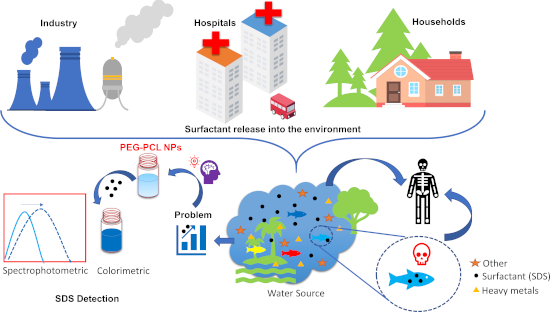
- through various pathways. This has led to significant concerns regarding developing rapid onsite qualitative and quantitative methods for estimating SDS in aqueous solutions. Although a range of high-throughput techniques is currently utilized for SDS quantification, these methods are often expensive
- sulfate group, with sodium as the counter-ion. The amphiphilic structure of SDS, integrating a hydrophobic alkyl chain and a hydrophilic headgroup, confers unique physicochemical properties that are leveraged in various applications. However, the widespread use of SDS in different applications led to the


Fabrication and evaluation of BerNPs regarding the growth and development of Streptococcus mutans
Beilstein J. Nanotechnol. 2025, 16, 308–315, doi:10.3762/bjnano.16.23
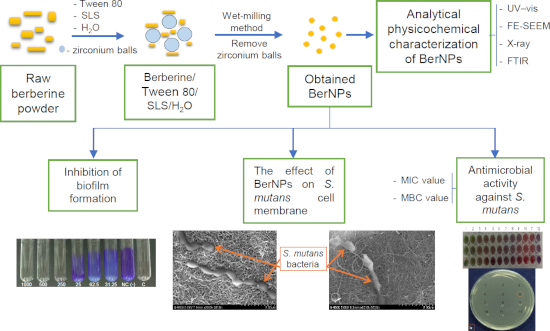
- , ultimately triggering cell death [32]. The findings of Peng et al. on Streptococcus agalactiae indicated that berberine significantly disrupted the cell membrane structure. SDS-PAGE electrophoresis results showed that some protein bands were blurred or absent, suggesting that berberine led to complete or




Enhancing mechanical properties of chitosan/PVA electrospun nanofibers: a comprehensive review
Beilstein J. Nanotechnol. 2025, 16, 286–307, doi:10.3762/bjnano.16.22

- chitosan/PVA nanofibers using dielectric barrier discharge (DBD) plasma and reported enhanced wettability, mechanical properties, and biocompatibility of the fibers. The argon and oxygen plasma treatments led to significant cross-linking of the fibers, which improved tensile strength and Young’s modulus


Emerging strategies in the sustainable removal of antibiotics using semiconductor-based photocatalysts
Beilstein J. Nanotechnol. 2025, 16, 264–285, doi:10.3762/bjnano.16.21
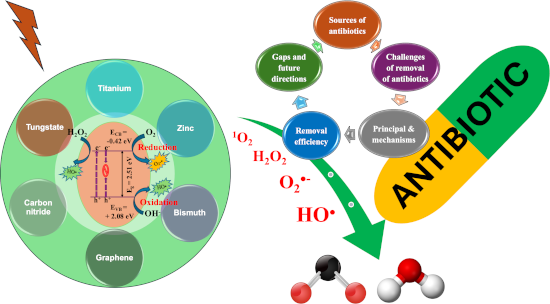
- with a suitable transition metal and synthesizing composite materials. Several advanced photocatalysts have been developed and successfully used to prevent antibiotics contamination, a list of which is shown below in Table 1. These modifications have led to improved charge separation rates, reduced



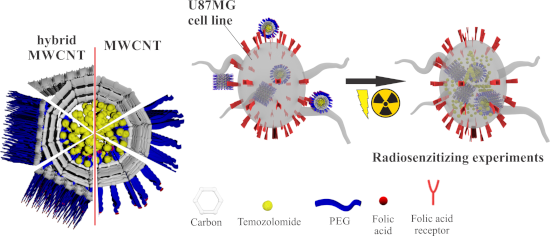
Radiosensitizing properties of dual-functionalized carbon nanostructures loaded with temozolomide
Beilstein J. Nanotechnol. 2025, 16, 229–251, doi:10.3762/bjnano.16.18
- . Such a trend was observed in a study of Jun et al. [47] in which MWCNTs conjugated with chitosan oligomers and with incorporated tea polyphenols for cancer treatment were irradiated by gamma rays from 60Co for 30 min with a dose of 1.5 Gy. The irradiation also led to changes in zeta potential to lower
- oxidation, the content of functional groups increased because of the increase in the effective surface for functionalization (or decrease in size) and the increase in number of defective sites on the MWCNTs created by the gamma photons. In addition, an exposure of SWCNTs to gamma radiation led to a
- significantly higher extent of functionalization with single-stranded DNA [64]. It was also shown that gamma radiation with low doses, 25 and 50 kGy, improved the graphite arrangement of MWCNTs; higher doses, 100 and 150 kGy, led to major structural deteriorations, while very high doses above 200 kGy distorted




Recent advances in photothermal nanomaterials for ophthalmic applications
Beilstein J. Nanotechnol. 2025, 16, 195–215, doi:10.3762/bjnano.16.16
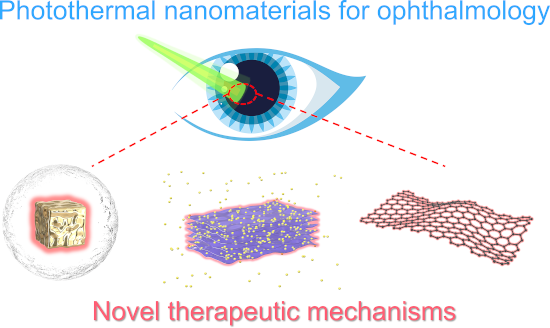
- damage to surrounding tissues due to inadequate control over the heat distribution [100][101][102][103][104][105]. Innovations in this field have led to the development of transparent polylactic acid (PLA) thin films with embedded iron oxide nanoclusters prepared via spin coating [51]. The efficient
- a frequent complication following ophthalmic surgery [146][147][148]. While antibiotics remain the most effective treatment against microbial infections, their global overuse has led to the emergence of drug-resistant bacterial strains [149][150][151]. In response, Zhou et al. developed a
- showed that ICG liposomes led to subtle disruption effects in the ILM, in which completely ablated ILM regions alternate with intact regions. Photoporation strategies to overcome the ILM have the potential to improve the efficacy of all retinal therapies impeded by ILM delivery barriers, including


A review of metal-organic frameworks and polymers in mixed matrix membranes for CO2 capture
Beilstein J. Nanotechnol. 2025, 16, 155–186, doi:10.3762/bjnano.16.14
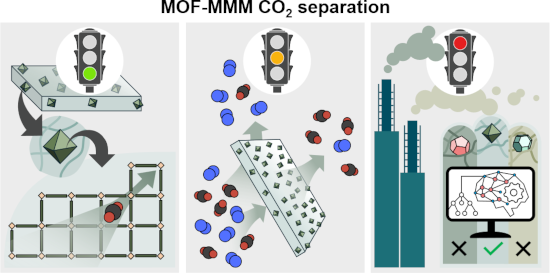
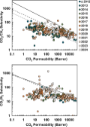
- synthesis [32]. The resulting constructions have pore sizes ranging from microporous (<2 nm) to mesoporous (2–50 nm) [30][36]. This simple strategy has led to substantial exploration of various MOFs with different structures and properties for various applications in heterogeneous catalysis, biomedicine
- displayed severe curling and exhibited poor MOF distributions, attributed to the prolonged evaporation times required, as well as the low viscosity and density of this solvent. In contrast, the MMMs produced in oxolane, dichloromethane, and chloroform led to generally well-formed MMMs with reasonable
- modification expanded the pore-limiting diameter marginally from 2.8 to 2.9 Å, while maintaining the overall MOF topology. This isoreticular fine-tuning led to an increase in CO2/N2 selectivity from 180 to 500 in simulations of a 15/85 binary CO2/N2 mixture at 1 bar and 293 K. Alternatively, incorporating pro




Nanocarriers and macrophage interaction: from a potential hurdle to an alternative therapeutic strategy
Beilstein J. Nanotechnol. 2025, 16, 97–118, doi:10.3762/bjnano.16.10
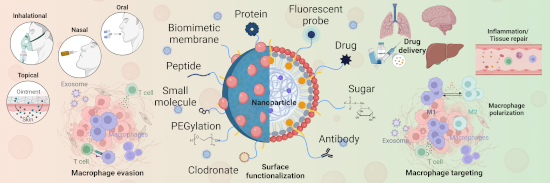
- . Intranasal delivery has emerged as a promising strategy for targeting the central nervous system by bypassing the blood–brain barrier (BBB). This approach was demonstrated by the nose-to-brain administration of D6-cholestrol-loaded liposomes, which led to an accumulation of D6-cholesterol in the brain in


Characterization of ZnO nanoparticles synthesized using probiotic Lactiplantibacillus plantarum GP258
Beilstein J. Nanotechnol. 2025, 16, 78–89, doi:10.3762/bjnano.16.8
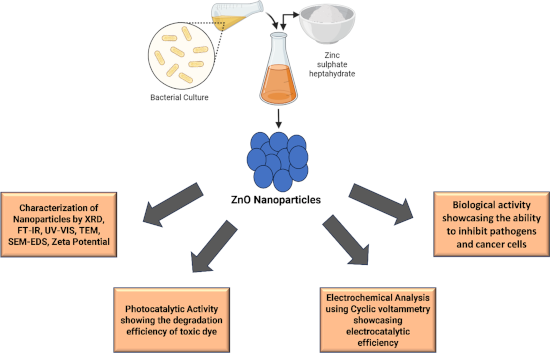
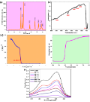
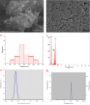
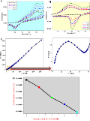
- peak current, though a steady addition led to decreased currents, possibly due to surface accumulation. The Nyquist plots display a larger impedance for ZnO electrodes. To fit the data into an analogous circuit, an uninterrupted phase element (Q1) was introduced with the adjustable parameters angular



Instance maps as an organising concept for complex experimental workflows as demonstrated for (nano)material safety research
Beilstein J. Nanotechnol. 2025, 16, 57–77, doi:10.3762/bjnano.16.7

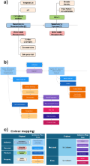
- properties can be tailored by changing their size, shape, surface chemistry, and functionality, have led to the designation of nanomaterials as a key enabling technology and to their subsequent inclusion in the broader categorisation of advanced materials [1][2]. Applications of nanomaterials derive in many


A nanocarrier containing carboxylic and histamine groups with dual action: acetylcholine hydrolysis and antidote atropine delivery
Beilstein J. Nanotechnol. 2025, 16, 11–24, doi:10.3762/bjnano.16.2

- concentration range (13–1650 μM) and did not cause hemolysis even at the highest concentration of 825 μM (Table 2 and Supporting Information File 1, Figure S4). Hist-RA at 220 μM led to nearly 100% hemolysis (Supporting Information File 1, Figure S4), while at concentrations of 110 and 55 μM, agglutination was


Attempts to preserve and visualize protein corona on the surface of biological nanoparticles in blood serum using photomodification
Beilstein J. Nanotechnol. 2024, 15, 1654–1666, doi:10.3762/bjnano.15.130

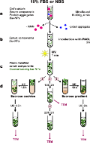
- on the bio-NPs was lost during the isolation process. Long-term exposure of bio-NPs to 30% sucrose at 100,000g led to the disruption of their ultrastructure. Isolation on a sucrose cushion did not preserve the protein corona on EVs and LPs, but it did not damage their ultrastructure. In the samples



Facile synthesis of size-tunable L-carnosine-capped silver nanoparticles and their role in metal ion sensing and catalytic degradation of p-nitrophenol
Beilstein J. Nanotechnol. 2024, 15, 1576–1592, doi:10.3762/bjnano.15.124
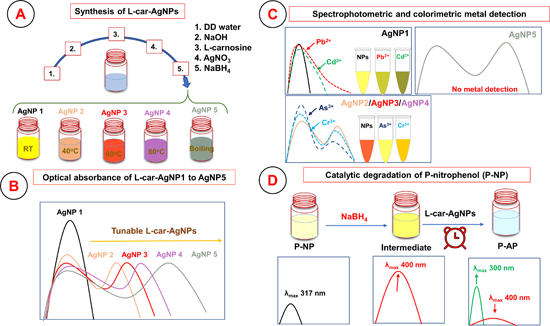
- temperature and the ratio of NaBH4 to NaOH led to the formation of ʟ-car-AgNPs with different colors. The color of the obtained nanoparticles suggested that they were in a controlled aggregated state. Further characterization was performed to analyze the physicochemical properties of the synthesized ʟ
- is assumed that the higher temperature, along with the ratio of NaOH to NaBH4, led to the formation of aggregated ʟ-car-AgNPs. These results contradict earlier reports and confirm the formation of aggregated ʟ-car-AgNPs with two absorption bands. However, despite the different shapes, absorption
- -AgNP1 led to the degradation of 0.25 mM P-NP within 90 s of the reaction, achieving a degradation efficiency of 95.5% (Figure 9a). In comparison, ʟ-car-AgNP2, ʟ-car-AgNP3, ʟ-car-AgNP4, and ʟ-car-AgNP5 achieved complete P-NP degradation within 100, 160, 140, and 220 s, respectively, with catalytic




Electrochemical nanostructured CuBTC/FeBTC MOF composite sensor for enrofloxacin detection
Beilstein J. Nanotechnol. 2024, 15, 1522–1535, doi:10.3762/bjnano.15.120
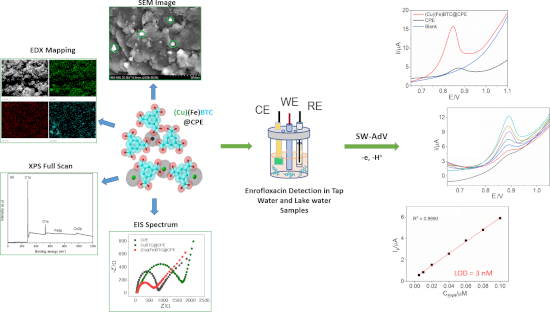
- Ω and significantly better conductivity [37], to the (Cu)(Fe)BTC@CPE led to reduction to about a third in Rct. This reduction in charge transfer resistance is advantageous for the enhancement of electrochemical oxidation on the electrode surface. Electrochemical behaviour of enrofloxacin on the (Cu





Effect of radiation-induced vacancy saturation on the first-order phase transformation in nanoparticles: insights from a model
Beilstein J. Nanotechnol. 2024, 15, 1453–1472, doi:10.3762/bjnano.15.117

- effects led to a polymorphic phase change, transforming the high-density fcc structure to a low-density hexagonal close-packed crystallographic phase. The investigation of the radiation stability of nanocrystalline single-phase multicomponent alloys (NiFe, NiCoFe, and NiCoCr) using molecular dynamics


Ion-induced surface reactions and deposition from Pt(CO)2Cl2 and Pt(CO)2Br2
Beilstein J. Nanotechnol. 2024, 15, 1427–1439, doi:10.3762/bjnano.15.115

- techniques is that they produce deposits with relatively low metal contents as compared to CVD and ALD. Indeed, creating deposits with high metal contents is one of the biggest challenges for FIBID and FEBID, and recent advances in precursor design and fine-tuning of deposition parameters led to deposits of



Lithium niobate on insulator: an emerging nanophotonic crystal for optimized light control
Beilstein J. Nanotechnol. 2024, 15, 1415–1426, doi:10.3762/bjnano.15.114
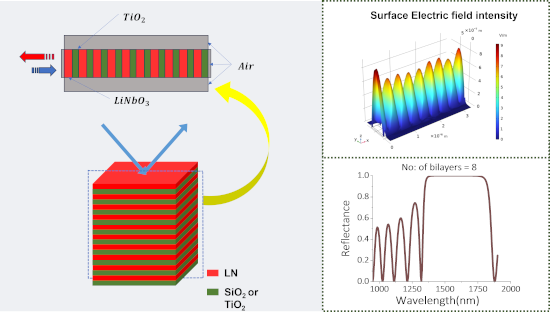
- ]. However, a major challenge in their development is maximizing the light that escapes the micro-LED. By incorporating a DBR onto the bottom of a flip-chip micro-LED, engineers can capture light that would normally be lost downward and redirect it upwards, significantly improving the overall light output


Nanotechnological approaches for efficient N2B delivery: from small-molecule drugs to biopharmaceuticals
Beilstein J. Nanotechnol. 2024, 15, 1400–1414, doi:10.3762/bjnano.15.113
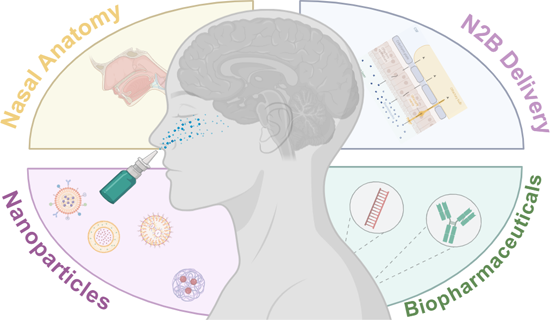
- revealed that an increase in particle size led to a shift towards caveolae-mediated internalization, the primary pathway for particles sized around 500 nm [69]. This shows the possibility of an even more extended particle size range to be considered for N2B delivery [69]. Regarding surface characteristics
- administration. The optimization process yielded optimized NLCs with a particle size of 178 nm of and an entrapment efficiency of 77%. The in vivo pharmacokinetic study showed that intranasal administration of the optimized NLC formulation led to significantly faster drug absorption and greater clozapine
- monoclonal antibody onto the NPs led to an increase in particle size and influenced the distribution of NPs in the hippocampus, indicating another critical factor for N2B delivery, namely, the particle size of NPs [153]. In another study with mAbs, Ferreira et al. developed and optimized a system of PLGA and


Various CVD-grown ZnO nanostructures for nanodevices and interdisciplinary applications
Beilstein J. Nanotechnol. 2024, 15, 1390–1399, doi:10.3762/bjnano.15.112
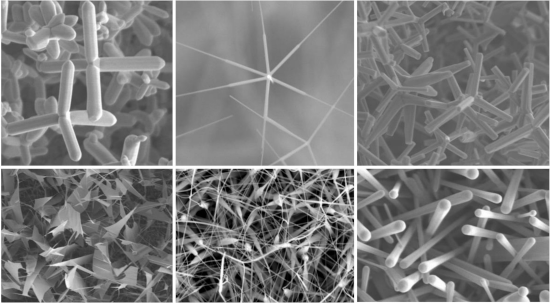
- comparison to other compounds [4][5][6]. Specifically, its large bandgap energy Eg ≈ 3.4 eV is comparable to GaN – a typical material for blue-light-emitting diode (LED) technology [7][8]. Also, its exciton binding energy is higher than the thermal energy at 300 K, and it has high-quality optical



A biomimetic approach towards a universal slippery liquid infused surface coating
Beilstein J. Nanotechnol. 2024, 15, 1376–1389, doi:10.3762/bjnano.15.111
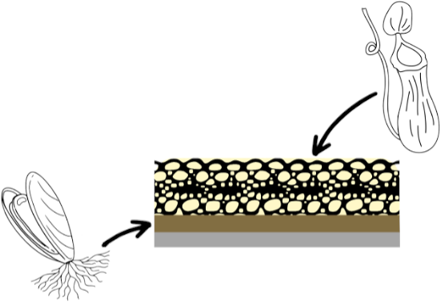
- reducing the potential for adverse effects. Factor XII, thrombin, and calcium are critical components of the coagulation cascade, and their removal represents a pathway for lowering thrombus formation due to contact with foreign materials. Each of these components has led to different approaches for the
- approximately 20% higher fiber diameter and 25% lower clot density than glass (Figure 9). PDA–FDT–PFD also led to significantly higher fiber diameter and lower clot density than BSA and COC, suggesting that clots formed on PDA–FDT–PFD are less stable and easier to break down than clots formed on glass, COC, and




Nanoarchitectonics with cetrimonium bromide on metal nanoparticles for linker-free detection of toxic metal ions and catalytic degradation of 4-nitrophenol
Beilstein J. Nanotechnol. 2024, 15, 1312–1332, doi:10.3762/bjnano.15.106
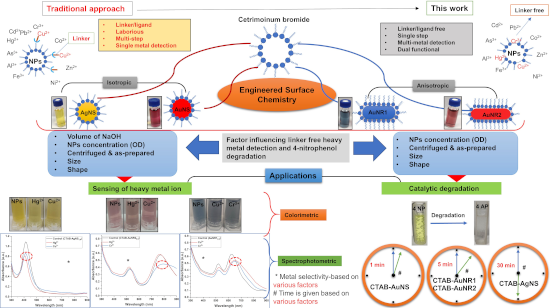
- and silver) nanoprobes are emerging as versatile colorimetric and spectrophotometric nanosensors for rapid detection/degradation of heavy metal ions and toxic pollutants that pose a serious challenge to environment and human health. Globally, acceleration of industrial growth and urbanization led to
- /mL CTAB, which changes in the case of centrifuged CTAB-AgNS to 856 µg/mL. Despite less CTAB on the silver nanoparticle surface, they showed excellent sensing capability even at lower nanoparticle concentration. The addition of NaOH (5–50 µL) to centrifuged CTAB-AgNS led to no selectivity toward metal




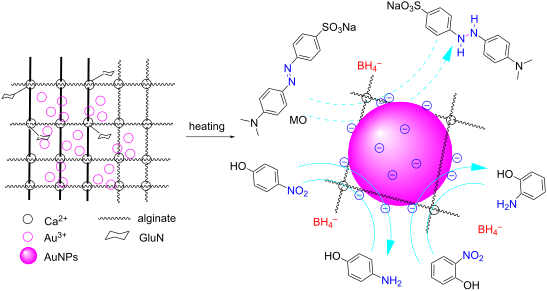
Enhanced catalytic reduction through in situ synthesized gold nanoparticles embedded in glucosamine/alginate nanocomposites
Beilstein J. Nanotechnol. 2024, 15, 1227–1237, doi:10.3762/bjnano.15.99
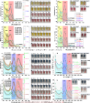
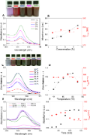
- on the formation of AuNPs@GluN/Alg. We explored the Au3+ ion-to-gel ratios ranging from 1% to 9% (w/w). The results indicate that the concentration of Au3+ ions profoundly influences the formation of stable AuNPs. An increase in Au3+ concentration led to a corresponding rise in the absorbance values



Synthesis, characterization and anticancer effect of doxorubicin-loaded dual stimuli-responsive smart nanopolymers
Beilstein J. Nanotechnol. 2024, 15, 1189–1196, doi:10.3762/bjnano.15.96
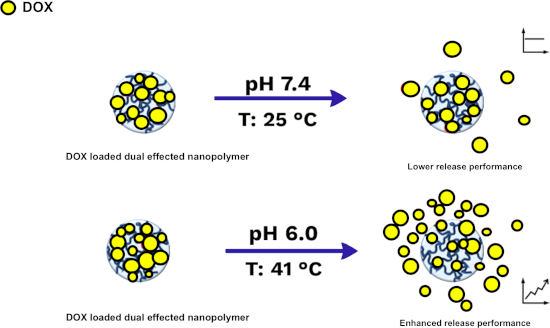
- corresponds to a concentration of free DOX in the solution of 2 µmol/L (5 µM/L of DOX × 0.4) as it is known that the basic drugs doxorubicin and mitoxantrone are concentrated in acidic endosomes of cells with pH approximately 5.5 [38]. Incubation for 96 h led to a decrease of viability of HeLa cells at 5 µmol


Quantum-to-classical modeling of monolayer Ge2Se2 and its application in photovoltaic devices
Beilstein J. Nanotechnol. 2024, 15, 1153–1169, doi:10.3762/bjnano.15.94
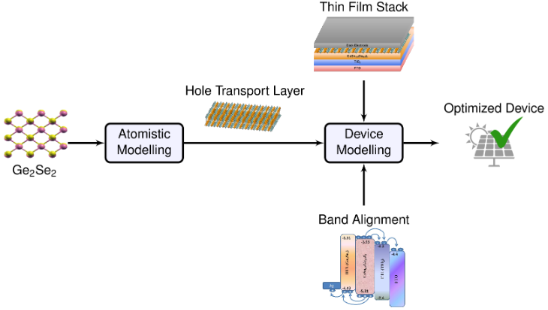
- in the last few decades has led to many successful breakthroughs in terms of the stability, efficiency, and cost of PV technology. In the past few decades, perovskite solar cells (PSCs) have emerged as a groundbreaking technology in the field of renewable energy because of their remarkable efficiency
- constants, refractive index, and extinction coefficient. The optimum bandgap (1.2 eV), high carrier mobility, and promising optical characteristics of monolayer Ge2Se2 further led us to investigate the application of the investigated structure. To show the application of monolayer Ge2Se2, a perovskite solar