Search results
Search for "Ne" in Full Text gives 111 result(s) in Beilstein Journal of Nanotechnology.
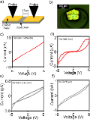
Preparation and characterization of polycarbonate/multiwalled carbon nanotube nanocomposites
Beilstein J. Nanotechnol. 2017, 8, 2026–2031, doi:10.3762/bjnano.8.203
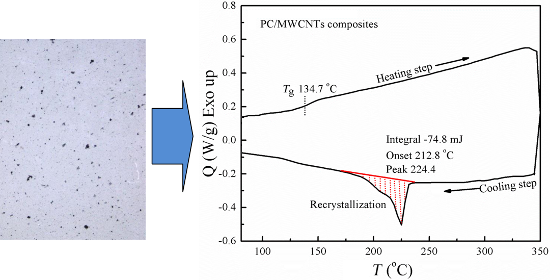
- normalized thereafter. Raman spectra were acquired with an inVia micro-Raman spectrometer by Renishaw, Gloucester, UK using a He–Ne laser excitation source emitting at a wavelength of 632.8 nm with a 20× objective. The data acquisition time was 30 s. The slit provided a spectral resolution of 1 cm−1


Evaluation of preparation methods for suspended nano-objects on substrates for dimensional measurements by atomic force microscopy
Beilstein J. Nanotechnol. 2017, 8, 1774–1785, doi:10.3762/bjnano.8.179
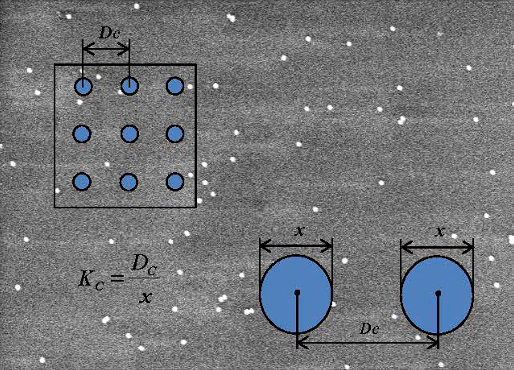
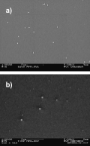
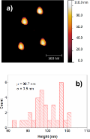
- transducer (PZT) while operating in closed loop [10]. The optical interferometer used for measuring the z-displacement is the National Physical Laboratory’s (NPL) Plane Mirror Differential Optical Interferometer (PMDOI) [11], a homodyne differential interferometer, fibre-fed with a He-Ne frequency stabilized
- the primary route to traceability for dimensional metrology, and in this case it is realized using a frequency-stabilized He-Ne laser [12]. This results in improved accuracy and traceability over commercial AFMs [11]. The measurements were carried out using the AFM in closed-loop, non-contact mode in


Effect of the fluorination technique on the surface-fluorination patterning of double-walled carbon nanotubes
Beilstein J. Nanotechnol. 2017, 8, 1688–1698, doi:10.3762/bjnano.8.169
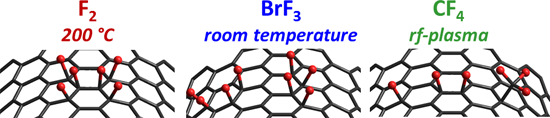
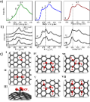
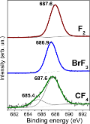
- ) approximation requires significantly less computer resources and well fits NEXAFS C K-spectra of fullerene C60, CNTs and their fluorinated derivatives [32][55][56]. Intensities of spectral lines were obtained by summing the squared coefficients at Ne 2p orbitals and broadened with Lorentzian functions of a



Uptake and intracellular accumulation of diamond nanoparticles – a metabolic and cytotoxic study
Beilstein J. Nanotechnol. 2017, 8, 1649–1657, doi:10.3762/bjnano.8.165
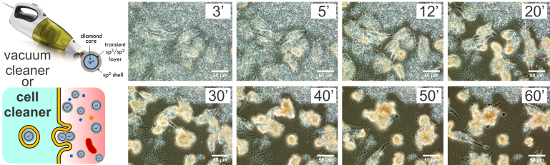
- diamond nanoparticles The size of the ND particles and their zeta potential was determined by dynamic light scattering (DLS) measurements in water at 25 °C using a Nano-ZetaSizer (Malvern, UK) equipped with an He-Ne laser. A separate disposable folded capillary cell was used for each set of ND


Group-13 and group-15 doping of germanane
Beilstein J. Nanotechnol. 2017, 8, 1642–1648, doi:10.3762/bjnano.8.164
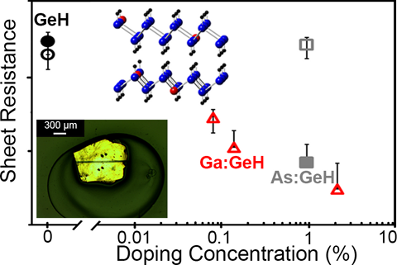
- Bruker D8 powder X-ray diffractometer. XRD was performed using with finely ground powders packed in capillaries. Raman spectroscopy was used to confirm vibrational modes using a Renishaw InVia Raman equipped with a CCD detector exciting with a 633 nm He–Ne laser. The relative elemental composition was



Surface functionalization of 3D-printed plastics via initiated chemical vapor deposition
Beilstein J. Nanotechnol. 2017, 8, 1629–1636, doi:10.3762/bjnano.8.162
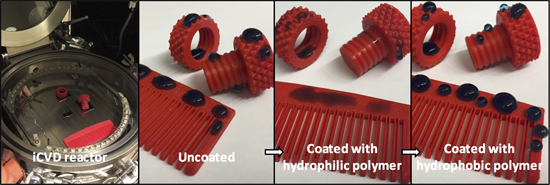
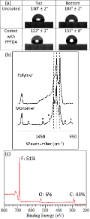
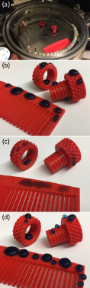
- ) array held at 31 mm above the substrates was resistively heated to 250 °C, unless otherwise stated, to thermally cleave the peroxide bond of the initiator. The deposition rate was monitored in situ via interferometry on a reference silicon wafer using a He–Ne laser (Industrial Fiber Optics, 633 nm). For



Oxidative stabilization of polyacrylonitrile nanofibers and carbon nanofibers containing graphene oxide (GO): a spectroscopic and electrochemical study
Beilstein J. Nanotechnol. 2017, 8, 1616–1628, doi:10.3762/bjnano.8.161
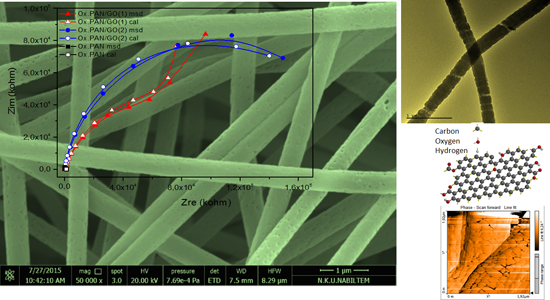
- via electrospinning using a mixture of PAN (10% w/v) and a given amount of GO (at different weight-to-volume percentages) in DMF. The solutions were poured into a 2 mL syringe and delivered at a constant flow rate of 1.0 mL/h (New era, NE-300) to a needle with a blunt tip connected to a high-voltage


A nanocomplex of C60 fullerene with cisplatin: design, characterization and toxicity
Beilstein J. Nanotechnol. 2017, 8, 1494–1501, doi:10.3762/bjnano.8.149
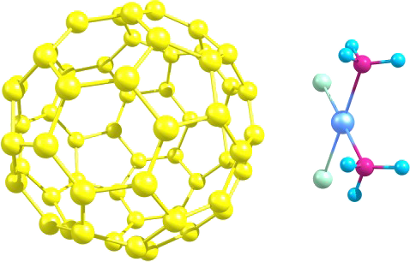
- of the hydrodynamic size distribution was performed by dynamic light scattering (DLS) on a Zetasizer Nano ZS (Malvern Ins. Ltd) with upload of multiple narrow modes (high resolution) at room temperature. The instrument is equipped with a He–Ne gas laser (max. output power 5 mW) operating at a



Relationships between chemical structure, mechanical properties and materials processing in nanopatterned organosilicate fins
Beilstein J. Nanotechnol. 2017, 8, 863–871, doi:10.3762/bjnano.8.88

- , Intel Corporation, Hillsboro OR 97124, USA Logic Technology Development, Intel Corporation, 5200 NE Elam Young Parkway, Hillsboro OR 97124, USA 10.3762/bjnano.8.88 Abstract The exploitation of nanoscale size effects to create new nanostructured materials necessitates the development of an understanding



Liquid permeation and chemical stability of anodic alumina membranes
Beilstein J. Nanotechnol. 2017, 8, 561–570, doi:10.3762/bjnano.8.60
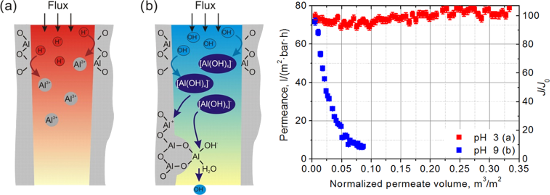
- matrix using a Zeiss Libra 200 FX instrument. Raman spectroscopy studies were carried out on a Renishaw InVia spectrometer using He–Ne laser excitation (633 nm). 27Al NMR spectra were recorded on a Bruker AVANCE II 400WB spectrometer at 104.3 MHz, using 0.7 ms (15°) pulses and 0.5 s recycle delays with


Diffusion and surface alloying of gradient nanostructured metals
Beilstein J. Nanotechnol. 2017, 8, 547–560, doi:10.3762/bjnano.8.59
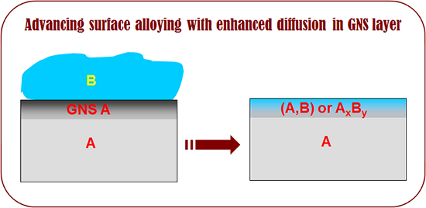
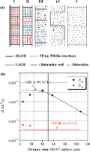
- diffusion (GB) [35], and the diffusion in GNS Fe (NE-GB) [31] were also included. Figure reproduced with permission from [32], copyright 2005 Elsevier. (a) A schematic illustration of the gradient microstructure of grain size and interface in the GNS surface layer of a SMAT Cu sample, and (b) variation in




Nanocrystalline TiO2/SnO2 heterostructures for gas sensing
Beilstein J. Nanotechnol. 2017, 8, 108–122, doi:10.3762/bjnano.8.12
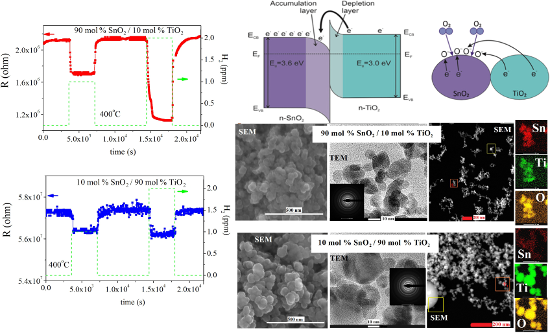
- interaction with hydrogen and can be described in detail as follows [1][37]: Applying the law of mass action to Equations 5–7 yields: where ne denotes the concentration of electrons, and K1, K2, K3 are the equilibrium constants of the reactions described by Equations 5–7. The concentration of adsorbed oxygen
- electrical resistivity reduces to ρ = 1/(e·μe·ne) for n-type semiconductors, the 1/R(pH2) dependence assumes the same form as ne(pH2) does (Equations 8–10). Thus, n = 1/2, 1 or 2 are theoretically predicted for different oxygen species preadsorbed on the surface of the semiconductor. In the case of formation




Graphene–polymer coating for the realization of strain sensors
Beilstein J. Nanotechnol. 2017, 8, 21–27, doi:10.3762/bjnano.8.3
- , equipped with a liquid nitrogen-cooled charge-coupled detector. The grating with 1800 grooves/mm allows for a final spectral resolution of 4 cm−1. The spectra were recorded in air at room temperature using a 17 mW He–Ne (λ = 632.8 nm) laser source. The laser light was focused to a 10 μm spot size on the


Streptavidin-coated gold nanoparticles: critical role of oligonucleotides on stability and fractal aggregation
Beilstein J. Nanotechnol. 2017, 8, 1–11, doi:10.3762/bjnano.8.1
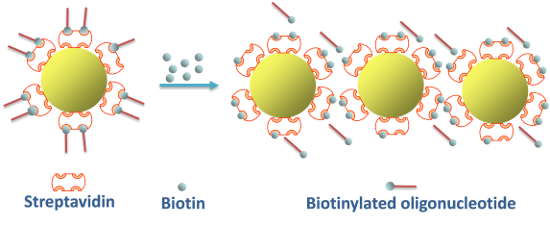
- a Zetasizer Nano ZS ZEN3600 (Malvern Instruments, Malvern, UK) instrument equipped with a 4 mW He–Ne laser operating at 633 nm and an avalanche photodiode detector (APD) (quantum efficiency >50% at 633 nm). Measurements were performed at 25 °C by using aqueous AuNP solutions filtered with a 0.45 µm




Evolution of the graphite surface in phosphoric acid: an AFM and Raman study
Beilstein J. Nanotechnol. 2016, 7, 1878–1884, doi:10.3762/bjnano.7.180
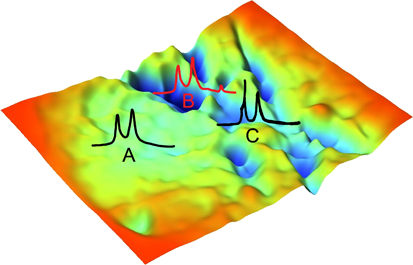
- . Spectra were acquired in backscattering geometry using a 50× objective with different excitation lines (457.9 nm Ar+ laser, 632.8 nm He–Ne laser, 784.5 nm diode laser). CV in H3PO4 at different EC potential ranges (scan rate = 150 mV/s). a) First (continuous line) and second (dash-dotted line) scan from


Numerical investigation of depth profiling capabilities of helium and neon ions in ion microscopy
Beilstein J. Nanotechnol. 2016, 7, 1749–1760, doi:10.3762/bjnano.7.168
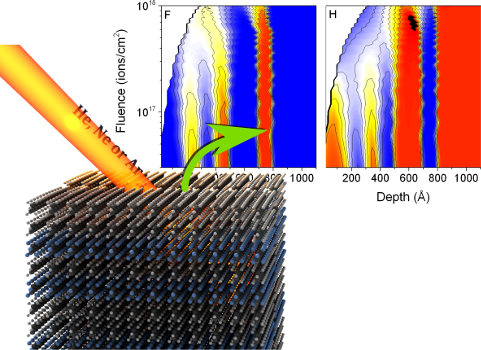
- lateral resolution for 2D and 3D imaging. By contrast the development of a mass spectrometer as an add-on tool for the helium ion microscope (HIM), which uses finely focussed He+ or Ne+ beams, allows for the analysis of secondary ions and small secondary cluster ions with unprecedented lateral resolution
- depth profiling applications of multi-layered polymer samples, or organic samples in general. Depth profiling using 20 keV Ne+ and Ar+ Ne+ and Ar+ primary ions are much heavier than He+ ions, leading to higher sputtering rates and lower implantation depths than the latter. This improves their abilities
- for depth profiling capabilities. Ar+ ions have already been used for applications in SIMS [31][32], especially before the development of cluster ion beams [33]. In this paragraph we are going to compare them to Ne+ ions which are going to be used on the HIM for similar applications. Although the


Development of adsorptive membranes by confinement of activated biochar into electrospun nanofibers
Beilstein J. Nanotechnol. 2016, 7, 1556–1563, doi:10.3762/bjnano.7.149
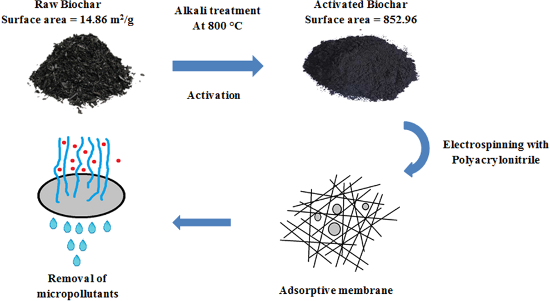
- Solutions Inc., 2300, rue Jean-Perrin, Québec, Québec G2C 1T9, Canada Department of Civil Engineering, University of Nebraska-Lincoln, N104 SEC PO Box 886105, Lincoln, NE 68588-6105, USA 10.3762/bjnano.7.149 Abstract Adsorptive membranes have many applications in removal of contaminants, such as heavy




Antitumor magnetic hyperthermia induced by RGD-functionalized Fe3O4 nanoparticles, in an experimental model of colorectal liver metastases
Beilstein J. Nanotechnol. 2016, 7, 1532–1542, doi:10.3762/bjnano.7.147
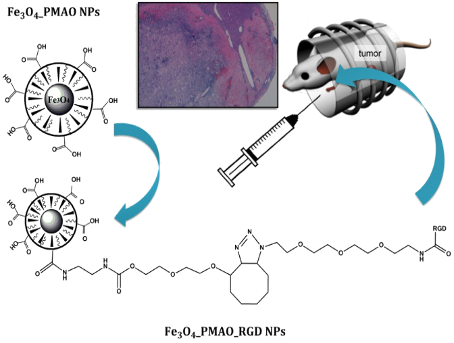
- acceleration voltage of 200 kV. Dynamic light scattering (DLS) measurements were carried out at 25 °C with a Nano ZS (Malvern Instruments) equipped with a solid-state He-Ne laser (λ = 633 nm) to determine the hydrodynamic diameter of the hydrosoluble NPs. The FTIR spectra of the nanoparticles and ligands were


Electric field induced structural colour tuning of a silver/titanium dioxide nanoparticle one-dimensional photonic crystal
Beilstein J. Nanotechnol. 2016, 7, 1404–1410, doi:10.3762/bjnano.7.131
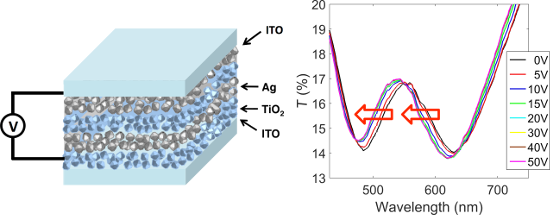
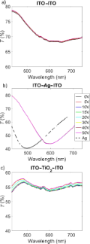
- , effectively increase the carrier density involved in the plasma frequency, as schematically depicted in Figure 5. Moreover, a second contribution can be the flow of charges in the silver layers due to the electric field itself. In this way, we have the carrier density with the electric field (NE) versus the
- initial carrier density (N), such that NE > N. The Drude model can be used to predict the behaviour of the plasmonic response in the photonic crystal [19]. The frequency-dependent complex dielectric function of silver can be written as where and with Γ representing the free carrier damping [20]. The
- an estimate of the number of charges introduced with an applied voltage of 40 V (Supporting Information File 1, Figure S6), we had to increase the carrier density to the value of NE = 6.86 × 1028 m−3. This resulted in a difference of ΔN = 1.1 × 1028 m−3. Taking into account that the five silver




Experimental and simulation-based investigation of He, Ne and Ar irradiation of polymers for ion microscopy
Beilstein J. Nanotechnol. 2016, 7, 1113–1128, doi:10.3762/bjnano.7.104
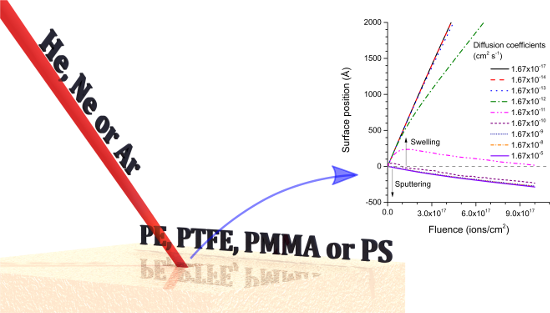
- the helium ion microscope (HIM) promises higher lateral resolution than on classical SIMS instruments. However, full advantage of this new technique can only be obtained when the interaction of He+ or Ne+ primary ions with the sample is fully controlled. In this work we investigate how He+ and Ne
- , Ne and Ar in polymers are sufficiently high to prevent any accumulation of rare gas atoms in the polymers which could lead to some swelling and bubble formation. Roughness formation was also not observed. Preferential sputtering is more of a problem, with enrichment of carbon up to surface
- + steady state conditions are reached for fluences much higher than 1018 ions/cm2. For Ne+ and Ar+, the transient regime extends up to fluences of 1017–1018 ions/cm2. Hence, preferential sputtering needs to be taken into account when interpreting images recorded under He+ or Ne+ bombardment on the HIM


Unraveling the neurotoxicity of titanium dioxide nanoparticles: focusing on molecular mechanisms
Beilstein J. Nanotechnol. 2016, 7, 645–654, doi:10.3762/bjnano.7.57
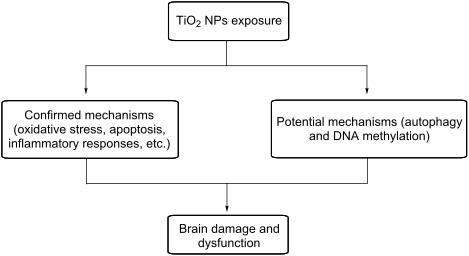
- activities of Na+/K+-ATPase, Ca2+-ATPase, and Ca2+/Mg2+-ATPase also decreased, and the levels of neurotransmitters, including acetyl choline (Ach), glutamic acid (Glu), and NO were elevated. The expression of monoamine neurotransmitters consisting of norepinephrine (NE), dopamine (DA), dihydroxyphenylacetic
Calculations of helium separation via uniform pores of stanene-based membranes
Beilstein J. Nanotechnol. 2015, 6, 2470–2476, doi:10.3762/bjnano.6.256
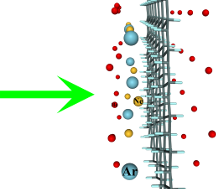
- three membranes are equal to the lattice constants. Additionally, the 2D Sn, SnH, and SnF structures possess a concentration of pores significantly higher than that of porous graphene or silicene [11][12][13]. Next, we investigated the minimum pathway for noble gases (He, Ne and Ar) penetrating through
- , Ne and Ar passing through the 2D Sn are 0.75, 1.39 and 3.09 eV, respectively. Clearly, the selectivity is high, but the penetration barrier for He through pristine 2D Sn is quite high, indicating a low permeability at room temperature. Since the pore size is critical for gas penetration, a small
- tensile strain applied to the 2D Sn is expected to increase the penetration efficiency of noble gases. Under 5% strain, the penetration barrier for He, Ne and Ar is significantly decreased to 0.51, 0.94 and 2.38 eV, respectively. When the strain on 2D Sn is further increased to 8%, the penetration barrier


Surface-enhanced Raman scattering by colloidal CdSe nanocrystal submonolayers fabricated by the Langmuir–Blodgett technique
Beilstein J. Nanotechnol. 2015, 6, 2388–2395, doi:10.3762/bjnano.6.245
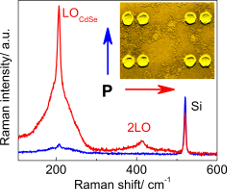
- same substrate but without dimer arrays was used as a reference. Micro-Raman experiments were performed with a LabRam spectrometer in backscattering geometry at 300 K. The excitation wavelength of λexc = 632.8 nm (provided by a He–Ne laser) was used in the Raman experiments. The laser light incident on


Green and energy-efficient methods for the production of metallic nanoparticles
Beilstein J. Nanotechnol. 2015, 6, 2354–2376, doi:10.3762/bjnano.6.243
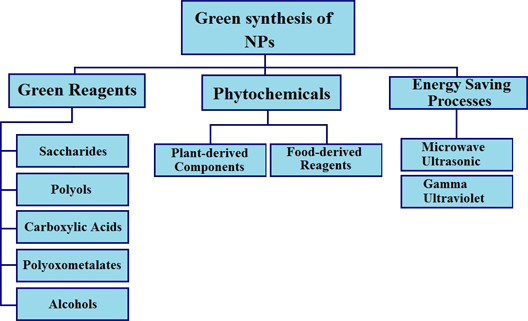
- -Lincoln, N104 SEC PO Box 886105, Lincoln, NE 68588-6105, USA 10.3762/bjnano.6.243 Abstract In the last decade, researchers paid great attention to the concept of “Green Chemistry”, which aims at development of efficient methods for the synthesis of nanoparticles (NPs) in terms of the least possible


Nanofibers for drug delivery – incorporation and release of model molecules, influence of molecular weight and polymer structure
Beilstein J. Nanotechnol. 2015, 6, 1939–1945, doi:10.3762/bjnano.6.198
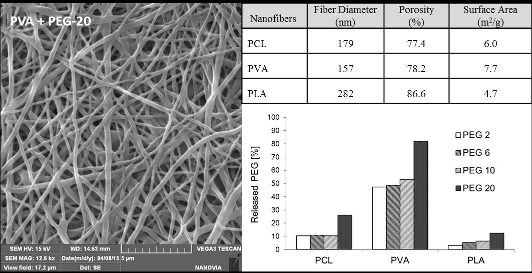
- were obtained from Sigma, St. Louis, MO, USA. PVA was provided by Nippon Gohsei, Osaka, Japan. PLA (Mw ≈ 100 kDa) was kindly provided as a sample from Natureworks, Blair, NE, USA. Phosphoric acid (85 wt % aqueous solution), N,N-dimethylformamide, tetrahydrofuran and dichloromethane were obtained from