


Search results
Search for "alcohol" in Full Text gives 276 result(s) in Beilstein Journal of Nanotechnology. Showing first 200.
Hierarchical Bi2WO6/TiO2-nanotube composites derived from natural cellulose for visible-light photocatalytic treatment of pollutants
Beilstein J. Nanotechnol. 2022, 13, 745–762, doi:10.3762/bjnano.13.66
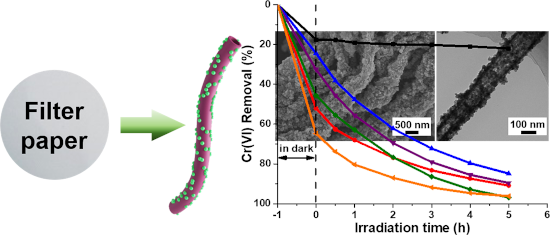
- , anhydrous ethanol, acetone, barium sulfate (BaSO4), rhodamine B, isopropyl alcohol (IPA), N-methylpyrrolidone, ethylenediaminetetraacetic acid disodium salt (EDTA-2Na), silver nitrate (AgNO3), sodium sulfate (Na2SO4), ethylene glycol (EG), potassium dichromate (K2Cr2O7), phosphoric acid (H3PO4), and


A nonenzymatic reduced graphene oxide-based nanosensor for parathion
Beilstein J. Nanotechnol. 2022, 13, 730–744, doi:10.3762/bjnano.13.65
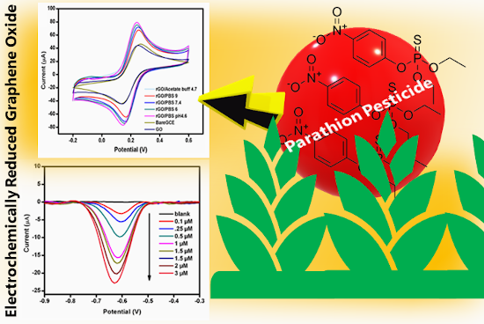
- alcohol for 2 min, and finally dried in air. The as-prepared GO colloidal suspension (2 mg·mL−1) was deposited onto the surface of the pretreated GCE and dried at room temperature. The GO/GCE was submerged in 50 mM PBS, pH 4.6, for the electrochemical reduction of GO by a potentiostat technique at a


Comparative molecular dynamics simulations of thermal conductivities of aqueous and hydrocarbon nanofluids
Beilstein J. Nanotechnol. 2022, 13, 620–628, doi:10.3762/bjnano.13.54
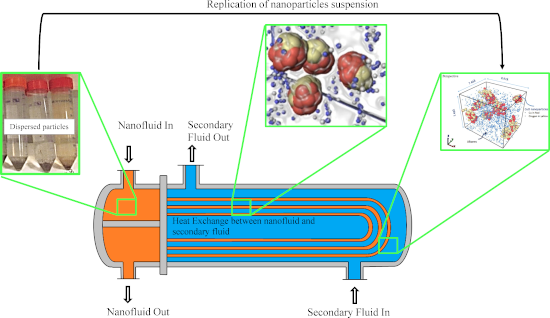
- perspective, optimized alcohol-based nanofluids are being used in internal combustion engines. For this purpose, Cu nanoparticles have been used with ethanol, ethylene glycol, and polypropylene glycol [55]. Conclusion This study presents useful information regarding the usage of molecular dynamics simulations


Sodium doping in brookite TiO2 enhances its photocatalytic activity
Beilstein J. Nanotechnol. 2022, 13, 599–609, doi:10.3762/bjnano.13.52
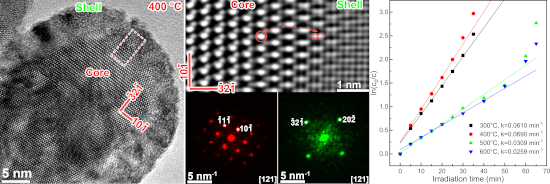
- ]. The morphology and the chemical composition of the products were characterized by a field-emission scanning electron microscope (Hitachi S-4800) equipped with an energy-dispersive X-ray spectroscope working at 10 kV and 10 μA. Samples were dispersed into ethyl alcohol and then sprayed on a silicon


Ciprofloxacin-loaded dissolving polymeric microneedles as a potential therapeutic for the treatment of S. aureus skin infections
Beilstein J. Nanotechnol. 2022, 13, 517–527, doi:10.3762/bjnano.13.43
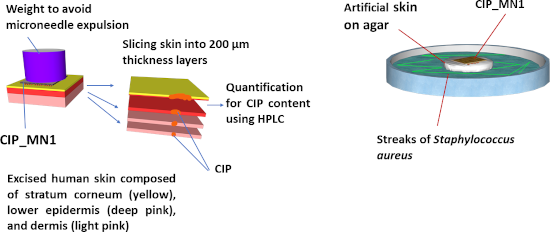
- dissolving polymeric microneedles prepared by a two-layer centrifugation method as a potential treatment of skin infections such as cellulitis. The polymers used were polyvinyl alcohol (PVA) and polyvinylpyrrolidone (PVP). Two formulations were investigated, namely CIP_MN1, composed of 10 mg ciprofloxacin
- results suggest that CIP_MN1 can be a potential delivery system for the treatment of S. aureus skin infections. Keywords: dissolving microneedles; microneedles; polyvinyl alcohol (PVA); polyvinylpyrrolidone (PVP); skin infection; Introduction Topical and transdermal drug delivery is a major route for


Design and characterization of polymeric microneedles containing extracts of Brazilian green propolis
Beilstein J. Nanotechnol. 2022, 13, 503–516, doi:10.3762/bjnano.13.42
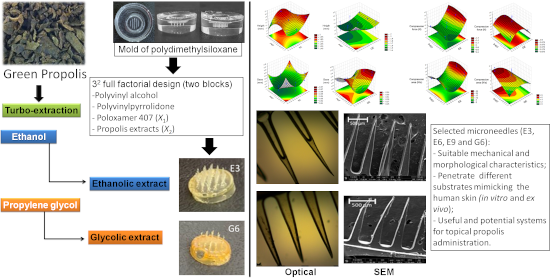
- taken orally, the extracts have a strong and unpleasant taste. The aim of this work was to fabricate and characterize microneedles containing polyvinyl alcohol, polyvinylpyrrolidone, poloxamer P407, and an ethanolic or glycolic extract of PRP. Also, the obtained structures were microscopically and
- and lower toxicity [26][27]. In our previous studies, polymeric systems composed of polyvinyl alcohol (PVA), polyvinylpyrrolidone (PVP), and poloxamer 407 (P407) were obtained and characterized. P407 could improve structuring and rapid dispersion of polymeric matrices, which showed promising
- from Sigma (St. Louis, MO, USA). Polyvinyl alcohol (PVA) was obtained from Neon (Sao Paulo, SP, Brazil), polyvinylpyrrolidone (PVP), and ethanol 96° GL was purchased from Labsynth (Sao Paulo, SP, Brazil). SylgardTM 184 silicone elastomers kit (polydimethylsiloxane; PDMS) was purchased from Dow (Midland


A chemiresistive sensor array based on polyaniline nanocomposites and machine learning classification
Beilstein J. Nanotechnol. 2022, 13, 411–423, doi:10.3762/bjnano.13.34
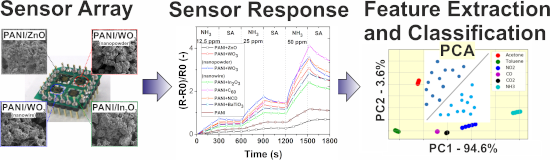
- , the sensor array platforms were cleaned in acetone and isopropyl alcohol for 15 min and then exposed to hexamethyldisilazane (HMDS) for 2 h to improve the adhesion of sensing layers. Figure 14 demonstrates the top view of sensor array with nanocomposite sensing layers and the bottom view with heating




Micro- and nanotechnology in biomedical engineering for cartilage tissue regeneration in osteoarthritis
Beilstein J. Nanotechnol. 2022, 13, 363–389, doi:10.3762/bjnano.13.31
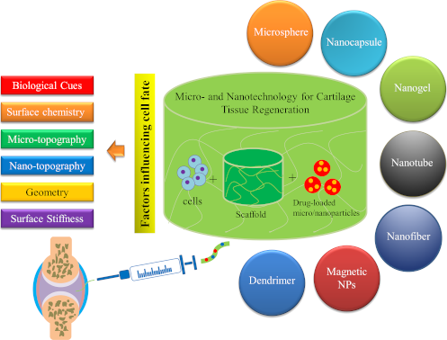
- alcohol) (PVA), nanoscale hydroxyapatite, and magnetic NPs (Fe2O3) has also shown that the incorporation of NPs enhances the mechanical properties of the scaffold and regulates the behavior of cells seeded in the nanocomposites [61]. A magnetic hydrogel-based nanocomposite can provide a promising scaffold


Alcohol-perturbed self-assembly of the tobacco mosaic virus coat protein
Beilstein J. Nanotechnol. 2022, 13, 355–362, doi:10.3762/bjnano.13.30
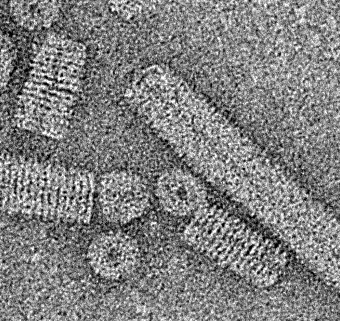
- Ismael Abu-Baker Amy Szuchmacher Blum Department of Chemistry, McGill University, Montréal, Québec, Canada 10.3762/bjnano.13.30 Abstract The self-assembly of the tobacco mosaic virus coat protein is significantly altered in alcohol–water mixtures. Alcohol cosolvents stabilize the disk aggregate
- and prevent the formation of helical rods at low pH. A high alcohol content favours stacked disk assemblies and large rafts, while a low alcohol concentration favours individual disks and short stacks. These effects appear to be caused by the hydrophobicity of the alcohol additive, with isopropyl
- alcohol having the strongest effect and methanol the weakest. We discuss several effects that may contribute to preventing the protein–protein interactions between disks that are necessary to form helical rods. Keywords: alcohol; hydrophobic effect; protein assembly; self-assembly; tobacco mosaic virus


Surfactant-free syntheses and pair distribution function analysis of osmium nanoparticles
Beilstein J. Nanotechnol. 2022, 13, 230–235, doi:10.3762/bjnano.13.17
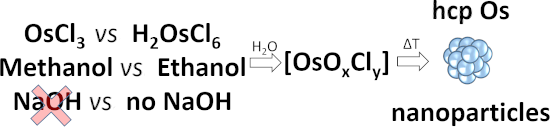
- Information File 1). As opposed to the case of Pt NP synthesis, the Os NP size is also not affected by the alcohol used as reductant, as similar NP sizes are obtained when considering the TEM results (comparing Figure S6 and Figure S8, Supporting Information File 1). This result is confirmed by size analysis
- of Os NPs in 1:2 alcohol/water ratios and for different precursors as indicated. The PDFs can be described using a hcp model. Fit of a hcp cluster (seen in the insert) to the PDF obtained from the Os NPs formed in methanol/water from OsCl3. (a) Measured PDF of OsCl3 in methanol/water. The insert
- shows the same PDF plotted to 21 Å. (b) Overall formation mechanism of the hcp Os NPs. The Os chloride precursor reacts with the alcohol/water mixture to form chain-like structures of [OsOxCly]-octahedra, which after a long incubation time form Os NPs. Os, Cl, and O atoms are shown in grey, green, and


A comprehensive review on electrospun nanohybrid membranes for wastewater treatment
Beilstein J. Nanotechnol. 2022, 13, 137–159, doi:10.3762/bjnano.13.10
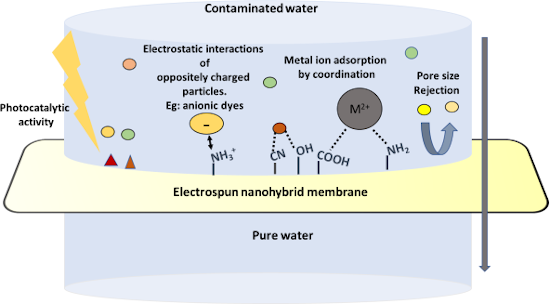
- common synthetic polymer membranes such as polycaprolactone (PCL), polyacrylonitrile (PAN), polyacrylic acid (PAA), polysulfones (PSF), polyimides (PI), polyvinyl alcohol (PVA), polystyrene (PS), polyethylene oxide (PEO), poly(vinylidene fluoride) (PVDF) and natural polymers such as gelatin, keratin




Tin dioxide nanomaterial-based photocatalysts for nitrogen oxide oxidation: a review
Beilstein J. Nanotechnol. 2022, 13, 96–113, doi:10.3762/bjnano.13.7
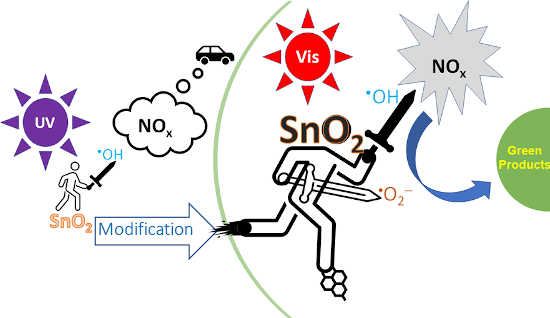
- ). Growth curves of •OH radicals (e) and •O2− radicals (f) vs irradiation time of the materials. The charge transfer pathways of the materials (g). K2Cr2O7, KI, and isopropyl alcohol (IPA) act as scavengers for electrons, holes, and •OH radicals, respectively. The brown and green arrows indicate the path of


Nanoscale friction and wear of a polymer coated with graphene
Beilstein J. Nanotechnol. 2022, 13, 63–73, doi:10.3762/bjnano.13.4
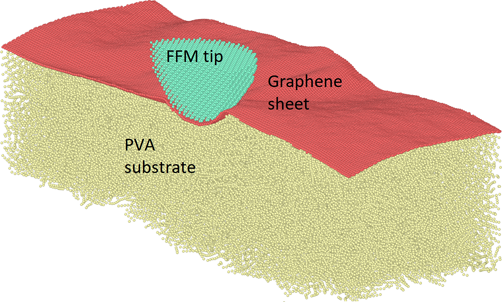
- challenging problem due to the complex viscoelastic properties and structure. Using molecular dynamics simulations, we investigate how a graphene sheet on top of the semicrystalline polymer polyvinyl alcohol affects the friction and wear. Our setup is meant to resemble an AFM experiment with a silicon tip. We
- of depositing, indenting, and sliding on graphene. In the final section, we draw some conclusions. Simulation Setup We simulate a slab of polyvinyl alcohol (PVA) coated with a single layer of graphene and a counterbody representing an AFM tip consisting of silicon. The simulations were performed
- by this mechanism, as it is harder to penetrate. Coarse grained model for polyvinyl alcohol (PVA, C2H4O)x). Red atoms are oxygen, dark gray are carbon, and light gray are hydrogen. One green circle represents one coarse-grained particle, which replaces the group of atoms C2H4O. Snapshot of the


Polarity in cuticular ridge development and insect attachment on leaf surfaces of Schismatoglottis calyptrata (Araceae)
Beilstein J. Nanotechnol. 2021, 12, 1326–1338, doi:10.3762/bjnano.12.98
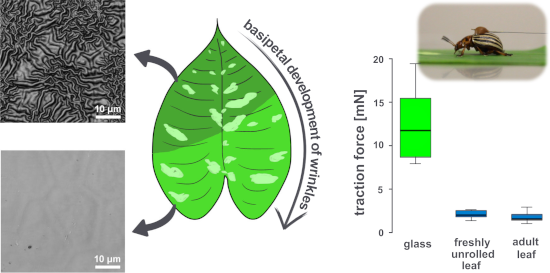
- growth stages. Insect traction experiments Insect walking frictional forces were measured on a freshly unrolled (stage 3) and an adult (stage 4) S. calyptrata leaf and were compared with the forces on a clean glass slide. The glass slide was cleaned with acetone followed by isopropyl alcohol before




Electrical, electrochemical and structural studies of a chlorine-derived ionic liquid-based polymer gel electrolyte
Beilstein J. Nanotechnol. 2021, 12, 1252–1261, doi:10.3762/bjnano.12.92
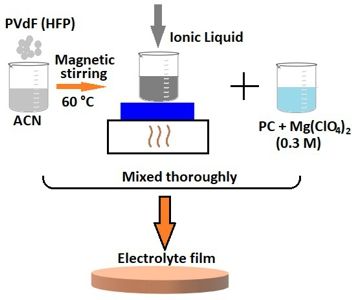
- -dimethylimidazolium chloride ([BDiMIM][Cl]), tested its application in polymer electrolytes, and obtained a maximum room-temperature conductivity of 2.7 × 10⁻⁶ S·cm−1. Among various polymer matrix systems, such as polyethylene oxide (PEO) [18][19], polyvinyl alcohol (PVA) [20][21], and polyvinylpyrrolidone (PVP) [22



Morphology-driven gas sensing by fabricated fractals: A review
Beilstein J. Nanotechnol. 2021, 12, 1187–1208, doi:10.3762/bjnano.12.88
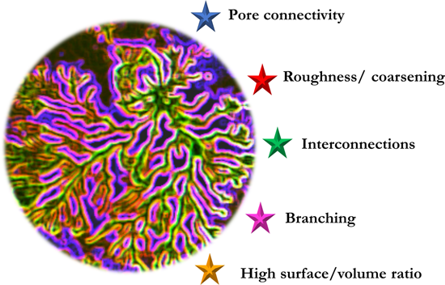
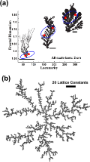
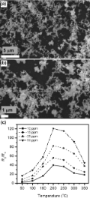
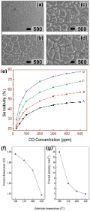
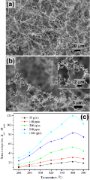
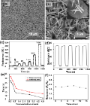
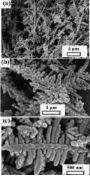
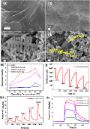
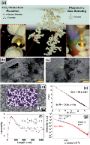
- geometry. Plugotarenko et al. employed sol–gel method to prepare SiO2·SnOx·CuOy nanofilms from a tetraethoxysilane (TEOS) alcohol solution modified by metal salts and applied the samples for NO2 sensing [50]. The SiO2·SnOx·CuOy films annealed at 500 °C exhibited a sample surface consisting of crater-like










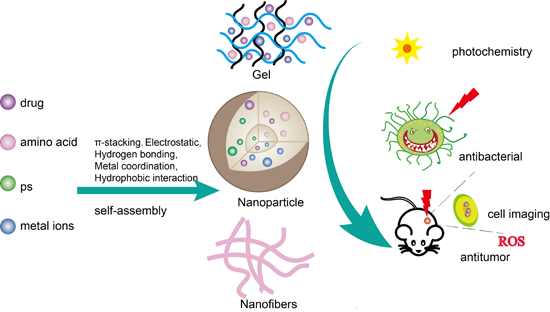
Self-assembly of amino acids toward functional biomaterials
Beilstein J. Nanotechnol. 2021, 12, 1140–1150, doi:10.3762/bjnano.12.85
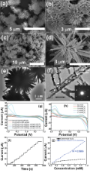
- alcohol dehydrogenase may be incorporated into Cys microspheres, resulting in hybrid microspheres with photocatalytic and biocatalytic activities. In addition, Cys/Zn microspheres were modified with CO32−-doped ZnS nanocrystals by a hydrothermal treatment, and then glutamic acid dehydrogenase was

Revealing the formation mechanism and band gap tuning of Sb2S3 nanoparticles
Beilstein J. Nanotechnol. 2021, 12, 1021–1033, doi:10.3762/bjnano.12.76
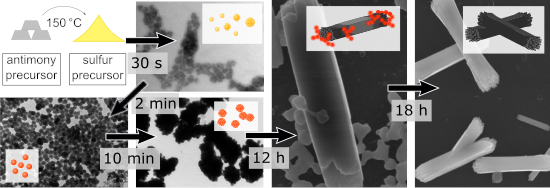
- with a 14-gauge cannula (L = 200 mm, neoLab). Materials Sb(III)Cl3 (>99.95%), sulfur (99.98%), EHA (>99%), paraffin oil (d = 0.827–0.890 g/mL), OlAm (70%), and isopropyl alcohol (IPA, 99.5%) were obtained from Sigma-Aldrich. Hexane (>98%) was purchased from Alfa Aesar, chlorobenzene (>99%) from Merck


Self-assembly of Eucalyptus gunnii wax tubules and pure ß-diketone on HOPG and glass
Beilstein J. Nanotechnol. 2021, 12, 939–949, doi:10.3762/bjnano.12.70
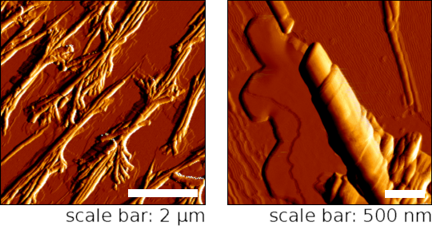
- morphological characteristics, different tubule types were distinguished. Most tubules belong to the group of secondary alcohol tubules, predominantly containing nonacosanol and homologues, or to the group of ß-diketone tubules, containing high amounts of ß-diketones, such as hentriacontane-14,16-dione
- structure [13][18]. Secondary alcohol tubules evolved in all major groups of land plants and design durable superhydrophobic surfaces (e.g., the Lotus Effect). In vitro recrystallization experiments with single wax components of these tubules showed that tubules were formed by secondary alcohols plus at
- least 2% of diols [25]. The expected arrangements of the tubule-forming molecules are bended layers of nonacosanol and alkanediol. Within these layers, the hydroxyl groups of the alcohol molecules function as spacers in the tightly packed layer, leading to a curvature of the layer and eventually to the


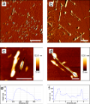


The role of deep eutectic solvents and carrageenan in synthesizing biocompatible anisotropic metal nanoparticles
Beilstein J. Nanotechnol. 2021, 12, 924–938, doi:10.3762/bjnano.12.69
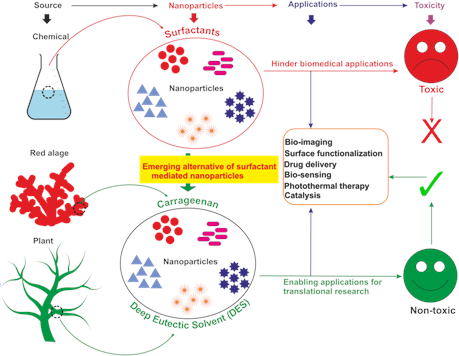
- application. For example, Gutiérrez et al. synthesized porous carbon using p-toluenesulfonic acid and choline chloride in a molar ratio of 1:1 [88]. The DES used served as solvent and catalyst for the condensation of furfuryl alcohol, followed by carbonization resulting in the formation of pores. Oh et al


Modification of a SERS-active Ag surface to promote adsorption of charged analytes: effect of Cu2+ ions
Beilstein J. Nanotechnol. 2021, 12, 902–912, doi:10.3762/bjnano.12.67
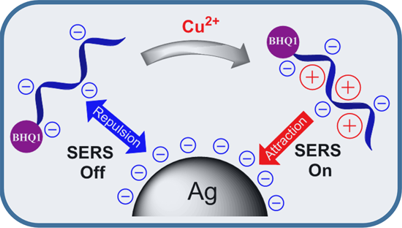
- of (3-chloropropyl)trichlorosilane in water-free toluene (2% by mass) for 24 h and rinsed several times with dry toluene, then with isopropyl alcohol, and dried at room temperature. The chloropropyl-functionalized substrates were then modified with PEI by soaking in 10% (by mass) polymer solution in


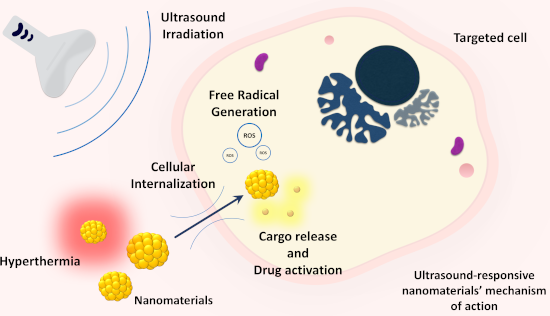
Comprehensive review on ultrasound-responsive theranostic nanomaterials: mechanisms, structures and medical applications
Beilstein J. Nanotechnol. 2021, 12, 808–862, doi:10.3762/bjnano.12.64


Stability and activity of platinum nanoparticles in the oxygen electroreduction reaction: is size or uniformity of primary importance?
Beilstein J. Nanotechnol. 2021, 12, 593–606, doi:10.3762/bjnano.12.49
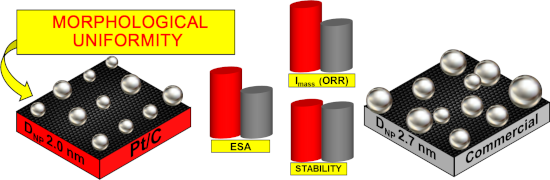
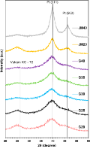
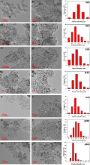
- suspension of Pt/C catalysts (i.e., "catalytic ink"), 900 μL of isopropyl alcohol and 100 μL of a 0.5% aqueous emulsion of Nafion® polymer were added to 6 mg of each sample. Then, the suspension was dispersed with ultrasound for 15 min. Under continuous stirring, an aliquot of “ink” of 6 μL in volume was


A review on the green and sustainable synthesis of silver nanoparticles and one-dimensional silver nanostructures
Beilstein J. Nanotechnol. 2021, 12, 102–136, doi:10.3762/bjnano.12.9
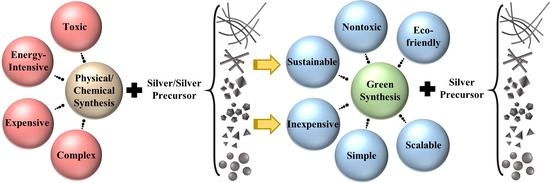
- AgNPs from 5 to 45 nm using the same method. In more recent works by Tseng et al. [132][133], AgNPs were produced using a micro-electrical discharge machining system and by adding polyvinyl alcohol (PVA) as the capping agent. They obtained AgNPs with a diameter of 50–100 nm when PVA was not used, and a
- ]. In the sol–gel method, a gel-like mixture is first prepared by mixing the silver precursor solution with a metal complex compound (i.e. comprised of Ca, Ti, Sr, etc.) [143][144] in a solvent such as water or alcohol. Then the product is heated in order for the nucleation and reaction to take place


The role of gold atom concentration in the formation of Cu–Au nanoparticles from the gas phase
Beilstein J. Nanotechnol. 2021, 12, 72–81, doi:10.3762/bjnano.12.6
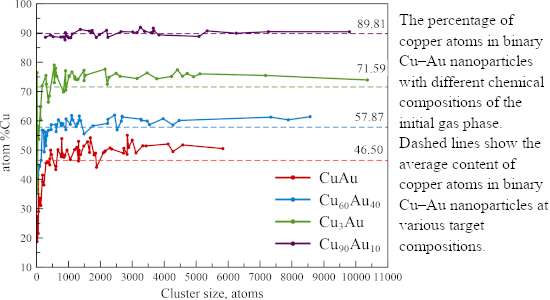
- oxidation of benzyl alcohol to benzaldehyde and in the epoxidation of propene with nitrous oxide. Moreover, in experimental and theoretical works [9], it was clearly shown that the partial substitution of copper with gold leads to a change in the physicochemical properties in many cases. For example, there





