


Search results
Search for "animals" in Full Text gives 158 result(s) in Beilstein Journal of Nanotechnology.
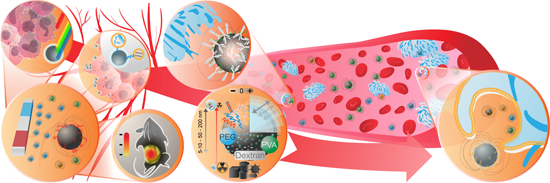
Applications of superparamagnetic iron oxide nanoparticles in drug and therapeutic delivery, and biotechnological advancements
Beilstein J. Nanotechnol. 2020, 11, 1092–1109, doi:10.3762/bjnano.11.94


Plant growth regulation by seed coating with films of alginate and auxin-intercalated layered double hydroxides
Beilstein J. Nanotechnol. 2020, 11, 1082–1091, doi:10.3762/bjnano.11.93
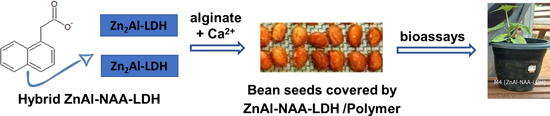
- applied to plantations in higher doses than recommended. These high doses can cause environmental problems such as contamination of soil, water, plants, and animals. The intercalation of agrochemicals in LDHs can generate a sustained release of the organic compounds, reducing the number of applications



Uniform Fe3O4/Gd2O3-DHCA nanocubes for dual-mode magnetic resonance imaging
Beilstein J. Nanotechnol. 2020, 11, 1000–1009, doi:10.3762/bjnano.11.84
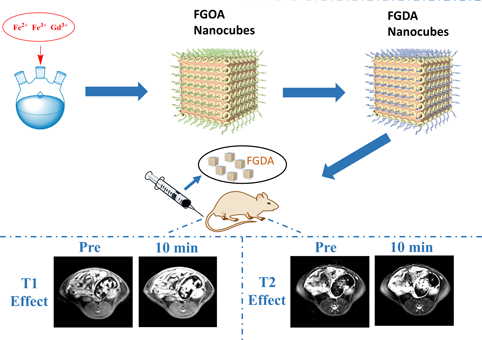
- cause significant side effects in cells or animals. In vivo T1WI and T2WI images showed that FGDA nanocubes can be used as a T1–T2 dual-mode contrast agent in MRI. Collectively, the results show that FGDA nanocubes may serve as a potential MRI tracker in research and clinical settings. In the future
- received FGDA nanocubes as the contrast agent. The animals were anesthetized with 2% isoflurane inhalation anesthesia while the MRI was being performed. T1WI and T2WI were acquired by the turbo spin echo (TSE) sequence with TR/TE = 550/14 ms and TR/TE = 2510/101 ms, respectively. After the FGDA nanocubes



Preparation and in vivo evaluation of glyco-gold nanoparticles carrying synthetic mycobacterial hexaarabinofuranoside
Beilstein J. Nanotechnol. 2020, 11, 480–493, doi:10.3762/bjnano.11.39
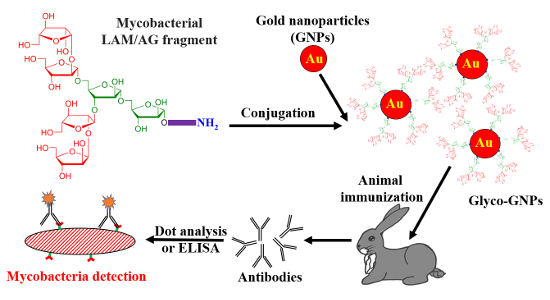
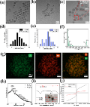
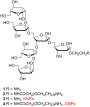
- (conjugate of an antigen with GNPs) is typical for the immunization of animals, starting with the first published work on the production of antibodies using colloidal gold [102]. The prepared Ara6-GNPs 3 and 4 were not separated from the excess of ligands 1 and 2 and were used for hyperimmunization of
- tetrasaccharide epitope S. pneumonia type 14 without T-helper peptide did not result in the activation of the immune response of the animals (mice) or the production of specific antibodies. The situation is rather complex as our analysis of the literature data on the use of thiol- and amino-containing glyco-GNPs
- of glyco-GNPs bearing the hexasaccharide epitope of LAM/AG for the activation of a specific immune response against carbohydrate antigens in laboratory animals (rabbits). The results are helpful in the development of synthetic protein- and peptide-free glycoconjugate vaccines based on glyco-GNPs. It


Facile biogenic fabrication of hydroxyapatite nanorods using cuttlefish bone and their bactericidal and biocompatibility study
Beilstein J. Nanotechnol. 2020, 11, 285–295, doi:10.3762/bjnano.11.21
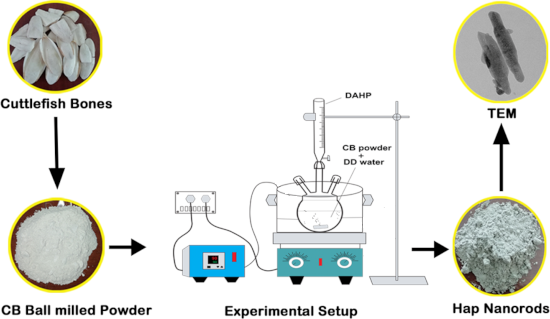
- ; cuttlefish bone; hard tissue treatment; hydroxyapatite; nanorods; Introduction Generally, the hard tissue of humans and animals, such as bone and teeth, are composed of natural hydroxyapatite (Hap), which is a bioactive ceramic material with high calcium phosphate concentration whereby the material can


Rational design of block copolymer self-assemblies in photodynamic therapy
Beilstein J. Nanotechnol. 2020, 11, 180–212, doi:10.3762/bjnano.11.15
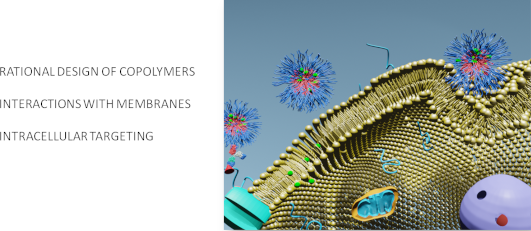
- animal testing ethics (the “3 R’s” stand for replacement, reduction and refinement aiming at limiting the number of in vivo experiments requiring the sacrifice of animals). 3D systems such as spheroids or cell-derived matrices and using microfluidics have thus been suggested for PDT [28][29]. Based on






Long-term stability and scale-up of noncovalently bound gold nanoparticle-siRNA suspensions
Beilstein J. Nanotechnol. 2019, 10, 2568–2578, doi:10.3762/bjnano.10.248
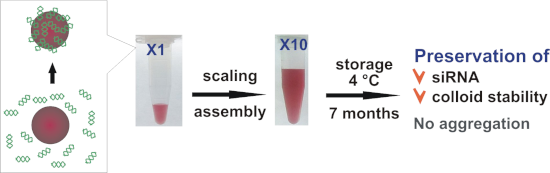
- Discussion Scaling up of the AuNP-siRNA synthesis The development of new drugs involves the study of their specific activity in cell cultures and animals, which requires the preparation, storage, and use of significant quantities of tested substances [22]. Significant quantities of the preparation can be


Label-free highly sensitive probe detection with novel hierarchical SERS substrates fabricated by nanoindentation and chemical reaction methods
Beilstein J. Nanotechnol. 2019, 10, 2483–2496, doi:10.3762/bjnano.10.239
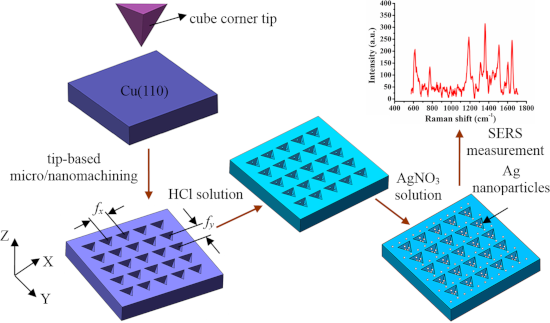
- green is highly toxic for aquatic animals or mammals and can induce cancer in animals. Thus, MG is significantly detected at low concentrations in water. The maximum concentration of malachite green is less than 2 μg/kg (5.48 × 10⁻⁹ mol/L) for many national food safety standards. Pesticide residues in


Nanostructured and oriented metal–organic framework films enabling extreme surface wetting properties
Beilstein J. Nanotechnol. 2019, 10, 1994–2003, doi:10.3762/bjnano.10.196
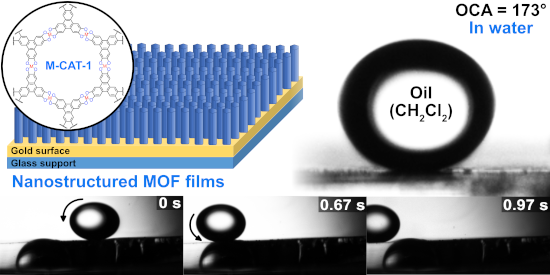
- . Keywords: antifog; antifouling; biomimetic coatings; metal–organic frameworks (MOFs); superhydrophilic; superoleophobic; thin films; vapor-assisted conversion; Introduction Over millions of years, plants and animals have evolved a spectrum of surface designs enabling specific wetting properties tailored
- for their survival in extreme conditions [1][2][3][4]. In plants, the unique surface architecture of the lotus leaf enables superhydrophobic and self-cleaning properties for sustaining efficient photosynthesis, even in polluted environments [5][6][7]. In the realm of animals, mosquitos utilize an


Gold-coated plant virus as computed tomography imaging contrast agent
Beilstein J. Nanotechnol. 2019, 10, 1983–1993, doi:10.3762/bjnano.10.195
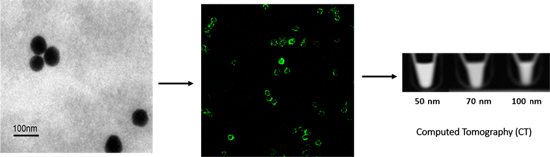
- ]. One of the first examples of such NP-based systems was reported by Caride et al. using brominated phospholipids packaged into liposomes and administered to dogs. Contrast enhancement signals of 40 HU were observed in the liver of imaged animals [14]. Two hours after injection, micelles loaded with




Engineered superparamagnetic iron oxide nanoparticles (SPIONs) for dual-modality imaging of intracranial glioblastoma via EGFRvIII targeting
Beilstein J. Nanotechnol. 2019, 10, 1860–1872, doi:10.3762/bjnano.10.181
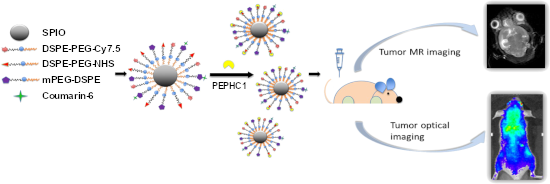
- cytotoxicity assay kit was obtained from Sigma (USA). Puromycin was purchased from Aladdin (Shanghai, China). All other reagents were of analytical grade and used without further purification. Cells and animals The human glioblastoma cell line, U87MG, was purchased from The Institute of Biochemistry and Cell




Toxicity and safety study of silver and gold nanoparticles functionalized with cysteine and glutathione
Beilstein J. Nanotechnol. 2019, 10, 1802–1817, doi:10.3762/bjnano.10.175
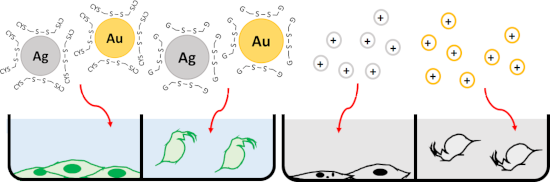
- that caused harmful effects were much lower in aquatic toxicity tests. The microscopic evaluation of treated and survived D. magna was additionally performed to assess if any accumulated NPs can be found in the digestive tract of these animals. Deposits of NPs, but also of ingested ionic Ag, were


Scavenging of reactive oxygen species by phenolic compound-modified maghemite nanoparticles
Beilstein J. Nanotechnol. 2019, 10, 1073–1088, doi:10.3762/bjnano.10.108
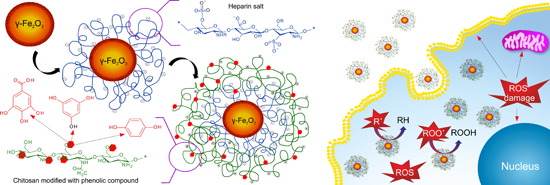
- phenolic compounds and allow for the attachment of the cationic polymer (chitosan). Heparin is a polysaccharide, containing glycosaminoglycan with densely repeated O-(α-L-iodopyranosyluric acid 2-sulfate)-(1→4)-2-sulfoamino-2-deoxy-D-glucose 6-sulfate sequences obtained from the mucosal tissue of animals





Enhanced inhibition of influenza virus infection by peptide–noble-metal nanoparticle conjugates
Beilstein J. Nanotechnol. 2019, 10, 1038–1047, doi:10.3762/bjnano.10.104
- ; gold nanoparticles; influenza virus; lytic infection; silver nanoparticles; Introduction The influenza (“flu”) type-A virus is a major health concern for humans and livestock animals. The primary mode of transmission is by the respiratory route. Flu infection occurs seasonally and can cause global
- complete, only a fraction of the human population is vaccinated, and although some vaccines have been trialled against avian influenza, farm animals in general are not routinely vaccinated on a global scale [4]. There is, therefore, the need for drugs to combat influenza infection in a more effective and




The systemic effect of PEG-nGO-induced oxidative stress in vivo in a rodent model
Beilstein J. Nanotechnol. 2019, 10, 901–911, doi:10.3762/bjnano.10.91
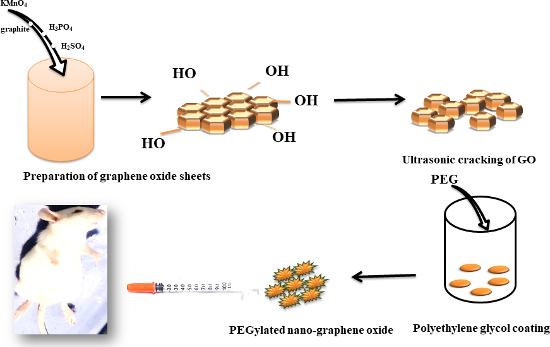
- Zhang and co-workers [29]. Biocompatibility of nGO was achieved by coating with polyethylene glycol (PEG). Then, a single dose (5 mg/kg) of synthesized PEG-nGO was administered to groups of groups of six mice. The dosage was found to be optimum in previous studies [28][29]. The animals were dissected


Ultraviolet patterns of flowers revealed in polymer replica – caused by surface architecture
Beilstein J. Nanotechnol. 2019, 10, 459–466, doi:10.3762/bjnano.10.45
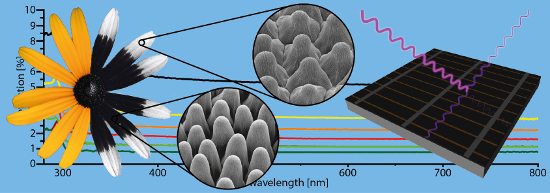
- attention has been given to the possible influence of the hierarchical petal surface microarchitecture. Structural coloration and structure-based reflection of VIS- and UV-radiation is well known in animals such as butterflies, birds or beetles [15][16]. In plants, periodic structures causing iridescence


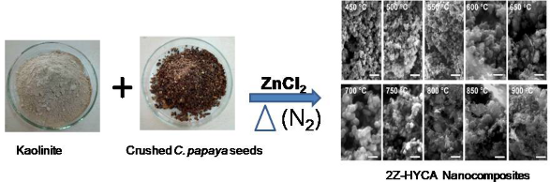
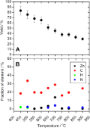
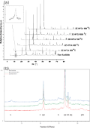
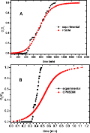
New micro/mesoporous nanocomposite material from low-cost sources for the efficient removal of aromatic and pathogenic pollutants from water
Beilstein J. Nanotechnol. 2019, 10, 119–131, doi:10.3762/bjnano.10.11
- of such contaminants is a necessity for public health in many developing countries because these pollutants can negatively alter important biochemical processes and thus are a critical threat to the health of plants, animals, and humans [5]. In addition to chemical contaminants, the removal of




A comparison of tarsal morphology and traction force in the two burying beetles Nicrophorus nepalensis and Nicrophorus vespilloides (Coleoptera, Silphidae)
Beilstein J. Nanotechnol. 2019, 10, 47–61, doi:10.3762/bjnano.10.5
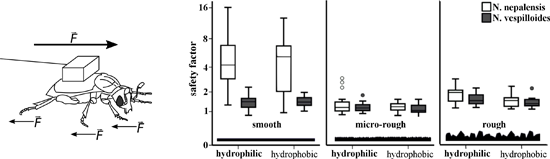
- . Instead, they are specialized in the burying of carrion and thus need to be able to cling firmly onto the skin and fur of their (mammal) carrion while tunnelling under its body. In our study, the attachment performance of animals having all tarsi attached to the ground has been quantified by means of
- traction force measurements of entire animals, whereas the performance of single fore tarsi has been measured with a nanotribometer. Both the number and the special morphology of the tarsal tenent hairs of the fore, middle and hind tarsi have been investigated by scanning electron microscopy (SEM). The
- push) direction. This behaviour is related to the arrangement angle of the tenent hairs on the tarsal surface. The traction force of entire animals and the friction force of single tarsi were tested on smooth, micro-rough and rough surfaces. All the used polymer surfaces were tested in duplicate, i.e



A new bioinspired method for pressure and flow sensing based on the underwater air-retaining surface of the backswimmer Notonecta
Beilstein J. Nanotechnol. 2018, 9, 3039–3047, doi:10.3762/bjnano.9.282
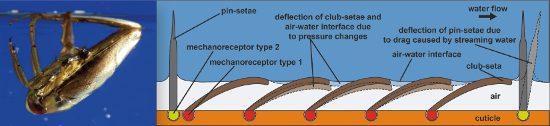
- . Keywords: mechanoreceptor; Notonecta sensor; pressure sensor; Salvinia effect; superhydrophobic surfaces; Introduction The surfaces of animals and plants are interfaces between the organisms and the environment. Since animals and plants inhabit many different environments, it is not surprising that over
- adhesive pads [6] or the structural colors of Morpho menelaus [7]. Superhydrophobic surfaces are also important in the above context. Several plants and animals, which can maintain stable air layers while submerged (Salvinia effect [8]), have been analyzed. Especially the floating ferns of the genus
- underwater sensors. Experimental Animals Adult Notonecta glauca and N. maculata, caught between 2011 and 2017 in a semi-natural pond (“Melbweiher”) in the Botanical Garden of the University of Bonn, have been studied. For our experiments, the hemelytra of Notonecta were either fresh, fixed for electron


Characterization of the microscopic tribological properties of sandfish (Scincus scincus) scales by atomic force microscopy
Beilstein J. Nanotechnol. 2018, 9, 2618–2627, doi:10.3762/bjnano.9.243
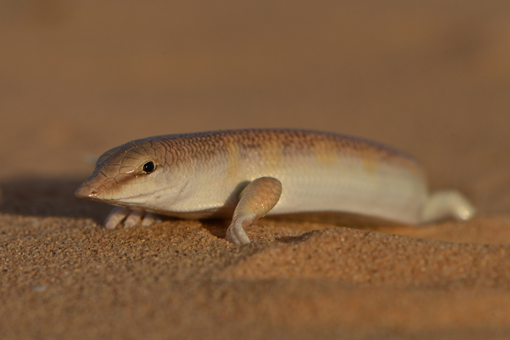
- studies where classical tribometer experiments with animals are challenging. Rechenberg’s studies [3][7][8] and subsequent studies of Staudt et al. [9][11] revealed that this granular friction angle of preserved sandfish is about θ = 21° (corresponding friction coefficient μgr = tan θ = 0.38). This value
- . [13] sedated animals, put them on a tilted flat covered with a monolayer of granular particles, and determined the angle at which the animal started to slide in forward direction on its ventral scales. The static friction coefficient µst, determined in this more classical way, was higher for sandfish
- , mechanisms are likely to be involved. Experimental Moulted sandfish skin collected from kept animals was cut in small pieces or scales were singled before sample preparation (Figure 1b). In some cases it is possible to distinguish between dorsal and ventral scales through their different colour and


Friction reduction through biologically inspired scale-like laser surface textures
Beilstein J. Nanotechnol. 2018, 9, 2561–2572, doi:10.3762/bjnano.9.238
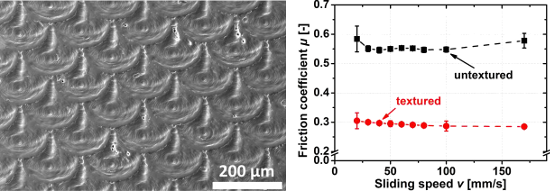
- allow for tribologically optimized surfaces [17]. Among the animals and biological structures that have been considered are butterfly wings [18], beetles and earthworms [19], scorpions [20] as well as (and most importantly) the skin of snakes and sand fish lizards [21][22][23][24]. It has been
- demonstrated, for example, that sandfish skin exhibits low friction and little wear [25][26]. The development of manufactured surface textures that are inspired by animals with scale-like surface morphology has resulted in fascinating insights. For texturing a titanium alloy, a lithography-based method was
- slurries, and in contacts containing dry, fine oxide powders in order to simulate the environment that animals like sandfish encounter in their natural habitats. Preliminary results indicate that under these conditions, laser-generated scale-like surface morphologies have the potential to significantly


Nanocellulose: Recent advances and its prospects in environmental remediation
Beilstein J. Nanotechnol. 2018, 9, 2479–2498, doi:10.3762/bjnano.9.232
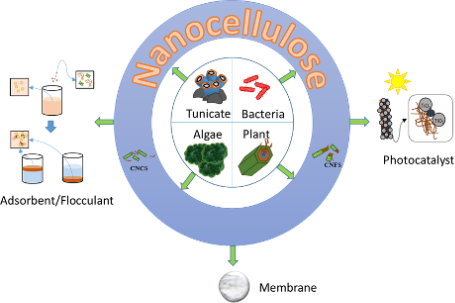
- marine invertebrate animals). Many studies have identified the use of sea squirts in particular as a contemporary alternative for nanocellulose fabrication. In general, cellulose is formed on the outer tissue of the tunicates (tunic) and is comprised of highly pure and crystalline cellulose of CIβ


Nanoscale characterization of the temporary adhesive of the sea urchin Paracentrotus lividus
Beilstein J. Nanotechnol. 2018, 9, 2277–2286, doi:10.3762/bjnano.9.212
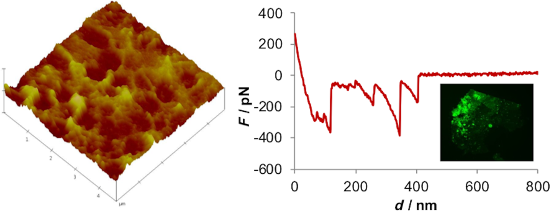
- urchins Individual Paracentrotus lividus (Lamarck, 1816) were collected intertidally in Ericeira, Portugal. They were kept in a marine aquarium with closed circulation (18 °C, 33% salinity) and fed algae (Laminaria sp.). To collect the sea urchin adhesive material, the animals were overturned and the oral


The structural and chemical basis of temporary adhesion in the sea star Asterina gibbosa
Beilstein J. Nanotechnol. 2018, 9, 2071–2086, doi:10.3762/bjnano.9.196
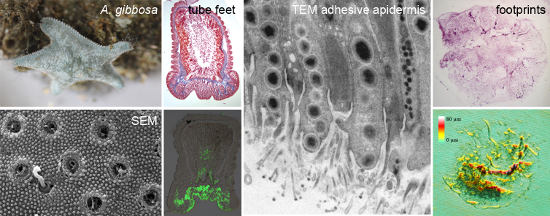
- supportive cells and their microvilli collar prevented the animals from attaching themselves [37][41]. In asteroids, the area of attachment is an order of magnitude larger and completely covered by normal and specialized microvilli. The microvilli are embedded in a cuticle, which is poorly preserved in
- resembled that described in A. rubens [22][25][26]. Similar footprint structures have been described in many temporary adhering animals, from other sea star species [20][25], to sea urchins [12], ectoparasitic flatworms [42], and the cnidarian Hydra [43]. It is noteworthy that in A. gibbosa the described
- footprint structures were only observed after animals attached firmly for at least one minute to the substrate (see Experimental). When animals just walked on glass slides without agitation, no detectable footprints were observed. Therefore, we assume that adhesive strength might be adjusted by the amount


Review on nanoparticles and nanostructured materials: history, sources, toxicity and regulations
Beilstein J. Nanotechnol. 2018, 9, 1050–1074, doi:10.3762/bjnano.9.98

- produced nanomaterials, which can be found in the bodies of organisms, insects, plants, animals and human bodies. However, the distinctions between naturally occurring, incidental, and manufactured NPs are often blurred. In some cases, for example, incidental NMs can be considered as a subcategory of
- plants and animals, which is frequent in nature, contributes to NP composition in nature. Dust storms, volcanic eruptions, and forest fires are events of natural origin that are reported to produce high quantities of nanoparticulate matter that significantly affect worldwide air quality. Similarly
- smoke and ash, and are known to cause respiratory problems in humans and animals [78][79][80]. Smoke containing very small particles can worsen pre-existing cardiopulmonary conditions in patients [73]. It has also been reported that smoke inhalation causes 75% of fire-related deaths [64]. Sea salt





