


Search results
Search for "cancer therapy" in Full Text gives 86 result(s) in Beilstein Journal of Nanotechnology.
A study on the consequence of swift heavy ion irradiation of Zn–silica nanocomposite thin films: electronic sputtering
Beilstein J. Nanotechnol. 2014, 5, 1691–1698, doi:10.3762/bjnano.5.179
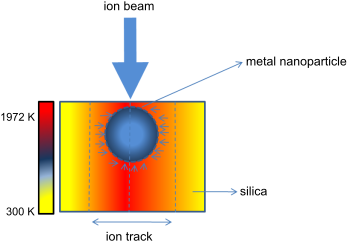
- yield of Au from Au–silica nanocomposite on the size of Au nanoparticles. To the best of our knowledge, no reports are available on sputtering of Zn nanoparticles embedded in silica matrix by using SHI. Zn nanoparticles have great potential for application in several fields. These can be used in cancer
- therapy, anticorrosive coating and antimicrobial coatings, in chemical reaction as catalyst, galvanization of iron and steel [30][31]. Bulk Zn has a melting point of 419.6 °C and the melting point of Zn nanoparticle varies from 250 to 420 °C depending on the size of nanoparticle [32][33]. The melting


PEGylated versus non-PEGylated magnetic nanoparticles as camptothecin delivery system
Beilstein J. Nanotechnol. 2014, 5, 1312–1319, doi:10.3762/bjnano.5.144
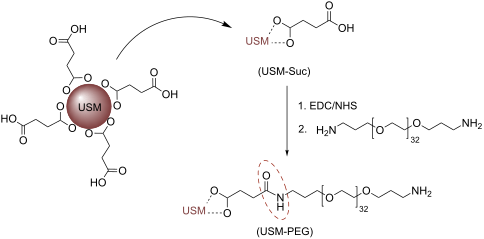
- ; cancer therapy; iron oxide superparamagnetic nanoparticles; polyethylene glycol; Introduction Camptothecin (CPT) is a quinoline based alkaloid, which exhibits a potent cytotoxic activity against a broad spectrum of tumours [1][2][3]. While most antineoplastic agents inhibit cancer cell proliferation by
- undesirable side effects. Due to the combined impact of cancer together with adverse side effects of many conventional chemotherapeutic agents, a significant effort is devoted to the design of nanoparticle vectors for cancer therapy [8][9][10]. Concerning CPT, attempts to improve its solubility and stability


Organic and inorganic–organic thin film structures by molecular layer deposition: A review
Beilstein J. Nanotechnol. 2014, 5, 1104–1136, doi:10.3762/bjnano.5.123
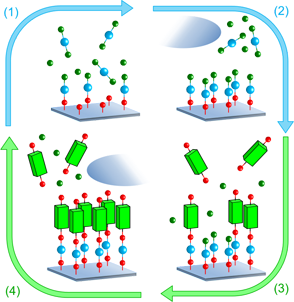
- process; Leskelä et al. [25] shortly review the novel materials fabricated by ALD and MLD; George [26], George et al. [27] and Lee et al. [28] focus on metal alkoxide thin films; Yoshimura et al. [29] discuss a possibility to utilize MLD in cancer therapy applications; King et al. [30] describe fine




In vitro toxicity and bioimaging studies of gold nanorods formulations coated with biofunctional thiol-PEG molecules and Pluronic block copolymers
Beilstein J. Nanotechnol. 2014, 5, 546–553, doi:10.3762/bjnano.5.64
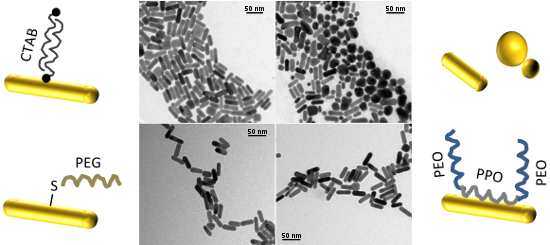
- the NIR region so that heat is generated to damage cells and tissues. This property renders them useful for photothermal therapy and imaging of cancer [7][8]. In addition, the AuNRs surface can be functionalized with ligands for targeted drug delivery to support cancer therapy in vitro and in vivo [9


Plasma-assisted synthesis and high-resolution characterization of anisotropic elemental and bimetallic core–shell magnetic nanoparticles
Beilstein J. Nanotechnol. 2014, 5, 466–475, doi:10.3762/bjnano.5.54
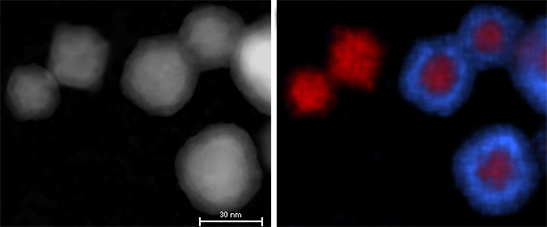
- as powerful nanotools in many areas of biology, biophysics and medicine [1]. Possible applications include their use as contrast agents for cell tracking via magnetic resonance imaging (MRI) [2], as colloidal mediators in cancer therapy (hyperthermia) [3] or as nanocarriers for targeted drug delivery


Near-infrared dye loaded polymeric nanoparticles for cancer imaging and therapy and cellular response after laser-induced heating
Beilstein J. Nanotechnol. 2014, 5, 313–322, doi:10.3762/bjnano.5.35
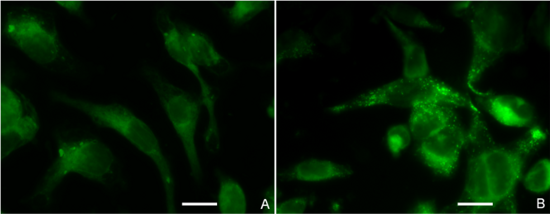
- , Nova Southeastern University, 3200 S. University Dr., Fort Lauderdale, FL 33328, USA Department of Basic and Applied Sciences, Galgotias University, UP, 201308, India 10.3762/bjnano.5.35 Abstract Background: In the past decade, researchers have focused on developing new biomaterials for cancer therapy
- hyperthermia (HT). HT is currently used in clinical trials for cancer therapy in combination with radiotherapy and chemotherapy. One of the potential problems of HT is that it can up-regulate hypoxia-inducible factor-1 (HIF-1) expression and enhance vascular endothelial growth factor (VEGF) secretion. Results
- is slow, thus taking a fairly long time to reach the targeted temperature (39–43 °C). Therefore, the comparison between incubator HT and laser/NP HT may provide important information on the effects of different modes of HT used in cancer therapy. In a previous publication, we described the in vivo


Extracellular biosynthesis of gadolinium oxide (Gd2O3) nanoparticles, their biodistribution and bioconjugation with the chemically modified anticancer drug taxol
Beilstein J. Nanotechnol. 2014, 5, 249–257, doi:10.3762/bjnano.5.27

- systems for cancer therapy. Gadolinium compounds are used in neutron capture therapy (NCT) as an alternative for boron-10 [6][7]. NCT is mainly associated with tumor-specific delivery systems and involves the production of localized cytotoxic radiations by a non-radioactive nuclide delivered to tumor
- fungus based approach for the synthesis of this material for the first time. We show that the thermophilic fungus Humicola sp. can be used for the synthesis of Gd2O3 nanoparticles at 50 °C. Since Gd2O3 nanoparticles have proved their value in site-specific drug delivery systems for cancer therapy, we


Size-dependent characteristics of electrostatically actuated fluid-conveying carbon nanotubes based on modified couple stress theory
Beilstein J. Nanotechnol. 2013, 4, 771–780, doi:10.3762/bjnano.4.88
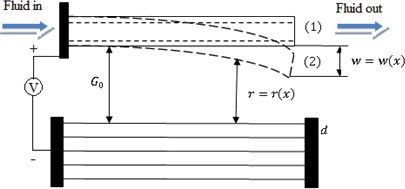
- chemical and thermal stability, and their hollow geometries. For example, they can be used as hydraulic parts in support platforms or carry reactant molecules into reaction chambers [21]. Furthermore, CNTs have a potential usage as cancer therapy devices or nanovessels for conveying and storing fluids and


Nanolesions induced by heavy ions in human tissues: Experimental and theoretical studies
Beilstein J. Nanotechnol. 2012, 3, 556–563, doi:10.3762/bjnano.3.64
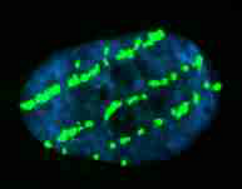
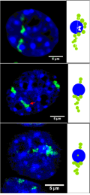
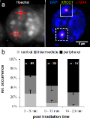
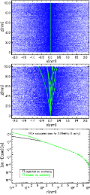
- , Max-von-Laue-Str. 1, 60438 Frankfurt am Main, Germany 10.3762/bjnano.3.64 Abstract The biological effects of energetic heavy ions are attracting increasing interest for their applications in cancer therapy and protection against space radiation. The cascade of events leading to cell death or late



Radiation-induced nanostructures: Formation processes and applications
Beilstein J. Nanotechnol. 2012, 3, 533–534, doi:10.3762/bjnano.3.61

- passing through body tissues. On the other hand, this same observation has led to the rise of charged-particle cancer therapy over the past 20 years. Conceptually speaking, electrons that locally drive molecular dissociations, as well as swift heavy ions that locally cause damage in polymers or living
- understanding of the different dissociation pathways and bond-breaking mechanisms would be highly valuable. On the one hand, for FEBID this holds the promise of developing this technique towards electron-controlled chemistry on the nanometer scale. For cancer therapy and the understanding of DNA damage, a
Magnetic-Fe/Fe3O4-nanoparticle-bound SN38 as carboxylesterase-cleavable prodrug for the delivery to tumors within monocytes/macrophages
Beilstein J. Nanotechnol. 2012, 3, 444–455, doi:10.3762/bjnano.3.51
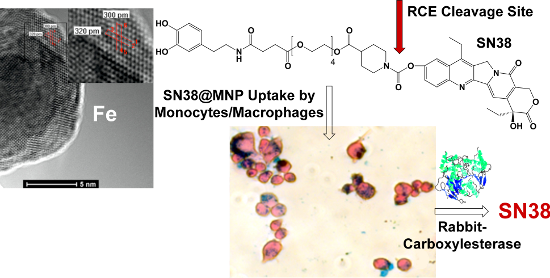
- Mo/Ma cells. These cells feature a Tet-On Advanced system for intracellular carboxylesterase (InCE) expression. Upon addition of doxycycline, SN38 was released from the nanoplatform, as evidenced by HPLC analysis. Therefore, this nanoplatform can be potentially used as a multipurpose agent in cancer
- therapy through highly localized magnetic hyperthermia and triggered release/activation of the chemotherapeutic drug SN38 at the cancer site. Using the synergy between targeted chemotherapy and hyperthermia will make cell-delivered anticancer treatment a viable option. Scheme 3 summarizes this approach to





