


Search results
Search for "catalyst" in Full Text gives 384 result(s) in Beilstein Journal of Nanotechnology. Showing first 200.
Design of a biomimetic, small-scale artificial leaf surface for the study of environmental interactions
Beilstein J. Nanotechnol. 2022, 13, 944–957, doi:10.3762/bjnano.13.83
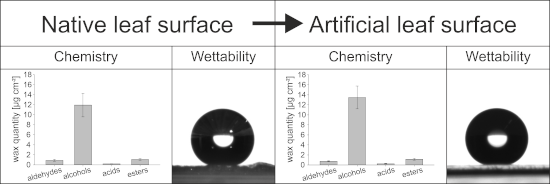
- ) for 45 min at 70 °C. 20 µL of pyrimidine (Merck KGaA, Darmstadt, Germany) was used as catalyst. The waxes were analyzed quantitatively with a gas chromatograph coupled with a flame ionization detector (GC–FID, 6890N, Agilent Technologies Sales & Services, column: DB-1; 30 m × 0.32 mm, 0.1 μm; J&W
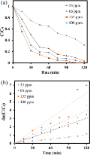
Solar-light-driven LaFexNi1−xO3 perovskite oxides for photocatalytic Fenton-like reaction to degrade organic pollutants
Beilstein J. Nanotechnol. 2022, 13, 882–895, doi:10.3762/bjnano.13.79
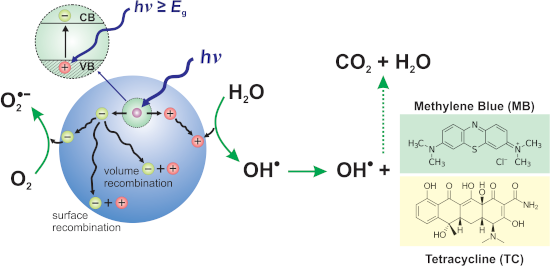
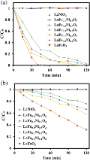
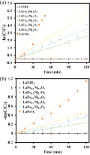
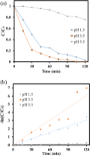
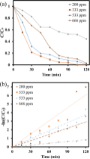
- , such as pH value, catalyst dosage, and the additional amount of H2O2. LaFe0.7Ni0.3O3 perovskite oxides could operate efficiently under pH 3.5, catalyst dosage of 50 mg/150 mL, and H2O2 concentration of 133 ppm to decompose the MB dye in the 1st order kinetic rate constant of 0.0506 s−1. Keywords
- transmittance and suitable surface area for degrading methylparaben. Although Ti-doped catalyst was expected as a semiconductor to enhance the photocatalytic efficiency, pure LaFeO3 still revealed the better performance of methylparaben photodegradation than LaTi0.15Fe0.85O3 [28]. On the contrary, Garcia-Muñoz
- , methylene blue, and rhodamine B under visible light irradiation. Their optimal sample was LaFe0.85Cu0.15O3, which could remove dyes much more efficiently due to more generation of hydroxyl radicals than pure LaFeO3 [31]. Ni-doped LaFeO3 was ubiquitously employed as a photo/thermal catalyst or a catalyst



Optimizing PMMA solutions to suppress contamination in the transfer of CVD graphene for batch production
Beilstein J. Nanotechnol. 2022, 13, 796–806, doi:10.3762/bjnano.13.70
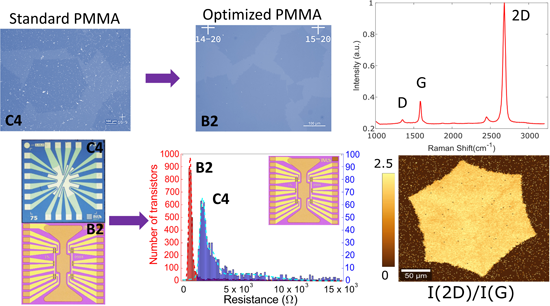
- ) and 1860 Ω (FWHM = 567 Ω), respectively, proving that the optimized PMMA mixture enables the production of reproducible arrays of electronic devices with consistent properties. Experimental Graphene growth Single-crystal and large-area graphene were obtained on Cu foil via catalyst-assisted growth in
- a low-pressure CVD system (CVD First Nano, EasyTube 3000). A 25 µm thick annealed Cu foil (Alfa Aesar, purity 99.8%), serving as a metal catalyst, was placed in a graphite enclosed cavity during the whole process. The temperature for annealing and growth was kept stable at 1040 °C by PID thermal




Sodium doping in brookite TiO2 enhances its photocatalytic activity
Beilstein J. Nanotechnol. 2022, 13, 599–609, doi:10.3762/bjnano.13.52
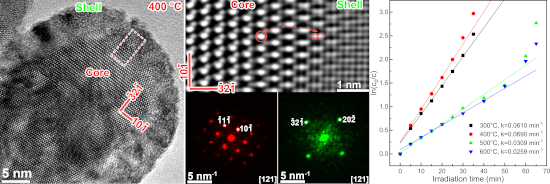
- methylene blue (MB) solution at room temperature under UV light generated by a PLS-SXE300 Xenon lamp with a 365 nm band filter. Following the method reported by Wang et al. [22], 15 mg of the catalyst was dispersed into 75 mL of the MB solution (10 mg/L). Before UV light irradiation, the suspension was


Design and characterization of polymeric microneedles containing extracts of Brazilian green propolis
Beilstein J. Nanotechnol. 2022, 13, 503–516, doi:10.3762/bjnano.13.42
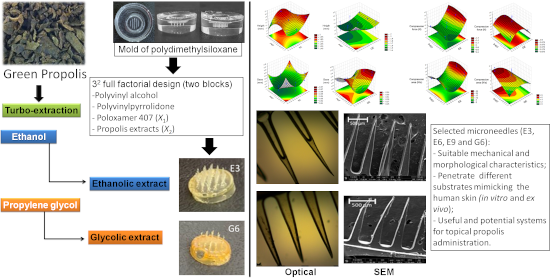
- northeast regions of the states of Paraná, São Paulo, and Minas Gerais [31][32][33]. The PRP used had all suitable characteristics to be used in the following experiments. Preparation of mold When using polydimethylsiloxane (PDMS), the combination of base and catalyst resulted in a translucent mixture
- replicas of this master structure. For the preparation of the PDMS mold, suitable amounts of the catalyst agent and the silicone base were mixed, in a proportion of 1:6, using a beaker and taken to ultrasound for 5 min. Afterwards, the mixture was poured into 12-well plates and taken to ultrasound for


Tubular glassy carbon microneedles with fullerene-like tips for biomedical applications
Beilstein J. Nanotechnol. 2022, 13, 455–461, doi:10.3762/bjnano.13.38
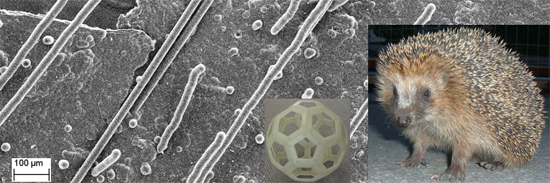
- pyrolysis of methane on a curved alumina surface. The surface provides the catalyst as well as the “strain” required to direct nucleation and growth. Figure 1a is a scanning electron microscopy (SEM) overview image showing a number of glassy carbon microneedles, which grow in the direction of the gas flow


A comprehensive review on electrospun nanohybrid membranes for wastewater treatment
Beilstein J. Nanotechnol. 2022, 13, 137–159, doi:10.3762/bjnano.13.10
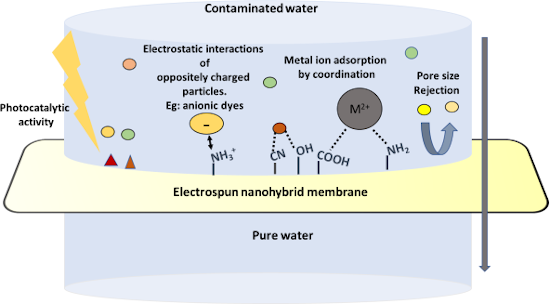
- predominant PEMs [13]. Zhang et al. developed nanohybrid PVDF membranes by incorporating zeolite with enhanced thermal and electrochemical performance for lithium-ion batteries [14]. ENHs have also been used as a heterogeneous catalyst in indole synthesis by Savva et al. by incorporating gold nanoparticles





Tin dioxide nanomaterial-based photocatalysts for nitrogen oxide oxidation: a review
Beilstein J. Nanotechnol. 2022, 13, 96–113, doi:10.3762/bjnano.13.7
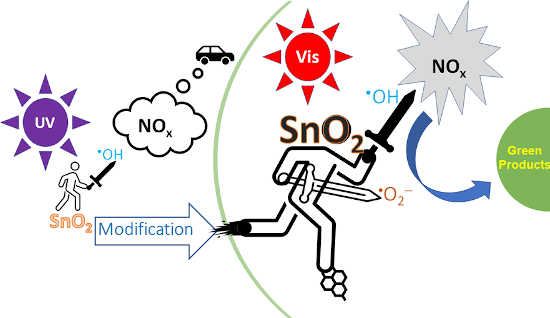
- −, similarly holes react with water to form hydroxyl radicals). Free radicals and strong oxidizing agents react with NOx to produce NO3−, deposited on the photocatalyst surface. The NO3− product formed on the surface of the catalyst can be easily separated for further treatment by washing with water due [11
- , surface engineering, heterojunction construction, co-catalyst, which will be thoroughly outlined in this review. Structure and bandgap SnO2 has a crystal structure similar to that of rutile TiO2 [41][42]. The unit cell parameters of rutile SnO2 are a = b = 0.47374 nm and c = 0.31864 nm [43]. In one unit
- resulting heterojunction photocatalytically removed 40% NO (initial concentration of 500 ppb) and showed excellent photostability under visible light. The NO2 production from the photocatalytic reaction was also negligible. The good photocatalytic NO degradation of the 2D/0D g-C3N4/SnO2 catalyst is due to


Sputtering onto liquids: a critical review
Beilstein J. Nanotechnol. 2022, 13, 10–53, doi:10.3762/bjnano.13.2






Measurement of polarization effects in dual-phase ceria-based oxygen permeation membranes using Kelvin probe force microscopy
Beilstein J. Nanotechnol. 2021, 12, 1380–1391, doi:10.3762/bjnano.12.102
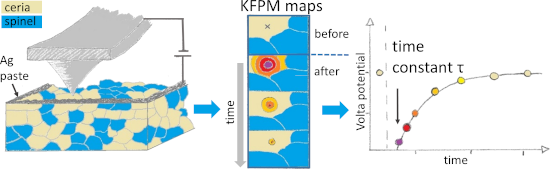
- permeation membrane, as oxygen sensor material, or for the use in solid oxide fuel cell components [1][5][6]. Apart from this, ceria is also widely employed as a catalyst in the middle- to low-temperature regime (20–400 °C) [7][8][9], making ceria-based dual-phase materials with a second electron-conductive


Morphology-driven gas sensing by fabricated fractals: A review
Beilstein J. Nanotechnol. 2021, 12, 1187–1208, doi:10.3762/bjnano.12.88
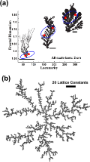
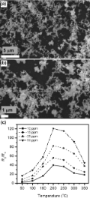
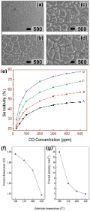
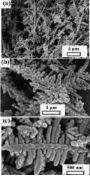
- of ZnO dendrites and single-crystal ZnO dendrites up to the macroscale [77]. These were synthesized via a vapor-phase transport method at 930 °C using a copper catalyst. Figure 16a and Figure 16b show, respectively, a schematic and a SEM image of the ZnO dendrite gas sensor device. The ZnO dendrites










The effect of cobalt on morphology, structure, and ORR activity of electrospun carbon fibre mats in aqueous alkaline environments
Beilstein J. Nanotechnol. 2021, 12, 1173–1186, doi:10.3762/bjnano.12.87
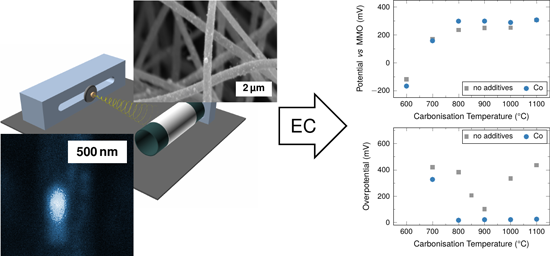
- . Many researchers focus on the active material, that is, the catalyst, which enhances the ORR, and many promising systems have been reported and extensively reviewed [5]. The electrode scaffold receives far less attention. Only few reports elaborate on the importance of the electrode architecture for
- active sites, that is, triple-phase contact points. These contact points of air, solid catalyst, and liquid electrolyte, need to be high in number or area. This entails a partial wetting of the electrode to ensure accessibility of the sites for gaseous oxygen. From a more industrial perspective
- electrospinning are a convenient and promising material for air electrodes in metal–air batteries. These studies used the cobalt-enhanced fibre material either as a bottom-up catalyst material in aqueous alkaline systems [21][22] or as free-standing electrodes in non-aqueous systems with a lab-scale geometric


The role of deep eutectic solvents and carrageenan in synthesizing biocompatible anisotropic metal nanoparticles
Beilstein J. Nanotechnol. 2021, 12, 924–938, doi:10.3762/bjnano.12.69
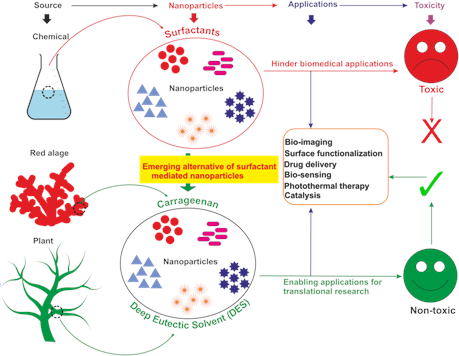
- biological organisms and are mainly governed by cytochrome P450, which acts as a strong catalyst for oxidation. Hence, the gold nanoparticles can alter the cell metabolism, leading to toxicity. In vitro studies also confirmed that isotropic gold nanoparticles with core sizes of greater than 5 nm were less
- application. For example, Gutiérrez et al. synthesized porous carbon using p-toluenesulfonic acid and choline chloride in a molar ratio of 1:1 [88]. The DES used served as solvent and catalyst for the condensation of furfuryl alcohol, followed by carbonization resulting in the formation of pores. Oh et al


The role of convolutional neural networks in scanning probe microscopy: a review
Beilstein J. Nanotechnol. 2021, 12, 878–901, doi:10.3762/bjnano.12.66
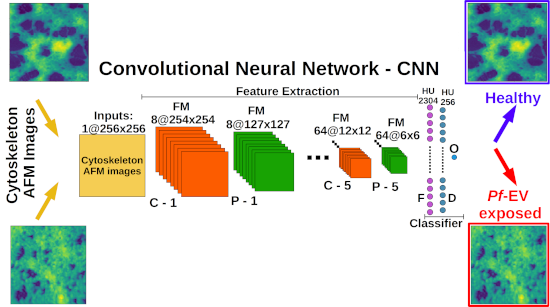
- probe microscopy [74], has emerged in the past decade as a catalyst for a better understanding of data and exploitation of the experimental tools we have at hand. The literature referred to above, and in the rest of this manuscript, points to some of the major developments and hopefully captures some of







Comprehensive review on ultrasound-responsive theranostic nanomaterials: mechanisms, structures and medical applications
Beilstein J. Nanotechnol. 2021, 12, 808–862, doi:10.3762/bjnano.12.64


Prediction of Co and Ru nanocluster morphology on 2D MoS2 from interaction energies
Beilstein J. Nanotechnol. 2021, 12, 704–724, doi:10.3762/bjnano.12.56
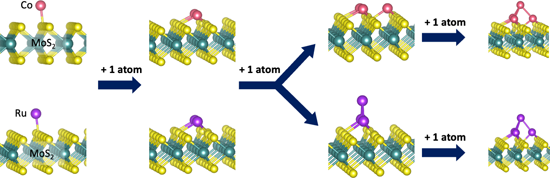
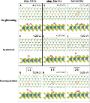
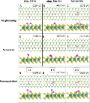
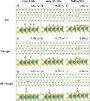
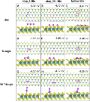
- of surface to bulk is of great importance in promoting catalytic activity. Therefore, 3D growth (agglomeration) is essential when creating a supported metal catalyst [44][45][46][47]. In this work we aim to determine the atomic-scale interactions that control the stability of small Con and Run
- results, there are some concerns how the transfer of S atoms from the ML to Con would affect the purity of the interconnect. Ru on MoS2 might be better suited as a catalyst. However further studies involving larger Run structures are needed to determine if the overall strength of the interaction between



A review of defect engineering, ion implantation, and nanofabrication using the helium ion microscope
Beilstein J. Nanotechnol. 2021, 12, 633–664, doi:10.3762/bjnano.12.52
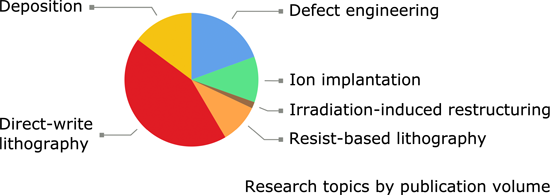
- has been used to induce the growth of semiconductor nanowires [97]. In this study by Aramesh, gold catalyst nanoparticles were distributed onto GaAs and InAs substrates and upon irradiating selected regions with helium ions, semiconductor nanowires grew from the gold nucleation sites. By increasing


Nanoporous and nonporous conjugated donor–acceptor polymer semiconductors for photocatalytic hydrogen production
Beilstein J. Nanotechnol. 2021, 12, 607–623, doi:10.3762/bjnano.12.50
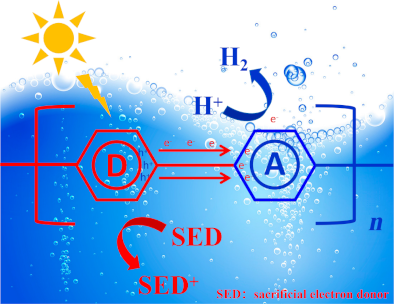
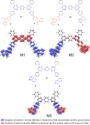
- , studies regarding the long-term stability of CPs are still needed. (Left) Schematic diagram of the mechanism of semiconducting catalyst-mediated photocatalytic hydrogen production (CB: conduction band, VB: valence band, SED: sacrificial electron donors). (Right) Charge separation in a CP-based




Stability and activity of platinum nanoparticles in the oxygen electroreduction reaction: is size or uniformity of primary importance?
Beilstein J. Nanotechnol. 2021, 12, 593–606, doi:10.3762/bjnano.12.49
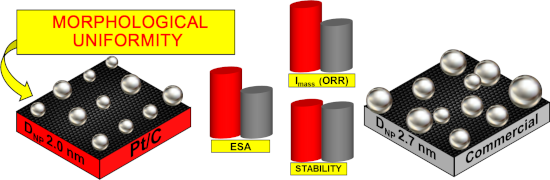
- composition and structure of the catalytic layers, and the catalysts themselves [9]. Platinum–carbon catalysts, whose composition and structure determine their functional characteristics, are the key components of MEA catalytic layers. Of particular importance is the study of the catalyst electrochemical
- behavior in the ORR, since it is at the cathode that strong polarization and pronounced degradation of the catalyst take place. Such а degradation occurs as a result of both the operation at high anodic potentials and the effect of aggressive oxygen-containing intermediates, which are formed during the
- . Kinoshita was one of the first researchers to obtain such results [12]. As a first approximation, the specific activity of platinum in the catalyst, being referred to the unit mass of the metal Imass (mass activity), is determined as a product of the electrochemically active surface area (ESA) and the
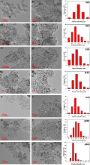


The preparation temperature influences the physicochemical nature and activity of nanoceria
Beilstein J. Nanotechnol. 2021, 12, 525–540, doi:10.3762/bjnano.12.43
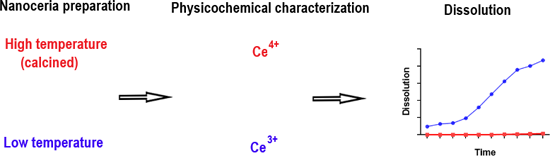
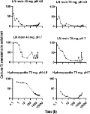
- exposed to during preparation may contribute to the dissolution rate difference. Industrially formed nanoceria is often calcined, that is, exposed to temperatures of 400 °C and more. This is appropriate for nanoceria used as a combustion catalyst, as the calcined surface can become quite active when




Boosting of photocatalytic hydrogen evolution via chlorine doping of polymeric carbon nitride
Beilstein J. Nanotechnol. 2021, 12, 473–484, doi:10.3762/bjnano.12.38
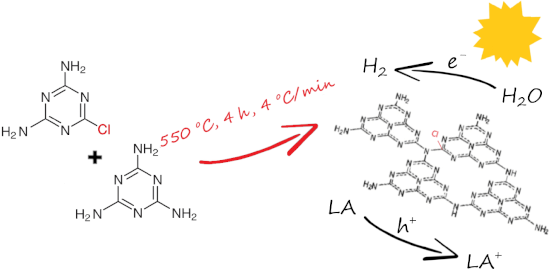
- pairs, (iv) improved photogenerated charge transport and separation, and (v) higher reducing ability of the photogenerated electrons. The above factors affected the 4.4-fold enhancement of the photocatalytic efficiency in hydrogen evolution in comparison to the pristine catalyst. Keywords: chlorine
- structure allows for the catalyst to have a higher specific surface area and more active sites, which can simultaneously promote mass transfer and charge separation in nanodomains, thus optimizing the π-conjugated system for photochemical applications [40][41]. Furthermore, elemental mapping of nitrogen
- the H2 evolution rate after three cycles, indicating the stability of the catalyst. Table 4 presents a comparative study of Cl-PCN with catalysts doped with Cl and other elements which have been reported in the literature. The table presents a broad range of the enhancement factor of the hydrogen


Spontaneous shape transition of MnxGe1−x islands to long nanowires
Beilstein J. Nanotechnol. 2021, 12, 366–374, doi:10.3762/bjnano.12.30
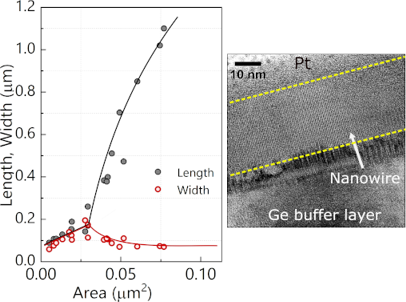
- obtained via chemical methods [28][29] or via vapor–solid–liquid (VLS) and, less frequently, vapor–solid–solid (VSS) mechanisms. A metallic droplet (liquid or solid) acts as a catalyst, in chemical vapor deposition (CVD), or as a seed, in molecular beam epitaxy (MBE), for the NW growth [7][30][31]. By
- using these techniques, NWs are grown away from the substrate, usually in a tilted direction, and size distribution and geometry strongly depend on the growth dynamics [32][33]. Furthermore, it is known that the catalyst introduces uncontrolled and unwanted contamination inside the crystal lattice of
- the wires. For instance, Au, generally used as catalyst for the growth of various semiconductor NWs, acts as a deep-level trap in germanium bulk and NWs, modifying the electronic transport properties [5]. Strain-induced elongation is a mechanism [34] that can lead to either epitaxial or endotaxial


Free and partially encapsulated manganese ferrite nanoparticles in multiwall carbon nanotubes
Beilstein J. Nanotechnol. 2020, 11, 1891–1904, doi:10.3762/bjnano.11.170
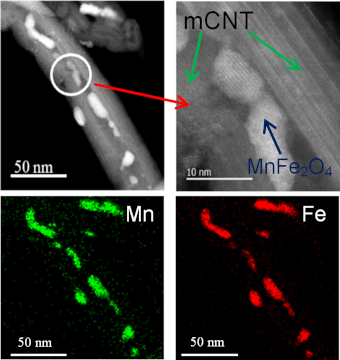
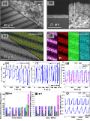
- ) carbon, (e) manganese, (f) iron, (g) nickel (the source of Ni is the original MWCNTs used as catalyst), and (h) overlays of MnFe2O4/MWCNTs. The arrows in (a) and (b) are pointing at MWCNTs layers, which are coating the partially encapsulated nanoparticles. (i–l) The majority of the MnFe2O4 nanoparticles




Towards 3D self-assembled rolled multiwall carbon nanotube structures by spontaneous peel off
Beilstein J. Nanotechnol. 2020, 11, 1865–1872, doi:10.3762/bjnano.11.168
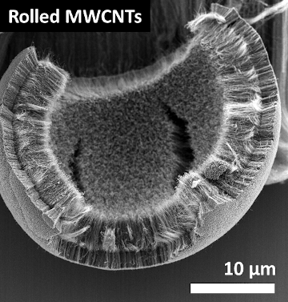
- smaller inner diameter [16]. Thus, the size of a catalyst to grow a N-MWCNT is larger than that to grow an undoped C-MWCNT. This size is determined by the experimental conditions, such as the presence or absence of N atoms. This is related to the fact that smaller nanoparticles are more difficult to be
- . For the synthesis performed, a size increase is relatively easy to be achieved since ferrocene, source of the iron atoms, is constantly provided (see Experimental section). However, a size decrease is possible mainly by a size change of the catalyst nanoparticle and by some “loss” of the catalyst (e.g
- is suggested (Figure 5). This schematic representation is based on the experimental results of a confirmed root-growth mechanism, on the relationship between the size of the catalyst particle, and on the diameter of MWCNTs and N-MWCNTs. In addition, it is in agreement with [6][12][16][20][21][24][26



Unravelling the interfacial interaction in mesoporous SiO2@nickel phyllosilicate/TiO2 core–shell nanostructures for photocatalytic activity
Beilstein J. Nanotechnol. 2020, 11, 1834–1846, doi:10.3762/bjnano.11.165
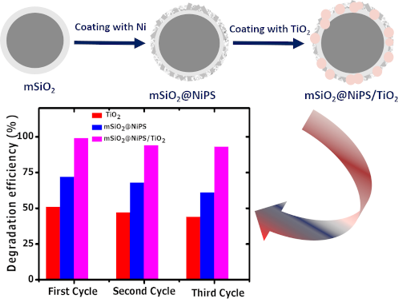
- [24][25]. One method to maximize the SiO2–TiO2 interaction is via the synthesis of core–shell nanostructures or nanocomposites [18][19][26][27]. Ikeda et al. [26] reported an improved photodecomposition of acetic acid by using a titania core@hollow silica shell nanostructured catalyst. Similarly, Ren
- surface [23]. Thus, silica-based core–shell nanocomposites offer added advantages of manipulating the pore structure, surface area, morphology, and catalyst reactivity [28]. Unlike the metal oxide–metal oxide composites, the use of metal oxide core@metal nanocomposites as dopants for titania
- NiPS with a sheet-like morphology, which was then used as a catalyst for the hydrogenation of styrene. More recently, Ghiat et al. [39] reported on the photocatalytic properties of nickel phyllosilicates for hydrogen production. Their nickel phyllosilicate, displaying a surface area of 95 m2·g−1, was





