Search results
Search for "chemical reactions" in Full Text gives 153 result(s) in Beilstein Journal of Nanotechnology.
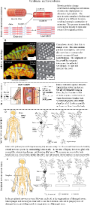
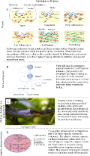
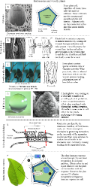
Bioinspired self-healing materials: lessons from nature
Beilstein J. Nanotechnol. 2018, 9, 907–935, doi:10.3762/bjnano.9.85






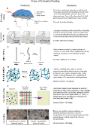


Towards the third dimension in direct electron beam writing of silver
Beilstein J. Nanotechnol. 2018, 9, 842–849, doi:10.3762/bjnano.9.78
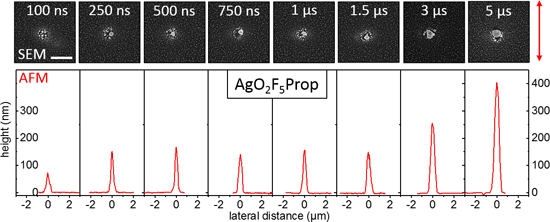
- incorporated into the deposit by ligand co-dissociation together with the dissociated residual hydrocarbons from the vacuum background [11]. Pure material could be deposited only in few cases in which an inorganic precursor compound [12][13] or catalytic activity [14] was utilized. The chemical reactions


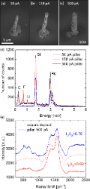
A review of carbon-based and non-carbon-based catalyst supports for the selective catalytic reduction of nitric oxide
Beilstein J. Nanotechnol. 2018, 9, 740–761, doi:10.3762/bjnano.9.68
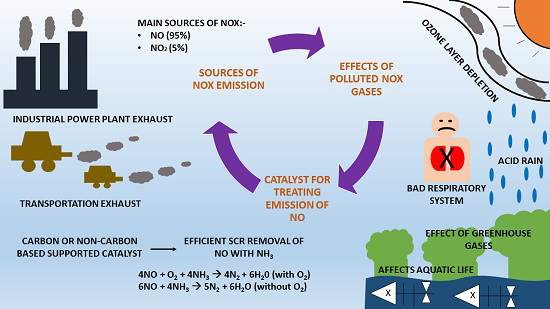
- Brønsted acid sites in the CeO2-WO3 mixed oxide catalyst. Generally, chemical reactions that occurr in the NO adsorption system involve a redox reaction on the surface of the catalyst and adsorption of NO, NH3, and O2. The rate of a chemical reaction normally depends on the catalyst, which speeds up the
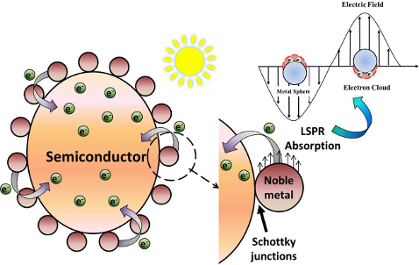
Mechanistic insights into plasmonic photocatalysts in utilizing visible light
Beilstein J. Nanotechnol. 2018, 9, 628–648, doi:10.3762/bjnano.9.59
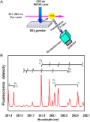
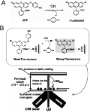
- to a fluorescent molecule, rhodamine 123, by the reaction with H2O2 and peroxidase as shown in Figure 13b [115]. Detection methods for 1O2 1O2 is singlet oxygen, which is an excited state of O2. It can be deactivated to the original stable O2 without being involved in chemical reactions or electron
- Ag, Au, and Cu surfaces, showing that low intensity visible photon irradiation significantly enhances the rate of chemical reactions. A pioneering work showed that Au NPs have potential in degrading volatile organic compounds, HCHO to CO2, under 600–700 nm red light irradiation [168]. The same group





Fabrication and photoactivity of ionic liquid–TiO2 structures for efficient visible-light-induced photocatalytic decomposition of organic pollutants in aqueous phase
Beilstein J. Nanotechnol. 2018, 9, 580–590, doi:10.3762/bjnano.9.54
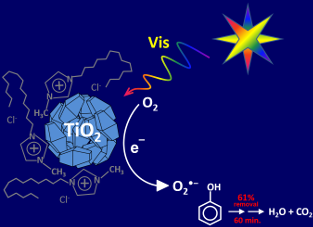
- absorption of IL–TiO2 in the visible region can be attributed to the existence of carbon species on the surface of the photocatalysts [45]. Chemical composition of ionic liquid/TiO2 composites The photocatalytic degradation is based on chemical reactions on the surface of the photocatalyst [46][47][48]. In




Electron interaction with copper(II) carboxylate compounds
Beilstein J. Nanotechnol. 2018, 9, 384–398, doi:10.3762/bjnano.9.38
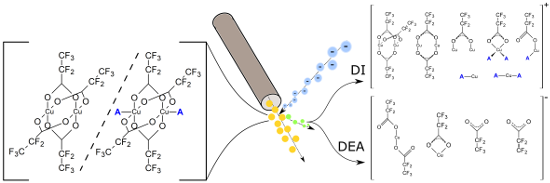
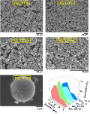
- photolithographic masks [4][5]. However, the underlying chemical reactions on the surface are still not well known. Moreover, the main problems of FEBID are co-deposited impurities resulting from incomplete dissociation of the precursor molecules. The level of purity strongly depends on the type of the precursor


BN/Ag hybrid nanomaterials with petal-like surfaces as catalysts and antibacterial agents
Beilstein J. Nanotechnol. 2018, 9, 250–261, doi:10.3762/bjnano.9.27
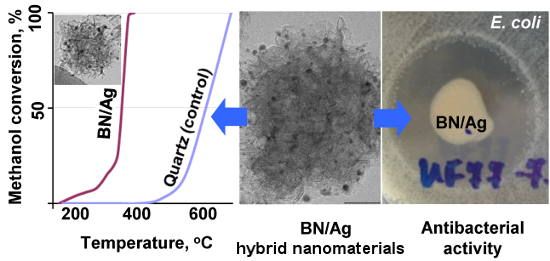
- elevated temperatures. The overall chemical reactions within BN/Ag HNMs can be presented in the following simplified forms: Where reaction 1 represents the decomposition of silver oxide, reaction 2 corresponds to oxygen activation, and reaction 3 shows the BN oxidation. Catalytic activity The results of





Electron-driven and thermal chemistry during water-assisted purification of platinum nanomaterials generated by electron beam induced deposition
Beilstein J. Nanotechnol. 2018, 9, 77–90, doi:10.3762/bjnano.9.10
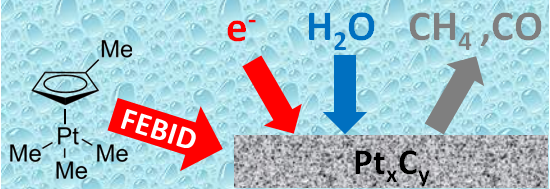
- carbon-containing precursors, a new general approach to the generation of pure metallic nanostructures could be implemented. Therefore this study aims to understand the chemical reactions that are fundamental to the water-assisted purification of platinum FEBID deposits generated from trimethyl
- understanding on the molecular level is required. The previous study [12] reported the purification process on a phenomenological level and did not provide insight in its underlying chemical reactions. It could only assume that these reactions involve the conversion of the initial carbon material to small
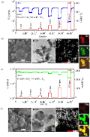
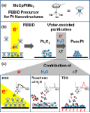
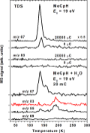
- the subsequent water-assisted purification [12] of a deposit produced from MeCpPtMe3 (b), and mass spectrometric desorption experiments applied in this work to obtain insight in the underlying chemical reactions of the water-assisted purification process (c). (a) MS signals recorded during leaking of



Review on optofluidic microreactors for artificial photosynthesis
Beilstein J. Nanotechnol. 2018, 9, 30–41, doi:10.3762/bjnano.9.5
- and enzymes. Therefore, this platform is also useful for the rapid screening of various photocatalysts [54][55][56][57][58][59]. Inexpensive, parallel tests are beneficial for the rare or expensive chemical reactions, too [60][61]. Moreover, for enzymatic reactions, the flow-based reaction has the
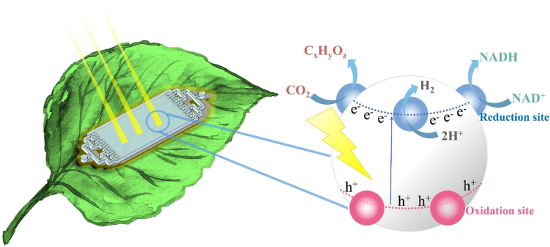
- -efficiency photocatalysis [67]. In summary, the basic mechanism of APS is comprised of three processes: (1) generation of charge carriers (i.e., electrons and holes), (2) separation and transfer of charge carriers, and (3) chemical reactions between surface species and charge carriers. Based on this


Enhanced photoelectrochemical water splitting performance using morphology-controlled BiVO4 with W doping
Beilstein J. Nanotechnol. 2017, 8, 2640–2647, doi:10.3762/bjnano.8.264
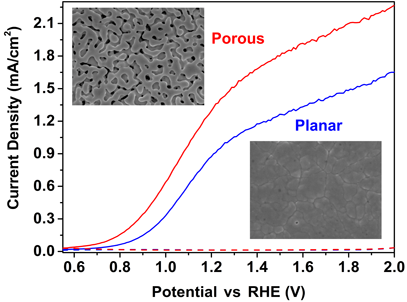
- . Photoelectrochemical (PEC) water splitting generates hydrogen through chemical reactions assisted by photo-generated electrons and holes in semiconductor materials [1][2][3]. An ideal semiconductor for PEC water splitting requires a small bandgap to capture enough solar light, a high conversion efficiency, a good
- chemical reactions and enhance light capture due to multiple light scattering within the nanostructures [11][12][13]. Many research works have been reported for enhanced PEC water splitting performances using nanostructured BiVO4 [5][6][12][14][15][16][17][18][19]. However, most of them require complex


Interactions of low-energy electrons with the FEBID precursor chromium hexacarbonyl (Cr(CO)6)
Beilstein J. Nanotechnol. 2017, 8, 2583–2590, doi:10.3762/bjnano.8.258
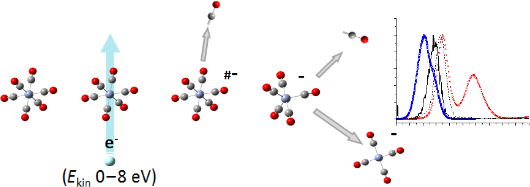
- the desired metal, with the formation of non-defined deposits on the surface. When high-energy electrons interact with the surface, a cascade of low-energy electrons (LEE) and backscattered electrons are generated. Many chemical reactions can be triggered by those secondary electrons with an energy
- backscattered electrons with the precursor molecules. LEE initiate chemical reactions on the surface by dissociative electron attachment (DEA) and dissociative electron ionization, as well as neutral dissociation. Those processes need to be well understood, in order to maximise the quality of deposited metal as



PTFE-based microreactor system for the continuous synthesis of full-visible-spectrum emitting cesium lead halide perovskite nanocrystals
Beilstein J. Nanotechnol. 2017, 8, 2521–2529, doi:10.3762/bjnano.8.252
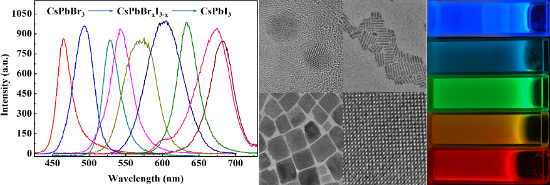
- chemical reactions and microreactor design, QDs of different characteristics can be synthesized. In addition, microreactor systems with microchannels made from poly(tetrafluoroethylene) (PTFE) capillaries provide a stable environment for the chemical reactions involving air-sensitive materials. Currently


Laser-assisted fabrication of gold nanoparticle-composed structures embedded in borosilicate glass
Beilstein J. Nanotechnol. 2017, 8, 2454–2463, doi:10.3762/bjnano.8.244
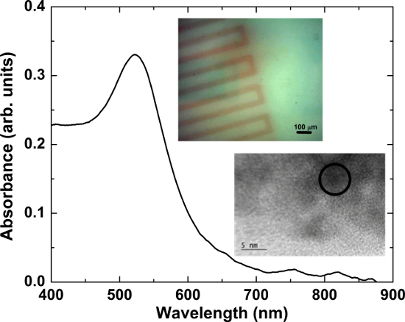
- semiconductor by varying the particle concentration [9][10][11]. Any further progress regarding detailed studies of or in finding novel applications for these materials is still hampered by the lack of efficient fabrication techniques. Although various techniques, such as chemical reactions, ion implantation


Angstrom-scale flatness using selective nanoscale etching
Beilstein J. Nanotechnol. 2017, 8, 2181–2185, doi:10.3762/bjnano.8.217
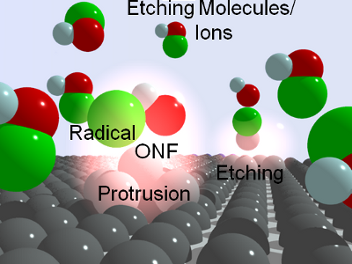
- new properties such as second harmonic generation [4], dipole-forbidden transitions [5], and indirect band transitions [6][7][8]. Because the ONF can achieve dipole-forbidden transitions, we can create selective chemical reactions that occur only where the ONF has been generated. Using this concept



Evaluating the toxicity of TiO2-based nanoparticles to Chinese hamster ovary cells and Escherichia coli: a complementary experimental and computational approach
Beilstein J. Nanotechnol. 2017, 8, 2171–2180, doi:10.3762/bjnano.8.216

- alters the rate of chemical reactions, when exposed to light (photocatalyst) [1]. TiO2-based NPs have already found wide applications as efficient photocatalysts for sterilization, sanitation, air and water purification systems, hydrogen production by water splitting, and dye-sensitized solar cells [1


Ester formation at the liquid–solid interface
Beilstein J. Nanotechnol. 2017, 8, 2139–2150, doi:10.3762/bjnano.8.213
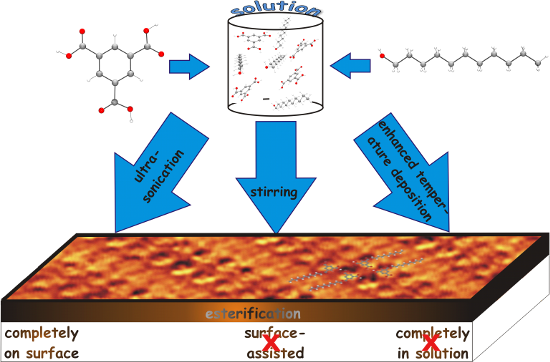
- supported. Keywords: on-surface reaction; scanning tunneling microscopy; trimesic acid; undecan-1-ol; Introduction On-surface reactions are a widespread class of chemical reactions taking place on a surface or at an interface involving active participation of two-dimensional molecular entities. This
- ambient conditions [27]. Molecular mixture at solid−liquid interfaces could possibly initiate chemical reactions and be monitored in situ with scanning tunneling microscopy (STM). Metal complexation reactions, polymerizations [28][29][30] and photochemical dimerization [31] are shown to be initiated at
- the solid–liquid interface. Initial efforts have been made to perform chemical reactions leading to covalently stabilized adlayers at metal crystal/UHV interfaces [2][10][11][12]. However, the size of covalently linked domains is often limited in UHV due to low diffusion of the components forming the


In situ controlled rapid growth of novel high activity TiB2/(TiB2–TiN) hierarchical/heterostructured nanocomposites
Beilstein J. Nanotechnol. 2017, 8, 2116–2125, doi:10.3762/bjnano.8.211
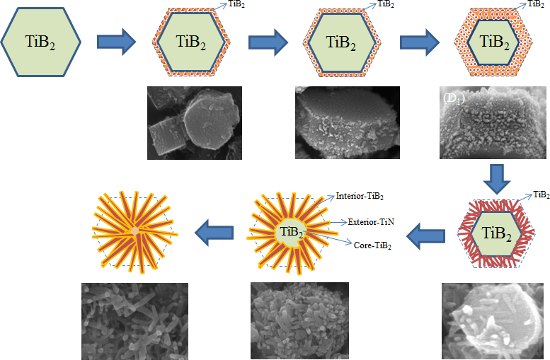
- and TiN, respectively. Additionally, a thermogravimetric and differential scanning calorimetry analyzer (TG-DSC) comparison analysis indicated that the as-synthesized samples presented better chemical activity than that of commercial TiB2 powders. Finally, the possible chemical reactions as well as
- samples. Moreover, based on the obtained experimental results and previous work, the possible chemical reactions as well as the appropriate growth mechanism of the TiB2/(TiB2–TiN) hierarchical/heterostructured nanocomposites were also discussed. Results and Discussion Figure 1a,b gives the typical field
- TiB2/(TiB2–TiN) samples could be effectively controlled through the in situ reaction coupling self-propagating high-temperature synthesis (RC-SHS) method. The results were found to be in agreement with that of our previous studies [9][10][14]. Chemical reactions and growth mechanism During the growth


Fabrication of carbon nanospheres by the pyrolysis of polyacrylonitrile–poly(methyl methacrylate) core–shell composite nanoparticles
Beilstein J. Nanotechnol. 2017, 8, 1897–1908, doi:10.3762/bjnano.8.190

- substantially, which is very important to industrial manufacturing. Yang et al. obtained carbon nanospheres with a diameter of 170–190 nm from PAN particles synthesized by a soap-less emulsion polymerization method [35]. A series of complicated chemical reactions, including oxidization, dehydrogenation



Process-specific mechanisms of vertically oriented graphene growth in plasmas
Beilstein J. Nanotechnol. 2017, 8, 1658–1670, doi:10.3762/bjnano.8.166
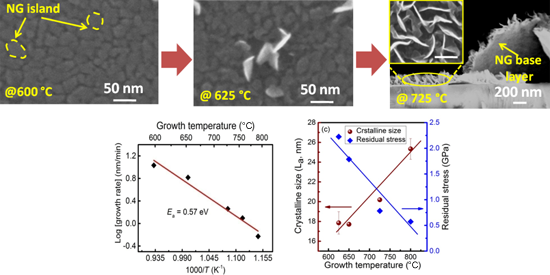
- have observed the effect of various process parameters such as carrier gas, nature of substrate, total pressure and microwave power on the growth of VGNs. However, the plasma chemistry and chemical reactions with the substrate surface during growth are still a matter of study [9][27][28][29][30][31][32
- . Therefore, the electron gas acts as an effective negative bias field to generate high-energy ions. The electrons and ions interact with other plasma species through chemical reactions that lead to molecular decomposition and transformative re-assembly [57]. The species that influence the growth of carbon
- maintained constant. Hence, this result is related to the increased mobility of surface atoms such that the rates of adsorption and surface chemical reactions become higher at high temperatures; this reduces the surface energy of the substrate. Similar transformations of islands to VGNs have also been


Parylene C as a versatile dielectric material for organic field-effect transistors
Beilstein J. Nanotechnol. 2017, 8, 1532–1545, doi:10.3762/bjnano.8.155
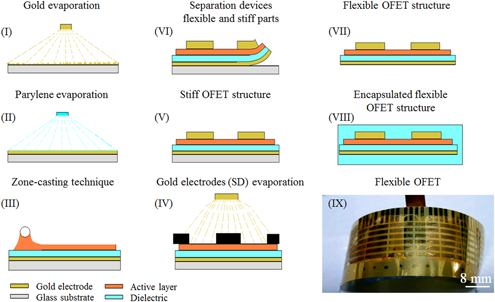
- with the accompanying chemical reactions, is presented in Figure 1. There is a number of advantages of the parylene technology. First of all, being a gas-phase diffusion-controlled process, it yields smooth pinhole-free conformal coatings with excellent penetration abilities. Second, there are several
- parylene layer, assures a sufficient protection of OFETs against oxygen and water, which is especially important for transistors with n-type channels. Schematic representation of the deposition process of Parylene C with the respective chemical reactions. Reprinted with permission from [28], copyright 2016




Spin-chemistry concepts for spintronics scientists
Beilstein J. Nanotechnol. 2017, 8, 1427–1445, doi:10.3762/bjnano.8.143
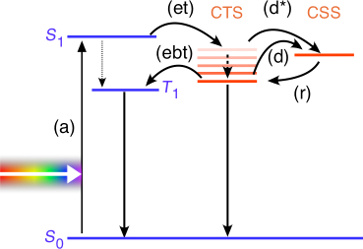
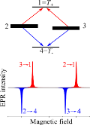
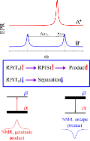
- Introduction In general, chemical reactions are discussed in terms of thermodynamics: reaction enthalpy, reaction entropy and free energy. It is also recognized that steric and charge effects can lead to kinetic control of the reaction dynamics by introduction of activation energies. In some cases, chemical
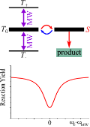
- chemistry as a new field, which was initially mainly run by physical organic chemists as well as EPR and NMR spectroscopists. The discovery of CIDEP and CIDNP was followed by reports of MFE [8][9] on chemical reactions and MIE [10][11]. All these effects originate from the spin-conserving nature of most
- chemical reactions and from singlet–triplet interconversion in radical pairs, which is sensitive to external magnetic fields and local hyperfine fields of magnetic nuclei. Although experiments have been done in gas phase (see Sections IV.A and V.A of [2] and the references therein) and in solid state (e.g



A top-down approach for fabricating three-dimensional closed hollow nanostructures with permeable thin metal walls
Beilstein J. Nanotechnol. 2017, 8, 1231–1237, doi:10.3762/bjnano.8.124
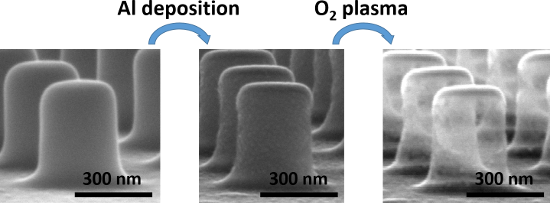
- –gel chemical reactions [1][2][3][4][5]. These procedures allow the synthesis of disperse, hollow nanostructures with precise control of their physical and chemical properties, such as size, shape, material composition and structural characteristics of the shell (thickness, permeability and surface


Energy-level alignment at interfaces between manganese phthalocyanine and C60
Beilstein J. Nanotechnol. 2017, 8, 927–932, doi:10.3762/bjnano.8.94
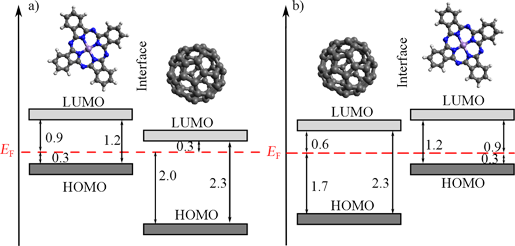
- interfaces as discussed below. There is no evidence for any additional contribution to the spectra and all spectra can be well described by a superposition of the spectra of pure C60 and MnPc. This clearly indicates the absence of chemical reactions at the interface studied here, as otherwise additional


Photo-ignition process of multiwall carbon nanotubes and ferrocene by continuous wave Xe lamp illumination
Beilstein J. Nanotechnol. 2017, 8, 134–144, doi:10.3762/bjnano.8.14
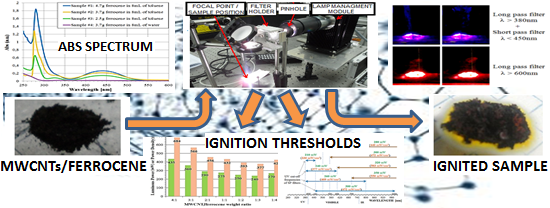
- process (b). Chemical reactions relative to photo-induced electron and energy transfer in MWNTs–FeCp2 nanocomposites occurring during the photo-induced ignition process. Solvent type and amount of ferrocene used in this work.




Nanocrystalline TiO2/SnO2 heterostructures for gas sensing
Beilstein J. Nanotechnol. 2017, 8, 108–122, doi:10.3762/bjnano.8.12
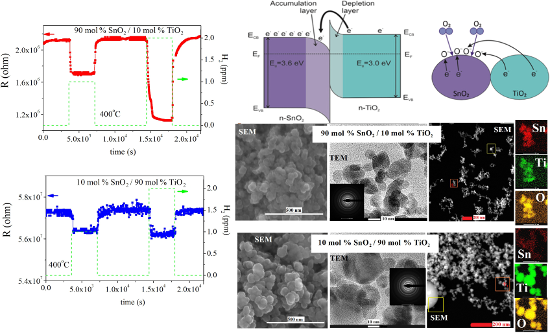
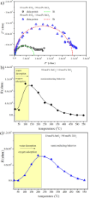
- , oxygen adsorption and semiconducting behavior at higher temperatures. As can be seen in Figure 8b, for SnO2-rich heterostructures Tmax is about 100–125 °C, while for TiO2-rich heterostructures as shown in Figure 8c, Tmax is much higher within the range of 200–250 °C. From the thermodynamics of chemical
- reactions it is well known that oxygen adsorption (described, e.g., by the coverage degree Γ) is an exothermic process and decreases with temperature [34]. Under the experimental conditions this situation is given when the adsorption processes remain in thermodynamic equilibrium, i.e., at temperatures