


Search results
Search for "delivery system" in Full Text gives 92 result(s) in Beilstein Journal of Nanotechnology.
Development of polycationic amphiphilic cyclodextrin nanoparticles for anticancer drug delivery
Beilstein J. Nanotechnol. 2017, 8, 1457–1468, doi:10.3762/bjnano.8.145
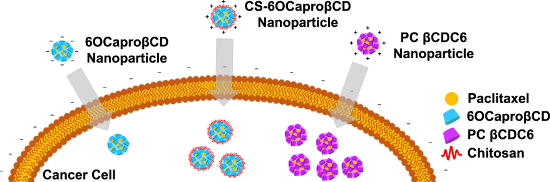
- cells. The amphiphilic, cationic PC βCDC6 derivative was used as the anticancer drug carrier delivery system for PCX for the first time in this study. There are various studies in which this derivative is used as a gene transfer delivery system; however, there is only example where this derivative was
- used as a drug delivery system. This was a study regarding the non-polar anxiolytic drug diapezam realized by Mendez-Ardoy et al. [22]. Our goal is to evaluate the potential of the polycationic CD nanoparticles as an anticancer drug delivery system. In fact, these polycationic CDs were evaluated for
- their intrinsic apoptotic effect in our first paper [26] in unloaded blank nanoparticle form. This study focuses on the nanocarrier properties and drug delivery system potential of the polycationic CD nanoparticles for PCX, which is an anticancer drug with several serious bioavaibility and toxicity


Cationic PEGylated polycaprolactone nanoparticles carrying post-operation docetaxel for glioma treatment
Beilstein J. Nanotechnol. 2017, 8, 1446–1456, doi:10.3762/bjnano.8.144
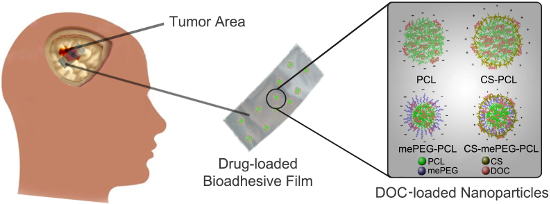
- than 100 nm and a net positive surface charge to facilitate cellular internalization of drug-loaded nanoparticles. Hydroxypropyl cellulose films were prepared to incorporate these nanoparticle dispersions to complete the implantable drug delivery system. Results: The diameter of core–shell
- nanoparticles and their zeta potential can be varied with chitosan coating. When further loaded into films, these nanoparticles seem to be a potential drug delivery system for docetaxel for glioma treatment and a good candidate for further evaluation in animal studies. This film formulation can be implanted




3D Nanoprinting via laser-assisted electron beam induced deposition: growth kinetics, enhanced purity, and electrical resistivity
Beilstein J. Nanotechnol. 2017, 8, 801–812, doi:10.3762/bjnano.8.83
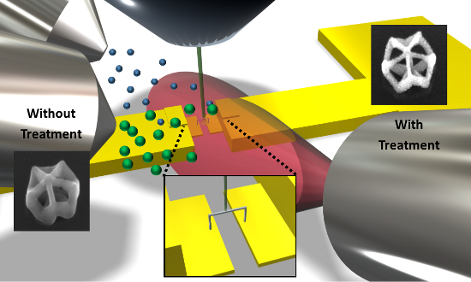
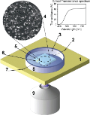
- 1 nm was used while varying dwell times per pixel. A previously developed computer aided design program was used to determine the dwell times per pixel necessary to construct complex shapes. The beam energy and current for all patterns was set at 30 keV and 21 pA, respectively. Laser delivery system
- automated axial translation. An objective lens located at the shaft tip projects the 100 µm diameter laser spot with a Gaussian distribution at the coincidence point between the focused electron beam and the gas injection systems. The laser delivery system is a prototype under development by Waviks, Inc
- of different growth conditions. Schematic illustrating the experimental system which includes a laser delivery system, precursor and co-reactant gas delivery systems, and the electron beam all coincident to the same region. The schematic also illustrates the deposition of the 3D suspended bridge


Chitosan-based nanoparticles for improved anticancer efficacy and bioavailability of mifepristone
Beilstein J. Nanotechnol. 2016, 7, 1861–1870, doi:10.3762/bjnano.7.178
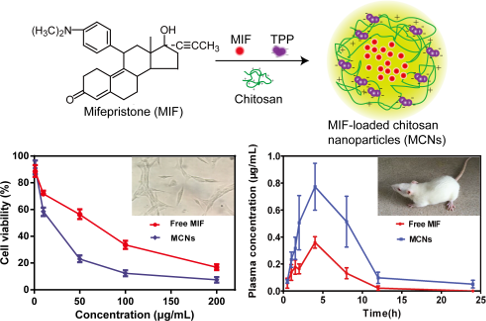
- mechanism of action. However, application of MIF is limited by its poor water solubility and low oral bioavailability. In this work, we developed a drug delivery system based on chitosan nanoparticles (CNs) to improve its bioavailability and anticancer activity. The MIF-loaded chitosan nanoparticles (MCNs
- curve from 0 to 24 h compared with free MIF. These results demonstrated that MCNs could be developed as a potential delivery system for MIF to improve its anticancer activity and bioavailability. Keywords: anticancer; chitosan; drug delivery; mifepristone; nanoparticles; pharmacokinetics; sustained
- increased its efficacy by sustained release to reduce drug crystallization [33]. These results suggested that MCNs might be a good drug delivery system for delivery of MIF for cancer therapy. Pharmacokinetic study In our previous study, we found MIF showed distinct pharmacokinetic differences between


Gold nanoparticles covalently assembled onto vesicle structures as possible biosensing platform
Beilstein J. Nanotechnol. 2016, 7, 655–663, doi:10.3762/bjnano.7.58
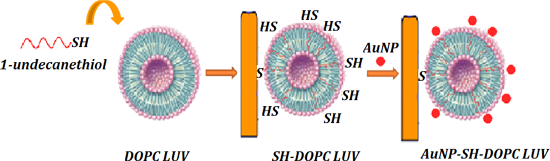
- methodology. This nanomaterial offers interesting possibilities and future applications such as its use in the design of immunosensors. Moreover, the developed methodology can be a promising candidate for other applications as optical addressable delivery system and affinity columns. Experimental Synthesis of


Comparison of the interactions of daunorubicin in a free form and attached to single-walled carbon nanotubes with model lipid membranes
Beilstein J. Nanotechnol. 2016, 7, 524–532, doi:10.3762/bjnano.7.46
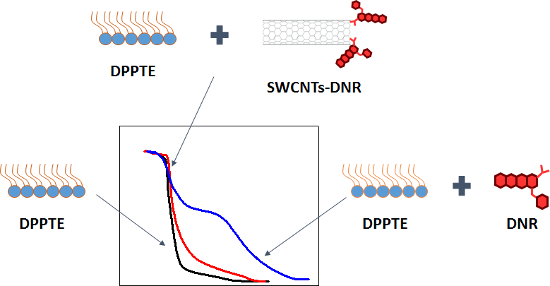
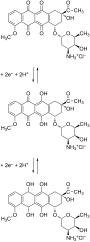
- includes liposomes, which are commercially available daunorubicin formulation (Daunoxome®) used in the treatment of Kaposi’s sarcoma [6]. Despite that, there are still numerous studies on the improvement of this drug delivery system aiming at enhancing drug loading into cells by using specific interactions
- . Moreover, it was shown that the surface concentration of the drug on the electrode surface is similar for both the drug in a free form and the drug–nanocarrier adduct. This observation proves that application of single-walled carbon nanotubes as drug delivery system allows for the transport of the




pH-Triggered release from surface-modified poly(lactic-co-glycolic acid) nanoparticles
Beilstein J. Nanotechnol. 2015, 6, 2504–2512, doi:10.3762/bjnano.6.260
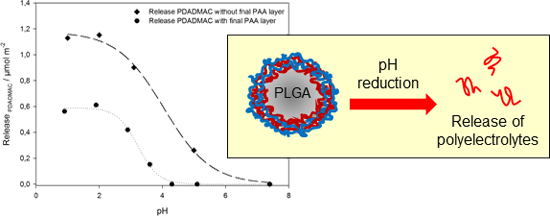
- Nanoparticles (NP) of poly(lactic-co-glycolic acid) (PLGA) represent a promising biodegradable drug delivery system. We suggest here a two-step release system of PLGA nanoparticles with a pH-tunable polymeric shell, providing an initial pH-triggered step, releasing a membrane-toxic cationic compound. PLGA
- . We present here the idea of a two-step delivery system consisting of core–shell nanoparticles. The outer shell is susceptible to changes of the pH value, such that the release of a membrane-toxic cationic compound is triggered by a reduced pH value in the endolysosomal compartment of the cells. The


Nanofibers for drug delivery – incorporation and release of model molecules, influence of molecular weight and polymer structure
Beilstein J. Nanotechnol. 2015, 6, 1939–1945, doi:10.3762/bjnano.6.198
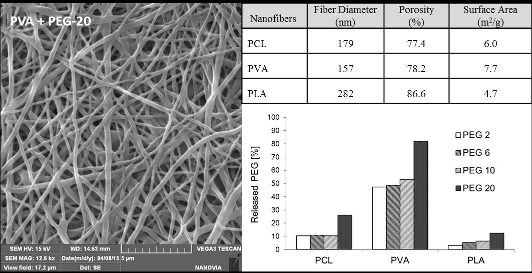
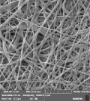
- delivery system with the diffusion rate of the therapeutic agent stable throughout the life. The structure of the nanofibrous drug delivery system plays a key role in the drug release process. The fiber diameter, specific surface area, size and total volume of pores significantly influence the convection



Filling of carbon nanotubes and nanofibres
Beilstein J. Nanotechnol. 2015, 6, 508–516, doi:10.3762/bjnano.6.53
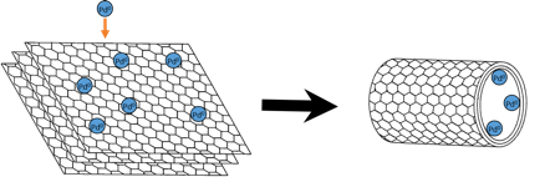
- delivery and medical imaging applications of SWCNT and MWCNTs have been identified, this line of research has only very recently emerged [117][118][119]. Further investigations into the selective binding of functional groups and various viruses or tumours could provide for an effective drug delivery system


Release behaviour and toxicity evaluation of levodopa from carboxylated single-walled carbon nanotubes
Beilstein J. Nanotechnol. 2015, 6, 243–253, doi:10.3762/bjnano.6.23
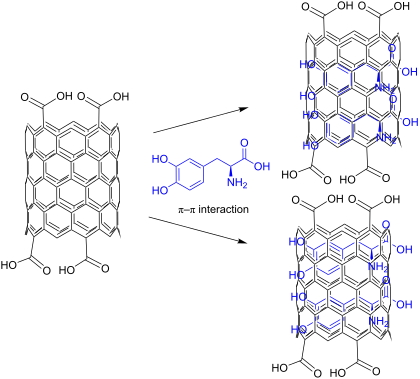
- suggests that the newly synthesized nanohybrid is a promising drug delivery system for the delivery of LD to nervous system. Experimental Materials Short, carboxyl single-walled carbon nanotubes (SWCNT–COOH) produced by chemical vapour deposition with a diameter of 1–2 nm an purity of 90% (w/w %) were




Anticancer efficacy of a supramolecular complex of a 2-diethylaminoethyl–dextran–MMA graft copolymer and paclitaxel used as an artificial enzyme
Beilstein J. Nanotechnol. 2014, 5, 2293–2307, doi:10.3762/bjnano.5.238
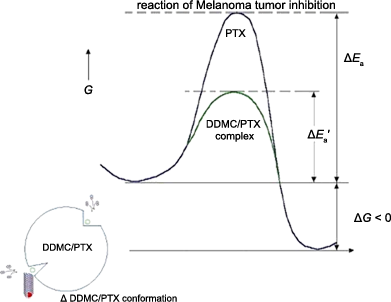
- complex is considered to be useful as a drug delivery system (DDS) for anticancer compounds since it formed a stable polymeric micelle in water. The resistance of B16F10 melanoma cells to PTX was shown clearly through a maximum survival curve. Conversely, the DDMC/PTX complex showed a superior anticancer
- cancer cells; paclitaxel; supramolecular complex; Review Introduction As a means of delivering a drug to a target effectively, the enhanced permeation and retention (EPR) effect and reticuloendothelial system (RES) were enabled by using a polymer drug delivery system (DDS), and it is thought to
- an anticancer agent can be prevented if the agent promotes positive allosteric modulation according to the enzyme reaction model of a 1:1 ratio of a substrate and enzyme, which is the ratio utilized in vivo. Gene delivery system On the other hand, development of the gene delivery system in field of


Carbon-based smart nanomaterials in biomedicine and neuroengineering
Beilstein J. Nanotechnol. 2014, 5, 1849–1863, doi:10.3762/bjnano.5.196
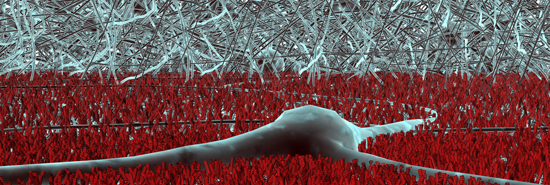
- presence of reactive functional groups and of localised π-electrons, which promote the π–π bond with aromatic compounds, render graphene a suitable candidate as a drug delivery system. Several remarkable studies in this area have been performed, including those involving the functionalisation of GO by PEG


Different endocytotic uptake mechanisms for nanoparticles in epithelial cells and macrophages
Beilstein J. Nanotechnol. 2014, 5, 1625–1636, doi:10.3762/bjnano.5.174
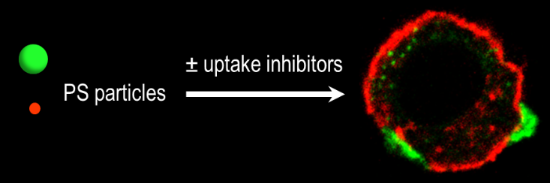
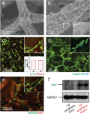
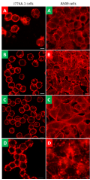
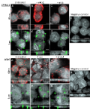
- pathway of a NP will have direct consequences on its intracellular localization; hence, understanding the overall NP distribution in a specific compartment, such as endosomes, lysosomes or others, might provide some interesting suggestions for developing a future drug delivery system. To gain more insight



PEGylated versus non-PEGylated magnetic nanoparticles as camptothecin delivery system
Beilstein J. Nanotechnol. 2014, 5, 1312–1319, doi:10.3762/bjnano.5.144


Nanodiamond-DGEA peptide conjugates for enhanced delivery of doxorubicin to prostate cancer
Beilstein J. Nanotechnol. 2014, 5, 937–945, doi:10.3762/bjnano.5.107
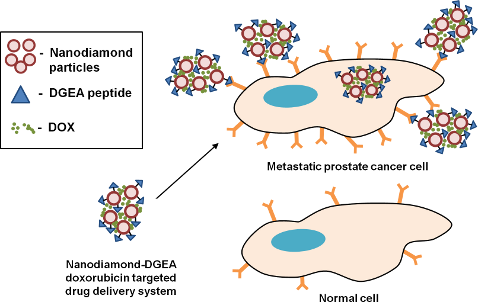
- delivery system for bone metastatic prostate cancer was developed, characterized, and evaluated in vitro. NDs were conjugated with the Asp–Gly–Glu–Ala (DGEA) peptide to target α2β1 integrins over-expressed in prostate cancers during metastasis. To facilitate drug delivery, DOX was adsorbed to the surface
- work, we developed a novel ND meditated drug delivery system to increase specificity of DOX by utilizing DGEA to target the α2β1 integrins overexpressed in metastatic prostate cancers. ND-DGEA conjugates and the ND-DGEA+DOX system were synthesized and evaluated for multifunctional applications (i.e
- effects of the drug delivery system were due to the combination of enhanced targeting and drug delivery instead of potential toxicity of ND or DGEA peptide, PC3 cells were also exposed to ND, ND-DGEA, and free DGEA. The cell viability was quantified with a 3-(4,5-dimethylthiazol-2-yl)-5-(3


Near-infrared dye loaded polymeric nanoparticles for cancer imaging and therapy and cellular response after laser-induced heating
Beilstein J. Nanotechnol. 2014, 5, 313–322, doi:10.3762/bjnano.5.35
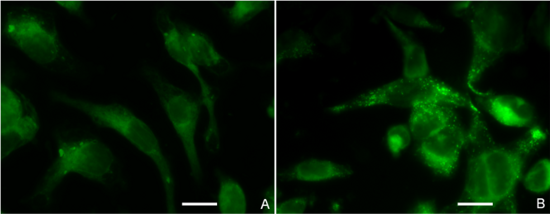
- after background subtraction). The ratio R was then determined by normalizing the total pixel intensity of this region of interest to its total area. HT treatment Two different heating modes, namely (1) an incubator and (2) a laser/NP HT delivery system, were used for in vitro studies. Detailed


Magnetic-Fe/Fe3O4-nanoparticle-bound SN38 as carboxylesterase-cleavable prodrug for the delivery to tumors within monocytes/macrophages
Beilstein J. Nanotechnol. 2012, 3, 444–455, doi:10.3762/bjnano.3.51
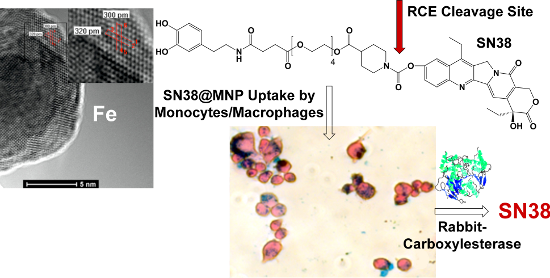
- physiological conditions, which is highly desired for a cell-based delivery system. We have established that when Mo/Ma cells are used as carriers, the tumor-homing process takes about one day. Their robust stability will ensure the integrity of the MNPs after delivery to the tumor site. The uptake efficiency





