


Search results
Search for "doping" in Full Text gives 427 result(s) in Beilstein Journal of Nanotechnology. Showing first 200.
Enhanced electronic transport properties of Te roll-like nanostructures
Beilstein J. Nanotechnol. 2022, 13, 1284–1291, doi:10.3762/bjnano.13.106
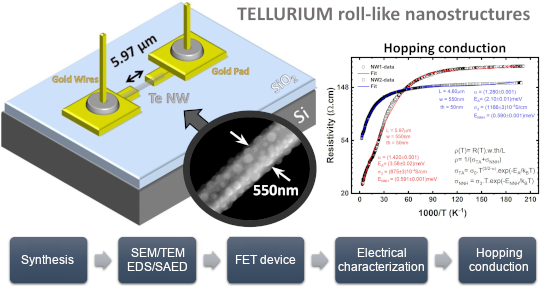
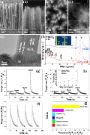
- 77 K, a power-law dependence of µ ~ T−1.5 [37] or weaker was described in the literature [34][40]. The power law strongly depends on the doping level of the t-Te crystals [34]. In our case, a weaker dependency with α = (1.420 ± 0.001) and (1.280 ± 0.001), see Equation 2, for NW-1 and NW-2
- ionization energy of the defects found on these nanostructures also favors the control of doping and, consequently, the electrical properties of the nanowires. These superior quality transport properties demonstrate the potential use of t-Te roll-like nanostructures for electronic device applications. (a–c




Studies of probe tip materials by atomic force microscopy: a review
Beilstein J. Nanotechnol. 2022, 13, 1256–1267, doi:10.3762/bjnano.13.104
- + doping. The fluorescence was restored after further adding ascorbic acid (AA) based on a redox reaction. A rapid detection method for Fe3+ and AA was established and successfully used to detect Fe3+ and AA in human serum. The DMT-AuAgNCs were successfully prepared using 4,6-diaminopyrimidine-2-thiol (DMT
Application of nanoarchitectonics in moist-electric generation
Beilstein J. Nanotechnol. 2022, 13, 1185–1200, doi:10.3762/bjnano.13.99
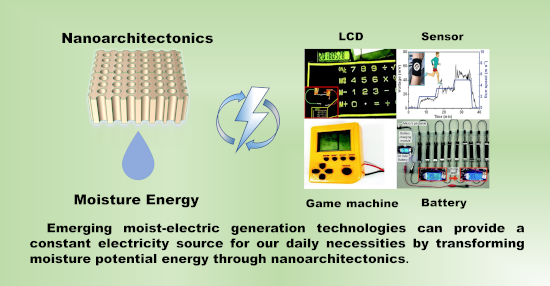
- materials such as paper [79], cellulose nanofibrils, which were exfoliated mechanically from naturally biomass [80], natural wood [81]. In other works with cellulose doping [55][82][83], voltages of, respectively, 250, 100, and 300 mV were obtained. Li et al. studied in detail the effects of various


Rapid fabrication of MgO@g-C3N4 heterojunctions for photocatalytic nitric oxide removal
Beilstein J. Nanotechnol. 2022, 13, 1141–1154, doi:10.3762/bjnano.13.96
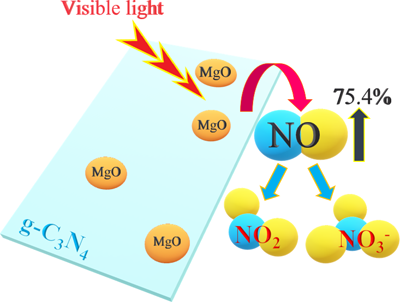
- spectroscopy (DRS) was used to determine the optical properties and bandgap energies of the material. The bandgap of the material decreases with increasing amounts of MgO. The photoluminescence spectra indicate that the recombination of electron–hole pairs is hindered by doping MgO onto g-C3N4. Also, NO
- visible light region, including nonmetal and noble-metal doping, metal deposition, and formation of heterojunctions [21][22]. The construction of heterojunction structures has shown its effectiveness in improving photocatalytic performance by enhancing the separation of charge carriers and optimizing the
- atoms [64][65][66]. Also, Liang and co-workers reported that the recombination of the e−–h+ pairs could be inhibited by doping MgO into g-C3N4 [32]. When MgO is added, the defect concentration increases and Mg and O vacancies are generated in MgO@g-C3N4. These defects work as the electron traps, which






Recent advances in green carbon dots (2015–2022): synthesis, metal ion sensing, and biological applications
Beilstein J. Nanotechnol. 2022, 13, 1068–1107, doi:10.3762/bjnano.13.93
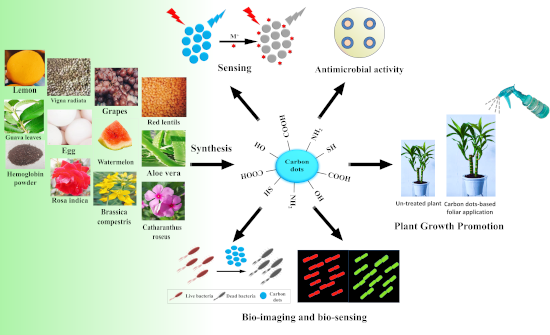
- proteins, which makes them a better option based on the fact that surface functionality of CDs can be achieved without adding extra substances for doping, modification and surface passivation [54]. A summary of CDs synthesized from carbon-rich plant extract without surface-passivating agents and their
- CDs containing surfactants that contain nitrogen, phosphorus, or sulfur [16][88]. Usually, CDs synthesized from a single precursor without any doping agent have low QYs and are inadequate for bioimaging and other applications. Numerous researches claim that co-doping, or the simultaneous doping of two
- or more distinct atoms, can mitigate the drawbacks of CDs. The optical characteristics and applications of CDs may be enhanced by doping them with nitrogen, sulfur, and other elements. Due to the synergistic interaction between the doped heteroatoms in CDs, the co-doping with heteroatoms has started




Electrocatalytic oxygen reduction activity of AgCoCu oxides on reduced graphene oxide in alkaline media
Beilstein J. Nanotechnol. 2022, 13, 1020–1029, doi:10.3762/bjnano.13.89
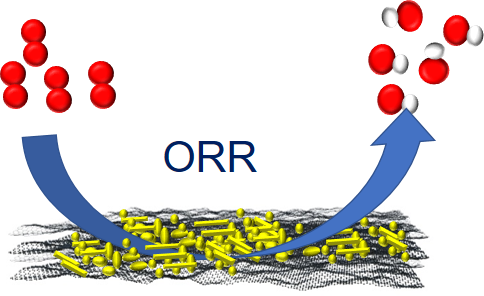
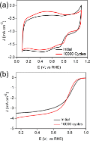
- trimetallic atoms finely dispersed over rGO. Moreover, based on the d-band centre theory, the low value of Ag impacts the low oxygen absorption energy, which can be boosted by doping with copper atoms on the surface [31]. The efficiency of the ORR depends on the design and composition of the catalyst for


Theoretical investigations of oxygen vacancy effects in nickel-doped zirconia from ab initio XANES spectroscopy at the oxygen K-edge
Beilstein J. Nanotechnol. 2022, 13, 975–985, doi:10.3762/bjnano.13.85
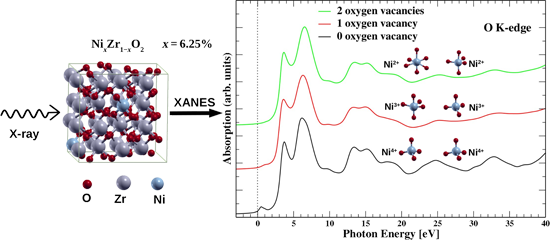
- photoelectron spectroscopy (XPS) [26], XANES spectra [27], and synchrotron radiation measurements [4], where it was suggested that for every two dopant atoms of Fe in zirconia, one single O vacancy is created. It is, thus, expected that in similarity to the effect of Fe doping in zirconia, substitutional Ni in
- increase of this pre-edge peak with Fe concentration, which may indicate an increase of unoccupied 3d states in the system. In the present work, we expand the study of transition metal doping of ZrO2 by considering another magnetic dopant, namely nickel (Ni), which has oxidation states similar to those of
- structure. The fluorite structure is not stable under ambient conditions and, thus, zirconia is usually found in the monoclinic phase. The cubic distorted fluorite structure may however be stabilized by a doping or by deposition as a thin film (because the surface energy of the cubic structure is lower than


Solar-light-driven LaFexNi1−xO3 perovskite oxides for photocatalytic Fenton-like reaction to degrade organic pollutants
Beilstein J. Nanotechnol. 2022, 13, 882–895, doi:10.3762/bjnano.13.79
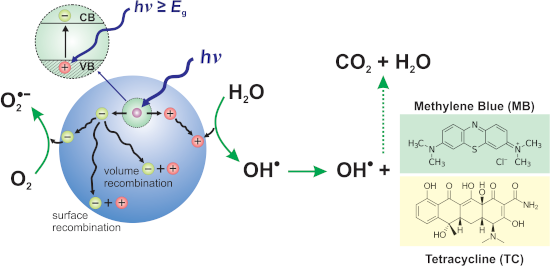
- [24], carbon spheres [25], BiOBr [26], and Ag2CrO4 [27]) to form heterojunction structures or doping other atoms into LaFeO3 [28] are comprehensively developed. For instance, Orak et al. impregnated LaFeO3 or LaTi0.15Fe0.85O3 on the monolithic cordierite structure, which could provide light
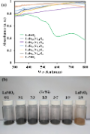
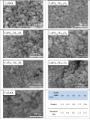
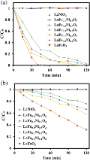
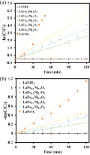
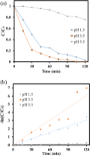
- essential role in photocatalytic reactions for wastewater [38]. Fe doping of LaNiO3 revealed the potential of tuning bandgap and boosting the light absorption to degrade RhB [39]. However, little literature comprehensively and systematically discusses the effect of different doping ratios on photocatalytic
- reactions. Moreover, LaNiO3 revealed broad absorption in the visible light range [38], so the Ni doping was expected to improve the visible light harvesting of LaFeO3. Accordingly, little literature explored the effect of Ni substitution to LaFeO3 on the performance of photocatalytic Fenton-like reaction to



Optimizing PMMA solutions to suppress contamination in the transfer of CVD graphene for batch production
Beilstein J. Nanotechnol. 2022, 13, 796–806, doi:10.3762/bjnano.13.70
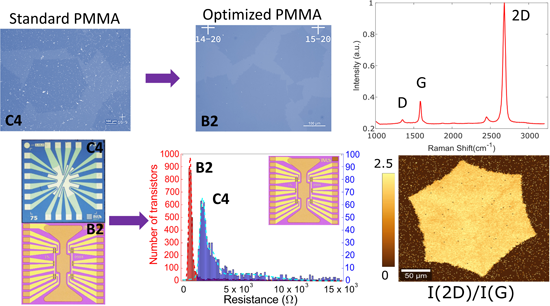
- be considered: (i) metallic particles from the Cu or Ni etching process and (ii) PMMA residues after the removal and rinsing processes. Both contaminations are leading causes of undesired p-type doping in CVD graphene, accompanied by a deterioration of its electrical properties [19][20][21][22]. The
- the PMMA mixture, we consider that the differences in Raman spectra between the different samples can be attributed to adsorbed PMMA residues. Such residues could absorb water and oxygen molecules, conferring p-type doping to graphene [29]. Conversely, by tracking the G phonon band features in Raman
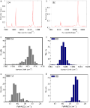
- spectra, we can correlate the degree of doping in graphene [30][31] with PMMA residues. A comparison of the statistical data of the G band position and FWHM(G) of graphene transferred with C4 and B2 PMMA is presented in Figure 3. Representative Raman spectra for the two cases are shown in Figure 3a and




Nanoarchitectonics of the cathode to improve the reversibility of Li–O2 batteries
Beilstein J. Nanotechnol. 2022, 13, 689–698, doi:10.3762/bjnano.13.61
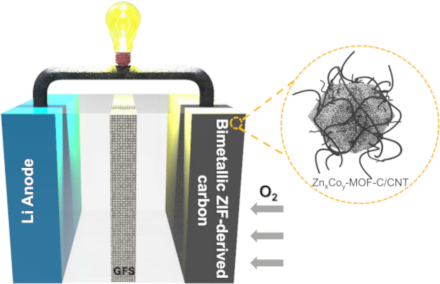
- inferred that the crystallinity and N content in the ZnxCoy–C particles can be increased by decreasing the Zn/Co ratio, since the metallic Co facilitates graphitization and N doping at a given temperature. Figure 5a shows the electrical conductivities of ZnxCoy–C/CNT composites, indicating that the Zn1Co4



Tunable high-quality-factor absorption in a graphene monolayer based on quasi-bound states in the continuum
Beilstein J. Nanotechnol. 2022, 13, 675–681, doi:10.3762/bjnano.13.59
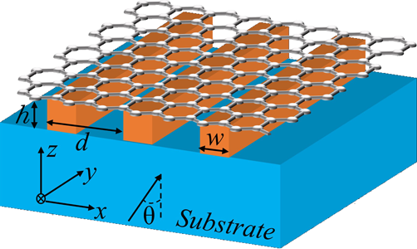
- structure, graphene supports much stronger binding of surface plasmon polaritons (SPPs) with less loss, which leads to a longer propagation distance compared with traditional metal SPPs [35]. In addition, its conductivity can be dynamically controlled by chemical doping or electrostatic fields owing to the


Sodium doping in brookite TiO2 enhances its photocatalytic activity
Beilstein J. Nanotechnol. 2022, 13, 599–609, doi:10.3762/bjnano.13.52
- Boxiang Zhuang Honglong Shi Honglei Zhang Zeqian Zhang School of Science, Minzu University of China, 27 Zhong guancun South Avenue, Haidian District, Beijing, 100081, People's Republic of China 10.3762/bjnano.13.52 Abstract We report in this work that sodium doping of brookite TiO2 effectively
- structure and produce microstructures such as the core–shell structure, local lattice distortion, interstitial atoms, and atomic vacancies, which are critical to its excellent photocatalytic activity. Keywords: brookite titanium dioxide; core–shell structure; photocatalytic activity; sodium doping; twins
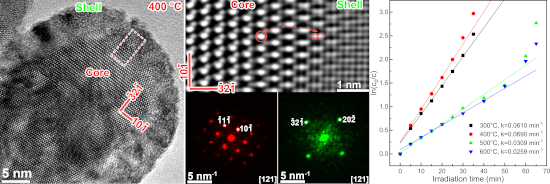
- , the Na doping in the Ti site will destroy the local atomic arrangement of the brookite phase and produce some microstructures. Figure 6a displays a typical high-resolution transmission electron microscopy (HRTEM) image of the sample calcinated at 400 °C, oriented at the [121]Brookite zone axis. The


Zinc oxide nanostructures for fluorescence and Raman signal enhancement: a review
Beilstein J. Nanotechnol. 2022, 13, 472–490, doi:10.3762/bjnano.13.40
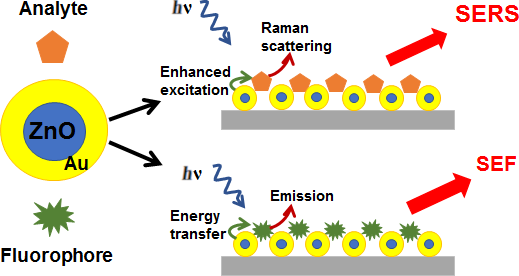
- SERS activity of ZnO is weak [15] it can be improved by doping with heavy elements or by combining ZnO nanostructures with noble metals, thus increasing the electromagnetic or the chemical enhancement factor. Combined nanomaterials can offer increased SERS amplification due to both metal-induced EM and
- unoccupied molecular orbital level (LUMO) of the analyte molecules match the conduction band (CB) and valence band (VB) of the semiconductor. The EM effect can be amplified by shifting the LSPR peak to the near infrared (NIR) or visible spectral region by doping the semiconductor and, thus, increasing the
- development of composite semiconductor–noble metal-based substrates is desirable since they could be implemented as reusable, low-cost SERS substrates for ultrasensitive detection of analytes. ZnO lattice defects and doping ZnO nanostructures usually present two emission bands, namely a narrow UV band




A chemiresistive sensor array based on polyaniline nanocomposites and machine learning classification
Beilstein J. Nanotechnol. 2022, 13, 411–423, doi:10.3762/bjnano.13.34
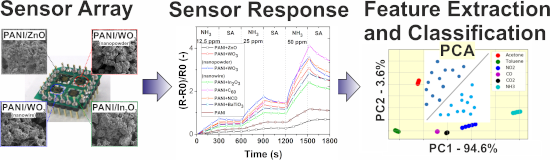
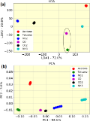
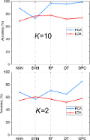
- concentration due to PANI doping and the formation of charge transfer complexes [20]. The decrease of electrical resistance is caused by the greater mobility of the dopant ions, related to the development of PANI chains. Furthermore, the swelling effect contributes to the change in resistivity [21]. Statistical




Electrostatic pull-in application in flexible devices: A review
Beilstein J. Nanotechnol. 2022, 13, 390–403, doi:10.3762/bjnano.13.32
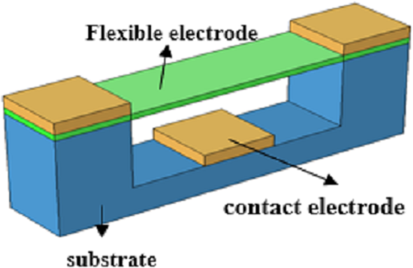
- a lateral spacing of 50 nm. The pull-in voltage was −1.8 V and the switching ratio was 105. However, the introduction of heavy doping will increase the risk of failure. In situ technique: In 2010, Andzane et al. [14] used the in situ technique to characterize Mo6S3I6 NW electrodes. The Mo6S3I6 beam
- variability. Boodhoo et al. [38] investigated the influence of the doping level on the gate voltage by preparing bilateral-gate Si NW transistors. Figure 10 shows the NEM-PUF structure prepared by Hwang and co-workers [79]. The device uses Si NWs as a moving electrode and the two gates (G1/G2) are
- encryption capacity by applying different doping levels on the source and drain sides of Si NWs. A NEM-PUF is ideal for outdoor and military applications due to the unique encryption formed by the random stiction of the devices during manufacturing. Microscale energy systems Electrostatically driven switches


Selected properties of AlxZnyO thin films prepared by reactive pulsed magnetron sputtering using a two-element Zn/Al target
Beilstein J. Nanotechnol. 2022, 13, 344–354, doi:10.3762/bjnano.13.29
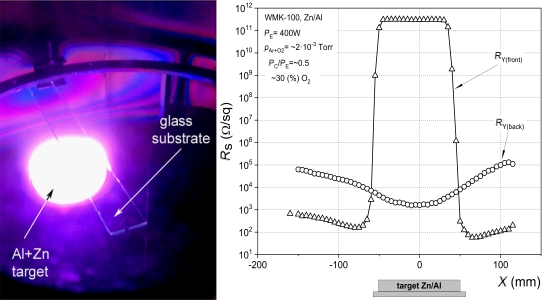
- high transparency in the visible wavelength range and, simultaneously, poor intrinsic conductivity. However, substitutional doping by Al replacing Zn provides an extra electron, which can populate the conduction band and lead to an increase in conductivity. This implication is in good agreement with



Engineered titania nanomaterials in advanced clinical applications
Beilstein J. Nanotechnol. 2022, 13, 201–218, doi:10.3762/bjnano.13.15
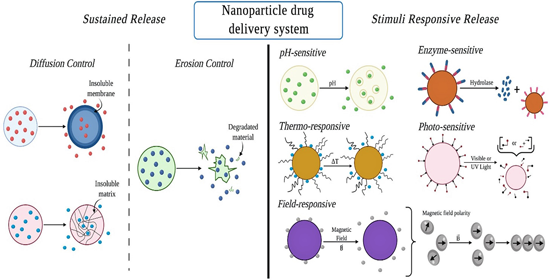
- intrinsic photocatalytic property, which can kill even antibiotic-resistant bacteria in the presence of UV light; however, UV light is not feasible in clinical situations since it poses a hazard to human cells and the significant energy input required is inefficient. In this context, doping of TiO2 with


A comprehensive review on electrospun nanohybrid membranes for wastewater treatment
Beilstein J. Nanotechnol. 2022, 13, 137–159, doi:10.3762/bjnano.13.10
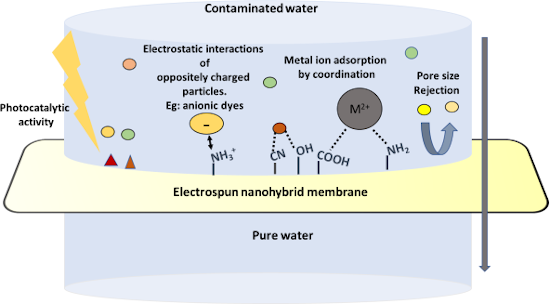
- particulate matter. Ge et al. developed an electrospun nanocomposite with rare earth-fused polyurethane to adsorb volatile organic compounds, which are air pollutants [16]. Al-Attabi et al. fabricated a nanohybrid for the submicrometer aerosol particle size filtration by doping wrinkled silica into PAN via




Tin dioxide nanomaterial-based photocatalysts for nitrogen oxide oxidation: a review
Beilstein J. Nanotechnol. 2022, 13, 96–113, doi:10.3762/bjnano.13.7
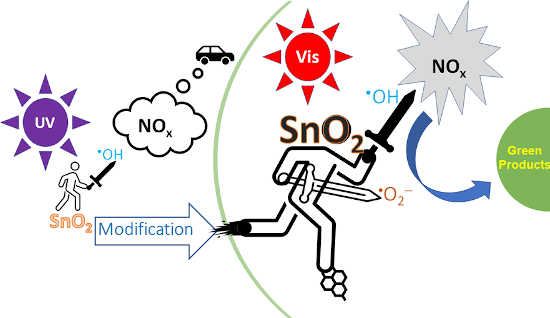
- ] investigated the bandgap of SnO2 when changing the self-doping of SnO2. The change of the color of the powder products and the redshift in the absorption spectra are two quantities that are correlated with each other. Normally, SnO2 is white and optical absorptions in the visible region arise from changes of
- -doping [73] or elemental doping [39][74]. Hybrid or doped photocatalysts ideally exhibit an improved photocatalytic efficacy due to the reduced recombination rate of photogenerated charge carriers and the lower activation energy. However, additional factors considerably affect the overall photocatalytic
- narrowing the bandgap of SnO2, such as modifying SnO2 by noble metal, graphene, or doping, including self-doping SnO2 (Sn2+-doped SnO2 or SnO2−x). In general, doping SnO2 will reduce the bandgap, which enhances the photoactivity in the visible light region for SnO2. The narrowing of the bandgap by


Chemical vapor deposition of germanium-rich CrGex nanowires
Beilstein J. Nanotechnol. 2021, 12, 1365–1371, doi:10.3762/bjnano.12.100
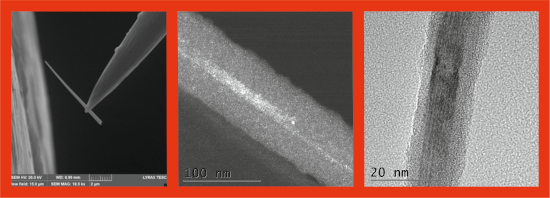
- structure of the prepared nanowires, unlike simple structures, enables further more extensive engineering of nanowire properties by specific technological steps (e.g., thermal annealing, etching, doping, and filling) in order to obtain, for example, catalytic nanowires with huge specific surface or hollow



Plasmon-enhanced photoluminescence from TiO2 and TeO2 thin films doped by Eu3+ for optoelectronic applications
Beilstein J. Nanotechnol. 2021, 12, 1271–1278, doi:10.3762/bjnano.12.94
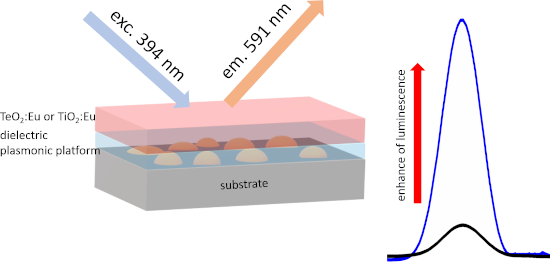
- thin films can be implemented in many ways. The change of deposition parameters and working gasses, doping with various elements, or annealing at an elevated temperature are the most commonly used procedures [17][18]. It gives enormous possibilities for manufacturing thin films with novel properties
- and opens fields of new applications. Especially, doping of oxide materials by rare-earth ions positively influences the luminescent properties. Rare-earths ions represent a vast group of luminescent materials that exhibit light emission in the visible range [19][20]. Among them, europium (Eu) has


Morphology-driven gas sensing by fabricated fractals: A review
Beilstein J. Nanotechnol. 2021, 12, 1187–1208, doi:10.3762/bjnano.12.88
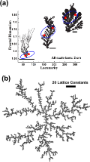
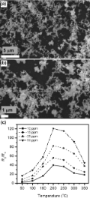
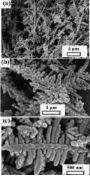
- , NO2 and SO2 gases at 100 ppm gas at 350 degree centigrade. Though the morphology of the fractals did not change appreciably, Pt doping led to faster response and recovery times. This could be due to the excellent interaction of Pt with hydrogen via the established spillover effect that catalyzes
- material upon interaction with target gas analytes arise due to changes in, for instance, energy bands, surface charge, and work function caused by temperature, grain size, crystal plane energies, and doping [87][90][91]. Thus, there is no single sensing mechanism that explains all SMO gas sensors. The










The effect of cobalt on morphology, structure, and ORR activity of electrospun carbon fibre mats in aqueous alkaline environments
Beilstein J. Nanotechnol. 2021, 12, 1173–1186, doi:10.3762/bjnano.12.87
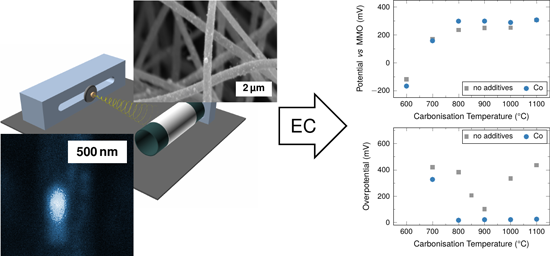
- demonstrated by elemental analysis (Figure 7a) the significance of nitrogen doping in the cobalt-decorated carbon fibres is, however, substantially reduced, in favour of cobalt-based activity. Electrochemical ORR characterisation Linear sweep voltammetry using fibre-based electrodes The oxygen reduction


Open-loop amplitude-modulation Kelvin probe force microscopy operated in single-pass PeakForce tapping mode
Beilstein J. Nanotechnol. 2021, 12, 1115–1126, doi:10.3762/bjnano.12.83
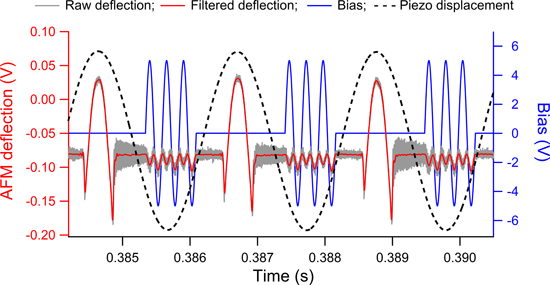
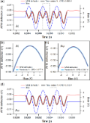
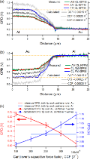
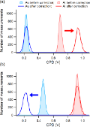
- the local contact potential difference (CPD) between a conductive AFM probe and a surface, KPFM has been used for qualitative and quantitative electric characterizations. Examples include surface potential, doping, charge profiling, optoelectronic response, and others on various materials and





First-principles study of the structural, optoelectronic and thermophysical properties of the π-SnSe for thermoelectric applications
Beilstein J. Nanotechnol. 2021, 12, 1101–1114, doi:10.3762/bjnano.12.82
- reasonable thermoelectric models [25][26]. For instance, AgSbTe2 when doped with Se shows ZT ≈ 2.1 at 573 K [27], GeTe (ZT ≈ 2.4 at 600 K by doping with Pb and Bi) [28], PbTe (ZT ≈ 2.51 at 823 K by doping with Na, Eu, and Sn) [29], and SnSe crystals (ZT ≈ 2.8 at 773 K by doping with Br) [30]. Among the tin
- lately [38]. In recent years, numerous research groups from all over the globe tried to enhance TE efficiency through alloying [38], doping (metal or hole) [39][40][41][42][43], and texturing [44]. Despite demonstrating superior TE properties, SnSe still has limitations for practical applications mostly
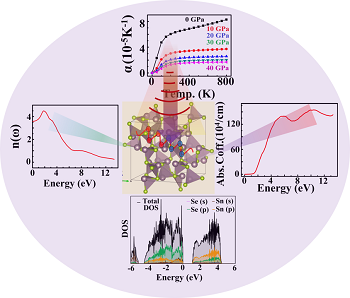
- properties of the π-SnSe can be regulated by using suitable doping and structural transformations. The unit cell of the π-SnSe phase with 64 atoms (Sn = 32, Se = 32) which has a space group P213 (no. 198) and a lattice constant of 12.20 Å. Grey and green colors represents the Sn and Se atoms, respectively





