


Search results
Search for "energy" in Full Text gives 2056 result(s) in Beilstein Journal of Nanotechnology. Showing first 200.
Further insights into the thermodynamics of linear carbon chains for temperatures ranging from 13 to 300 K
Beilstein J. Nanotechnol. 2025, 16, 1818–1825, doi:10.3762/bjnano.16.125
- , Tuscaloosa, Alabama 35487, USA Departamento de Ensino, Instituto Federal de Educação, Ciência e Tecnologia do Ceará (IFCE), 62580-000, Acarau, Ceara, Brazil Department of Polymer Engineering, School of Polymer Science and Engineering, and Alan G. MacDiarmid Energy Research Institute, Chonnam National
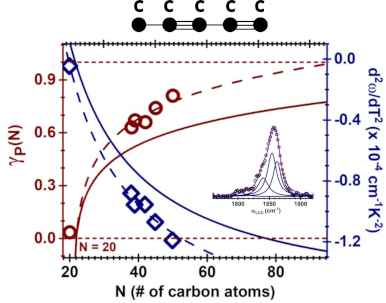
- nanotubes (LCC@DWCNT and LCC@MWCNT, respectively) behave as Debye’s materials for temperatures as high as 293 K with an estimate that such materials could still withstand such characteristics for even higher temperatures (≈700 K). Using the Debye model, thermodynamic observables (internal energy
- phonons, and gain and loss of energy of carriers [1][2][10][17][24][25][26][27][28]. The phonon lifetime as well as the selection rules behind ph–ph and e–ph interactions determine the efficiency of such phonon emission and absorption [1][2][10][17][24][25][26][27][28]. Phonons need to be in an excited


![[Graphic 23]](/bjnano/content/inline/2190-4286-16-125-i25.svg?max-width=637&scale=1.18182)
Piezoelectricity of layered double hydroxides: perspectives regarding piezocatalysis and nanogenerators
Beilstein J. Nanotechnol. 2025, 16, 1812–1817, doi:10.3762/bjnano.16.124

- Evgeniy S. Seliverstov Evgeniya A. Tarasenko Olga E. Lebedeva Department of General Chemistry, Belgorod State National Research University, Pobedy 85, 308015 Belgorod, Russian Federation 10.3762/bjnano.16.124 Abstract Recent research in alternate sources of energy such as piezoelectric energy
- to the development of next-generation high-performance piezoelectric devices. Keywords: layered double hydroxides; nanogenerators; piezocatalysis; piezoelectricity; Introduction Given the ever-increasing global need to reduce dependence on fossil fuels, finding other ways to generate energy from
- environmental sources is a priority. Piezoelectric materials have the ability to convert mechanical energy into electrical energy due to the arrangement of dipoles in their structure, thus providing sustainable electrical energy for low-power-consuming and self-powered devices [1]. The most common piezoelectric

Electrical, photocatalytic, and sensory properties of graphene oxide and polyimide implanted with low- and medium-energy silver ions
Beilstein J. Nanotechnol. 2025, 16, 1794–1811, doi:10.3762/bjnano.16.123
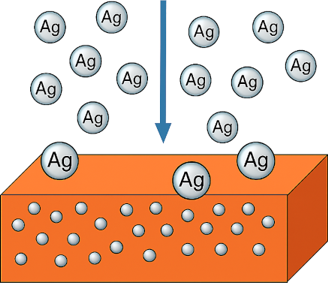
- implantation provides a controllable alternative for tuning surface properties at the nanoscale, enabling the targeted introduction of functional species without chemical reagents. This work investigates the effects of low-energy (20 keV) and medium-energy (1.5 MeV) Ag+ ion implantation on the electrical
- surface electrical resistivity [8]. During implantation, the kinetic energy of the implanted particles is transferred to the matrix, causing local crystallization and carbonization of the polymer structures. This process is associated with the destruction of the original covalent bonds (e.g., C–N, C=O
- [10]. The delocalized electrons in these regions can freely pass between neighboring centers, thereby reducing the energy activation for conducting electric current. At the same time, the aggregation of the implanted Ag ions and the formation of metal islands or clusters in the form of nanostructures


Exploring the potential of polymers: advancements in oral nanocarrier technology
Beilstein J. Nanotechnol. 2025, 16, 1751–1793, doi:10.3762/bjnano.16.122



Multifunctional anionic nanoemulsion with linseed oil and lecithin: a preliminary approach for dry eye disease
Beilstein J. Nanotechnol. 2025, 16, 1711–1733, doi:10.3762/bjnano.16.120
- efficacy and safety for ocular administration. Keywords: eye drops; micelles; low-energy method; ophthalmic vehicle; sample dilution; stability; Introduction Dry eye disease (DED) is a multifactorial condition affecting the ocular surface, characterized by changes in tear fluid composition and/or
- , homogeneity, and stability in colloidal systems are influenced by component proportions (surfactant, oil, and co-surfactant), emulsification methods (low-energy or high-energy techniques) [40][41][42], and intrinsic properties like linseed oil viscosity and lecithin’s molecular structure [43]. These last
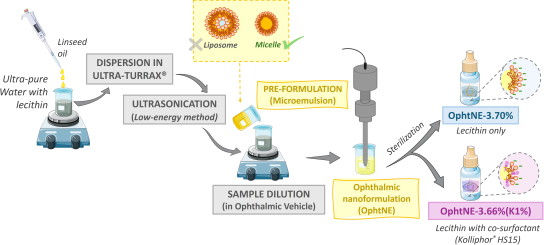
- experimentally determined using a dilution method combined with a low-energy technique, ensuring the formation of uniform micelles ideal for ophthalmic applications, as detailed below. Preparation of ophthalmic nanoformulations To obtain nanoemulsions for ocular application, three progressive studies were




Beyond the bilayer: multilayered hygroscopic actuation in pine cone scales
Beilstein J. Nanotechnol. 2025, 16, 1695–1710, doi:10.3762/bjnano.16.119
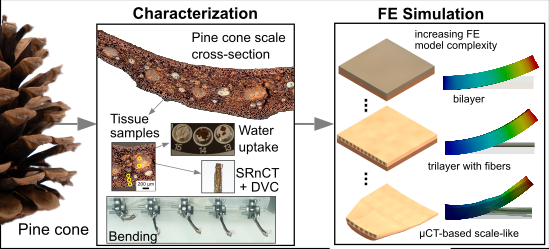
- imaging beamline P05 operated by Helmholtz-Zentrum Hereon at PETRA III (DESY Deutsches Elektronen Synchrotron, Hamburg, Germany). Phase contrast-based near-field holotomography was used to image our samples, utilizing a 300 µm gold Fresnel zone plate to focus the monochromatic beam with an energy of 11


Ambient pressure XPS at MAX IV
Beilstein J. Nanotechnol. 2025, 16, 1677–1694, doi:10.3762/bjnano.16.118
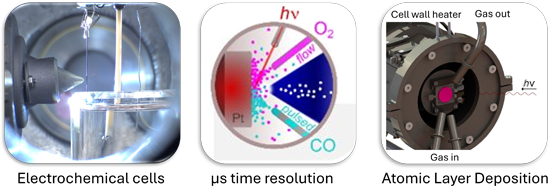
- studies across a broad pressure range, enabling research in catalysis, corrosion, energy storage, and thin film growth. The high brilliance and small beam size of MAX IV’s synchrotron light are essential for pushing the time-resolution boundaries of APXPS, especially in the soft X-ray regime. We discuss
- material interfaces under more realistic conditions, which is a critical advancement in material research, gaining increasing popularity across various fields. APXPS is crucial for studying dynamic processes in catalysis, environmental science, and energy materials, where reactions typically occur at or
- only at the turn of the century that APXPS instruments were developed, thanks to the high flux of the third and then, particularly, fourth generation of synchrotron radiation light sources. At the same time, the development of differentially pumped electron energy analyzers (EEA) with higher


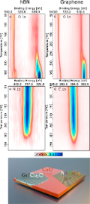


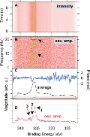


Energy spectrum and quantum phase transition of the coupled single spin and an infinitely coordinated Ising chain
Beilstein J. Nanotechnol. 2025, 16, 1668–1676, doi:10.3762/bjnano.16.117
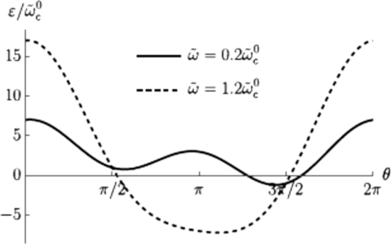
- operation, and it has technical benefits such as simplicity of calibration and suppression of the unwanted longitudinal ZZ interaction. One of the important quantities is the shift of the coupler qubits energy levels depending on the state of the logical qubits. In the present manuscript, we find the energy
- levels of such system in the limit of infinitely many logical qubits, and find the energy spectrum of the coupler qubit depending on the state of the logical qubits ensemble. We start our theoretical analysis by mapping the Ising chain Hamiltonian to a Lipkin– Meshkov–Glik (LMG) Hamiltonian [11][12][13
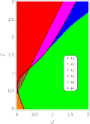
- Hamiltonian. In the limit of infinite Ising chain, or equivalently of the infinite total spin, the LMG Hamiltonian can be solved exactly. We exploit this fact and analytically obtain the energy spectrum of the whole system. Based on this result, we study the structure of the extrema of the ground state energy

![[Graphic 39]](/bjnano/content/inline/2190-4286-16-117-i63.svg?max-width=637&scale=1.18182)


![[Graphic 51]](/bjnano/content/inline/2190-4286-16-117-i75.svg?max-width=637&scale=1.18182)
Prospects of nanotechnology and natural products for cancer and immunotherapy
Beilstein J. Nanotechnol. 2025, 16, 1644–1667, doi:10.3762/bjnano.16.116


Venom-loaded cationic-functionalized poly(lactic acid) nanoparticles for serum production against Tityus serrulatus scorpion
Beilstein J. Nanotechnol. 2025, 16, 1633–1643, doi:10.3762/bjnano.16.115
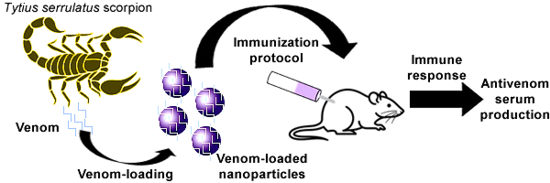
- -loaded PLA nanoparticles were fabricated by nanoprecipitation methods. In this technique, the PLA nanoparticles (NPs) were produced by low-energy solvent displacement and functionalized with polyethylenimine (cationic polymer) for the T. serrulatus protein adsorption. The NPs showed a mean diameter of
- were successfully obtained using parameters selected for the nanoprecipitation method. This low-energy technique allowed the spontaneous self-assembling of PLA nanoparticles, which were functionalized with polyethyleneimine (PEI) to enable the adsorption of venom proteins. Experimental results
- functionalized cationic PLA nanoparticles adsorbed with negatively charged proteins was successfully developed by low-energy solvent diffusion method, producing effective and stable spherical cationic nanoparticles. The positive surface charge enabled a high protein incorporation into particles. The prolonged


Nanotechnology-based approaches for the removal of microplastics from wastewater: a comprehensive review
Beilstein J. Nanotechnol. 2025, 16, 1607–1632, doi:10.3762/bjnano.16.114
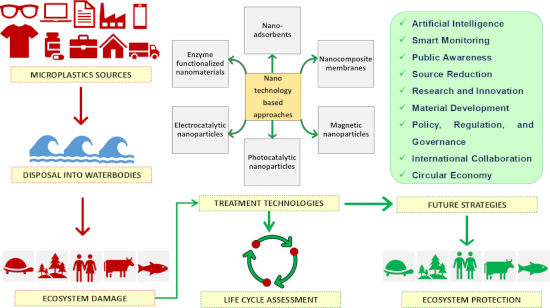
- techniques for the removal of MPs. Nanoparticle-based removal Advancements in characterization and synthesis techniques have enabled the manipulation of materials at the nanoscale, leading to innovations across various domains, including energy, electronics, and biomedical applications. Figure 5 depicts
- . Nanoparticles, owing to their high surface-to-volume ratio, demonstrate superior catalytic performance compared to bulk materials. Furthermore, the particle size of semiconductors influences their bandgap energy and crystalline structure, which in turn affects their redox potential and the spatial distribution
- . High energy demands further restrict the widespread adoption of pressure-driven membrane systems. Additionally, membrane fouling not only raises energy consumption but also adds complexity to system operation and design. This fouling also shortens the operational lifespan of membranes and their


Bioinspired polypropylene-based functionally graded materials and metamaterials modeling the mistletoe–host interface
Beilstein J. Nanotechnol. 2025, 16, 1592–1606, doi:10.3762/bjnano.16.113
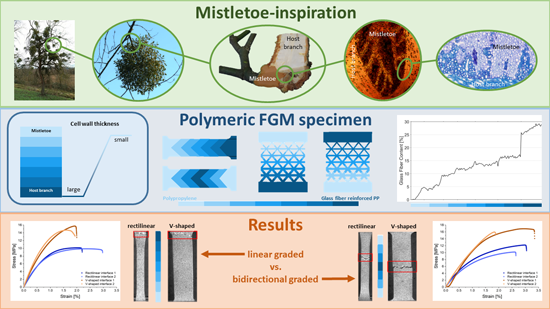
- material gradient that can either enhance or counteract the gradient effect, opening up even more possibilities for advanced programmable metamaterials, which could find applications, for example, in crash-resistant components to selectively absorb impact energy or in material systems for targeted


Few-photon microwave fields for superconducting transmon-based qudit control
Beilstein J. Nanotechnol. 2025, 16, 1580–1591, doi:10.3762/bjnano.16.112
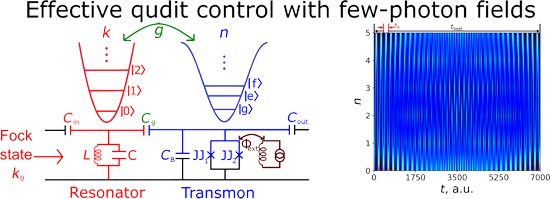
- populate on demand even relatively high energy levels of the qudit starting from the ground state; (ii) by changing the difference between the characteristic frequencies of the superconducting atom and a single field mode, we can choose which level to populate; and (iii) even the highest levels can be
- transmon (a slightly nonlinear oscillator) is quite close to the equidistant one; however, a number of widely used theoretical models describing its evolution in an external electromagnetic field (the Jaynes–Cummings model) do not take into account the high-lying energy levels of the artificial atom, nor
- factor is about 105–106 and depends mainly on the external coupling Cin/out) connected to a transmon [34] by a capacitance Cg (see Figure 1). The resonator in this system is a quantum harmonic oscillator with a fully equidistant energy spectrum described by the bosonic ladder operators and , and the


Photocatalytic degradation of ofloxacin in water assisted by TiO2 nanowires on carbon cloth: contributions of H2O2 addition and substrate absorbability
Beilstein J. Nanotechnol. 2025, 16, 1567–1579, doi:10.3762/bjnano.16.111
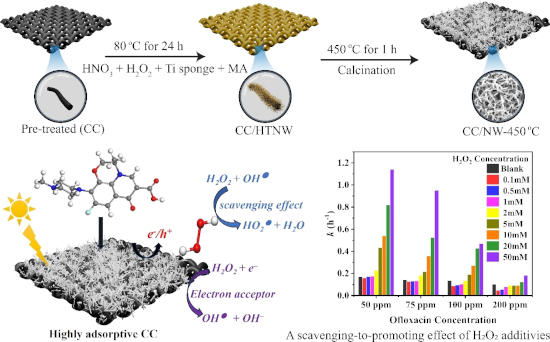
- (HRTEM) conducted with a JEM-2100 microscope (Jeol, Tokyo, Japan). Energy-dispersive X-ray (EDX) elemental mapping was performed using the FESEM system to examine the distribution of Ti and O on the carbon cloth substrate. X-ray diffraction (XRD) measurements were conducted using a SmartLab
- . The C 1s spectrum shows a peak at 284.8 eV, corresponding to adventitious carbon, which was used as the reference for binding energy calibration. Additional peaks at higher binding energies (286–288 eV) are attributed to oxygen-containing functional groups (C–O and C=O), indicating partial oxidation


Modeling magnetic properties of cobalt nanofilms used as a component of spin hybrid superconductor–ferromagnetic structures
Beilstein J. Nanotechnol. 2025, 16, 1557–1566, doi:10.3762/bjnano.16.110
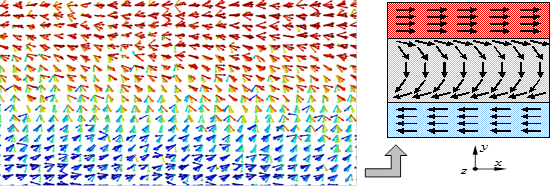
- parameters of the modeled nanoscale systems. It was found that the magnetic energy and magnetization norm of the system change in a nonlinear manner with increasing number of crystalline layers of the nanofilm. The peaks found on the graph of the magnetization rate change can be caused by surface effects in
- are currently used, as well as fundamental features of the thin film formation processes with new composition and coatings of various types. These types of nanomaterials are very promising (in terms of computational performance and energy dissipation efficiency) for use in superconducting digital
- : where UMEAM(r) is the force potential, the modified embedded atom method (MEAM) potential was used in this work; Hex(r) is the exchange interaction energy of spins; r = {r1,r2,…,rN} is the generalized variable showing the dependence on the whole set of radial vectors of atoms; κ,λ are viscous friction


Transient electronics for sustainability: Emerging technologies and future directions
Beilstein J. Nanotechnol. 2025, 16, 1545–1556, doi:10.3762/bjnano.16.109

- include materials with diverse bandgap properties remains a key challenge as it would enable wavelength-specific and electrically optimized device designs across a wide array of applications, including sensors, radio frequency (RF) devices, energy harvesters, and optoelectronic systems. For instance, low


Influence of laser beam profile on morphology and optical properties of silicon nanoparticles formed by laser ablation in liquid
Beilstein J. Nanotechnol. 2025, 16, 1533–1544, doi:10.3762/bjnano.16.108
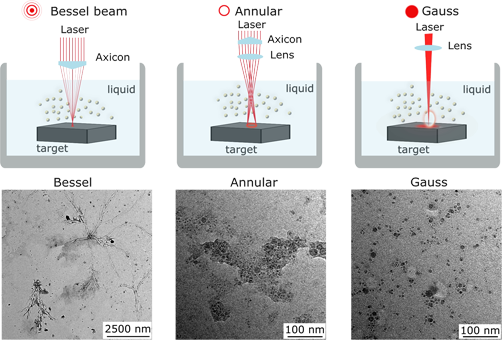
- laser beam energy distribution (Gauss, Bessel, or annular) for the synthesis of silicon nanomaterials of different shapes by laser ablation in a liquid. The advantages of laser beams with Bessel and annular profiles were demonstrated earlier in the fields of material processing, such as microdrilling
- -uniform energy distribution, which will affect plasma generation and confinement, the hydrodynamic trajectory of the ejected target material and pressure relaxation, as well as plasma and cavitation bubble propagation and temporal evolution. In the case of a Bessel beam, the focusing with an axicon
- of the synthesized products towards energy- and catalysis-related applications due to materials’ high surface area and prompt reaction kinetics. The potential benefits of the beam shape variation have recently initiated more active research on the ablative generation of NPs using spatially shaped


Dendrimer-modified carbon nanotubes for the removal and recovery of heavy metal ions from water
Beilstein J. Nanotechnol. 2025, 16, 1522–1532, doi:10.3762/bjnano.16.107

- materials have shown improved performance, the modification processes are generally energy-intensive and require harmful chemicals. Moreover, the optimum incorporation of chemical functionality, responsible for binding the trace metal ions, still needs to be achieved. Therefore, it is always a race to
- biosynthesis, extraction processes, and organic reactions [43]. In this study, we focus on the pre-functionalization of CNTs via Diels–Alder reaction using DES as the sole catalytic system under sonication energy and subsequent growth of dendrimers. We further evaluate the potential of the CNTs in the removal
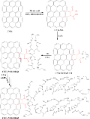
- of trace heavy metals from aqueous solutions explaining the kinetics and thermodynamics of adsorption process. Results and Discussion Dendrimerized CNTs have been fabricated by pre-functionalizing the CNTs with MA via Diels–Alder reaction, excluding harmful chemicals and energy-intensive processes


Cross-reactivities in conjugation reactions involving iron oxide nanoparticles
Beilstein J. Nanotechnol. 2025, 16, 1504–1521, doi:10.3762/bjnano.16.106
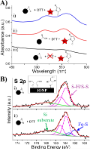
- majority of the bound CySH is either coordinated to surface Fe through the amine, or possibly bound to 3,4-DHBA quinones through its thiol. The presence of a higher binding energy feature in the S 2p spectra at >166 eV is attributed to a Si 2s plasmon loss peak, derived from the Si substrate (Supporting
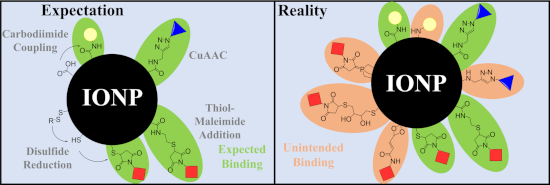
- -maleimide binding to both the cleaved CySS groups, and bound DTT ligands. Analysis of the S 2p XPS spectrum of IONP-CySS (Figure 11B.i) reveals the absence of the low binding energy Fe–S doublet, which is expected due to the presence of disulfide bonds that cannot bind surface Fe. After treating IONP-CySS







Nanomaterials for biomedical applications
Beilstein J. Nanotechnol. 2025, 16, 1499–1503, doi:10.3762/bjnano.16.105
- nanoparticles are most often used in photothermal therapy. These nanomaterials can capture specific wavelengths of light from the near-infrared spectrum and then use that energy to generate heat. This heat from the laser points causes cancer cells to be damaged or destroyed, while reducing the damage to nearby
Laser processing in liquids: insights into nanocolloid generation and thin film integration for energy, photonic, and sensing applications
Beilstein J. Nanotechnol. 2025, 16, 1428–1498, doi:10.3762/bjnano.16.104
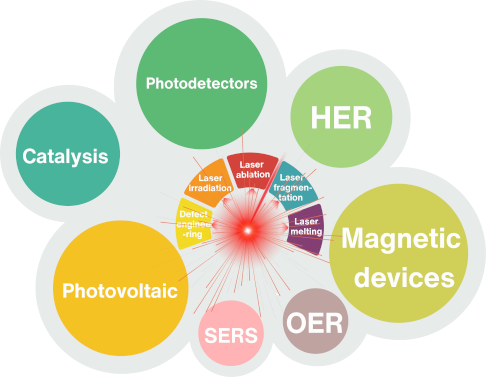
- catalysis, solar energy, and light emission. A critical review on the emerging topic of laser ablation, fragmentation, and melting in liquids, and key reports on both the fundamental principles and applications related to these processes are available in [6]. In another review, the formation mechanism and
- specific applications will be crucial for realizing the full potential of laser-based techniques and addressing challenges in LAL such as low productivity, high energy consumption, and wide size distribution. Additionally, advancing in situ characterization methods, such as time-resolved shadowgraphy [26
- pulsed laser fragmentation of PbTe micrometer-sized powders in distilled water using a Nd:YAG laser [31]. The study examined the impact of various experimental parameters, including laser wavelength (Figure 3a), treatment duration, and output energy, on the fragmentation yield, nanoparticle size, and






Parylene-coated platinum nanowire electrodes for biomolecular sensing applications
Beilstein J. Nanotechnol. 2025, 16, 1392–1400, doi:10.3762/bjnano.16.101
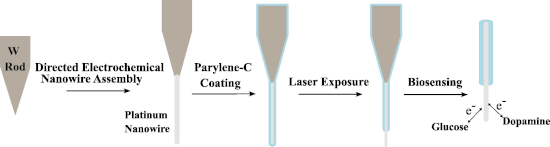
- complete as intended and these electrodes were discarded. A thin layer of copper deposition on the exposed platinum nanowire tip was further examined using SEM imaging and energy-dispersive X-ray spectroscopy (EDS) elemental composition analysis. Figure 2b presents an SEM image of the copper-coated


Synthesis and antibacterial properties of nanosilver-modified cellulose triacetate membranes for seawater desalination
Beilstein J. Nanotechnol. 2025, 16, 1380–1391, doi:10.3762/bjnano.16.100
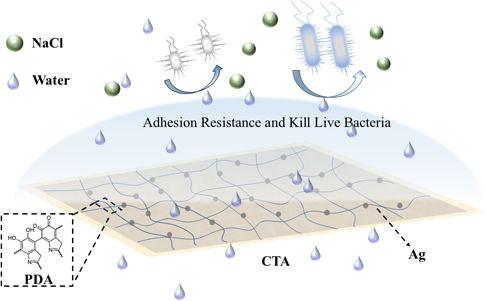
- these, membrane-based desalination stands out due to its numerous advantages, such as low energy consumption, compact footprint, and ease of operation [11][12]. Over the past decade, there has been a substantial increase in research publications related to membrane desalination, with the number reaching
- result cannot exclude the possibility of instrumental error. X-ray photoelectron spectroscopy (XPS) is utilized to analyze the surface chemical compositions of Ag@PCTA, PCTA, and CTA. Figure 3a shows the XPS wide scan spectrum of CTA, PCTA, and Ag@PCTA. The C 1s peak at a binding energy (BE) of 284.94 eV


Automated collection and categorisation of STM images and STS spectra with and without machine learning
Beilstein J. Nanotechnol. 2025, 16, 1367–1379, doi:10.3762/bjnano.16.99
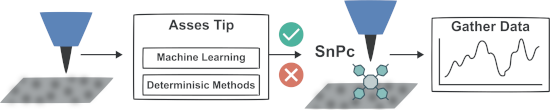
- properties of surfaces and molecules with atomic precision. This opens up the ability to map the local density of states (LDOS) of a sample with high spatial resolution [1][2][3]. Peaks within a map of the LDOS correspond to increases in conductance at specific bias values, revealing the energy levels of key
- was operated using an RC5 Nanonis controller, with all experiments carried out in UHV (base pressure ≤5 × 10⁻¹¹ mbar) cooled to 5 K. Gold and silver crystals (spl.eu) were prepared via repeated sputter–anneal cycles, sputtering under an argon pressure of ≈5 × 10⁻⁵ mbar, with a beam energy of 1.5 kV





Enhancing the therapeutical potential of metalloantibiotics using nano-based delivery systems
Beilstein J. Nanotechnol. 2025, 16, 1350–1366, doi:10.3762/bjnano.16.98
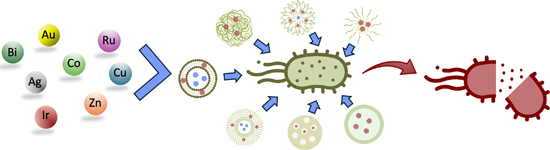
- receptors and ligands, as well as the number of interactions necessary to overcome the energy barrier for cellular uptake. Properly balancing these factors ensures efficient binding and internalization of the nanoparticles by the target cells [50][51]. For example, nanoparticles can be engineered to





