


Search results
Search for "energy dispersive X-ray spectroscopy (EDX)" in Full Text gives 89 result(s) in Beilstein Journal of Nanotechnology.
Probing the electronic transport on the reconstructed Au/Ge(001) surface
Beilstein J. Nanotechnol. 2014, 5, 1463–1471, doi:10.3762/bjnano.5.159
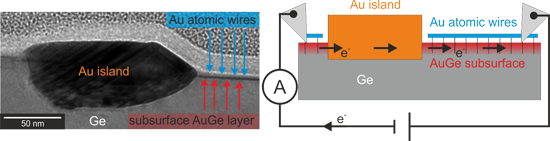
- a gas injection system by the electron beam and the FIB beam was used to cut out the lamella. The high resolution (HR) TEM and high angle annular dark field (HAADF) scanning TEM images together with energy dispersive X-ray spectroscopy (EDX) analysis of the sample were obtained by the FEI Tecnai




Synthesis, characterization, and growth simulations of Cu–Pt bimetallic nanoclusters
Beilstein J. Nanotechnol. 2014, 5, 1371–1379, doi:10.3762/bjnano.5.150
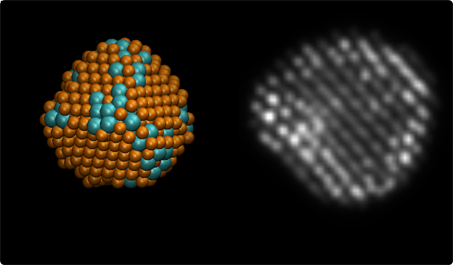
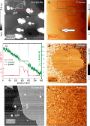
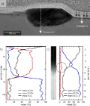
- the average diameter of the Cu–Pt nanoclusters is 3.0 ± 1.0 nm. The high angle annular dark field (HAADF-STEM) images, intensity profiles, and energy dispersive X-ray spectroscopy (EDX) line scans, allowed us to study the distribution of Cu and Pt with atomistic resolution, finding that Pt is embedded
- –Pt clusters; energy dispersive X-ray spectroscopy (EDX); grand-canonical Langevin dynamics; nanoalloys; scanning transmission electron microscopy (STEM); Introduction The study of bimetallic (BM) nanoclusters has received particular interest because of their myriad properties and applications in
- ) techniques. The use of high angle annular dark field (HAADF-STEM) images, intensity profiles, and energy dispersive X-ray spectroscopy (EDX) line scans, allowed us to study the atomic positions of Cu and Pt, and to compare the structure of the particles with the results of atomistic simulations. We applied a


Electron-beam induced deposition and autocatalytic decomposition of Co(CO)3NO
Beilstein J. Nanotechnol. 2014, 5, 1175–1185, doi:10.3762/bjnano.5.129
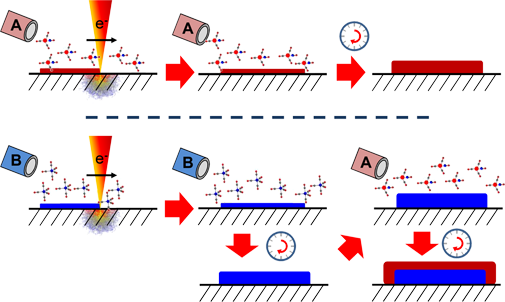
- -dispersive X-ray spectroscopy (EDX) [23][24][25]. The composition is almost independent of the applied beam current and energy, apart from a slight increase in oxygen content for increasing beam power [23]. The deposition yield decreases for higher electron energy, and increases strongly above 403 K
- , the thermally unstable CO ligands desorb without decomposition, yielding carbon free CoOyN [22]. At room temperature, EBID using Co(CO)3NO in a standard high-vacuum SEM setup yields deposits consisting of about 40–50 atom % Co, 25–35 atom % O, 10–15 atom % N and 10–15 atom % C as determined by energy




Optimizing the synthesis of CdS/ZnS core/shell semiconductor nanocrystals for bioimaging applications
Beilstein J. Nanotechnol. 2014, 5, 919–926, doi:10.3762/bjnano.5.105
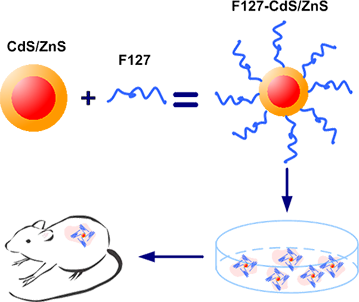
- redshift of about 45–55 nm for CdS/ZnS QDs. This is due to the quantum confinement. CdS/ZnS QDs were further characterized by energy dispersive X-ray spectroscopy (EDX), as shown in Figure 3. The spectra exhibit the composition of the CdS/ZnS QDs and indicating Cd, S, and Zn as components of the CdS/ZnS


Enhanced photocatalytic activity of Ag–ZnO hybrid plasmonic nanostructures prepared by a facile wet chemical method
Beilstein J. Nanotechnol. 2014, 5, 639–650, doi:10.3762/bjnano.5.75
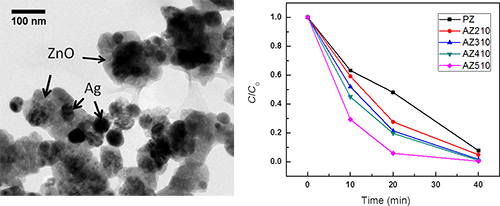
- square of the atomic number Z. Figure 3c shows the STEM-HAADF image of ZnO nanostructures in sample PZ. Energy dispersive X-ray spectroscopy (EDX) data from the regions marked by area 1 in Figure 3c and area 2 in Figure 4c is plotted in Figure 3d for ZnO and Ag–ZnO. The C and Cu signals in the EDX


Magnesiothermic conversion of the silica-mineralizing golden algae Mallomonas caudata and Synura petersenii to elemental silicon with high geometric precision
Beilstein J. Nanotechnol. 2014, 5, 554–560, doi:10.3762/bjnano.5.65
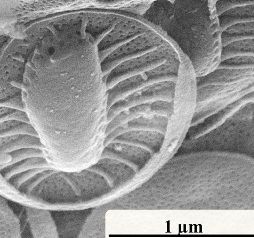
- instrument with gold-palladium-sputtered samples), X-ray diffraction (XRD, Bruker D8 Advance powder diffractometer with Cu Kα-radiation), energy dispersive X-ray spectroscopy (EDX, ESEM Quanta 400 FEG instrument) and infrared spectroscopy (IR, Bruker Alpha-Platinum FTIR-Spectrometer). Scanning electron
- of water (4.8 wt %). The second is attributed to the combustion of organic matter and also to dehydration of biogenic silica (43.0 wt % in total). The remaining 52.2 wt % of the sample can be assigned to inorganic silica, i.e., the dehydrated mineral ("SiO2"). The results of energy-dispersive X-ray
- spectroscopy (EDX) of the golden algae before the conversion are shown in Figure 4. Besides silicon, a couple of other elements were detected. The carbon and gold signals are due to the carbon sample holder and the gold sputtering, but the elements oxygen, sodium, magnesium, sulfur, calcium, and iron were


In situ growth optimization in focused electron-beam induced deposition
Beilstein J. Nanotechnol. 2013, 4, 919–926, doi:10.3762/bjnano.4.103
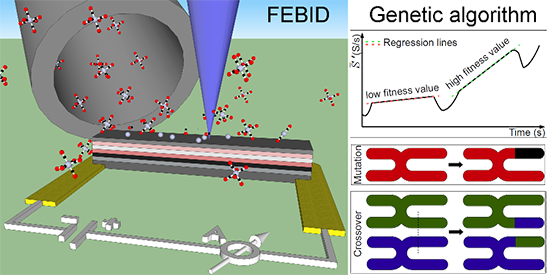
- , sample 2 (optimized for highest conductance) shows by far the highest value of conductance, whereas for sample 3 (optimized for lowest conductance) the lowest value is achieved. For the purpose of characterizing the chemical composition of the different samples energy dispersive X-ray spectroscopy (EDX


Synthesis and electrochemical performance of Li2Co1−xMxPO4F (M = Fe, Mn) cathode materials
Beilstein J. Nanotechnol. 2013, 4, 860–867, doi:10.3762/bjnano.4.97
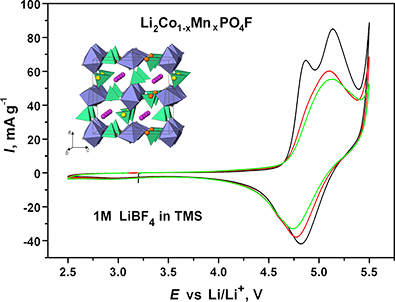
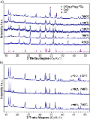
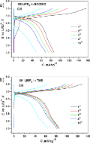
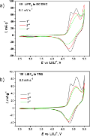
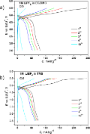
- carried out by Rietveld refinement with the program JANA 2006 [17]. SEM investigation of powdered samples was performed with a JEOL JSM-6490LV scanning electron microscope equipped with an energy dispersive X-ray spectroscopy (EDX) attachment. The electrochemical evaluation was performed in two-electrode



Ellipsometry and XPS comparative studies of thermal and plasma enhanced atomic layer deposited Al2O3-films
Beilstein J. Nanotechnol. 2013, 4, 732–742, doi:10.3762/bjnano.4.83
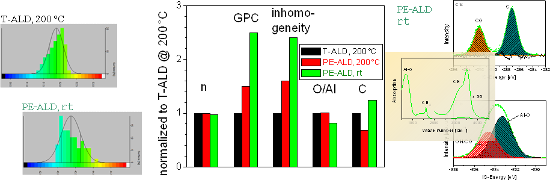
- influenced by charged species within the films. Carbon contamination (EDX, XPS, ellipsometry) In order to discuss the integration of carbon atoms into the films we conducted energy dispersive X-ray spectroscopy (EDX), XPS C1s core level spectroscopy, and spectroscopic ellipsometry. The chemical composition


A facile synthesis of a carbon-encapsulated Fe3O4 nanocomposite and its performance as anode in lithium-ion batteries
Beilstein J. Nanotechnol. 2013, 4, 699–704, doi:10.3762/bjnano.4.79
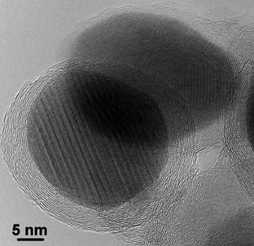
- produced from the Fe nanoparticles is encapsulated within the nanotubes or carbon shells. Elemental analysis suggested that the composite consists of 70 wt % of Fe3O4 and 30 wt % of carbon. The energy dispersive X-ray spectroscopy (EDX) patterns by using SEM mode (Figure S1 in Supporting Information File 1


Evolution of microstructure and related optical properties of ZnO grown by atomic layer deposition
Beilstein J. Nanotechnol. 2013, 4, 690–698, doi:10.3762/bjnano.4.78
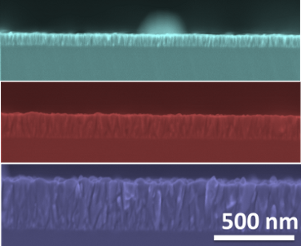
- properties of the ZnO films were characterized by scanning electron microscopy (SEM), ellipsometry, energy-dispersive X-ray spectroscopy (EDX), and grazing incidence X-ray diffraction (GIXRD). An Asylum Research MFP-3D atomic force microscope equipped with a commercial silicon tip was operated in the tapping


Catalytic activity of nanostructured Au: Scale effects versus bimetallic/bifunctional effects in low-temperature CO oxidation on nanoporous Au
Beilstein J. Nanotechnol. 2013, 4, 111–128, doi:10.3762/bjnano.4.13
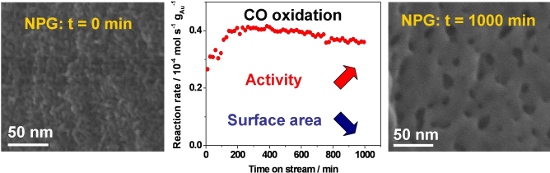
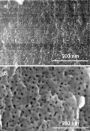
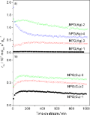
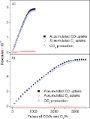
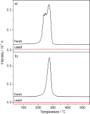
- characterization of samples after the catalytic reaction, which cannot be characterized by the capacitance ratio method. For further characterization of the samples, scanning electron microscopy (SEM) and energy dispersive X-ray spectroscopy (EDX) measurements were performed to determine the surface morphology


The morphology of silver nanoparticles prepared by enzyme-induced reduction
Beilstein J. Nanotechnol. 2012, 3, 404–414, doi:10.3762/bjnano.3.47
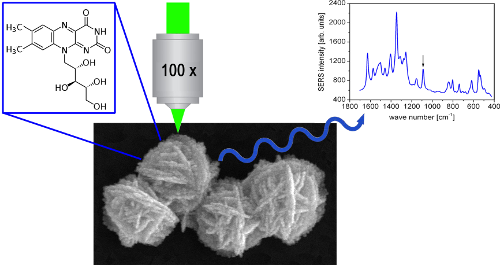
- energy-dispersive X-ray spectroscopy (EDX). These studies were performed both on a single-particle level as well as on particle arrangements or films. Results and Discussion In the following we report on investigations of the morphology and the composition of silver nanoparticles generated by means of an


Effect of the tip state during qPlus noncontact atomic force microscopy of Si(100) at 5 K: Probing the probe
Beilstein J. Nanotechnol. 2012, 3, 25–32, doi:10.3762/bjnano.3.3
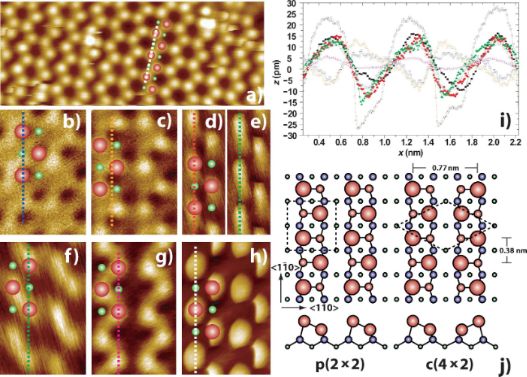
- silicon- rather than tungsten-terminated, and this assumption is supported by a combined scanning electron microscopy (SEM)/energy dispersive X-ray spectroscopy (EDX) study on an STM tip prepared by similar methods. We imaged at constant Δf, maintaining a constant oscillation amplitude (A0). All data





