Search results
Search for "feedback loop" in Full Text gives 92 result(s) in Beilstein Journal of Nanotechnology.
Influence of the adsorption geometry of PTCDA on Ag(111) on the tip–molecule forces in non-contact atomic force microscopy
Beilstein J. Nanotechnol. 2014, 5, 98–104, doi:10.3762/bjnano.5.9
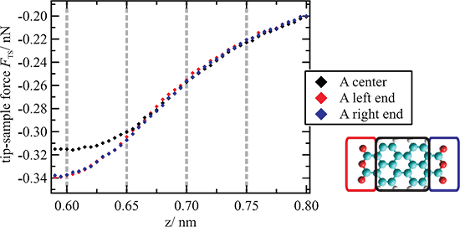
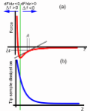
- forces start to partially compensate the attractive forces), the non-monotonic behavior of the frequency shift as a function of the tip–sample distance makes a stable operation of the distance feedback loop impossible. Furthermore, a stable and inert tip is required to avoid that the tip deforms or picks



Noise performance of frequency modulation Kelvin force microscopy
Beilstein J. Nanotechnol. 2014, 5, 1–18, doi:10.3762/bjnano.5.1
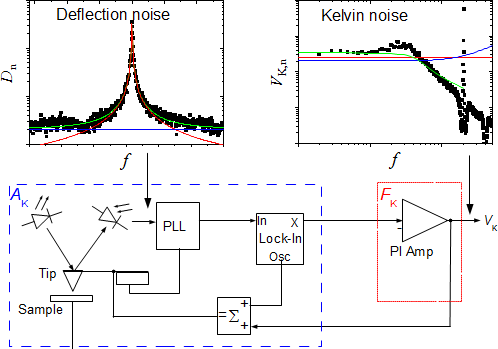
- noise expressions equal to the theoretical value for self-oscillating circuits and in agreement with measurement, demonstrating that the PLL components neither modify nor contribute noise. Kelvin output noise is then investigated by modeling the surrounding bias feedback loop. A design rule is proposed
- designing operational amplifier circuits. The noise PSD is modeled as if the bandwidth was unlimited and later, the bandwidth is chosen as a function of the acceptable signal fluctuation. This approach is appropriate because (1) increasing the closed loop bandwidth of a stable feedback loop above a certain





Dynamic nanoindentation by instrumented nanoindentation and force microscopy: a comparative review
Beilstein J. Nanotechnol. 2013, 4, 815–833, doi:10.3762/bjnano.4.93
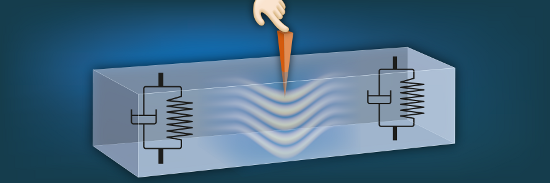
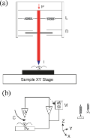
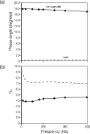
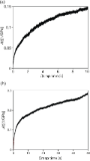
- phase shift was removed by conducting a comparative measurement on a stiff, clean surface. By modifying the AFM setup, Hutter et al. induced small oscillations to the deflection signal by inserting the modulation directly to the feedback loop to generate a compensatory oscillation of the sample z-piezo




Apertureless scanning near-field optical microscopy of sparsely labeled tobacco mosaic viruses and the intermediate filament desmin
Beilstein J. Nanotechnol. 2013, 4, 510–516, doi:10.3762/bjnano.4.60
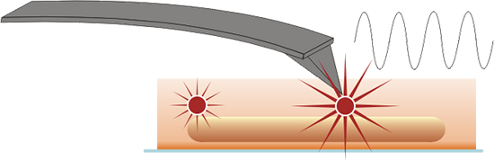
- . Furthermore, the distance-control feedback loop of the probe can be used to gain topographical information as it is done in atomic force microscopy (AFM). Thus, SNOM generally allows the acquisition of both optical and topographical information. Various conceptual approaches have been reported: In fiber SNOM


Ni nanocrystals on HOPG(0001): A scanning tunnelling microscope study
Beilstein J. Nanotechnol. 2013, 4, 406–417, doi:10.3762/bjnano.4.48
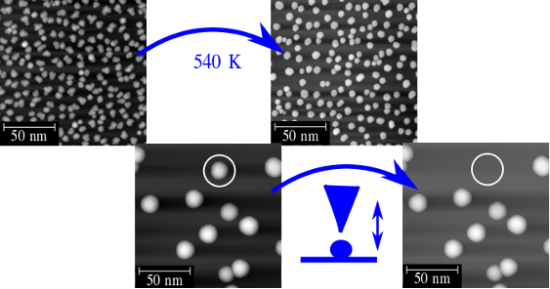
- installed to enhance the resolution) was gradually decreased with closed z-feedback loop. Since we used small bias values, we can assume that the distance depends linearly on the voltage. As soon as a jump in the current or z-feedback signal was observed, the bias was gradually increased again. Afterwards
- relative long time. We ascribe this behaviour to instabilities at the tip, for example through the rotation or break-up of the cluster. After increasing the bias and resetting the current setpoint to the original value, the feedback-loop was usually stable again, but the resolution of the tip was often



Bimodal atomic force microscopy driving the higher eigenmode in frequency-modulation mode: Implementation, advantages, disadvantages and comparison to the open-loop case
Beilstein J. Nanotechnol. 2013, 4, 198–207, doi:10.3762/bjnano.4.20
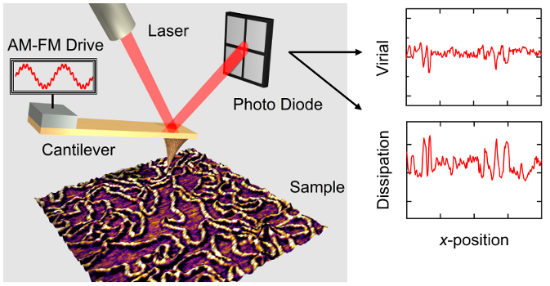
- the amplitude-modulation (AM) scheme while the second eigenmode was driven with a much smaller amplitude in open loop (OL, that is, only the first mode amplitude signal was used to control the tip–sample distance feedback loop. The second eigenmode drive signal had a constant amplitude and frequency
- ]) or it can provide a signal with variable drive amplitude to maintain a constant oscillation amplitude of the cantilever eigenmode (accordingly denoted as constant amplitude (CA) mode [9]). The latter case is internally realized by running an additional feedback loop that controls the oscillation
- tip–sample-distance feedback loop. These transient times scale as 2Q/ω0, with Q being the quality factor and ω0 the natural frequency [22]. Clearly, imaging becomes impractical when Q increases significantly (as in vacuum operations). In FM-AFM, this drawback is overcome by using the frequency shift


Thermal noise limit for ultra-high vacuum noncontact atomic force microscopy
Beilstein J. Nanotechnol. 2013, 4, 32–44, doi:10.3762/bjnano.4.4
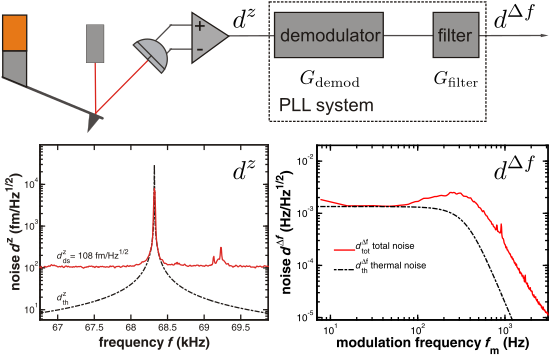
- system with a low-noise signal detection and a suitable cantilever, operated with appropriate filter and feedback-loop settings allows room temperature NC-AFM measurements at a low thermal-noise limit with a significant bandwidth. Keywords: Cantilever; feedback loop; filter; noncontact atomic force
- by the amplitude feedback loop. Signal processing in NC-AFM involves the demodulation of the periodic cantilever-displacement signal Vz(t) as well as filtering in the frequency domain to yield the frequency shift Δf(t) carrying the information on the tip–surface interaction [1]. Demodulation is


![[Graphic 53]](/bjnano/content/inline/2190-4286-4-4-i64.png?max-width=637&scale=1.18182) =
= ![[Graphic 32]](/bjnano/content/inline/2190-4286-4-4-i43.png?max-width=637&scale=1.18182) f...
f...


![[Graphic 56]](/bjnano/content/inline/2190-4286-4-4-i67.png?max-width=637&scale=1.18182) using three diff...
using three diff...

Pure hydrogen low-temperature plasma exposure of HOPG and graphene: Graphane formation?
Beilstein J. Nanotechnol. 2012, 3, 852–859, doi:10.3762/bjnano.3.96
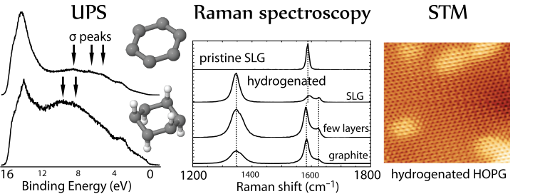
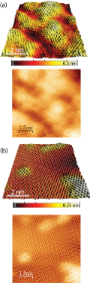
- Nanosurf FlexAFM operated in ambient conditions. The quantities that were measured are the cantilever oscillation amplitude (Afree = 20 nm) and phase related to the driving signal. The distance to the sample was controlled in a feedback loop, maintaining the cantilever oscillation amplitude equal to a



Mapping mechanical properties of organic thin films by force-modulation microscopy in aqueous media
Beilstein J. Nanotechnol. 2012, 3, 464–474, doi:10.3762/bjnano.3.53
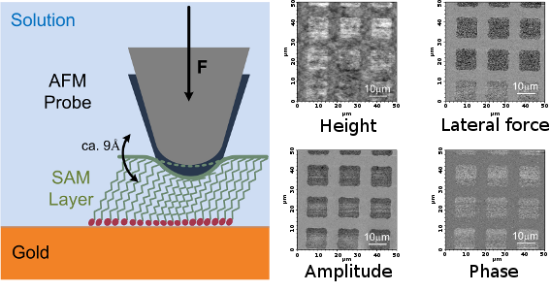
- Supporting Information File 1). The cantilever deflection with a second-order harmonic can be rewritten as, where is the second-harmonic factor. The frequency-independent, zeroth-order term in Equation 3 reflects a DC deflection. The feedback loop, however, cannot differentiate this zeroth-order component
- from the surface-topography-induced deflection response of the cantilever, thus precluding clear signal deconvolution [29]. Both the first and second harmonics, however, do not interfere with the feedback loop and can be detected by lock-in techniques. At low forces, the second-harmonic factor (β



Drive-amplitude-modulation atomic force microscopy: From vacuum to liquids
Beilstein J. Nanotechnol. 2012, 3, 336–344, doi:10.3762/bjnano.3.38
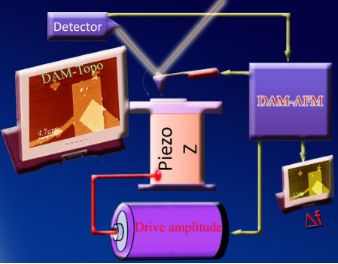
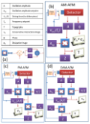
- -AFM Figure 2 portrays the functional schemes for the three different AFM modes under consideration. The standard representation of a feedback loop and the corresponding icon used to simplify the different diagrams is shown in Figure 2a. For the case of AM (Figure 2b) a harmonic driving force with
- and generates a topography image. This topography image is usually interpreted as a map of constant force gradient. The amplitude of the driving force, which is controlled in the parallel feedback loop, represents the dissipation. Figure 2d shows the functional scheme for DAM. As in FM, two nested
- -direction the driving force is kept constant at the setpoint value. A PLL, which tracks the effect resonance frequency, can operate as parallel feedback loop in DAM. Topography images in DAM represent maps of constant dissipation. The frequency shift controlled by the PLL provides a spectroscopic image. We


Pulse-response measurement of frequency-resolved water dynamics on a hydrophilic surface using a Q-damped atomic force microscopy cantilever
Beilstein J. Nanotechnol. 2012, 3, 260–266, doi:10.3762/bjnano.3.29
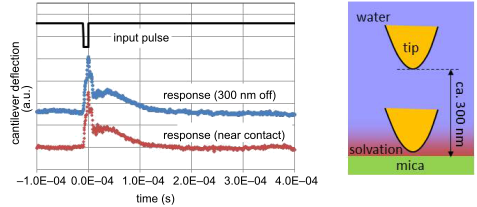
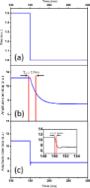
- amplifier inserted in the feedback loop. The net bandwidth of the constant-current driver and the electromagnet is larger than 1 MHz [24][25], which is sufficient for the present measurement. The measurement was carried out with a 0.03 N/m silicon nitride cantilever integrated with a probe tip. The tip
- the amplitude of the 500 Hz component of the cantilever deflection being detected with a lock-in amplifier. By setting the feedback reference to 90% of the full amplitude, the cantilever proved to remain stably at about 1 nm from the substrate. After the distance was stabilized the feedback loop was
- hydration layer and its shear property, and thus complicates the data analysis [19]. In the case of the pulse-response measurement, the effect of such a flow is expected to be weaker. In the present measurement the feedback loop for regulation of the tip–sample gap must be suspended during the period of




Theoretical study of the frequency shift in bimodal FM-AFM by fractional calculus
Beilstein J. Nanotechnol. 2012, 3, 198–206, doi:10.3762/bjnano.3.22
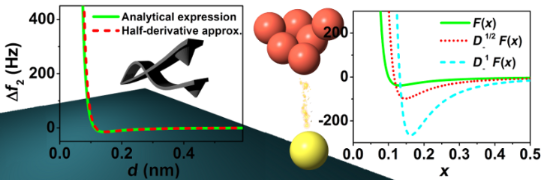
- characterized by the presence of several forces with different distance dependencies. (a) Scheme of the first two eigenmodes of a cantilever and the tip deflection under bimodal excitation. In bimodal FM-AFM changes in the interaction force produce changes in the resonant frequency. The feedback loop keeps the


Octadecyltrichlorosilane (OTS)-coated ionic liquid drops: Micro-reactors for homogenous catalytic reactions at designated interfaces
Beilstein J. Nanotechnol. 2012, 3, 33–39, doi:10.3762/bjnano.3.4
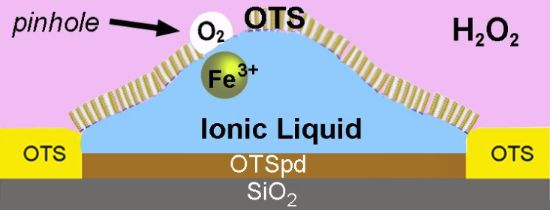
- from the AFM feedback loop. Therefore, from this experiment we conclude that the coated silane layer only formed at the surface of the IL drop. Reaction of the OTS-coated IL capsules Pinholes widely exist in the silane film that was prepared without stabilization [17]. When the “unstablized” OTS film


Charge transport in a zinc–porphyrin single-molecule junction
Beilstein J. Nanotechnol. 2011, 2, 714–719, doi:10.3762/bjnano.2.77
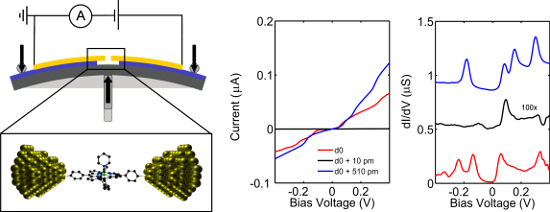
- stability increases, and both the thermal noise and thermal broadening decrease. We therefore cooled down the junctions to cryogenic temperature (6 K) while keeping the zero-bias conductance at a fixed value (around 1∙10−4 G0) with a feedback loop. In Figure 3a and Figure 3b, we present low-temperature I(V


Deconvolution of the density of states of tip and sample through constant-current tunneling spectroscopy
Beilstein J. Nanotechnol. 2011, 2, 607–617, doi:10.3762/bjnano.2.64
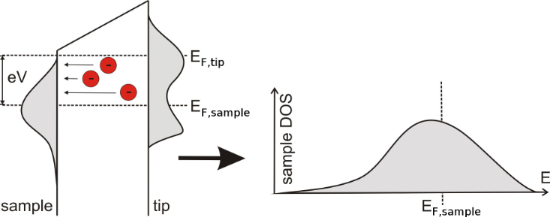
- -current spectroscopy, offers an interesting alternative to the I–V mode. In constant-current mode, the topographic feedback loop is left on and, thus, the tunneling current is held constant while the bias, V, is scanned and the derivative of I with respect to V, ∂VI(V), as well as the varying tip–sample
- curves were recorded at different set currents by employing a lock-in technique with a modulation frequency of ~500 Hz, which is well above the bandwidth of the topographic feedback loop. As tunneling tip, we used an electrochemically etched tungsten wire, which was subsequently heated in UHV to ~2000 °C




Terthiophene on Au(111): A scanning tunneling microscopy and spectroscopy study
Beilstein J. Nanotechnol. 2011, 2, 561–568, doi:10.3762/bjnano.2.60
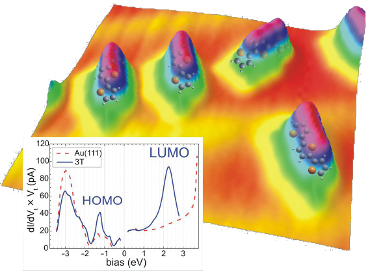
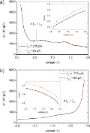
- modulation at a frequency well above the cut-off frequency of the topographic feedback loop. Figure 4 displays the topography (left column, (a) and (e)) of a single molecule that was scanned twice, once with Vt = –1.14 eV close to the HOMO (upper row) and once with Vt = +2.28 eV close to the LUMO (lower row
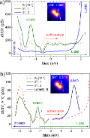
- setpoint before disabling the feedback loop is approximately given by the intersection of the curves at (+1.6 eV, 150 pS); (b) constant-current (z-V) spectra (Iset = 29 pA) taken at the bare gold surface (red curves) and in the flanks (blue) or the ends (green) of the molecule to detect the LUMO and the



Manipulation of gold colloidal nanoparticles with atomic force microscopy in dynamic mode: influence of particle–substrate chemistry and morphology, and of operating conditions
Beilstein J. Nanotechnol. 2011, 2, 85–98, doi:10.3762/bjnano.2.10
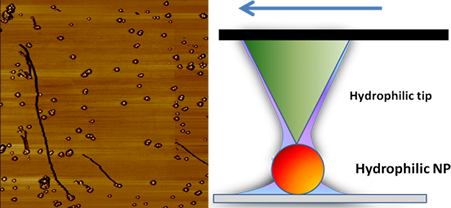
- oscillation amplitude of the tip, Aset, was kept constant by a feedback loop. In such cases, the power dissipation accompanying the tip-sample interaction can be determined from the following relationship [21][22][23][24][25][26][27][28][29][30][31][32][33][34][35][36]: where Apiezo is the oscillation
- constants of 5 and 48 N/m (respectively, MPP12100 from Veeco and PPP-NCLR from Nanosensors) were used. During manipulation, the oscillation amplitude of the tip, Aset, was kept constant by a feedback loop. In this case, the power dissipation accompanying the tip–sample interaction can be determined from