


Search results
Search for "high temperature" in Full Text gives 348 result(s) in Beilstein Journal of Nanotechnology. Showing first 200.
Measurement of polarization effects in dual-phase ceria-based oxygen permeation membranes using Kelvin probe force microscopy
Beilstein J. Nanotechnol. 2021, 12, 1380–1391, doi:10.3762/bjnano.12.102
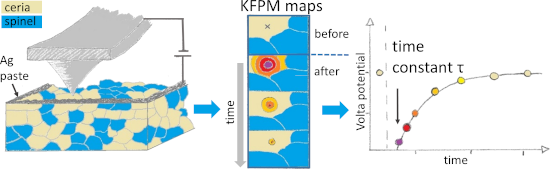
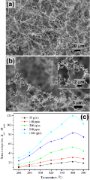
- focus of research for roughly 50 years [1]. The ion conductivity is combined with a moderate electron conductivity, which strongly depends on the oxygen partial pressure [2][3][4]. These features make ceria an interesting material for high-temperature industrial applications, for example, as oxygen
- spinel is partially reduced into a high-temperature monoxide phase with rock salt structure. Therefore, a slow rate of 0.5 K/min between 900 and 800 °C is implemented in the cooling cycle in order to enable complete re-oxidation of the high-temperature Co/Fe monoxide to the respective spinel phase


Nonmonotonous temperature dependence of Shapiro steps in YBCO grain boundary junctions
Beilstein J. Nanotechnol. 2021, 12, 1279–1285, doi:10.3762/bjnano.12.95
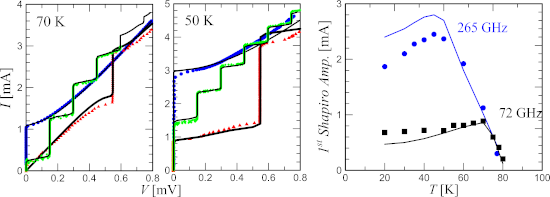
- ; Shapiro steps; temperature dependence; YBaCuO Josephson junction; Introduction High-temperature superconducting (HTSC) Josephson junctions (JJs) are of great interest since many physical properties can be observed in dynamics during the changing the temperature within a wide range from nitrogen


Electrical, electrochemical and structural studies of a chlorine-derived ionic liquid-based polymer gel electrolyte
Beilstein J. Nanotechnol. 2021, 12, 1252–1261, doi:10.3762/bjnano.12.92
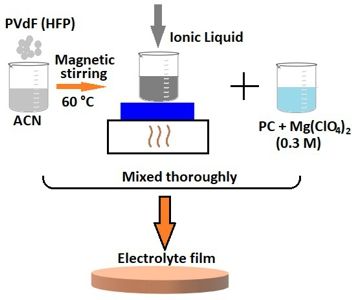
- that shows the conductivity at an infinitely high temperature, the parameter B is the pseudo-activation energy and it is related to the critical free volume for ion transport, and T0 is a reference temperature, also called equilibrium glass transition temperature, which has a value close to the Tg



Morphology-driven gas sensing by fabricated fractals: A review
Beilstein J. Nanotechnol. 2021, 12, 1187–1208, doi:10.3762/bjnano.12.88
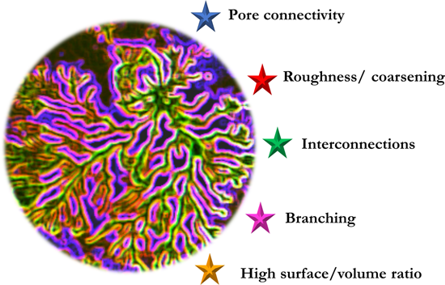
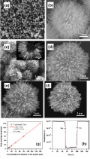
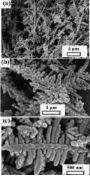
- -like structure of nanoscale Zn-doped nickel oxide dendritic crystals by an electrolytic method with high-temperature oxidation for the detection of NH3 at room temperature. Zn-doped NiO dendritic crystals at the nanoscale consisted of a major elongated stem having numerous secondary and tertiary










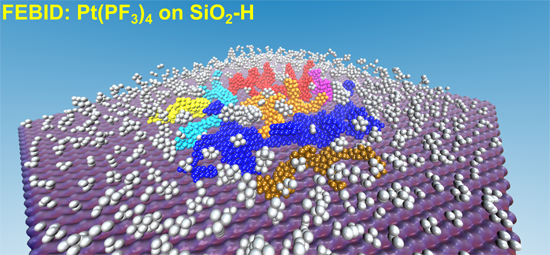
Irradiation-driven molecular dynamics simulation of the FEBID process for Pt(PF3)4
Beilstein J. Nanotechnol. 2021, 12, 1151–1172, doi:10.3762/bjnano.12.86
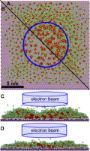
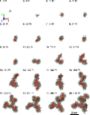
- and thermalization simulations for each new layer are performed in the same way as for the initial precursor layer. Step 5. Post-deposition processing Additional processing of the FEBID-grown structures, namely post-deposition electron irradiation or high-temperature annealing with or without
- the annealing includes heating of the deposited structures to high temperature and subsequent slow cooling. During annealing structural and topological changes in the deposit take place. The typical time scale for annealing in experiments varies from minutes to several hours [55][56][57]. Therefore








First-principles study of the structural, optoelectronic and thermophysical properties of the π-SnSe for thermoelectric applications
Beilstein J. Nanotechnol. 2021, 12, 1101–1114, doi:10.3762/bjnano.12.82
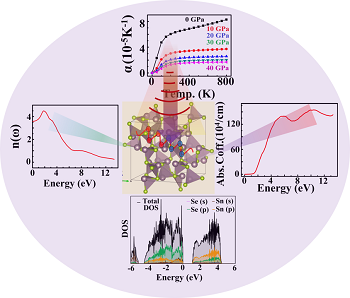
- ]. Thermodynamic properties It is very crucial to know thermodynamic (TD) properties to obtain more details about the particular responses of an alloy, especially when it is subjected to critical limitations, such as high-pressure and high-temperature conditions. Therefore, it is essential to examine the effects
- from Figure 6a that for a fixed pressure, the CV curve grows sharply up to 300 K then the value of CV gradually raises. Afterward, at a higher temperature range, the CV curve keeps a continuing pace and tends to reach the Dulong–Petit limit, revealing that at a high-temperature range all the phonon
- modes get excited by the thermal energy, which is a typical behavior for all solids at a high temperature [61][62]. It can be seen from Figure 6 that at a temperature higher than 300 K, CV depends on the pressure as well as temperature and satisfy the relation CV ∝ T3 [63]. From Figure 6 it can be also


Revealing the formation mechanism and band gap tuning of Sb2S3 nanoparticles
Beilstein J. Nanotechnol. 2021, 12, 1021–1033, doi:10.3762/bjnano.12.76
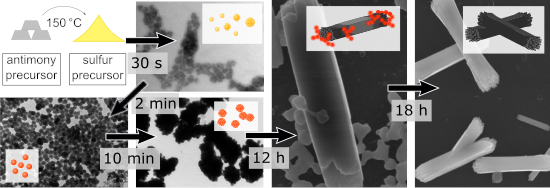
- found in high-temperature seeding processes from other metalloorganic syntheses [36]. A changing chemical composition could also be a reason for the nanoparticles to undergo a second hierarchical assembly. A similar behavior was found by Liu et al., who synthesized cobalt particles with a cobalt


Progress and innovation of nanostructured sulfur cathodes and metal-free anodes for room-temperature Na–S batteries
Beilstein J. Nanotechnol. 2021, 12, 995–1020, doi:10.3762/bjnano.12.75
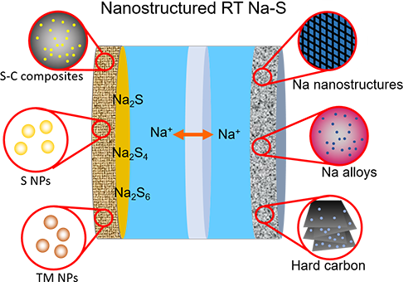
- batteries [3][12]. In fact, research on Na batteries is not new, starting with high-temperature (HT) Na–S batteries in the 1960s and RT sodium-ion batteries (SiBs) in the 1980s [10]. However, an appropriate anode material based on sodium was not achieved and, therefore, only lithium-ion batteries are
- commercially available for room-temperature applications [10]. The first commercialized Na–S battery was a high-temperature sodium–sulfur battery, which has an operational temperature in the range of 270–350 °C [13]. It was launched to the market by NGK Insulator Co. in Japan in 2002. However, these devices




Comprehensive review on ultrasound-responsive theranostic nanomaterials: mechanisms, structures and medical applications
Beilstein J. Nanotechnol. 2021, 12, 808–862, doi:10.3762/bjnano.12.64
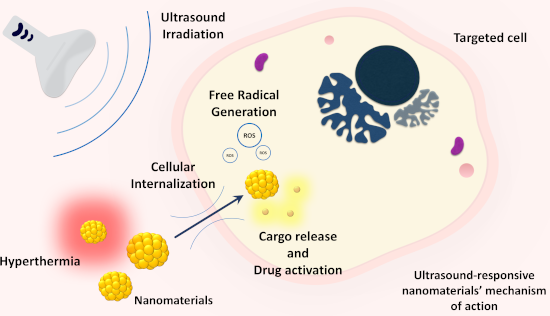
- -frequency ultrasound is mostly associated with mechanical effects [143]. During hyperthermia, the target tumor tissue is exposed to a high temperature above 47 °C, and thermal ablation occurs by direct destruction of the cancer cells. After sub-ablative local hyperthermia involving a slight increase in the


Recent progress in actuation technologies of micro/nanorobots
Beilstein J. Nanotechnol. 2021, 12, 756–765, doi:10.3762/bjnano.12.59
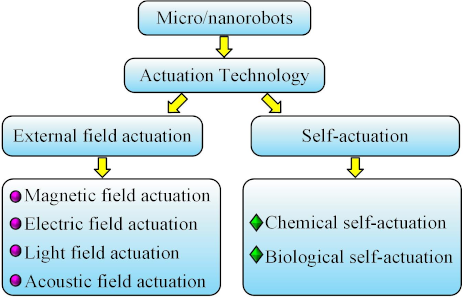
- dual-mode fluorescence and magnetic resonance imaging. Using magnetic targeting, the micro/nanorobot broke through complex physiological barriers and entered tumors while carrying a photosensitizer. After that, local high temperature was generated by a near-infrared laser, and observable and accurate


A review of defect engineering, ion implantation, and nanofabrication using the helium ion microscope
Beilstein J. Nanotechnol. 2021, 12, 633–664, doi:10.3762/bjnano.12.52
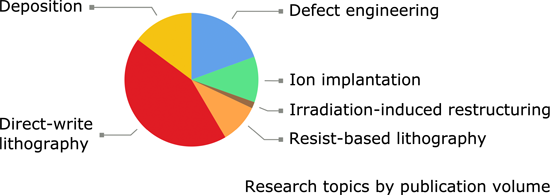
- YBCO. Moreover, significant lateral scatter of the helium ions in the LSCO thin film was observed, even for the lower doses, exacerbated by ion backscatter from the substrate interface. However, in the case of another high-temperature superconductor, MgB2, the creation of high-quality Josephson


The preparation temperature influences the physicochemical nature and activity of nanoceria
Beilstein J. Nanotechnol. 2021, 12, 525–540, doi:10.3762/bjnano.12.43
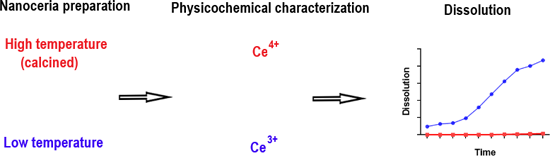
- . Solvothermally synthesized nanoceria dissolve in acidic environments, accelerated by carboxylic acids. NM-212 dissolution has been reported to be minimal. To gain insight into the role of high-temperature exposure on nanoceria dissolution, product susceptibility to carboxylic acid-accelerated dissolution, and
- were employed. Dissolution of NM-212 and the calcined nanoceria was much slower than that of the non-calcined form. The decreased solubility was attributed to an increased amount of surface Ce4+ species induced by the high temperature. Carboxylic acids doubled the very low dissolution rate of NM-212
- . NM-212 was prepared as a nanoceria representative of those used in industrial applications. Nanoceria prepared for industrial applications are often exposed to high temperature (calcined), which increases particle size and produces crystalline particles with a predominance of surface Ce4+ [14][15][16




Solution combustion synthesis of a nanometer-scale Co3O4 anode material for Li-ion batteries
Beilstein J. Nanotechnol. 2021, 12, 424–431, doi:10.3762/bjnano.12.34
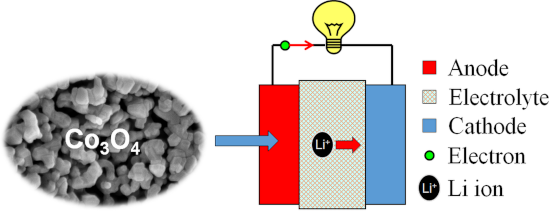
- ]. Intentionally, we have not mentioned before another synthesis technique, which is known as solution combustion synthesis (SCS) or self-propagating high-temperature synthesis (SHS). In fact, this method is relatively inexpensive and effective for the production of various industrially useful materials [42][43


Spontaneous shape transition of MnxGe1−x islands to long nanowires
Beilstein J. Nanotechnol. 2021, 12, 366–374, doi:10.3762/bjnano.12.30
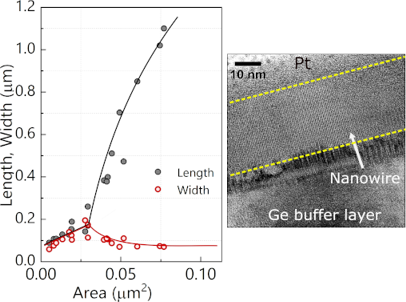
- spontaneous shape transition, from regular islands to elongated nanowires, upon high-temperature annealing of a thin Mn wetting layer evaporated on Ge(111). We demonstrate that 4.5 monolayers is the critical thickness of the Mn layer, governing the shape transition to wires. A small change around this value
- formation of quantum wires [35]. In this method, wires are obtained via epitaxial growth of a strained wetting layer followed by annealing at high temperature. However, only few studies have been dedicated to strain-induced elongation mechanisms leading to the formation of semiconducting nanowires, such as
- electron beam. Results and Discussion High-temperature annealing of the evaporated Mn thin films on Ge(111) results in a significant change of the film morphology with the appearance of nanostructures onto the surface. The features of the structures are related to the Mn layer thickness and the duration of


Scanning transmission helium ion microscopy on carbon nanomembranes
Beilstein J. Nanotechnol. 2021, 12, 222–231, doi:10.3762/bjnano.12.18
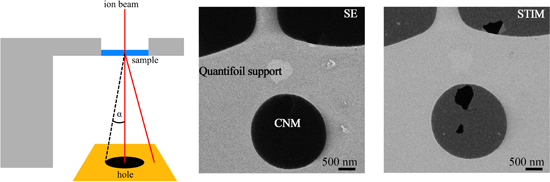
- bands become more pronounced, similar to a film of high-temperature annealed nanographite [33]. It was previously demonstrated in TEM that, at an energy of 80 keV, a graphitization of free-standing amorphous carbon can be induced [34]. It is also known that CNMs can turn from the amorphous state into


Paper-based triboelectric nanogenerators and their applications: a review
Beilstein J. Nanotechnol. 2021, 12, 151–171, doi:10.3762/bjnano.12.12
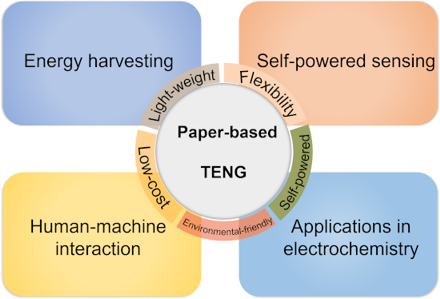
- the CE behavior is dependent on the surrounding temperature, Xu et al. [91] have further explored the operation of TENGs at high temperature values. Their results reveal that the thermionic emission of electrons is the main reason for CE and the atomic thermal vibrations strongly influence the CE at






The role of gold atom concentration in the formation of Cu–Au nanoparticles from the gas phase
Beilstein J. Nanotechnol. 2021, 12, 72–81, doi:10.3762/bjnano.12.6
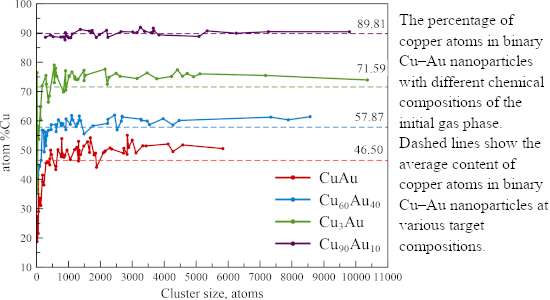
- using computer simulation methods of only one of the physical methods used for the production of binary Cu–Au nanoparticles (i.e, the synthesis from a high-temperature gas phase). For the first time, a detailed study of the dependence of the atomic ordering of Cu–Au particles on the concentration of
- means a lower binding energy between gold atoms in these small clusters. This is, most likely, decisive for the formation of binary Cu–Au nanoparticles. In the initial stages of formation, due to the high temperature of the simulated system, Cu–Au clusters are small drops of a highly heated liquid. To
- even lower binding energy when compared to the atoms of the copper center. At high temperature values in the synthesis chamber, the influence of all these factors prove that the discharge of the smallest droplets of gold from the surface of a binary cluster can be energetically favorable. Note that the


Kondo effects in small-bandgap carbon nanotube quantum dots
Beilstein J. Nanotechnol. 2020, 11, 1873–1890, doi:10.3762/bjnano.11.169
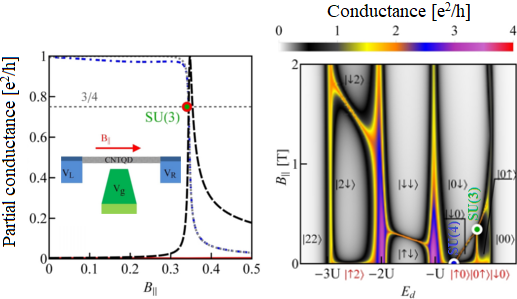
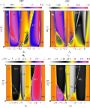
- the gauge invariance symmetry, which is associated with charge conservation. Consequently, at higher temperatures, a spurious transition to the local-moment regime is found rather than a continuous crossover. When analyzing higher temperatures, one can avoid the high-temperature drawbacks of SBMFA by
- fluctuations in addition to spin fluctuations. Alternatively, one can use another complementary many-body technique that correctly predicts in the high-temperature range. Technically simple is the equation of motion (EOM) method with Lacroix truncation of the chain of Green functions at the second order in the
- associated with the given resonances. At this point it should be mentioned that one should look at the high-temperature results in Figure 6b with some caution, in particular, at those that concern the thermopower. Inelastic processes, for example, these resulting from electron–phonon interaction are



![[Graphic 37]](/bjnano/content/inline/2190-4286-11-169-i52.svg?max-width=637&scale=1.18182) as a functio...
as a functio...


Self-standing heterostructured NiCx-NiFe-NC/biochar as a highly efficient cathode for lithium–oxygen batteries
Beilstein J. Nanotechnol. 2020, 11, 1809–1821, doi:10.3762/bjnano.11.163
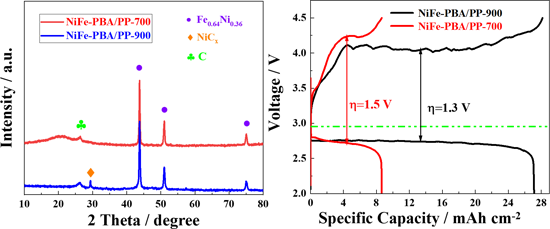
- of NiFe-PBA/PP-700 and NiFe-PBA/PP-900 (Figure 2b and Figure 2c) show that, after the sample was calcined at a high temperature, the cubic-shaped particles disappeared and were replaced with aggregated irregular particles formed on the surface of the carbon support material. Compared to the sample






Imaging and milling resolution of light ion beams from helium ion microscopy and FIBs driven by liquid metal alloy ion sources
Beilstein J. Nanotechnol. 2020, 11, 1742–1749, doi:10.3762/bjnano.11.156
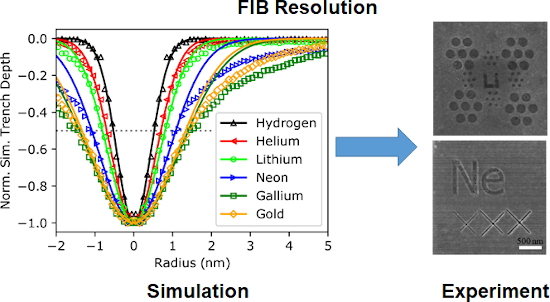
- junctions in high-temperature superconductors [11]. Although HIM is highly suitable for imaging and nanometer-scale patterning, there is a need of focused ion beams other than helium or neon with comparable properties. Alternative developments were made using laser-cooled magneto-optical trap ion sources


Antimicrobial metal-based nanoparticles: a review on their synthesis, types and antimicrobial action
Beilstein J. Nanotechnol. 2020, 11, 1450–1469, doi:10.3762/bjnano.11.129

- living organisms [70][71]. Moreover, the physical-based synthesis methods require expensive equipment, high temperature and high pressure, which makes it an unprofitable and unscalable method [10]. On the other hand, the chemical methods use and generate toxic chemicals that can cause dangerous effects


Cryogenic low-noise amplifiers for measurements with superconducting detectors
Beilstein J. Nanotechnol. 2020, 11, 1316–1320, doi:10.3762/bjnano.11.115
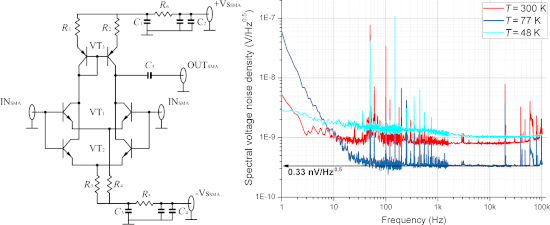
- termination. Unfortunately, modern cryostats for low-temperature experiments do not have a cooling temperature stage corresponding to 77 K. Hence, the designed amplifiers are most applicable for the working temperature of liquid nitrogen, which is the main working temperature for high-temperature


Structure and electrochemical performance of electrospun-ordered porous carbon/graphene composite nanofibers
Beilstein J. Nanotechnol. 2020, 11, 1280–1290, doi:10.3762/bjnano.11.112
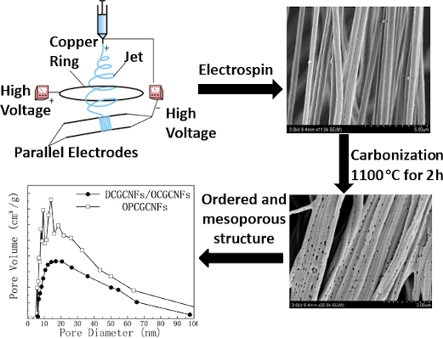
- are incompatible with PAN, such as polystyrene (PS), poly(ʟ-lactic acid) (PLLA) and poly(methyl methacrylate) (PMMA) [20][21][22][23]. During the carbonization process at a high temperature, PAN and the blended polymers undergo phase separation, forming a large number of pores which increases the
- square shape (e.g., 3 cm × 3 cm), put into a muffle furnace (KSY-D-16, Longkou Precision Instrument Co., Ltd., China), and submitted to a preoxidation step at 280 °C for 8 h under air at a heating rate of 1 °C·min−1. The high temperature during the oxidation process induced phase separation between PAN
- . Compared with DCGCNFs/OCGCNFs, the adsorption volume of OPCGCNFs was gradually increased, indicating that porosity also increased. It was evident that DIW became a pore-making agent in the high-temperature carbonization process. Upon the addition of DIW, heating and DIW evaporation, many mesoporous


Ultrasensitive detection of cadmium ions using a microcantilever-based piezoresistive sensor for groundwater
Beilstein J. Nanotechnol. 2020, 11, 1242–1253, doi:10.3762/bjnano.11.108
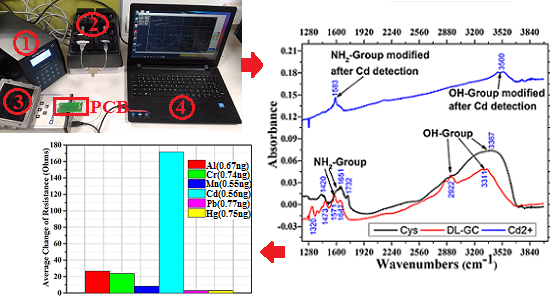
- . [28], but it is not suitable for other high-temperature sputtering processes. Microcantilevers based on SiO2 have been manufactured by Tang et al. [29] to enhance the sensitivity of cantilever sensors. Many authors use optical setups for microcantilevers. However, an optical output has several




Nonadiabatic superconductivity in a Li-intercalated hexagonal boron nitride bilayer
Beilstein J. Nanotechnol. 2020, 11, 1178–1189, doi:10.3762/bjnano.11.102
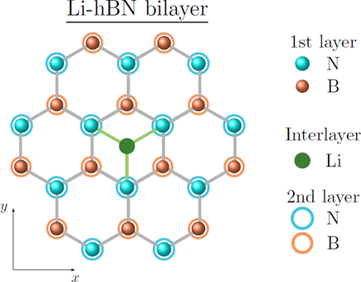
- result is radically different from the data obtained for graphene/SiO2 [33]. In addition, hBN monolayers exhibit a high temperature stability, a low dielectric constant (ε = 3–4), and a high thermal conductivity [34]. The band gap of hBN is about 5.9 eV [35]. Furthermore, which is also important, hBN is


![[Graphic 34]](/bjnano/content/inline/2190-4286-11-102-i54.svg?max-width=637&scale=1.18182) for Li-hBN. The results were obta...
for Li-hBN. The results were obta...



