Search results
Search for "indentation" in Full Text gives 109 result(s) in Beilstein Journal of Nanotechnology.
Optimization of phase contrast in bimodal amplitude modulation AFM
Beilstein J. Nanotechnol. 2015, 6, 1072–1081, doi:10.3762/bjnano.6.108
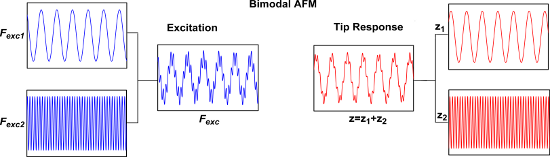
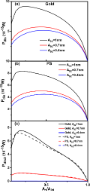
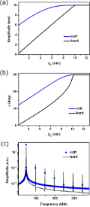
- and detected. The feedback operates on the amplitude of the first mode while both second and third modes are in open loops. It has been shown the usefulness of the third mode to modulate the indentation [23]. A comparison of the trade-offs in sensitivity and sample depth have been performed with
- AFM offers two additional channels for compositional contrast. The value of A03 has been used modulate the indentation while imaging embedded nanoparticles in a soft polymer [23]. To understand some of the fundamental aspects of trimodal AFM and the differences with respect to bimodal AM we study the



Mapping of elasticity and damping in an α + β titanium alloy through atomic force acoustic microscopy
Beilstein J. Nanotechnol. 2015, 6, 767–776, doi:10.3762/bjnano.6.79
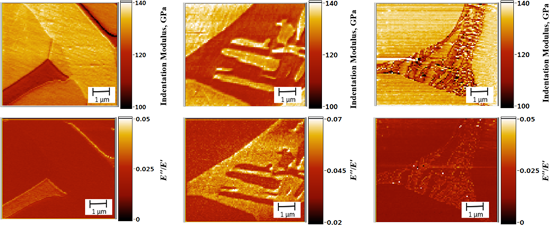
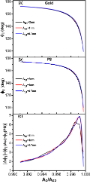
- cantilever with damped flexural modes. The cantilever dynamics model considering damping, which was proposed recently, has been used for mapping of indentation modulus and damping of different phases in a metallic structural material. The study indicated that in a Ti-6Al-4V alloy the metastable β phase has
- acoustic microscopy; contact resonances; damping; indentation modulus; Ti-6Al-4V; Introduction The physical and mechanical properties of the individual phases govern the respective properties of the multiphase structural materials. The knowledge of elastic properties of the individual phases is important
- successfully mapped the indentation modulus of α- and β-phases in a Ti-6Al-4V alloy by using AFAM while using a cantilever dynamic model in which damping, however, was neglected. In this paper, we report mapping of elastic modulus and damping using a modified cantilever dynamic model in various phases, such as


Dynamic force microscopy simulator (dForce): A tool for planning and understanding tapping and bimodal AFM experiments
Beilstein J. Nanotechnol. 2015, 6, 369–379, doi:10.3762/bjnano.6.36
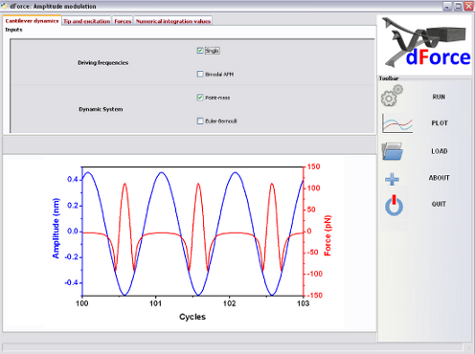
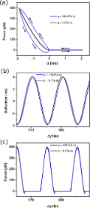
- tip–surface charge density and σs is the sample surface charge density. Hertz contact mechanics The elastic contact between the tip and sample is usually modelled with the Hertz model [46] whereby for a spherical tip and a half-space sample the force is given by where δ is the indentation and Eeff is
- applied to describe contacts characterized by a relatively small Young modulus, and large adhesion and contact area [48]. In this model the force is calculated as an implicit equation of the indentation where and Tatara contact mechanics The Tatara contact mechanics are applied to describe a sample with a




Mechanical properties of MDCK II cells exposed to gold nanorods
Beilstein J. Nanotechnol. 2015, 6, 223–231, doi:10.3762/bjnano.6.21
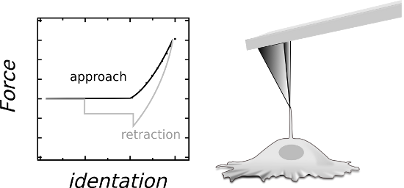
- atomic force microscope (AFM) by taking force curves at each spot the probe touches the sample surface. These force indentation curves are frequently subject to regression analysis employing Hertzian contact models that permit to assess the cell’s Young’s modulus. The modulus bears invaluable information
- environmental cues also adhesion and uptake of nanoparticles is reflected in the mechanical properties of cells. Figure 3A shows averaged force indentation curves performed on the center of confluent MDCK II cells. Two different models were used to extract mechanical parameters from these data. The first one
- force in response to indentation with a conical indenter originating from two sources, linear elasticity due to area dilatation and pre-stress (constant tension). Pre-stress is mainly generated by contractile actomyosin, strong adhesion at the cell-borders and interaction of the plasma membrane with the


Boosting the local anodic oxidation of silicon through carbon nanofiber atomic force microscopy probes
Beilstein J. Nanotechnol. 2015, 6, 215–222, doi:10.3762/bjnano.6.20
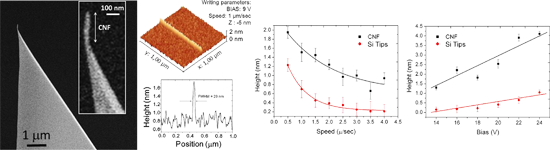
- –sample direct mechanical contact or long range interactions, such as based on van der Waals or electrostatic forces. Because of this, AFM-based SPL can be achieved through oxidation, indentation, as well as various other implementations such as dip-pen nanolithography [5]. Early works on AFM-based SPL


Accurate, explicit formulae for higher harmonic force spectroscopy by frequency modulation-AFM
Beilstein J. Nanotechnol. 2015, 6, 149–156, doi:10.3762/bjnano.6.14
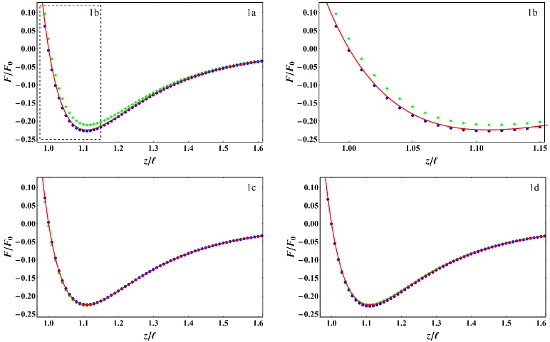
- methods yield satisfactory results. Figure 2 depicts the reconstruction of the generalized damping coefficients. Both the Sader–Jarvis formula for dissipative forces and the second harmonic reconstruction lose accuracy as the indentation into the simulated surface increases to the order of the oscillation


Nanometer-resolved mechanical properties around GaN crystal surface steps
Beilstein J. Nanotechnol. 2014, 5, 2164–2170, doi:10.3762/bjnano.5.225
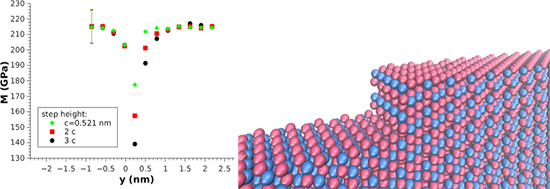
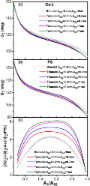
- (TRM), Universität Leipzig, 04103 Leipzig, Germany 10.3762/bjnano.5.225 Abstract The mechanical properties of surfaces and nanostructures deviate from their bulk counterparts due to surface stress and reduced dimensionality. Experimental indentation-based techniques present the challenge of measuring
- these effects, while avoiding artifacts caused by the measurement technique itself. We performed a molecular dynamics study to investigate the mechanical properties of a GaN step of only a few lattice constants step height and scrutinized its applicability to indentation experiments using a finite
- with experiments. Keywords: finite elements; gallium nitride; indentation; mechanical properties; molecular dynamics; nanostructures; Introduction Recently developed scanning probe-based techniques, such as contact resonance atomic force microscopy (CR-AFM) [1][2], allow for the assessment of


![[Graphic 3]](/bjnano/content/inline/2190-4286-5-225-i13.png?max-width=637&scale=1.18182) along the y-axis of the upper Ga atom...
along the y-axis of the upper Ga atom...


Modeling viscoelasticity through spring–dashpot models in intermittent-contact atomic force microscopy
Beilstein J. Nanotechnol. 2014, 5, 2149–2163, doi:10.3762/bjnano.5.224
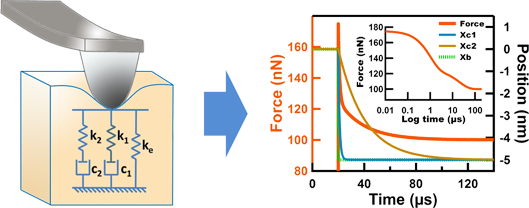
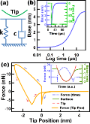
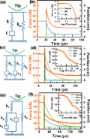
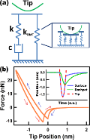
- contact mechanics to incorporate the contact area and sample deformation [7]. The dissipative part of this model, originally introduced by García and coworkers [34] has the following form: where η is the viscosity, R is the tip radius and δ is the sample deformation (tip–sample indentation). In this model
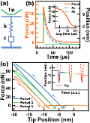
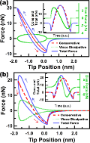
- that at low frequencies the dissipation loop is larger and also the tip position reaches lower values corresponding to a greater tip–sample indentation. As the tip reaches lower values, the minimum of the FD curve when the tip leaves the sample (the left-most minimum in the FD curves, corresponding to


Optical properties and electrical transport of thin films of terbium(III) bis(phthalocyanine) on cobalt
Beilstein J. Nanotechnol. 2014, 5, 2070–2078, doi:10.3762/bjnano.5.215
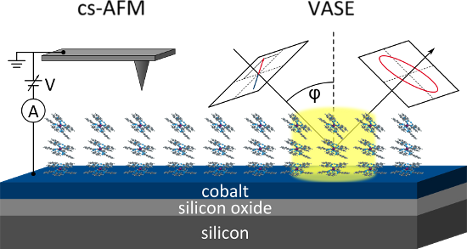
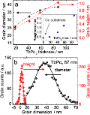
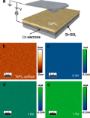
- TbPc2 films. In order to obtain the current density from the cs-AFM measurements, we follow a similar approach as presented by Reid et al. [26], where the contact area between probe and sample is determined assuming a tip indentation of 1 nm for the same kind of Pt-coated hemispherical probes used in



Dissipation signals due to lateral tip oscillations in FM-AFM
Beilstein J. Nanotechnol. 2014, 5, 2048–2057, doi:10.3762/bjnano.5.213
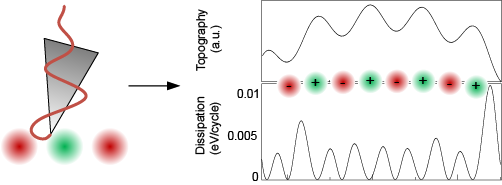
- , the effects that take place are far more complex than having just a single hysteresis loop. Depending on the indentation depth of the tip (or the minimum distance between tip and sample), multiple adhesion hysteresis loops might occur [10]. It can also happen that in some of the cycles, there is no


Mechanical properties of sol–gel derived SiO2 nanotubes
Beilstein J. Nanotechnol. 2014, 5, 1808–1814, doi:10.3762/bjnano.5.191
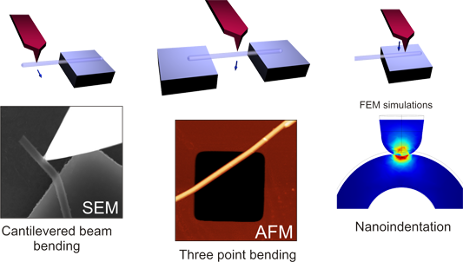
- ). The problem of indentation of thick-walled elastic NTs was addressed and discussed. To the best of our knowledge, no in situ SEM bending tests, as well as AFM nanoindentation experiments were performed on sol–gel silica NTs previously. Experimental Ag/SiO2 core–shell NWs were synthesized by coating Ag
- indentation is limited to the thin-shell or membrane case [27]. Therefore, for the case of thick shells studied in this work, we employed finite element method (FEM, COMSOL Multiphysics) models instead, where all geometric parameters can be taken into account. The Solid Mechanics module was used, where the
- Poisson ratio ν1 = 0.22; and the shell: Young modulus E2 is to be found and Poisson ν2 = 0.17 [28]. For a reference we have also applied the thin-shell and Hertz models. The thin-shell approach allows one to neglect the indentation of the surface and the tip geometry by taking into account only the


Probing viscoelastic surfaces with bimodal tapping-mode atomic force microscopy: Underlying physics and observables for a standard linear solid model
Beilstein J. Nanotechnol. 2014, 5, 1649–1663, doi:10.3762/bjnano.5.176
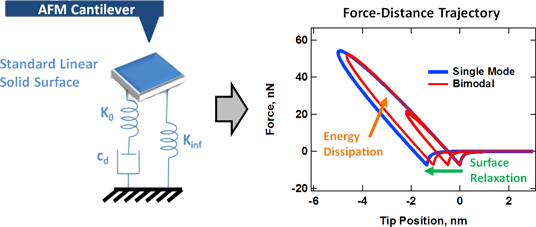
- for constant-indentation imaging of the sample with increasing higher mode amplitude (if such a method can be developed) the level of dissipation decreases monotonically, which is as expected, since the SLS has only one characteristic relaxation time (governed by the damper) and the sample deformation
- higher eigenmodes in successive experiments, under constant indentation. The analysis could be repeated at different levels of indentation to give a complete picture of the depth-dependent behavior of the sample. Second, the further development of spectroscopy methods that provide the tip–sample force


Hydrophobic interaction governs unspecific adhesion of staphylococci: a single cell force spectroscopy study
Beilstein J. Nanotechnol. 2014, 5, 1501–1512, doi:10.3762/bjnano.5.163
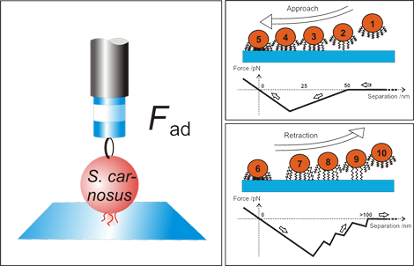
- , yet, due to adhesive forces, a deep global minimum is recorded. Further retraction provokes a loss of contact (“jump-off contact”). In the repulsive regime (F > 0), a force of 150 pN is not enough to deform the bacterium: With a force trigger of 150 nN, only an indentation of ca. 10 nm is reached (cf


Surface topography and contact mechanics of dry and wet human skin
Beilstein J. Nanotechnol. 2014, 5, 1341–1348, doi:10.3762/bjnano.5.147
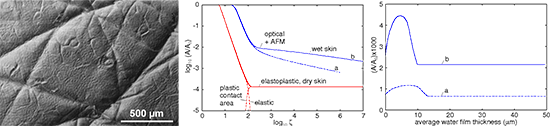
- corneum are very soft. This has been demonstrated in indentation experiments on the inner forearm by using a macroscopic indentor (a ball with a diameter of about 1 cm). The measurements are explained well by using the Hertzian contact theory. The effective elastic modulus was found to be 10–40 kPa [3


Trade-offs in sensitivity and sampling depth in bimodal atomic force microscopy and comparison to the trimodal case
Beilstein J. Nanotechnol. 2014, 5, 1144–1151, doi:10.3762/bjnano.5.125
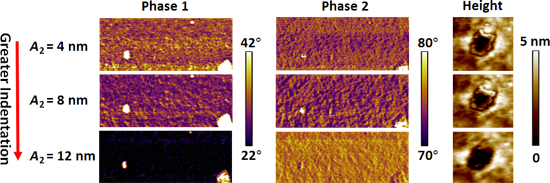
- experiments on Nafion® proton exchange membranes and numerical simulations illustrating the trade-offs between the optimization of compositional contrast and the modulation of tip indentation depth in bimodal atomic force microscopy (AFM). We focus on the original bimodal AFM method, which uses amplitude
- modulate tip indentation depth, in addition to providing sample topography and material property contrast, although there are important competing effects between the optimization of sensitivity and the control of indentation depth, both of which strongly influence the contrast quality. Furthermore, we
- ; multifrequency atomic force microscopy; indentation depth modulation; Nafion; open loop; proton exchange membranes; trimodal; Introduction Since its invention in the early 1980s [1], atomic force microscopy (AFM) has become one of the most widely used characterization tools in nanotechnology and a wide range of


Dry friction of microstructured polymer surfaces inspired by snake skin
Beilstein J. Nanotechnol. 2014, 5, 1091–1103, doi:10.3762/bjnano.5.122
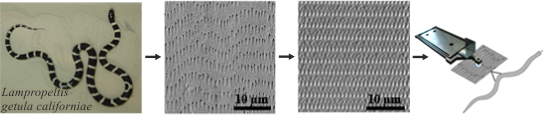
- and flat surface under an applied normal force F was characterised by the indentation depth d and indentation radius a (Figure 4). The contact radius a can be described by [37]: The relationship between applied force and geometrical deformation can be described by the following formula [37]: where The
- calculated contact area between the tribo-pair on smooth and flat surfaces was 40 µm2 corresponding to a contact radius of 3.5 µm and an indentation depth of 25 nm. The actual contact areas in case of the microstructured surfaces were indeed smaller. The following calculations are dealing with the geometric
- the exact geometry of PGMS topography is listed in Table 3. The measured details are described in Figure 2. The indentation depth h of the glass sphere was calculated according to the following formula modified after Sondhauß et al. [38]. With the indentation radius a and the periodicity of the


Insect attachment on crystalline bioinspired wax surfaces formed by alkanes of varying chain lengths
Beilstein J. Nanotechnol. 2014, 5, 1031–1041, doi:10.3762/bjnano.5.116
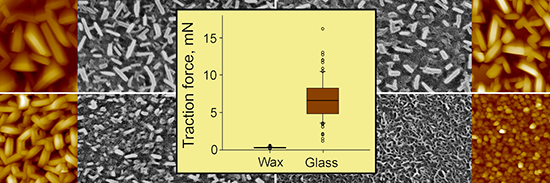
- : first on hydrophilic smooth glass (glass 1), then on one of the wax surfaces, and once more on glass (glass 2). Each insect individual was tested on all wax surfaces. We used 20 male beetles and carried out 240 traction tests in total. Pull-off forces were measured in indentation experiments with the


Scale effects of nanomechanical properties and deformation behavior of Au nanoparticle and thin film using depth sensing nanoindentation
Beilstein J. Nanotechnol. 2014, 5, 822–836, doi:10.3762/bjnano.5.94
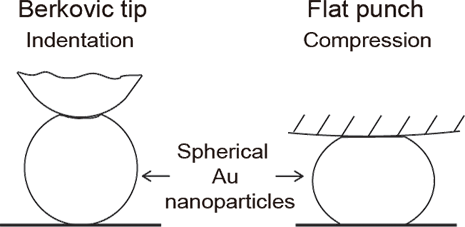
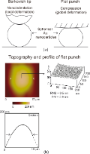
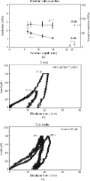
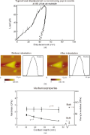
- nano-objects that are continually being developed and incorporated into a wide variety of macro- to nanoscale systems [3]. With the depth-sensing nanoindenter, indentation studies with a sharp three-sided pyramidal Berkovich tip and compression studies with a flat punch have been performed. The sharp
- ][17] made of various materials including Al, Au, Ag, Cu, GaAs, GaP, Si, Ti, ZnSe and Ni, scale effects on hardness with respect to the depth of penetration or indentation size effect (ISE) and decreasing film thickness have been reported. Pharr and Oliver [9] and Bhushan et al. [11], for example
- , found that a decreasing indentation depth resulted in higher hardness of Ag and Si surfaces, respectively. In both cases the hardness of the nano-objects was higher than that of the bulk material. Other studies revealed the relationship between film thickness and hardness. Cao et al. [15] and Dietiker






The softening of human bladder cancer cells happens at an early stage of the malignancy process
Beilstein J. Nanotechnol. 2014, 5, 447–457, doi:10.3762/bjnano.5.52
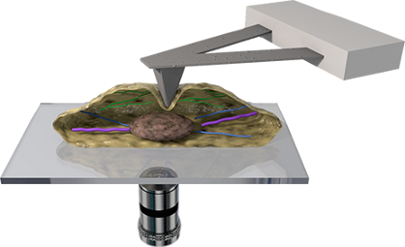
- [27]. First, the force curves were converted into force-versus-indentation curves and those curve were fitted to Equation 1 (see section Experimental: Force spectroscopy on living cells). Because the Young’s modulus of the tip is about 160 GPa (seven orders of magnitude larger than that of the cells
- the stiff and compliant surface gives the indentation (Equation 2, see section Experimental: Force spectroscopy on living cells). Figure 4B shows the force-versus-indentation curve derived from Figure 4A and the fit obtained with the Sneddon’s model assuming a conical AFM tip with half-angle of 20
- (indentation). For that reason, any conclusion derived from the data has to be verified for all the indentation depths studied here. On the other hand, the relative error in the determination of the contact point will decrease for larger indentations. The results obtained for all recorded cell lines yielded


Uncertainties in forces extracted from non-contact atomic force microscopy measurements by fitting of long-range background forces
Beilstein J. Nanotechnol. 2014, 5, 386–393, doi:10.3762/bjnano.5.45
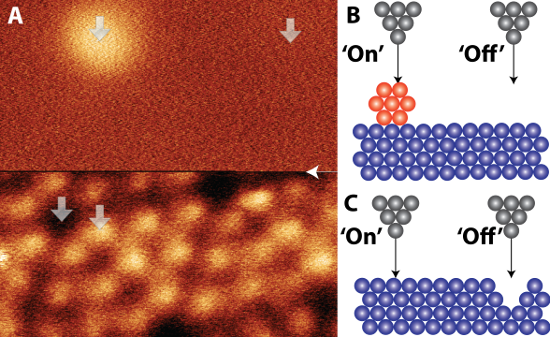
- , and, based on previous measurements of similar sensors [5][15], assume an effective stiffness of k ≈ 2000 N/m. The sensors were first prepared on a clean silicon surface by standard STM techniques (pulsing and indentation) until good STM and NC-AFM resolution was achieved. Typically we used
- indentation of the tip into the surface will require the tip structure checks to be repeated. This is likely to be even more important in the case of experiments using qPlus-type setups, where STM tip treatment methods are often used to prepare tips in situ on the surface. In these cases, significant transfer


Influence of the adsorption geometry of PTCDA on Ag(111) on the tip–molecule forces in non-contact atomic force microscopy
Beilstein J. Nanotechnol. 2014, 5, 98–104, doi:10.3762/bjnano.5.9
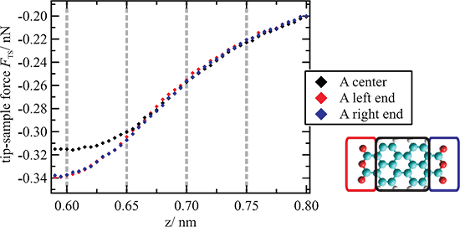
- oscillation was held constant at A = 0.40 nm. To avoid crosstalk between tunneling current and deflection signal, no voltage was applied to the tip during NC-AFM operation. The tip was prepared by voltage pulses and soft indentation into the Ag sample most likely resulting in a Ag-terminated apex. However, it



Structural development and energy dissipation in simulated silicon apices
Beilstein J. Nanotechnol. 2013, 4, 941–948, doi:10.3762/bjnano.4.106
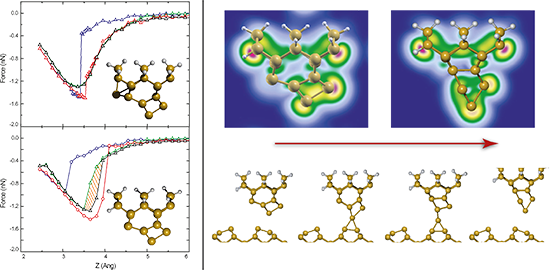
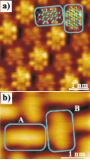
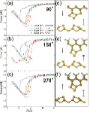
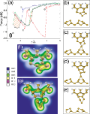
- structural evolution of the tip apex within a low temperature NC-AFM experiment, we simulated a repeated tip–surface indentation until the tip structure converged to a stable termination and the characteristic hysteretic behaviour was no longer observed. Our calculations suggest that varying just a single
- dominant role in many experimental dissipation observations. Enhancing tip stability via surface indentation Examination of the tip geometries in our simulations suggest that the increase in F(z) hysteresis is driven by significant structural rearrangements. Our calculations suggest that the D2 tip
- are not reduced sufficiently upon interaction with the surface. Therefore, in some instances, the presence of a tip-hysteresis may act as an identifier for a potentially unstable tip configurations. Tip indentation is a commonly applied technique to improve the quality of tips in NC-AFM, and in turn


Peak forces and lateral resolution in amplitude modulation force microscopy in liquid
Beilstein J. Nanotechnol. 2013, 4, 852–859, doi:10.3762/bjnano.4.96
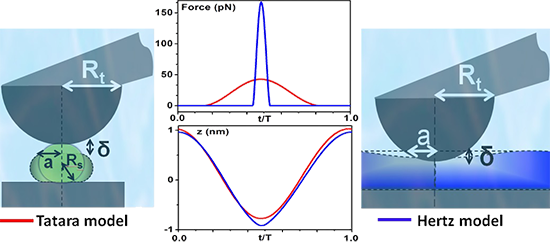
- the Hertzian mechanics. The average model follows the trend of the Tatara model for the peak forces when varying the set-point amplitude for soft samples. For soft materials, the indentation of the tip could be higher than Asp. Thus the tip and the sample are in permanent contact during the whole
- displacements are part of the contact force computed with this model. where The subindexes “t” and “s” stand, respectively, for tip and sample. In the above equations, δ is the indentation depth, ν is the Poisson coefficient (νt = 0.3 and νs = 0.4) and E the Young modulus with Et = 170 GPa. Each contact
- forces derived from the Hertz model for relatively soft materials. Sample deformation in terms of Es, A0, and Rt The deformation (indentation) exerted by the tip can be considered as an indicator of the degree of invasiveness of the technique. The dependence of the indentation on the Young modulus for


Dynamic nanoindentation by instrumented nanoindentation and force microscopy: a comparative review
Beilstein J. Nanotechnol. 2013, 4, 815–833, doi:10.3762/bjnano.4.93
- ]. This approach uses relations that were derived by Sneddon [8] in order to extract the indentation modulus from the slope of the unloading curve according to Equation 1 [23][24] where S is stiffness, given by the slope dF/dh of the unloading curve, and A the contact area between the indenter and the
- sample. Er is the reduced modulus which accounts for both sample and indenter Poisson ratio and modulus – υs, Es and υi, Ei respectively: Several depth sensing indentation methods were developed to evaluate A [23][24][25], which allow for evaluation of hardness and modulus without imaging the indentation
- , meet the basic requirements. For instance, in heterogeneous materials, sub-micron sized domains can be treated by this analysis when using an indenter with nanometric radius and small indentation depths. Thin, soft films on hard substrates also are well-described by this equation when the indentation


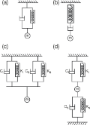
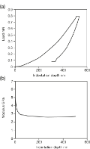
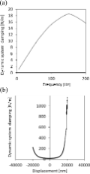

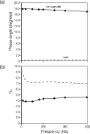

Nanoglasses: a new kind of noncrystalline materials
Beilstein J. Nanotechnol. 2013, 4, 517–533, doi:10.3762/bjnano.4.61
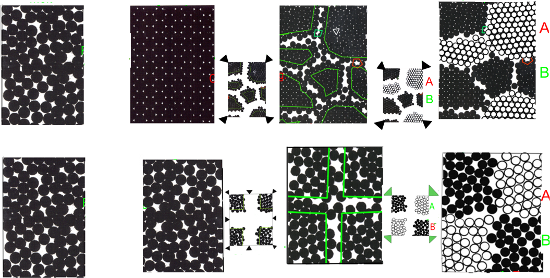
- al. [37]. These results are in line with observations on pre-induced shear bands produced by indentation [37] or cold rolling [54] where structural disorder was found to be retained even after annealing. The effect of the chemical composition of the glassy regions on the plastic deformation of