Search results
Search for "laser ablation" in Full Text gives 90 result(s) in Beilstein Journal of Nanotechnology.
Dry friction of microstructured polymer surfaces inspired by snake skin
Beilstein J. Nanotechnol. 2014, 5, 1091–1103, doi:10.3762/bjnano.5.122
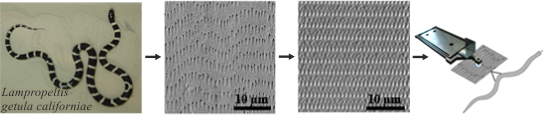
- originated from moulds of polishing paper (FibrMet Discs, Buehler GmbH, Düsseldorf, Germany) with different grain sizes (Ra: 0.3 µm, 1 µm, 3 µm, 9 µm, and 12 µm) (Figure 3b). The master for the third type of surfaces was produced from zirconium oxide surface microstructured by femtosecond laser ablation


Injection of ligand-free gold and silver nanoparticles into murine embryos does not impact pre-implantation development
Beilstein J. Nanotechnol. 2014, 5, 677–688, doi:10.3762/bjnano.5.80
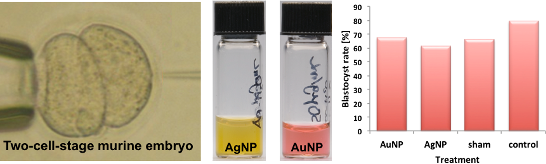
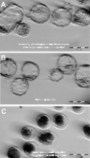
- to the cytotoxicity of silver ions [42]. In order to exclude any cross-effects of stabilizers or reducing agents, which are difficult to exclude in precursor-based chemically produced gold and silver nanoparticles, the particles for this study were synthesized by laser ablation of a bulk solid target
- can unfold toxic properties of their own [78]. The studies performed on avian embryos and the experiments presented here employed particles synthesized by physical means, an electric non-explosive method and laser ablation in water, respectively. Those methods produce colloids completely free of any
- . Beta actin expression after normalization with globin. Values are mean ± SD. Gold and silver nanoparticle characteristics after synthesis by laser ablation. Preimplantation development rates in the various treatment groups. Realtime PCR primers and characteristics. Acknowledgements The authors




Energy dissipation in multifrequency atomic force microscopy
Beilstein J. Nanotechnol. 2014, 5, 494–500, doi:10.3762/bjnano.5.57
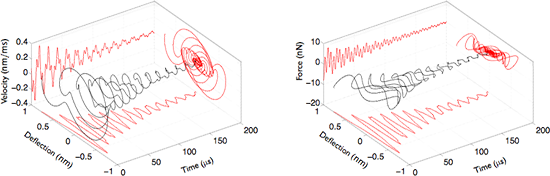
- action. Moreover, the techniques outlined in this work will find applications in a variety of fields of interest for nanotechnology. Few-cycle AFM will be useful to characterize the mechanical contact properties of nanostructures produced by femtosecond laser ablation [22], while wavelets techniques will


A catechol biosensor based on electrospun carbon nanofibers
Beilstein J. Nanotechnol. 2014, 5, 346–354, doi:10.3762/bjnano.5.39
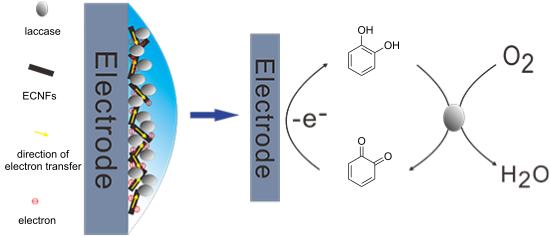
- development, various methods used for CNFs preparation are established, such as arc-discharge [21], laser ablation [22], chemical vapor deposition (CVD) methods [23]. Electrospinning, which is known as a facile and convenient process, can produce nanofibers or microfibers with different diameters while using


Synthesis of boron nitride nanotubes from unprocessed colemanite
Beilstein J. Nanotechnol. 2013, 4, 843–851, doi:10.3762/bjnano.4.95
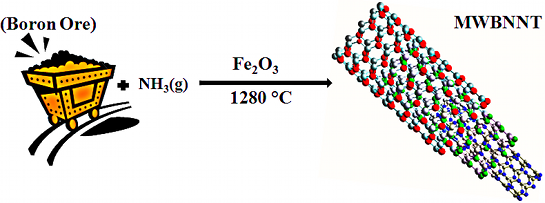
- BNNTs are more toxic than CNTs [13]. The first BNNTs were synthesized by Chopra et al. with the arc-discharge method [14]. Later, the use of chemical vapor deposition (CVD), laser ablation, ball milling, a template-assisted process, and displacement reactions were reported for the synthesis [15][16][17
- with the use of a laser-ablation technique [22]. As can be concluded from these studies, CVD is a commonly used technique to synthesize BNNTs. The BNNT synthesis and growth mechanism depend on the reaction parameters such as substrate, catalyst and temperature but the mechanism has not been elucidated


Mapping of plasmonic resonances in nanotriangles
Beilstein J. Nanotechnol. 2013, 4, 588–602, doi:10.3762/bjnano.4.66
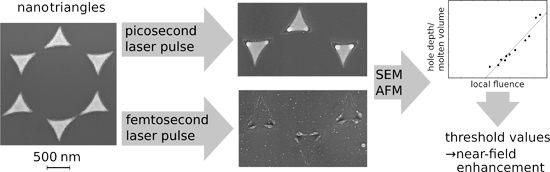
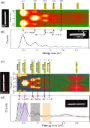
- inside the triangle. Results and Discussion Femtosecond laser ablation General features We first give an overview over the general features of femtosecond plasmonic ablation. Figure 5 shows an SEM micrograph of a typical femtosecond ablation site on a sample, which consists of gold nano-triangles


Femtosecond-resolved ablation dynamics of Si in the near field of a small dielectric particle
Beilstein J. Nanotechnol. 2013, 4, 501–509, doi:10.3762/bjnano.4.59
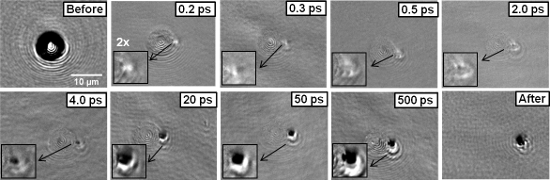
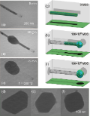
- after excitation. Keywords: crystalline Si; fs-resolved microscopy; laser ablation; near-field enhancement; ultrafast dynamics; Introduction The term “near field optics” is used to describe the phenomena associated to non-propagating and highly localized electromagnetic fields and their interaction


Functionalization of vertically aligned carbon nanotubes
Beilstein J. Nanotechnol. 2013, 4, 129–152, doi:10.3762/bjnano.4.14
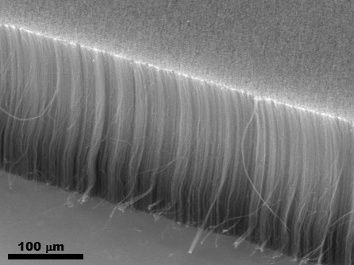
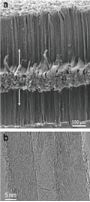
- were the synthesis on a large scale, the reproducibility, and the control of the diameter and number of walls of the CNTs using different synthesis techniques such as arc discharge, laser ablation or chemical vapor deposition. After these issues had been addressed, the focus in carbon nanotube research
- synthesize non-aligned CNTs, such as chemical vapor deposition (CVD), electrical arc discharge, or laser ablation, CVD has been reported to be the best for the synthesis of VA-CNTs. Different versions of CVD for the synthesis of VA-CNTs have been used, which can be mainly divided in two types: those








Characterization and properties of micro- and nanowires of controlled size, composition, and geometry fabricated by electrodeposition and ion-track technology
Beilstein J. Nanotechnol. 2012, 3, 860–883, doi:10.3762/bjnano.3.97
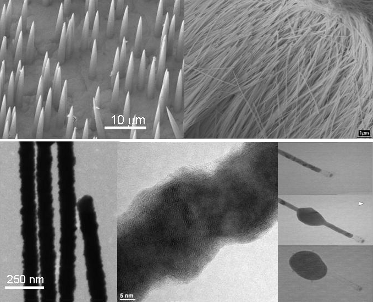
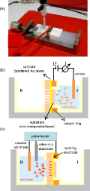
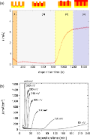
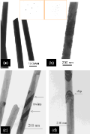
- deposition, laser ablation, or thermal evaporation. The first template-grown nanowires of amorphous Si were recently reported by using ionic liquids [100][101]. Ionic liquids have proved to be a good alternative electrolyte to fabricate materials such as Al, Ti, Si, or Ge, which cannot be electrodeposited in








Tuning the properties of magnetic thin films by interaction with periodic nanostructures
Beilstein J. Nanotechnol. 2012, 3, 831–842, doi:10.3762/bjnano.3.93
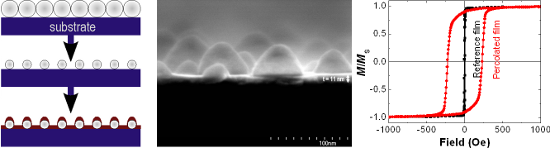
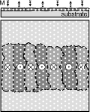
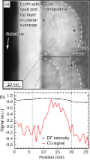
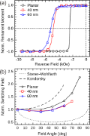
- . After the preparation of the non-close-packed PS nanostructure, subsequent growth of magnetic films can be carried out in standard deposition chambers under ultrahigh-vacuum conditions. The percolated magnetic films discussed below were deposited either by pulsed laser ablation (Fe films) or e-beam


Influence of the diameter of single-walled carbon nanotube bundles on the optoelectronic performance of dry-deposited thin films
Beilstein J. Nanotechnol. 2012, 3, 692–702, doi:10.3762/bjnano.3.79
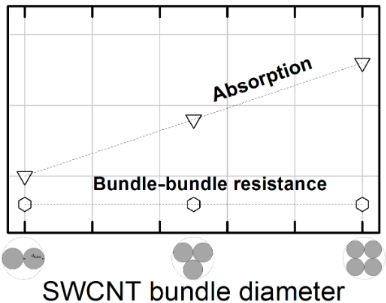
- sample-preparation routes. For example, Hecht et al. induced mechanical damage to liquid-suspended SWCNT bundles synthesized with the arc discharge and laser ablation methods, and were thus able to control the bundle lengths and diameters to some extent [14]. Geng et al. conducted a more thorough
- comparison between the performances of SWCNT networks from chemical vapor deposition (CVD), HiPCO, laser ablation, and arc discharge sources; although, again involving liquid suspensions [15]. While these initial studies have been steps in the right direction, the damage induced by sample preparation and the


Synthesis and electrical characterization of intrinsic and in situ doped Si nanowires using a novel precursor
Beilstein J. Nanotechnol. 2012, 3, 564–569, doi:10.3762/bjnano.3.65
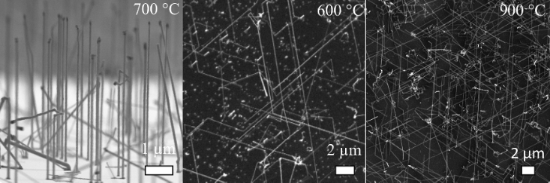
- achieve NWs with tailored properties, namely chemical vapor deposition (CVD) [11], metal–organic CVD [12], molecular-beam epitaxy [13] and laser ablation techniques [14]. In this work we focus on the well-established VLS growth mechanism [15][16], which has shown remarkable potential in the fabrication of


Directed deposition of silicon nanowires using neopentasilane as precursor and gold as catalyst
Beilstein J. Nanotechnol. 2012, 3, 535–545, doi:10.3762/bjnano.3.62
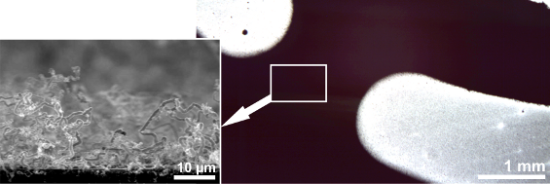
- nanosized wires (NW) of silicon including thermal evaporation [9], molecular beam epitaxy [10], laser ablation [11], chemical vapor deposition (CVD) [12] and CVD in combination with the vapor–liquid–solid (VLS) method [13]. In the VLS mechanism, small solid metal particles catalyze the decomposition of the


Zirconium nanoparticles prepared by the reduction of zirconium oxide using the RAPET method
Beilstein J. Nanotechnol. 2011, 2, 198–203, doi:10.3762/bjnano.2.23
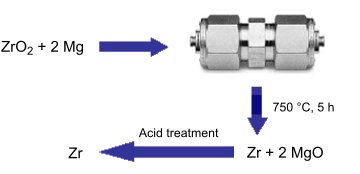
- production of metallic zirconium is the Kroll process [6]. In this reaction zirconium is produced by the reduction of zirconium tetrachloride with an active metal such as magnesium at 800–900 °C. Elsewhere in the literature, the preparation of metallic Zr nanoparticles by ultrafast laser ablation of a



Room temperature synthesis of indium tin oxide nanotubes with high precision wall thickness by electroless deposition
Beilstein J. Nanotechnol. 2011, 2, 119–126, doi:10.3762/bjnano.2.14
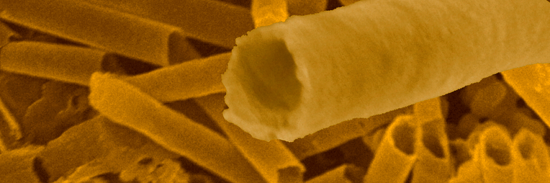
- development of applications in optoelectronics, sensors and biomedical sciences [4][5][6]. Miscellaneous methods for the fabrication of ITO nanostructures, such as the post calcination method [7], alkaline hydrolysis [8] or pulsed laser ablation [9] have been developed and used. For fabricating metal