


Search results
Search for "lead" in Full Text gives 1349 result(s) in Beilstein Journal of Nanotechnology. Showing first 200.
Functional bio-packaging enhanced with nanocellulose from rice straw and cinnamon essential oil Pickering emulsion for fruit preservation
Beilstein J. Nanotechnol. 2025, 16, 1234–1245, doi:10.3762/bjnano.16.91
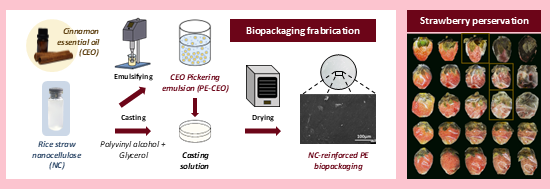
- of persimmons was maintained up to 63 days in cold storage [35]. The major challenge of using CEO is its hydrophobic nature, which prevents it from blending with the biopackaging casting solution, and its volatile and unstable structure, which can lead to significant loss of efficacy over time [36




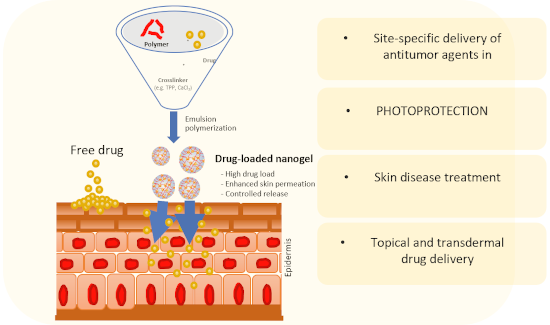
Hydrogels and nanogels: effectiveness in dermal applications
Beilstein J. Nanotechnol. 2025, 16, 1216–1233, doi:10.3762/bjnano.16.90
- [20][21], drug monitoring in biological fluids [22], CO2 absorption from the atmosphere [23], dye removal from industrial effluents [24], cavity-prevention in oral products [25], insect repellent coating for textiles [26], lead detection in water reservoirs [27], production of vaccines [28], and


Investigation of the solubility of protoporphyrin IX in aqueous and hydroalcoholic solvent systems
Beilstein J. Nanotechnol. 2025, 16, 1209–1215, doi:10.3762/bjnano.16.89
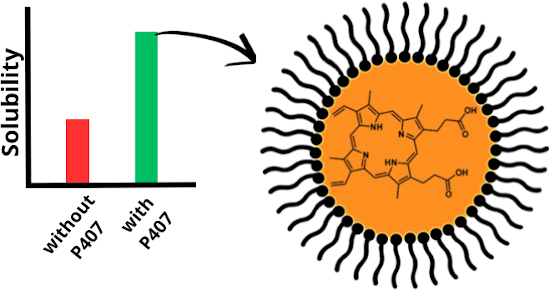
- PSs have their hydrophobicity as drawback, which can lead to the formation of aggregates in aqueous solutions, compromising bioavailability and photodynamic activity [5]. The aggregation of the PS decreases its photoactive properties since, for its action, it must be in the monomeric form, in which


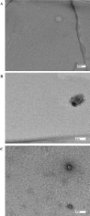
Mechanical stability of individual bacterial cells under different osmotic pressure conditions: a nanoindentation study of Pseudomonas aeruginosa
Beilstein J. Nanotechnol. 2025, 16, 1171–1183, doi:10.3762/bjnano.16.86
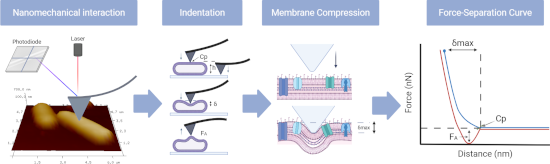
- channels contributing to its selective permeability [12][13]. Also integrated into the outer membrane, specific tension-activated channel proteins are responsible for the osmoregulation of the membrane envelope and its protection from threatening conditions such as severe osmotic downshocks, which can lead


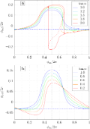
Transfer function of an asymmetric superconducting Gauss neuron
Beilstein J. Nanotechnol. 2025, 16, 1160–1170, doi:10.3762/bjnano.16.85
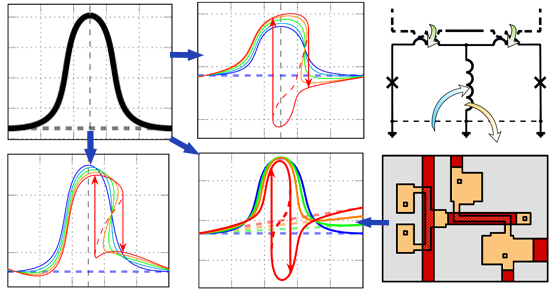
- asymmetry in our model, since they are generated through a single element Lout, common to both receiving loops. Nevertheless, Lout can lead to an effective asymmetry of the input signal supply, as will be shown below. Let us try to apply the results obtained above to the experimental data presented in our

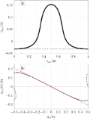


Crystalline and amorphous structure selectivity of ignoble high-entropy alloy nanoparticles during laser ablation in organic liquids is set by pulse duration
Beilstein J. Nanotechnol. 2025, 16, 1141–1159, doi:10.3762/bjnano.16.84
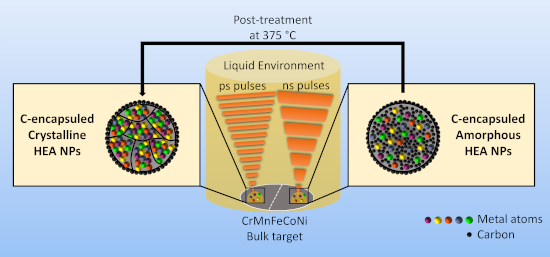
- lattice [20]. In addition, the synthesis of the CrMnFeCoNi system by arc-discharge plasma method also lead to the formation of fcc HEA NPs [7]. The addition of Al to the high-entropy alloy system was shown to stabilize a bcc-type structure in the synthesized HEA NPs [14][30], while amorphous FeCoNiCrMox
- amorphous. As different pulse durations (ps vs ns) may lead to fundamentally different ablation mechanisms during LAL [50][64], it is conceivable that differences in sample compositions (content and distribution of the elements Cr, Mn, Fe, Co, Ni) may be responsible for the observed pulse-duration-dependent
- remelting already occurs after the first laser pulse, continuous ablation of the same area with consecutive pulses could lead to the creation of NPs with Mn enrichment. All in all, the composition of metallic constituents in all HEA NPs analyzed agrees well with the determined composition of the bulk target




Towards a quantitative theory for transmission X-ray microscopy
Beilstein J. Nanotechnol. 2025, 16, 1113–1128, doi:10.3762/bjnano.16.82
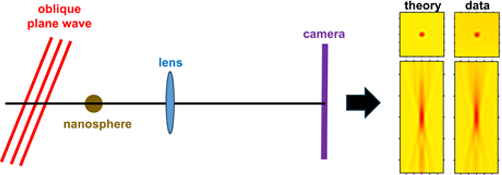
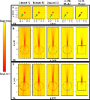
- determined by Beer’s law, whereas the microscope underestimates this absorption by 10–20%. This surprising observation highlights the need for future work to identify the microscope feature(s) that lead to this quantitative discrepancy. Keywords: 3D imaging; mathematical model; Mie theory; nanoparticle
- component, for example, a tilt of the incoming beam relative to the optical axis defined by the zone plate and camera (Figure 4c). In this case, the condenser will be aligned relative to the tilted incoming beam and will lead to polar angles θ of plane wave illumination that vary as a function of the
- similar significant undershoot and a slight overshoot of the pc-Mie model compared to the data (Figure 5). This significant undershoot cannot be explained by errors in estimating the diameters of the slightly oblong nanospheres by SEM, as these estimation errors lead to only small differences in the



Influence of ion beam current on the structural, optical, and mechanical properties of TiO2 coatings: ion beam-assisted vs conventional electron beam evaporation
Beilstein J. Nanotechnol. 2025, 16, 1097–1112, doi:10.3762/bjnano.16.81
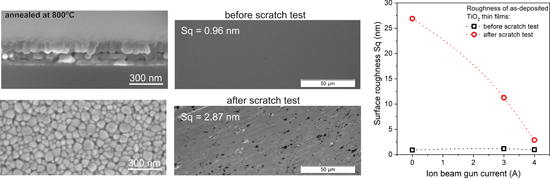
- practice, additional heating of the substrates, reducing the pressure in the working chamber, applying additional electrical bias to the substrates, or using ion beam assistance are used. All of these methods lead to an increase in the total energy of the nucleating particles on the substrate. Ion beam
- such as substrate temperature, deposition rate, substrate biasing, and ion beam gun settings. Moreover, post-process annealing can lead to a reduction in thermal stress due to the difference in thermal expansion coefficients between the film and the substrate and can also affect internal stress by
- showed that the annealed film was composed of big, elongated grains with a length from 160 to 350 nm (Figure 3a). It is worth noting that the coatings had a milky color. This was probably the result of the size of grains, which could lead to a significant scattering of light. In contrast, the use of the




Piezoelectricity of hexagonal boron nitrides improves bone tissue generation as tested on osteoblasts
Beilstein J. Nanotechnol. 2025, 16, 1068–1081, doi:10.3762/bjnano.16.78
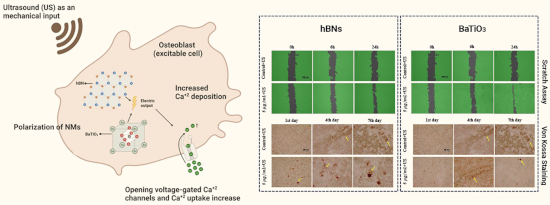
- [57]. Moreover, sonoporation, a mechanical effect of US, may lead to a temporarily perturbation of cell membrane homeostasis and disruption of the cell membrane [58]. Additionally, US exposure could cause cells to detach from the surface, potentially leading to their removal during the washing process


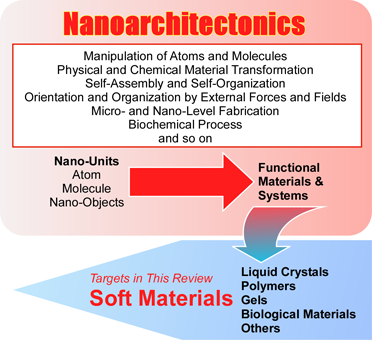
Soft materials nanoarchitectonics: liquid crystals, polymers, gels, biomaterials, and others
Beilstein J. Nanotechnol. 2025, 16, 1025–1067, doi:10.3762/bjnano.16.77






A calix[4]arene-based supramolecular nanoassembly targeting cancer cells and triggering the release of nitric oxide with green light
Beilstein J. Nanotechnol. 2025, 16, 1003–1013, doi:10.3762/bjnano.16.75
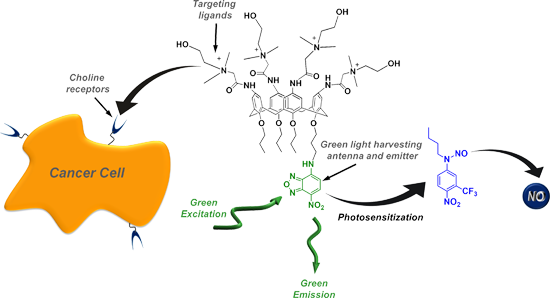
- electron transfer. Either reductive or oxidative pathways usually lead to NO loss and the concomitant formation of an anlinyl radical intermediate, which evolves to the stable photoproduct 2b after H transfer. In our case, such a process involves mainly the lowest singlet state of ABF. This hypothesis is


Time-resolved probing of laser-induced nanostructuring processes in liquids
Beilstein J. Nanotechnol. 2025, 16, 968–1002, doi:10.3762/bjnano.16.74
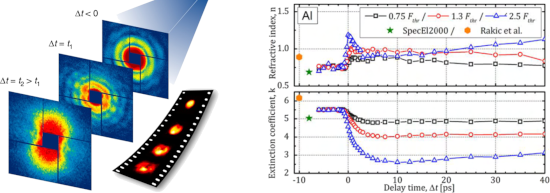
- to liquid) should lead to restructuring. In a simple model, the laser energy is converted into heat that will be localized in the absorbing part within the laser penetration depth. Absorption is linear as expressed by the (known) absorption cross section. In the model by Takami et al. [46], which is
- further until the evaporation threshold is reached. Evaporation again requires additional energy to overcome heat of fusion. Only evaporation can lead to expulsion of material and formation of clusters in this context via condensation of the vapor. Further processes that will be described in the laser
- of electrons (of the order of 10%) can be excited, which would lead to changes of the interatomic forces faster than electron–phonon coupling. This has been seen in semiconductors [24][112] in particular. The electron–phonon coupling will increase the temperature of the lattice, which will undergo


Focused ion beam-induced platinum deposition with a low-temperature cesium ion source
Beilstein J. Nanotechnol. 2025, 16, 910–920, doi:10.3762/bjnano.16.69
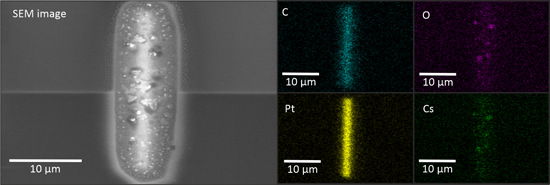
- diminish with higher acceleration voltages. This is why only 2 and 5 kV Cs+ depositions lead to surface bubbles. Because the Pt layers deposited with Cs+ ions at 2 kV are so sensitive to air exposure, the deposition rate and the resistivity measurements will mainly focus on layers deposited with
- Figure 9a, this may lead to a higher electrical resistivity. The changes in resistivity are not immediately obvious from the chemical composition of the deposits. Speculation based on the microstructure provides a probable cause for this decreasing resistivity vs beam energy. Figure 7 shows that the
- resistivity decreases despite a similar chemical composition. However, it is unclear why Cs+ FIBID-Pt would have a higher resistivity than Ga+ FIBID-Pt under similar beam conditions since the Cs+ FIBID was observed to have the lowest O%, which should lead to a smaller resistivity. So this might be a combined


Ar+ implantation-induced tailoring of RF-sputtered ZnO films: structural, morphological, and optical properties
Beilstein J. Nanotechnol. 2025, 16, 872–886, doi:10.3762/bjnano.16.66
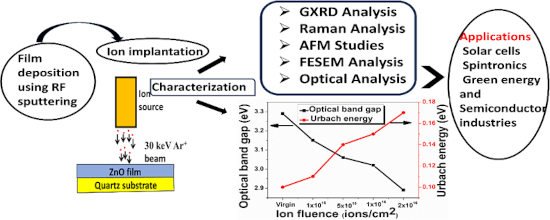
- 450 and 650 nm, which are ascribed to the presence of defects like oxygen vacancies, oxygen interstitials, zinc vacancies, and zinc interstitials. The defects lead to the formation of sub-bandgap levels [42][43]. Further, the peak positions of these absorption peaks shift towards shorter wavelengths
- Figure 11. Generally, implanted ions lead to the production of point defects, which act as trapping centers and affect the optical absorption [47]. Thus, a progressive decrement in bandgap values with increasing fluence is ascribed to lattice disorder due to argon ion implantation. Moreover, we have






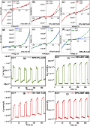
Morphology and properties of pyrite nanoparticles obtained by pulsed laser ablation in liquid and thin films for photodetection
Beilstein J. Nanotechnol. 2025, 16, 785–805, doi:10.3762/bjnano.16.60
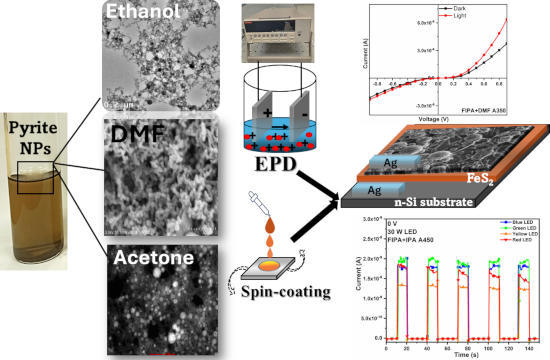
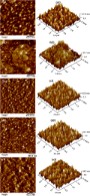
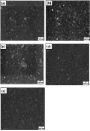
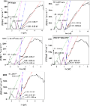
- solvents (e.g., acetone) allow for rapid NP formation. This can result in bimodal size distributions (with smaller nanoparticles (1–35 nm) and some larger particles (50–60 nm)) with an average size of 17.06 nm due to uneven growth conditions, which may lead to broader size distributions or agglomeration


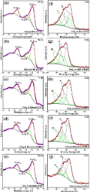




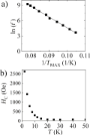
Changes of structural, magnetic and spectroscopic properties of microencapsulated iron sucrose nanoparticles in saline
Beilstein J. Nanotechnol. 2025, 16, 762–784, doi:10.3762/bjnano.16.59
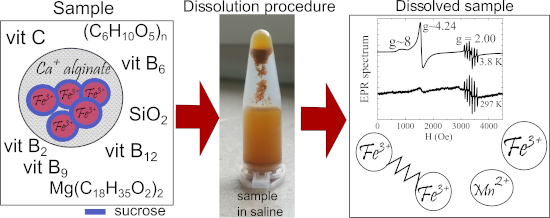





Efficiency of single-pulse laser fragmentation of organic nutraceutical dispersions in a circular jet flow-through reactor
Beilstein J. Nanotechnol. 2025, 16, 711–727, doi:10.3762/bjnano.16.55
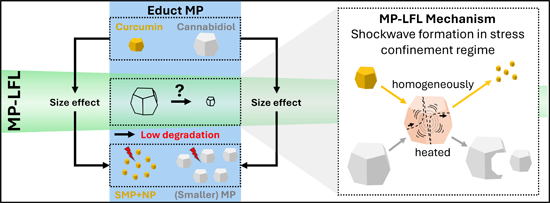
- ]. The LFL of lipophilic drugs is of particular interest in improving their dissolution properties and oral absorption. Better dissolution properties and dissolution rates lead to a higher saturation limit, which allows one to reduce the required amount of the drug [38]. However, for sensitive active
- materials, with curcumin not only reaching higher yields but also higher product selectivity. Nevertheless, it is noticeable as a common trend for both model substances that low concentrations (0.01 wt % curcumin or 0.1 wt % CBD) lead to the best increase in fragmentation efficiency, but also result in an


Nanostructured materials characterized by scanning photoelectron spectromicroscopy
Beilstein J. Nanotechnol. 2025, 16, 700–710, doi:10.3762/bjnano.16.54
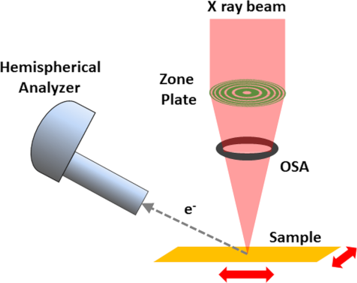
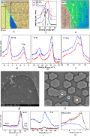
- charge distribution, to list the most important features. If the building blocks are crystallites, any change in the structure or chemical composition may lead to the formation of incoherent or coherent interfaces among them which may influence the final properties of the material. Often the volumes of


High-temperature epitaxial growth of tantalum nitride thin films on MgO: structural evolution and potential for SQUID applications
Beilstein J. Nanotechnol. 2025, 16, 690–699, doi:10.3762/bjnano.16.53
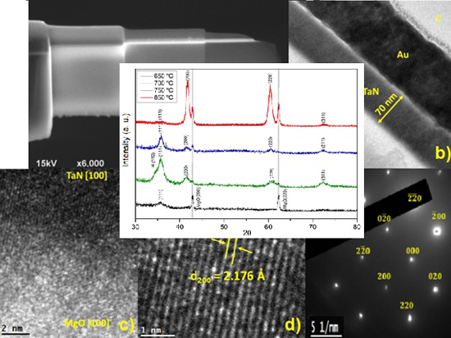
- -vacuum conditions, a small residual oxygen concentration inevitably remains within the deposition chamber. At elevated temperatures, the reactivity of these residual oxygen molecules increases, facilitating their adsorption onto the growing film surface. However, an increase in N2 pressure can lead to


The impact of tris(pentafluorophenyl)borane hole transport layer doping on interfacial charge extraction and recombination
Beilstein J. Nanotechnol. 2025, 16, 678–689, doi:10.3762/bjnano.16.52
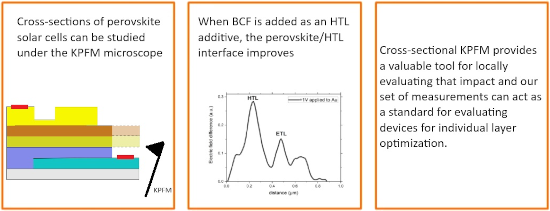
- ability of a solar cell to generate electrical current effectively. Particularly, the relative capability of the two interfaces to properly extract and block charges is critical, since issues such as energetic misalignment, trap states, and interfacial recombination may lead to an uneven extraction and
- charge transport to the terminal. Furthermore, as a strong Lewis acid, BCF passivates mobile iodide defects at the perovskite/HTL interface, which act as recombination centers, thus reducing non-radiative recombination losses and improving hole extraction efficiency. These beneficial effects lead to a
- , with an oxygen flow of 10 L/min. Then, a 1 M methylammonium lead iodide (MAPI) precursor solution was prepared (lead iodide 99.99% trace metals basis from TCI, methylammonium iodide >99.99% from Greatcell solar) with the materials dissolved in a DMF/DMSO (4:1) solvent and spin-coated using a two-step


Nanoscale capacitance spectroscopy based on multifrequency electrostatic force microscopy
Beilstein J. Nanotechnol. 2025, 16, 637–651, doi:10.3762/bjnano.16.49

- reliability of capacitors [10]. Similarly, in next-generation photovoltaic devices, the dielectric properties of absorber layers, such as lead-halide perovskites, affect carrier recombination and electric field distribution, thereby influencing power conversion efficiency [11]. At the nanoscale, the




Polyurethane/silk fibroin-based electrospun membranes for wound healing and skin substitute applications
Beilstein J. Nanotechnol. 2025, 16, 591–612, doi:10.3762/bjnano.16.46
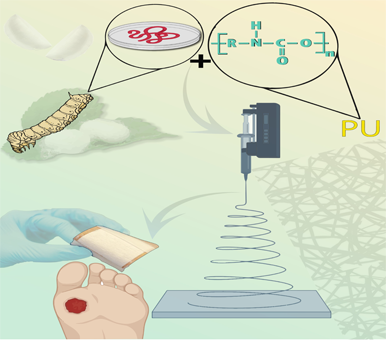
- in the silk thread needs to be removed for biomedical applications because it can lead to allergic reactions [75][76]. Recently, it has been reported that sericin, when used alone, is a biocompatible material. However, combining SF and sericin compromises its biocompatibility [77]. The SF produced by
- be made of PU. However, PU in such devices may degrade when placed within the human body, which could lead to device failure [141]. Many researchers have found it difficult to explore these events because of the complexity in vivo. Hence, many studies have been conducted to learn more about the ways



Feasibility analysis of carbon nanofiber synthesis and morphology control using a LPG premixed flame
Beilstein J. Nanotechnol. 2025, 16, 581–590, doi:10.3762/bjnano.16.45
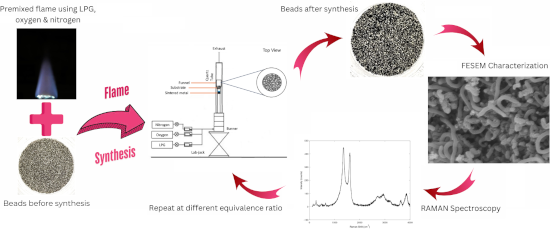
- increases the mobility of the particle and the chances to collide and accumulate, results larger diameter of CNF. An equivalence ratio of 1.60 favors the formation of amorphous carbon, which can be attributed also to the reaction conditions. The thermal conditions at an equivalence ratio of 1.60 lead to a



Nanomaterials in targeting amyloid-β oligomers: current advances and future directions for Alzheimer's disease diagnosis and therapy
Beilstein J. Nanotechnol. 2025, 16, 561–580, doi:10.3762/bjnano.16.44
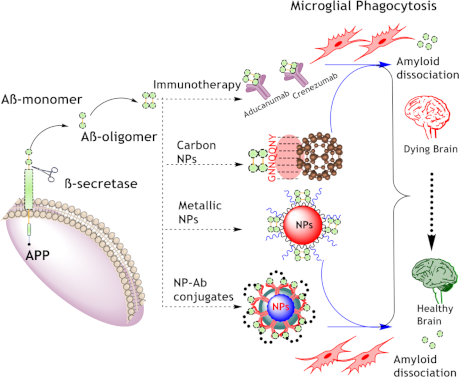
- definitive understanding. Genetic studies on AD patients indicate that mutations in the amyloid precursor protein (APP), such as the Osaka [3] and Arctic mutations [4], lead to an overproduction of soluble AβOs. These mutations are associated with an earlier onset of AD, often occurring before the age of 50


Retrieval of B1 phase from high-pressure B2 phase for CdO nanoparticles by electronic excitations in CdxZn1−xO composite thin films
Beilstein J. Nanotechnol. 2025, 16, 551–560, doi:10.3762/bjnano.16.43

- -based optoelectronic applications [7]. High-energy ion irradiation can lead to latent track formation or phase transitions, either from crystalline to crystalline or crystalline to amorphous, depending on the threshold electronic energy loss (Seth) [8][9]. The formation of latent tracks has been
- exhibit a complete transformation compared to those of the CZ900_Pris sample. The introduction of a substantial number of defects may have relaxed the dipole selection rule, resulting in a destructive interference pattern within the multiple scattering signal. Such out-of-phase oscillations can lead to





