Search results
Search for "liquids" in Full Text gives 237 result(s) in Beilstein Journal of Nanotechnology. Showing first 200.
Preparation and in vivo evaluation of glyco-gold nanoparticles carrying synthetic mycobacterial hexaarabinofuranoside
Beilstein J. Nanotechnol. 2020, 11, 480–493, doi:10.3762/bjnano.11.39
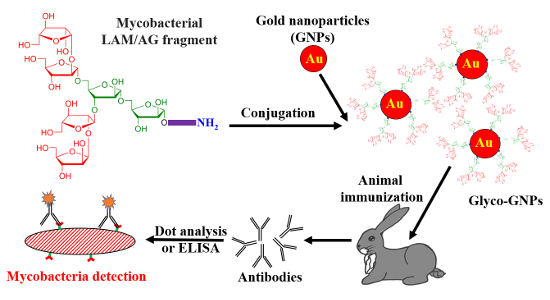
- obtained through holding the grid near an incandescent lamp for 2 min. The excess of the liquids was removed by touching the grid to a strip of the filter paper. The grid was washed by a drop of deionized water, dried and then analyzed by TEM. According to TEM data, the prepared Ara6-GNPs 3 and 4 had the


An advanced structural characterization of templated meso-macroporous carbon monoliths by small- and wide-angle scattering techniques
Beilstein J. Nanotechnol. 2020, 11, 310–322, doi:10.3762/bjnano.11.23
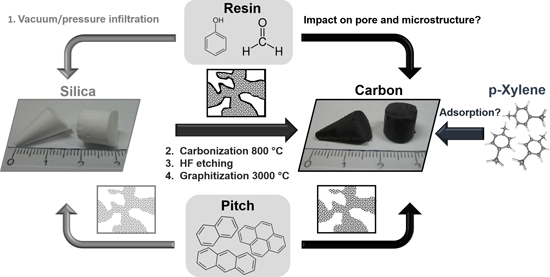
- carbonate [60], propylene carbonate [61] and ionic liquids [1] in contrast to argon. Furthermore, the adsorption of xylene isomers is an important step for synthesizing polyethylene terephthalate (PET) and polybutylene terephthalate (PBT) [62]. Moreover, Ar physisorption measurements are conducted at 87 K




Integration of sharp silicon nitride tips into high-speed SU8 cantilevers in a batch fabrication process
Beilstein J. Nanotechnol. 2019, 10, 2357–2363, doi:10.3762/bjnano.10.226
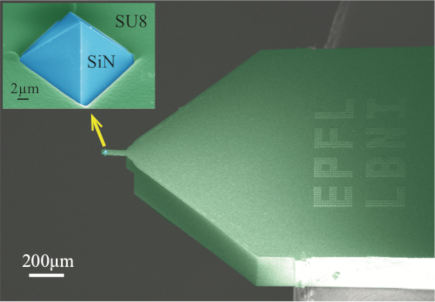
- parasitic resonance peaks in the cantilever tune, which is well known for tapping-mode AFM in low-Q environments such as liquids. As with imaging in fluids, acquiring a thermal tune prior to the mechanical tune helps to find the correct resonance peak to use. The poor mechanical tune caused by the low Q


Dynamics of superparamagnetic nanoparticles in viscous liquids in rotating magnetic fields
Beilstein J. Nanotechnol. 2019, 10, 2294–2303, doi:10.3762/bjnano.10.221
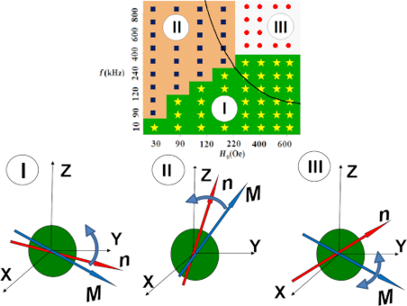
- . It is important to note that for sufficiently large particle diameters the SAR in RMFs is approximately two times larger than that in AMFs. It is worth mentioning that liquids with suspended particles of average size of the order of or less than 100 nm belong to the interesting class of nanofluids
- different magnetic anisotropy constants and in liquids of different viscosities. As Figure 5a shows, with a slight decrease in the magnetic anisotropy constant the dependence of the SAR on the average nanoparticle diameter does not change appreciably, whereas the SAR maximum shifts to larger particle
- diameters. Figure 5b shows the dependence of the SAR on the average diameter of nanoparticles in liquids of various viscosities. One can see in this figure that the range of optimal particle diameters varies little in the range of η = 0.01–0.1 g/(cm·s), but the SAR decreases with increasing viscosity


Microfluidics as tool to prepare size-tunable PLGA nanoparticles with high curcumin encapsulation for efficient mucus penetration
Beilstein J. Nanotechnol. 2019, 10, 2280–2293, doi:10.3762/bjnano.10.220
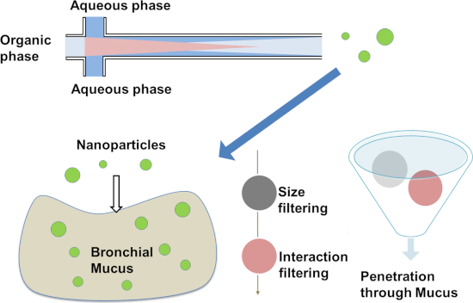
- of PLGA in 1 mL ACN was pumped into the middle channel using another syringe pump (Multi Programmable Syringe Pump, Sarasota, USA). The flow rate ratios (FRR) of the two phases were varied from (0.05 up 1). The two liquids were brought together in the mixing channel and the PLGA started to


BergaCare SmartLipids: commercial lipophilic active concentrates for improved performance of dermal products
Beilstein J. Nanotechnol. 2019, 10, 2152–2162, doi:10.3762/bjnano.10.208
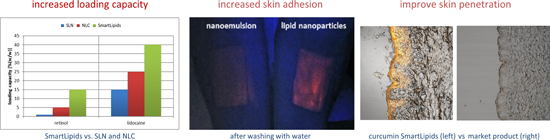
- Electronic GmbH, Germany) [26]. The probe determines the dielectric constant, D, of the skin through a condenser in the probe. An insulator medium in the condenser reduces the measured D value. For example, D is 0 for a complete insulator (vacuum), about 5 for lipids and organic liquids, and 80 for pure


Nanostructured and oriented metal–organic framework films enabling extreme surface wetting properties
Beilstein J. Nanotechnol. 2019, 10, 1994–2003, doi:10.3762/bjnano.10.196
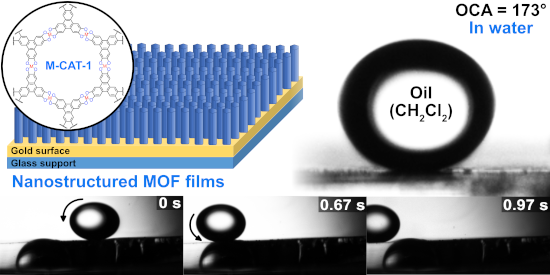
- good basis for understanding their growth behavior and morphology. To assess the wetting properties of Ni- and Co-CAT-1, we investigated the interaction of the bulk materials pressed as compact pellets with different polar and apolar liquids. For this purpose, we synthesized M-CAT-1 bulk materials
- ). To establish these MOF films as superoleophobic surfaces applicable to a wide range of oils, we examined the interactions of other high-density oils with the oriented and nanostructured MOF surfaces. For this purpose, we determined the underwater OCA for different chlorinated liquids, such as
- MOF films efficiently repel a large variety of oily liquids, hence constituting an intriguing platform for underwater superoleophobic properties. Since MOFs are crystalline materials featuring crystal facets with distinct surface energies, the orientation of these crystallites on a surface is expected


Preservation of rutin nanosuspensions without the use of preservatives
Beilstein J. Nanotechnol. 2019, 10, 1902–1913, doi:10.3762/bjnano.10.185
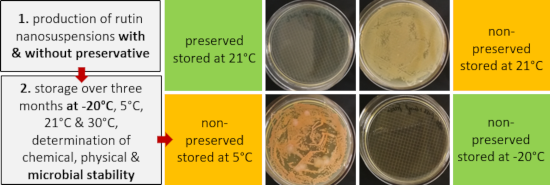
- upon the production with high-pressure homogenization, which is a well-described technique to reduce the number of bacteria in liquids [26]. The growth of microorganisms during storage was temperature-dependent and was also found to be slightly influenced by the type of stabilizer, i.e., a slightly


High-tolerance crystalline hydrogels formed from self-assembling cyclic dipeptide
Beilstein J. Nanotechnol. 2019, 10, 1894–1901, doi:10.3762/bjnano.10.184
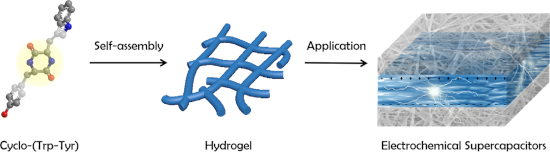
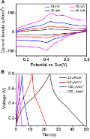
- focused on the amorphous assemblies in organic solvents and ionic liquids [42][43][44][45][46]. Although these CDP gels have good mechanical properties and deceased enzymatic degradation under physiological conditions, they still have some challenging problems such as inflexibility, low biosecurity and


Processing nanoporous organic polymers in liquid amines
Beilstein J. Nanotechnol. 2019, 10, 1844–1850, doi:10.3762/bjnano.10.179
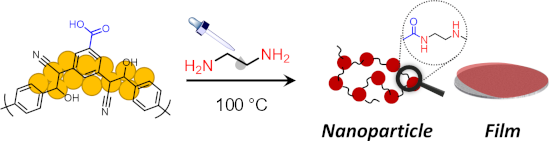
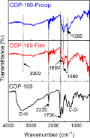
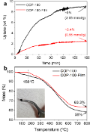
- liquids. During processing COP-100, the amount of EDA varied according to the molar ratio between the nitrogen content of COP-100 and the molecular weight of EDA. Interestingly, even a tiny amount of EDA can dissolve COP-100, showing significant solubility COP-100 in liquid amines. The amount of EDA



Biocatalytic oligomerization-induced self-assembly of crystalline cellulose oligomers into nanoribbon networks assisted by organic solvents
Beilstein J. Nanotechnol. 2019, 10, 1778–1788, doi:10.3762/bjnano.10.173
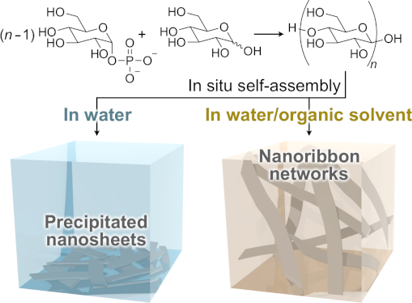
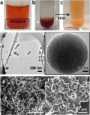
- , represented by ionic liquids [23], which are known (or considered) to dissolve cellulose via direct interactions. Furthermore, the introduction of functional groups at the terminal of cellulose oligomers [34][35][36][37][38][39][40] significantly expands the variety of available molecular species that can





Synthesis of nickel/gallium nanoalloys using a dual-source approach in 1-alkyl-3-methylimidazole ionic liquids
Beilstein J. Nanotechnol. 2019, 10, 1754–1767, doi:10.3762/bjnano.10.171
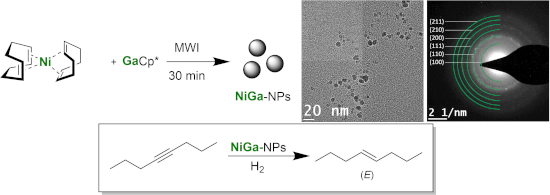
- conversion values. IL-free, precipitated NiGa nanoparticles achieve conversion values of over 90% and selectivity of 100% towards alkene over three runs. Keywords: ionic liquids; microwave decomposition; nickel/gallium nanoparticles; semihydrogenation catalysis; soft wet-chemical synthesis; Introduction
- [17]. Alternatively, ionic liquids can be used as solvents and stabilization agents for different metal nanoparticles from metal carbonyls [18] or organometallic complexes [19]. Ni nanoparticles from Ni(COD)2 in ionic liquids can be obtained through spontaneous decomposition [20] or decomposition
- ionic liquids decomposition of GaCp* is possible at temperatures below 300 °C with the aid of transition metals. Reactions of transition-metal complexes are reported to show H/D activation/exchange reactions at the C2 imidazolium carbon atom of the ionic liquid cation. The generated N-heterocyclic




Nanoporous smartPearls for dermal application – Identification of optimal silica types and a scalable production process as prerequisites for marketed products
Beilstein J. Nanotechnol. 2019, 10, 1666–1678, doi:10.3762/bjnano.10.162
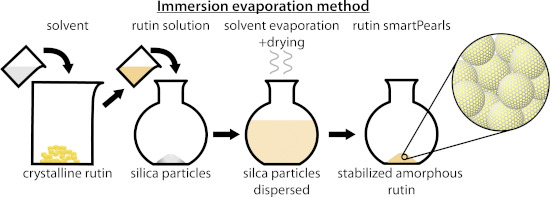
- agents in the amorphous state. However, the amorphous state is physically unstable. Because of their high free energy, amorphous phase materials tend to recrystallize [15], especially in the presence of liquids [16]. This has hindered the broad application of amorphous active agents in dermal




Materials nanoarchitectonics at two-dimensional liquid interfaces
Beilstein J. Nanotechnol. 2019, 10, 1559–1587, doi:10.3762/bjnano.10.153
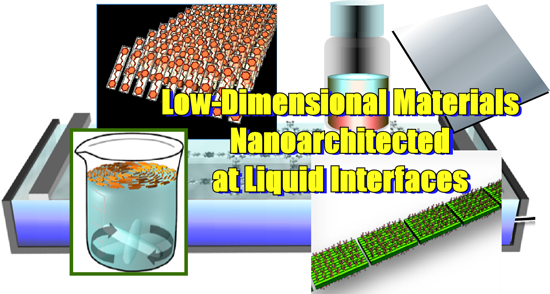
- categorized as interfacial environments with certain degrees of freedom of molecular mobility (dynamism). These interfaces with liquids have several intrinsic features: (i) They are environments of two different phases; (ii) they exhibit a discontinuous change of the dielectric constant; (iii) they are highly
- liquids dissolve different species that can only come into contact at the interface. At gas–liquid interfaces, insoluble components remain only at the interface and interact with other molecules (or materials) diffused from the underneath liquid phase. These circumstances can induce the generation of low
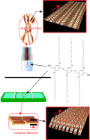
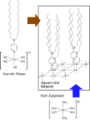
- . Because of the relatively dynamic nature of two liquids, the liquid–liquid interfaces are, in general, less well-defined than liquid-gas interfaces. Hence, the interfacial polymerizations tend to afford thicker films [220]. π‑conjugated nickel bis(dithiolene) complex nanosheets reported by Kambe and co













Synthesis of P- and N-doped carbon catalysts for the oxygen reduction reaction via controlled phosphoric acid treatment of folic acid
Beilstein J. Nanotechnol. 2019, 10, 1497–1510, doi:10.3762/bjnano.10.148
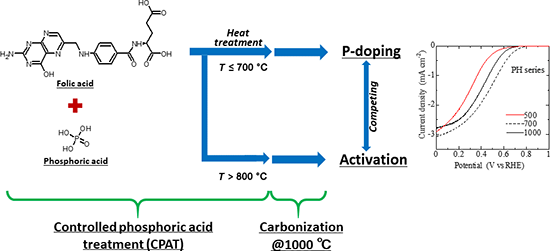
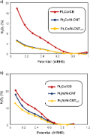
- , co-doping with P and N was found to be an effective way of increasing the ORR activity of carbon materials [22][23][24][25][26]. Most of the reported PN-doping techniques involve the carbonization of [N-containing polymer + P-containing compound] mixtures or of ionic liquids containing both N and P


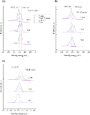

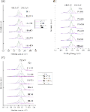


Alloyed Pt3M (M = Co, Ni) nanoparticles supported on S- and N-doped carbon nanotubes for the oxygen reduction reaction
Beilstein J. Nanotechnol. 2019, 10, 1251–1269, doi:10.3762/bjnano.10.125
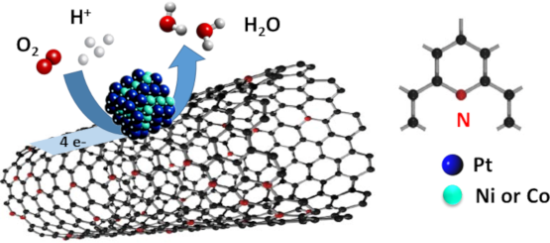
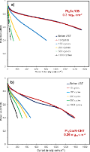
- introduction of small amounts of ionic liquids (ILs), which are known as NP stabilizers, including on carbon supports [26], into Pt-based catalysts can further improve the ORR performance. This is likely due to the high O2 solubility in the IL phase [27]. It was also demonstrated that the choice of the carbon







Porous N- and S-doped carbon–carbon composite electrodes by soft-templating for redox flow batteries
Beilstein J. Nanotechnol. 2019, 10, 1131–1139, doi:10.3762/bjnano.10.113
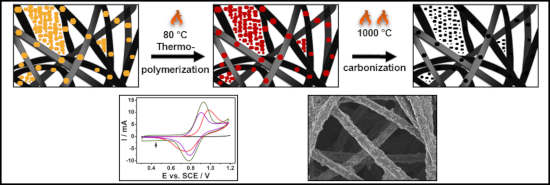
- novel composite electrodes that were synthesized utilizing the soft-template method inspired by Martinez de Yuso et al. from 2017 [23]. With this method we are able to reduce the cost for the precursor materials significantly. We are able to use pyrrole-2-carboxyaldehyde, instead of ionic liquids, as



Direct growth of few-layer graphene on AlN-based resonators for high-sensitivity gravimetric biosensors
Beilstein J. Nanotechnol. 2019, 10, 975–984, doi:10.3762/bjnano.10.98
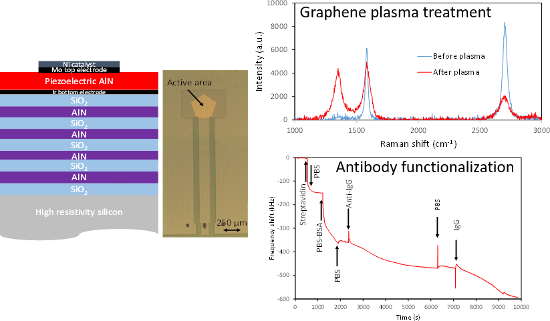
- were exposed to the different solutions by circulating the liquids containing the reagents with the aid of the peristaltic pump while the frequency response of the resonator was continuously recorded. Figure 6 shows the time evolution of the resonant frequency of a resonator subjected to the above
- washed with PBS 10 mM until the resonant frequency was stabilised. Figure 7 shows the time evolution of the resonant frequency of a resonator during the non-covalent process; again the arrows point out the times at which the different liquids are introduced in the fluidic system. In this approach, a
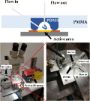
- with an O-ring to seal a 30 µL cavity around the active area of the device (see Figure 10). A peristaltic pump feeds the liquid into the cavity at a rate of 100 µL/min. The liquids can freely flow for washing purposes or be recirculated when the incubation times are long. The whole volume of the


Novel reversibly switchable wettability of superhydrophobic–superhydrophilic surfaces induced by charge injection and heating
Beilstein J. Nanotechnol. 2019, 10, 840–847, doi:10.3762/bjnano.10.84
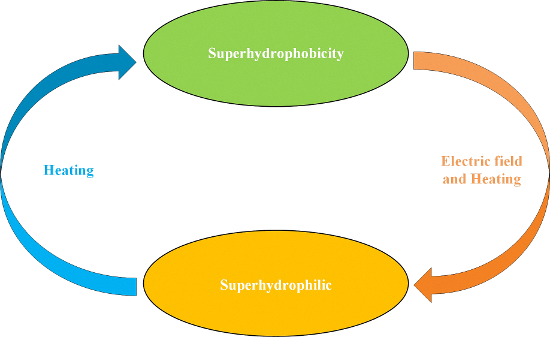
- environments. At 150 V, the maximum contact angle could be reduced by 23° by electrical wetting in a reversible manner. Li et al. [23] studied the diffusion of droplets of ionic liquids on an insulating electrode subjected to an external voltage. The catalytic effect of a vertical electric field on the


Deposition of metal particles onto semiconductor nanorods using an ionic liquid
Beilstein J. Nanotechnol. 2019, 10, 718–724, doi:10.3762/bjnano.10.71
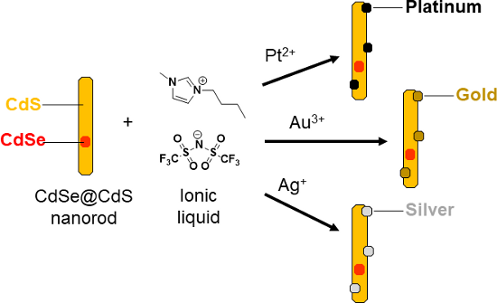
- using ionic liquids and metal salts without the need for additional reagents, and the deposited particles did not cause significant aggregation even when these materials were taken into organic media. It is possible that a broad range of metal/semiconductor heterostructured particles can be prepared
- dimensions smaller than 10 nm are commonly reported with small deviations in the distribution of nanorod lengths. Another widely investigated approach to nanoparticle synthesis uses ionic liquids as solvents for the synthesis of nanoparticles without the need for additional stabilizing surfactants [13][14
- ][15][16][17]. The low surface tension of ionic liquids causes high nucleation rates and allows for the synthesis of small nanoparticles with minimal Ostwald ripening [17]. Further, many ionic liquids consist of a large anion with diffuse negative charge; this lack of strongly binding anionic ligands


Ultrasonication-assisted synthesis of CsPbBr3 and Cs4PbBr6 perovskite nanocrystals and their reversible transformation
Beilstein J. Nanotechnol. 2019, 10, 666–676, doi:10.3762/bjnano.10.66
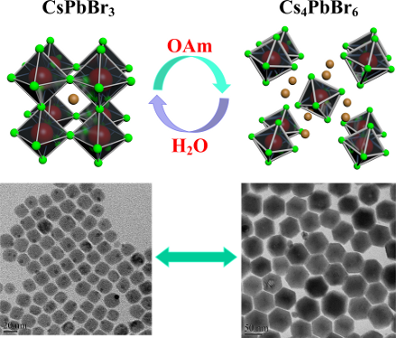
- performance when the immersion height of the vibrating spear is set at 1/5 of the total liquid height. Ultrasonication results in a combination of thermal, vibrational, and acoustic cavitation, i.e., the formation, growth, and implosive collapse of bubbles in liquids [32][33][34]. In the center of these



Heating ability of magnetic nanoparticles with cubic and combined anisotropy
Beilstein J. Nanotechnol. 2019, 10, 305–314, doi:10.3762/bjnano.10.29
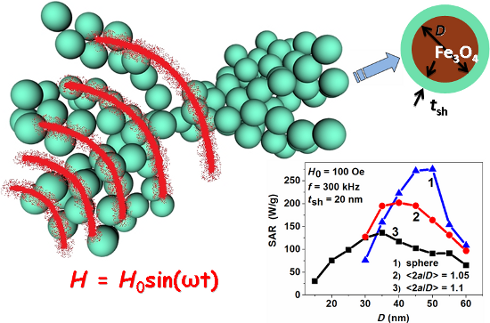
- nanoparticles in biological media to quantitatively predict their heating efficiency in magnetic nanoparticle hyperthermia. In this respect we would like to stress that the behavior of an assembly of magnetic nanoparticles in viscous liquids and biological media is different [2][3]. It has been proved recently


Targeting strategies for improving the efficacy of nanomedicine in oncology
Beilstein J. Nanotechnol. 2019, 10, 168–181, doi:10.3762/bjnano.10.16
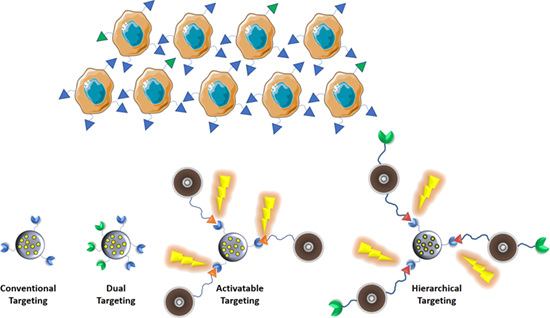
- vessels, they can leak from the vessels through these pores into the malignant tissue. Moreover, the accelerated growth of the tumoral mass usually compresses the lymphatic vessels that are on charge of the elimination of wastes products and liquids from the tissue and thus, the extravasated nanoparticles


A comparison of tarsal morphology and traction force in the two burying beetles Nicrophorus nepalensis and Nicrophorus vespilloides (Coleoptera, Silphidae)
Beilstein J. Nanotechnol. 2019, 10, 47–61, doi:10.3762/bjnano.10.5
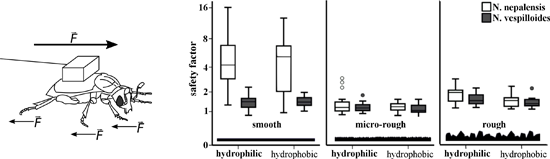
- as diiodomethane) than with polar substances. However, in contrast to both the other surfaces, the surface with 11 µm roughness showed a higher surface polarity and an improved wettability towards polar liquids such as water. As surface free energies of real solids are always influenced by surface



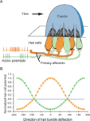
Bidirectional biomimetic flow sensing with antiparallel and curved artificial hair sensors
Beilstein J. Nanotechnol. 2019, 10, 32–46, doi:10.3762/bjnano.10.4
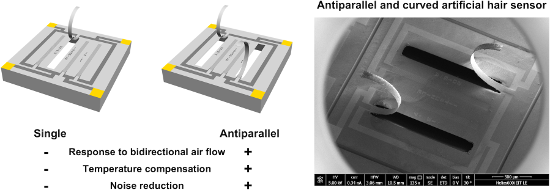
- bidirectional sensitivity to flow sensing with curved artificial hair sensors. In the short term, the presented sensor platform will be investigated in liquids as well, once the sensors are embedded in a waterproof MEMS package. For future applications, we are targeting automotive, robotics, automation and air