Search results
Search for "long-term stability" in Full Text gives 112 result(s) in Beilstein Journal of Nanotechnology.
Tuning adhesion forces between functionalized gold colloidal nanoparticles and silicon AFM tips: role of ligands and capillary forces
Beilstein J. Nanotechnol. 2018, 9, 660–670, doi:10.3762/bjnano.9.61
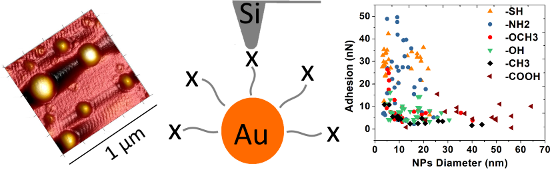
- exchange only electrostatic interactions with Au atoms and residues of Au3+ ions. However, this interaction between Au NP and ligands is strong enough to provide a long-term stability of Au NPs in solution. In addition, it allows functionalization of the NPs with a partially hydrophilic thin coating. From


Review on optofluidic microreactors for artificial photosynthesis
Beilstein J. Nanotechnol. 2018, 9, 30–41, doi:10.3762/bjnano.9.5
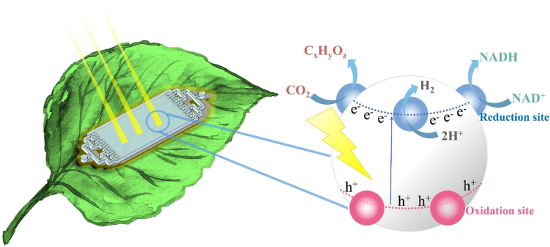
- for the redox reactions [65][66][67]. The desirable features of a photocatalyst include wide-range absorption, long-term stability, fast electron–hole separation, and strong redox powers. However, it is difficult to have all of these features in a single photocatalyst. Thereby, a simple heterojunction
- photocatalyst is expected to have wide-range absorption, long-term stability, fast electron–hole separation, and strong redox power. The heterojunction and Z-scheme systems are the important most research results to date. Based on these systems, various materials have been developed for the improvement of


Facile synthesis of silver/silver thiocyanate (Ag@AgSCN) plasmonic nanostructures with enhanced photocatalytic performance
Beilstein J. Nanotechnol. 2017, 8, 2781–2789, doi:10.3762/bjnano.8.277
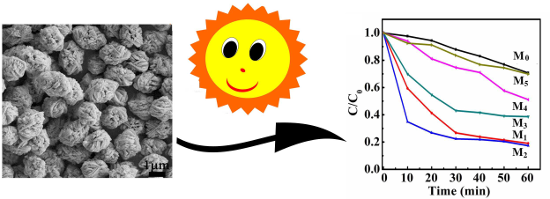
- the product was investigated based on the time-dependent experiments. Further experiments indicated that the prepared Ag@AgSCN nanostructures with an atomic ratio of Ag/AgSCN = 0.0463 exhibited high photocatalytic activity and long-term stability for the degradation of oxytetracycline (84%) under
- visible-light irradiation. In addition to the microstructure and high specific surface area, the enhanced photocatalytic activity was mainly caused by the surface plasmon resonance of Ag nanoparticles, and the high stability of AgSCN resulted in the long-term stability of the photocatalyst product
- photocatalysts, Ag/AgX (X = Cl, Br, I), suffer from instability during the recycling application, mainly due to the decomposition of AgX (X = Cl, Br, I) under irradiation [19][20][21][22]. Therefore, the development of visible-light catalysts with both high catalytic activity and long-term stability is of great


Dry adhesives from carbon nanofibers grown in an open ethanol flame
Beilstein J. Nanotechnol. 2017, 8, 2719–2728, doi:10.3762/bjnano.8.271
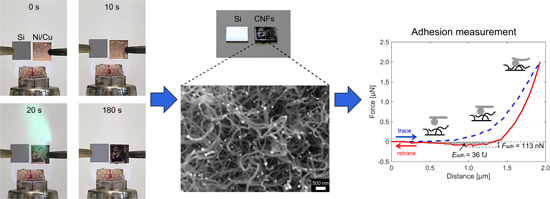
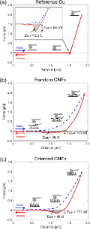
- prevents that some CNFs get in contact with the silica sphere, as schematically shown in Figure 7. Consequently, the oriented CNFs have higher adhesion forces and energies than the randomly oriented CNFs. An important question for dry adhesives is their long-term stability. It is essential for various
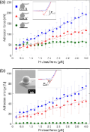
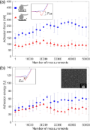
- artificial structures based on CNFs. Overall, the measurements demonstrate that CNF arrays have the potential for applications relying on adhesives with long-term stability under harsh environments. Conclusion We presented a fabrication method to produce dry adhesives by the growth of CNFs in an open ethanol


Towards molecular spintronics
Beilstein J. Nanotechnol. 2017, 8, 2464–2466, doi:10.3762/bjnano.8.245

- , taking into account that for device integration, the molecular layers need to obey certain boundary conditions, such as long-term stability, process compatibility, and the ability to integrate with electrode materials. Progress in this respect was only made possible by a continuous feedback from basic
Increasing the stability of DNA nanostructure templates by atomic layer deposition of Al2O3 and its application in imprinting lithography
Beilstein J. Nanotechnol. 2017, 8, 2363–2375, doi:10.3762/bjnano.8.236
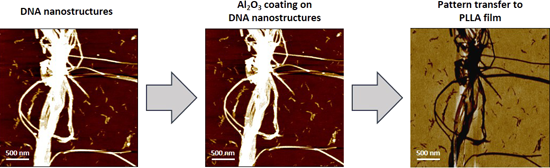
- depth and FWHM of the trenches along with cross-sectional analysis on the PLLA stamp at the four locations remained consistent, demonstrating the long-term stability of the PLLA stamp. As mentioned earlier, the most critical challenge of using the DNA master template without a protective film is the
- nanostructures beneath the 2 nm of Al2O3 coating are likely damaged by the oxidation by O3. The long-term stability of the ALD-coated template was also studied. We kept the template in a plastic petri dish that was stored in a common lab bench drawer for 40 days. AFM images with corresponding cross-sectional




Parylene C as a versatile dielectric material for organic field-effect transistors
Beilstein J. Nanotechnol. 2017, 8, 1532–1545, doi:10.3762/bjnano.8.155
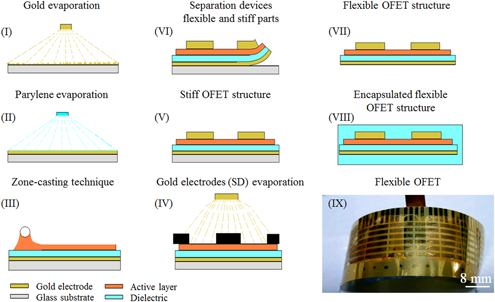
- material. In addition the material should yield device characteristics such as high on/off ratio, low hysteresis, and long-term stability. There are only few reports that describe, in a comprehensive way, an influence of each element on the performance of the organic transistor [12][14][15]. At present




Calcium fluoride based multifunctional nanoparticles for multimodal imaging
Beilstein J. Nanotechnol. 2017, 8, 1484–1493, doi:10.3762/bjnano.8.148
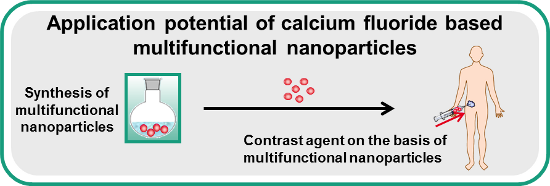
- synthesis and determine the long-term stability of the CAs. No cytotoxicity of NP concentrations between 0.5 and 1 mg·mL−1 was observed after exposure to human dermal fibroblasts over 24 h. Overall this study shows, that the CaF2:(Tb3+,Gd3+) NPs are suitable for medical imaging. Keywords: calcium fluoride
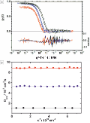
- comparable with each other indicating a high reproducibility of the synthesis procedure. This matches to the above described results of TEM, DLS and ICP-OES examinations. Long-term stability The long-term stability of the relaxivity over time was examined. All batches were investigated nine months after
- NPs are suitable for use as a PL CA. With the second investigated imaging technique MRI we verified the integration of the Gd3+ ions in the CaF2 lattice and the reproducibility of the NP synthesis procedure. Furthermore, we investigated the long-term stability of the relaxivities. In fact, the results


Micro- and nano-surface structures based on vapor-deposited polymers
Beilstein J. Nanotechnol. 2017, 8, 1366–1374, doi:10.3762/bjnano.8.138
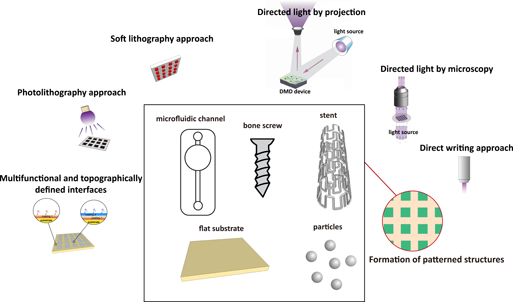
- -term stability due to degradation or desorption from the modified surface [66][67], or hardly predictable biological outcomes of interactions between the biological environment and the materials interfaces [60]. Moreover, widely used laminated/layered constructs are limited through the boundary
- , dielectric constant, temperature, and morphology and various chemical compositions [58][59][60][61][62][63][64][65]. Because of the challenges in fabrication processes, gradients are often generated with solution-based technology. Limitations remain for the ongoing technologies, for example, the lack long


Vapor-phase-synthesized fluoroacrylate polymer thin films: thermal stability and structural properties
Beilstein J. Nanotechnol. 2017, 8, 933–942, doi:10.3762/bjnano.8.95
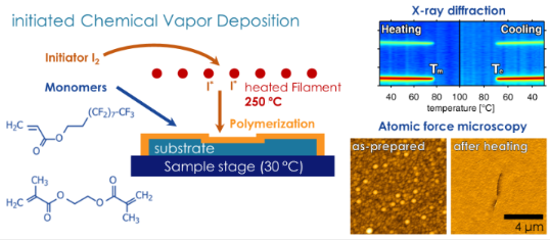
- processability due to an unsaturated acrylate group, allowing for mild processing conditions. One of the greatest limitations to the long-term stability of perfluoroacrylate-based technologies are mechanical, thermal and chemical stresses on the materials [4][5][6][7]. Some super-hydrophobic and oleophobic


Synthesis of coaxial nanotubes of polyaniline and poly(hydroxyethyl methacrylate) by oxidative/initiated chemical vapor deposition
Beilstein J. Nanotechnol. 2017, 8, 872–882, doi:10.3762/bjnano.8.89
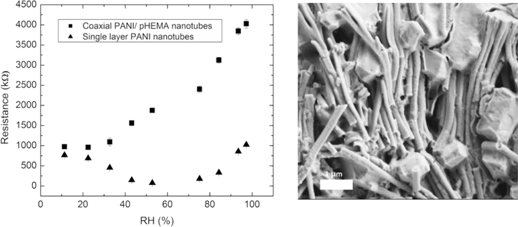
- , above 100 °C the polymer starts degrading, resulting in damage to the crystalline structure and reduction of the conductivity. For sensor applications, the long-term stability of the deposited films was investigated. The conductivities of the PANI coated glass were recorded with a four-point probe in


Photocatalysis applications of some hybrid polymeric composites incorporating TiO2 nanoparticles and their combinations with SiO2/Fe2O3
Beilstein J. Nanotechnol. 2017, 8, 272–286, doi:10.3762/bjnano.8.30
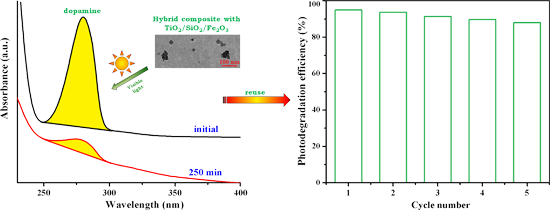
- than the other catalysts studied in literature (ZnO, SnO2, WO3, CdS) because of their superior redox ability and photoelectric properties, the long-term stability, the nontoxicity, and the low cost [10][11][12][13][14][15]. Nevertheless, the practical applications of TiO2 have a major drawback, namely


Nanostructured SnO2–ZnO composite gas sensors for selective detection of carbon monoxide
Beilstein J. Nanotechnol. 2016, 7, 2045–2056, doi:10.3762/bjnano.7.195
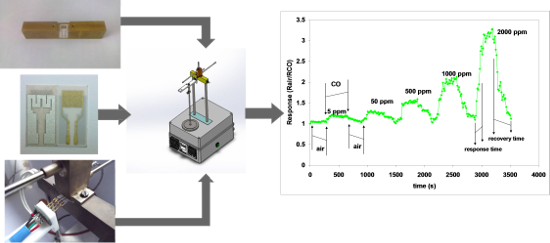
- technologies, low power requirements, quick response times (seconds), high sensitivity to small concentrations of a specific gas, complete sensor recovery, lightweight, and long term stability. More recently, sensors were fabricated with reduced dimensions (miniaturization or microelectronic processing) [2][3




Functionalized platinum nanoparticles with surface charge trigged by pH: synthesis, characterization and stability studies
Beilstein J. Nanotechnol. 2016, 7, 1822–1828, doi:10.3762/bjnano.7.175
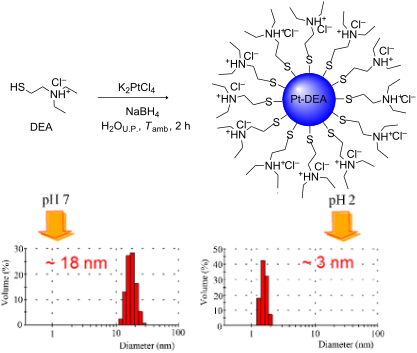
- colloid [39]). As observed in the literature, the role of the stable negative counter-ion is underlined from the negative values observed [40]. Measurements carried out up to three months confirmed the long-term stability of the colloidal suspension for all the samples. The FTIR spectrum of Pt-DEA
- bond on the PtNP surface. The DLS characterization demonstrated the long-term stability of the colloidal system up to three months and the possibility to tune the aggregation phenomenon of the PtNPs by varying the pH due to modulation of the metal surface charge. Experimental Instrumentation UV–vis


Hydrophilic silver nanoparticles with tunable optical properties: application for the detection of heavy metals in water
Beilstein J. Nanotechnol. 2016, 7, 1654–1661, doi:10.3762/bjnano.7.157
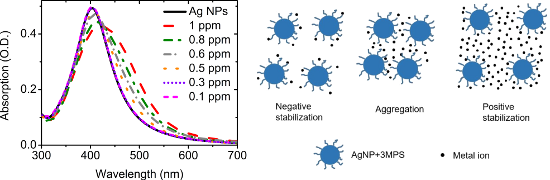
- <2RH> = 5 ± 2 nm, in good agreement with the STM analysis. The SPR absorption was monitored as a function of the time in order to check the long term stability of the NPs. As shown in Figure 5, the solution presents the same optical spectra 15 days after the preparation, indicating that no aggregation
- . SPR absorption spectroscopy of the AgNP-3MPS solution (synthesis b) taken immediately after the synthesis and after 15 days, indicating good long term stability. Absorption spectra of the AgNP-3MPS (synthesis b) solution with 1 ppm ion concentration. a) Absorption spectra of the AgNP-3MPS system


Reconstitution of the membrane protein OmpF into biomimetic block copolymer–phospholipid hybrid membranes
Beilstein J. Nanotechnol. 2016, 7, 881–892, doi:10.3762/bjnano.7.80
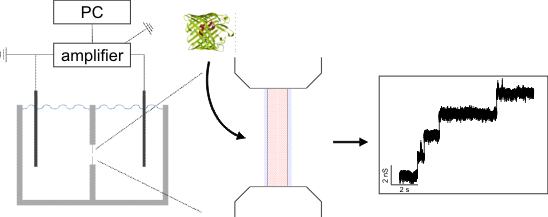
- functional reconstitution of integral proteins, these membranes are often not applicable in technical processes due to their high fluidity and lack of long-term stability [16][17]. Therefore, novel approaches substitute phospholipids by amphiphilic block polymers that form membranes with a mechanical



Antibacterial activity of silver nanoparticles obtained by pulsed laser ablation in pure water and in chloride solution
Beilstein J. Nanotechnol. 2016, 7, 465–473, doi:10.3762/bjnano.7.40
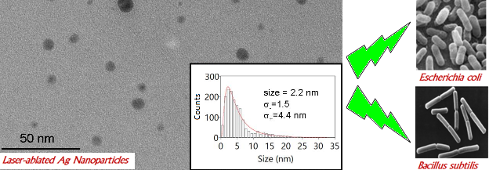
- zeta potential. In all cases, the zeta potential is strongly negative, indicating excellent long-term stability of the NPs, as already assessed by Giorgetti et al. [32]. Furthermore, as expected, the adsorption of chloride ions shifts the zeta potential of the samples obtained in LiCl solution towards


Efficiency improvement in the cantilever photothermal excitation method using a photothermal conversion layer
Beilstein J. Nanotechnol. 2016, 7, 409–417, doi:10.3762/bjnano.7.36
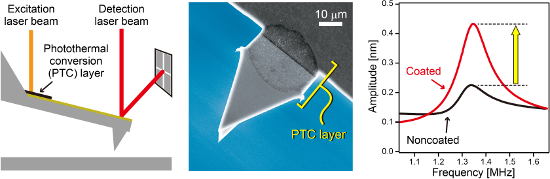
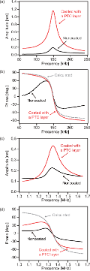
- used PTC layers with a blackened area of ≈70% in our experiments. Long-term stability of PTC layers in liquid Long-term stability of a PTC layer in liquid is very important for stable operation of a photothermal excitation system in dynamic-mode AFM. To investigate the long-term stability, we measured
- colloidal graphite on the cantilevers. Long-term stability evaluation of PTC layers in liquid Long-term stability of the PTC layers in liquid was evaluated by monitoring the cantilever excitation amplitude. The signal of excitation amplitude from the oscillation controller (OC4) was recorded by a data
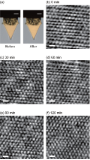
- the location where we took a magnified image. Long-term stability of the PTC layer in liquid. (a) Optical images of an AC55 cantilever before and after use in water. (b)–(f) Successive FM-AFM images of a mica surface in PBS solution. Δf = +3.9 kHz. A = 0.4 nm. Scale bar = 1 nm. Properties of a PPP



Organized films
Beilstein J. Nanotechnol. 2016, 7, 406–408, doi:10.3762/bjnano.7.35
- and long term stability, the problems mentioned above made such films less appealing for applications, emphasizing the need for exploration and invention of new processes of film fabrication. The most successful of these processes evolved during the habilitation of Gero Decher. In this process
Evaluation of gas-sensing properties of ZnO nanostructures electrochemically doped with Au nanophases
Beilstein J. Nanotechnol. 2016, 7, 22–31, doi:10.3762/bjnano.7.3
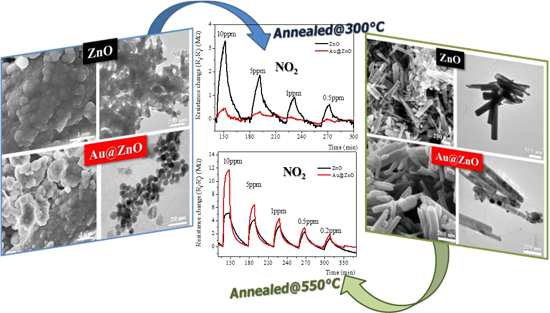
- general and ZnO nanomaterials in particular are promising as sensing layer in chemiresistive gas sensors, although their limited selectivity, high response/recovery time, high-power consumption, and lack of long-term stability have limited their use in more demanding applications [24]. Nowadays, many




Thermal energy storage – overview and specific insight into nitrate salts for sensible and latent heat storage
Beilstein J. Nanotechnol. 2015, 6, 1487–1497, doi:10.3762/bjnano.6.154
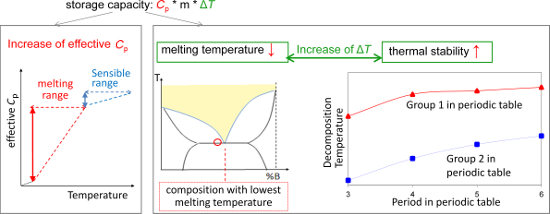
- contrast, basalt and quartzite look promising from the first experiments, but long-term stability measurements are still required. Classification of heat storage media. Heat capacity of Solar Salt in the liquid phase [3][4][5][6][7][8][9]. Thermal conductivity of Solar Salt reported by several groups [8


Materials and characterization techniques for high-temperature polymer electrolyte membrane fuel cells
Beilstein J. Nanotechnol. 2015, 6, 68–83, doi:10.3762/bjnano.6.8
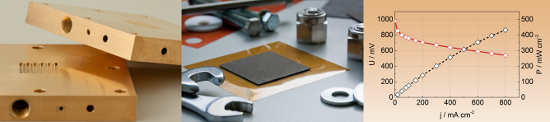
- the robustness of the HT-PEMFC against structural variations due to electrode preparation [12]. Still the fabrication technique might have an effect on the long-term stability of the cell. The large shrinkage cracks are the main pathway of the phosphoric acid from the membrane though the GDL and out
- . Conclusion Phosphoric acid-doped PBI-type fuel cells are so far the most promising candidates for practical high-temperature operation under ambient pressure. For commercial deployment, however, the performance and long-term stability of the high-temperature MEAs still need significant improvement. To




Inorganic Janus particles for biomedical applications
Beilstein J. Nanotechnol. 2014, 5, 2346–2362, doi:10.3762/bjnano.5.244
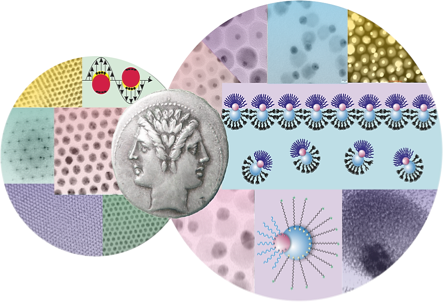
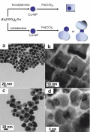
- resonance and their additional strong contrast for CT-analysis, which enables dual detection for in vivo analysis. Furthermore, the materials of the metal oxide domain were chosen to exhibit magnetic behavior to be able to apply the multifunctional Janus particles as MRI contrast agents. As long term
- stability in aqueous media is of particular importance for biomedical applications, the extraordinary stability of silica encapsulated nanoparticles and the well-known surface chemistry of silica were transferred to Janus particles, whereby the Janus character was retained due to the distinct chemical






Electrical contacts to individual SWCNTs: A review
Beilstein J. Nanotechnol. 2014, 5, 2202–2215, doi:10.3762/bjnano.5.229
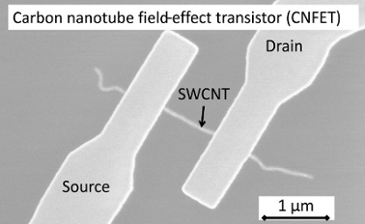
- process and their effect on the device with respect to resistance are summarized. Finally, the challenges in obtaining high-performance CNFETs are discussed, covering the reproducibility, long term stability of electrical contact properties, and large-scale fabrication options. Carrier transport mechanism
- challenges are reproducibility, predictability and long-term stability of device performance, as well as the feasibility of large-scale fabrication. Comparing the performance of CNFETs obtained from the same fabrication batch, a large variation in the on-resistance was observed among thousands of devices [70
- the metal–SWCNT interface must be further investigated. The long-term stability of CNFET transfer characteristics is another major concern for their applicability, which has been studied by several authors [83][84][85]. For devices with the Cr/Au (3 nm/20 nm) contacts, the electrical contacts were


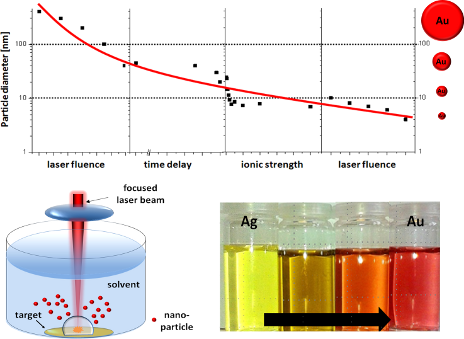
Current state of laser synthesis of metal and alloy nanoparticles as ligand-free reference materials for nano-toxicological assays
Beilstein J. Nanotechnol. 2014, 5, 1523–1541, doi:10.3762/bjnano.5.165