


Search results
Search for "magnetic nanoparticles" in Full Text gives 113 result(s) in Beilstein Journal of Nanotechnology.
Comparison of the interactions of daunorubicin in a free form and attached to single-walled carbon nanotubes with model lipid membranes
Beilstein J. Nanotechnol. 2016, 7, 524–532, doi:10.3762/bjnano.7.46
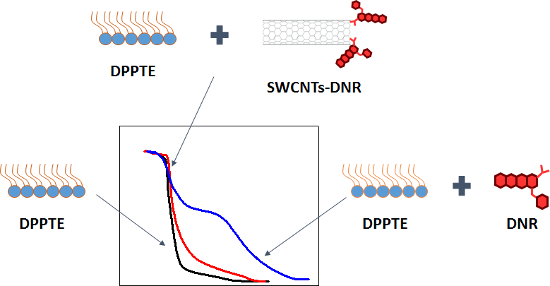
- fields. Such magnetic nanoparticles conjugated with DNR were reported to induce apoptosis of cancer cell lines [11][12]. Other examples of nanoparticles include titanium dioxide (TiO2) and gold nanoparticles (AuNPs) [13][14]. In the latter case the nanoparticles were also modified with aptamer – single


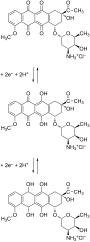


Case studies on the formation of chalcogenide self-assembled monolayers on surfaces and dissociative processes
Beilstein J. Nanotechnol. 2016, 7, 263–277, doi:10.3762/bjnano.7.24
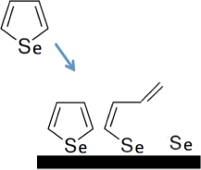
- interaction with Ni(111). We looked at Ni, since amongst other uses it can be employed as an electrode material. Additionally, Ni nanoparticles [93][94][95][96][97] are an example of magnetic nanoparticles [95] that are useful as catalysts [96], in magnetic fluids, as well as for binding and even magnetic


Simultaneous cancer control and diagnosis with magnetic nanohybrid materials
Beilstein J. Nanotechnol. 2016, 7, 121–125, doi:10.3762/bjnano.7.14
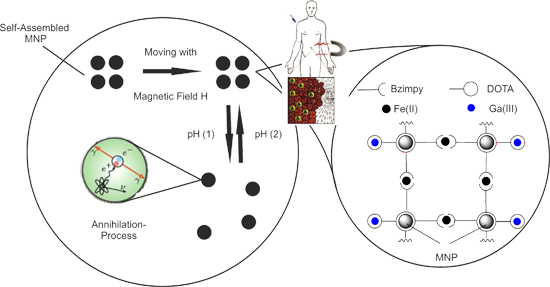
- foreclosed. Thus the visual input of the MNP can give a first cautious estimation of a successful functionalization. Conclusion In conclusion, Ga-DOTA and [Fe(II)(Cl-bzimpy)2] complexes were synthesized and linked to magnetic nanoparticles. The linked MNP were analyzed with DLS and TG/DTA and showed a
- annihilation of a positron with an electron by a radiopharmaceutical called “tracer” which has been previously injected intravenously into the patient. A computer reconstructs then tomographic images of the tracer concentration so that sectional images can be conveyed [5]. By linking PET isotopes to magnetic
- nanoparticles (MNP) a sophisticated system with different applications can be achieved (Figure 1): The magnetism of the particles allows an all-time control of the nanopharmaceuticals position, a linker, connecting the nanoparticles to each other, enables a pH-controlled assembly/disassembly and the PET



An adapted Coffey model for studying susceptibility losses in interacting magnetic nanoparticles
Beilstein J. Nanotechnol. 2015, 6, 2173–2182, doi:10.3762/bjnano.6.223
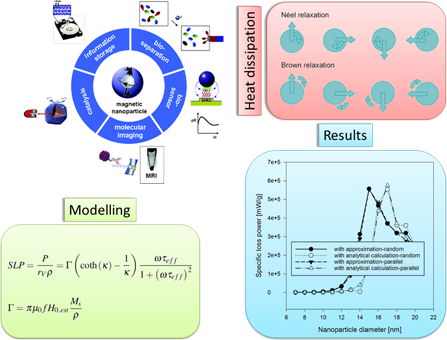
- frequencies and amplitudes of external magnetic fields for biomedical applications, especially for tumor therapy by magnetic hyperthermia. Keywords: hyperthermia; magnetic nanoparticles; relaxation process; specific loss power; susceptibility losses; Introduction Magnetic nanoparticles are important for
- upper limit of 4.85·108 Am−1s−1 for the product of frequency and field strength per one hour of treatment [4]. The influence of the nanoparticle concentration is implicitly related to the magnetic dipolar interactions among the nanoparticles. In order to select an assembly of magnetic nanoparticles
- suitable for use in hyperthermia, it is of interest to establish the conditions providing a sufficiently high SLP in an alternating external magnetic field of moderate amplitude Hext and frequency f [5]. The latest researches suggest that the so-called “hard-magnetic nanoparticles” are a more reliable


Self-assembly mechanism of Ni nanowires prepared with an external magnetic field
Beilstein J. Nanotechnol. 2015, 6, 2123–2128, doi:10.3762/bjnano.6.217
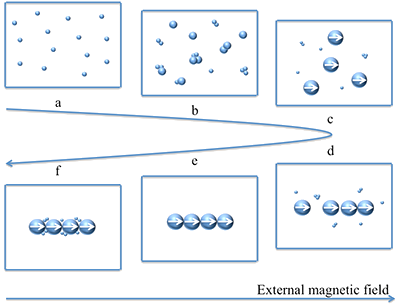
- the surface of the nickel nanowires as well. Interestingly, magnetic nanoparticles can be first prepared and then aligned into one-dimensional chain-like structures in ferrofluids under a magnetic field [32][33][34][35]. The self-assembly behavior is similar to the second stage of the above self





A facile method for the preparation of bifunctional Mn:ZnS/ZnS/Fe3O4 magnetic and fluorescent nanocrystals
Beilstein J. Nanotechnol. 2015, 6, 1743–1751, doi:10.3762/bjnano.6.178
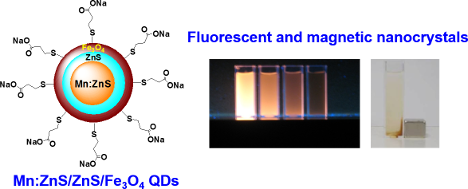
- diodes [6][7] or solar cells [8]. Conventional QDs systems have a core/shell architecture. The shell, generally constituted of a wide band gap material such as ZnS, prevents degradation and preserves the optical properties [3][4]. Magnetic nanoparticles have many advantages, especially for biological
- based on the unique feature of magnetic nanoparticles to respond well to magnetic control. The combination of magnetic and optical properties in a single, nanostructured material has attracted increased attention because of the advantageous properties of such nanoparticles. Such fluorescent and magnetic


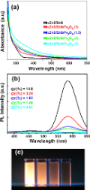


Synthesis, characterization and in vitro biocompatibility study of Au/TMC/Fe3O4 nanocomposites as a promising, nontoxic system for biomedical applications
Beilstein J. Nanotechnol. 2015, 6, 1677–1689, doi:10.3762/bjnano.6.170
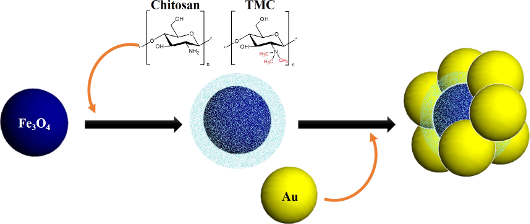
- . Moreover, the results of the MTT assay showed no significant cytotoxicity effect when the Au/TMC/Fe3O4 nanocomposites were applied in vitro. These TMC-containing magnetic nanoparticles are well-coated by Au nanoparticles and have good biocompatibility and can thus play the role of a platform or a label in
- various fields of application, especially the biomedical sciences and biosensors. Keywords: Au/polymer/Fe3O4 nanocomposites; Au nanoparticles; cell viability; magnetic nanoparticles; N-trimethyl chitosan; Introduction Nanotechnology is the science of the fabrication of novel materials, devices and
- as catalysis, electronics, photonics, sensors, microfluidic lateral flow devices, medical diagnosis, and related sciences [6][7][8][9][10]. One of the most important classes of metal nanoparticles are magnetic nanoparticles. Due to their unique properties, such as magnetic resonance momentum, super




Possibilities and limitations of advanced transmission electron microscopy for carbon-based nanomaterials
Beilstein J. Nanotechnol. 2015, 6, 1541–1557, doi:10.3762/bjnano.6.158
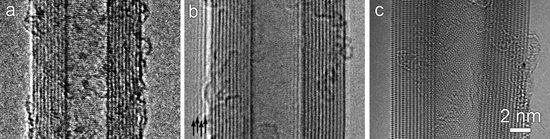
- nanotechnology: as building blocks for nanoelectronics [64], for drug delivery in biomedicine [65], and as bio-imaging agents when decorated with magnetic nanoparticles [66], just to name a few. The investigation of the interfaces of nanohybrids is often crucial in optimizing their design toward eventual


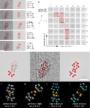
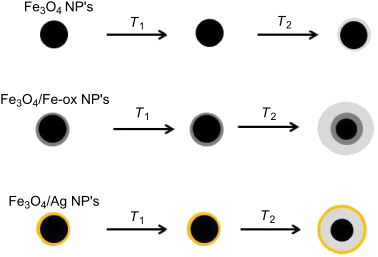
Thermal treatment of magnetite nanoparticles
Beilstein J. Nanotechnol. 2015, 6, 1385–1396, doi:10.3762/bjnano.6.143
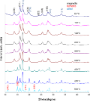
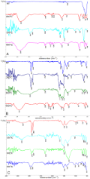
- size, morphology and shape from different synthetic methods. As far as the applications are concerned, the production of a desired size and good characterization of the obtained magnetic nanoparticles are very important factors. To obtain a desired range of diameters, strict control of the reaction




The convenient preparation of stable aryl-coated zerovalent iron nanoparticles
Beilstein J. Nanotechnol. 2015, 6, 1192–1198, doi:10.3762/bjnano.6.121
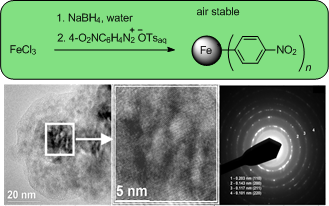
- analysis were performed in order to characterize the resulting material. Keywords: arenediazonium salts; chemical reduction; covalent modification; surface-modified nanoparticles; zerovalent iron nanoparticles; Introduction Functionalized magnetic nanoparticles (NPs) have aroused great interest recently


Tunable magnetism on the lateral mesoscale by post-processing of Co/Pt heterostructures
Beilstein J. Nanotechnol. 2015, 6, 1082–1090, doi:10.3762/bjnano.6.109
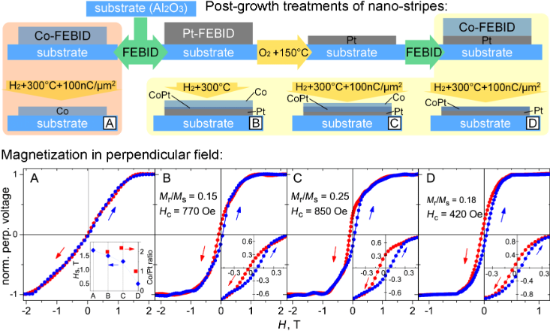
- treatments of samples include annealing in reactive gases [31], electron irradiation [27][28], or a combination of both [30][32][33][34]. Several approaches have already been proposed for the preparation of magnetic nanoparticles and their alloying, in particular, with the purpose of eventually using them
- for ultrahigh-density data-storage media. Thus, driven by the need to accomplish the above demand, FePt magnetic nanoparticles were prepared using colloidal chemistry [35] and micellar methods [36]. The latter method was also extended to the preparation of CoPt nanoparticles [37]. Later on, it turned


Interaction of electromagnetic radiation in the 20–200 GHz frequency range with arrays of carbon nanotubes with ferromagnetic nanoparticles
Beilstein J. Nanotechnol. 2015, 6, 1056–1064, doi:10.3762/bjnano.6.106
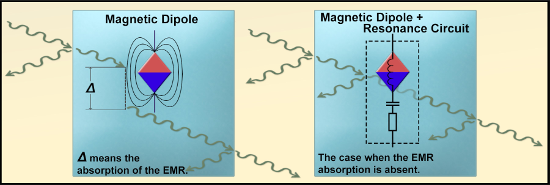
- ], antennas and absorbing materials [18][19][20][21][22][23][24][25][26]. The absorption properties of CNT-based nanocomposites are primarily determined by the dielectric loss [27]. However, the intercalation of magnetic nanoparticles into the CNT matrix leads to the increase of the absorption properties due


Overview of nanoscale NEXAFS performed with soft X-ray microscopes
Beilstein J. Nanotechnol. 2015, 6, 595–604, doi:10.3762/bjnano.6.61
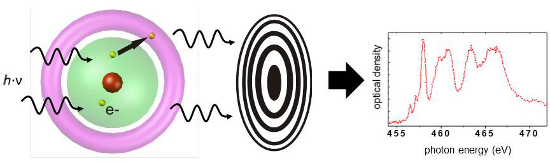
- magnetic nanoparticles which will have future applications in photo thermal therapy or drug delivery can be optimized by different analysis methods including NEXAFS spectroscopy with the HZB-TXM [65]. In the latter case as well as in the case of hybrid colloid particles the nanoparticles have sizes below


Silica micro/nanospheres for theranostics: from bimodal MRI and fluorescent imaging probes to cancer therapy
Beilstein J. Nanotechnol. 2015, 6, 546–558, doi:10.3762/bjnano.6.57

- will cover a full description of MRI-active and fluorescent multifunctional silica micro/nanospheres including the design of the probe, different characterization methods and their application in imaging and treatment in cancer. Keywords: bimodal imaging; fluorescence imaging; magnetic nanoparticles
- shift to 580 nm in the case of Fe3O4@SiO2 NPs. The saturation magnetization value of the magnetic nanoparticles was observed to be 21 emu/g. The biocompatibility of these NPs was determined by incubating them with the human fibroblasts cells for which a cell viability of about 90% was observed even


Multifunctional layered magnetic composites
Beilstein J. Nanotechnol. 2015, 6, 134–148, doi:10.3762/bjnano.6.13
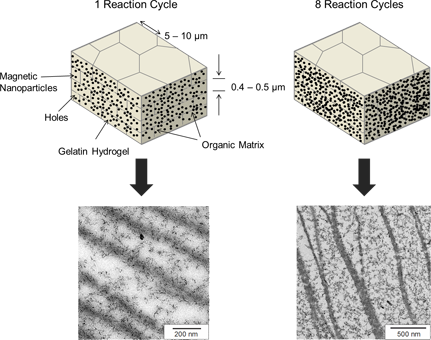
- cross section of the material. It can be clearly seen that the spaces in between the layers mainly give signals for Fe. With the performed studies we could not observe a mineral gradient throughout the matrix arising from the synthesis of the magnetic nanoparticles produced by a diffusion approach





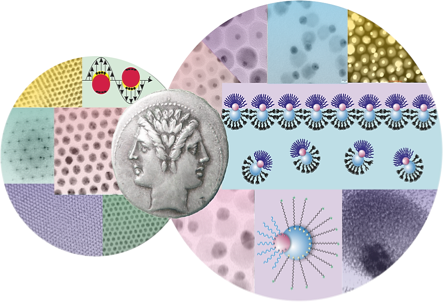
Inorganic Janus particles for biomedical applications
Beilstein J. Nanotechnol. 2014, 5, 2346–2362, doi:10.3762/bjnano.5.244
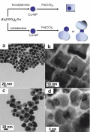
- magnetic nanoparticles in the late 1970’s for the first time [83]. Nowadays, superparamagnetic iron oxide nanoparticle-based MRI contrast agents are used in clinical applications [84]. Further, iron oxide based nanoparticles are in focus of research for their application as MRI contrast agents, including




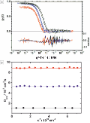


Influence of surface-modified maghemite nanoparticles on in vitro survival of human stem cells
Beilstein J. Nanotechnol. 2014, 5, 1732–1737, doi:10.3762/bjnano.5.183
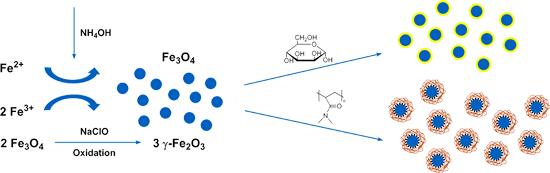
- cellular uptake of the magnetic nanoparticles and enhance their specific targeting effect, surface functionalization has to be employed to coat the nanoparticle surface with ligands that could specifically interact with the receptors overexpressed in the cell membrane. While the size of the dry


PEGylated versus non-PEGylated magnetic nanoparticles as camptothecin delivery system
Beilstein J. Nanotechnol. 2014, 5, 1312–1319, doi:10.3762/bjnano.5.144
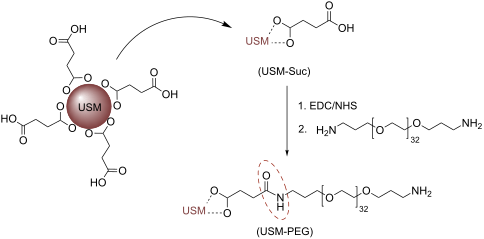
- results indicate that camptothecin retains its biological activity after loading onto the magnetic nanoparticles. The proposed materials represent novel materials based on naturally occurring bioactive molecules loaded onto nanoparticles to be used as chemotherapeutic formulations. The procedure seems apt
- to be extended to other active molecules extracted from natural products. In addition, these materials offer the potential of being further implemented for combined imaging and therapeutics, as magnetic nanoparticles are known to be multifunctional tools for biomedicine. Keywords: camptothecin
- modification procedure with PEG the amount of CPT that can be loaded was greatly enhanced (in effect doubled) with respect to bare USM nanoparticles. No significant difference in the cytotoxic activity was observed among the CPT loaded on either the PEGylated or bare USM magnetic nanoparticles. Nevertheless, a


Designing magnetic superlattices that are composed of single domain nanomagnets
Beilstein J. Nanotechnol. 2014, 5, 956–963, doi:10.3762/bjnano.5.109
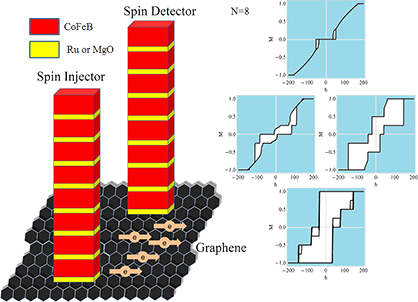
- a methodology that is based upon a very powerful computational Monte Carlo technique to study the magnetic ordering in a system of dipolarly interacting magnetic nanoparticles distributed along 1D chains. They studied in detail the very interesting issue of the interplay between the nanoparticles
- character (which, in the next section, we will describe by the constant of inter-particles interaction, J). Thus, our approach is consistent with the studies [10][11][12][13], which found by computational Monte Carlo techniques that the magnetization of the dipolarly interacting magnetic nanoparticles is
- general conclusion of these papers was that a mean-field treatment is not adequate to study magnetic nanoparticle systems [10][11][12][13]. Therefore, in the present paper we developed a microscopic approach which is based on considering the dynamical behavior of magnetic nanoparticles with the use of


Nanodiamond-DGEA peptide conjugates for enhanced delivery of doxorubicin to prostate cancer
Beilstein J. Nanotechnol. 2014, 5, 937–945, doi:10.3762/bjnano.5.107
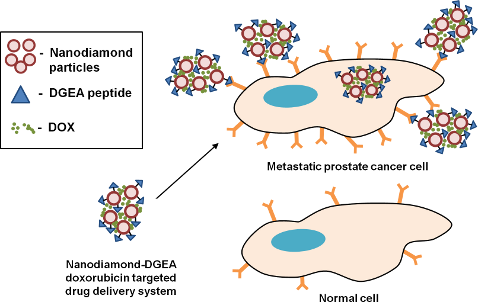
- tumor types [6][7][8][9]. Currently, there are several clinically approved nanoparticle-based cancer drugs using liposomes, nanoparticle albumin-bound (nab) technology, dendrimers, polymeric, carbon, and metal nanoparticles [6][8]. Gold nanorods, iron magnetic nanoparticles, polymer nanospheres, lipids


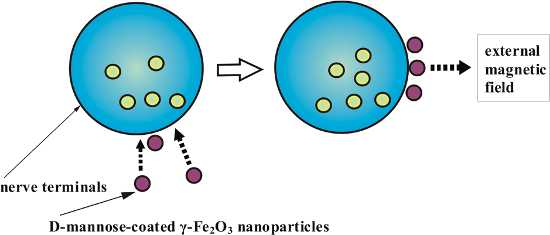
Manipulation of isolated brain nerve terminals by an external magnetic field using D-mannose-coated γ-Fe2O3 nano-sized particles and assessment of their effects on glutamate transport
Beilstein J. Nanotechnol. 2014, 5, 778–788, doi:10.3762/bjnano.5.90
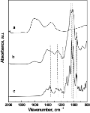
- -mannose (Figure 2c) were apparent in the spectrum of the surface-modified magnetic nanoparticles (Figure 2b). This suggests that the surface of the γ-Fe2O3 particles was coated with D-mannose (Figure 2). D-mannose may be bonded to the surface of the particles via the hydroxy group located on the C2 carbon
- /mL) was pre-incubated in standard salt solution at 37 °C for 8 min, then magnetic nanoparticles (250 µg/mL; stock solution 4.4 mg/mL was diluted 18 times) were added to the synaptosomal suspension and incubated for 10 min. Uptake was initiated by the addition of 10 µM L-glutamate supplemented with



Encapsulation of nanoparticles into single-crystal ZnO nanorods and microrods
Beilstein J. Nanotechnol. 2014, 5, 485–493, doi:10.3762/bjnano.5.56
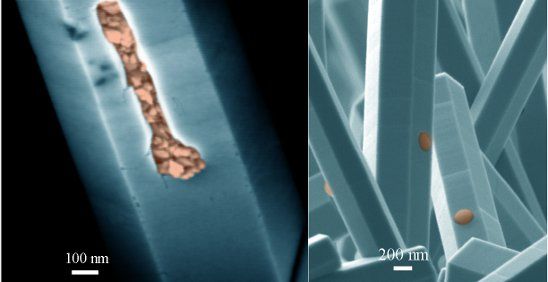
- be multi-functional by hosting luminescent dye molecules or magnetic nanoparticles. As the growth rate over the side facets of a ZnO nanorod is much slower than that over the top facet, it would be more challenging to encapsulate large nanoparticles with size beyond the 100 nm regime into ZnO nanorod


Plasma-assisted synthesis and high-resolution characterization of anisotropic elemental and bimetallic core–shell magnetic nanoparticles
Beilstein J. Nanotechnol. 2014, 5, 466–475, doi:10.3762/bjnano.5.54
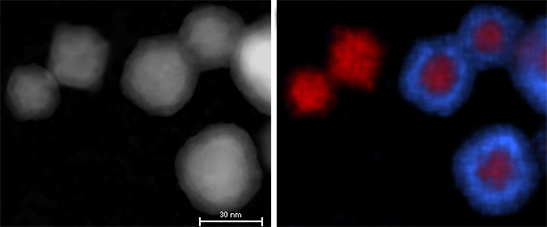
- heterostructured NP in gas condensation processes are discussed. Keywords: bimetallic magnetic nanoparticle; core–shell; magnetron sputtering; plasma gas condensation; Introduction Due to their size, novel physical properties and the possibility of contactless manipulation, magnetic nanoparticles can be employed
- analysis. Future studies will aim at circumventing this problem by using a noble metal as the shell material. Conclusion We set up a plasma gas-condensation apparatus for the synthesis of nanoparticles and demonstrated the successful production of highly tunable elemental and CS-structured magnetic
- nanoparticles. In contrast to earlier studies, in which a shell thickness of only several monolayers was reached [10], the present experiments demonstrate the capacity of plasma gas condensation to synthesize CS-NPs with much larger shell dimensions. Deposition of a 10 nm layer of Cu atoms on Ni cores was


Hydrogen-plasma-induced magnetocrystalline anisotropy ordering in self-assembled magnetic nanoparticle monolayers
Beilstein J. Nanotechnol. 2013, 4, 164–172, doi:10.3762/bjnano.4.16
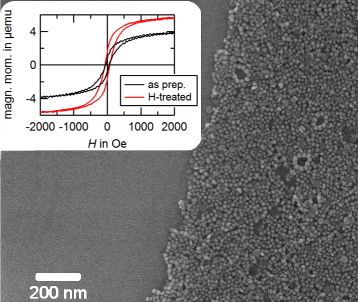
- set of magnetic moments, we propose a model that relates the change of the hysteresis loops to a dipole-driven ordering of the magnetocrystalline easy axes within the particle plane due to the high spatial aspect ratio of the system. Keywords: dipolar particle coupling; magnetic nanoparticles
- ; magnetocrystalline anisotropy; monolayers; Introduction Due to their wide range of applications in physical, biological and medical fields, magnetic nanoparticles have been thoroughly studied during the past few decades [1][2]. In this regard, various manufacturing techniques to synthesize particles with distinct
- magnetic nanoparticles is zero if there is no external field applied. The situation changes if various types of interaction become important. A common example is given by ligand- or polymer-stabilized magnetic nanoparticles that tend to assemble in self-ordered two-dimensional arrays of high spatial




Physics, chemistry and biology of functional nanostructures
Beilstein J. Nanotechnol. 2012, 3, 843–845, doi:10.3762/bjnano.3.94

- , in turn, stands alongside previous series. Of special interest appear those reports dealing with self-assembly on solid surfaces, micro- and mesoporous solids, electrical transport through nanostructures, nanooptical aspects, organic–inorganic hybrids and properties of magnetic nanoparticles. A much



