Search results
Search for "manipulation" in Full Text gives 230 result(s) in Beilstein Journal of Nanotechnology. Showing first 200.
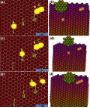
Transition from freestanding SnO2 nanowires to laterally aligned nanowires with a simulation-based experimental design
Beilstein J. Nanotechnol. 2020, 11, 843–853, doi:10.3762/bjnano.11.69
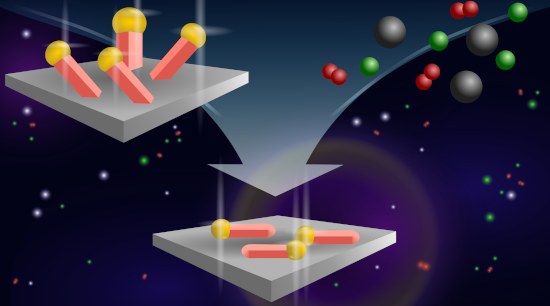
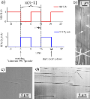
- functionalized as heterostructures with the aim to understand their growth process as well as to use their unique properties in devices [2][3][4][5][6]. Due to their respective high surface-to-volume ratio [7], NWs are highly beneficial for recognition and manipulation of surface-sensitive processes [2][8]. As a





Integrated photonics multi-waveguide devices for optical trapping and Raman spectroscopy: design, fabrication and performance demonstration
Beilstein J. Nanotechnol. 2020, 11, 829–842, doi:10.3762/bjnano.11.68
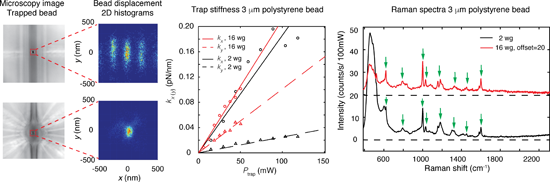
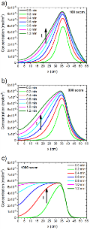
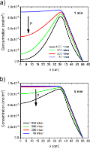
- waveguides. Keywords: Brownian motion; integrated optics devices; lab-on-a-chip; optical trapping; nanofabrication; Raman spectroscopy; ridge waveguides; Introduction Photonic lab-on-a-chip (LOC) techniques strongly attract attention for the manipulation and measurement of biological particles such as


Adsorption behavior of tin phthalocyanine onto the (110) face of rutile TiO2
Beilstein J. Nanotechnol. 2020, 11, 821–828, doi:10.3762/bjnano.11.67
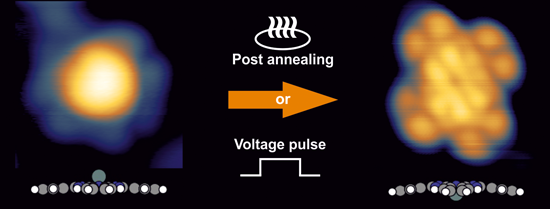
- molecules into the Sn-down conformation was observed either after sample annealing at 200 °C or as a result of tip-induced manipulation. Room-temperature measurements conducted for a coverage of close to a monolayer showed no tendency for molecular arrangement. Keywords: rutile (110) surface; scanning
- the position of a tin atom protruding from the macrocycle: “Sn-up” and “Sn-down”. Switching from the Sn-up to the Sn-down geometry can be realized by annealing the sample at 200 °C or by tip-induced manipulation (bias pulse). X-ray photoelectron spectroscopy (XPS) measurements reveal a lack of strong
- ] direction of the rutile (110) surface. Tip-induced switching sometimes leads to the rotation of the molecule with respect to the surface directions. We suggest that this is the result of the abrupt nature of tip-induced manipulation in which a molecule does not have enough time to thermalize and adapt the


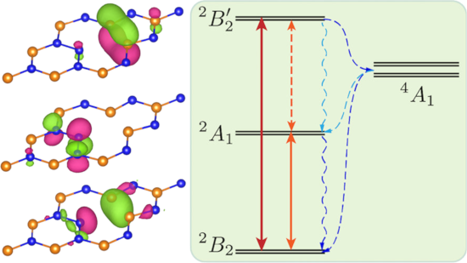
Hexagonal boron nitride: a review of the emerging material platform for single-photon sources and the spin–photon interface
Beilstein J. Nanotechnol. 2020, 11, 740–769, doi:10.3762/bjnano.11.61




Multilayer capsules made of weak polyelectrolytes: a review on the preparation, functionalization and applications in drug delivery
Beilstein J. Nanotechnol. 2020, 11, 508–532, doi:10.3762/bjnano.11.41
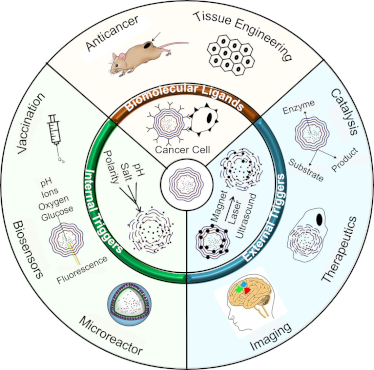
- ]. As the critical pH is closer to physiological pH, no additional changes are required to release the loaded cargo. The fabrication of a multilayer assembly as well as its post formation manipulation is affected by molecular weight, pH, ionic strength and temperature [49]. When the critical pH is



Nanoarchitectonics: bottom-up creation of functional materials and systems
Beilstein J. Nanotechnol. 2020, 11, 450–452, doi:10.3762/bjnano.11.36

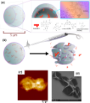
- other research fields such as atom/molecular manipulation, organic synthesis, supramolecular chemistry, and bio-related technology. This task is assigned to an emerging concept, nanoarchitectonics (Figure 1) [7][8][9]. The nanoarchitectonics concept was initially proposed by Masakazu Aono [10][11] who

Nonclassical dynamic modeling of nano/microparticles during nanomanipulation processes
Beilstein J. Nanotechnol. 2020, 11, 147–166, doi:10.3762/bjnano.11.13
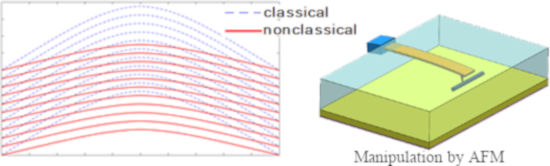
- , Science and Research Branch, Islamic Azad University, Tehran, Iran 10.3762/bjnano.11.13 Abstract Since the manipulation of particles using atomic force microscopy is not observable in real-time, modeling the manipulation process is of notable importance, enabling us to investigate the dynamical behavior
- the substrate, along with the dominant motion mode, the nonclassical theory of continuum mechanics and a developed von Mises yield criterion are employed to investigate the dynamical behavior of a cylindrical gold nanoparticle during manipulation. Timoshenko and Euler–Bernoulli beam theories based on
- deflection before the beginning of the dominant mode and a difference of more than 25% in the dynamic modeling of a 200 nm manipulation of a gold nanoparticle with a length of 25 µm and aspect ratio of 30. This difference increases with each increment of the aspect ratio and reduction of manipulation







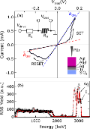
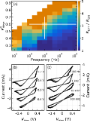
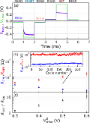
Nanosecond resistive switching in Ag/AgI/PtIr nanojunctions
Beilstein J. Nanotechnol. 2020, 11, 92–100, doi:10.3762/bjnano.11.9
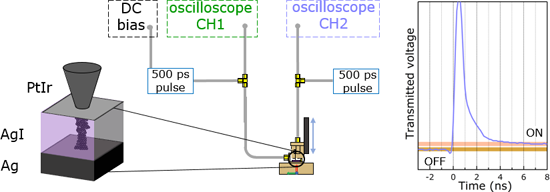
- single exception of its photosensitivity. The latter offers a further possibility for a combined electrical and optical manipulation of the resistance states. Instrumental developments for high-speed resistive switching measurements In order to investigate resistive switching in STM based nanojunctions


The effect of heat treatment on the morphology and mobility of Au nanoparticles
Beilstein J. Nanotechnol. 2020, 11, 61–67, doi:10.3762/bjnano.11.6
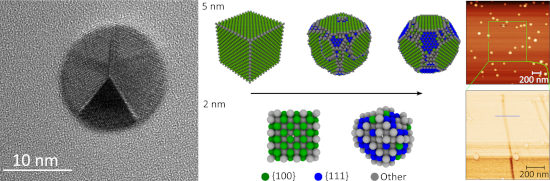
- particles became immovable again. This effect was attributed to the diffusion of Au into the Si substrate and to the growth of the SiO2 layer. Keywords: annealing; atomic force microscopy (AFM); Au nanoparticles; manipulation; melting; nanotribology; Introduction Gold is one of the most prominent
- ]. Due to their inert state, geometrical diversity and convenient synthesis, Au NPs are an attractive model system for nanotribological manipulation experiments [5][6][7][8][9][10][11][12] and simulations [13]. Additional flexibility is provided by the ability to tune the properties of the NPs by varying
- manipulation of the NPs was performed with a Bruker Multimode 8 AFM in the PeakForce quantitative nanoscale mechanical characteriztion (PeakForce QNM) mode using a rectangular AFM cantilever (Bruker, RTESPA-300, k = 40 N/m) with a resonance frequency of around 300 kHz. Prior to each manipulation, the samples


Bombesin receptor-targeted liposomes for enhanced delivery to lung cancer cells
Beilstein J. Nanotechnol. 2019, 10, 2553–2562, doi:10.3762/bjnano.10.246
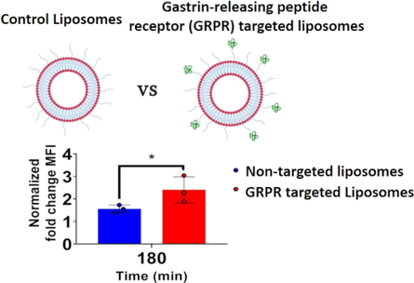
- liposomes was examined using two different approaches. To examine this, we exploited a GRPR overexpression construct transfected into the widely used, adherent non-SCLC cell line A549. This model grows more rapidly than SCLC cells and its adherent phenotype allows for easier manipulation. First

Multiple Fano resonances with flexible tunablity based on symmetry-breaking resonators
Beilstein J. Nanotechnol. 2019, 10, 2459–2467, doi:10.3762/bjnano.10.236
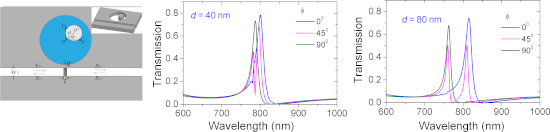
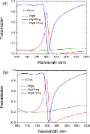
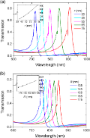
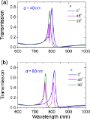
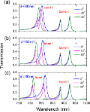
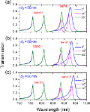
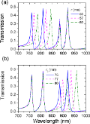
- -breaking ring cavity is proposed. Discrete states are obtained in the same cavity without exciting high-order cavity modes. Because of the equal mode order, the interval of the resonant frequency is reduced. The manipulation of Fano resonances is further discussed by adjusting the degree of asymmetry. More




A novel method to remove impulse noise from atomic force microscopy images based on Bayesian compressed sensing
Beilstein J. Nanotechnol. 2019, 10, 2346–2356, doi:10.3762/bjnano.10.225
- Yingxu Zhang Yingzi Li Zihang Song Zhenyu Wang Jianqiang Qian Junen Yao School of Instrumentation and Optoelectronic Engineering, Beihang University, Beijing 100191, China Key Laboratory of Micro-nano Measurement-Manipulation and Physics (Ministry of Education), Beihang University, Beijing 100191


Liquid crystal tunable claddings for polymer integrated optical waveguides
Beilstein J. Nanotechnol. 2019, 10, 2163–2170, doi:10.3762/bjnano.10.209
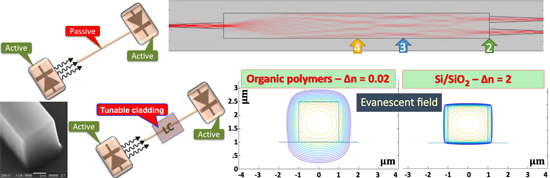
- cladding refractive index. For example, modifying the effective length from E to D or to F would change power splitting from 50:50 to 100:0 or 0:100, respectively. The same result would be obtained shifting from C to B or D. However, the manipulation of optical lengths with variable core or cladding


Nitrogen-vacancy centers in diamond for nanoscale magnetic resonance imaging applications
Beilstein J. Nanotechnol. 2019, 10, 2128–2151, doi:10.3762/bjnano.10.207
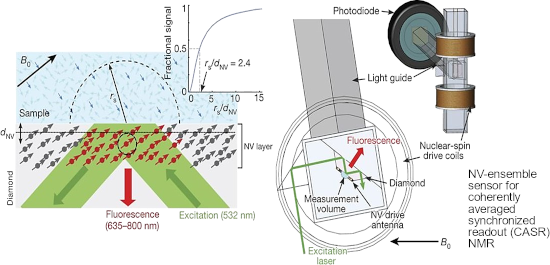
- (NV−). Room temperature manipulation of electron spins at the NV centers by means of magnetic or electric field, microwave or light irradiation, or a combination thereof, allows the generation of sharp resonances in the intensity and wavelength of the NV photoluminescence. The origin of these
- using complex spin manipulation sequences. This approach results in the best achievable sensitivity of magnetic field sensing based on this atomic sensor. Alternatively, a high concentration of NV centers are formed close to the surface of bulk diamond using delta-doping techniques, and in this case
- magnetic field gradient, the Zeeman split between the |±1⟩ states in individual NV centers becomes position-dependent and gets a specific microwave resonance frequency, allowing for individual manipulation. To prove site-selective NV center addressing by frequency encoding, ODMR measurements are performed


Review of advanced sensor devices employing nanoarchitectonics concepts
Beilstein J. Nanotechnol. 2019, 10, 2014–2030, doi:10.3762/bjnano.10.198
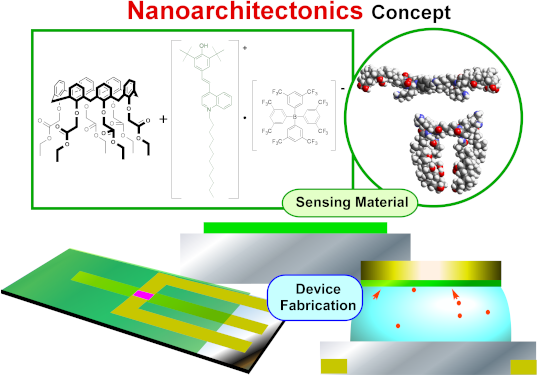
- by Masakazu Aono [54][55]. This conceptual methodology corresponds to the creation of functional materials from nanoscale units through combined processes, including organic synthesis, atomic/molecular manipulation, self-assembly, self-organization, stimuli-based arrangement, and biological treatment
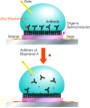
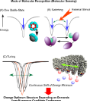
- size events, enabling the manipulation of molecular receptors by macroscopic motion. Adapted with permission from [51] copyright 2015, The Royal Society of Chemistry. Mode of molecular recognition and sensing: (A) one most stable state between guest and host; (B) switching molecular binding by external





Nanoarchitectonics meets cell surface engineering: shape recognition of human cells by halloysite-doped silica cell imprints
Beilstein J. Nanotechnol. 2019, 10, 1818–1825, doi:10.3762/bjnano.10.176
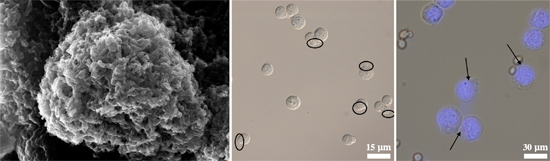
- directed fabrication of functional materials [1]. It widely employs atom and molecule manipulation and self-organisation of nanoscale particles [2]. Engineering of cell surfaces with various nanoscale materials has been recognised as a powerful means to attenuate the intrinsic properties of microbial and


The impact of crystal size and temperature on the adsorption-induced flexibility of the Zr-based metal–organic framework DUT-98
Beilstein J. Nanotechnol. 2019, 10, 1737–1744, doi:10.3762/bjnano.10.169
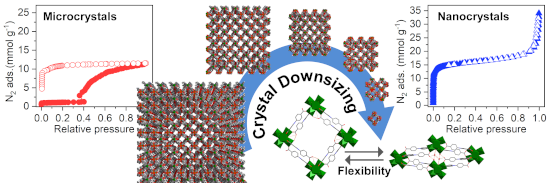
- examples progressively illustrate the manipulation of the adsorption properties of switching adsorbents by variation of size [9][10][11][12][13] and morphology [14] of the crystals, without changing the composition of the MOF. The reports on the MOF MIL-53 indicate an impact of crystal morphology and size



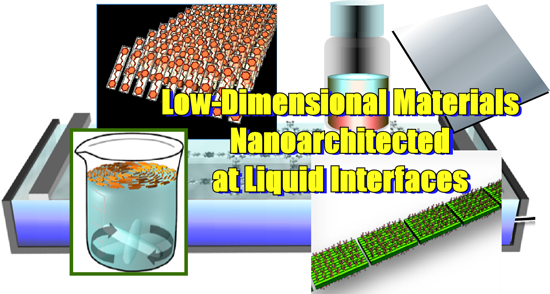
Materials nanoarchitectonics at two-dimensional liquid interfaces
Beilstein J. Nanotechnol. 2019, 10, 1559–1587, doi:10.3762/bjnano.10.153
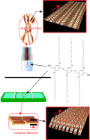
- synthesis, physical materials control, supramolecular chemistry, and biology [92][93][94]. In this concept, materials and systems can be engineered through the manipulation of atoms and molecules, self-assembly and self-organization, and field-controlled organization (Figure 2). Unlike the well-established
- ], environmental protection [118][119], catalysts [120][121], biology [122][123][124], and biomedical applications [125][126]. For example, the following recent research works on low-dimensional materials have been carried out using the nanoarchitectonics concept: Hasegawa and co-workers used atom-manipulation
- -dimensional CuO petal assemblies (by Abe and co-workers [133]), perovskite nanosheets and their layer-by-layer assemblies as high-k dielectric/ferroelectric materials (by Osada and Sasaki [134]), the manipulation of transition-metal dichalcogenides nanosheets for the usage in energy storage/conversion













Molecular attachment to a microscope tip: inelastic tunneling, Kondo screening, and thermopower
Beilstein J. Nanotechnol. 2019, 10, 1243–1250, doi:10.3762/bjnano.10.124
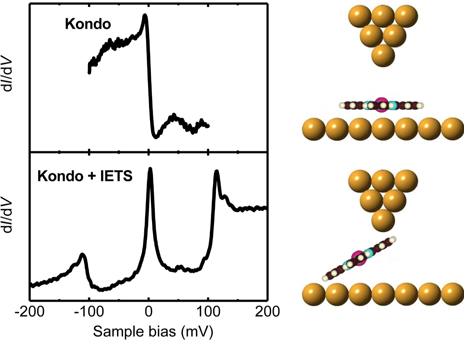
- microsope (STM) and a surface are investigated by combining the local manipulation capabilities of the STM with inelastic electron tunneling spectroscopy. By attachment of the molecule to the probe tip, the intrinsic physical properties similar to those exhibited by a free standing molecule become


Tailoring the stability/aggregation of one-dimensional TiO2(B)/titanate nanowires using surfactants
Beilstein J. Nanotechnol. 2019, 10, 1024–1037, doi:10.3762/bjnano.10.103
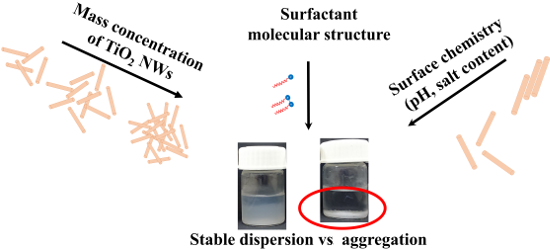
- affected by media composition, TNW mass concentration, molecular structure and concentration of surfactants. 12-2-12 was a better choice for the manipulation of the TNW stability/aggregation under the given conditions. Therefore, it can be concluded that lower concentrations of 12-2-12 can be used either


Capillary force-induced superlattice variation atop a nanometer-wide graphene flake and its moiré origin studied by STM
Beilstein J. Nanotechnol. 2019, 10, 804–810, doi:10.3762/bjnano.10.80
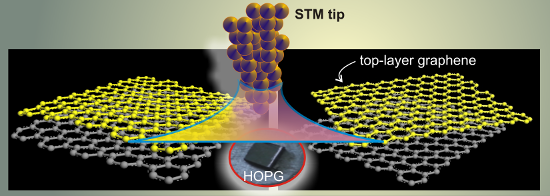
- STM manipulation of folding of graphene under UHV conditions [30], although tip-driven surface layer deformation may occur more easily in air than in vacuum [31]. Under humid or liquid conditions, capillary forces are present and might offer a substantial amount of force for rotation or translation of
- the rotation of the flake. Conclusion A modification of the superlattice on a nanometer-wide graphene flake has been achieved by STM manipulation using the capillary forces at play at a graphite–liquid interface. The calculated periodicities and orientations of the initial and final lattices are in


The effect of translation on the binding energy for transition-metal porphyrines adsorbed on Ag(111) surface
Beilstein J. Nanotechnol. 2019, 10, 706–717, doi:10.3762/bjnano.10.70
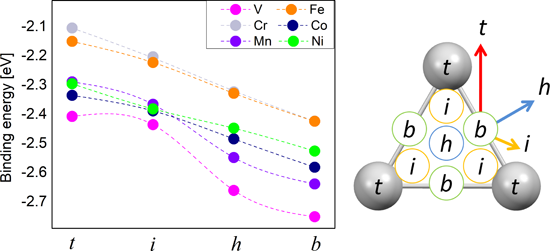
- that Kondo effect of organo-metallic compounds adsorbed on coinage metals is sensitive to the manipulation of the chemical bonds [73][74]. The Kondo effect in Co-porphyrins on Au(111) can be switched on or off by binding a NO group to the molecule [73]. Also, the changes in molecular conformation can
- environment of the TM atom. This may result in a mechanism for the manipulation of the Kondo physics in the molecule, inspired by those commented above [73][74][75], since the changes in the dipolar effect and in the TM–surface distances may be sufficient to change the interaction mechanism between the


![[Graphic 1]](/bjnano/content/inline/2190-4286-10-70-i1.svg?max-width=637&scale=1.18182) , for all systems and relative molecule–surface positions. Right: symm...
, for all systems and relative molecule–surface positions. Right: symm...


![[Graphic 7]](/bjnano/content/inline/2190-4286-10-70-i7.svg?max-width=637&scale=1.18182) for selected TMPP systems (M = V, Mn, Co; red: positive values, blue: negative value...
for selected TMPP systems (M = V, Mn, Co; red: positive values, blue: negative value...
Sub-wavelength waveguide properties of 1D and surface-functionalized SnO2 nanostructures of various morphologies
Beilstein J. Nanotechnol. 2019, 10, 379–388, doi:10.3762/bjnano.10.37
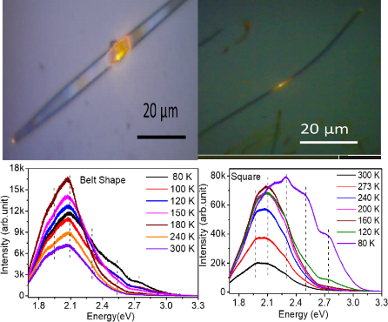
- novel route to manipulation of surface defects for the first time for waveguides. This result demonstrates a leap forward for the utility of SnO2 NWs in optoelectronics applications. Square- and cylindrical-shaped NWs were found to have a high number of in-plane oxygen vacancies in comparison to the


One-step nonhydrolytic sol–gel synthesis of mesoporous TiO2 phosphonate hybrid materials
Beilstein J. Nanotechnol. 2019, 10, 356–362, doi:10.3762/bjnano.10.35
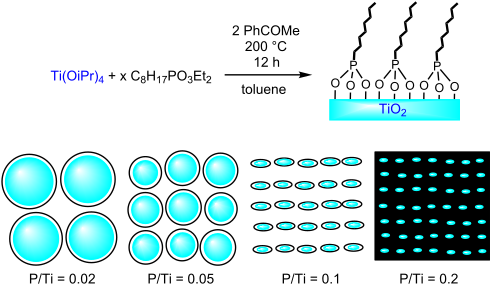
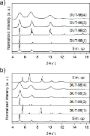
- assigned to a deformation mode of adsorbed water), and also of surface hydroxyl groups resulting from the hydrolysis of residual surface groups during washing or manipulation under air. The X-ray diffraction (XRD) patterns of TiO2 and of the hybrid samples are presented in Figure 3. The patterns of TiP0.02


Intuitive human interface to a scanning tunnelling microscope: observation of parity oscillations for a single atomic chain
Beilstein J. Nanotechnol. 2019, 10, 337–348, doi:10.3762/bjnano.10.33
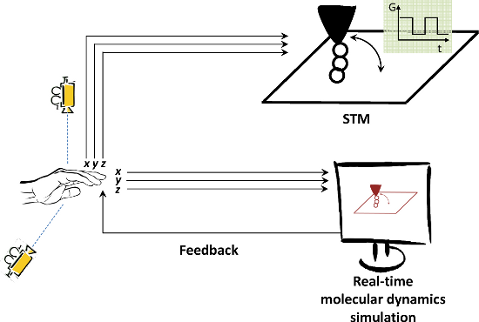
- to the motion control system that provides a continuous visual feedback to the operator during atomic manipulation. This allows the operator to become a part of the experiment and to make any adaptable tip trajectory that could be useful for atomic manipulation in three dimensions. The strength of
- to ascertain previously. We also show here a new geometric procedure to infer the adatom positions and therefore information about the substrate atoms, which are not easily visible on clean metallic surfaces such as gold. This method enables a new controlled atom manipulation technique, which we will
- . Scanning tunnelling microscopy bestows us with the capability not only to image single atoms and molecules when they are deposited on a conducting surface but also to study electronic transport through these entities [1][2]. However, during atomic and molecular manipulation operations it is not possible to