


Search results
Search for "micelles" in Full Text gives 117 result(s) in Beilstein Journal of Nanotechnology.
Nanocrystalline ZrO2 and Pt-doped ZrO2 catalysts for low-temperature CO oxidation
Beilstein J. Nanotechnol. 2017, 8, 264–271, doi:10.3762/bjnano.8.29
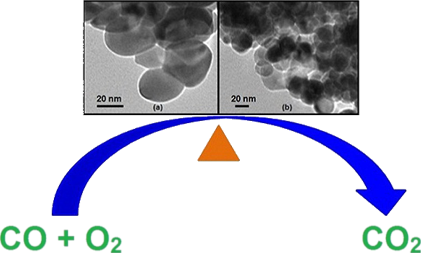
- nanoparticles such as sol–gel [21], precipitation [22], combustion [23], hydrothermal synthesis [24], solvothermal synthesis [25], reverse micelles [26], chemical vapor synthesis [27], aerosol pyrolysis [28], and sonochemical synthesis [29]. Dongare et al. [30] described the synthesis of ZrO2 by a sol–gel


A dioxaborine cyanine dye as a photoluminescence probe for sensing carbon nanotubes
Beilstein J. Nanotechnol. 2016, 7, 1991–1999, doi:10.3762/bjnano.7.190
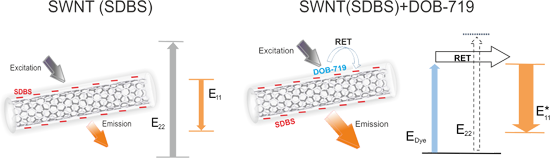
- the PL detection towards the nanotube diameters. The energy diagram shown at the right-hand side of Figure 2a represents a two-component system consisting of the anionic surfactant SDBS and the SWNTs in water, where the anionic surfactant forms micelles around the nanotubes having typical exciton
- mixture at micellar concentration of SDBS does not exhibit new bands in the range of 700–780 nm (in absorption and PL excitation). Thus, no RET from DOB-719 is possible when the micelles of SDBS fully cover the SWNTs. This shows another dissimilarity of the studied system in comparison with SWNT–SDBS
- 735 nm can be used for PL detection of SWNTs in aqueous environment. In the mixture of DOB-719 and SWNTs, the monomeric dye molecules were either in free form and degraded severely, or associated in a complex with the SWNT micelles and became more stable. Thus, the interaction between DOB-719 and the


Antitumor magnetic hyperthermia induced by RGD-functionalized Fe3O4 nanoparticles, in an experimental model of colorectal liver metastases
Beilstein J. Nanotechnol. 2016, 7, 1532–1542, doi:10.3762/bjnano.7.147
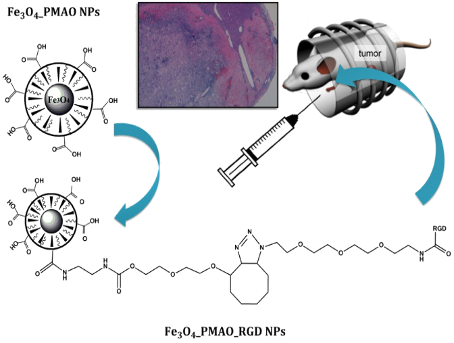
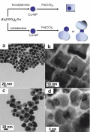
- -water micelles, encapsulating iron oxide nanocrystals inside them. The monomeric units of maleic anhydride are easily hydrolyzed to form carboxylic groups, becoming hydrosoluble. Besides, the conjugation of carboxylates to a linker containing both an amino and a triple bond group generates an


Polystyrene-block-poly(ethylene oxide) copolymers as templates for stacked, spherical large-mesopore silica coatings: dependence of silica pore size on the PS/PEO ratio
Beilstein J. Nanotechnol. 2016, 7, 1454–1460, doi:10.3762/bjnano.7.137
- critical micellar concentration, CMC) amphiphiles can spontaneously self-organize into well-defined supramolecular aggregates (host) which can be classified as normal and reverse micelles, emulsions, vesicles or liquid crystal phases and can shape or pattern other materials (guest), forming spherical
- concentration dependent. In addition to the amphiphile concentration, the morphology and size of both micelles and micellar aggregates also depend on other solution parameters, such as the type of solvents, the solvent/nonsolvent ratio, the presence of additives, and on molecular parameters, such as the
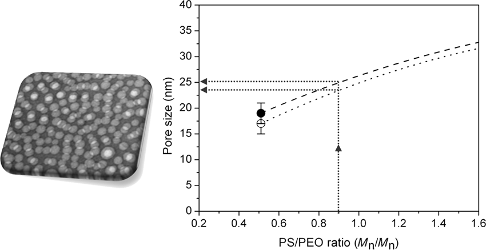
- films. Thus, by fixing the TEOS/PS-b-PEO weight ratio of the micellar solutions in order to get spherical micelles (that is for TEOS/PS-b-PEO weight ratios of 95/5 or 93/7), we studied the effect of the PS/PEO ratio on the pore size of the templated silica films. Results and Discussion Hybrid TEOS/block


Multiwalled carbon nanotube hybrids as MRI contrast agents
Beilstein J. Nanotechnol. 2016, 7, 1086–1103, doi:10.3762/bjnano.7.102
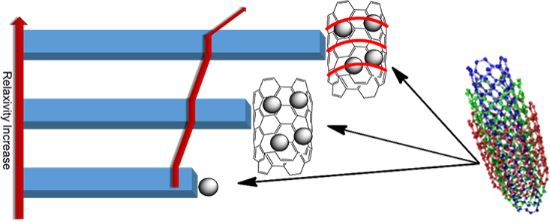
- surfactants seem to enable such water interactions. On the contrary, ionic surfactants tend to form micelles that limit access for the water molecules. Therefore, the results of the SWCNT studies give a general idea of the impact of surfactants on the relaxivity results. When comparing solely r2 measured in



Orientation of FePt nanoparticles on top of a-SiO2/Si(001), MgO(001) and sapphire(0001): effect of thermal treatments and influence of substrate and particle size
Beilstein J. Nanotechnol. 2016, 7, 591–604, doi:10.3762/bjnano.7.52
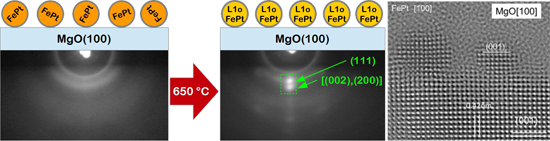
- particle size, distance and arrangement [11]. Since this preparation is almost independent of the substrate, we successfully deposited the well-separated NPs on a-SiO2/Si(001), sapphire(0001) and magnesium oxide MgO(001). In brief, reverse micelles were formed using a commercial diblock-copolymer (PS-P2VP
- ) solved in water-free toluene and loaded by Zeise’s salt K[PtCl3(C2H4)]·H2O and FeCl2 or FeCl3 in the appropriate ratio for equiatomic FePt NPs. All chemicals were used as received. A self-assembled close-packed monolayer of precursor-loaded micelles forms on the substrates by dip coating at a typical
- velocity of 15 mm/min [11][30]. These deposited precursor-loaded micelles are transformed into FePt NPs by a combination of oxygen and hydrogen plasma treatments: The organic shell is removed by oxygen plasma, followed by a subsequent hydrogen plasma step, necessary to completely reduce the NPs into the


Comparison of the interactions of daunorubicin in a free form and attached to single-walled carbon nanotubes with model lipid membranes
Beilstein J. Nanotechnol. 2016, 7, 524–532, doi:10.3762/bjnano.7.46
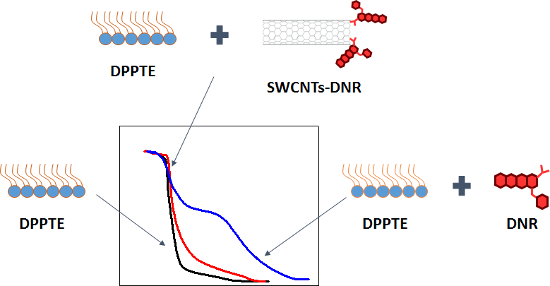
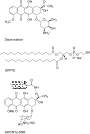
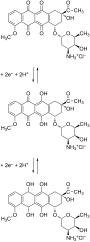
- employed in case of other DDS such as biodegradable polymers, which co-assemble into composite micelles [10]. Another type of common drug carriers includes nanoparticles. Magnetic Fe3O4 nanoparticles are often employed because they give possibility to control the transport by applying external magnetic




Two step formation of metal aggregates by surface X-ray radiolysis under Langmuir monolayers: 2D followed by 3D growth
Beilstein J. Nanotechnol. 2015, 6, 2406–2411, doi:10.3762/bjnano.6.247
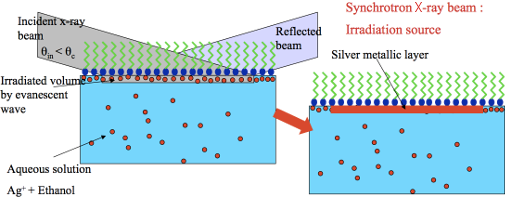
- place around the organic templates. We have previously applied this strategy to a spherical and a planar geometry. In the first case, we observed the formation of silver nanoshells upon irradiation of an aqueous solution of linoleic acid micelles that contained silver ions [6][7]. In the latter case, we


Selective porous gates made from colloidal silica nanoparticles
Beilstein J. Nanotechnol. 2015, 6, 2105–2112, doi:10.3762/bjnano.6.215
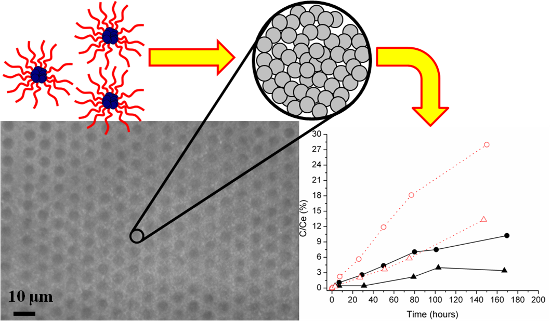
- solution are able to form various types of aggregates, such as micelles and vesicles that can be employed to build novel nanomaterials [36][37]. Figure 1 reports the possible supramolecular organizations of amphiphiles when dissolved in solution. In particular, by changing the ratio between the silica
- brings them to spontaneously segregate in well-defined nanostructures. Therefore, when block copolymers are mixed to solvents which are selective for one of the blocks, polymer chains spontaneously aggregate into micelles having different architectures (i.e., spheres, rods, tubes, lamellae) and degree of
- reverse micellization takes place, reverse micelles can work as nanoreactors [40] and used to produce nanoparticles. Basing on our results, the reverse micellization regime definitively establishes with a TEOS/block copolymer weight ratio of 75/25 and the corresponding samples, obtained after calcination


Nanotechnology in the real world: Redeveloping the nanomaterial consumer products inventory
Beilstein J. Nanotechnol. 2015, 6, 1769–1780, doi:10.3762/bjnano.6.181
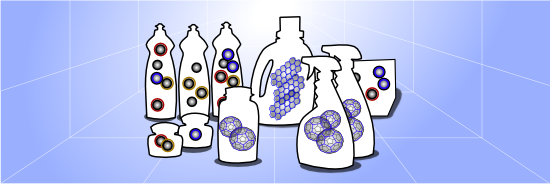
- advertising to contain metal and metal oxide nanomaterials, silicon-based nanomaterials (mostly SiO2 nanoparticles), and a variety of other nanomaterial components (organics, ceramics, polymers, clays, nanocellulose, liposomes, nano micelles, carnauba wax, etc.) have been growing in popularity. During the
- nanomaterials (CNT = carbon nanotubes). Major nanomaterial composition groups over time. Carbon = carbonaceous nanomaterials (carbon black, carbon nanotubes, fullerenes, graphene). Other = organics, ceramics, polymers, clays, nanocellulose, liposomes, nano micelles, carnauba wax, etc. Note the difference in



Analyzing collaboration networks and developmental patterns of nano-enabled drug delivery (NEDD) for brain cancer
Beilstein J. Nanotechnol. 2015, 6, 1666–1676, doi:10.3762/bjnano.6.169
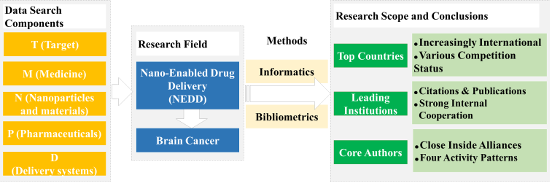
- exposure of the pharmaceutical through controlled release. Thus, NEDD provides a novel approach to medical therapy, including treatment of chronic diseases and genetic disorders [5]. At the present, various kinds of nanoparticles have been developed as drug carriers, such as liposomes, micelles, polymeric


Tailoring the ligand shell for the control of cellular uptake and optical properties of nanocrystals
Beilstein J. Nanotechnol. 2015, 6, 232–242, doi:10.3762/bjnano.6.22
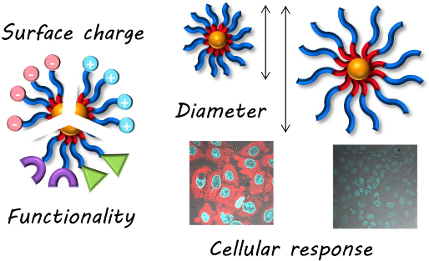
- and specificity in a broad in vitro test is demonstrated. Keywords: biolable; cellular uptake; fluorescence quenching; poylmeric micelles; quantum dots; Introduction One of the main challenges in using high quality nanoparticles for biological applications is to ensure that the ligand system
- solvents, which are selective for only one of the blocks [7]. The formation of polymeric vesicles (polymerosomes) and spherical micelles is an interesting tool for the encapsulation of hydrophobic nanoparticles and since the critical micelle concentration (CMC) is comparatively low [8][9], a high stability
- -assembled vesicles and micelles in water, depending on the chosen block length ratio [19]. The high amount of present double bonds in the micelle core offers the possibility of radically initiated cross-linking of the structures or even microemulsion polymerizations to produce very dense capsules. Review






The distribution and degradation of radiolabeled superparamagnetic iron oxide nanoparticles and quantum dots in mice
Beilstein J. Nanotechnol. 2015, 6, 111–123, doi:10.3762/bjnano.6.11
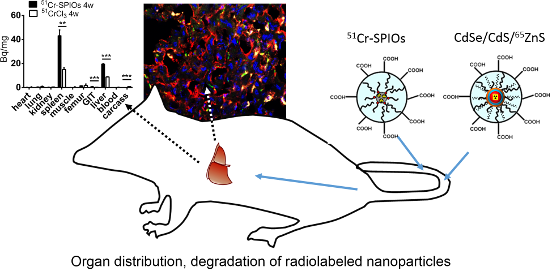
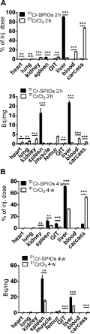
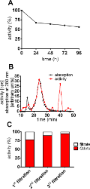
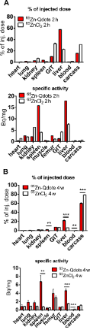
- -coated SPIOs or from oleic acid-stabilized, lipophilic SPIOs embedded in lipid micelles (Figure 5B, “nanosomes”). The measured 51Cr values were significantly lower (p < 0.01) as compared to a trace dose of orally administered, aqueous CrCl3, indicating that only a very limited amount (<0.05%) of the
- administered dose from intact particles can be absorbed in the intestinal tract. This excludes a relevant, unspecific particle uptake in the intestinal tract, at least for particles of this type (size, charge). It should be noted that the results obtained with lipid micelles are also relevant for the field of
- dietary fat absorption in the intestinal tract, and would support the classical view of fatty acid absorption from micelles formed in the gastrointestinal tract after food intake. The action of bile acids and pancreas lipase would first produce free fatty acids or monoglycerides, but obviously does not





Synthesis and characterization of fluorescence-labelled silica core-shell and noble metal-decorated ceria nanoparticles
Beilstein J. Nanotechnol. 2014, 5, 2413–2423, doi:10.3762/bjnano.5.251
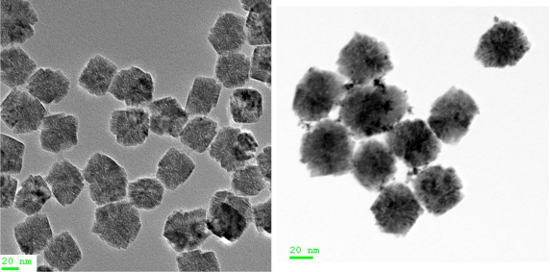
- -derived BPD dye can be immobilized in a polyorganosiloxane network which in turn could be isolated by a silica shell. This is indeed possible. We modified existing procedures [24][25][26][27] for the slow co-hydrolysis of methyltrimethoxysilane and dimethyldiethoxysilane in the presence of BPD in micelles
- incorporated is, however, limited. It seems that the very large BPD molecules do not easily enter the micelles where the polyorganosiloxane network is formed, but tend to precipitate from the aqueous reaction mixture. The average number of dye molecules in the core can be estimated by the same photometric
- groups. A common feature of all dyes which failed is their cationic nature. We therefore think that they have difficulties to pass through the membrane of the micelles formed from (easily deprotonated) 4-dodecylbenzenesulfonic acid. Ceria nanoparticles Ceria (CeO2) NP do not occur in nature but are man


Inorganic Janus particles for biomedical applications
Beilstein J. Nanotechnol. 2014, 5, 2346–2362, doi:10.3762/bjnano.5.244
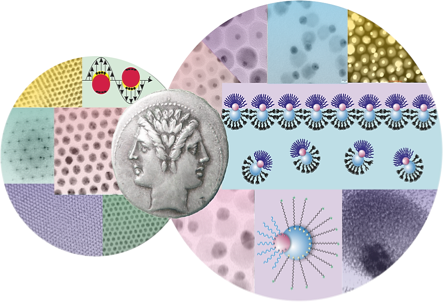
- bifunctional or multi-dentate ligands/polymers or the formation of amphiphilic micelles while maintaining the original hydrophobic ligand shell. However, all these strategies suffer from the assumption that the ligand coating is neither densely packed nor static with regards to ligand exchange when the






Anticancer efficacy of a supramolecular complex of a 2-diethylaminoethyl–dextran–MMA graft copolymer and paclitaxel used as an artificial enzyme
Beilstein J. Nanotechnol. 2014, 5, 2293–2307, doi:10.3762/bjnano.5.238
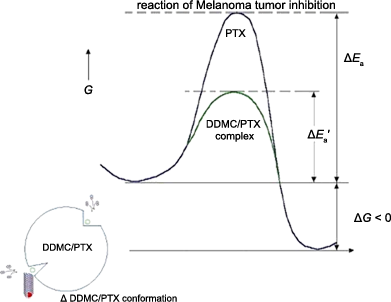
- represent an outstanding drug delivery method [1][2][3]. Recent detailed research of Maysinger et al. measuring the intracellular distribution of fluorescently labeled polymer micelles by using confocal laser scanning microscopy has shown the effect of a drug administered with a polymer DDS. As for polymer
- micelles carrying a drug, they have been shown to be transported to and act on not only endosomes and lysosomes but also the Golgi body and mitochondria [4]. A block copolymer micelle can be used to deliver a hydrophobic drug as a nanocarrier with water-soluble biological affinity. Knowledge of the
- cellular distribution of micelles is required to enable the selective delivery of a drug to a specific target at the subcellular level [4]. By means of triple-labeling confocal microscopy of living cells, Savic et al. identified the exact cellular targets of block copolymer micelles, i.e., several


Influence of stabilising agents and pH on the size of SnO2 nanoparticles
Beilstein J. Nanotechnol. 2014, 5, 2192–2201, doi:10.3762/bjnano.5.228
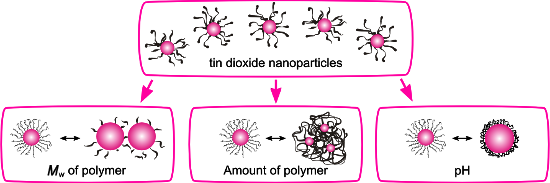
- were obtained by combining a spray pyrolysis method and annealing carried out under atmospheric pressure. The subject of the synthesis of SnO2 nanoparticles in aqueous solution rarely occurs in the literature. SnO2 colloidal synthesis in cetyltrimethylammonium bromide (CTAB) micelles (where tin
- metal oxides occurring in polymeric micelles [20]. The second theory, although less popular, describes the stabilisation of polymers by molecules that results from the polymerisation of monomers which occur in the presence of nanoparticles. In this article, synthetic polymers were used as stabilisers
- particles attach to the polymer chain and do not form micelles. In contrast, when the concentration is increased to the critical micelle concentration (CMC) point, the micelles are formed in the solution and bind to the active groups of the polymer. Upon further increase of the amount of Triton, the polymer


Biopolymer colloids for controlling and templating inorganic synthesis
Beilstein J. Nanotechnol. 2014, 5, 2129–2138, doi:10.3762/bjnano.5.222
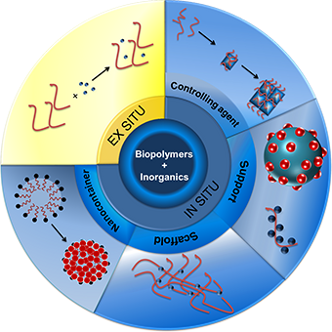
- , micelles, and vesicles, and on the other hand continuous scaffolds generated by gelling biopolymers. Keywords: biomacromolecules; biopolymer; colloid; nanoparticle; organic–inorganic hybrid; template; Introduction During the natural synthesis of inorganic matter in living organisms, referred to as
- “soft templates”, two subgroups can be considered: (C1) Biopolymer-stabilized spherical geometries (stabilized droplets, micelles, and vesicles) that confine the inorganic formation. (C2) Biopolymer structures acting as “scaffolds”, with more complex geometries than simple spheres. This is typically the
- as “soft templates” C1. Biopolymer-stabilized simple geometries (droplets, micelles, and vesicles): Surface-active polymers can assemble in solution and in heterophase systems to form defined geometries, most typically spherical, such as micelles, vesicles, or even stabilized droplets. As in the case


The impact of the confinement of reactants on the metal distribution in bimetallic nanoparticles synthesized in reverse micelles
Beilstein J. Nanotechnol. 2014, 5, 1966–1979, doi:10.3762/bjnano.5.206
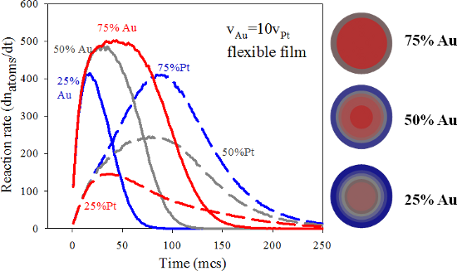
- the chemical reduction rate, but also on the intermicellar exchange rate. Furthermore, intermicellar exchange causes the accumulation of slower precursors inside the micelles, which favors chemical reduction. As a consequence, slower reduction rates strongly correlate with the number of reactants in
- this confined media. On the contrary, faster reduction rates are limited by the intermicellar exchange rate and not the number of reactants inside the micelles. As a result, different precursor proportions lead to different sequences of metal reduction, and thus the arrangement of the two metals in the
- the same micelle due to micelle collisions and coalescence. The chemical reaction can then take place to form precipitates of nanometric size, which remain confined to the interior of reverse micelles. This approach has been used to prepare a variety of nanomaterials [6][11][12][13][14][15] that often


Towards bottom-up nanopatterning of Prussian blue analogues
Beilstein J. Nanotechnol. 2014, 5, 1933–1943, doi:10.3762/bjnano.5.204
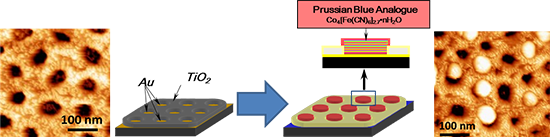
- samples resulting from this first step and corresponding to the different thicknesses are called Au10, Au20 and Au50 in the following (see below in Table 1). The second step is the deposition by dip-coating of an ethanolic solution of titanium molecular species containing block copolymers micelles that


Non-covalent and reversible functionalization of carbon nanotubes
Beilstein J. Nanotechnol. 2014, 5, 1675–1690, doi:10.3762/bjnano.5.178
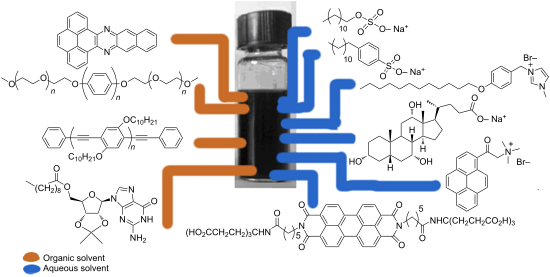
- 18 carbon atoms (NTA) do arrange into half-cylinders oriented parallel to the tube axis (see Figure 3, arrangement A) highlighting the crucial role of supramolecular assembling for CNT-dispersant interactions. The environment of nanotubes in SDS micelles was modeled also by O’Connell et al. [64
- ] through molecular dynamics simulations run for 0.4 ns. The nanotube represented the core of a SDS cylindrical micelles were the hydrophobic tails of SDS molecules could adopt a wide range of orientations with respect to the tube (see Figure 3, arrangement B). As no water density was observed in the
- induced by the surfactant micelles on large colloidal particles. Examples of polymers that favor CNTs dispersion in water are countless. This review is not intended to list all of the investigated polymers, nevertheless it is worth mentioning that the majority of polymers and block copolymers have been



In vitro interaction of colloidal nanoparticles with mammalian cells: What have we learned thus far?
Beilstein J. Nanotechnol. 2014, 5, 1477–1490, doi:10.3762/bjnano.5.161
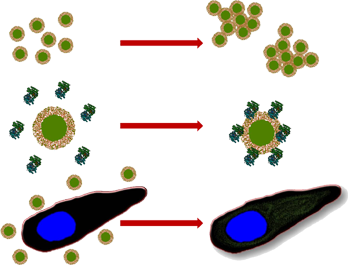
- to positively charged NPs [121][122]. iii) Lipids present in membranes or second-messenger lipids wrap around NPs driven by hydrophilic/hydrophobic interaction and often result in formation of micelles [123][124]. iv) Thiols, present in glutathione or reduced proteins bind to the surface of noble


The cell-type specific uptake of polymer-coated or micelle-embedded QDs and SPIOs does not provoke an acute pro-inflammatory response in the liver
Beilstein J. Nanotechnol. 2014, 5, 1432–1440, doi:10.3762/bjnano.5.155
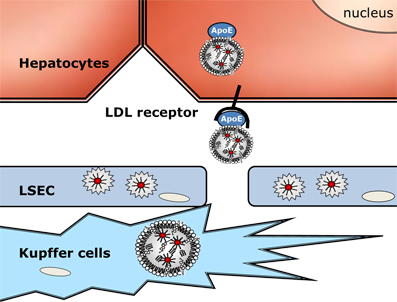
- an important entry route into the human body. Therefore, it is crucial to investigate biological responses of the body to nanocrystals to avoid harmful side effects. In recent years, we established a system to embed nanocrystals with a hydrophobic oleic acid shell either by lipid micelles or by the
- type mice, we show that 30 min after injection polymer-coated nanocrystals are primarily taken up by liver sinusoidal endothelial cells. In contrast, by using wild type, Ldlr-/- as well as Apoe-/- mice we show that nanocrystals embedded within lipid micelles are internalized by Kupffer cells and, in a
- haemolysis or nanoparticle uptake [13][14]. In most studies so far, complex surface modification was carried out to achieve water-solubility of hydrophobic QDs or SPIOs [15][16]. Another way to make nanocrystals hydrophilic is the embedding of QDs or SPIOs into the core of lipid micelles [17][18][19]. After


Model systems for studying cell adhesion and biomimetic actin networks
Beilstein J. Nanotechnol. 2014, 5, 1193–1202, doi:10.3762/bjnano.5.131
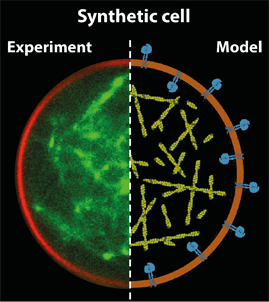
- confirmed by specific binding to fibrinogen [33]. Triton X-100 is another detergent that is widely used for the reconstitution of numerous membrane proteins into liposomes since the 1980s [32][35][36]. This detergent has the tendency to form large micelles, which cannot be removed by dialysis. An efficient
- proteins like bacteriorhodopsin and the ferrichrome transport protein FhuA into GUVs with lipid mixtures representative of cellular plasma membranes [51]. Reconstitution was either performed with proteins solubilised in detergent micelles, with proteoliposomes or purified native membranes. This method


Nanodiamond-DGEA peptide conjugates for enhanced delivery of doxorubicin to prostate cancer
Beilstein J. Nanotechnol. 2014, 5, 937–945, doi:10.3762/bjnano.5.107
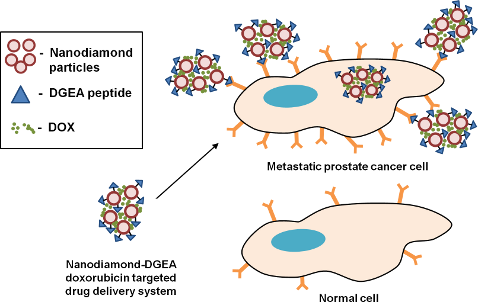
- ]. Liang et al. demonstrated that DOX-loaded micelles can efficiently use the tumor-targeting function of RGD sequence to deliver the drug into HeLa cells [38]. Tian et al. showed that iRGD exosomes delivered DOX specifically to tumor tissues and inhibited tumor growth without overt toxicity [39]. Zhou et





