


Search results
Search for "morphological changes" in Full Text gives 93 result(s) in Beilstein Journal of Nanotechnology.
Mammalian cell growth on gold nanoparticle-decorated substrates is influenced by the nanoparticle coating
Beilstein J. Nanotechnol. 2014, 5, 2479–2488, doi:10.3762/bjnano.5.257
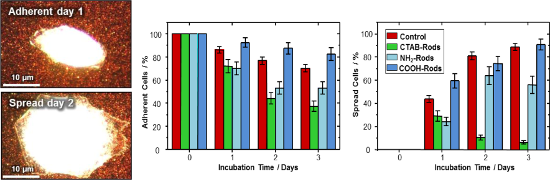
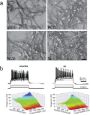
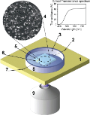
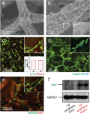
- , non-invasive biosensor, which permits the monitoring of morphological changes of living cells acting as dielectric bodies in real time [26][27]. The method measures the complex impedance, Z, of a small working electrode and a larger counter electrode (Supporting Information File 1, Figure S3). The


Effect of silver nanoparticles on human mesenchymal stem cell differentiation
Beilstein J. Nanotechnol. 2014, 5, 2058–2069, doi:10.3762/bjnano.5.214
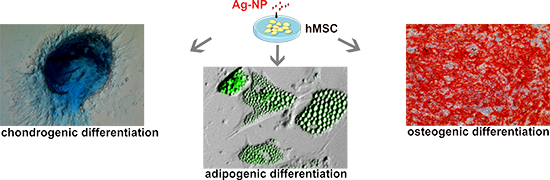
- (Figure 3B) or 1.0 µg·mL−1 Ag+ ions (Figure 3D) revealed no significant morphological changes compared with cells cultured without silver (Figure 3C). However, a large decrease in the number of formed lipid droplets was observed in the presence of a high concentration of Ag-NP or Ag+ ions (Figure 3B and
- -NP displayed no distinct morphological changes, but a decrease in the differentiation of hMSCs (Figure 6B) in contrast to cells cultured without silver (Figure 6C) was observed. In the presence of Ag+ ions, no significant change in calcium accretion was measured (Figure 6D) in contrast to the


Rapid degradation of zinc oxide nanoparticles by phosphate ions
Beilstein J. Nanotechnol. 2014, 5, 2007–2015, doi:10.3762/bjnano.5.209
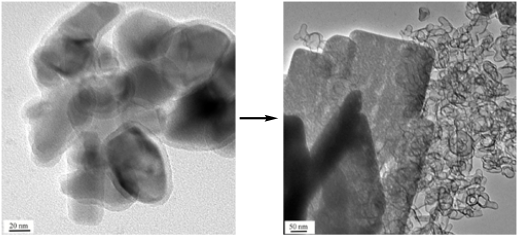
- medium is of crucial importance for biological studies of ZnO-NP. In this context, the effect of water itself must be distinguished from that of the phosphate ions. Aggregation of ZnO nanoparticles in water was attributed to partial dissolution [9]. Morphological changes of ZnO nanocrystals under the


PVP-coated, negatively charged silver nanoparticles: A multi-center study of their physicochemical characteristics, cell culture and in vivo experiments
Beilstein J. Nanotechnol. 2014, 5, 1944–1965, doi:10.3762/bjnano.5.205

- correlated with morphological changes of cells as well as biochemical reactions in cellular media, such as changes in the intracellular distribution of Ca2+ during apoptosis. Such investigations require spectroscopic methods which permit high resolution imaging combined with selective probing. Imaging by
- thick (up to 10 µm) and wet samples can be studied. In spite of these advantages, the number of available setups is limited, so that STXM has only been applied to a small number of biological or biomedical samples in the past, including the investigation of local morphological changes in cells [75]. We
- were identified in the nucleus [76]. Within the resolution of STXM no morphological changes of the cells were found. The particles that were taken up into the cells appear to be slightly aggregated or at least associated to larger units (see Figure 5B in comparison to particles imaged by TEM or STXM


Imaging the intracellular degradation of biodegradable polymer nanoparticles
Beilstein J. Nanotechnol. 2014, 5, 1905–1917, doi:10.3762/bjnano.5.201
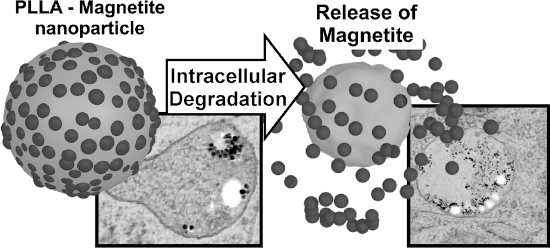
- detected at 680–750 nm). Transmission electron microscopy (TEM) TEM was performed to precisely localize the intracellular particles and characterize morphological changes. For preparation, cells were seeded out in a 24-well plate (Greiner, Germany) containing three sapphire disks, surface C-coated. Cells
- MSCs), the uptake of PLLA/magnetite NPs in the cells does not lead to any morphological changes of the cells over the whole observation period. Cell morphology is not affected by the incubation. Generally, the particles were located inside the cells. After 24 h (Figure 2A), the PLLA nanoparticles were


Synthesis of Pt nanoparticles and their burrowing into Si due to synergistic effects of ion beam energy losses
Beilstein J. Nanotechnol. 2014, 5, 1864–1872, doi:10.3762/bjnano.5.197
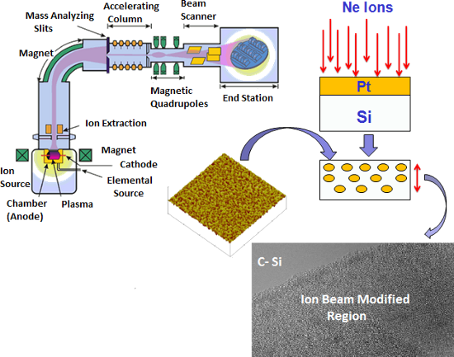
- with Se/Sn = 1 (where maximum burrowing was seen) was also performed in order to gain quantitative information, for example, particle size, depth of burrowing, etc. The morphological changes on the surfaces were studied using a multimode Nanoscope IIIa atomic force microscopy (AFM) in tapping mode. The



Carbon-based smart nanomaterials in biomedicine and neuroengineering
Beilstein J. Nanotechnol. 2014, 5, 1849–1863, doi:10.3762/bjnano.5.196
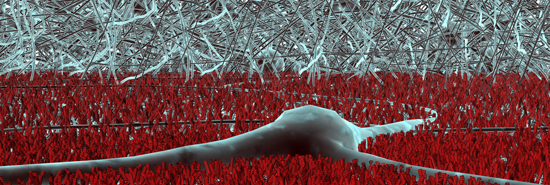
- cultures; additionally, the electrical stimulation resulted in affecting the regulation of cytoskeleton protein related to cellular mobility, such as actin, resulting in morphological changes in cellular edges. Sahni et al. [139] compared the neurite outgrowth of rat primary cortical neurons cultured on


Influence of surface-modified maghemite nanoparticles on in vitro survival of human stem cells
Beilstein J. Nanotechnol. 2014, 5, 1732–1737, doi:10.3762/bjnano.5.183
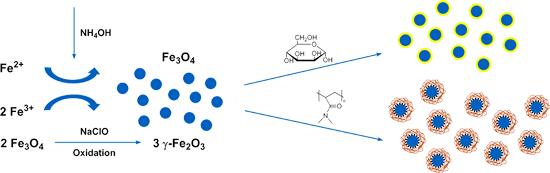
- intravenous introduction of a nanoparticle colloid was described earlier [31][32][33]. This confirmed adaptive reactions of the mouse organism. Morphological changes of the organ cells may result from the direct action of nanoparticles on the cells, or may also indirectly result from impaired microcirculation


The protein corona protects against size- and dose-dependent toxicity of amorphous silica nanoparticles
Beilstein J. Nanotechnol. 2014, 5, 1380–1392, doi:10.3762/bjnano.5.151
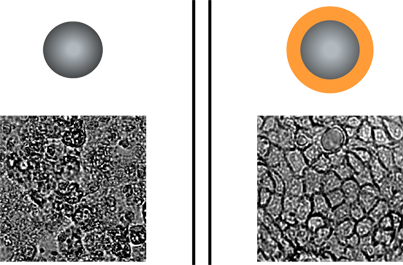
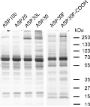
- aggregation. ASP affect cell vitality in a size- and dose-dependent manner To investigate the (patho)biological effect of the ASP, we used independent experimental approaches. As a rapid and inexpensive screening method for cytotoxicity, we first employed light microscopy to analyze morphological changes of
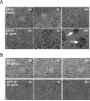
- the Caco-2 cells following exposure to the different ASP (Figure 2). Exposure to ASP30 or ASP30L under serum free conditions induced dose- and time-dependent significant morphological changes, such as loss of a structured cell shape, disruption of the monolayer, and loss of adhesion, which is
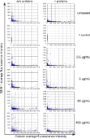
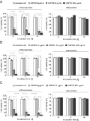
- cells served as a negative control to correct for background fluorescence. Transmission electron microscopy (TEM) images of representative ASP used in the study. Scale bar = 100 nm. Microscopy-based assessment of cell vitality by analyzing ASP-induced morphological changes. (A/B) Caco-2 morphology was




Restructuring of an Ir(210) electrode surface by potential cycling
Beilstein J. Nanotechnol. 2014, 5, 1349–1356, doi:10.3762/bjnano.5.148
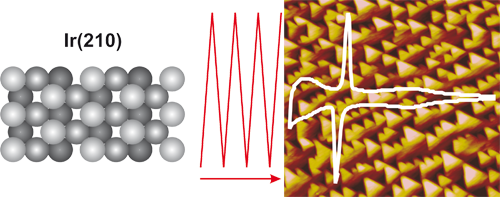
- –reduction cycles [15][16]. Thus, morphological changes between thermodynamically stable structures can be induced for example by temperature, electrode potential or specific adsorption. Unlike reconstruction phenomena, the faceting of surfaces leads to structures, which exist in the bulk lattice already. In


Model systems for studying cell adhesion and biomimetic actin networks
Beilstein J. Nanotechnol. 2014, 5, 1193–1202, doi:10.3762/bjnano.5.131
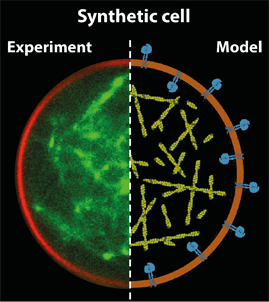
- -binding proteins, such as filamin, into GUVs of 20 μm diameter. K+ ions were introduced into the vesicles by ionophores, thus triggering actin polymerisation. This polymerisation process was observed to induce morphological changes of the initially spherical vesicles towards irregular, asymmetric shapes
- regulation of morphological changes in such synthetic cells was explained by a balance of actomyosin cortical tension and mechanical resistance to rupture [71]. For the functional encapsulation of cytoskeletal proteins into lipid vesicles high physiological salt levels are mandatory and the fabrication
- stable holes and transform into cup-shaped liposomes, which finally turned into lipid bilayers (Figure 7) [81]. Reversion of these morphological changes could be achieved by diluting talin in the surrounding medium, which resulted in the lipid bilayers to transform back into closed liposomes. In future


Enhanced photocatalytic activity of Ag–ZnO hybrid plasmonic nanostructures prepared by a facile wet chemical method
Beilstein J. Nanotechnol. 2014, 5, 639–650, doi:10.3762/bjnano.5.75
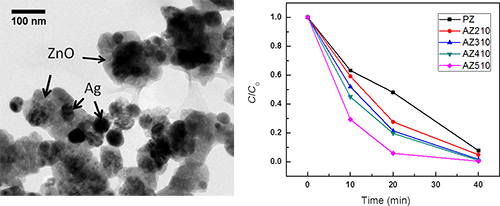
- clearly indicates that increase in the photocatalytic efficiency of the synthesized Ag–ZnO hybrid plasmonic nanostructures is mainly due to citrate-assisted morphological changes and changes in plasmonic coupling due to different level of Ag nanoparticle decoration. Beyond a threshold concentration


DNA origami deposition on native and passivated molybdenum disulfide substrates
Beilstein J. Nanotechnol. 2014, 5, 501–506, doi:10.3762/bjnano.5.58
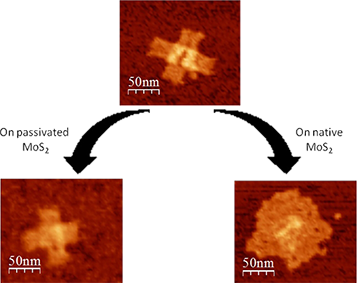
- any morphological changes in the DNA origami structure on the modified MoS2 surface in ambient environment. No significant changes were noted after 24 h and 48 h, respectively (Figure 3c and Figure 3d), indicating that the 1-pyrenemethylamine layer does not experience significant water accumulation


AFM as an analysis tool for high-capacity sulfur cathodes for Li–S batteries
Beilstein J. Nanotechnol. 2013, 4, 611–624, doi:10.3762/bjnano.4.68
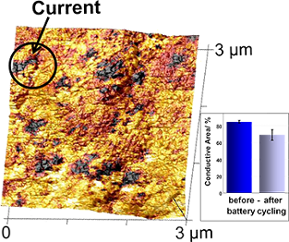
- , homogeneous, thin, and agglomeration-free cathode, which exhibited reduced structural changes during the discharge–charge cycles. Morphological changes and the stability of the electronic conductivity of the sulfur cathodes upon cycling were detected by means of SEM, material-sensitive AFM and conductive
- Li+ ions on the surface of the anode [31][32]. This time, low-order polysulfides form and settle down on the surface of the lithium anode. They cannot be oxidised back and therefore block the active sites of the anode surface [31]. As shown in Figure 2c and Figure 2d, the morphological changes upon



Mechanical and thermal properties of bacterial-cellulose-fibre-reinforced Mater-Bi® bionanocomposite
Beilstein J. Nanotechnol. 2013, 4, 325–329, doi:10.3762/bjnano.4.37
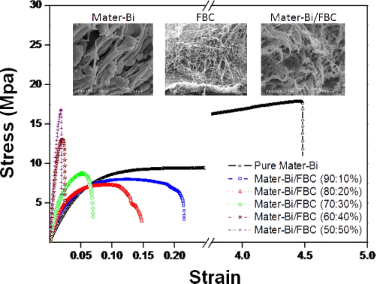
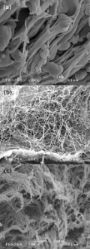
- contributes to the composite toughness. The addition of FBC into Mater-Bi containing PEVOH as plasticizer for the preparation of Mater-Bi/FBC bionanocomposites showed morphological changes on the surface, as shown in Figure 2. It can be seen that FBC is easily incorporated in the Mater-Bi matrix and gives a


The memory effect of nanoscale memristors investigated by conducting scanning probe microscopy methods
Beilstein J. Nanotechnol. 2012, 3, 722–730, doi:10.3762/bjnano.3.82
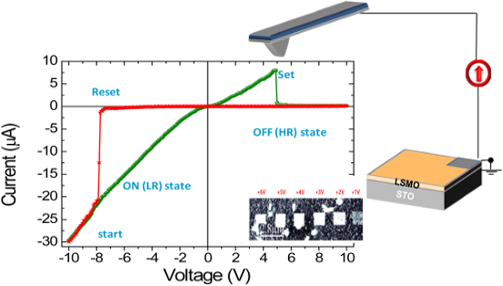
- ) Reading process at Vrd = −2V and three steps of the erasing process Ver = −3, −4 and −5 V. The conducting character of the initial LSMO is recovered after applying Ver ≈ −Vwr. (b) Series of topographic images of the erased region show that the process does not result in morphological changes. Experimental


Nano-structuring, surface and bulk modification with a focused helium ion beam
Beilstein J. Nanotechnol. 2012, 3, 579–585, doi:10.3762/bjnano.3.67
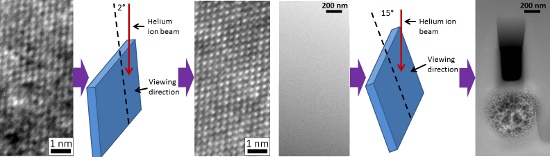
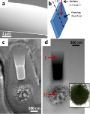
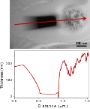
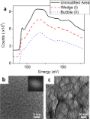
- distort the silicon. The contrast observed corresponds to regions where helium bubbles have formed and silicon has been displaced. At this point we have described the morphological changes induced by a high dose of HIM irradiation on sample 3. We then investigated the effect of the HIM modification on the


Flash laser annealing for controlling size and shape of magnetic alloy nanoparticles
Beilstein J. Nanotechnol. 2010, 1, 55–59, doi:10.3762/bjnano.1.7
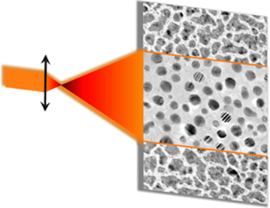
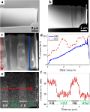
- -resolution pole piece and a PGT energy dispersive X-Ray (EDX) analyser. The morphology of as-grown CoPt NPs is shown in Figure 2a. NPs have irregular shapes elongated in the substrate plane due to coalescence processes during the synthesis. The morphological changes induced by the laser irradiation as a





