


Search results
Search for "nanosystems" in Full Text gives 95 result(s) in Beilstein Journal of Nanotechnology.
Combination of surface- and interference-enhanced Raman scattering by CuS nanocrystals on nanopatterned Au structures
Beilstein J. Nanotechnol. 2015, 6, 749–754, doi:10.3762/bjnano.6.77
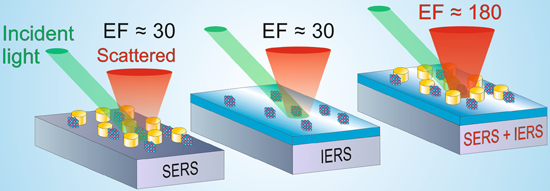
- with the Raman response of the CuS NCs of ultra-low areal density (denoted as 0.1 ML, curve 2). The 25 times enlarged fragment of curve 2 is shown for comparison. Acknowledgements The work was supported by the DFG project ZA146/22-1, DFG Research Unit 1713 “Sensoric Micro- and Nanosystems”, Russian


Electromagnetic enhancement of ordered silver nanorod arrays evaluated by discrete dipole approximation
Beilstein J. Nanotechnol. 2015, 6, 686–696, doi:10.3762/bjnano.6.69
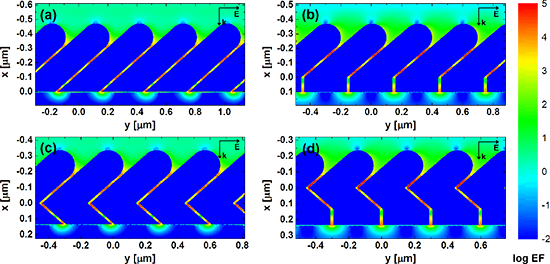
- neglected compared to the plasmonic resonance width in metal nanosystems, leading to a fourth-power dependence [26], To evaluate the EF of SERS for the nanostructures, we calculated the sum and the average of the EF within a unit cell of the periodic lattice over the available surface area except the bottom


A surface acoustic wave-driven micropump for particle uptake investigation under physiological flow conditions in very small volumes
Beilstein J. Nanotechnol. 2015, 6, 414–419, doi:10.3762/bjnano.6.41
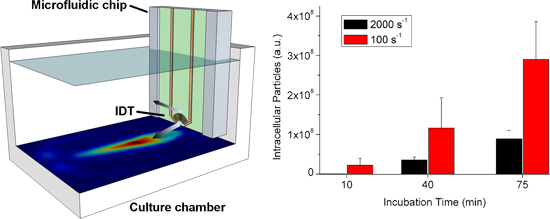
- Florian G. Strobl Dominik Breyer Phillip Link Adriano A. Torrano Christoph Brauchle Matthias F. Schneider Achim Wixforth Lehrstuhl für Experimentalphysik I, Universität Augsburg, 86159 Augsburg, Germany Nanosystems Initiative Munich NIM, Schellingstr. 4, 80799 Munich, Germany Department of


Oxygen-plasma-modified biomimetic nanofibrous scaffolds for enhanced compatibility of cardiovascular implants
Beilstein J. Nanotechnol. 2015, 6, 254–262, doi:10.3762/bjnano.6.24
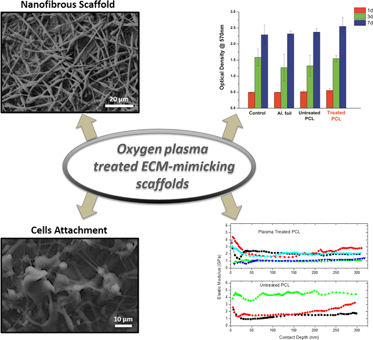
- Anna Maria Pappa Varvara Karagkiozaki Silke Krol Spyros Kassavetis Dimitris Konstantinou Charalampos Pitsalidis Lazaros Tzounis Nikos Pliatsikas Stergios Logothetidis 1Νanomedicine Group, Department of Physics, Lab for “Thin Films Nanosystems & Nanometrology” Aristotle University of Thessaloniki


Intake of silica nanoparticles by giant lipid vesicles: influence of particle size and thermodynamic membrane state
Beilstein J. Nanotechnol. 2014, 5, 2468–2478, doi:10.3762/bjnano.5.256
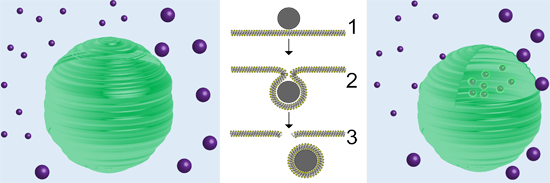
- Florian G. Strobl Florian Seitz Christoph Westerhausen Armin Reller Adriano A. Torrano Christoph Brauchle Achim Wixforth Matthias F. Schneider Lehrstuhl für Experimentalphysik I, Universität Augsburg, 86159 Augsburg, Germany Nanosystems Initiative Munich NIM, Schellingstr. 4, 80799 München


Electrical contacts to individual SWCNTs: A review
Beilstein J. Nanotechnol. 2014, 5, 2202–2215, doi:10.3762/bjnano.5.229
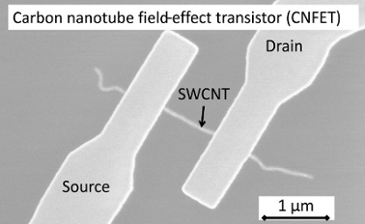
- Wei Liu Christofer Hierold Miroslav Haluska Micro and Nanosystems, Department of Mechanical and Process Engineering, ETH Zurich, CH-8092 Zurich, Switzerland 10.3762/bjnano.5.229 Abstract Owing to their superior electrical characteristics, nanometer dimensions and definable lengths, single-walled


Advances in NO2 sensing with individual single-walled carbon nanotube transistors
Beilstein J. Nanotechnol. 2014, 5, 2179–2191, doi:10.3762/bjnano.5.227
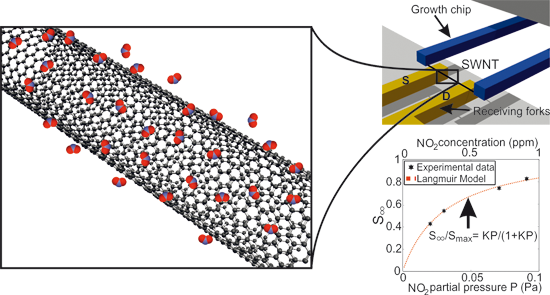
- Kiran Chikkadi Matthias Muoth Cosmin Roman Miroslav Haluska Christofer Hierold Micro and Nanosystems, Department of Mechanical and Process Engineering, ETH Zurich, Switzerland 10.3762/bjnano.5.227 Abstract The charge carrier transport in carbon nanotubes is highly sensitive to certain molecules


Properties of plasmonic arrays produced by pulsed-laser nanostructuring of thin Au films
Beilstein J. Nanotechnol. 2014, 5, 2102–2112, doi:10.3762/bjnano.5.219
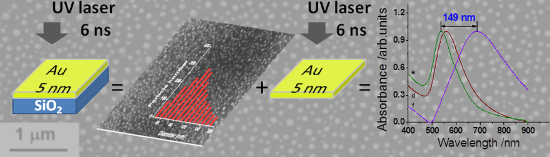
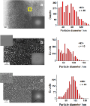
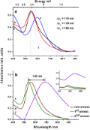
- to diffraction was observed [15]. Properties of the Au, Ag, and Cu nanostructures and also bi-metal nanosystems (known for broader tunability) such as Au/Ag and Au/Ni were reported in a number of papers where the keyword “laser nanostructuring” (or annealing) is used rather than “laser dewetting” [16


Precise quantification of silica and ceria nanoparticle uptake revealed by 3D fluorescence microscopy
Beilstein J. Nanotechnol. 2014, 5, 1616–1624, doi:10.3762/bjnano.5.173
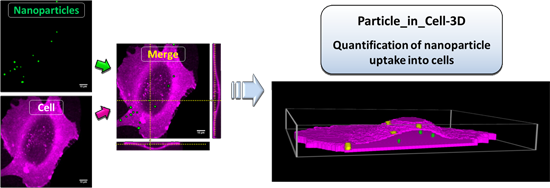
- different (**p < 0.01) for 72 h. Acknowledgements The study was supported by the German Research Foundation, project SPP1313, cluster NPBIOMEM and by the Nanosystems Initiative Munich. Silica and ceria nanoparticles were kindly synthesized and provided by R. Herrmann (Department of Physics, University of


Antimicrobial nanospheres thin coatings prepared by advanced pulsed laser technique
Beilstein J. Nanotechnol. 2014, 5, 872–880, doi:10.3762/bjnano.5.99
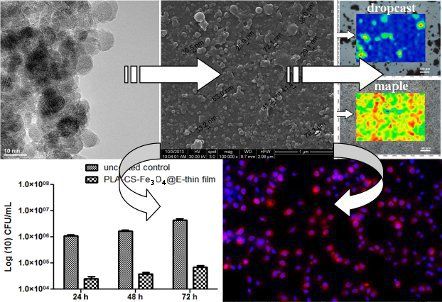
- -CS-Fe3O4@EUG nanospheres diameter sizes range between 20 and 80 nm. These MAPLE-deposited coatings acted as bioactive nanosystems and exhibited a great antimicrobial effect by impairing the adherence and biofilm formation of Staphylococcus aureus (S. aureus) and Pseudomonas aeruginosa (P. aeruginosa
- ) bacteria strains. Moreover, the obtained nano-coatings showed a good biocompatibility and facilitated the normal development of human endothelial cells. These nanosystems may be used as efficient alternatives in treating and preventing bacterial infections. Keywords: antimicrobial; chitosan; magnetite
- nanosystems to obtain improved, antimicrobial coatings for biomedical applications [7][8]. Nonpolar functionalized magnetite nanostructures alone [9][10] or combined with different natural products, such as usnic acid (UA) [11] or essential oils (Mentha piperita [12], Anethum graveolens [13], Salvia




Photoactivation of luminescence in CdS nanocrystals
Beilstein J. Nanotechnol. 2014, 5, 355–359, doi:10.3762/bjnano.5.40
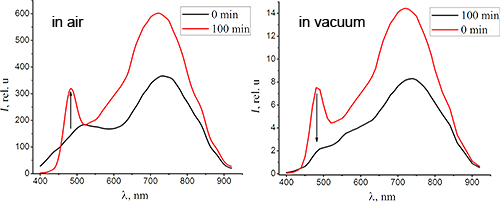
- isolated in a polymer matrix is a significant chemical activity of the surface. It is important to experimentally investigate the nanosystems with interphase boundaries between the nanocrystal and matrix and study the processes that occur at this interface. There are particularly important questions about


Controlling the near-field excitation of nano-antennas with phase-change materials
Beilstein J. Nanotechnol. 2013, 4, 632–637, doi:10.3762/bjnano.4.70
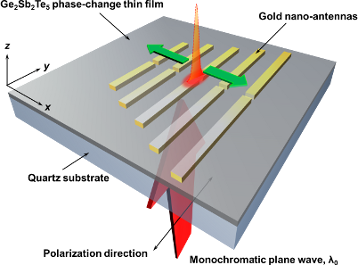
- nano-antennas by controlling polarization singularities and subwavelength spatial phase variations at the focus of high-order beams [2]. The above approaches all provide new opportunities to control light behaviour on a nanoscale. However, they can only be performed through complex nanosystems or



Near-field effects and energy transfer in hybrid metal-oxide nanostructures
Beilstein J. Nanotechnol. 2013, 4, 306–317, doi:10.3762/bjnano.4.34
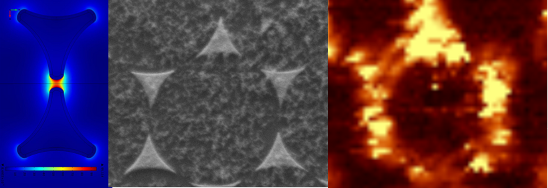
- parameters such as the flow rates of gases, precursor temperature, and furnace temperature (Figure 1). The nanoparticles are carried away from the reaction zone by the gas flow and subsequently deposited inside a powder-collection system. For the generation of hybrid nanosystems, metal nanostructures
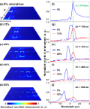
- containing this spacer layer, local enhancements of the fluorescence intensity at the nanoantenna positions can be observed. In summary, the results show the potential for nanophosphors as local probes for energy transfer in hybrid metal-oxide nanosystems. A quantitative measurement of the energy transfer








Physics, chemistry and biology of functional nanostructures
Beilstein J. Nanotechnol. 2012, 3, 843–845, doi:10.3762/bjnano.3.94

- understanding of nanoscaled phenomena. We deem progress in theory necessary in order to gain feedback for testing new predicted phenomena or optimizing already existing nanosystems and devices. All three of these conditions together with the given examples play a major role in the present Thematic Series, which
FTIR nanobiosensors for Escherichia coli detection
Beilstein J. Nanotechnol. 2012, 3, 485–492, doi:10.3762/bjnano.3.55
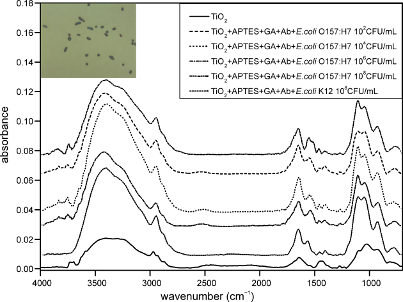
- important to prevent and identify problems related to health and safety. Lately, micro- and nanosystems for bacteria and food sample analysis have been developed as innovative tools for the detection of foodborne pathogens in the food and drink industries [14][15][16][17][18][19][20][21]. In particular


Repulsive bimodal atomic force microscopy on polymers
Beilstein J. Nanotechnol. 2012, 3, 456–463, doi:10.3762/bjnano.3.52
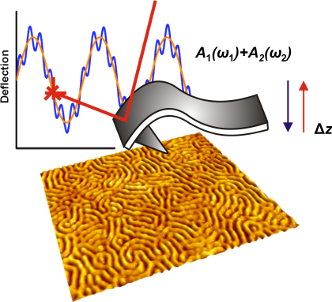
- discussions. This work was financially supported by the European Commission (FORCETOOL, NMP4-CT-2004-013684) and the Excellence Cluster “Nanosystems Initiative Munich" (NIM).



Nanostructures for sensors, electronics, energy and environment
Beilstein J. Nanotechnol. 2012, 3, 351–352, doi:10.3762/bjnano.3.40
- nanoscale, such as fullerenes, nanotubes, graphene [4] and other carbon structures, or new organic–inorganic mixtures with unexpected properties, discussed also in the series “Organic–inorganic nanosystems” edited by Paul Ziemann [5]. Last but not least, we need to acknowledge that the ability to study
An MCBJ case study: The influence of π-conjugation on the single-molecule conductance at a solid/liquid interface
Beilstein J. Nanotechnol. 2011, 2, 699–713, doi:10.3762/bjnano.2.76
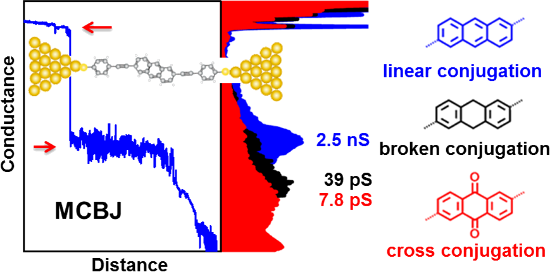
- , Department of Physics, Lancaster LA1 4YB, England Institute of Bio- and Nanosystems IBN 3 and Center of Nanoelectronic Systems for Informational Technology, Research Center Juelich, D-52425 Juelich, Germany 10.3762/bjnano.2.76 Abstract π-Conjugation plays an important role in charge transport through single




Simulation of bonding effects in HRTEM images of light element materials
Beilstein J. Nanotechnol. 2011, 2, 394–404, doi:10.3762/bjnano.2.45
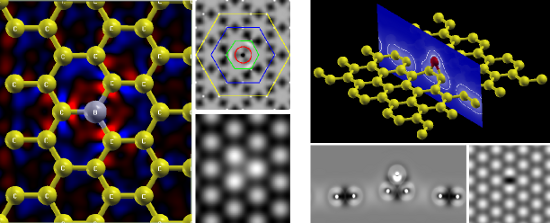
- Structure Formation and Function of Organic-Inorganic Nanosystems” as well as DFG and the Ministry of Science, Research and the Arts (MWK) of the state Baden-Württemberg within the Sub-Angstrom Low-Voltage Electron Microscopy project (SALVE).


Organic–inorganic nanosystems
Beilstein J. Nanotechnol. 2011, 2, 363–364, doi:10.3762/bjnano.2.41
- –inorganic nanosystems enter the stage. Imagine an organic moiety such as a diblock-copolymer, in an appropriate solvent, forming an even more complex building block such as a nanoscaled micelle, which, in turn, can be deposited onto an inorganic substrate such as a Si-wafer by dip coating. Due to the
- (STS), while for larger coverages standard photoelectron spectroscopies such UPS or XPS – often synchrotron based – also play an important role. This broad spectrum of preparational approaches, analytical tools and sought after functionalities, all related to organic–inorganic nanosystems, are
- part funded by the German Science Foundation (DFG), many of them within the Collaborative Research Center (SFB) 569 dealing with the “Hierarchical Structure Formation and Function of Organic–Inorganic Nanosystems”. Thus, in addition to acknowledging the contributions of all authors and their teams, I



