Search results
Search for "photodegradation" in Full Text gives 87 result(s) in Beilstein Journal of Nanotechnology.
Poly(styrene)/oligo(fluorene)-intercalated fluoromica hybrids: synthesis, characterization and self-assembly
Beilstein J. Nanotechnol. 2014, 5, 2450–2458, doi:10.3762/bjnano.5.254
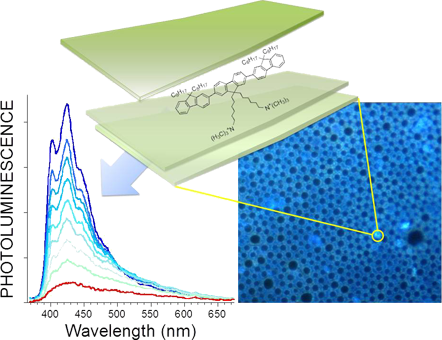
- ]. PT15, selected as a representative sample, shows good chromatic stability when irradiated by a 100 mW/cm2 UV lamp at 365 nm (Figure 6b), compared to the flat film of neat TF (Figure 6a). The photodegradation of fluorene-based compounds leads to a reduction of PL intensity together with the appearance




Characterization and photocatalytic study of tantalum oxide nanoparticles prepared by the hydrolysis of tantalum oxo-ethoxide Ta8(μ3-O)2(μ-O)8(μ-OEt)6(OEt)14
Beilstein J. Nanotechnol. 2014, 5, 1082–1090, doi:10.3762/bjnano.5.121
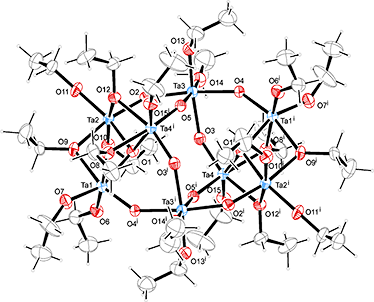
- observed that Ta2O5 particles calcined at 750 °C possess best degradation efficiency (Figure 15). This may be due to increase in crystallinity and surface area with more active sites for photodegradation process when temperature is increased from 650 °C to 750 °C. A further increase in calcination


DFT study of binding and electron transfer from colorless aromatic pollutants to a TiO2 nanocluster: Application to photocatalytic degradation under visible light irradiation
Beilstein J. Nanotechnol. 2014, 5, 1016–1030, doi:10.3762/bjnano.5.115
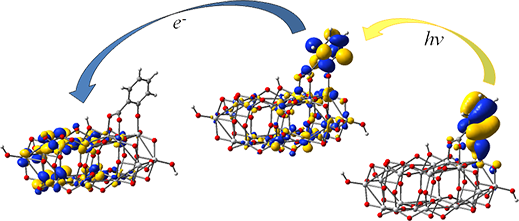
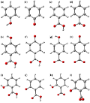
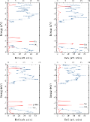
- data as well as the key requirements for efficient photodegradation based on theoretical arguments. Computational details The structures of all pollutants were optimized in neutral as well as deprotonated forms, using DFT [31][32][33], with the B3LYP exchange–correlation functional [34][35] and the



Nanostructure sensitization of transition metal oxides for visible-light photocatalysis
Beilstein J. Nanotechnol. 2014, 5, 696–710, doi:10.3762/bjnano.5.82
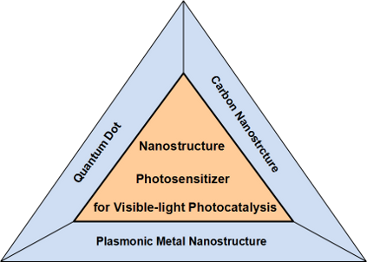
- potential applications of carbon nanodots [107][108][109][110], among the latter of which is their use as a photosensitizer for the visible-light photocatalysis. For example, TiO2/carbon nanodots demonstrate an efficient photodegradation of methyl blue under visible light [112]. The visible-light
- carbon nanodots can effectively harness the broad spectrum of sunlight to improve the photocatalytic activities of monoclinic bismuth vanadate (m-BiVO4) for the photodegradation of methylene blue [133]. The carbon nanodots play a twofold role in this photocatalytic process. Firstly, carbon nanodots




A visible-light-driven composite photocatalyst of TiO2 nanotube arrays and graphene quantum dots
Beilstein J. Nanotechnol. 2014, 5, 689–695, doi:10.3762/bjnano.5.81
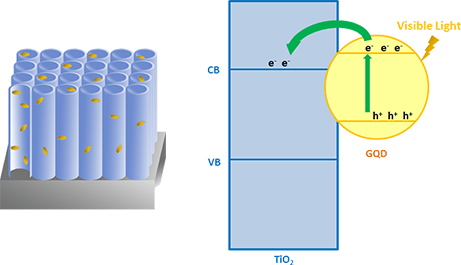
- ), scanning electron microscopy (SEM), transmission electron microscopy (TEM), X-ray diffraction (XRD), thermogravimetric analysis (TGA) and UV–vis absorption spectroscopy. The product exhibited high photocatalytic performance in the photodegradation of methylene blue and enhanced photocurrent under visible
- light irradiation. Keywords: anodic oxidation; graphene quantum dots; photocatalyst; photodegradation; TiO2 nanotube arrays; Introduction Semiconductor-mediated photocatalysis is a promising technique for the conversion of solar energy as well as degradation of organic pollutants in air and water [1
- ). Thermogravimetric analysis was performed in air using a thermogravimetric analyzer (Perkin Elmer, TGA 6). The samples were heated from 50 °C to 800 °C at a rate of 10 °C·min−1. Photocatalytic activity measurements: The photocatalytic activities of catalysts were evaluated by measuring the photodegradation of


Effects of the preparation method on the structure and the visible-light photocatalytic activity of Ag2CrO4
Beilstein J. Nanotechnol. 2014, 5, 658–666, doi:10.3762/bjnano.5.77
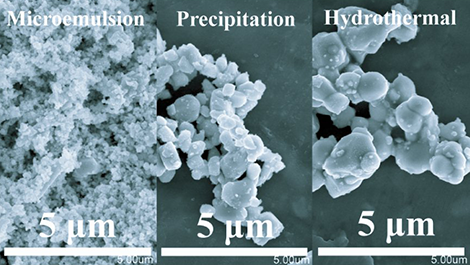
- Ag2CrO4photocatalyst shows the best activity in the photodegradation of a MB aqueous solution, because of the higher adsorption of MB molecules, shorter diffusion process of more photogenerated excitons, and stronger oxidation ability of the photogenerated holes. The current investigation may provide new insight into


Enhanced photocatalytic activity of Ag–ZnO hybrid plasmonic nanostructures prepared by a facile wet chemical method
Beilstein J. Nanotechnol. 2014, 5, 639–650, doi:10.3762/bjnano.5.75
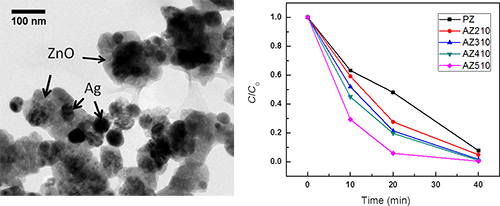
- exposure, whereas all the Ag–ZnO hybrid plasmonic nanostructures led to enhanced photodegradation for the same exposure time. Among the various Ag–ZnO photocatalysts used, sample AZ510 exhibited the highest photocatalytic efficiency of 94% for the same exposure time of 20 min. Figure 9c shows the results
- can be clearly seen from that for the same citrate concentration, the photocatalytic efficiency increases with increasing Ag loading. Also, for the same Ag concentration, an increase in citrate concentration has been found to result in an increased efficiency of the photodegradation of MB. This
- +]/[citrate] ratio of 1: 10, as photocatalysts. Schematic band diagram of Ag–ZnO hybrid nanostructure showing the charge redistribution processes that lead to the photocatalytic degradation of MB dye. (a,b) Kinetics of MB photodegradation by Ag–ZnO hybrid plasmonic nanostructures with different Ag


Mesoporous cerium oxide nanospheres for the visible-light driven photocatalytic degradation of dyes
Beilstein J. Nanotechnol. 2014, 5, 517–523, doi:10.3762/bjnano.5.60
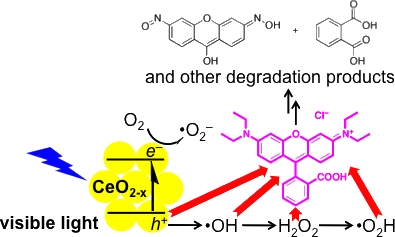
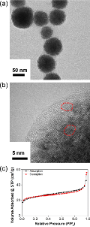
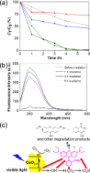
- the cerium oxide sample has been probed by the photodegradation of the suspected carcinogenic dye rhodamine B (RhB). A colloidal mixture of cerium oxide and RhB has been stirred and irradiated with AM 1.5 solar intensity light after equilibration in the dark for 30 min. A standard glass filter has
- is most pronounced in the presence of the hole scavenger, with impaired activity in the presence of both •OH and •OOH/•O2− scavengers. Interestingly, the electron scavenger does not significantly affect the photodegradation experiments. The participation of •OH radicals was confirmed with the use of

Structural, optical and photocatalytic properties of flower-like ZnO nanostructures prepared by a facile wet chemical method
Beilstein J. Nanotechnol. 2013, 4, 763–770, doi:10.3762/bjnano.4.87
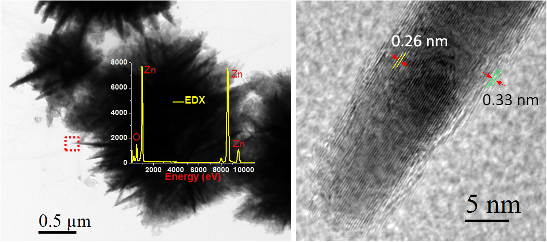
- UV–vis absorption spectroscopy. SEM and TEM studies revealed flower-like structures consisting of nanosheets, formed due to oriented attachment of ZnO nanoparticles. Flower-like ZnO structures showed enhanced photocatalytic activity towards sun-light driven photodegradation of methylene blue dye (MB
- dyeing industries. Since the sun is an abundantly available natural energy source, its light can be conveniently utilized for the photodegradation of organic dyes [3][4][5][6][7][8]. ZnO with a band gap of 3.37 eV has received much attention for the complete mineralization and degradation of
- did not result in any significant change in the absorption spectrum of MB. Figure 4d shows the extent of photodegradation of MB marked by the changes in C/C0 with irradiation time. Irradiation with sunlight for 20 min resulted in 92% degradation of MB when sample S1 was used, whereas by using sample


Modulation of defect-mediated energy transfer from ZnO nanoparticles for the photocatalytic degradation of bilirubin
Beilstein J. Nanotechnol. 2013, 4, 714–725, doi:10.3762/bjnano.4.81
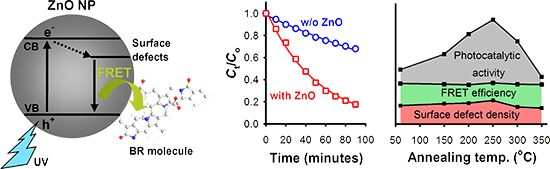
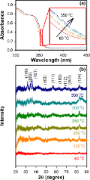
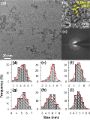
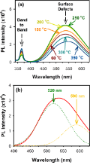
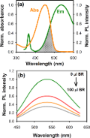
- molecules on ZnO nanostructures, a resonant defect-mediated energy transfer from the photo-excited ZnO nanostructures to the BR molecules induces their photodegradation [15]. It was also demonstrated that the system can effectively degrade BR when it is bound to albumin. Although literature related to the


Mesoporous MgTa2O6 thin films with enhanced photocatalytic activity: On the interplay between crystallinity and mesostructure
Beilstein J. Nanotechnol. 2012, 3, 123–133, doi:10.3762/bjnano.3.13
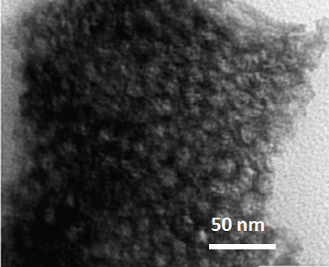
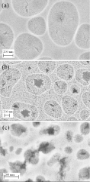
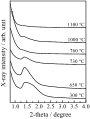
- of the mesoporous films to assist the photodegradation of rhodamine B in water was studied. As a result, two maxima in the photocatalytic activity were identified in the calcination temperature range of 550–850 °C, peaking at 700 °C and 790 °C, and the origin of this was investigated by using
- that, of all the various oxide films, the KLE derived mesoporous MgTa2O6 film possessed the highest activity in assisting the photodegradation of RhB in water. Interestingly, PIB6000-templated mesoporous MgTa2O6 thin film showed a very similar dye-degradation activity as compared with the KLE-templated
- prolongs the lifetime of the photogenerated pairs, thus increasing the number of holes that are able to diffuse all the way to the surface to be involved in the photodegradation reaction. Small grains are assumed to facilitate the photocatalytic reaction, as it takes less time for the photogenerated pairs






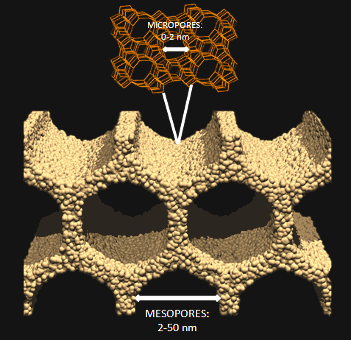
Synthesis and catalytic applications of combined zeolitic/mesoporous materials
Beilstein J. Nanotechnol. 2011, 2, 785–801, doi:10.3762/bjnano.2.87
- properties and their photocatalytic activity in photodegradation processes [169], TiO2 formation often needs to be avoided in the synthesis of Ti-containing nanoporous siliceous materials since its presence can be detrimental for the catalytic activity associated with tetrahedrally coordinated Ti [170][171