Search results
Search for "physicochemical properties" in Full Text gives 215 result(s) in Beilstein Journal of Nanotechnology. Showing first 200.
Vinorelbine-loaded multifunctional magnetic nanoparticles as anticancer drug delivery systems: synthesis, characterization, and in vitro release study
Beilstein J. Nanotechnol. 2024, 15, 256–269, doi:10.3762/bjnano.15.24
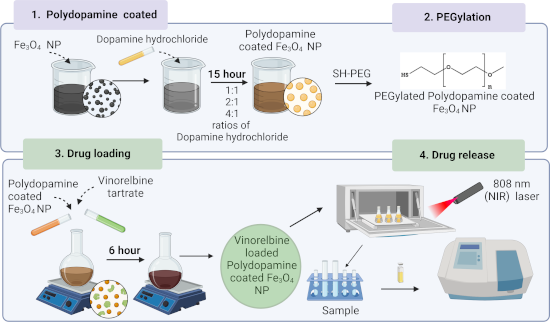
- chemotherapy functionalities using a solvothermal method. The incorporation of PDA into the fabricated nanostructures imparts several advantages for cancer therapy and controlled drug release systems because of its robust structural and physicochemical properties. Additionally, aside from enhancing


Multiscale modelling of biomolecular corona formation on metallic surfaces
Beilstein J. Nanotechnol. 2024, 15, 215–229, doi:10.3762/bjnano.15.21
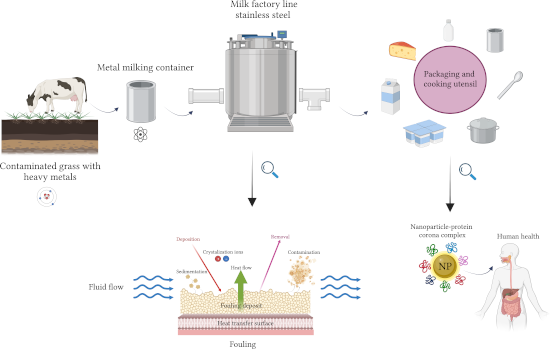
- concerns regarding the safety of nanoparticles (NPs) in relation to human and animal health. The toxicity of NPs is closely linked to their chemical aggressiveness and varies with their physicochemical properties, including surface area, charge, and reactivity. Understanding the intricate interplay between





Development and characterization of potential larvicidal nanoemulsions against Aedes aegypti
Beilstein J. Nanotechnol. 2024, 15, 104–114, doi:10.3762/bjnano.15.10
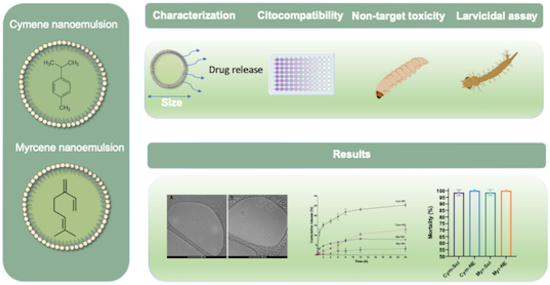
- nanoemulsion comprising 5% p-cymene stabilized with 1% Tween 80, with droplet sizes measuring approximately 150 nm, which maintained its stability for 60 days [31]. The zeta potential is used to predict the stability of dispersions, and its value depends on the physicochemical properties of active ingredients
- previously validated method. In silico molecular and physicochemical properties of the monoterpenes The ACD/Labs Percepta Platform, particularly the PhysChem Module, was employed to forecast molecular and physicochemical data. The ChemSpider tool facilitated the acquisition of these properties [56][57
- -Sol, (B) Myr-Sol, (C) Cym-NE, and (D) Myr-NE; DC: death control (100% methanol); SC: solvent control (ethanol 5%); TC: trauma control. Hydrodynamic diameter, PdI, and zeta potential of Cym-NEs.a Hydrodynamic diameter, PdI and zeta potential of Myr-NEs.a In silico molecular/physicochemical properties


Curcumin-loaded nanostructured systems for treatment of leishmaniasis: a review
Beilstein J. Nanotechnol. 2024, 15, 37–50, doi:10.3762/bjnano.15.4
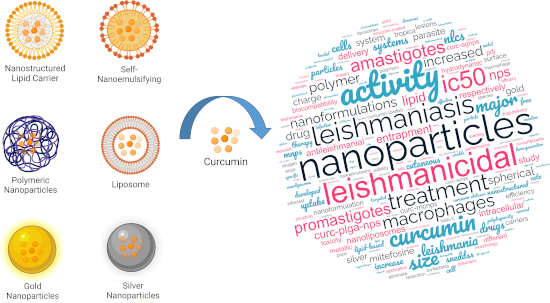
- physicochemical properties of the systems, and by the release and targeting features of the loaded nanosystems, rather than by the drug properties themselves [58][59][60][61][62]. The intracellular amastigote form of Leishmania spp. allocates in macrophage phagolysosomes from infected individuals [63]. However


Elasticity, an often-overseen parameter in the development of nanoscale drug delivery systems
Beilstein J. Nanotechnol. 2023, 14, 1149–1156, doi:10.3762/bjnano.14.95
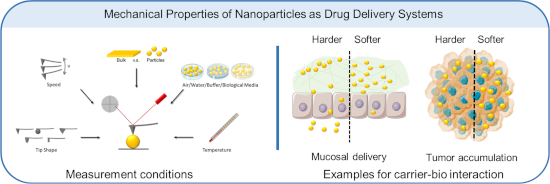
- , translation to the clinics or even market approval often fails. So far, the reason for this discrepancy is manifold. Physicochemical properties such as size, surface potential, and surface chemistry are in focus of research for many years. Other equally important parameters, influencing whether a successful


Nanoarchitectonics of photothermal materials to enhance the sensitivity of lateral flow assays
Beilstein J. Nanotechnol. 2023, 14, 988–1003, doi:10.3762/bjnano.14.82
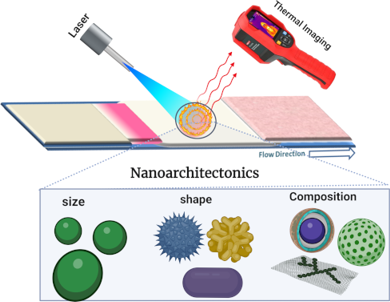
- the aggregation pattern of nanomaterials, and extrinsic factors, including surrounding medium, medium viscosity, and concentration of the nanomaterial. Most often, nanomaterials with complex three-dimensional structures have better optical and physicochemical properties for the use in colorimetry
- ]. The photothermal properties can also be enhanced by optimizing the elemental composition of the nanomaterials [44]. Generally, nanocomposite materials are developed by incorporating two or more compounds in a single particle, resulting in enhanced physicochemical properties of the final composite


Upscaling the urea method synthesis of CoAl layered double hydroxides
Beilstein J. Nanotechnol. 2023, 14, 927–938, doi:10.3762/bjnano.14.76
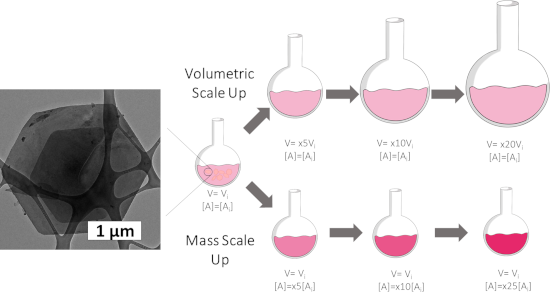
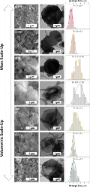
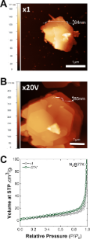
- (P, As, Sb and Bi)) to multielementals (e.g., boron nitrate, metal dichalcogenides, MXenes, layered metal/covalent organic frameworks, or layered hydroxides/oxides) [9][10][11]. These systems exhibit an enormous variability in their physicochemical properties, which are defined by their layer-to


Antibody-conjugated nanoparticles for target-specific drug delivery of chemotherapeutics
Beilstein J. Nanotechnol. 2023, 14, 912–926, doi:10.3762/bjnano.14.75
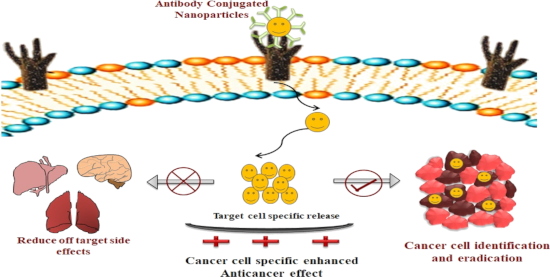
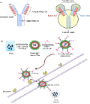
- affected by their physicochemical properties, including hydrodynamic diameter, surface potential, shape, functional groups, and hydrophobicity. The protein corona reduces the targeted delivery of NPs by disturbing or inhibiting the binding of target molecules to their receptors. Mirshafiee et al. used a



Silver nanoparticles loaded on lactose/alginate: in situ synthesis, catalytic degradation, and pH-dependent antibacterial activity
Beilstein J. Nanotechnol. 2023, 14, 781–792, doi:10.3762/bjnano.14.64
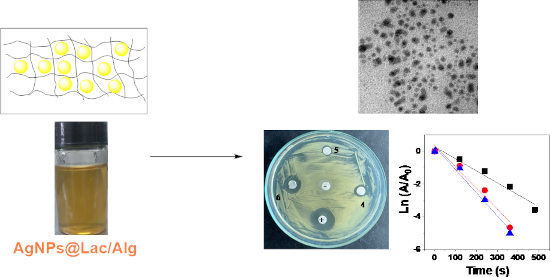
- . Subsequently, AgNPs@Lac/Alg was characterized using various analytical techniques and applied for the catalytic degradation of contaminants and in bacterial activity assays. Absorption spectra were analyzed to monitor changes in physicochemical properties at the maximum peak region of surface plasmon resonance
- in the absorbance value in the UV–vis spectra. Minor changes in λmax values were noted from the absorption data, indicating a slight influence of the silver-ion-to-nanocomposite ratio on the physicochemical properties of the synthesized AgNPs. Considering these findings, two ratios of silver ions to
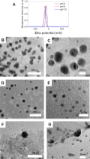
- distribution analysis of AgNPs@Lac/Alg-0.3 and AgNPs@Lac/Alg-0.7 indicates that the highest frequency for AgNPs@Lac/Alg-0.3 is at 6 nm while for AgNPs@Lac/Alg-0.7, it is at 4 nm, with sizes ranging from 2 to 8 nm. The results show the similarity in physicochemical properties of the AgNPs@Lac/Alg nanocomposites


Metal-organic framework-based nanomaterials as opto-electrochemical sensors for the detection of antibiotics and hormones: A review
Beilstein J. Nanotechnol. 2023, 14, 631–673, doi:10.3762/bjnano.14.52


Carbon nanotube-cellulose ink for rapid solvent identification
Beilstein J. Nanotechnol. 2023, 14, 535–543, doi:10.3762/bjnano.14.44
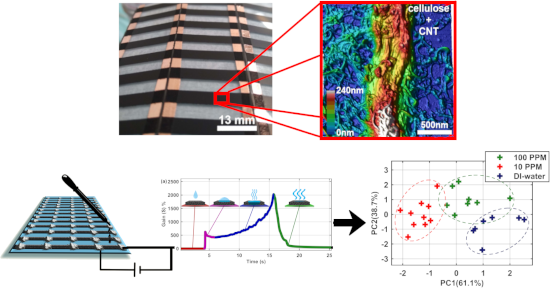
- ) with physicochemical properties of the organic solvents (vapor pressure and dielectric constant) [63][64]. Guided by previous studies that show the electrical response is due to the swelling of CPCs [25][56][57], we found that the maximum value in the Gain curve (max) is proportional to the dielectric


New trends in nanobiotechnology
Beilstein J. Nanotechnol. 2023, 14, 377–379, doi:10.3762/bjnano.14.32

- agent for nanomaterials synthesis. The review is concluded providing an outlook of these two components (i.e., deep eutectic solvents and carrageenan) as alternatives for the formation of plasmonic metal nanoparticles. The importance of applying these tools to improve the physicochemical properties and
Polymer nanoparticles from low-energy nanoemulsions for biomedical applications
Beilstein J. Nanotechnol. 2023, 14, 339–350, doi:10.3762/bjnano.14.29
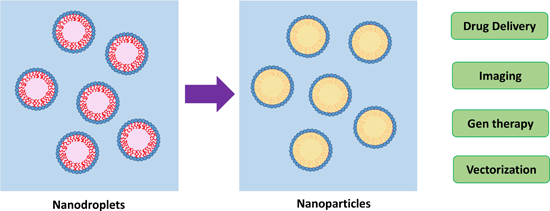
- nanoemulsions and derived PLGA nanoparticles discussed above are summarized in Table 2. 3.3 Polyurethane and polyurea nanoparticles Polyurethane and polyurea are polymers that can be made biocompatible and display superior physicochemical properties. Therefore, they are attractive for biomedical applications
- , particularly by the phase inversion composition method, and the use of these nanoemulsions as templates for the preparation of polymer nanoparticles for biomedical applications are reviewed. The methods of preparation, nature of the components in the formulation, and their impact on the physicochemical
- properties, drug loading, and drug release are discussed. We highlight the utilization of ethyl cellulose, poly(lactic-co-glycolic acid), and polyurethane/polyurea in the field of nanomedicine as potential drug delivery systems. Advances are still needed to achieve better control over size distribution




Overview of mechanism and consequences of endothelial leakiness caused by metal and polymeric nanoparticles
Beilstein J. Nanotechnol. 2023, 14, 329–338, doi:10.3762/bjnano.14.28
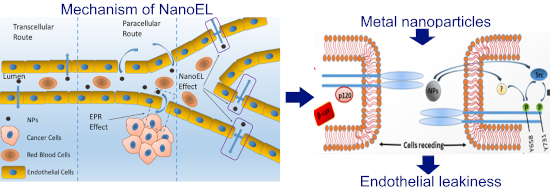
- Magdalena Lasak Karol Ciepluch Division of Medical Biology, Jan Kochanowski University in Kielce, Uniwersytecka Street 7, Kielce, Poland 10.3762/bjnano.14.28 Abstract Nanoparticles (NPs) exhibit unique physicochemical properties that enable them to overcome biological barriers and to be
- increasing the access to the target sites in the organism. This type of interaction can lead to NP-modulated endothelial leakiness (NanoEL). The most important factors determining NanoEL are the physicochemical properties of the NPs. NP-modulated endothelial leakiness can lead to the discovery of new
- [18][19][20][21][22][23]. NPs exhibit unique physicochemical properties that enable them to overcome biological barriers, such as negative surface charge and sizes from 5 to 50 nm. Moreover, most of the administered NPs eventually end up in the bloodstream, which facilitates their interaction with the


Biocatalytic synthesis and ordered self-assembly of silica nanoparticles via a silica-binding peptide
Beilstein J. Nanotechnol. 2023, 14, 280–290, doi:10.3762/bjnano.14.25
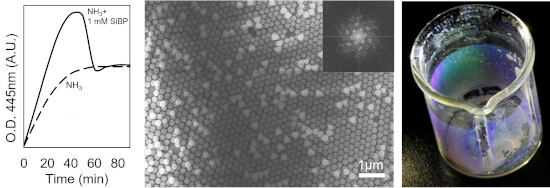
- -range homogeneity of self-assembly of as-synthesized SiO2 particles formed with NH3 alone and NH3 + 1 mM SiBP. Amino acid sequence and physicochemical properties of the SiBP. Reaction contents for the different conditions studied. Supporting Information Supporting Information features mass spectra of
- synthesis and assembly of SiO2 nanoparticles into gels or opal-like ordered structures. Experimental Synthesis of the peptide The SiBP was commercially synthesized (Genscript, NJ, USA) at <98% purity via 9-fluorenylmethoxycarbonyl (F-moc) chemistry methods. The amino acid sequence and physicochemical
- properties of the SiBP are shown in Table 1. Synthesis of SiO2 particles The particles were synthesized based on the method described by Stöber and co-workers [42]. Tetraethyl orthosilicate (TEOS) (Alfa Aesar, Ward Hill, MA, USA) was used as the precursor, a 1:1 mixture of ethanol/deionized water was used as




Nanotechnology – a robust tool for fighting the challenges of drug resistance in non-small cell lung cancer
Beilstein J. Nanotechnol. 2023, 14, 240–261, doi:10.3762/bjnano.14.23
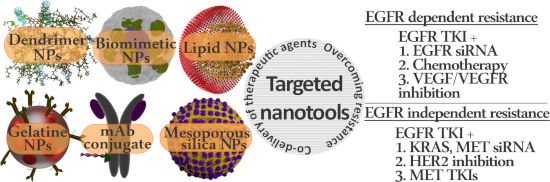
- microenvironment, and tumor cells, (ii) delivering large payloads of active substances with different physicochemical properties, such as small-molecular drugs and siRNA, to the site of action, and (iii) limiting drug resistance [91]. Nanotherapy can change the landscape of clinical lung cancer treatment by
- task limited by extracellular and intracellular challenges. Combinatorial therapy further complicates the right-time, right-place co-delivery of siRNA with other active ingredients due to the differences in the physicochemical properties, delivery, and stability problems. The nanoparticle core for
- physicochemical properties (polar headgroup, linker region, and type and length of hydrophobic domain), PEG amount, PEG lipid alkyl length, as well as the physicochemical properties of the LNPs (zeta potential, pKa value, and structure and conformation of the lipid bilayer) will result in improved targeting


Two-step single-reactor synthesis of oleic acid- or undecylenic acid-stabilized magnetic nanoparticles by thermal decomposition
Beilstein J. Nanotechnol. 2023, 14, 11–22, doi:10.3762/bjnano.14.2
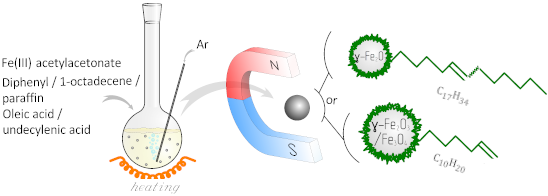
- as the initial precursor. The properties of the synthesized materials were studied using various methods. Results and Discussion The physicochemical properties of NPM synthesized via thermal decomposition depend on many factors, such as selection of precursors and organic stabilizers, ligand


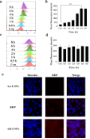
Facile preparation of Au- and BODIPY-grafted lipid nanoparticles for synergized photothermal therapy
Beilstein J. Nanotechnol. 2022, 13, 1432–1444, doi:10.3762/bjnano.13.118
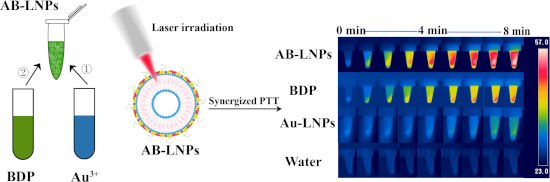
- materials. In addition, AB-LNPs could cause severe cytotoxicity when exposed to only a very low dose of laser irradiation (0.5 W/cm2, 60 s), which is beneficial to clinical application. Conclusion AB-LNPs were prepared by simply mixing Au-LNPs with BDP. The physicochemical properties of AB-LNPs were closely




Supramolecular assembly of pentamidine and polymeric cyclodextrin bimetallic core–shell nanoarchitectures
Beilstein J. Nanotechnol. 2022, 13, 1361–1369, doi:10.3762/bjnano.13.112
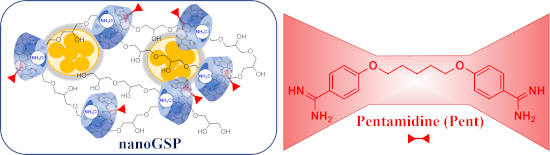
- nanostructures endowed with unique physicochemical properties. Recently, we have proposed a straightforward synthetic strategy that exploits the properties of polymeric β-cyclodextrin (PolyCD) to act as both the reducing and stabilizing agent to produce monodispersed and stable gold-based NPs either as
- composed of gold and/or silver, are versatile agents endowed with unique physicochemical properties, which recently have drawn great interest for a variety of applications ranging from catalysis to nanomedicine [1][2][3]. The size of the NPs is a key parameter that defines their optical properties


Design of surface nanostructures for chirality sensing based on quartz crystal microbalance
Beilstein J. Nanotechnol. 2022, 13, 1201–1219, doi:10.3762/bjnano.13.100
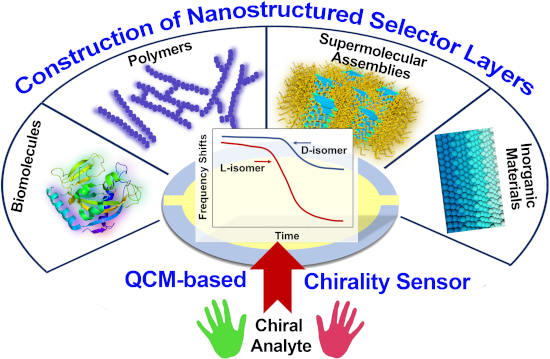
- . A similar QCM response is also seen for gelatin. As physicochemical properties of BSA and gelatin are different, it was inferred that the chiral sensing effect of this system could be applied to various protein species. The authors further employed fluorescent titration measurements to study the


Recent advances in green carbon dots (2015–2022): synthesis, metal ion sensing, and biological applications
Beilstein J. Nanotechnol. 2022, 13, 1068–1107, doi:10.3762/bjnano.13.93
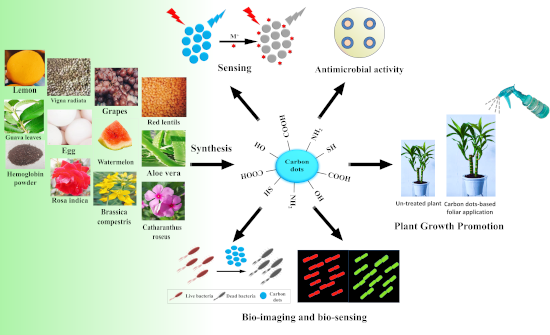
- their functional properties [5][6]. These exceptional optical and physicochemical properties make them ideal for transdisciplinary research. Fluorescent CDs can be manufactured using inexpensive, naturally rich carbon sources in an environmentally friendly manner. By adjusting the surface chemistry of




Design of a biomimetic, small-scale artificial leaf surface for the study of environmental interactions
Beilstein J. Nanotechnol. 2022, 13, 944–957, doi:10.3762/bjnano.13.83
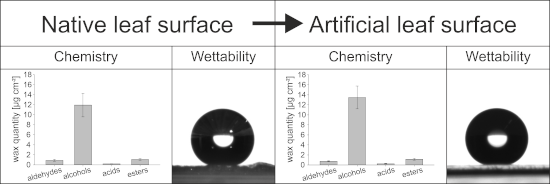
- physicochemical properties due to the cuticle and, in particular, due to the epicuticular waxes deposited on it. In previous studies, bio-inspired technical surfaces were often used with surface properties only partially corresponding to those of the natural surfaces. In the present work, an artificial leaf
- developed that mimics the physicochemical properties of a natural leaf surface. The morphology of the recrystallized structures was not a 1:1 copy of the native structures, but the properties were still transferred. This proves that the thermal evaporation process made it possible to transfer the surface
- , which mimics the physicochemical properties of a natural leaf. The thermal evaporation process allowed for a homogeneous coating of the glass with three-dimensional structures. By coating with the medium amount of wax (1400 µg), the wettability and the wax composition of the wheat leaf surface could be
Solar-light-driven LaFexNi1−xO3 perovskite oxides for photocatalytic Fenton-like reaction to degrade organic pollutants
Beilstein J. Nanotechnol. 2022, 13, 882–895, doi:10.3762/bjnano.13.79
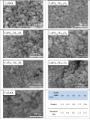
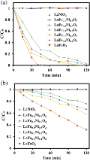
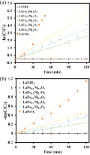
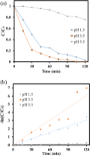
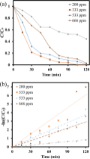
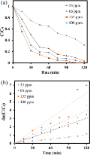
- degradation. Though it was proven that Mn-doped LaFeO3 could enhance the activity of heterogeneous photo-Fenton-like reactions, the influence of Mn content on the activity was not significant [30]. Phan et al. verified that Cu-doped LaFeO3 exhibited physicochemical properties to decolorize methlyorgane



Hierarchical Bi2WO6/TiO2-nanotube composites derived from natural cellulose for visible-light photocatalytic treatment of pollutants
Beilstein J. Nanotechnol. 2022, 13, 745–762, doi:10.3762/bjnano.13.66
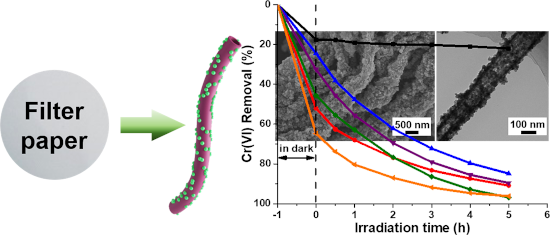
- photocorrosion [20]. Among them, the Aurivillius phase bismuth tungstate (Bi2WO6) material is applied in visible-light photocatalysis due to its effective response to visible light and stable physicochemical properties [21]. Bi2WO6 is formed by the alternating growth of (Bi2O2)2+ and perovskite-structured (WO4)2


Design and selection of peptides to block the SARS-CoV-2 receptor binding domain by molecular docking
Beilstein J. Nanotechnol. 2022, 13, 699–711, doi:10.3762/bjnano.13.62
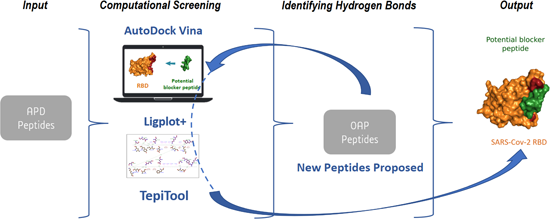
- physical and biochemical properties of the potential peptides. Summary of the physicochemical properties of the final peptide candidates. Secondary structure and contact area of peptides. The secondary structure is presented as the number of amino acids in each structure divided by the total number of
- ); distribution of electrostatic potential on the surface of APD peptide candidates docked to the SARS-CoV-2 RBD (Figure S2); secondary structure, docking, and distribution of electrostatic charges of aligned peptides (Figure S3); physicochemical properties, hydrogen bonds, and hydrophobic interactions of the