Search results
Search for "structure" in Full Text gives 2228 result(s) in Beilstein Journal of Nanotechnology. Showing first 200.
Microplastic pollution in Himalayan lakes: assessment, risks, and sustainable remediation strategies
Beilstein J. Nanotechnol. 2025, 16, 2144–2167, doi:10.3762/bjnano.16.148
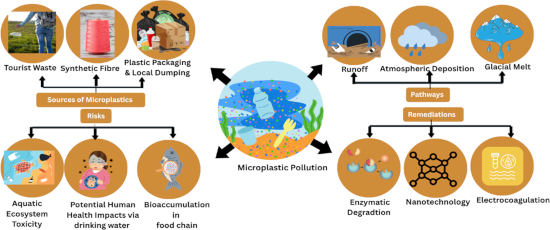
- influence the food web structure [4]. For instance, a study in Dal Lake recorded MP concentrations of 2450 particles/m2 in sediments and 9.8 particles/L in surface water [11], indicating significant ecological exposure. 3.3 Global comparison with other sensitive aquatic ecosystems Across the globe, MPs have
- ) spectroscopy is used regularly to identify the chemical structure of MPs [34]. One of the most important developments for nanoplastic detection in complex environmental matrices is micro-FTIR to analyze particles smaller than 10 µm [35]. Raman spectroscopy improves on FTIR by using higher resolution and the
- is an emerging area. The defects in the crystal structure of nanomaterials trap light energy and enhance the production of ROS. According to Kim and Youn, these developments are essential to address the robustness and effectiveness of photocatalysts in a variety of environmental conditions [77]. 6.2


Electron transport through nanoscale multilayer graphene and hexagonal boron nitride junctions
Beilstein J. Nanotechnol. 2025, 16, 2132–2143, doi:10.3762/bjnano.16.147
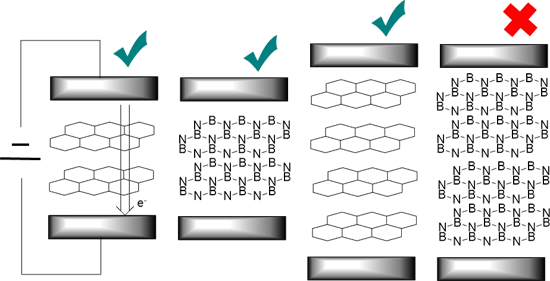
- defects are results of C–C bond rotation in the graphene plane, which isomerizes a 6–6 ring structure to a 7–5 ring structure. Stone–Wales defects are commonly observed in multilayer graphene, graphite, graphene oxide, and their occurrence is temperature-dependent [15][16]. Hexagonal boron nitride (h-BN
- ) is a material that shares many structural and electronic properties with graphite. It is isoelectronic to graphene with N contributing two electrons to the π-conjugated bond and B contributing zero electrons, as opposed to graphene, where each C atom contributes one electron. The h-BN structure is
- h-BN with Stone–Wales defect. For graphite and bulk h-BN, we adopt a graphite unit cell with A–B stacking consisting of two layers and two atoms per layer. We perform geometry optimization, density of states (DOS) calculations, and band structure calculations. For graphite and h-BN with Stone–Wales


Quality by design optimization of microemulsions for topical delivery of Passiflora setacea seed oil
Beilstein J. Nanotechnol. 2025, 16, 2116–2131, doi:10.3762/bjnano.16.146
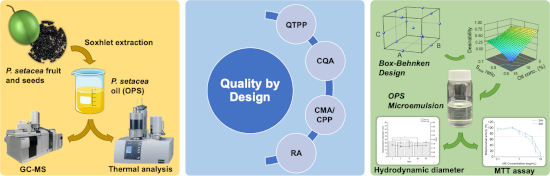
- . Accordingly, the microemulsions were evaluated for their shear stress and viscosity at both room temperature (25 ± 2 °C) and skin temperature (32.5 ± 2 °C). Microemulsions can exhibit diverse rheological behaviors depending on their type, structure, droplet density, and interdroplet interactions [49]. As


Rapid synthesis of highly monodisperse AgSbS2 nanocrystals: unveiling multifaceted activities in cancer therapy, antibacterial strategies, and antioxidant defense
Beilstein J. Nanotechnol. 2025, 16, 2105–2115, doi:10.3762/bjnano.16.145
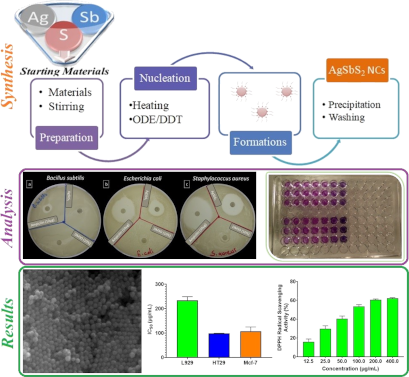
- gram-negative (Escherichia coli) pathogenic bacteria were evaluated, along with their DPPH scavenging activities. The crystal structure of the synthesized NCs was elucidated through XRD analysis, revealing characteristic diffraction peaks corresponding to the (111), (200), (220), (311), and (222
- Structural and morphological characterization of AgSbS2 NCs The crystal structure and phase of AgSbS2 NCs were investigated by XRD analysis. The obtained diffraction pattern and a schematic representation of the crystal structure are given in Figure 1. As can be seen from the XRD pattern, five dominant peaks
- separate interaction exists between 6 sulfur atoms and silver and antimony atoms. Also, the obtained diffraction peaks are neat and intense, indicating the absence of other secondary phase peaks, and proving the successful synthesis of the desired structure. FTIR analysis was carried out in the range of


Toward clinical translation of carbon nanomaterials in anticancer drug delivery: the need for standardisation
Beilstein J. Nanotechnol. 2025, 16, 2092–2104, doi:10.3762/bjnano.16.144

- doxorubicin (DOX), for example. Used in cancer treatment for decades, DOX has become a mainstay in oncology and is often nicknamed “the red devil” [34]. This name stems not only from its distinctive red colour, attributed to the quinone ring in its chemical structure, which absorbs in the visible spectrum and
- class, substantial variability in structure and surface chemistry can arise depending on the synthesis and purification methods employed, resulting in divergent biological outcomes. For example, carbon dots (CDs) smaller than 6 nm are typically cleared rapidly via the renal route, whereas larger CDs
- their surface chemistry and structure, emphasizing the need for systematic evaluation of their degradation pathways and by-products to ensure the safe design of nanomedicines. Moreover, CNMs can contain impurities that may impact their biological activity and safety. Therefore, it is important to assess




Calibration of piezo actuators and systems by dynamic interferometry
Beilstein J. Nanotechnol. 2025, 16, 2086–2091, doi:10.3762/bjnano.16.143
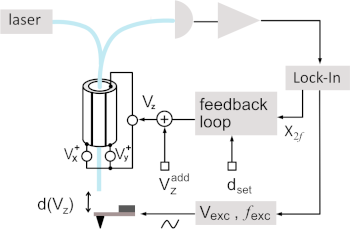
- [26] depending on minute charges in the beam profile or cantilever alignment. Both effects result in a considerable dependence of the lateral intensity distribution in the cantilever plane [25] on details of the alignment and, in turn, have an impact on the amount and interference structure of the


Molecular and mechanical insights into gecko seta adhesion: multiscale simulations combining molecular dynamics and the finite element method
Beilstein J. Nanotechnol. 2025, 16, 2055–2076, doi:10.3762/bjnano.16.141
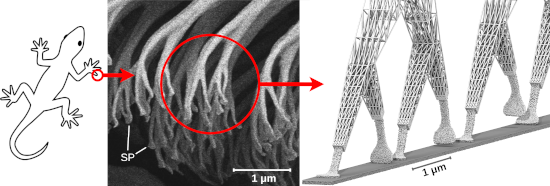
- structure similar to a fiber-reinforced elastomer, with a fibrillar nature that leads to anisotropic mechanical properties [40][41][42]. Rather than explicitly resolving individual fibers and the surrounding amorphous matrix, we represented the spatula with a coarse-grained bead network whose anisotropic
- fibrillar structure was encoded through direction-dependent bond stiffnesses. Figure 5a shows the molecular spatula with beads colored according to different regions (tip/pad/shaft). Each bead, representing approximately five keratin molecules or 2.5 keratin dimers (65228 Da), was connected to 30
- , differences in adhesion originate from structure and geometry rather than interface chemistry. We analyzed the 16 spatulae individually. Figure 10, Figure 11, and Figure 12 report, respectively, their force, contact, and displacement profiles in a representative run. Across runs, orientation (pad- vs tip







Stereodiscrimination of guests in chiral organosilica aerogels studied by ESR spectroscopy
Beilstein J. Nanotechnol. 2025, 16, 2034–2054, doi:10.3762/bjnano.16.140
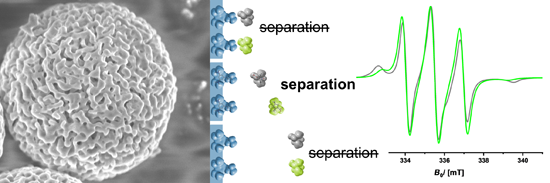
- the chromatographic separation of enantiomers. Despite these materials being highly engineered and commercially available, optimization was often done empirically. A rational design of future and improved solid phases for chiral chromatography requires that one understands how the chemical structure
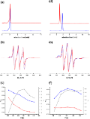
- displays the typical aerogel structure with a random pore system and polydisperse sizes from 30 to 250 nm. The high porosity was confirmed by nitrogen physisorption analysis (Figure 2b). The isotherm is typical for a material with large mesopores and macropores, and the specific surface area, ABET, is 552
- m2·g−1. The meso-macroporous structure was also found by mercury intrusion porosimetry (Figure 2c). The FTIR spectrum is consistent with the proposed composition (Figure 2d). The vibrations at ν = 3000–3600 cm−1 are characteristic for NH and OH groups. At 2982 cm−1, one sees the CH groups. Amide




Beyond the shell: exploring polymer–lipid interfaces in core–shell nanofibers to carry hyaluronic acid and β-caryophyllene
Beilstein J. Nanotechnol. 2025, 16, 2015–2033, doi:10.3762/bjnano.16.139
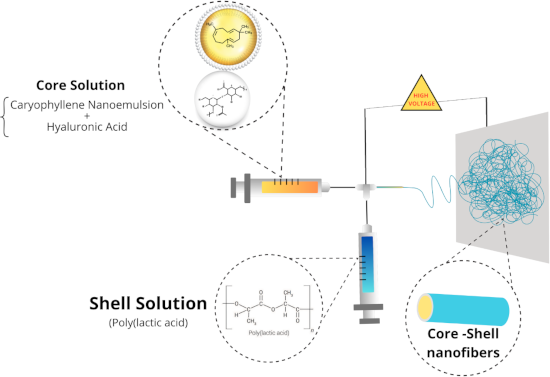
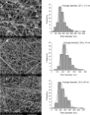
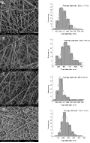
- -sectional imaging, and attenuated total reflectance with Fourier transform infrared (ATR-FTIR) spectroscopy provided compelling evidence for the successful formation of the intended core–shell structure. The resulting nanofibers exhibited surface hydrophobicity, suggesting potential for anti-adhesive
- properties of nanofibers and create advanced structures with enhanced functionality, coaxial electrospinning can be used to generate nanofibers allowing for the building of a core–shell structure with desirable properties, taking advantage of the positive characteristics of each component (core and shell
- applications and naturally occurring in vertebrates [26][27]. It is a key element of the extracellular matrix, providing a gelatinous structure where collagen and elastin fibers are embedded. As an endogenous molecule, it demonstrates ideal biocompatibility and full absorption by human tissues. Its natural




The cement of the tube-dwelling polychaete Sabellaria alveolata: a complex composite adhesive material
Beilstein J. Nanotechnol. 2025, 16, 1998–2014, doi:10.3762/bjnano.16.138
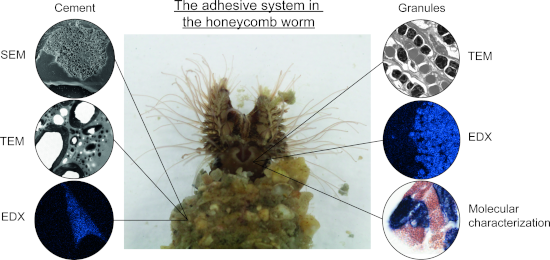
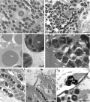
- . Transverse sections through the tubes could be imaged with high resolution in SEM (JEOL JSM-7200F), showing the arrangement of cement spots binding mineral particles together. The epoxy resin embedding technique provided excellent preservation of the cement spot structure. Honeycomb worms embedded in Spurr
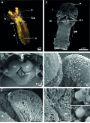
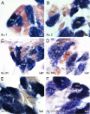
- distinguish both types of cement glands based on their secretory granule morphology, and images were taken with an AxioCam 305 digital camera (Carl Zeiss MicroImaging). Results Tube structure As described by Vovelle [6], the tubes of S. alveolata are generally rectilinear and cylindrical, measuring up to 12
- it a smooth appearance. The hollow spheroids, measuring about 0.3–6.8 μm in diameter, appear empty at their centers. Their cortex is electron-dense and possesses a concentric lamellar structure. The thickness of this cortex also seems to increase with the spheroid size and can measure up to 400 nm



Laser ablation in liquids for shape-tailored synthesis of nanomaterials: status and challenges
Beilstein J. Nanotechnol. 2025, 16, 1963–1997, doi:10.3762/bjnano.16.137
- , shape, crystal structure, and temperature [12]. As a result, thermodynamically controlled growth typically results in near-spherical NPs. The lowest surface energy of nanospheres also induces the transformation of other shapes into spherical ones. The effect of surface energy is most pronounced in small
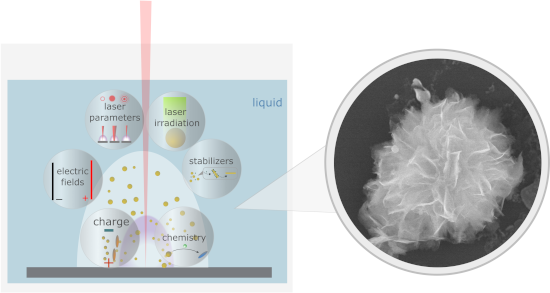
- , Figure 2 demonstrates the correlation of the shape of laser-induced plasma generated in the electric field applied directly to a Zn target with NP structure. The plasma imaging (Figure 2b,c) demonstrates clear differences in shape depending on the applied field direction. In case of cathode ablation, the
- in the next sections. Chemical processes occurring during laser ablation influence not only composition but also the chemical structure of the formed nanostructures and their surface, guiding NP growth and morphology change processes. In principle, chemical reactions are present at every stage of




Mechanical property measurements enabled by short-term Fourier-transform of atomic force microscopy thermal deflection analysis
Beilstein J. Nanotechnol. 2025, 16, 1952–1962, doi:10.3762/bjnano.16.136
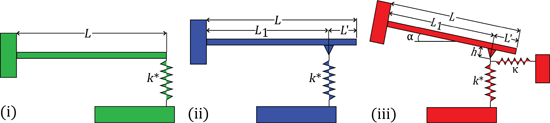
- of the overall structure. Analytical models for interpreting the vibrational modes of cantilevers were developed prior to the invention of the technique [7][8]. This model or variations of it are often presented in manuscripts to explain the interpretation of experimental data, but are not used to




Evaluating metal-organic precursors for focused ion beam-induced deposition through solid-layer decomposition analysis
Beilstein J. Nanotechnol. 2025, 16, 1942–1951, doi:10.3762/bjnano.16.135
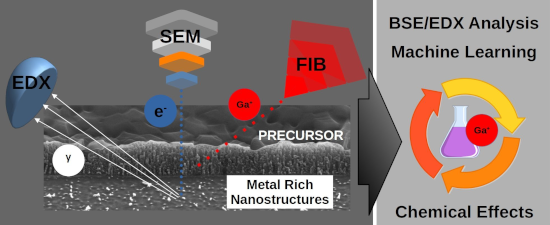
- occurs throughout ion irradiation, this point marks the transition beyond which further irradiation leads primarily to material removal rather than the structure growth. The structures formed at “the optimal” ion fluence were examined by scanning electron microscopy energy-dispersive X-ray spectroscopy
- the thickness of the precursor layer on the substrate. (2) Performing SEM imaging of the growth layers, which provide detailed information about the surface structure and composition of the precursor layer. They are essential for understanding how the precursors are decomposed under the following FIB
- becomes the dominant process over structure growth, leading to the erosion of the formed metal-rich deposits. This threshold provides insight into the precursor’s resistance to ion bombardment and is crucial for assessing its stability and reactivity under processing conditions. (4) Collecting SEM EDX


Quantum circuits with SINIS structures
Beilstein J. Nanotechnol. 2025, 16, 1931–1941, doi:10.3762/bjnano.16.134
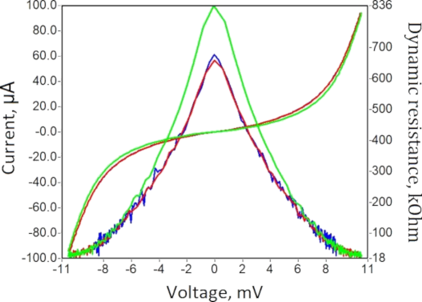
- "Higher School of Economics," Moscow, 101000 Russia P. Kapitza Institute for Physical Problems RAS, Moscow, Russia 10.3762/bjnano.16.134 Abstract The superconductor–insulator–normal metal–insulator–superconductor (SINIS) tunnel junction structure is the basic building block for various cryogenic devices
- superconducting quantum interference devices (SQUIDs) and rapid single flux quantum circuits, are based on superconductor–insulator–superconductor (SIS) junctions, another uses superconductor–insulator–normal metal (SIN) junctions. Tunnel junctions based on the SIN structure are widely used, and many different
- quasiparticles out of the normal electrode, which leads to electron cooling, as in a Peltier element. In a single SINIS structure, it is possible to reduce the electron temperature from 260 to 90 mK [31]. Cascaded NIS coolers can be efficient refrigerators for cooling from 1 K to below 100 mK [32]. One of the


PEGylated lipids in lipid nanoparticle delivery dynamics and therapeutic innovation
Beilstein J. Nanotechnol. 2025, 16, 1914–1930, doi:10.3762/bjnano.16.133
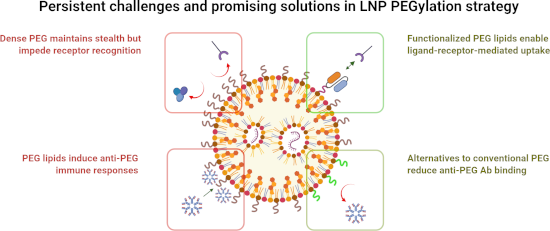
- components plays a specific role in maintaining the nanoparticles’ structure and enhancing their performance [2]. The remarkable success of mRNA-based COVID-19 vaccines has highlighted LNPs as a transformative nanomedicine, driving significant interest and innovation in this field [3]. As a key ingredient in
- review first reveals the localization and conformation of PEG lipids on the LNP surface, which is fundamental for understanding how PEG lipids contribute to nanoparticle stability and surface interactions. It then demonstrates how PEG density and chemical structure may influence the physicochemical
- lipid surface density and structure on LNP physicochemical properties Understanding the spatial organization of lipid components within LNPs is critical for optimizing their physicochemical characterization and stability. In particular, the localization of PEG lipids plays a significant role in



Programmable soliton dynamics in all-Josephson-junction logic cells and networks
Beilstein J. Nanotechnol. 2025, 16, 1883–1893, doi:10.3762/bjnano.16.131

- . This idea enables us to use the “flaws” of the structure as its important features, opening up a pathway to creating programmable and reconfigurable large circuits. An obvious and widely required application of this technology is in the development of superconductive programmable gate arrays (SPGAs
- , resulting in another full 2π phase advance across the entire line. It is crucial to note that although the absolute phase values accumulate in multiples of 2π throughout this sequence, the physical state of the structure remains unchanged after each full transmission, a direct consequence of the 2π
- periodicity of the Josephson energy. A significant feature of this structure is the ability to disable the diode effect. By increasing the inductance to L/LJ = 3, the device becomes bi-directionally transparent, effectively turning the diode function “off”. This demonstrates how the introduced structural


Low-temperature AFM with a microwave cavity optomechanical transducer
Beilstein J. Nanotechnol. 2025, 16, 1873–1882, doi:10.3762/bjnano.16.130
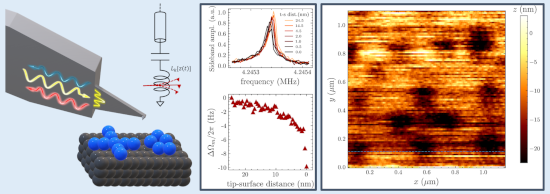
- . Figure 5d–f shows the effect of the measurement bandwidth on a single scan line. Finally, we tested the lateral resolution of our microscope by imaging a less trivial structure. We fabricated a second test sample by etching a pattern from the top Ti layer of a Ti(10 nm)/Au(5 nm)/Ti(5 nm) film deposited


Self-assembly and adhesive properties of Pollicipes pollicipes barnacle cement protein cp19k: influence of pH and ionic strength
Beilstein J. Nanotechnol. 2025, 16, 1863–1872, doi:10.3762/bjnano.16.129
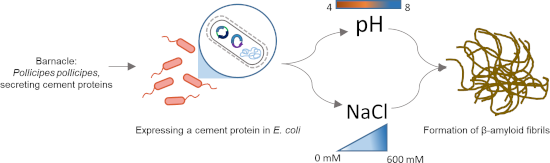
- fibril formation occurs in the acidic, iso-osmotic gland of the barnacle, with delayed cement curing enabling fibril secretion for sustained adhesion of the organism. The study provides insight into the environmental sensitivity of cp19k structure–function dynamics and may support the design of
- underwater curing in barnacle bioadhesion. While monomeric cp19k exhibited apparently stronger surface adhesion than fibrillar protein, differences in structure, β-amyloid composition, and adhesive properties between the monomeric and the fibrillar protein, as well as between fibrils assembled under


On the road to sustainability – application of metallic nanoparticles obtained by green synthesis in dentistry: a scoping review
Beilstein J. Nanotechnol. 2025, 16, 1851–1862, doi:10.3762/bjnano.16.128
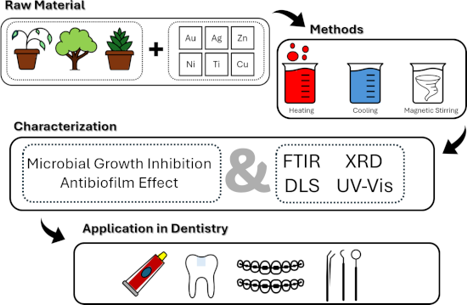
- nanoparticle formation in real time by detecting surface plasmon resonance bands, which provide insight into particle size and distribution [57]. XRD offers detailed information on the crystalline structure and phase composition of the nanoparticles, confirming successful synthesis and purity [53]. Together


Phytol-loaded soybean oil nanoemulsion as a promising alternative against Leishmania amazonensis
Beilstein J. Nanotechnol. 2025, 16, 1826–1836, doi:10.3762/bjnano.16.126

- nanoscale size, lipid fusion with membrane components, or disruption of the plasma membrane structure [48][49]. However, several studies have also highlighted the remarkable potential of nanoemulsions against intracellular amastigote forms. In addition to enhancing cutaneous penetration, nanoemulsions also


Piezoelectricity of layered double hydroxides: perspectives regarding piezocatalysis and nanogenerators
Beilstein J. Nanotechnol. 2025, 16, 1812–1817, doi:10.3762/bjnano.16.124

- conversion devices has positioned layered double hydroxides (LDHs) as promising candidates among the other two-dimensional materials. With their unique flexible layered structure, LDHs hold great potential for piezocatalysis and powering smart wearable electronics. Despite their promise, this area of study
- future, systematic research into the effects of LDHs’ composition and structure on piezoelectric properties will be crucial to unlock their full potential. This mini-review aims to inspire the audience with valuable ideas for the development of new LDH-based piezoelectric materials, thereby contributing
- environmental sources is a priority. Piezoelectric materials have the ability to convert mechanical energy into electrical energy due to the arrangement of dipoles in their structure, thus providing sustainable electrical energy for low-power-consuming and self-powered devices [1]. The most common piezoelectric

Electrical, photocatalytic, and sensory properties of graphene oxide and polyimide implanted with low- and medium-energy silver ions
Beilstein J. Nanotechnol. 2025, 16, 1794–1811, doi:10.3762/bjnano.16.123
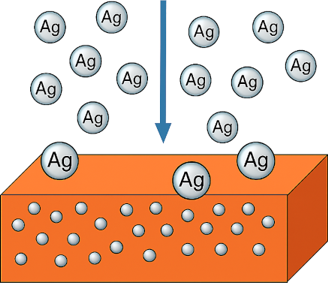
- , and C–O) and the simultaneous transformation of the amorphous polymer phase into a graphitized structure with higher electrical parameters [9]. This results in carbon regions rich in conjugated π-electron systems, which allow for efficient charge delocalization and the formation of conducting pathways
- relative humidity [16]. In addition to improving the affinity for water vapor, the implantation of Ag ions also translates into changes in optical and photochemical properties of the material, such as photocatalytic properties [17]. The modified electronic structure, characterized by a narrowing of the
- structure of graphene oxide where carbon atoms form the basic lattice, while oxygen is present in the form of epoxy and hydroxy groups [23]. The C=O bonds (9.42%) represent carbonyl groups, while C=C bonds (14.68%) indicate the presence of residual conjugated sp2-hybridized regions, which are characteristic


Exploring the potential of polymers: advancements in oral nanocarrier technology
Beilstein J. Nanotechnol. 2025, 16, 1751–1793, doi:10.3762/bjnano.16.122
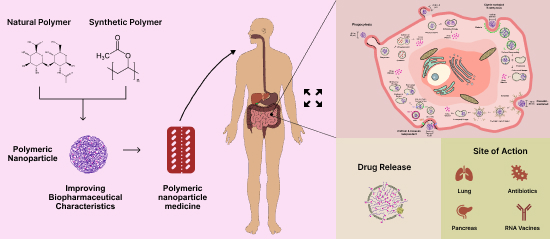
- anionic glycoprotein that plays a pivotal role in determining the thickness and structure of the mucus layer. Consequently, its barrier function and permeability to drugs are also influenced. As a consequence, positively charged substances are attracted to mucin by electrostatic forces and retained within
- matrix, osmotic pumping, and erosion. Release via diffusion through water-filled pores depends on a concentration gradient. Water absorbed by the NPs penetrates the polymer matrix, and progressive hydration leads to the formation and expansion of water-filled pores, the structure of which evolves with
- polymer begins to degrade at the outer layer of the matrix and progressively advances inward, with the degradation rate exceeding that of water penetration. In bulk erosion, water rapidly penetrates the entire polymer structure, promoting homogeneous degradation of the matrix. This type of erosion


Advances of aptamers in esophageal cancer diagnosis, treatment and drug delivery
Beilstein J. Nanotechnol. 2025, 16, 1734–1750, doi:10.3762/bjnano.16.121
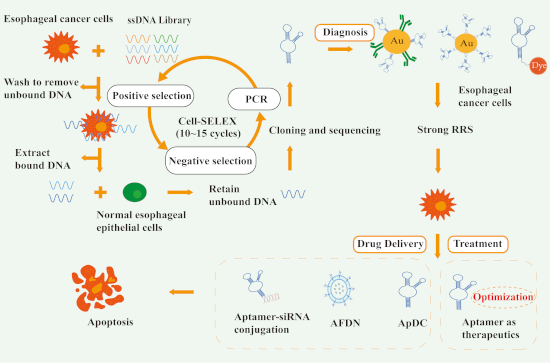
- by exponential enrichment” (SELEX) technology, and their folded three-dimensional structure realizes high affinity and specific binding with targets; also, they have the advantages of relatively small molecular size, cost-effective production, broad target spectrum, and high adaptability for
- , this synergistic strategy presents a promising approach to circumvent chemotherapy resistance in cancer treatment. In general, DNA aptamers have higher thermal stability, RNA aptamers are richer in secondary structure, and peptide aptamers are smaller in size and easier to enter cells [29]. Furthermore
- azithromycin, but its effect in vivo is inferior. It is expected that ZY3A can be applied to clinical practice through optimizing drug administration strategies, such as combination of antibiotics and improvement of the aptamer structure. The mechanism of action of ZY3A may be to inhibit NF-κB pathway and MMP2


Multifunctional anionic nanoemulsion with linseed oil and lecithin: a preliminary approach for dry eye disease
Beilstein J. Nanotechnol. 2025, 16, 1711–1733, doi:10.3762/bjnano.16.120
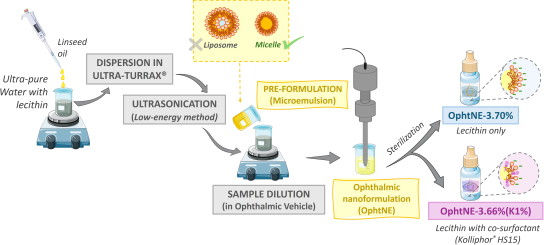
- ingredient [1]. NEs are designed as droplets that can potentially replenish the lipid layer in DED patients, mimicking the trilayered structure of the tear film, consisting of lipid, aqueous, and mucin layers [13][15][18][20]. According to the literature, the tear film compromises the stability of NE
- addition to PFAs, phospholipids are notable for their structure, which includes a hydrophilic part (phosphate groups) and a hydrophobic part (fatty acid chains). This unique configuration allows phospholipids to interact at the interface between the lipid and aqueous layers of the tear film, increasing its
- Rio de Janeiro (BCRJ)/ATCC (Brazil). RPMI Medium 1640 (code 31800022), fetal bovine serum (FBS, code 12657029), GlutaMAX (code 35050061), and penicillin–streptomycin (code 15140122) were purchased from GIBCOTM (Brazil). Methodological basis: lecithin structure and emulsification process Droplet size