Search results
Search for "thermal conductivity" in Full Text gives 132 result(s) in Beilstein Journal of Nanotechnology.
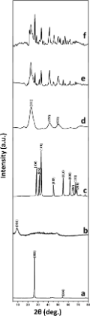
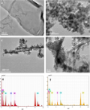
Hierarchically structured nanoporous carbon tubes for high pressure carbon dioxide adsorption
Beilstein J. Nanotechnol. 2017, 8, 1135–1144, doi:10.3762/bjnano.8.115
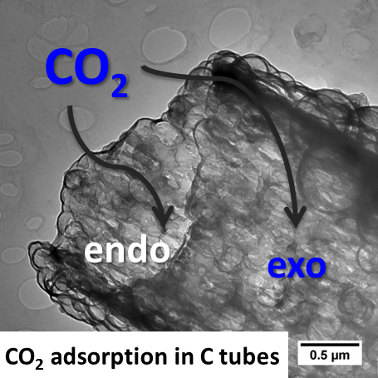
- attractive as a potential material for catalysis and electronic and photonic devices due to its semiconducting nature with a wide band gap, excellent mechanical properties, chemical inertness and thermal conductivity [13][14][15][16][17]. Especially, one-dimensional SiC in the form of nanowires or nanorods


Investigation of growth dynamics of carbon nanotubes
Beilstein J. Nanotechnol. 2017, 8, 826–856, doi:10.3762/bjnano.8.85
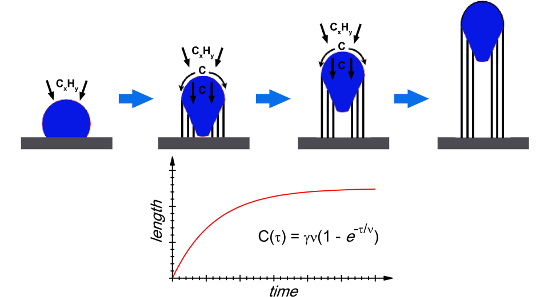
- hypothesis of a temperature gradient is further challenged for small nm sized particles, which can grow single-walled carbon nanotubes. It is unlikely to play an important role in the growth of SWCNTs, because small catalytic particles have a high thermal conductivity and therefore the temperature gradient


Gas sensing properties of MWCNT layers electrochemically decorated with Au and Pd nanoparticles
Beilstein J. Nanotechnol. 2017, 8, 592–603, doi:10.3762/bjnano.8.64
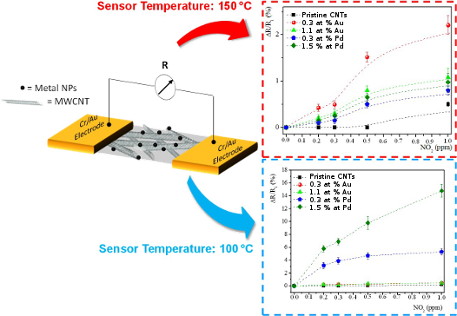
- the sensing active layer so as to restore resistance to the initial baseline with a full recovery without loss of the catalytic effects of metal NPs [35][45]. Above the critical temperature, the desorption of gaseous molecules from the surface of MWCNTs is accelerated by the decrease of the thermal
- conductivity of MWCNTs [46]. This results in the consequent lowering of the energy barrier, and therefore, a decrease of the sensing response [47][48]. Considering the specific optimum operating temperature of each hybrid sensing system, the sensing response, in terms of electrical resistance variation (ΔR


Tailoring bifunctional hybrid organic–inorganic nanoadsorbents by the choice of functional layer composition probed by adsorption of Cu2+ ions
Beilstein J. Nanotechnol. 2017, 8, 334–347, doi:10.3762/bjnano.8.36
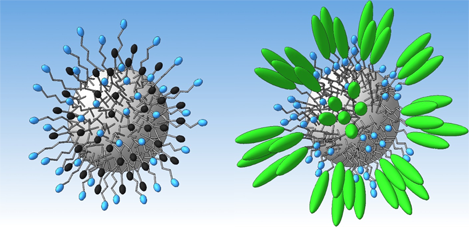
- performed by elementary analyzer Vario MACRO cube (Elementar Analysensysteme GmbH, Germany) using a thermal conductivity detector. Helium and oxygen (both purity 99.995%) were used as the carrier and combusting gases, respectively, with 2 bar intake pressure. The combustion tube was set at 1150 °C and the


Nanocrystalline ZrO2 and Pt-doped ZrO2 catalysts for low-temperature CO oxidation
Beilstein J. Nanotechnol. 2017, 8, 264–271, doi:10.3762/bjnano.8.29
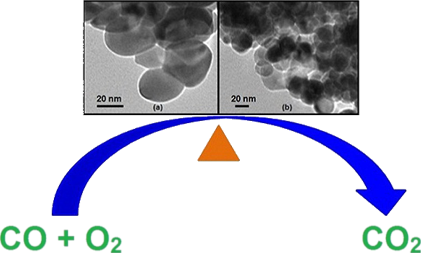
- thermal conductivity detector (TCD). Each run was tested for at least 60 min to achieve a steady state. The CO conversion was measured as follows: XRD patterns of (a) ZrO2, and (b) Pt(1%)-ZrO2. Expanded XRD region between 29° and 32° to show the peak shift between (a) ZrO2 and (b) Pt(1%)-ZrO2. TGA of (a


Graphene–polymer coating for the realization of strain sensors
Beilstein J. Nanotechnol. 2017, 8, 21–27, doi:10.3762/bjnano.8.3
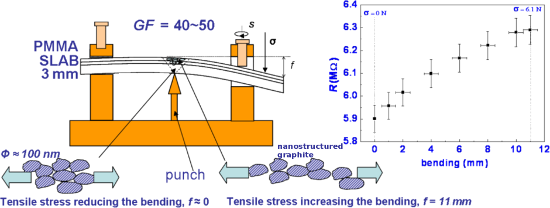
- thermal noise, as shown in the Figure 5. It is interesting to stress here that this result is obtained on a graphene/PMMA sample where the graphene layer is about 1 μm thick. This behavior can be ascribed to the high thermal conductivity of graphene compared to the other materials reported in Figure 5


The difference in the thermal conductivity of nanofluids measured by different methods and its rationalization
Beilstein J. Nanotechnol. 2016, 7, 2037–2044, doi:10.3762/bjnano.7.194
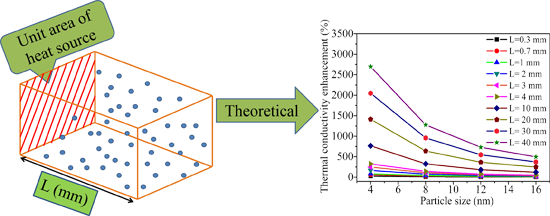
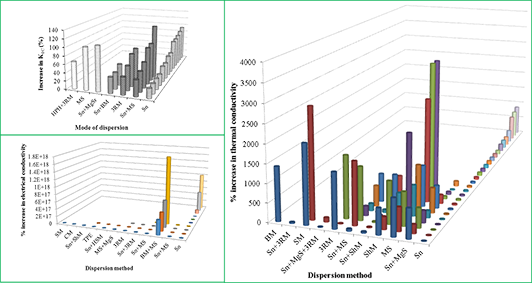
- notable enhancement in thermal conductivity, when measured by the transient hot-wire method. In contrast, when the conductivity of the same nanofluid is measured by the laser flash method, the enhancement reported is about one order of magnitude lower. This difference has been quantitatively resolved for
- -mediated heat transfer model; laser flash method; nanofluids; thermal conductivity; transient hot-wire method; Introduction In 1995, Choi et al. [1] dispersed copper nanoparticles in water, and termed the suspension as nanofluid. They observed a large increase in the thermal conductivity of this nanofluid
- compared to water when measured by the transient hot-wire method (THWM). Subsequently, the thermal conductivity of nanofluids has been extensively investigated by THWM with the prospect to use them for enhanced heat-transfer applications [2][3][4][5][6][7][8]. However, the cause of this enhanced thermal


Role of RGO support and irradiation source on the photocatalytic activity of CdS–ZnO semiconductor nanostructures
Beilstein J. Nanotechnol. 2016, 7, 1684–1697, doi:10.3762/bjnano.7.161
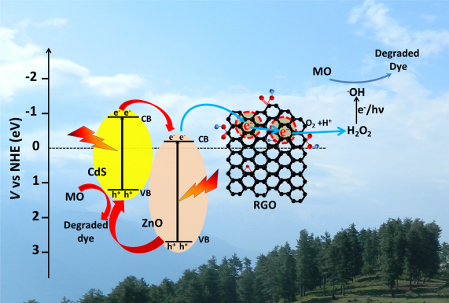
- dimensional (2D) network of sp2-hybridized carbon atoms with hexagonal packed lattice structure [28]. Graphene also possesses unique electronic, optical and mechanical properties such as high theoretical specific surface area (2630 m2·g−1) [29], chemical stability, high transparency and good thermal
- conductivity (5000 W·m−1·K−1) [30]. Its optical transmittance is about 97.7% and possesses superior electron mobility (200000 cm2·V−1·s−1), which makes it an ideal material for photocatalyst support [31]. Several semiconductor nanocomposites supported on graphene have been used as photocatalysts for the




Analysis of self-heating of thermally assisted spin-transfer torque magnetic random access memory
Beilstein J. Nanotechnol. 2016, 7, 1676–1683, doi:10.3762/bjnano.7.160
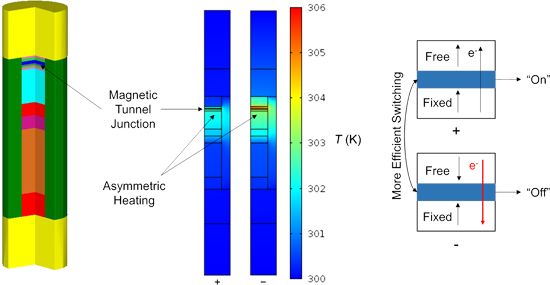
- the temperature, t is the time, k is the thermal conductivity, and Π is the net Peltier coefficient. Thermoelectric Peltier, and Thomson heat terms are included in the heat equation (Equation 2). Tunneling through the device is modeled using an external circuit that circumvents the thin insulating
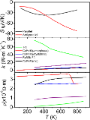
- T is the local temperature. Temperature-dependent materials properties [7][10][11][12][13][14] (Figure 3) are used for CoFeB, MgO, and Fe. The temperature-dependent thermal conductivity of CoFeB is calculated using the Wiedemann–Franz law: where L is the Lorenz number. It is assumed the annealing
- different heat paths through metal and passivation layers, the configurations with passivation–Cu contacts (I, III) are simulated with and without thermal boundary resistances (TBR) applied on the passivation–Cu interfaces. This TBR is modeled as a 1 nm thick virtual layer with a thermal conductivity of





Fracture behaviors of pre-cracked monolayer molybdenum disulfide: A molecular dynamics study
Beilstein J. Nanotechnol. 2016, 7, 1411–1420, doi:10.3762/bjnano.7.132
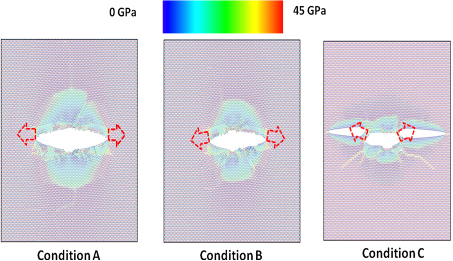
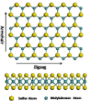
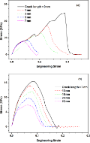
- ][12][13][14]. Jiang et al. [15] presented a parameterization of the Stillinger–Weber (SW) potential to describe the interatomic interactions within single-layer MoS2 (SLMoS2). And based on this potential, they studied chirality, size, and strain effects on the Young’s modulus and the thermal
- conductivity of defect-free SLMoS2 by using classical MDS. Dang et al. [16] used MDS with a reactive empirical bond order potential to study the mechanical deformation and failure of monolayer molybdenum disulfide under uniaxial and multiaxial tension. Zhao et al. [17] investigated the influence of temperature




Reasons and remedies for the agglomeration of multilayered graphene and carbon nanotubes in polymers
Beilstein J. Nanotechnol. 2016, 7, 1174–1196, doi:10.3762/bjnano.7.109


Thermo-voltage measurements of atomic contacts at low temperature
Beilstein J. Nanotechnol. 2016, 7, 767–775, doi:10.3762/bjnano.7.68
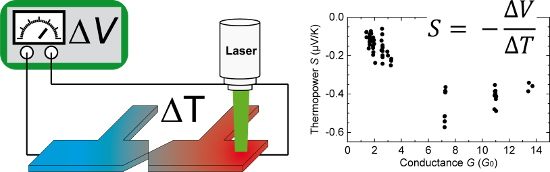
- suitable for low temperature measurements. Apart from being flexible its thermal conductivity is one to two orders of magnitude lower at 4 K than the one of the usual metallic substrates. This supports the creation (and the preservation) of a temperature gradient for thermopower measurements. Due to r.m.s
- to All other parameters, A, b0, and c are not relevant for the determination. Sample details Simulation details For the simulations we used the following material parameters: Gold: Thermal conductivity κ = 320/1.85 W m−1 K−1, specific heat cp = 128 J kg−1 K−1, mass density ρm = 19300 kg m−3


Charge and heat transport in soft nanosystems in the presence of time-dependent perturbations
Beilstein J. Nanotechnol. 2016, 7, 439–464, doi:10.3762/bjnano.7.39
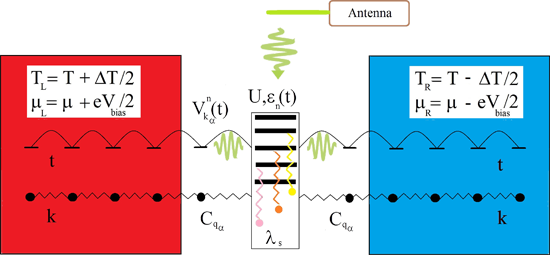
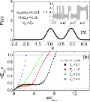
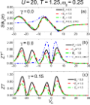
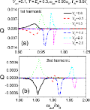
- always gets larger with increasing the electron–vibration coupling EP. Actually, the electron–oscillator coupling gives rise to an additional damping rate on the vibrational dynamics whose effect is to enhance the thermal conductivity . In a certain sense, due to the electron–vibration coupling, the






Synthesis and applications of carbon nanomaterials for energy generation and storage
Beilstein J. Nanotechnol. 2016, 7, 149–196, doi:10.3762/bjnano.7.17
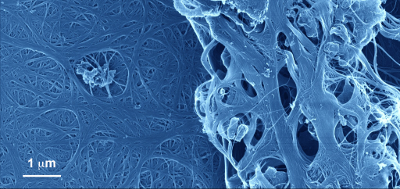
- hexagons around the equatorial plane and exhibits a more oval shape (Figure 4) [26]. The main properties of C60 are [25]: Young’s modulus, ≈14 GPa Electrical resistivity, ≈1014 Ω m Thermal conductivity, ≈0.4 W/mK Band gap, 1.7 eV The other fullerene species show similar properties to C60. Depending on the
- , ≈0.62–1.25 TPa [40] Electrical resistivity, ≈1 μΩ cm [41] Thermal conductivity, ≈3000 W/mK [42] In addition to their extraordinary properties, the density of CNTs is around 1.33–1.4 g/cm3 [40], which is half of the density of aluminium (2.7 g/cm3), making them very attractive for lightweight
- ][63], high Young’s modulus (≈1 TPa) with an intrinsic strength of 130 GPa [64][65], high thermal conductivity (over 3000 W m−1 K−1) [66] and excellent optical transmittance (≈97.7%) [67]. Additional graphene characteristics include: high theoretical specific surface area (2630 m2 g−1) [68















Current-induced runaway vibrations in dehydrogenated graphene nanoribbons
Beilstein J. Nanotechnol. 2016, 7, 68–74, doi:10.3762/bjnano.7.8
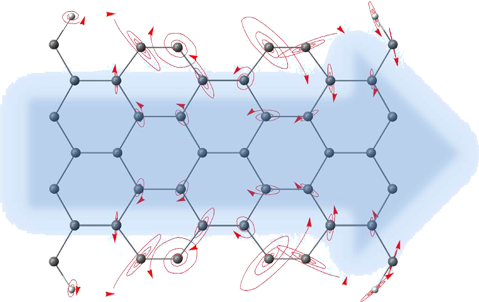
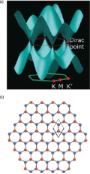
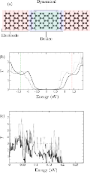
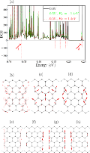
- study since its discovery in 2004 [1]. Due to the strong σ-bonding between carbon atoms, graphene has a very high thermal conductivity, and can potentially sustain much higher current intensities than other materials. Graphene nanoribbons (GNR) exhibit a bandgap opening due to quantum confinement in the
Calculations of helium separation via uniform pores of stanene-based membranes
Beilstein J. Nanotechnol. 2015, 6, 2470–2476, doi:10.3762/bjnano.6.256
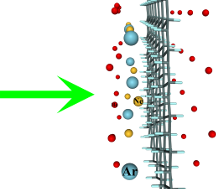
- lattice; Introduction With many outstanding properties such as low density, low boiling point, low solubility, and high thermal conductivity and inertness, helium finds extensive application in cryogenic science [1], arc welding processes [2], and leak detection [3]. Although it is the second most


High Ion/Ioff current ratio graphene field effect transistor: the role of line defect
Beilstein J. Nanotechnol. 2015, 6, 2062–2068, doi:10.3762/bjnano.6.210
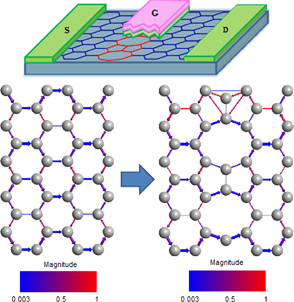
- of its unique electronic transport properties. The properties of graphene such ultra-thin body properties for optimum electrostatic scaling and excellent thermal conductivity has made it a potential alternative to silicon and facilitated the manufacture of devices [1][2]. Furthermore, the high
- the best candidates for changing the hexagon structure of graphene with acceptable C–C distances and angles for sp2 hybridization [7]. These defects play a remarkable role in graphene and nano-structured devices. One controlled defect in graphene are grain boundaries. The electrical and thermal
- conductivity decrease with grain boundaries in materials [8][9]. By studying the grain boundaries in graphite, extended line defects become visible in the STM analysis [10]. The first experimental report of the extended line defect (ELD), which was studied through alternating Stone–Thrower–Wales defects, was


Simulation of thermal stress and buckling instability in Si/Ge and Ge/Si core/shell nanowires
Beilstein J. Nanotechnol. 2015, 6, 1970–1977, doi:10.3762/bjnano.6.201
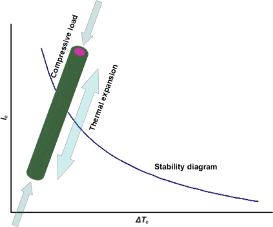
- for next generation transistor devices. The radial heterostructure offers the advantage of control of the band gap and charge carrier mobility by tuning their size [5] and selecting suitable impurity doping scheme [3][6]. In addition, they exhibit significantly suppressed phonon thermal conductivity
- been widely adopted for incorporating the quantum effects in classical MD simulations dealing with the measurement of thermal properties such as thermal conductivity [31] and the coefficient of thermal expansion [32][33]. In this method, a system with N atoms produces the 3N × 3N dynamical matrix, as


Temperature-dependent breakdown of hydrogen peroxide-treated ZnO and TiO2 nanoparticle agglomerates
Beilstein J. Nanotechnol. 2015, 6, 1897–1903, doi:10.3762/bjnano.6.193
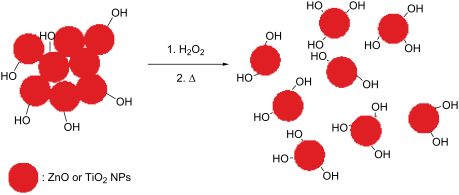
- nm) was examined [16]. The thermal conductivity and surface potential of the nanofluids were also studied [17][18][19]. The toxicity of NPs is another concern that is strongly related to their size, shape, and surface chemistry. Since the synthesis of NPs of a certain size and shape in large




Metal hydrides: an innovative and challenging conversion reaction anode for lithium-ion batteries
Beilstein J. Nanotechnol. 2015, 6, 1821–1839, doi:10.3762/bjnano.6.186
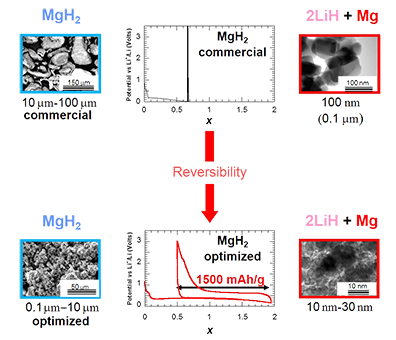
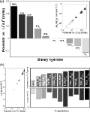
- particle size of the hydride but also enhances its reactivity vs Li-ions. In the case of the system Mg/MgH2, 5% of Super P carbon was mixed with the Mg powder in order to increase the thermal conductivity of the powder and to prevent the necking of particles during sorption cycles. Figure 13a and Figure
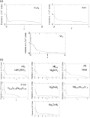
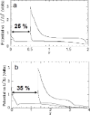
- commercial hydride, as expected (Figure 16). The dispersion of the hydride particles into carbon increases the thermal conductivity of the powder and helps the hydrogen release. With regard to the electrochemical properties, the potential–capacity curves of an electrode composite of MgH2–10% Ct,z obtained










Possibilities and limitations of advanced transmission electron microscopy for carbon-based nanomaterials
Beilstein J. Nanotechnol. 2015, 6, 1541–1557, doi:10.3762/bjnano.6.158
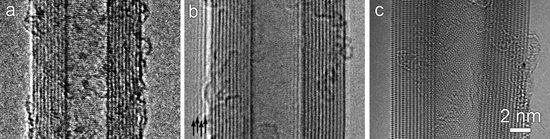
- excellent electric and thermal conductivity [47][48] and suffer only slightly from damage related to inelastic scattering. Although the previous discussion has pointed out that low operating voltages increase the damage of large holes possibly due to etching, imaging conditions of 60 keV and 80 keV are


Thermal energy storage – overview and specific insight into nitrate salts for sensible and latent heat storage
Beilstein J. Nanotechnol. 2015, 6, 1487–1497, doi:10.3762/bjnano.6.154
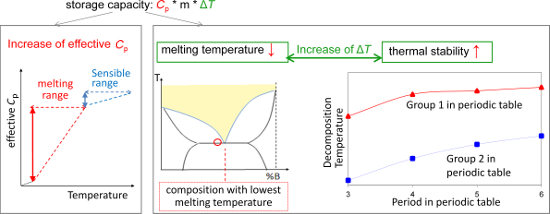
- the storage capacity is directly proportional to the heat capacity which therefore is an essential parameter. Several data exist which are summarized in the following. The data show that the heat capacity is slightly increasing with temperature (see Figure 2). Concerning the thermal conductivity
- several data exist which are not consistent and therefore rather give a rough idea, as shown in Figure 3. Even though the data differ in the different publications the measurements show that the thermal conductivity increases with temperature. More precise data require additional experiments. As to the
- properties (porosity, density, compressive strength, heat capacity) and the thermal stability up to 400 °C in an air atmosphere have been determined. Quartzite was chosen as the most suitable filler material because of its high thermal conductivity (caused by the high percentage of the mineral quartz) and


Improved optical limiting performance of laser-ablation-generated metal nanoparticles due to silica-microsphere-induced local field enhancement
Beilstein J. Nanotechnol. 2015, 6, 1199–1204, doi:10.3762/bjnano.6.122
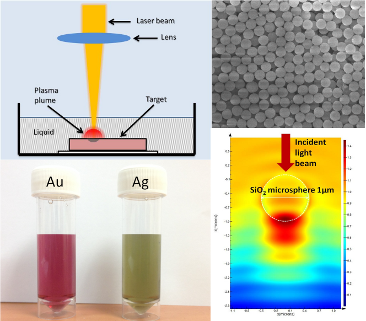
- absorbed laser energy. Hence, the size of the laser-generated Ag nanoparticles is larger. Au and Ag have different physical properties, such as the absorption spectrum of the laser light, melting point, boiling point and thermal conductivity, which all can contribute to the size difference. The laser


Enhancing the thermoelectric figure of merit in engineered graphene nanoribbons
Beilstein J. Nanotechnol. 2015, 6, 1176–1182, doi:10.3762/bjnano.6.119
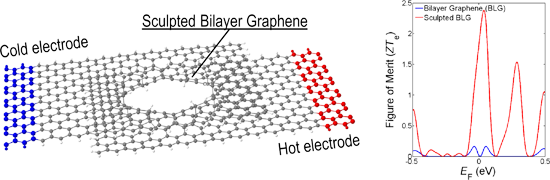
- thermoelectricity requires a strongly suppressed thermal conductivity (κ) since the performance of thermoelectric devices is inversely proportional to the thermal conductivity. On the other hand, the cooling of local hot spots requires a high thermal conductivity [3]. Thermal conductance in a solid is defined by
- graphene [20]. This means that 2D graphene and its multilayer counterparts are useful for thermal management applications [21]. The high thermal conductivity of the graphene is mainly due to the high phonon contribution to heat transport. Therefore, for thermoelectricity applications, one needs to engineer
- phonon transport to achieve a low thermal conductivity. Moreover, graphene is a zero-gap material and not suitable to use as thermoelectric material because of its very small Seebeck coefficient. However, theoretical studies revealed that phonon transport is sensitive to defects, strain, sample size and


Graphene quantum interference photodetector
Beilstein J. Nanotechnol. 2015, 6, 726–735, doi:10.3762/bjnano.6.74
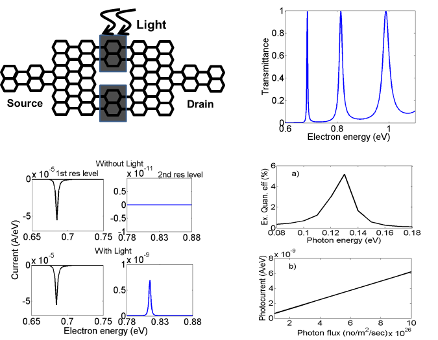
- as high electrical mobility, high thermal conductivity, high mechanical strength, linear energy dispersion around the Dirac point and strong light absorption from near-infrared to visible wavelengths [1][2][3]. Graphene also exhibits ballistic electron transport over unusually long lengths [4][5][6