


Search results
Search for "transport properties" in Full Text gives 171 result(s) in Beilstein Journal of Nanotechnology.
Comparative study of post-growth annealing of Cu(hfac)2, Co2(CO)8 and Me2Au(acac) metal precursors deposited by FEBID
Beilstein J. Nanotechnol. 2018, 9, 91–101, doi:10.3762/bjnano.9.11
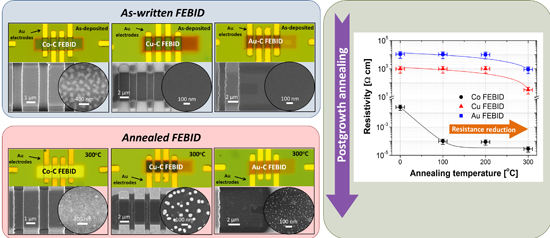
- incomplete dissociation of organometallic precursor adsorbate molecules usually leads to codeposition of organic compounds into the metal deposits [3][8][12][32][33][34][35]. This unwanted deposition degrades the electrical transport properties of the deposit, thus limiting the applicability of the FEBID


L-Lysine-grafted graphene oxide as an effective adsorbent for the removal of methylene blue and metal ions
Beilstein J. Nanotechnol. 2017, 8, 2680–2688, doi:10.3762/bjnano.8.268
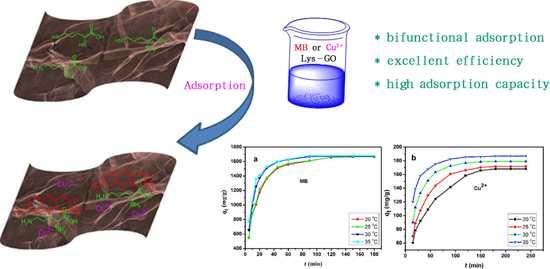
- attention because of their huge specific surface area, extraordinary electronic transport properties and unique adsorption properties [1][2][3]. These materials have important applications in many fields, including physics [4], electrochemistry [5], environmental science [6] and catalysis [7]. For example


One-step chemical vapor deposition synthesis and supercapacitor performance of nitrogen-doped porous carbon–carbon nanotube hybrids
Beilstein J. Nanotechnol. 2017, 8, 2669–2679, doi:10.3762/bjnano.8.267
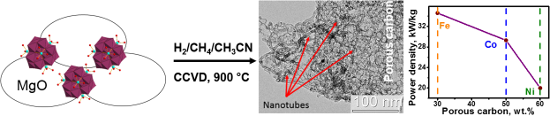
- . The value is larger when the fraction of porous carbon in the sample is lower (Table S1 in Supporting Information File 1). This fact evidences the role played by the MWCNTs in the enhancement of the charge transport properties of the materials. The fast ion-transfer process in the cells results in


The role of ligands in coinage-metal nanoparticles for electronics
Beilstein J. Nanotechnol. 2017, 8, 2625–2639, doi:10.3762/bjnano.8.263
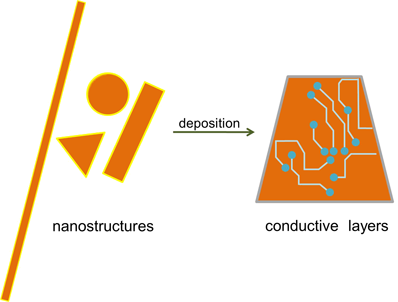
- synthesis and ligand exchange. They provide colloidal stability to gold, silver, and copper nanostructures. Representative examples of surface ligands that have been shown to improve charge transport properties in films. Post-deposition liquid exchange increases conductivity by replacing the insulating


Inelastic electron tunneling spectroscopy of difurylethene-based photochromic single-molecule junctions
Beilstein J. Nanotechnol. 2017, 8, 2606–2614, doi:10.3762/bjnano.8.261
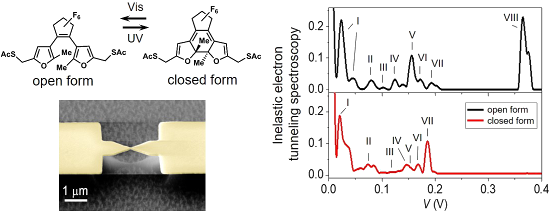
- , including the energy of the highest occupied molecular orbital (HOMO) and the lowest unoccupied molecular orbital (LUMO) and their coupling to electrodes. This behavior results in a change of the charge transport properties of the corresponding molecular junctions, most prominently of the electrical


Electronic structure, transport, and collective effects in molecular layered systems
Beilstein J. Nanotechnol. 2017, 8, 2094–2105, doi:10.3762/bjnano.8.209
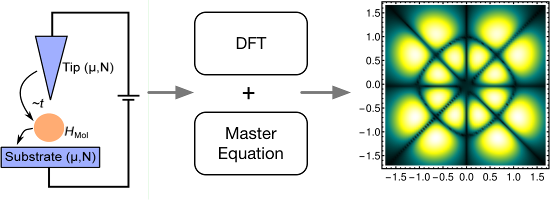
- heterostructures for organic device applications is exemplified by the targeted engineering of the electronic properties of phthalocyanine-based systems. The transport properties of two different phthalocyanine systems, a pure copper phthalocyanine (CoPc) and a flourinated copper phthalocyanine–manganese
- included. The geometry of the molecules was optimized using a gradient approach, the relaxation was terminated once all atomic were below 0.05 eV/Å. We applied the NEGF method for the self-consistent calculation of the electronic transport properties as implemented in the GPAW code [20][21] to investigate
- of 2–3 larger than the TMR of the pure CoPc device, depending on the applied bias voltage. Our results make the F16CoPc/MnPc material system a more promising candidate for applications. In principle the experiments presented in [31] did show that application specific design of transport properties is


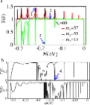
![[Graphic 29]](/bjnano/content/inline/2190-4286-8-209-i41.png?max-width=637&scale=1.18182) between the occupations nA and nB of the two checkerboard sublattices for a) asy...
between the occupations nA and nB of the two checkerboard sublattices for a) asy...

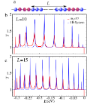
![[Graphic 30]](/bjnano/content/inline/2190-4286-8-209-i42.png?max-width=637&scale=1.18182) per site for a) asymmetric tunneling, Γtop/Γbottom = 0.5, and b) symmetric tunneli...
per site for a) asymmetric tunneling, Γtop/Γbottom = 0.5, and b) symmetric tunneli...
Adsorbate-driven cooling of carbene-based molecular junctions
Beilstein J. Nanotechnol. 2017, 8, 2060–2068, doi:10.3762/bjnano.8.206
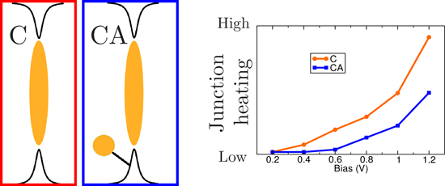
- also find that the direct influence of adsorbate states is significantly smaller and tends to heat adsorbate vibrations. Our results highlight the important role of molecular adsorbates not only on the electronic and elastic transport properties but also on the current-induced energy exchange and
- electrodes, close to the metal–carbene bond. N-Heterocyclic carbenes (NHCs) have recently attracted much attention because of their interesting electronic properties and their high thermal and mechanical stability [25][26][27]. We recently studied the electronic and elastic transport properties of NHC-based
- junctions anchored to Au(100) electrodes [28]. We reported a strong dependence of transport properties on the atomistic structure of the metal/molecule interface and analyzed its implications on the current-induced damping and excitation of localized molecular vibrations [29]. We considered the case of a


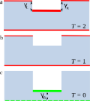
![[Graphic 14]](/bjnano/content/inline/2190-4286-8-206-i21.png?max-width=637&scale=1.18182) = 176 meV as a function of applied bias for the C and CA junctions, a...
= 176 meV as a function of applied bias for the C and CA junctions, a...

Spin-dependent transport and functional design in organic ferromagnetic devices
Beilstein J. Nanotechnol. 2017, 8, 1919–1931, doi:10.3762/bjnano.8.192
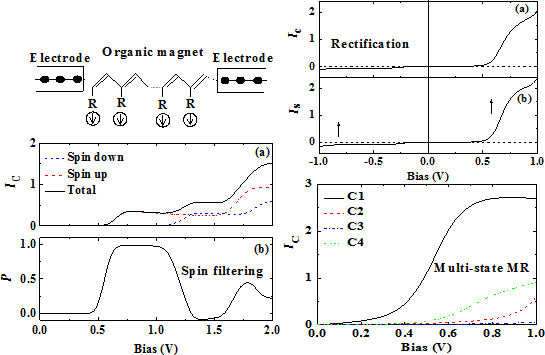
- research on OFs has focused on the synthesis, measurement, and characterization of the magnetic properties of the isolated molecules. Recently, the progress in organic and molecular spintronics has motivated us to explore the spin-dependent transport properties of OFs and the possibility to design organic
- Hamiltonian involving the electric potential is Here, e is the electronic charge of an electron. The first term is the electric potential of the π-electrons, and the second term is the potential of the ion cores. Before calculating the transport properties, one needs to obtain the stationary structure of the
- 0.9 μA for C4. On the other hand, the current for C3 is strongly suppressed within the calculated bias region. The different transport properties indicate that a multi-state MR effect can be realized by controlling the magnetization orientations of the electrodes and the central OF. One can quantify


(Metallo)porphyrins for potential materials science applications
Beilstein J. Nanotechnol. 2017, 8, 1786–1800, doi:10.3762/bjnano.8.180
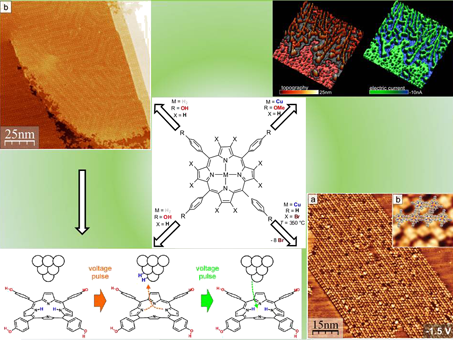
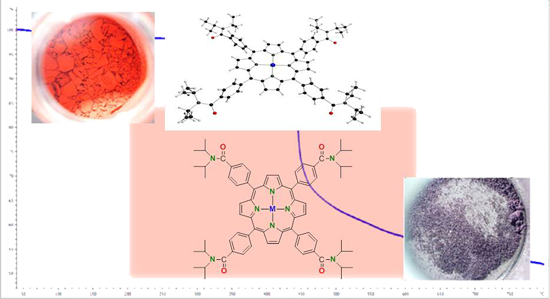
- of those ensembles of (metallo)porphyrins in materials science is discussed. Keywords: atomic force microscopy; magneto-optical Kerr effect spectroscopy; scanning tunnelling microscopy and spectroscopy; self-assembly; surface-confined 2D polymerization; transport properties; Review Introduction
- , which enable a better potential to build molecular spintronic devices [4][5][6][7][8][9]. A crucial step and thus, a prerequisite for the reliable implementation of (metallo)porphyrin-based thin films in a device, is the understanding of the electrical response and local transport properties [10
- processes, where thin films are required. Therefore, the understanding of the electrical transport properties of (metallo)porphyrin compounds (down to the nanoscale) is a crucial step for a reliable implementation in devices [10]. When performed at the nanoscale level, for example via spectroscopic






Transport characteristics of a silicene nanoribbon on Ag(110)
Beilstein J. Nanotechnol. 2017, 8, 1699–1704, doi:10.3762/bjnano.8.170
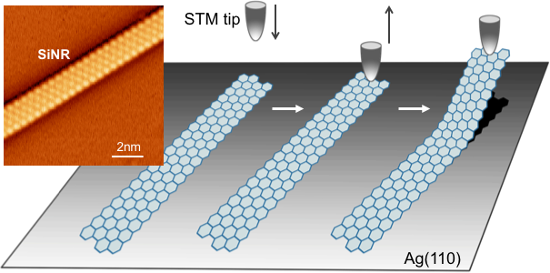
- . The histogram indicates how long the nanojunction can be fabricated. The nanojunctions are usually broken at small values of Zgap_max and SiNRs can rarely be lifted up to 1.0 nm. It is of interest to compare the properties of SiNRs with graphene nanoribbons (GNRs). The transport properties of armchair
- measurements. In the DFT calculation of Ding and Wang [33], pentagonal rings appear inside the honeycomb ribbon and the peak structure may reflect the pentagonal structure. However, further investigations are required to conclude the atomic structure and transport properties of SiNRs. Conclusion We


Group-13 and group-15 doping of germanane
Beilstein J. Nanotechnol. 2017, 8, 1642–1648, doi:10.3762/bjnano.8.164
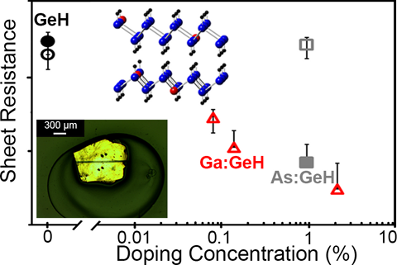
- group-15 element As, can be successfully doped into a precursor CaGe2 phase, and remain intact in the lattice after the topotactic deintercalation, using HCl, to form GeH. After deintercalation, a maximum of 1.1% As and 2.3% Ga can be substituted into the germanium lattice. Electronic transport
- properties of single flakes show that incorporation of dopants leads to a reduction of resistance of more than three orders of magnitude in H2O-containing atmosphere after As doping. After doping with Ga, the reduction is more than six orders of magnitude, but with significant hysteretic behavior, indicative



Charge transport in organic nanocrystal diodes based on rolled-up robust nanomembrane contacts
Beilstein J. Nanotechnol. 2017, 8, 1277–1282, doi:10.3762/bjnano.8.129
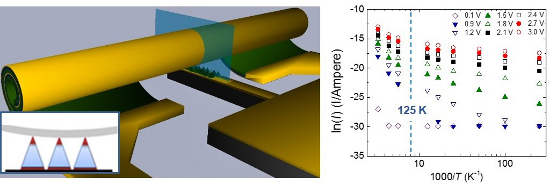
- diodes contacted by rolled-up robust nanomembranes. The organic nanocrystals consist of vanadyl phthalocyanine and copper hexadecafluorophthalocyanine heterojunctions. The temperature dependent charge transport through organic nanocrystals was investigated to reveal the transport properties of ohmic and
- contacts. The nanocrystals consist of vanadyl phthalocyanine (VOPc) and copper hexadecafluorophthalocyanine (F16CuPc) heterojunctions. The temperature dependent current–voltage behaviors were investigated to unveil the charge transport properties of the nanocrystals. As most of the well-studied charge
- our previous reports [19]. The fabrication yield of the devices contacted by rolled-up electrodes on the single chip can achieve more than 95% owing to the reliable parallel nanofabrication when the whole process is carefully performed. To study the charge transport properties of the crystalline


Synthesis, spectroscopic characterization and thermogravimetric analysis of two series of substituted (metallo)tetraphenylporphyrins
Beilstein J. Nanotechnol. 2017, 8, 1191–1204, doi:10.3762/bjnano.8.121
- ) were investigated by current-sensing atomic force microscopy [8]. It was concluded that for the investigation of films with different morphologies and transport properties further (metallo)porphyrins should be studied, as outlined in the Introduction section [6][7][8][9]. However, we were not able to


Growth, structure and stability of sputter-deposited MoS2 thin films
Beilstein J. Nanotechnol. 2017, 8, 1115–1126, doi:10.3762/bjnano.8.113
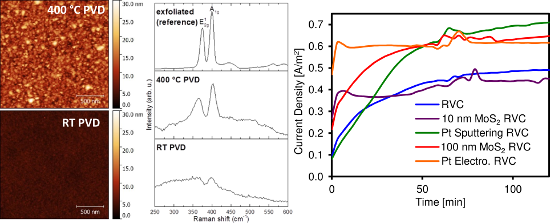
- variations in doping were described to be defect chemistry related and independent of contact metal. Combined this shows that variations in Mo/S stoichiometry can have severe effects on electrical transport properties of MoS2 films. As described above, our PVD MoS2 films here are generally enriched in S
- ], substitution [49][50] or adsorption [51] of add-atoms in/on MoS2 are known to affect the electrical transport properties of MoS2 in a variety of ways, including change from n-type to p-type behaviour, changes in carrier numbers or changes in local structure from 2H (semiconducting) to 1T (metallic). Previous
- measurements on our films to confirm trace contaminations, the increased interlayer distance in our 400 °C films observed in XRD could suggest that additional add-elements may (partly) be intercalated between individual MoS2 layers and thus alter electronic transport properties of the PVD films. Third, and


Stable Au–C bonds to the substrate for fullerene-based nanostructures
Beilstein J. Nanotechnol. 2017, 8, 1073–1079, doi:10.3762/bjnano.8.109
- atoms and molecules can be manipulated. In parallel, the use of atomistic simulations, mainly based on density functional theory (DFT), has allowed for a detailed understanding of the basic mechanisms that determine the electronic and nanoscale transport properties [1]. For spintronics, small organic


First examples of organosilica-based ionogels: synthesis and electrochemical behavior
Beilstein J. Nanotechnol. 2017, 8, 736–751, doi:10.3762/bjnano.8.77
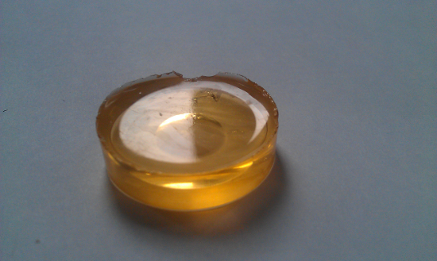
- the zwitterionic nature of the [BmimSO3H][PTS] IL will lead to very strong interactions within the IL rather than between the IL and the silica pore wall. The main advantage of this behavior is that the IL is “self-sufficient” as far as the ionic transport is concerned and transport properties will








Synthesis of graphene–transition metal oxide hybrid nanoparticles and their application in various fields
Beilstein J. Nanotechnol. 2017, 8, 688–714, doi:10.3762/bjnano.8.74
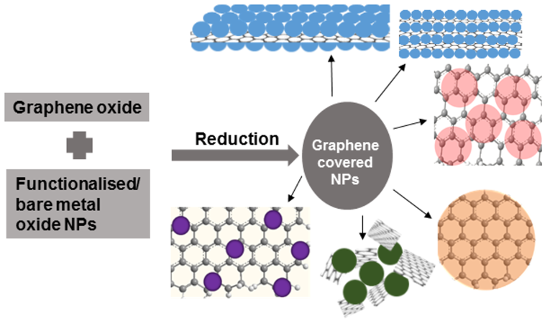
- ), sensors, photocatalysts, removal of organic pollutants, etc. Recent studies have shown that a single graphene sheet (GS) has extraordinary electronic transport properties. One possible route to connecting those properties for application in electronics would be to prepare graphene-wrapped TMO NPs. In this






Anodization-based process for the fabrication of all niobium nitride Josephson junction structures
Beilstein J. Nanotechnol. 2017, 8, 539–546, doi:10.3762/bjnano.8.58
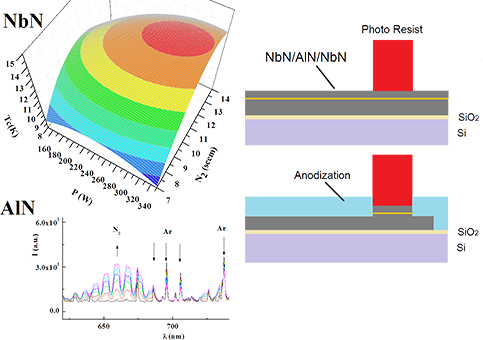
- investigate its mechanical and adhesion properties. The transport properties of NbN/AlN/NbN Josephson junctions obtained as a result of the above described fabrication process were measured in liquid helium at 4.2 K. Keywords: Josephson effect; superconductors; thin films; tunneling; Introduction Niobium


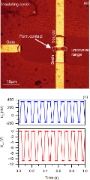
Copper atomic-scale transistors
Beilstein J. Nanotechnol. 2017, 8, 530–538, doi:10.3762/bjnano.8.57
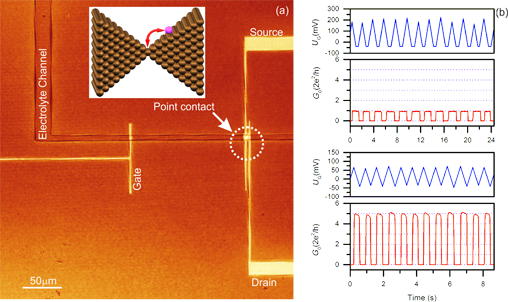
- atomic-scale transistor with a copper quantum point contact as switching block. The fabrication and electron-transport properties of metallic point contacts have been investigated both experimentally and theoretically [23][24][25][26][27][28][29][30][31][32][33][34][35][36][37][38][39][40][41]. The


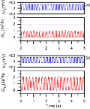
Nitrogen-doped twisted graphene grown on copper by atmospheric pressure CVD from a decane precursor
Beilstein J. Nanotechnol. 2017, 8, 145–158, doi:10.3762/bjnano.8.15
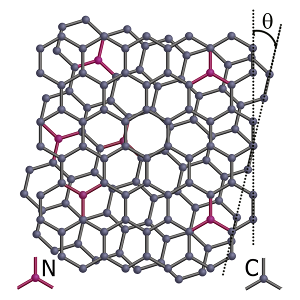
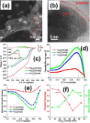
- of a •CxHy + N2 reaction has been proposed. Further work related to the mechanisms of the nitrogen doping and relation between transport properties of graphene and its microstructure is in progress now. Optical images for (a) sample A, (b) sample B as deposited on copper foil. Raman spectrum for (a


Zigzag phosphorene nanoribbons: one-dimensional resonant channels in two-dimensional atomic crystals
Beilstein J. Nanotechnol. 2016, 7, 1983–1990, doi:10.3762/bjnano.7.189

- to the Fermi energy, hinders a wider use of single-orbital tight-binding models in chasing the alluded electronic and transport properties of systems based on this new material. Nevertheless, the use of such model is well validated, by means of comparisons with first-principle electronic structure
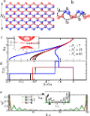
- contact ΣL(R) are calculated recursively for the semi-infinite zigzag phosphorene nanoribbons [23]. Other electronic properties such as the local density of states (LDOS) are also calculated. The electronic and transport properties of a host zizgzag nanoribbon, in which a finite segment will be latter
- transmission probability as a function of the energy as well as the LDOS associated to selected resonances in the presence of vacancies. Defects are normally seen as mechanisms that hinder the observation of transport properties associated to shape modulation of nanoscopic low-dimensional systems. Indeed, the



Properties of Ni and Ni–Fe nanowires electrochemically deposited into a porous alumina template
Beilstein J. Nanotechnol. 2016, 7, 1709–1717, doi:10.3762/bjnano.7.163
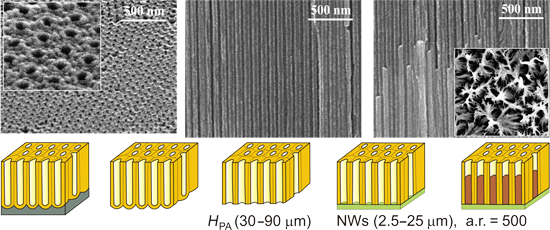
- ; Introduction Arrays of vertically arranged metallic NWs have attracted a lot of attention due to their shape anisotropy and extremely large surface area. The combination of this unique structure with uncommon magnetic, optical and transport properties can be used to develop novel functional nanomaterials for
- magnetic, electronic, biomedical and optical nano-scale devices [1][2][3][4][5]. Additionally, the magnetic composite nanostructures are interesting as materials for basic research of magnetic and transport properties in magnetic nanosystems as they possess unique physicochemical properties compared with


Fingerprints of a size-dependent crossover in the dimensionality of electronic conduction in Au-seeded Ge nanowires
Beilstein J. Nanotechnol. 2016, 7, 1574–1578, doi:10.3762/bjnano.7.151
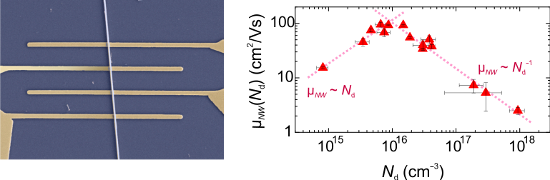
- Ireland 10.3762/bjnano.7.151 Abstract We studied the electrical transport properties of Au-seeded germanium nanowires with radii ranging from 11 to 80 nm at ambient conditions. We found a non-trivial dependence of the electrical conductivity, mobility and carrier density on the radius size. In particular
- -type charge transport. Inset: four-point current–voltage characteristic of the same NW. Radius-dependent charge transport properties in Ge NWs. (a) Electrical conductivity, (b) mobility and (c) charge carrier density as function of the NW radius R. Dotted lines in (a) and (b) are a guide to the eye
- . Grey dashed line in (c) corresponds to the numerical fitting of Nd(R) with a power function. Carrier-density dependent transport properties in Ge NWs. (a) Electrical conductivity and (b) mobility as function of carrier density Nd. Dashed lines are a guide to the eye. Characteristic length scales in Ge


![[Graphic 7]](/bjnano/content/inline/2190-4286-7-151-i9.png?max-width=637&scale=1.18182) and 1D screening length λ(1D) as function of carr...
and 1D screening length λ(1D) as function of carr...
Filled and empty states of Zn-TPP films deposited on Fe(001)-p(1×1)O
Beilstein J. Nanotechnol. 2016, 7, 1527–1531, doi:10.3762/bjnano.7.146
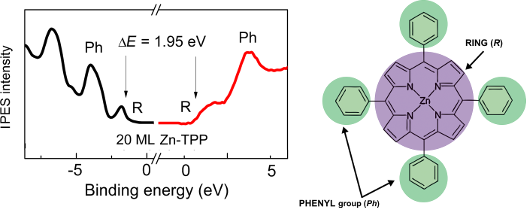
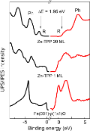
- alignment between molecular levels and substrate bands plays a key role in the transport properties. Results and Discussion From a technological point of view, the 1 monolayer (ML) thick sample is the most interesting and appealing, due to its ordered (5 × 5) reconstruction [10] that can be exploited (i) as
- ]. The changes of the interface dipole, as a function of the film thickness, can thus give a first characterization to evaluate possible barriers that affect the transport properties of the junction. Finally, we summarize in the Table 1 the main energy positions of the R/Ph-HOMO and R/Ph-LUMO molecular

Reasons and remedies for the agglomeration of multilayered graphene and carbon nanotubes in polymers
Beilstein J. Nanotechnol. 2016, 7, 1174–1196, doi:10.3762/bjnano.7.109
- in the hexagonal lattice along the vectors a1 and a2, respectively [40]. If n = m, the nanotube is called “armchair”. If m = 0, it is called “zigzag”, and in all other cases it is chiral. The chirality affects the transport properties, especially electronic properties. If (2n + m) is a multiple of 3
- , the nanotube exhibits electron transport properties of a metal, while it behaves as a semiconductor if above condition is not satisfied. The semiconducting CNTs have varying bandgaps [36]. The bandgap for semi-conducting CNT is inversely proportional to the diameter of nanotube. The values of about





