


Search results
Search for "uptake" in Full Text gives 324 result(s) in Beilstein Journal of Nanotechnology. Showing first 200.
Curcumin-loaded albumin submicron particles with potential as a cancer therapy: an in vitro study
Beilstein J. Nanotechnol. 2023, 14, 1127–1140, doi:10.3762/bjnano.14.93
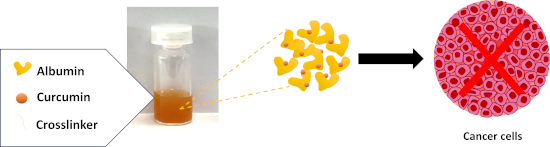
- to confirm the uptake of CUR-HSA-MPs by cancer cells. Our studies revealed that HSA-MPs are potentially promising vehicles for increasing the solubility and bioavailability of CUR. Keywords: albumin submicron particles; cancer therapy; curcumin; drug delivery; Introduction Curcumin (CUR) is a
- silk core–shell nanoparticles show high cytotoxicity and cellular uptake regarding breast cancer cells [14]. However, the effectiveness of zein nanoparticles as a delivery vehicle is limited by their poor stability, as they tend to aggregate when suspended in water [15]. Lyophilizing the particles
- effective delivery system, our second aim was to evaluate the cytotoxicity effect of CUR-HSA-MPs in vitro and determine cell uptake in MCF-7 cell line. Results and Discussion Preparation of CUR-loaded human serum albumin microparticles The preparation process of CUR-loaded human serum albumin microparticles




Recognition mechanisms of hemoglobin particles by monocytes – CD163 may just be one
Beilstein J. Nanotechnol. 2023, 14, 1028–1040, doi:10.3762/bjnano.14.85
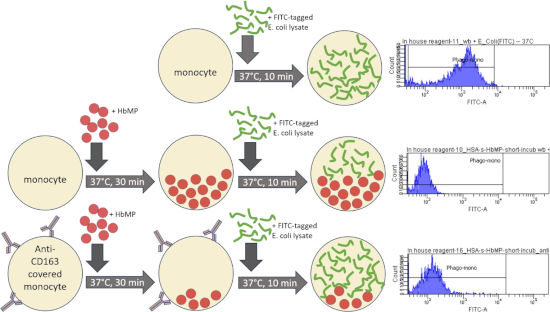
- shown in various studies to have a direct affinity for Hb in the absence of Hp. Thus, it seems reasonable that CD163 could possibly also bind Hb within HBOCs and cause phagocytosis of the particles. In this work we investigated the role of CD163 in the uptake of our hemoglobin sub-micron particles
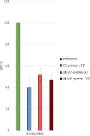
- (HbMPs) in monocytes and additionally screened for alternative ways of particle recognition by monocytes. In our experiments, blockade of CD163 by specific monoclonal antibodies proved to partly inhibit HbMP uptake by monocytes. It appears, however, that several other phagocytosis pathways for HbMPs
- size or other physical properties of the particles. In this study, we screened several monocytic surface receptors for a possible influence on the uptake of HbMPs by monocytes, which are precursor cells of macrophages. We chose to screen for CD14- as well as CD33-dependent HbMP uptake by monocytes




Metal-organic framework-based nanomaterials for CO2 storage: A review
Beilstein J. Nanotechnol. 2023, 14, 964–970, doi:10.3762/bjnano.14.79
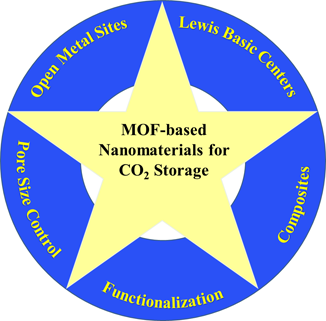
- -organic frameworks (MOFs) promising contenders for CO2 uptake. This review commences by discussing recent advancements in MOFs with diverse adsorption sites, encompassing open metal sites and Lewis basic centers. Next, diverse strategies aimed at enhancing CO2 adsorption capabilities are presented
- interactions with other chemical species. Extensive literature has been devoted to the investigation of MOFs with OMSs. Notably, HKUST-1, featuring copper OMSs, displayed a CO2 uptake of 4.1 mmol·g−1 at 298 K and 1 bar [22]. The effectiveness of OMSs has been exemplified in a study conducted by Caskey and
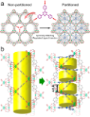
- to create nanosized SNU-70, which possesses a pore size of 9 Å, whereas SNU-71, with a 4-(2-carboxyethyl)benzoic acid linker has a pore size of 2.5 Å [32]. The outcomes revealed that SNU-71 displayed a greater CO2 uptake than SNU-70, attributing to its smaller pore size. Pore space partition (PSP) is




Prediction of cytotoxicity of heavy metals adsorbed on nano-TiO2 with periodic table descriptors using machine learning approaches
Beilstein J. Nanotechnol. 2023, 14, 939–950, doi:10.3762/bjnano.14.77
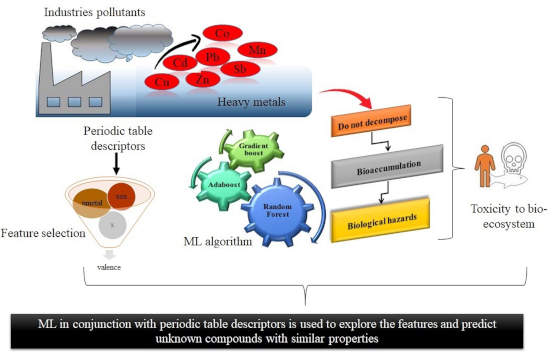
- increased the accumulation of Cd2+ in the ciliate Tetrahymen thermophila. Further, Tan et al. [12] showed increased uptake and retention of Cd2+ and Zn2+ adsorbed on TiO2 NPs in Daphnia magna. Heavy metal contamination affects plant growth and indirectly affects human health via the food chain. Heavy metals


Antibody-conjugated nanoparticles for target-specific drug delivery of chemotherapeutics
Beilstein J. Nanotechnol. 2023, 14, 912–926, doi:10.3762/bjnano.14.75
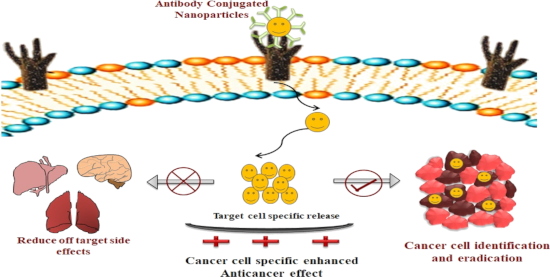
- fragment antigen-binding (Fab) region of mAbs are chemically conjugated to NP surfaces to recognize protein targets that are overexpressed on the surface of tumor cells. Conjugation of mAbs to NP surfaces improves targeting capacity, cellular uptake, and intracellular stability [12]. The mAb-functionalized
- Herceptin® to improve cellular uptake and cytotoxicity in breast cancer cells [41]. Similarly, Rayavarapu et al. conjugated HER2 antibodies on the surface of gold nanoparticles using a noncovalent conjugation method in order to increase intracellular uptake into cancer cells [42]. The adsorption results
- stable irreversible thioether linkages [55]. Swaminathan et al. used the maleimide conjugation technique to coat the surface of paclitaxel-loaded-PLGA NPs with anti-CD133 antibody. The antibody-conjugated NPs improved the intracellular uptake of paclitaxel as well as the targeting effectiveness of the



Green SPIONs as a novel highly selective treatment for leishmaniasis: an in vitro study against Leishmania amazonensis intracellular amastigotes
Beilstein J. Nanotechnol. 2023, 14, 893–903, doi:10.3762/bjnano.14.73
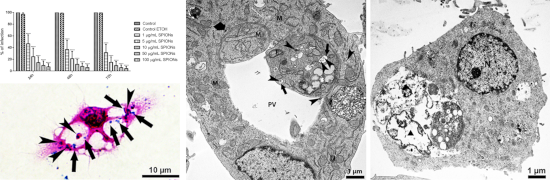
- using coconut water [9]. In this article, the ability of macrophages to uptake these SPIONs was evaluated, together with some physical and chemical characterizations. The synthesized green SPIONs are around 4 nm in diameter, are composed of pure nonstoichiometric magnetite, exhibit superparamagnetic
- and less toxic to the patient. Thus, the main goal of this study is to evaluate the effects of green SPIONs against Leishmania amazonensis (L. amazonensis) in vitro. Results Uptake of SPIONs by L. amazonensis promastigotes and intracellular amastigotes Bright-field optical microscopy of L. amazonensis
- promastigotes and intracellular amastigotes incubated with Prussian blue revealed that both parasite stages can uptake the SPIONs (Figure 1). The arrows and arrowheads in Figure 1 show the characteristic blue stain that indicates the positive reaction between potassium ferrocyanide and ferrous compounds. In


Nanostructured lipid carriers containing benznidazole: physicochemical, biopharmaceutical and cellular in vitro studies
Beilstein J. Nanotechnol. 2023, 14, 804–818, doi:10.3762/bjnano.14.66
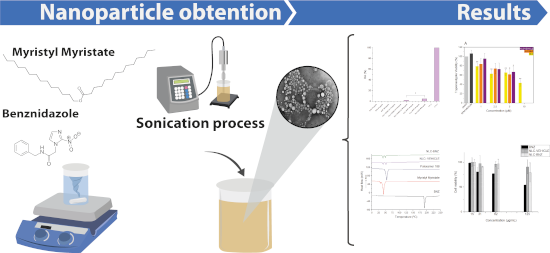
- high-negative ζ values may impede cellular uptake [40]. On the other hand, it was observed that the nanoparticulated systems remained stable after six months with no precipitation. This suggests that in this case the stabilization is not achieved by means of surface charge alone, but also by the steric


Carboxylic acids and light interact to affect nanoceria stability and dissolution in acidic aqueous environments
Beilstein J. Nanotechnol. 2023, 14, 762–780, doi:10.3762/bjnano.14.63
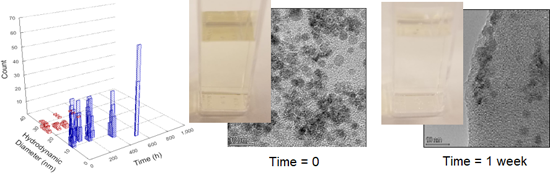
- , where it is known to dissolve and transform in the presence of chelating agents at low pH [15]. In cucumber plants, there is clear evidence of ceria uptake and transport throughout the plant. A fraction of the ceria formed cerium carboxyl complexes. No phytotoxicity was reported to the plant itself [16
- organic matter content of the soil also played a critical role in nanoceria uptake [20]. Cerium was detected in plant tissues, indicating nanoceria translocation within tomato plants [21]. The uptake and toxicity of nanoceria within radish seedlings were significantly reduced upon addition of a citric
- and transformations of nanoceria surfaces. Nanoceria within biological systems Nanoceria has been shown to accumulate and persist in rats and mice for 90 days and five months [26]. A significant amount was present within liver, spleen, and bone marrow [27][28]. Yokel et al. [29] discussed the uptake
Conjugated photothermal materials and structure design for solar steam generation
Beilstein J. Nanotechnol. 2023, 14, 454–466, doi:10.3762/bjnano.14.36
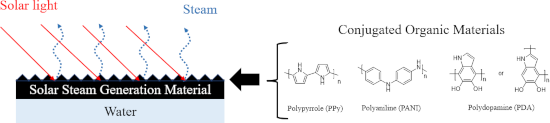
- derivatives on a filter paper produced Janus structures with a hydrophobic top surface suitable for vapor generation and a hydrophilic bottom surface for water uptake and transport. Figure 10e displays the developed SSG device. A cotton fiber thread connects the photothermal membrane to the water tank and


The steep road to nonviral nanomedicines: Frequent challenges and culprits in designing nanoparticles for gene therapy
Beilstein J. Nanotechnol. 2023, 14, 351–361, doi:10.3762/bjnano.14.30
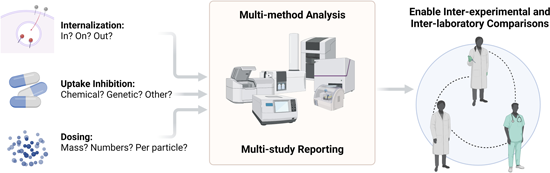
- overview of the current status and outline important concerns regarding the need for standardized protocols to evaluate NP uptake, NP transfection efficacy, drug dose determination, and variability of nonviral gene delivery systems. Based on these concerns, we propose wide adherence to multimodal
- field of nonviral gene delivery. Keywords: characterization; dosage; gene delivery; uptake; transfection; Introduction Recent efforts to develop and translate therapeutically loaded nanoparticles (NPs) have resulted in several advances in the treatment and prevention of disease. Key areas where NP
- due to the COVID-19 pandemic and the breathtaking acceptance of mRNA-based vaccines [15]. Following the spirit of MIRIBEL, the current perspective was written with two specific aims in mind. First is to provide an overview of current concerns regarding aspects of NP uptake, transfection efficiencies

Polymer nanoparticles from low-energy nanoemulsions for biomedical applications
Beilstein J. Nanotechnol. 2023, 14, 339–350, doi:10.3762/bjnano.14.29
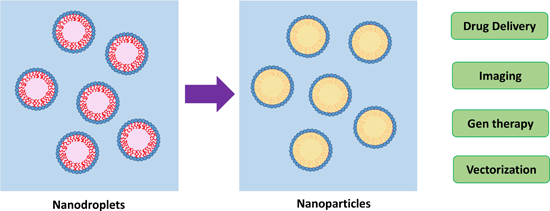
- SH-SY5Y cells, and no hemolysis was observed. The presence of Tat on the surface of the nanoparticles enabled cell membrane penetration and uptake in HeLa Cells. The effect of electrolytes in the aqueous phase on Polysorbate 80-based PIC nanoemulsions and derived PLGA nanoparticles has been explored
- corona formation (upon incubation in FBS). The nanoparticles showed low cytotoxicity for SH-SY5Y cells (viabilities of ca. 100% for nanoparticle concentrations equal or lower than 0.23 mg/mL), high cellular uptake (in SH-SY5Y cells), and dose-dependent antioxidant activity. The properties of the PIC




Overview of mechanism and consequences of endothelial leakiness caused by metal and polymeric nanoparticles
Beilstein J. Nanotechnol. 2023, 14, 329–338, doi:10.3762/bjnano.14.28
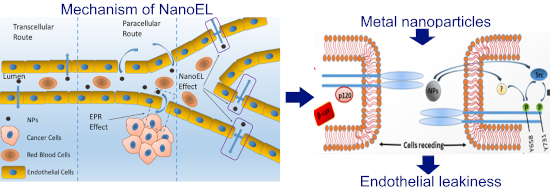
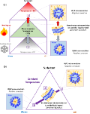
- mechanism based on the transcellular pathway as the dominant mechanism of NP transport through the endothelium. They supported their observations by quantitatively measuring the uptake of 15, 50, and 100 nm PEGylated Au NPs in various mouse tumor models using ICP-MS. Similarly, in a Zombie mouse model, they


Bismuth-based nanostructured photocatalysts for the remediation of antibiotics and organic dyes
Beilstein J. Nanotechnol. 2023, 14, 291–321, doi:10.3762/bjnano.14.26
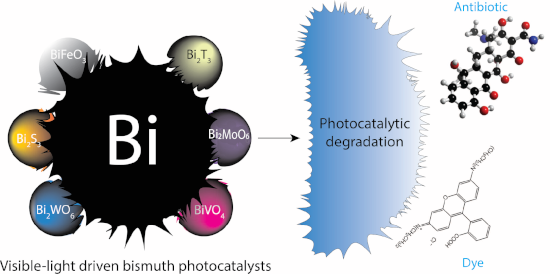
- the chemical and biochemical oxygen demand and inhibits photosynthesis. Additionally, the uptake of dye molecules or their by-products in excess may be mutagenic, teratogenic, or carcinogenic [68][69]. Myocardial depression and hypertension are reportedly exacerbated by oral exposure to methylene blue


Recent progress in cancer cell membrane-based nanoparticles for biomedical applications
Beilstein J. Nanotechnol. 2023, 14, 262–279, doi:10.3762/bjnano.14.24
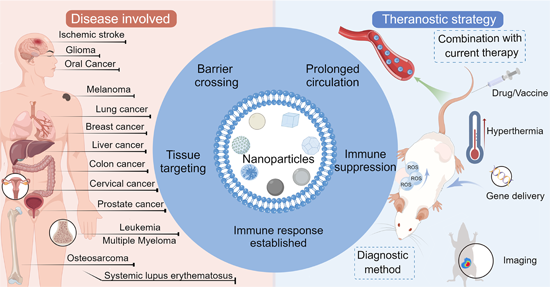
- intended function of the NPs, resulting in changes of biological behavior and loss of function [6][7]. Moreover, the protein corona can accelerate RES/MPS uptake and interfere with the targeting ability of NPs [8]. The biomimetic technique of cell membrane coating, which employs naturally cell-derived
- tumor cells and sends a “do not eat me” signal to phagocytic cells [41]. CD47 has been shown to avoid uptake by macrophages, which enables the NPs to escape immunogenic clearance [42]. Additionally, CD24 has been found to be overexpressed in several malignant diseases (e.g., ovarian and breast cancer
- production of singlet oxygen and superoxide in vivo [109]. It is important to reduce dosages and systemic toxic effects, which can be achieved by increasing the ability for uptake and for avoiding clearance of photosensitizers in tumor tissue. Due to its shallow location and high clinical operability, oral


Nanotechnology – a robust tool for fighting the challenges of drug resistance in non-small cell lung cancer
Beilstein J. Nanotechnol. 2023, 14, 240–261, doi:10.3762/bjnano.14.23
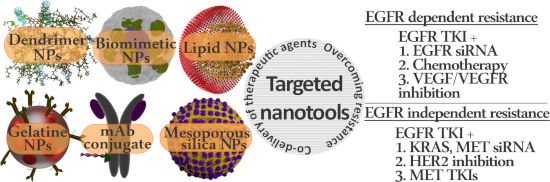
- environments either for higher uptake or reduced toxicity. In brief, the ABC triblock terpolymers comprised identical A and C segments. Yet, different functionalities in the middle PAGE block (B) are directly correlated to the combination and the number of functionalities and, therefore, easily adjusted to
- -mimetic NPs, showed significant retention in the systemic circulation and significantly decreased macrophage uptake compared to the conventional NPs with PEG corona [123]. Improved targeting may be achieved by RVPNs coupled with the tumor-penetrating peptide iRGD specific to αv integrins and neuropilin-1


Structural, optical, and bioimaging characterization of carbon quantum dots solvothermally synthesized from o-phenylenediamine
Beilstein J. Nanotechnol. 2023, 14, 165–174, doi:10.3762/bjnano.14.17
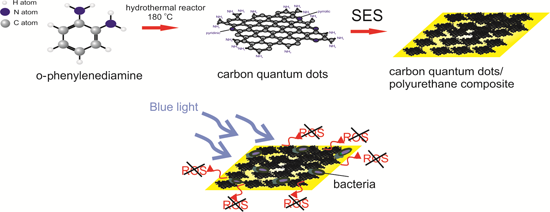
- oxygen species production, and showed low dark cytotoxicity. By investigating the cellular uptake, it was established that these dots penetrated the HeLa cells and could be used as probes for bioimaging. Keywords: antibacterial; bioimaging; carbon quantum dots; precursor; reactive oxygen species
- composites has a crucial effect on the properties of CQDs/PU composites. Cellular uptake Photobleaching limits the use of hydrophobic probes (e.g., Nile red) [50]. CQDs can be used as probes for bioimaging because of the tuneable strong photoluminescence and high resistance to photobleaching. In order to


Facile preparation of Au- and BODIPY-grafted lipid nanoparticles for synergized photothermal therapy
Beilstein J. Nanotechnol. 2022, 13, 1432–1444, doi:10.3762/bjnano.13.118
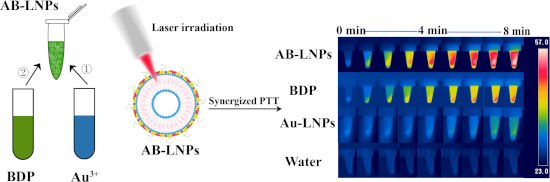
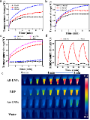
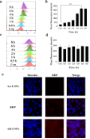
- could be associated stably to Au-LNPs, and the release of BODIPY from AB-LNPs could be accelerated by laser irradiation. AB-LNPs are scalable and showed excellent photothermal effects. AB-LNPs showed enhanced cellular uptake efficiency compared to free BODIPY in 4T1 breast cancer cells. Under laser
- -LNPs with optimized particle size and polydispersity index (PDI), and then mixed BDP with Au-LNPs to obtain both Au- and BDP-grafted LNPs (AB-LNPs). The physiochemical characteristics, the photothermal properties, and the stabilities of AB-LNPs were studied in detail. The cellular uptake efficiency and
- 10% FBS. The cells were cultured in a humidified incubator with atmosphere of 5% CO2 at 37 °C. Cellular uptake studies 4T1 cells were grown in 12-well plates and cultured for 24 h. The cells were incubated with free BDP (30 μM) and AB-LNPs (with a BDP concentration of 30 μM and a Au concentration of




Orally administered docetaxel-loaded chitosan-decorated cationic PLGA nanoparticles for intestinal tumors: formulation, comprehensive in vitro characterization, and release kinetics
Beilstein J. Nanotechnol. 2022, 13, 1393–1407, doi:10.3762/bjnano.13.115
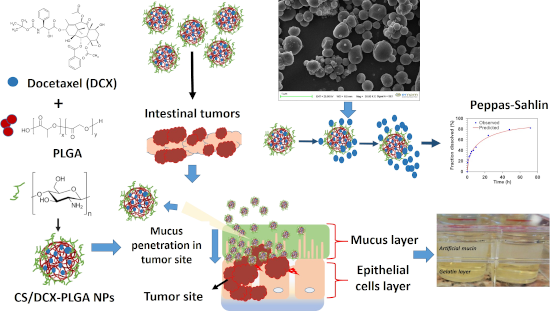
- carboxyl groups of PLGA at the NP surface [43]. CS is a cationic heteropolysaccharide, which promotes cellular uptake, mucoadhesiveness, and tissue penetration [42]. Therefore, CS interacts easily with negatively charged groups at the surface of the NPs and increases the tissue penetration. Morphology of
- DCX-loaded nanoparticles Morphological properties of NPs are among the most important factors influencing the efficacy of drugs and determining the fate of NP systems. It has been reported that the NP morphology significantly affects circulation time and cellular uptake of NPs [44]. Morphological
- concentration (p < 0.05). Additionally, CS/PLGA NPs exhibited a higher anticancer activity than DCX-PLGA formulations (p < 0.05). It is suggested that this is related to the positively charged surface of the CS-coated PLGA NPs and a strong cellular interaction resulting in increased cellular uptake. In the


Recent advances in green carbon dots (2015–2022): synthesis, metal ion sensing, and biological applications
Beilstein J. Nanotechnol. 2022, 13, 1068–1107, doi:10.3762/bjnano.13.93




Design of a biomimetic, small-scale artificial leaf surface for the study of environmental interactions
Beilstein J. Nanotechnol. 2022, 13, 944–957, doi:10.3762/bjnano.13.83
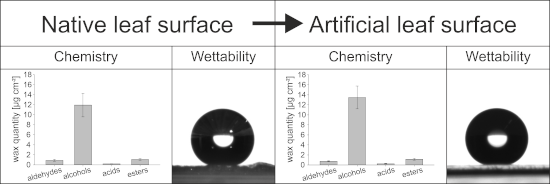
- application and uptake, Peirce et al. [78] investigated the retention of applied water droplets on wheat leaves. In this study, high CAs and very low CAH were also found, which indicates the ability for self-cleaning. However, the investigated plants were cultivated in the greenhouse. Weather-related damage
- cell development, (4) resistance to mechanical stress, (5) control of water loss, (6) control of solute uptake, (7) protection from hazardous radiation, (8) reduction of spore, bacterial, and viral attachment, (9) self-cleaning ability (modified after [9]). Schematic drawing of the device for wax
Gelatin nanoparticles with tunable mechanical properties: effect of crosslinking time and loading
Beilstein J. Nanotechnol. 2022, 13, 778–787, doi:10.3762/bjnano.13.68
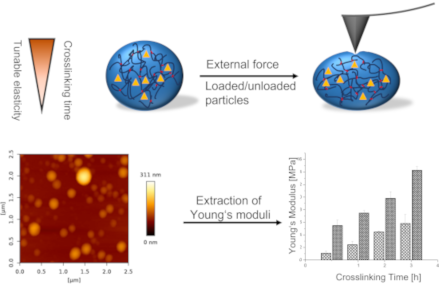
- system is usually tested intensively in vitro using cell culture-based assays before application in in vivo studies. Depending on the particle material, the mechanical properties will be influenced, also modulating potentially the particle–cell interaction. For polymeric particles, a higher uptake for
- internalization, the stiffer particles show significantly faster kinetics [6]. Similar results could be shown in an experimental approach by Hui et al. in a study with silica nanocapsules. Softer particles showed a greater deformation, resulting in a slower and less efficient uptake for softer particles [7
- ]. Contrarily, nanoparticles composed of a lipid bilayer with cores of different crosslinking extent showed higher uptake of softer particles in MCF-7 cells, which was thought to be due to a melting process of particles with the cell membrane that consumed less energy than endocytosis [8]. Regarding the in vivo


Recent advances in nanoarchitectures of monocrystalline coordination polymers through confined assembly
Beilstein J. Nanotechnol. 2022, 13, 763–777, doi:10.3762/bjnano.13.67
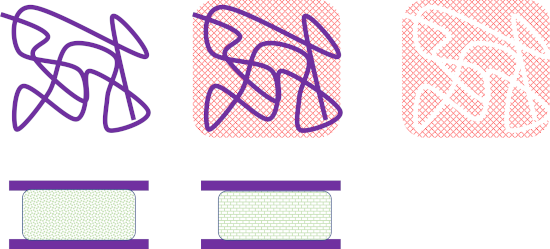
- increased by using these materials as positive electrodes. The networks can also help to accelerate ion transfer in coordination polymers. When the Prussian blue nanocrystals contain a double-network PAAm/PAMPS hydrogel, the uptake of Cs+ ions from solution could be as high as 397 mg·g−1, which is very
- acidic environment. Enhanced cell toxicity was found by encapsulating the doxorubicin drug into ZIF-8 crystals because intracellular uptake was facilitated. When multiple cargos were required, this strategy showed good feasibility. Multiple molecules could be simultaneously encapsulated during formation
- with considerable mechanical strength. For instance, DUT-134(Cu) plates could be assembled into carpets and tubes through face-to-face or edge-to-face alignment [150]. The carpets and tubes showed excellent performance as air filter. The uptake of H2S by the carpets is 6–7 times higher than that of




Design and selection of peptides to block the SARS-CoV-2 receptor binding domain by molecular docking
Beilstein J. Nanotechnol. 2022, 13, 699–711, doi:10.3762/bjnano.13.62
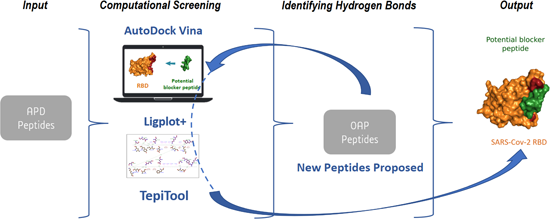
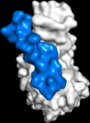
- uptake, or macrophage recognition [42][43][44][45][46]. It is important to note that RBD residues from Glu484 to Tyr505, Arg403 to Tyr421, and Tyr449 to Ala475 are involved in the docking of the APD peptides, as was previously reported by Othman and co-workers [6]. Figure 2 shows the mapping of these



Detection and imaging of Hg(II) in vivo using glutathione-functionalized gold nanoparticles
Beilstein J. Nanotechnol. 2022, 13, 549–559, doi:10.3762/bjnano.13.46
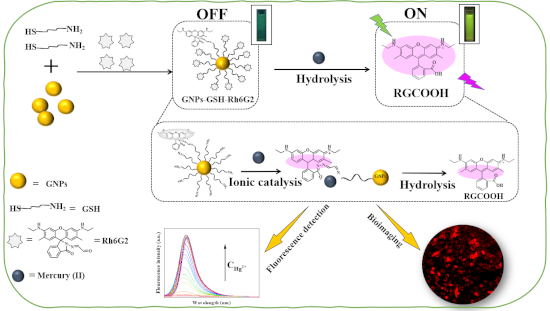
- living cells was observed gradually (Figure 6b and Figure 6e), indicating that GSH-Rh6G2 and GNPs-GSH-Rh6G2 could enter the cells and that the release of RGCOOH was triggered by intracellular Hg2+. Importantly, we found that the cellular uptake of GNPs-GSH-Rh6G2 was higher than that of GSH-Rh6G2. This


Stimuli-responsive polypeptide nanogels for trypsin inhibition
Beilstein J. Nanotechnol. 2022, 13, 538–548, doi:10.3762/bjnano.13.45
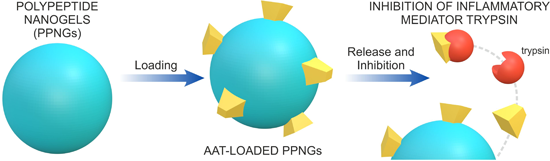
- Nα-Lys-NG nanogels were performed. 125I-radiolabeled BSA was loaded onto PHEG-Tyr nanogel at pH 4.7 and 25 °C as PHEG-Tyr nanogel exhibits the most swollen state and a negative charge under these conditions (Figure 2). The uptake of BSA was found to be more efficient at or below the isoelectric point





