


Search results
Search for "Fe3O4" in Full Text gives 132 result(s) in Beilstein Journal of Nanotechnology.
Comparison of the interactions of daunorubicin in a free form and attached to single-walled carbon nanotubes with model lipid membranes
Beilstein J. Nanotechnol. 2016, 7, 524–532, doi:10.3762/bjnano.7.46
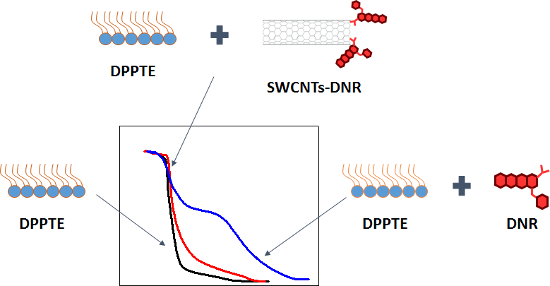
- employed in case of other DDS such as biodegradable polymers, which co-assemble into composite micelles [10]. Another type of common drug carriers includes nanoparticles. Magnetic Fe3O4 nanoparticles are often employed because they give possibility to control the transport by applying external magnetic




Early breast cancer screening using iron/iron oxide-based nanoplatforms with sub-femtomolar limits of detection
Beilstein J. Nanotechnol. 2016, 7, 364–373, doi:10.3762/bjnano.7.33
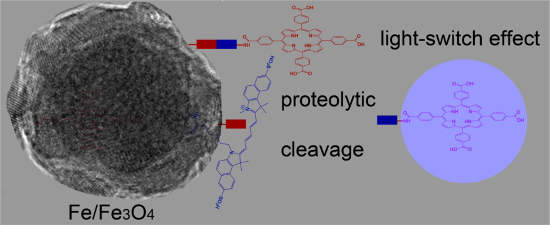
- is a vital strategy for early cancer detection. Water-dispersable Fe/Fe3O4-core/shell based nanoplatforms for protease detection are capable of detecting protease activity down to sub-femtomolar limits of detection. They feature one dye (tetrakis(carboxyphenyl)porphyrin (TCPP)) that is tethered to
- sensitive Fe/Fe3O4-nanoparticle based nanoplatforms for protease detection. Numerous proteases are required for early mutations, tumor survival, progression, angiogenesis, and invasion [1][2][3]. Following the pioneering research of Weissleder et al. [4], molecular [5], macromolecular [6] and nanoparticle
- the consensus sequence, its fluorescence will increase (for most of the nanoplatforms). The nanoplatforms for cancer detection are based on proteolytic cleavage of TCPP from the Fe/Fe3O4-core (Figure 2). Increasing the distance between the TCPP fluorophore and the nanoparticle decreases plasmon


Hemolysin coregulated protein 1 as a molecular gluing unit for the assembly of nanoparticle hybrid structures
Beilstein J. Nanotechnol. 2016, 7, 351–363, doi:10.3762/bjnano.7.32
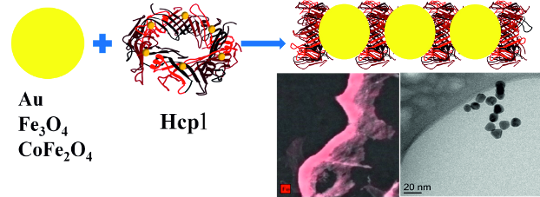
- gluing unit for the assembly of often linear, hybrid structures of plasmonic gold (Au NP), magnetite (Fe3O4 NP), and cobalt ferrite nanoparticles (CoFe2O4 NP). Furthermore, the assembly of Au NPs into linear structures using Hcp1_cys3 is investigated by UV–vis spectroscopy, TEM and cryo-TEM. One key
- order to prove the catalytic performance of the gold hybrid structures, they are used as a catalyst in the reduction reaction of 4-nitrophenol showing similar catalytic activity as the pure Au NPs. To further extend the functionality of the Hcp1_cys3 gluing unit, Fe3O4 and CoFe2O4 NPs are aligned in a
- magnetic field and connected by utilization of cysteine-modified Hcp1. After lyophilization, a fiber-like material of micrometer scale length can be observed. The Fe3O4 Hcp1_cys3 fibers show superparamagnetic behavior with a decreasing blocking temperature and an increasing remanent magnetization leading




Simultaneous cancer control and diagnosis with magnetic nanohybrid materials
Beilstein J. Nanotechnol. 2016, 7, 121–125, doi:10.3762/bjnano.7.14
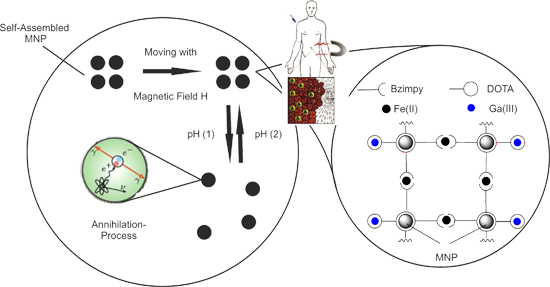
- -analogue Ga-DOTA (DOTA = 1,4,7,10-tetraazacyclododecane-1,4,7,10-tetraacetic acid) complexes were synthesized and linked to Fe3O4 MNP. In this manner it is possible to transport the PET tracer with an external magnetic field right to the target location. The functionalized MNP are linked to each other via


Green and energy-efficient methods for the production of metallic nanoparticles
Beilstein J. Nanotechnol. 2015, 6, 2354–2376, doi:10.3762/bjnano.6.243
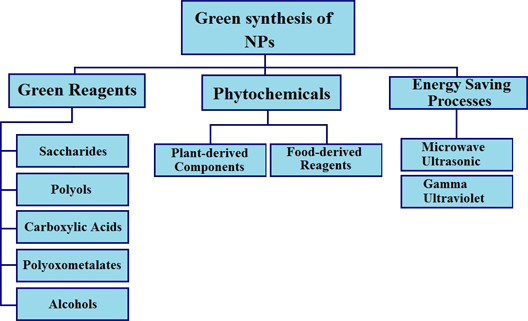
- . prepared super-paramagnetic Fe3O4 NPs utilizing gluconic acid as stabilizing agent and α-D-glucose as reducing agent at mild temperatures (60 and 80 °C) in aqueous media. They obtained spherical NPs with comparable size (≈12.5 nm) and polydispersity to conventional methods [90]. Darroudi et al. produced Ag
- solvent and stabilizer for producing Fe3O4 NPs by thermal decomposition of iron acetylacetonate (Fe(acac)3), which is a non-toxic precursor. They found that by changing reaction time and concentrations of precursor and surfactants, one can control the shape and size of Fe3O4 NPs. According to them, the
- average size of Fe3O4 NPs increases from 2 to 7 nm when the concentration of precursor increases from 0.1 mmol to 8 mmol [91]. Zhang et al. used tannic acid (TA), a water-soluble polyphenol, as the reducing agent to prepare Ag NPs supported on graphene (Ag NPs–GN) in a single-step process over 90 min


NanoE-Tox: New and in-depth database concerning ecotoxicity of nanomaterials
Beilstein J. Nanotechnol. 2015, 6, 1788–1804, doi:10.3762/bjnano.6.183
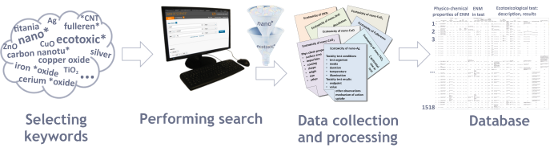
- oxide (CuO), and iron oxide (FeOx; Fe2O3, Fe3O4). Altogether, NanoE-Tox database consolidates data from 224 articles and lists altogether 1,518 toxicity values (EC50/LC50/NOEC) with corresponding test conditions and physico-chemical parameters of the ENMs as well as reported toxicity mechanisms and
- : carbon nanotubes (CNTs), fullerenes, silver (Ag), titanium dioxide (TiO2), zinc oxide (ZnO), cerium dioxide (CeO2), copper oxide (CuO), and iron oxide (FeOx; Fe2O3, Fe3O4). Furthermore, all these ENMs, except CuO, are listed by the Organisation for Economic Co-operation and Development (OECD) Working


A facile method for the preparation of bifunctional Mn:ZnS/ZnS/Fe3O4 magnetic and fluorescent nanocrystals
Beilstein J. Nanotechnol. 2015, 6, 1743–1751, doi:10.3762/bjnano.6.178
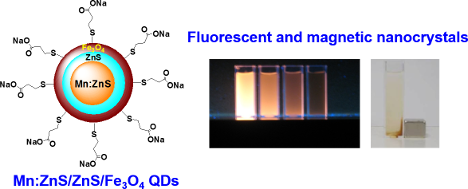
- , 54001 Nancy Cedex, France 10.3762/bjnano.6.178 Abstract Bifunctional magnetic and fluorescent core/shell/shell Mn:ZnS/ZnS/Fe3O4 nanocrystals were synthesized in a basic aqueous solution using 3-mercaptopropionic acid (MPA) as a capping ligand. The structural and optical properties of the
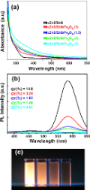
- heterostructures were characterized by X-ray diffraction (XRD), dynamic light scattering (DLS), transmission electron microscopy (TEM), UV–vis spectroscopy and photoluminescence (PL) spectroscopy. The PL spectra of Mn:ZnS/ZnS/Fe3O4 quantum dots (QDs) showed marked visible emission around 584 nm related to the 4T1
- → 6A1 Mn2+ transition. The PL quantum yield (QY) and the remnant magnetization can be regulated by varying the thickness of the magnetic shell. The results showed that an increase in the thickness of the Fe3O4 magnetite layer around the Mn:ZnS/ZnS core reduced the PL QY but improved the magnetic




Synthesis, characterization and in vitro biocompatibility study of Au/TMC/Fe3O4 nanocomposites as a promising, nontoxic system for biomedical applications
Beilstein J. Nanotechnol. 2015, 6, 1677–1689, doi:10.3762/bjnano.6.170
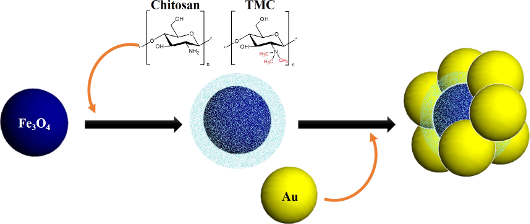
- derivatives, N-trimethylchitosan (TMC), were applied to construct three-layer nanocomposites in an Au/polymer/Fe3O4 system. It was demonstrated that replacement of chitosan with TMC reasonably improved the properties of the final nanocomposites including their size, magnetic behavior and thermal stability
- . Moreover, the results of the MTT assay showed no significant cytotoxicity effect when the Au/TMC/Fe3O4 nanocomposites were applied in vitro. These TMC-containing magnetic nanoparticles are well-coated by Au nanoparticles and have good biocompatibility and can thus play the role of a platform or a label in
- various fields of application, especially the biomedical sciences and biosensors. Keywords: Au/polymer/Fe3O4 nanocomposites; Au nanoparticles; cell viability; magnetic nanoparticles; N-trimethyl chitosan; Introduction Nanotechnology is the science of the fabrication of novel materials, devices and




Structural and magnetic properties of iron nanowires and iron nanoparticles fabricated through a reduction reaction
Beilstein J. Nanotechnol. 2015, 6, 1652–1660, doi:10.3762/bjnano.6.167
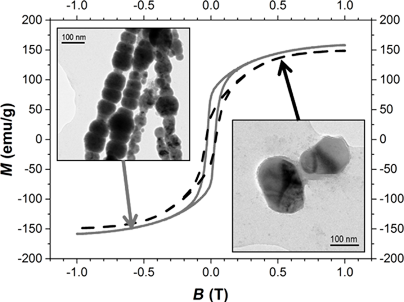
- ] and 130 emu/g [24], respectively, and knowing that amorphous iron oxides exhibit paramagnetic behaviour [20][22], and considering the magnetization of distorted iron oxides to be about the value of bulk magnetite (Fe3O4) of around 92 emu/g [25], the estimated magnetizations (Mcal.) of the investigated
- oxides in material, and Mdist.oxides – saturation magnetization of distorted iron oxides. The value of Mdist.oxides can be assumed as the saturation magnetization of Fe3O4 because our previous work has shown that an annealing of Fe NWs at 300 °C leads to the formation of oxide in the predominant form of
- well-known that iron nanomaterials in the presence of even small quantities of oxygen tend to be oxidized immediately. The increasing temperature leads to progressive oxidation of iron to Fe3O4 (large nanostructures) or γ-Fe2O3 (small nanostructures) and following transformation to α-Fe2O3 [12][15



Thermal treatment of magnetite nanoparticles
Beilstein J. Nanotechnol. 2015, 6, 1385–1396, doi:10.3762/bjnano.6.143
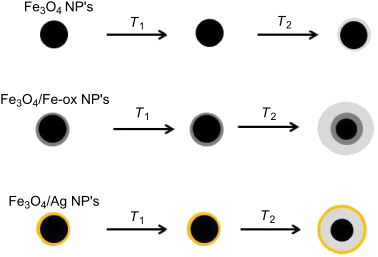
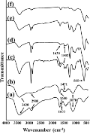
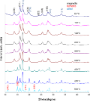
- temperatures up to 150 °C, Fe–O bonds typical for Fe3O4 are still preserved (560–580 cm−1) [6]. Nevertheless, in almost every spectrum, oxidation to hematite (540 cm−1), maghemite (647–679 cm−1) [35], lepidocrocite (730 and 1060 cm−1) [36], goethite (860 cm−1) [37] and ferrihydrite (964 cm−1) [35] is well
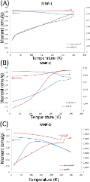
- magnetic behavior of the pure Fe3O4 sample appears largely unaffected by annealing in the measured temperature range (10–300 K), except for a clear reduction of the magnitude of the magnetic response (M/H) by a factor of about 0.6. The Fe3O4/Fe-ox sample is quite strongly affected by the annealing and the
- to appear at a higher temperature than in the reference sample. The magnetic response (M/H) is decreased by a factor of about 0.2 in the annealed compared to the reference sample. After annealing at 450 °C, the Fe3O4/Fe-ox/Ag sample has, to a large extent, transformed to hematite. This is seen from





Influence of gold, silver and gold–silver alloy nanoparticles on germ cell function and embryo development
Beilstein J. Nanotechnol. 2015, 6, 651–664, doi:10.3762/bjnano.6.66
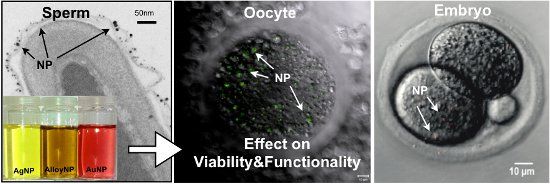
- molar fraction 20, 50 and 80%; diameter 6–7 nm; AuAgNP) where trials were conducted with porcine spermatozoa [49][50]. This observation does not entirely agree with what can be found in literature. Internalisation of nanoparticles made from gold [61][62] or other materials like Fe3O4–PVA [63][64], Eu2O3





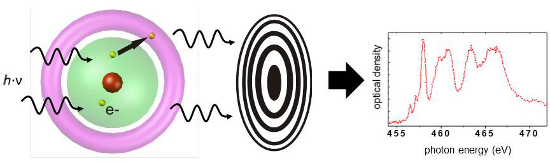
Overview of nanoscale NEXAFS performed with soft X-ray microscopes
Beilstein J. Nanotechnol. 2015, 6, 595–604, doi:10.3762/bjnano.6.61
- thin film devices (SrTiO3) could be demonstrated [64]. The change of resistance in a RRAM device could be assigned to a redox-process. The switching filament could be allocated to extended growth defects which are already present in the virgin films. Synthesis of anisotropic core-shell Fe3O4@Au


Silica micro/nanospheres for theranostics: from bimodal MRI and fluorescent imaging probes to cancer therapy
Beilstein J. Nanotechnol. 2015, 6, 546–558, doi:10.3762/bjnano.6.57
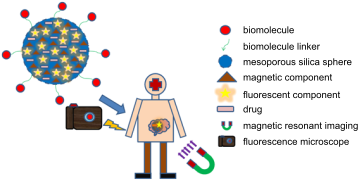
- microemulsion methods. Cerium–fluoride-doped terbium(III) NPs represented the luminescent part and Fe3O4 NPs were used as magnetic core. Both these nanostructures were trapped inside a silica shell, which acted as inert oxide. The synthesis involved simultaneous addition of luminescent NPs (CeF3:Tb3+) and
- magnetic materials (Fe3O4 NPs) inside silica shell in the presence of TEOS (Figure 3). The prepared NPs were characterized by XRD, TEM and fluorescence spectroscopy. The TEM images confirmed homogenous distribution of NPs of sizes 30–50 nm. When excited at 254 nm, the hybrid rare earth nanocomposites
- . The magnetic NPs (Fe3O4) were prepared by Massart’s method and finally these were coated with a silica layer by using TEOS. Further these Fe3O4@SiO2 NPs were encapsulated inside silica-coated luminescent Ru(bpy)32+ shells (Ru(bpy)3 = tris(2,2'-bipyridyl)ruthenium(II) dichloride hexahydrate). The TEM


Comparative evaluation of the impact on endothelial cells induced by different nanoparticle structures and functionalization
Beilstein J. Nanotechnol. 2015, 6, 300–312, doi:10.3762/bjnano.6.28
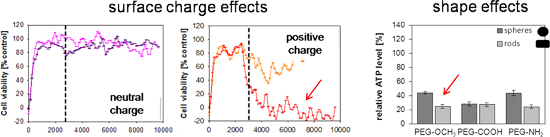
- MnO and Fe3O4, again, those with an elongated shape (Au@MnO and Au@Fe3O4, Figure 1b and Figure 1c) led to a stronger reduction of ATP levels than the spherical ones in a time-dependent manner. In general, the MnO-based nanoparticles and nanoparticles with NH2-functionalization had a stronger impact on
- cell metabolism than the Fe3O4 variants or the formulations without NH2-functionalization. The mentioned relationships could be attributed to the positively charged surface (NH2), which has been reported to induce damages on the cell membranes (APTMS-coated nanoparticles [47]). To conclude, among the
- microscopy (TEM) investigations were performed. Spherical CTAB-modified gold nanoparticles with a size of 40 nm were localized in vacuoles after 1 h of incubation (Figure 5a). After a 1 h treatment of cells only, Au-NH2@Fe3O4 (20 nm) and spherical Au (4 nm) nanoparticles were shown to be internalized into




Synthesis of boron nitride nanotubes and their applications
Beilstein J. Nanotechnol. 2015, 6, 84–102, doi:10.3762/bjnano.6.9
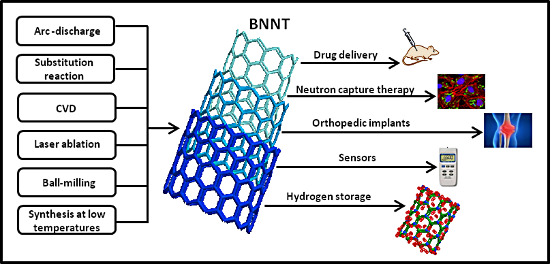
- (Ca6B6O11∙5H2O), for the first time by means of CVD [58]. The reaction parameters such as type of catalyst, colemanite/catalyst ratio, reaction temperature and duration were optimized. ZnO, Al2O3, Fe3O4 and Fe2O3 catalysts were investigated with respect to their differences in performance. It was found that




Inorganic Janus particles for biomedical applications
Beilstein J. Nanotechnol. 2014, 5, 2346–2362, doi:10.3762/bjnano.5.244
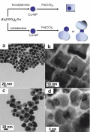
- building blocks, and makes these particles of particular importance. Binks and co-workers [31] predicted a strengthened adsorption at an oil–water interface due to the increase in surface activity by a factor of three of a Janus. Glaser et al. [32] demonstrated that Au@Fe3O4 Janus particles reduce the
- active component toward metal-organic reactions. For instance, this enhanced catalytic activity in comparison to the single component nanoparticles was demonstrated for Ni@Fe2O3 [45] or Pt@Fe3O4 [46]. Furthermore, the magnetic anisotropy and coercivity of Fe3O4 was significantly increased due to
- conjugation to Ag nanoparticles when combined to form Ag@Fe3O4 dumbbell-like hetero-nanoparticles [47]. Moreover, plasmonic photocatalysts combine two prominent features: a Schottky junction enhancing charge separation and surface plasmon resonance, which is responsible for strong absorption of visible light






Cathode lens spectromicroscopy: methodology and applications
Beilstein J. Nanotechnol. 2014, 5, 1873–1886, doi:10.3762/bjnano.5.198

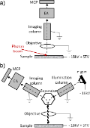
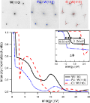
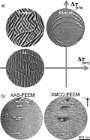
- micrometer-sized Fe3O4 islands on a FeO wetting layer. The combination of spatially-resolved XPS and XAS spectra, along with μ-LEED patterns, allowed the unequivocal identification of the specific iron-oxide phases. From the screening of substrate core-level photoelectrons, the thickness of the micrometer
- ). This observation corresponds to the thinnest magnetite crystal that shows magnetism. Beyond the self-organized crystal shapes at the micrometer scale, epitaxial iron-oxide films provide a variety of complex surface reconstructions at the atomic scale as usual for oxide surfaces [74]. Fe3O4 films on Pt
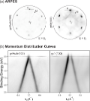
- (111) are known to give a (2 × 2) reconstruction with an additional moiré superstructure. Nevertheless, the details of the Fe3O4 surface structure is still under study. The recent work by using an aberration-corrected XPEEM-LEEM setup, SMART (BESSY II, Helmholtz Zentrum, Berlin), showed distinct



Influence of surface-modified maghemite nanoparticles on in vitro survival of human stem cells
Beilstein J. Nanotechnol. 2014, 5, 1732–1737, doi:10.3762/bjnano.5.183
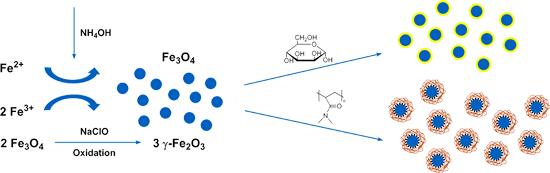
- (magnetite Fe3O4 or maghemite γ-Fe2O3) are their simple preparation and their magnetic properties, which are necessary for detection. Moreover, it is convenient that iron oxides are readily metabolized in the body. From this point of view, quantum dots are disqualified due to their toxicity. Like in every


A sonochemical approach to the direct surface functionalization of superparamagnetic iron oxide nanoparticles with (3-aminopropyl)triethoxysilane
Beilstein J. Nanotechnol. 2014, 5, 1472–1476, doi:10.3762/bjnano.5.160
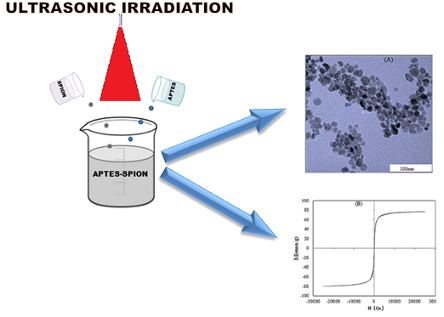
- the band of Fe 2p3/2 and Fe 2p1/2 (Supporting Information File 1, Figure S5) that appears at 725.25 eV and 711.85 eV, respectively. The difference in their energy is 13.4 eV, which corresponds to 13.6 eV of Fe2O3 or Fe3O4. However, the XPS result alone cannot be used to determine the oxidation state
- of Fe in Fe2O3 or Fe3O4. This is due to similarity in the oxidation state of both iron oxide compounds. The chemical shifts observed in all the bands can be ascribed to the binding of the APTES on the SPION. The XRD pattern of the silanized SPION is shown in Figure 3. It corresponds to the JCPDS


Antimicrobial nanospheres thin coatings prepared by advanced pulsed laser technique
Beilstein J. Nanotechnol. 2014, 5, 872–880, doi:10.3762/bjnano.5.99
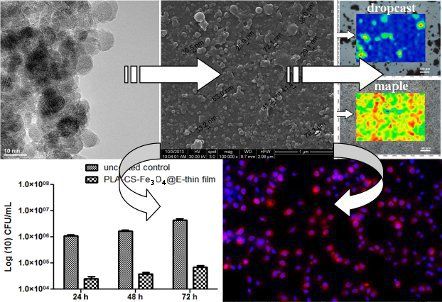
- -chitosan-magnetite-eugenol (PLA-CS-Fe3O4@EUG) nanospheres by matrix assisted pulsed laser evaporation (MAPLE). Transmission electron microscopy (TEM) and scanning electron microscopy (SEM) investigation proved that the homogenous Fe3O4@EUG nanoparticles have an average diameter of about 7 nm, while the PLA
- -CS-Fe3O4@EUG nanospheres diameter sizes range between 20 and 80 nm. These MAPLE-deposited coatings acted as bioactive nanosystems and exhibited a great antimicrobial effect by impairing the adherence and biofilm formation of Staphylococcus aureus (S. aureus) and Pseudomonas aeruginosa (P. aeruginosa
- and coatings of soft materials, organic and polymeric materials, and complex molecules [19][20][21][22][23][24][25][26][27][28][29][30][31][32][33][34][35]. Furthermore, the compatibility of MAPLE processing has been demonstrated for inorganic systems such as TiO2 [36], and Fe3O4 nanoparticle-based




Manipulation of isolated brain nerve terminals by an external magnetic field using D-mannose-coated γ-Fe2O3 nano-sized particles and assessment of their effects on glutamate transport
Beilstein J. Nanotechnol. 2014, 5, 778–788, doi:10.3762/bjnano.5.90
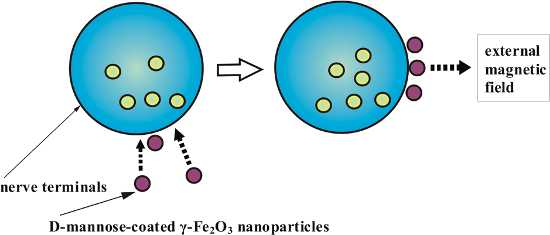
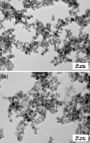
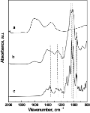
- of iron salts, namely FeCl2 and FeCl3, by rapid increase of pH by ammonia. Similarly as described in [12], this was followed by the oxidation of the resulting magnetite (Fe3O4) with sodium hypochlorite producing maghemite (γ-Fe2O3), which is chemically more stable than Fe3O4. This is in contrast to


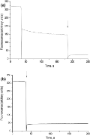

Carbon dioxide hydrogenation to aromatic hydrocarbons by using an iron/iron oxide nanocatalyst
Beilstein J. Nanotechnol. 2014, 5, 760–769, doi:10.3762/bjnano.5.88
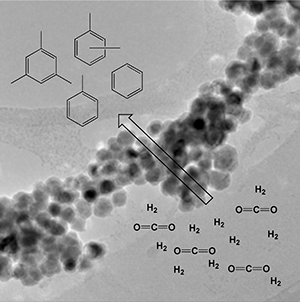
- ) employing Fe/Fe3O4 nanoparticles as catalyst. The synthesis of the catalyst and the mechanism of CO2-hydrogenation will be discussed, as well as further applications of Fe/Fe3O4 nanoparticles in catalysis. Keywords: aromatic hydrocarbons; carbon dioxide reduction; heterogenous catalysis; iron/iron oxide
- oxygen reduction reaction [46][47][48] have been reported. Synthesis of Fe/Fe3O4 nanoparticles Here we report the selective formation of aromatic hydrocarbons from CO2 hydrogenation reactions catalyzed by an Fe/Fe3O4 nanocatalyst. Recently, Sun’s group reported a facile method for synthesizing highly
- crystalline Fe/Fe3O4 nanoparticles [49]. These nanoparticles were found to be robust against deep oxidation because of the formation of a protective crystalline Fe3O4 shell upon the direct oxidation of the bcc-Fe core. The synthesis of the Fe/Fe3O4 nanoparticles was slightly modified and scaled up by a factor


Thermal stability and reduction of iron oxide nanowires at moderate temperatures
Beilstein J. Nanotechnol. 2014, 5, 323–328, doi:10.3762/bjnano.5.36
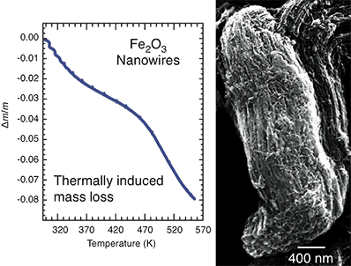
- , infrared and photoemission spectroscopy measurements. Results: The chemical state of the nanowires is typical of the Fe2O3 phase and the stoichiometry changes towards a Fe3O4 phase by annealing above 440 K. The shape and morphology of the nanowires is not modified by moderate thermal treatment, as imaged
- +) with a high chemical stability, while the mixed chemical state of Fe3O4 (Fe2+/3+) might induce instabilities during its use as electrode material. In the present work, we present a spectroscopic and morphologic characterization of Fe2O3 nanowires (NWs), which were produced by means of a hard template
- . Thermogravimetry measurements distinctly show the mass reduction due to oxygen loss, and infrared transmittance and core-level photoemission measurements allow to follow the reduction process of the iron ions at different temperatures, showing the chemical reduction to Fe3O4 starting at moderate temperatures


En route to controlled catalytic CVD synthesis of densely packed and vertically aligned nitrogen-doped carbon nanotube arrays
Beilstein J. Nanotechnol. 2014, 5, 219–233, doi:10.3762/bjnano.5.24
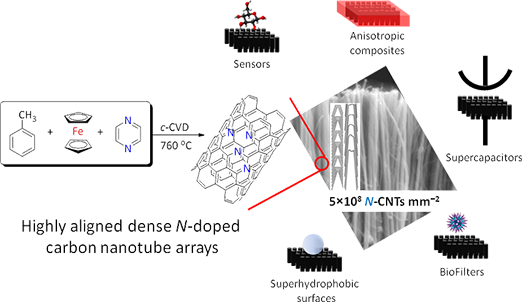
- phases accompanying the nanotubes. The most intensive reflections at 2θ = 42.9, 44.7 and 49.9° could be assigned to α-Fe (110) and γ-Fe (111, 200), respectively. The peak at 2θ = 35°, of the second highest intensity, matches several iron oxides, i.e., FeO, Fe2O3 and Fe3O4. The iron oxides in all of their


Synthesis of boron nitride nanotubes from unprocessed colemanite
Beilstein J. Nanotechnol. 2013, 4, 843–851, doi:10.3762/bjnano.4.95
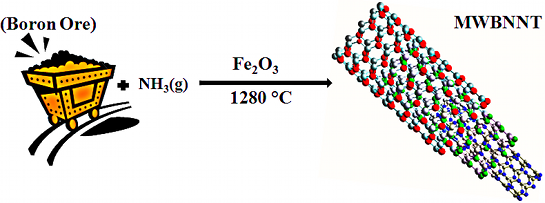
- catalyst. For this purpose Fe, Al or Mg are widely used in the synthesis of BNNT [3][6]. In this study, four types of catalysts, namely ZnO, Al2O3, Fe3O4, and Fe2O3, were investigated for their performances. Figure 1a–d shows 4 SEM images of reaction mixtures under the same experimental conditions but each
- difference, they do not effectively interact with NH3 gas. Therefore, no BNNT formation was observed. However, when iron oxides were used as catalysts, the formation of BNNTs was dramatically improved. The BNNTs synthesized with the use of Fe3O4 (Figure 1c) or Fe2O3 (Figure 1d) are clearly seen in the
- reaction mixtures on the SEM images. When Fe3O4 was used, the diameter of the BNNTs was dramatically increased and zigzag structures with shorter length were observed as seen in Figure 1c. When Fe2O3 was used, a lot of BNNTs with linear but smaller lengths was obtained (Figure 1d). This clearly indicates





