


Search results
Search for "UV–vis absorption" in Full Text gives 155 result(s) in Beilstein Journal of Nanotechnology.
Dispersion of single-wall carbon nanotubes with supramolecular Congo red – properties of the complexes and mechanism of the interaction
Beilstein J. Nanotechnol. 2017, 8, 636–648, doi:10.3762/bjnano.8.68
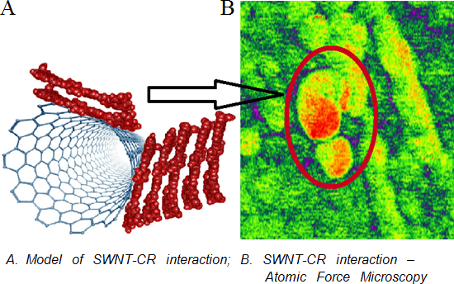
- total amount of CR added to the sample. UV–vis absorption spectra were recorded on a Cary 300Bio Varian spectrophotometer. Absorption coefficient for CR: ε489 = 50.46 M−1·cm−1. In order to avoid errors caused by clogging of the membrane (in case of samples containing higher amounts of CR) the filtering


Nanoscale isoindigo-carriers: self-assembly and tunable properties
Beilstein J. Nanotechnol. 2017, 8, 313–324, doi:10.3762/bjnano.8.34
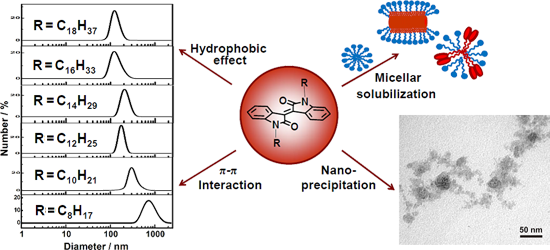
- available classical anionic (SDS), cationic (CTAB) and nonionic (Tween 80) surfactants. Because isatin and isoindigo derivatives are new dyes, their extinction coefficients were determined for the first time. UV–vis absorption spectra of 2a–h and 3 in chloroform are presented in Figures S11–S18 (Supporting




Photocatalysis applications of some hybrid polymeric composites incorporating TiO2 nanoparticles and their combinations with SiO2/Fe2O3
Beilstein J. Nanotechnol. 2017, 8, 272–286, doi:10.3762/bjnano.8.30
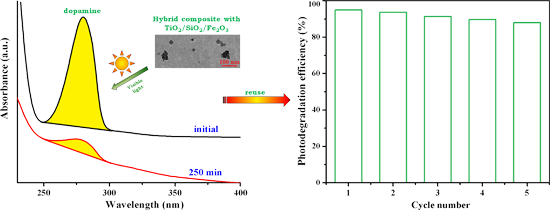
- photodecomposition process of an aqueous solution of phenol (1.06 × 10⁻³ M) in the presence of hybrid materials with TiO2 nanoparticles, pure or combined with SiO2 and/or Fe2O3, was investigated by monitoring the characteristic absorption band of phenol at λ = 270 nm. Figure 6a,b shows the UV–vis absorption spectra
- performed. As expected, S1 exhibited a very low photodegradation activity (Figure 7a), only 10% of phenol being reduced after 250 min of visible-light irradiation. The UV–vis absorption spectra measured in the presence of S4 hybrid (Figure 7b) show that phenol is decomposed with increasing irradiation time
- observed for aqueous hydroquinone solutions (0.5 × 10⁻³ M) in the presence of our hybrids catalysts S1–S4. Figure 8a displays the hydroquinone UV–vis absorption spectra under UV irradiation in the presence of S4 film. It can be observed that after only 5 min of UV irradiation the typical absorption band of


Performance of colloidal CdS sensitized solar cells with ZnO nanorods/nanoparticles
Beilstein J. Nanotechnol. 2017, 8, 210–221, doi:10.3762/bjnano.8.23
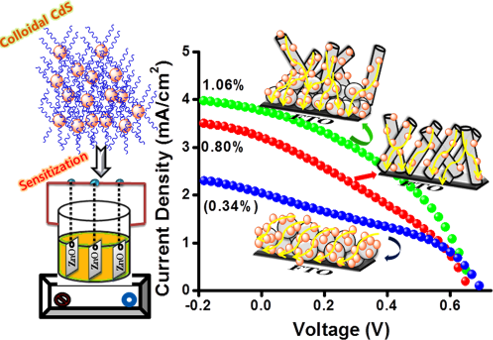
- longitudinal optical (LO) phonon modes of CdS, respectively. The peak 876 cm−1 is assigned to a combination of (1LO + 2LO) [37][38]. The UV–vis absorption spectrum of CdS NPs exhibited an absorption edge (λe) at ≈480 nm (Figure 2c) which further depicted an average nanoparticle size of 4.71 nm as derived from
- NPs. (c) UV–vis absorption spectrum (Inset: corresponding Tauc Plot for optical band gap measurement) and (d) excitation wavelength dependent emission spectra of the CdS NP dispersion at room temperature. (a) Respective X-ray diffraction patterns of the CdS-sensitized ZnO-P and ZnO-R films. (b


A novel electrochemical nanobiosensor for the ultrasensitive and specific detection of femtomolar-level gastric cancer biomarker miRNA-106a
Beilstein J. Nanotechnol. 2016, 7, 2023–2036, doi:10.3762/bjnano.7.193
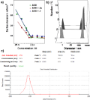
- the assembly of gold NPs and reached 20 nm. The estimated sizes from TEM images showed a good agreement with the DLS measurements (the insets). The UV–vis absorption spectrum of a colloidal solution of gold NPs is presented in Figure 2B and compared with the ones resulted from other synthesized NPs
- . The results indicated a remarkable peak near 520 nm in the gold (curve a) and final gold–magnetic (curve d) NPs analysis. This peak, which forms because of the excitation of surface plasmon vibrations and corroborates the presence of spherical gold NPs, is predictably absent in UV–vis absorption


Effect of Anderson localization on light emission from gold nanoparticle aggregates
Beilstein J. Nanotechnol. 2016, 7, 2013–2022, doi:10.3762/bjnano.7.192
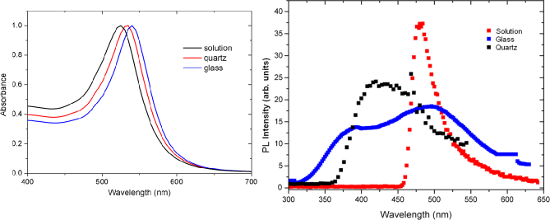
- on the dielectric constant of the particles. We studied the UV–vis absorption of the AuNPs in water solution as a reference sample, assuming no aggregation in the colloidal solution. When another two samples were drop cast on the glass and on the quartz substrates, the difference in medium dielectric
- the aggregated density and pattern as explained by the theory. Figure 4a–c shows the UV–vis absorption spectra of AuNPs in solution, deposited on quartz and deposited on glass substrate, respectively. The absorption band of AuNPs on quartz is quite broad, with a FWHM of ≈150 nm, while for the AuNPs on


Role of RGO support and irradiation source on the photocatalytic activity of CdS–ZnO semiconductor nanostructures
Beilstein J. Nanotechnol. 2016, 7, 1684–1697, doi:10.3762/bjnano.7.161
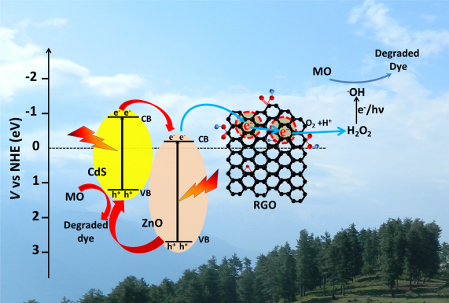
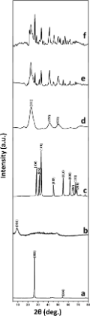
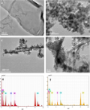
- spectra of (a) GO, (b) ZnO, (c) CdS, (d) CdS–ZnO and (e) CdS–ZnO–RGO nanocomposite. UV–vis absorption spectra of GO, ZnO NR, CdS NP, CdS–ZnO and CdS–ZnO–RGO nanocomposite. Time-dependent UV–vis spectra of photocatalytic degradation of MO: (a) visible light irradiation from a solar simulator using CdS–ZnO




The influence of phthalocyanine aggregation in complexes with CdSe/ZnS quantum dots on the photophysical properties of the complexes
Beilstein J. Nanotechnol. 2016, 7, 1018–1027, doi:10.3762/bjnano.7.94
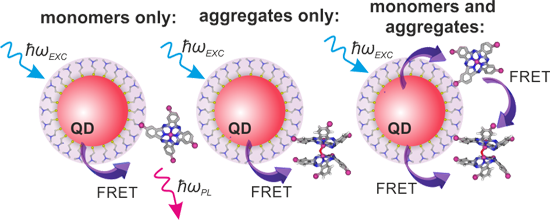
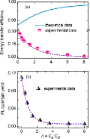
- solution, creating a final mixture with a PcSz concentration in the range from 1 × 10⁻⁸ to 5 × 10⁻⁶ mol/L. All measurements were performed within two hours after preparation of the solution. UV–vis absorption and PL spectra of samples were measured for the mixture solutions after every addition step. UV
- absorption is negligible. This approach allows us to easily evaluate the efficiency of energy transfer in the mixture solution and the change in the PL QY of phthalocyanine bound to QDs. (a) UV–vis absorption (solid lines) and normalized PL spectra (dotted lines) of DMAET capped CdSe/ZnS quantum dots and
- –vis absorption and PL spectra of free CdSe/ZnS quantum dots and PcSz molecules are presented in Figure 1a. As seen in Figure 1a, a high spectral overlap between QD PL and PcSz absorption allows FRET conditions to be satisfied. In aqueous solution, the sulfo groups PcSz dissociate at a neutral pH and



Hierarchical coassembly of DNA–triptycene hybrid molecular building blocks and zinc protoporphyrin IX
Beilstein J. Nanotechnol. 2016, 7, 697–707, doi:10.3762/bjnano.7.62
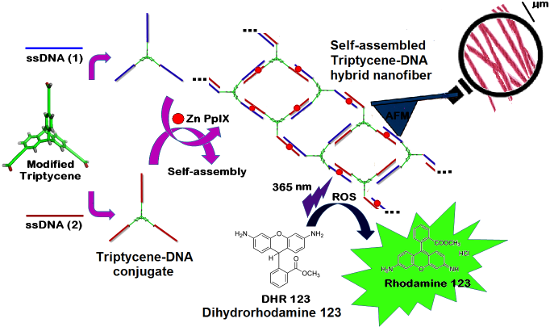
- nanofibers (S1 DNA–TPA/S2 DNA–TPA triconjugate Zn PpIX coassembly) from self-assembly of DNA–TPA triconjugates from absorbance of DNA in solution at 260 nm. CD spectra showing the chirality and conformation of nanofiber (S1 DNA–TPA/S2 DNA–TPA triconjugate Zn PpIX coassembly) and their controls. UV–vis
- absorption spectra and steady-state fluorescent spectra of rhodamine 123 quantifying the photocatalytic activity of nanofibers (S1 DNA–TPA/S2 DNA–TPA triconjugate Zn PpIX coassembly) and their control. Schematic representation of creation of nanostructures from DNA–TPA hybrid self-assembly. The number and


Antibacterial activity of silver nanoparticles obtained by pulsed laser ablation in pure water and in chloride solution
Beilstein J. Nanotechnol. 2016, 7, 465–473, doi:10.3762/bjnano.7.40
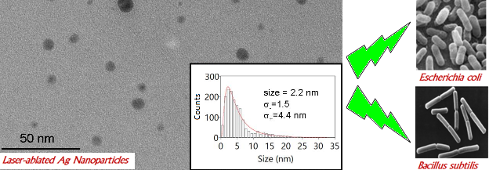
- characterization AgNPs were prepared by PLAL. The experimental setup has been previously described by Giorgetti et al. [31], and the specific fabrication conditions are reported in the Experimental section. The list of samples with their characteristics is shown in Table 1. Figure 1 reports the UV–vis absorption
- reasonable to expect more silver oxide in ps-ablated material. Moreover, the presence of a larger content of silver oxide on the surface of ps-ablated nanoparticles with respect to those ns-ablated was previously ascertained by means of UV–vis absorption experiments and theoretical modelling for Ag colloids
- NP size. The UV–vis absorption spectra, instead, evidenced a larger content of oxidized silver on the surface of the ps-ablated nanoparticles. This results in the release of more silver ions, which is recognized to be quite important for the antimicrobial activity [15][16]. For the colloids obtained


Rigid multipodal platforms for metal surfaces
Beilstein J. Nanotechnol. 2016, 7, 374–405, doi:10.3762/bjnano.7.34



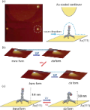


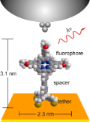


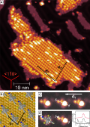


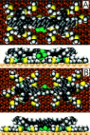


Characterisation of thin films of graphene–surfactant composites produced through a novel semi-automated method
Beilstein J. Nanotechnol. 2016, 7, 209–219, doi:10.3762/bjnano.7.19
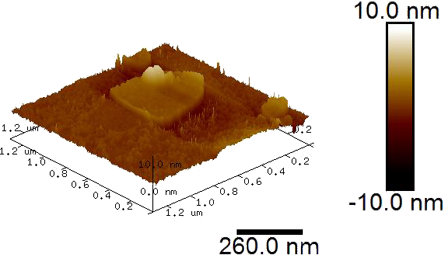
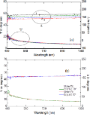
- LbL deposition of graphene(−)SDS alternated with polyethyleneimine (PEI). The optical study of graphene thin films deposited on different substrates was carried out using UV–vis absorption spectroscopy and spectroscopic ellipsometry. A particular focus was on studying graphene layers deposited on gold




Single-molecule mechanics of protein-labelled DNA handles
Beilstein J. Nanotechnol. 2016, 7, 138–148, doi:10.3762/bjnano.7.16
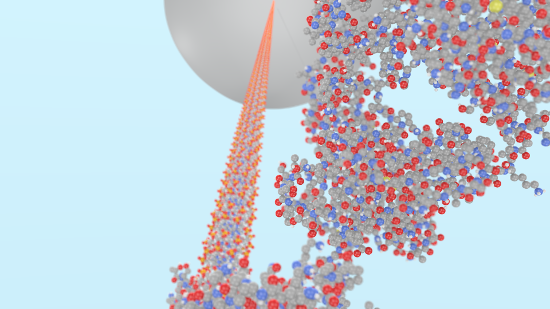
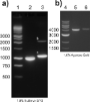
- ]. Results and Discussion Protein labelling of dsDNA Labelling of protein to DIG-DNA-Bio (4056, 3034 and 1000 bp) was carried out as discussed in the Experimental section. The labelled and unlabelled PDHs were analysed using electrophoresis in a 1.8% (for 1000 bp) and 1% (for 4056 bp) agarose gel and UV–vis
- absorption spectra. The mobility of the PDHs was expected to be less than that of the unlabelled DIG-biotin strands and was confirmed with band shifts in agarose gel electrophoresis tests (Figure 2). 1.8% (a) and 1% gel (b) images are shown next to each other, these shifts are more prominent in gel lanes 2



Green synthesis, characterization and catalytic activity of natural bentonite-supported copper nanoparticles for the solvent-free synthesis of 1-substituted 1H-1,2,3,4-tetrazoles and reduction of 4-nitrophenol
Beilstein J. Nanotechnol. 2015, 6, 2300–2309, doi:10.3762/bjnano.6.236
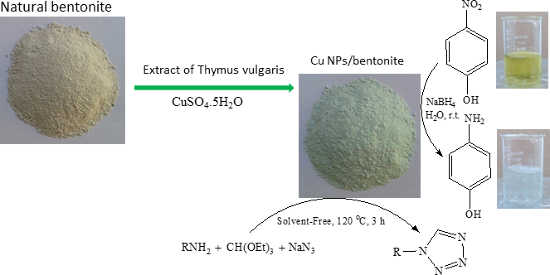
- yellow solution became colorless. 1.0 mL of the solution was extracted and diluted to 25 mL for further UV–vis absorption analysis at certain intervals. The concentration of 4-NP was determined spectrophotometrically at a wavelength of 400 nm. Results and Discussion Preparation and characterization of Cu
- against number of catalytic cycles for the preparation 1-phenyl-1H-1,2,3,4-tetrazole with Cu NPs/bentonite for five successive cycles. Conditions: aniline (2 mmol), NaN3 (2 mmol), triethyl orthoformate (2.4 mmol), catalyst (0.05 g) at 120 °C, 3 h. UV–vis absorption spectra of 4-NP (a) and 4-NP + NaBH4 (b


Light-powered, artificial molecular pumps: a minimalistic approach
Beilstein J. Nanotechnol. 2015, 6, 2096–2104, doi:10.3762/bjnano.6.214
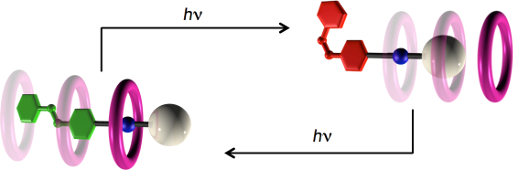
- molecular axle 1H+ (Figure 4) was thus synthesized, and the photoinduced transit of the dibenzo-24-crown-8 ether 2 was investigated in acetonitrile at room temperature by steady state and time-resolved 1H NMR spectroscopy and UV–vis absorption experiments [32]. The kinetic measurements demonstrated that the


A facile method for the preparation of bifunctional Mn:ZnS/ZnS/Fe3O4 magnetic and fluorescent nanocrystals
Beilstein J. Nanotechnol. 2015, 6, 1743–1751, doi:10.3762/bjnano.6.178
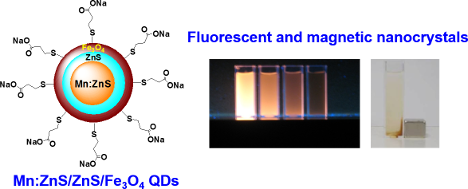
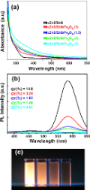
- conducted for all Mn:ZnS/ZnS/Fe3O4 materials prepared. Figure 4b illustrates the sensitive magnetic response of the Mn:ZnS/ZnS/Fe3O4 (2) sample. PL properties of Mn:ZnS/ZnS/Fe3O4 QDs The optical properties of Mn:ZnS/ZnS/Fe3O4 samples were studied by UV–vis absorption spectroscopy and PL spectroscopy (Figure




Synthesis, characterization and in vitro biocompatibility study of Au/TMC/Fe3O4 nanocomposites as a promising, nontoxic system for biomedical applications
Beilstein J. Nanotechnol. 2015, 6, 1677–1689, doi:10.3762/bjnano.6.170
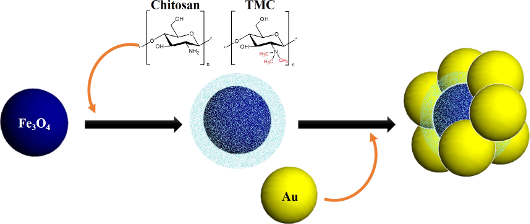
- , the final Au nanoparticles with a desirable diameter of 10 ± 2 nm (Figure 2a,b) and negative surface charge were obtained. The UV–vis absorption spectrum of a ruby-red colloidal solution of Au nanoparticles is presented in Figure 2c. Due to the excitation of surface plasmon vibrations, a strong peak
- , from the TGA results, the amount of immobilized polymer on the nanoparticles was estimated. Due to the strong surface plasmon peak of the Au nanoparticles at about 520 nm, the presence of such nanoparticles could be confirmed in the visible spectra via UV–vis absorption spectra (Lambda 950 UV–vis
- /Fe3O4. (d) Iron oxide suspensions with (right) and without (left) an external magnetic field. (a) TEM image of Au nanoparticles along with (b) their corresponding particle size distribution. (c) UV–vis absorption spectrum of synthesized Au nanoparticles. (d) Image of a freshly prepared, ruby-red




In situ SU-8 silver nanocomposites
Beilstein J. Nanotechnol. 2015, 6, 1661–1665, doi:10.3762/bjnano.6.168
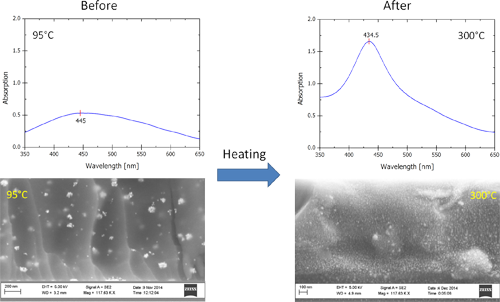
- -exposure bake at 300 °C resulted in the formation of densely populated silver nanoparticles in the polymer matrix. They appeared to be single nanoparticles entities, smaller than the clusters that formed during the baking steps at 95 °C. This is evident from the UV–vis absorption spectra shown in Figure 3
- acetonitrile results in a decreased film thickness compared to the unmodified SU-8. UV–vis absorption spectra of silver nanocomposites at silica wafers after post-exposure bake at 95 °C with varying AgNO3 precursor concentrations. The absorption increases with increasing amounts of AgNO3 precursor added. UV
- –vis absorption spectra of a nanocomposite on a silica wafer containing 0.5 mL of 125 mg·mL−1 AgNO3 precursor solution after different post-exposure heat treatments. Blue dashed curve – after 95 °C for 10 min, red solid curve – after an additional 300 °C for 30 min and black dotted curve – AgNPs in


Formation of substrate-based gold nanocage chains through dealloying with nitric acid
Beilstein J. Nanotechnol. 2015, 6, 1362–1368, doi:10.3762/bjnano.6.140
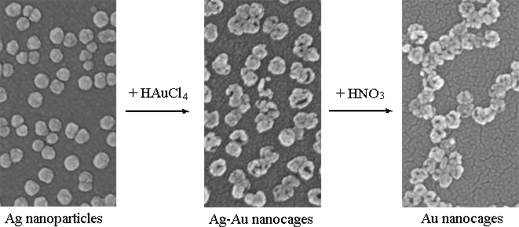
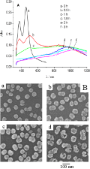
- using absorption spectroscopy. Figure 2A shows the UV–vis absorption spectra recorded from ITO-supported AgNPs after immersion in 0.1 mM HAuCl4 solution for various times. The spectra correspond to the excitation of dipolar and quadrupolar oscillations. The AgNPs exhibited typical LSPR peaks at 455 and

Addition of Zn during the phosphine-based synthesis of indium phospide quantum dots: doping and surface passivation
Beilstein J. Nanotechnol. 2015, 6, 1237–1246, doi:10.3762/bjnano.6.127
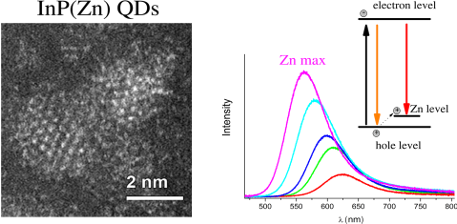
- atoms are mainly located at the surface of the InP QDs. With increasing Mnom an increasing blue shift of the UV–vis absorption spectra and the PL spectra is observed. This fact also points out to a decreasing of the QDs size. The dependence of the peak position on Mnom is shown in Figure 6. One can
- beginning plateaus of UV–vis absorption, luminescence peak position and QY. So we can observe that the optical properties are closely related to the amount of Zn in the sample and that there is a maximum amount of Zn that can be introduced into the QDs. It should be noted that the highest amount of Zn in
- nanocrystals solution dispersed in hexane was mixed with THF and a certain amount of myristic acid was added. The mixture was loaded into a perfluoroethylene vessel and a certain amount of etching mixture (HF in THF 1:10) was added under stirring. Characterization The UV–vis absorption spectra were measured at


Electrical characterization of single molecule and Langmuir–Blodgett monomolecular films of a pyridine-terminated oligo(phenylene-ethynylene) derivative
Beilstein J. Nanotechnol. 2015, 6, 1145–1157, doi:10.3762/bjnano.6.116
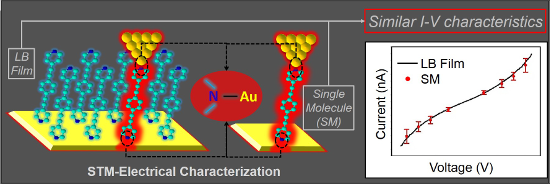
- BAM images. Figure 4 shows the normalized reflection spectra, ΔRnorm, of the Langmuir films of 1 (ΔRnorm = ΔR·A, where ΔR is the reflection and A is the area per molecule) for different values of the area per molecule. For comparison purposes, the UV–vis absorption spectrum of 1 (2.5 × 10⁻⁵ M) in
- mol·cm−2. This value is in excellent agreement with the estimated value determined from the molecular area of 1, which is 1.01 × 10⁻⁹ mol·cm−2 at a surface pressure of 16 mN·m−1. The UV–vis absorption spectrum of the LB film of 1 transferred onto quartz substrates at 16 mN·m−1 during the upstroke of the


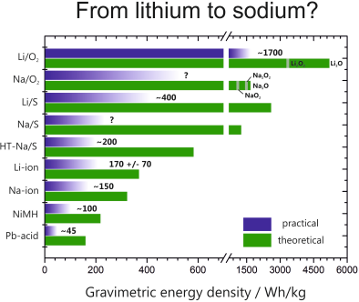
From lithium to sodium: cell chemistry of room temperature sodium–air and sodium–sulfur batteries
Beilstein J. Nanotechnol. 2015, 6, 1016–1055, doi:10.3762/bjnano.6.105


Electromagnetic enhancement of ordered silver nanorod arrays evaluated by discrete dipole approximation
Beilstein J. Nanotechnol. 2015, 6, 686–696, doi:10.3762/bjnano.6.69
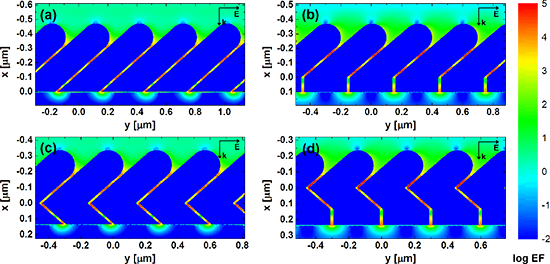
- the SERS polarization was different from that of the polarized UV–vis absorbance of a nonplanar AgNR array substrate [36]. Practically, the UV–vis absorption spectrum measured in the experiment is the sum of absorption and scattering, i.e., extinction. So, the experimental observation is in line with


Silica micro/nanospheres for theranostics: from bimodal MRI and fluorescent imaging probes to cancer therapy
Beilstein J. Nanotechnol. 2015, 6, 546–558, doi:10.3762/bjnano.6.57

- inside the silica spheres by using CTAB as template surfactant. Finally complexes of lanthanides, namely Eu3+, Tb3+ with nicotinic and isonicotinic acid were introduce inside silica. The characterization of these multifunctional nanostructures was achieved by UV–vis absorption spectroscopy, XRD


Palladium nanoparticles anchored to anatase TiO2 for enhanced surface plasmon resonance-stimulated, visible-light-driven photocatalytic activity
Beilstein J. Nanotechnol. 2015, 6, 428–437, doi:10.3762/bjnano.6.43
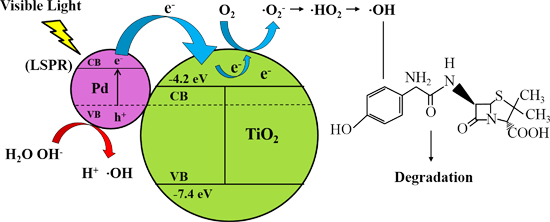
- –desorption isotherm of 0.5 wt % Pd/TiO2 and the inset is the pore size distribution. Core level XPS spectra of a) Ti 2p and b) Pd 3d of 0.5 wt % Pd/TiO2. UV–vis absorption spectra of a) TiO2, b) 3.0 wt % Pd/TiO2, c) 0.5 wt % Pd/TiO2 and d) 1.0 wt % Pd/TiO2. Photoluminescence spectra of a) TiO2, b) 0.5 wt





