Search results
Search for "Young’s modulus" in Full Text gives 155 result(s) in Beilstein Journal of Nanotechnology.
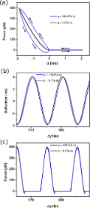
Determination of Young’s modulus of Sb2S3 nanowires by in situ resonance and bending methods
Beilstein J. Nanotechnol. 2016, 7, 278–283, doi:10.3762/bjnano.7.25
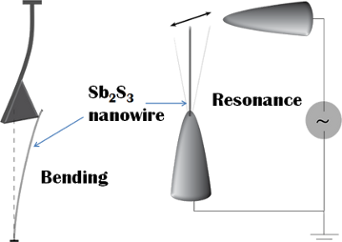
- and determine their Young’s modulus using in situ electric-field-induced mechanical resonance and static bending tests on individual Sb2S3 nanowires with cross-sectional areas ranging from 1.1·104 nm2 to 7.8·104 nm2. Mutually orthogonal resonances are observed and their origin explained by asymmetric
- cross section of nanowires. The results obtained from the two methods are consistent and show that nanowires exhibit Young’s moduli comparable to the value for macroscopic material. An increasing trend of measured values of Young’s modulus is observed for smaller thickness samples. Keywords: antimony
- sulfide; in situ; mechanical properties; nanowires; Young’s modulus; Introduction Antimony sulfide or stibnite is a highly anisotropic semiconductor material with potential applications in thermoelectric and optoelectronic [1][2] devices due to its high achievable thermoelectric power and


Synthesis and applications of carbon nanomaterials for energy generation and storage
Beilstein J. Nanotechnol. 2016, 7, 149–196, doi:10.3762/bjnano.7.17
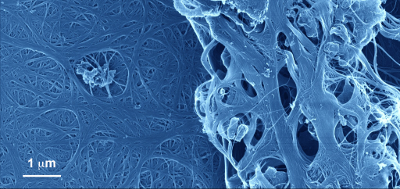
- hexagons around the equatorial plane and exhibits a more oval shape (Figure 4) [26]. The main properties of C60 are [25]: Young’s modulus, ≈14 GPa Electrical resistivity, ≈1014 Ω m Thermal conductivity, ≈0.4 W/mK Band gap, 1.7 eV The other fullerene species show similar properties to C60. Depending on the
- the discovery of CNTs, scientists have made great progress in the experimental and theoretical study of their mechanical, electrical and thermal properties. CNTs exhibit remarkable properties including: Tensile strength of at least 37 GPa and strain to failure of at least 6% [38][39] Young’s modulus
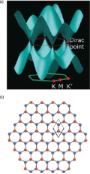
- ][63], high Young’s modulus (≈1 TPa) with an intrinsic strength of 130 GPa [64][65], high thermal conductivity (over 3000 W m−1 K−1) [66] and excellent optical transmittance (≈97.7%) [67]. Additional graphene characteristics include: high theoretical specific surface area (2630 m2 g−1) [68
















A simple and efficient quasi 3-dimensional viscoelastic model and software for simulation of tapping-mode atomic force microscopy
Beilstein J. Nanotechnol. 2015, 6, 2233–2241, doi:10.3762/bjnano.6.229
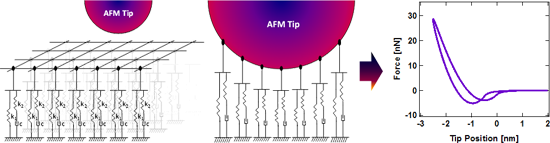
- extract properties such as the Young’s modulus, which describes the bulk stress–strain relation of the material, or the Hamaker constant, which describes the dispersion forces between the tip and the sample. In the case of a viscoelastic surface the extraction of material ‘properties’ is difficult for a
- terms of a real 3D tip interacting with a flat surface, and thus makes it impossible to extract approximate parameters such as the Young’s modulus [12]. It is clear in Figure 1a that the geometry of the tip and its indentation depth into the surface have absolutely no effect on the nature of the tip



Fabrication of hybrid nanocomposite scaffolds by incorporating ligand-free hydroxyapatite nanoparticles into biodegradable polymer scaffolds and release studies
Beilstein J. Nanotechnol. 2015, 6, 2217–2223, doi:10.3762/bjnano.6.227
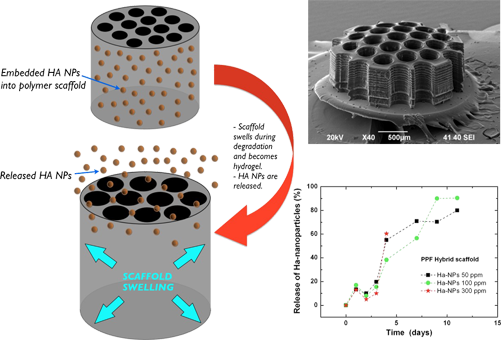
- Berkovich tip with a maximum load of 0.6 mN, a dwell time at maximum load of 30 s, loading and unloading periods of 30 and 15 s, respectively. Every sample has been measured at 16 different points (in a matrix of 4 × 4, the distance between measurement points was 50 μm). Young’s modulus was calculated


Development of a novel nanoindentation technique by utilizing a dual-probe AFM system
Beilstein J. Nanotechnol. 2015, 6, 2015–2027, doi:10.3762/bjnano.6.205
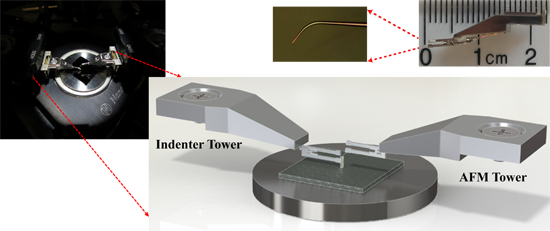
- . An indenter probe fabricated with a known tip geometry is used to penetrate into the sample. By utilizing the force and small amount of depth information measured during indentation, material properties such as elastic (Young’s) modulus of the sample can be estimated. For example, a growing


Simulation of thermal stress and buckling instability in Si/Ge and Ge/Si core/shell nanowires
Beilstein J. Nanotechnol. 2015, 6, 1970–1977, doi:10.3762/bjnano.6.201
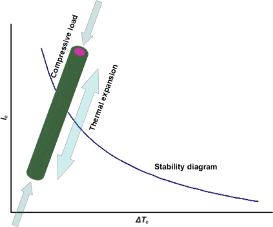
- employs the method of atomistic simulation to estimate the thermal stress experienced by Si/Ge and Ge/Si, ultrathin, core/shell nanowires with fixed ends. The underlying technique involves the computation of Young’s modulus and the linear coefficient of thermal expansion through separate simulations
- normal stresses on clamped Si/Ge and Ge/Si CSNWs due to variation in the operating temperature. The calculation of thermal stress typically involves the measurement of Young’s modulus and the thermal expansion of a solid. Unlike the composite structures of macroscopic dimensions, core–shell nanowires
- , it would be significant only for a nanowire diameter of less than 2–3 nm. As the surface/volume ratio decays rapidly with increasing wire thickness, the surface reconstruction is not expected to dramatically affect the Young’s modulus or thermal expansion coefficient of 10 nm diameter nanowires. The


A simple method for the determination of qPlus sensor spring constants
Beilstein J. Nanotechnol. 2015, 6, 1733–1742, doi:10.3762/bjnano.6.177
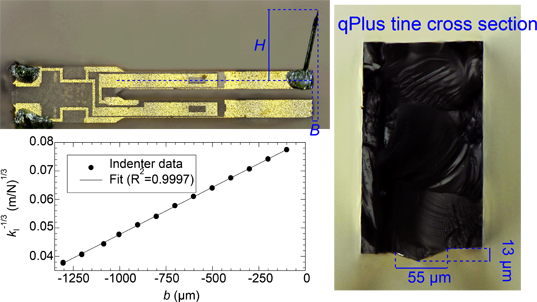
- approach has been to estimate the spring constant from plane view geometry and the Young’s modulus of the appropriate crystallographic orientation. In this case, the qPlus sensor is treated as a uniform, rectangular cantilever and the spring constant is predicted from Euler–Bernoulli beam theory [1][7
- uncertainty for moderate tip offsets (less than ±100 μm with this method, see Appendix section). Finally, the agreement between experiment and theory suggests that the spring constant of the tuning fork can be predicted reasonably well from the geometry and Young’s modulus of the tine, being careful to
- simply to estimate the spring constant from the Young’s modulus and geometry of the tuning fork, taking care to measure the dimensions of the cross section. We estimate the uncertainty in this method is closer to 10%, which comes primarily from limited knowledge of the effective cantilever length


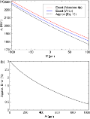


![[Graphic 9]](/bjnano/content/inline/2190-4286-6-177-i28.png?max-width=637&scale=1.18182) vs b is plotted where kI is the spring constan...
vs b is plotted where kI is the spring constan...
Improved atomic force microscopy cantilever performance by partial reflective coating
Beilstein J. Nanotechnol. 2015, 6, 1450–1456, doi:10.3762/bjnano.6.150
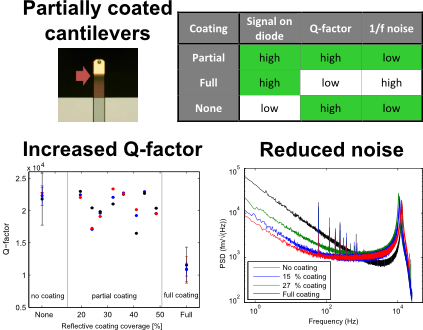
- Sosale et al. [8], derived a quantitative theory of how the internal material friction of a partial coating effects the Q-factor of a microcantilever: with ξ the normalized length (l/L), (ξ) the natural mode shape of the cantilever, E the Young’s modulus and hf, hs being the coating film thickness and


Nanomechanical humidity detection through porous alumina cantilevers
Beilstein J. Nanotechnol. 2015, 6, 1332–1337, doi:10.3762/bjnano.6.137
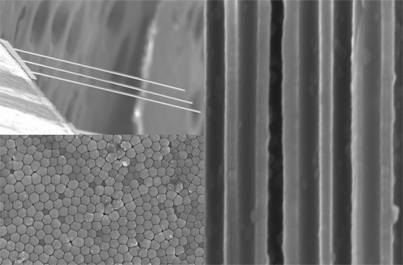
- is the Young’s modulus of the cantilever [11]. According to Equation 1, the more molecules are adsorbed on the surface of a cantilever, the larger is the shift of the resonance frequency. Therefore AAO cantilevers hold a great promise for the development of micromechanical sensor arrays. In the
- ). Using Equation 1 and the Young’s modulus of AAO of 340 GPa one can evaluate the quantity of water adsorbed onto the anodic alumina surface. The calculation gives a result of Δm = 20 pg at a sensitivity Δf/Δm of 56 Hz/pg. On the other hand, the amount of absorbed water can be estimated from the Langmuir



Stiffness of sphere–plate contacts at MHz frequencies: dependence on normal load, oscillation amplitude, and ambient medium
Beilstein J. Nanotechnol. 2015, 6, 845–856, doi:10.3762/bjnano.6.87
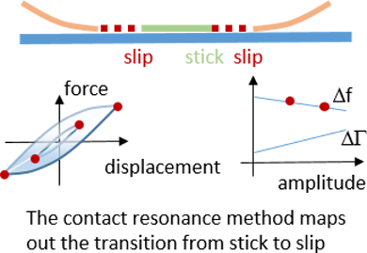
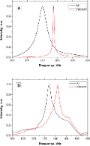
- , PMMA, gold) and use the same values on both sides. For the sake of quantitative modeling (see Figure 5 below) we keep the Poisson number fixed at v1 = v2 = 0.17 and express the shear modulus as where E is the Young’s modulus and E is a fit parameter. The contact radius, a, is assumed to obey the JKR
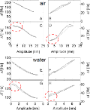
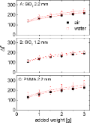
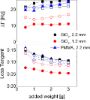
- . We fitted the data with the JKR model. (The Tabor parameter of the geometry under study is 10, which says that the JKR model should be applied, rather than the DMT model.) Table 1 shows the derived values of the interfacial energy, γ, and the effective Young’s modulus, E. While the values are




Capillary and van der Waals interactions on CaF2 crystals from amplitude modulation AFM force reconstruction profiles under ambient conditions
Beilstein J. Nanotechnol. 2015, 6, 809–819, doi:10.3762/bjnano.6.84
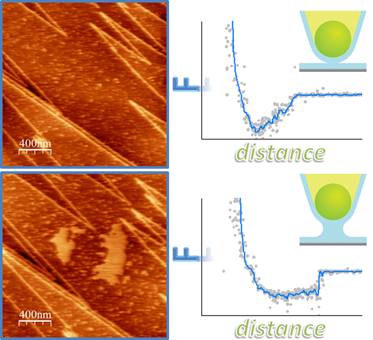
- (DMT) model of contact mechanics [54] has been employed to account for short range repulsion: where E* is the effective Young’s modulus that includes the elastic modulus of the tip and of the sample [14]. This profile is shown in Figure 4b. 2) The second profile corresponds to a linear decay in the


Mapping of elasticity and damping in an α + β titanium alloy through atomic force acoustic microscopy
Beilstein J. Nanotechnol. 2015, 6, 767–776, doi:10.3762/bjnano.6.79
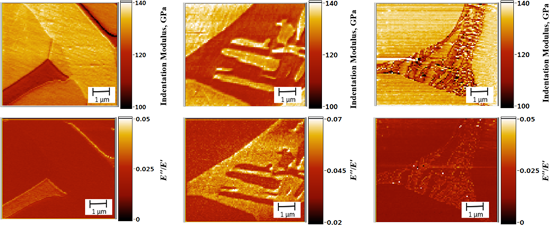
- -treated at different temperatures. The Young’s modulus of the individual phases can be approximated by using M values for the respective phases and Equation 6. Poisson’s ratio values as a function of heat-treatment temperature for Ti-6Al-4V samples are discussed in detail elsewhere [31]. The Poisson’s
- and α′ phases in the sample and EBS is the average Young’s modulus of the bulk sample. Substituting the values for Eα and Eβ, obtained by AFAM and Vα and Vβ obtained by JMatPro® simulation for specimens heat-treated at 923, 1123 and 1223 K in Equation 9, the EBS values are obtained as 119.1, 116.2 and


Self-assembled anchor layers/polysaccharide coatings on titanium surfaces: a study of functionalization and stability
Beilstein J. Nanotechnol. 2015, 6, 617–631, doi:10.3762/bjnano.6.63
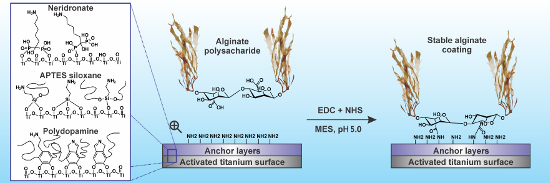
- strength, appropriate Young’s modulus, outstanding biocompatibility and excellent corrosion resistance make commercially pure titanium a highly favored, biocompatible, metallic material [2]. The biocompatibility and corrosion resistance of titanium surfaces is closely related to the presence of a


Chains of carbon atoms: A vision or a new nanomaterial?
Beilstein J. Nanotechnol. 2015, 6, 559–569, doi:10.3762/bjnano.6.58
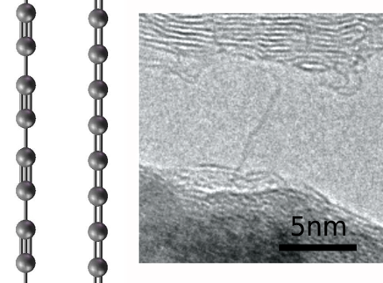
- . [19] have related the fracture strength to a specific strength of carbon chains of 6.0–7.5 × 10⁷ Nm/kg which would be the highest of all known materials. A Young’s modulus of 3.3 × 10¹³ Pa has been calculated [19] which is much higher than for graphene (approx. 1012 Pa). In sp2 networks like graphene


A scanning probe microscope for magnetoresistive cantilevers utilizing a nested scanner design for large-area scans
Beilstein J. Nanotechnol. 2015, 6, 451–461, doi:10.3762/bjnano.6.46
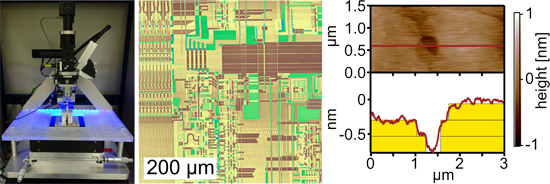
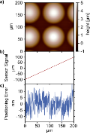
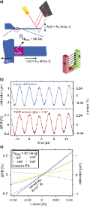
- deflection, the strain at the base of the cantilever can be approximated by using Hooke’s law and the Young’s modulus of the cantilever beam. In Figure 5c, the sensor response for four chosen field angles is given. The strain sensitivity (slope of the sensor response) varies quite significantly with the


Dynamic force microscopy simulator (dForce): A tool for planning and understanding tapping and bimodal AFM experiments
Beilstein J. Nanotechnol. 2015, 6, 369–379, doi:10.3762/bjnano.6.36
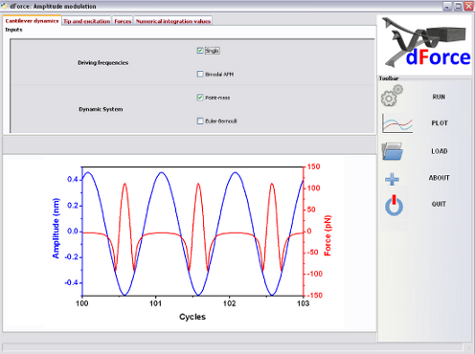
- the effective Young modulus of the interface defined by where Et and Es are the Young’s modulus of the tip and sample, respectively, and υt and υs are the Poisson coefficients of the tip and sample, respectively. Derjaguin–Mueller–Toporov contact mechanics (DMT) The DMT model is valid for describing
- with a spring and a dashpot. By assuming a contact mechanism as described by Hertz contact mechanics, we deduce the force as where E0 and E∞ represent the Young’s modulus of the material at fast and slow loading rates, respectively. Customized force The code also enables the definition of other types
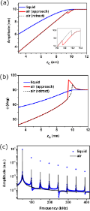
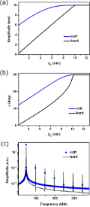
- higher in water (Figure 3c). Imaging soft and hard materials The cantilever dynamics in AM-AFM shows some subtle differences depending on the effective Young’s modulus of the interaction. Figure 4 shows the amplitude, phase shift and harmonic components for two materials characterized by an Es of 50 MPa




Mechanical properties of MDCK II cells exposed to gold nanorods
Beilstein J. Nanotechnol. 2015, 6, 223–231, doi:10.3762/bjnano.6.21
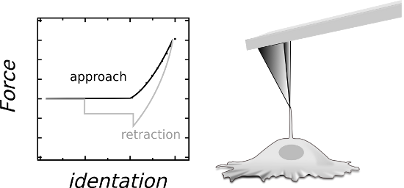
- atomic force microscope (AFM) by taking force curves at each spot the probe touches the sample surface. These force indentation curves are frequently subject to regression analysis employing Hertzian contact models that permit to assess the cell’s Young’s modulus. The modulus bears invaluable information
- uses Hertzian contact mechanics (Sneddon model for conical indenters) providing a single parameter, the Young’s modulus of the cell (see Materials and Methods section). The range of validity is limited to only a few hundred nanometers (green dotted lines in Figure 3). Due to the well-known shortcomings
- results of employing conventional contact models based on Hertzian mechanics expressing the mechanical properties as a single parameter, the Young’s modulus. However, the fits of the liquid droplet model describe the data very well and show the same trend as the more conventional contact models assuming a


The capillary adhesion technique: a versatile method for determining the liquid adhesion force and sample stiffness
Beilstein J. Nanotechnol. 2015, 6, 11–18, doi:10.3762/bjnano.6.2
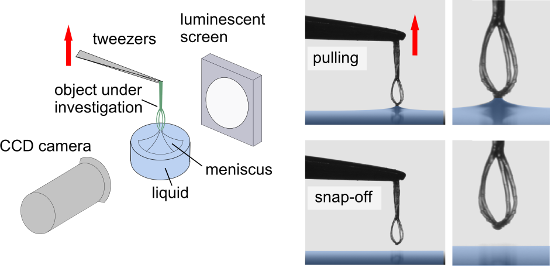
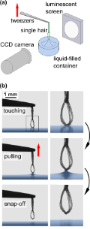
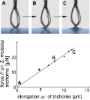
- also resulted in the measurement of an elastic modulus (Young’s modulus) for individual hairs of 3.0 × 10⁵ N/cm2, which is within the typical range known for human hair. (3) Finally, the accuracy and validity of the capillary adhesion technique was proven by examining calibrated atomic force microscopy
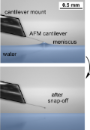
- -off, the elongation, Δy, of the trichome in the direction of the force was observed. Assuming Hooke’s law, its spring constant is Likewise, other elastic constants such as Young’s modulus can be determined, as shown later in the section where human head hairs are examined. The contribution of the
- the pulling force with respect to the trichome elongation, thus following Hooke’s law. This is valid over the whole range from a smaller force to the maximum force immediately before snap-off. Determining the water adhesion force, elasticity and Young’s modulus of human head hairs As a second


Nanometer-resolved mechanical properties around GaN crystal surface steps
Beilstein J. Nanotechnol. 2014, 5, 2164–2170, doi:10.3762/bjnano.5.225
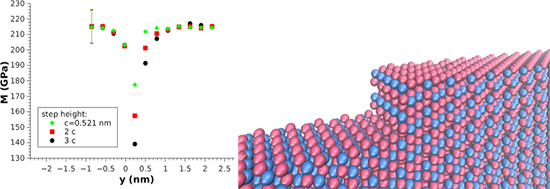
- the elastic constants. Therefore, the mechanical properties were investigated in terms of the indentation (or reduced Young’s) modulus M by using an indenter acting with a load F on a contact area A of a half-space, thereby causing a displacement u [20]: Since the elastic constants can consistently be
- spring constant of 39 N/m. The second resonance mode was used for further analysis. The reduced Young’s modulus was measured by using a reference approach with three reference samples: fused silica (M = 75 GPa), silicon (M = 165 GPa) and sapphire (M = 433 GPa), which were demonstrated to be sufficient


![[Graphic 3]](/bjnano/content/inline/2190-4286-5-225-i13.png?max-width=637&scale=1.18182) along the y-axis of the upper Ga atom...
along the y-axis of the upper Ga atom...


Mechanical properties of sol–gel derived SiO2 nanotubes
Beilstein J. Nanotechnol. 2014, 5, 1808–1814, doi:10.3762/bjnano.5.191
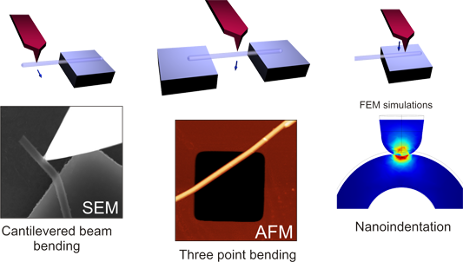
- performed by atomic force microscopy (AFM) under ambient conditions. Half-suspended and three-point bending tests were processed in the framework of linear elasticity theory. Finite element method simulations were used to extract Young’s modulus values from the nanoindentation data. Finally, the Young’s
- ), which were prepared by sol–gel synthesis using organic NT templates, by using three point bending [15]. The differences of the values of the Young’s modulus measured by the listed methods were approximately 40%, which can probably be attributed to peculiarities of the measurement techniques. The effect
- of the experimental technique on the measured values of the Young’s modulus was demonstrated by Rohlig et al. for ZnO NWs by comparing the resonant technique, nanoindentation, bending of bridges, and tensile and compressive strain tests [16]. In the case of SiO2 NTs it is also important to consider


On the structure of grain/interphase boundaries and interfaces
Beilstein J. Nanotechnol. 2014, 5, 1603–1615, doi:10.3762/bjnano.5.172
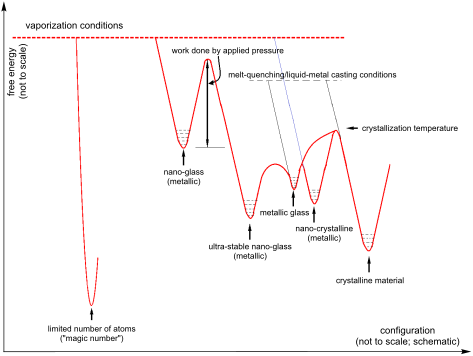
- temperature has a significant effect on properties. From structural studies and the measurements of interfacial properties (e.g., density, Young’s modulus) of metallic nano-glasses it is known that the atomic arrangements and electronic structures are different from what is found in the interface of relaxed
- actually increased [12][13]) but the Young’s modulus was similar to or higher than that of the crystalline and the denser, conventional glassy counterparts [9][10][14]. This could indicate a change in the nature of electronic interactions, e.g., from metallic to covalent bonding. The heat capacity was 20


Influence of the PDMS substrate stiffness on the adhesion of Acanthamoeba castellanii
Beilstein J. Nanotechnol. 2014, 5, 1393–1398, doi:10.3762/bjnano.5.152
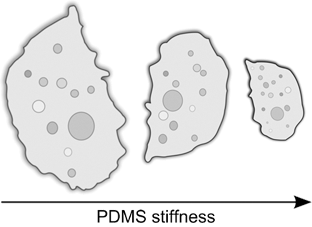
- increases with a decreasing Young’s modulus of the substrate. Conclusion: The dependence of A. castellanii adhesion on the elastic properties of the substrate is the first study suggesting a mechanosensory effect for a eukaryotic human pathogen. Interestingly, the main targets of A. castellanii infections
- cool down to room temperature. Elasticity measurements Mechanical properties of PDMS substrates were determined by microindentation using a micro-force measurements device (Basalt-BT01, Tetra GmbH, Ilmenau, Germany) [24]. The recorded force–distance curves were used to calculate the Young’s modulus of
- Young’s modulus (4 kPa), A. castellanii occupy a larger area compared to acanthamoebae on substrates with a higher Young’s modulus (128 kPa). The substrate with a Young’s modulus of 29 kPa gave an intermediate value. On the control sample, the cell adhesion area was similar to the one on the 4 kPa



Surface topography and contact mechanics of dry and wet human skin
Beilstein J. Nanotechnol. 2014, 5, 1341–1348, doi:10.3762/bjnano.5.147
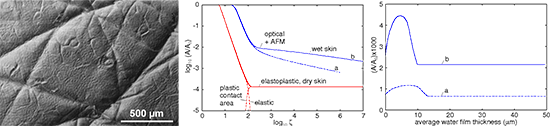
- a rather complex topic due to the layered morphology and the viscoelastic–plastic nature of the human skin. A modern view about this topic is presented in [3]. The top-layer of the skin (stratum corneum, about 20 μm thick) has a Young’s modulus of E ≈ 1–3 GPa, which is similar to rubber in the
- layer of stratum corneum has a Young’s modulus of E0 = 7 MPa in the wet state and of E0 = 1 GPa in the dry state with a Poisson ratio of ν0 = 0.5. Plastic deformation must be taken into account for the dry skin, because of the the high contact pressure. In the following calculations the plastic yield
- stress (or penetration hardness) of human skin was taken as σY = 50 MPa [10], which is similar to the yield stress of most polymers, which are of the order of 100 MPa. We note that the yield stress of the skin is about 5% of its Young’s modulus, which is typical for many materials, e.g., for dry


Physical principles of fluid-mediated insect attachment - Shouldn’t insects slip?
Beilstein J. Nanotechnol. 2014, 5, 1160–1166, doi:10.3762/bjnano.5.127
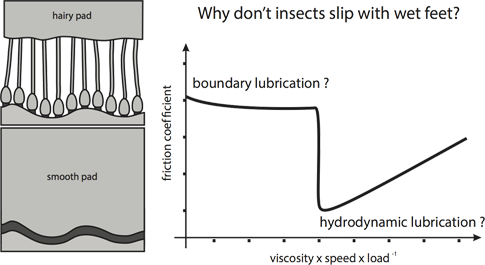
- case of insect (and tree frog) attachment, with very smooth and adaptable pads [49][50], it is very questionable whether this assumption is justified. In fact, recent and more comprehensive tribological models show that for certain ratios of adhesive pad size and stiffness, the Young’s modulus of the


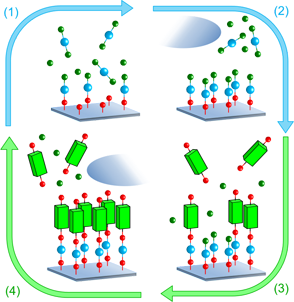
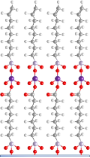
Organic and inorganic–organic thin film structures by molecular layer deposition: A review
Beilstein J. Nanotechnol. 2014, 5, 1104–1136, doi:10.3762/bjnano.5.123