


Search results
Search for "adsorbates" in Full Text gives 122 result(s) in Beilstein Journal of Nanotechnology.
The role of oxygen and water on molybdenum nanoclusters for electro catalytic ammonia production
Beilstein J. Nanotechnol. 2014, 5, 111–120, doi:10.3762/bjnano.5.11
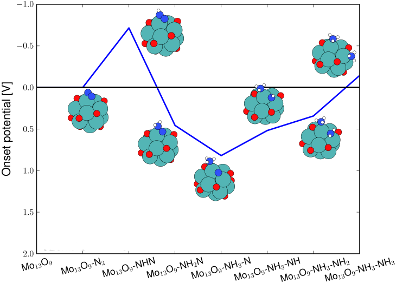
- adsorbates (N, H, O, NH, etc.); these were carried out using the BFGS and FIRE [18] optimizers within ASE. Electrochemical modelling The procedure for electrochemical reduction of nitrogen molecules through the associative mechanism is outlined in [2][16]. It was shown that the associative mechanism is the


Influence of the adsorption geometry of PTCDA on Ag(111) on the tip–molecule forces in non-contact atomic force microscopy
Beilstein J. Nanotechnol. 2014, 5, 98–104, doi:10.3762/bjnano.5.9
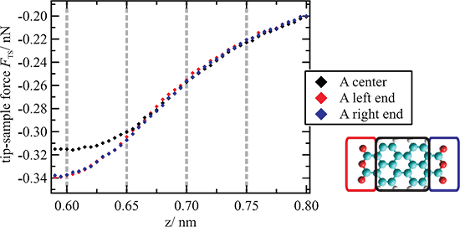
- both cases. This result demonstrates the capability of 3D force spectroscopy to detect even small effects in the electronic properties of organic adsorbates. Keywords: atomic force microscopy; organic molecules; three-dimensional (3D) force spectroscopy; Introduction Perylene-3,4,9,10-tetracarboxylic
- weight below the Fermi level correspond to different electron densities. Atomic force microscopy (AFM) investigations indicate that electronic properties such as the electron density distribution or partial charges within organic adsorbates are reflected by the tip–molecule force interactions [6][7][8][9
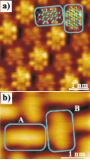
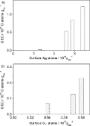
- adsorbates. (a) STM topography scan (V = 0.2 V, I = 0.3 nA) of PTCDA on Ag(111). The two molecule orientations (turquois rectangles) of the unit cell correspond to different adsorption geometries and are imaged with a different intensity. (b) NC-AFM topography scan (Δf = −0.6 Hz) of the surface area where



Exploring the retention properties of CaF2 nanoparticles as possible additives for dental care application with tapping-mode atomic force microscope in liquid
Beilstein J. Nanotechnol. 2014, 5, 36–43, doi:10.3762/bjnano.5.4
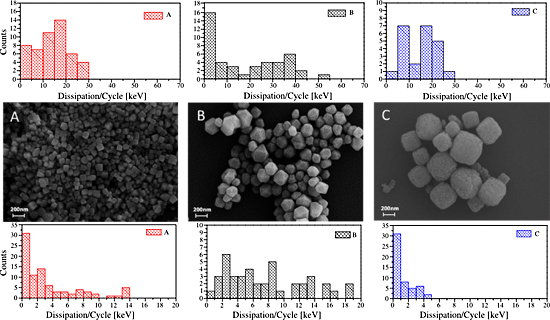
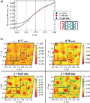
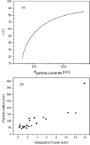
- needed to examine how the retention varies with respect to the pH and also solubility test are required to explore their acid-dependent release of fluorine over time. We showed that AM-AFM is a powerful tool to compare detachment and interaction properties of adsorbates in liquid. (a) Theoretically


Surface assembly and nanofabrication of 1,1,1-tris(mercaptomethyl)heptadecane on Au(111) studied with time-lapse atomic force microscopy
Beilstein J. Nanotechnol. 2014, 5, 26–35, doi:10.3762/bjnano.5.3
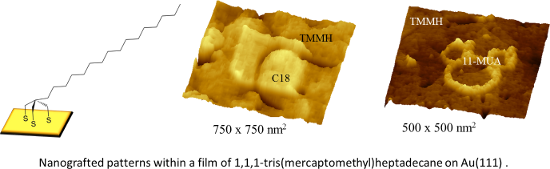
- –Au bonds to the substrate. Keywords: liquid AFM; multidentate; nanografting; nanolithography; self-assembly; Introduction Multidentate thiol-based adsorbates attach to gold surfaces through multiple bonds that provide enhanced stability to self-assembled monolayers (SAMs) [1][2]. Although detailed
- investigations of monodentate thiol-based SAMs have been widely reported, relatively few studies of SAMs derived from bidentate or tridentate thiol adsorbates are available. One might predict that the bulkier headgroups of multidentate adsorbates would strongly influence the kinetics, stability, and surface
- organization when compared to analogous monodentate n-alkanethiol adsorbates. The synthesis of custom-designed multidentate thiol-based adsorbates offers opportunities for generating interfaces having well-defined structure and composition based on either bidentate or tridentate thiol groups, a crosslinked


Some reflections on the understanding of the oxygen reduction reaction at Pt(111)
Beilstein J. Nanotechnol. 2013, 4, 956–967, doi:10.3762/bjnano.4.108
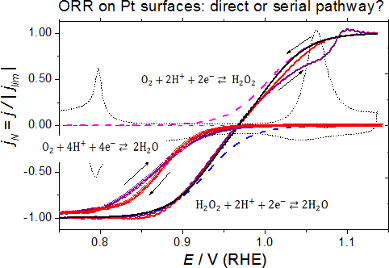
- adsorbates that arise from faradaic processes). In addition, if the electrode potential is increased beyond 0.6 V, the surface starts to be covered by oxygenated species. In this region, in acidic solutions the so called “butterfly” develops, which reflects the generation of PtOH, which is likely to happen
- fact, this happens in experiments if strong adsorbates are present in the solution, such as strongly adsorbing anions or adatoms deposited at an underpotential [26][29][30][43]. In this case, H2O2 is detected as the final product in RDE experiments [14][26], which proves that the surface reactivity is
- produced during the ORR in acidic media when surface adsorbates are present. The surface changes during oxidation and disordering of the surface may be relevant in the ORR because of the electrocatalytic nature of this reaction, which should involve adsorption steps. At high potentials dissolved oxygen may


Adsorption of the ionic liquid [BMP][TFSA] on Au(111) and Ag(111): substrate effects on the structure formation investigated by STM
Beilstein J. Nanotechnol. 2013, 4, 903–918, doi:10.3762/bjnano.4.102
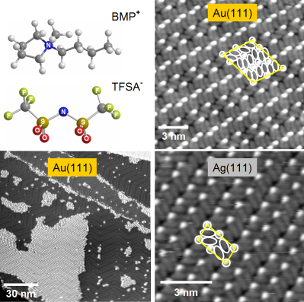
- tools for characterization of the IL adsorbates/adlayers, but also to vary the temperature over a wide range, down to cryogenic temperatures, where molecular motion is largely frozen. This way, the interaction between substrate and adsorbed ILs was investigated in a number of studies, applying both
- -ethyl-3-methylimidazolium-[TFSA] ([EMIM][TFSA]) adsorption on Au(110) [16], respectively, indicated that at room temperature the thermal mobility of IL adsorbates is too high for resolving individual molecular entities by STM. Images recorded under these conditions resolved a characteristic noise in the
- tunnel current on the IL covered surfaces, which was not observed in the absence of the IL adlayer. The authors of those studies attributed this noise to the formation of a 2D gas or 2D liquid adlayer phase, where the IL adsorbates are mobile on the surface and cause a temporary modification in the




The role of electron-stimulated desorption in focused electron beam induced deposition
Beilstein J. Nanotechnol. 2013, 4, 474–480, doi:10.3762/bjnano.4.56
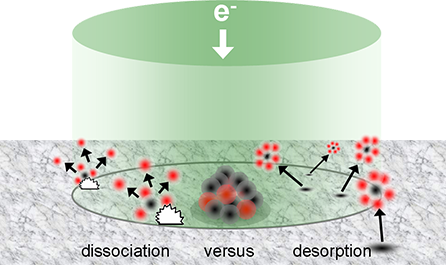
- al. [16]. We contribute this discrepancy to electron-stimulated desorption, which is known to occur during electron irradiation. Electron-stimulated desorption is observed for many adsorbates and is induced by secondary electron emission. Our experimental result suggests that, of the W(CO)6 molecules


Photoresponse from single upright-standing ZnO nanorods explored by photoconductive AFM
Beilstein J. Nanotechnol. 2013, 4, 208–217, doi:10.3762/bjnano.4.21
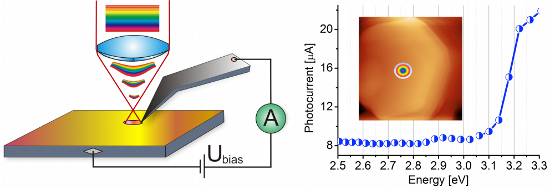
- . The surface conductivity of ZnO is highly dependent on the presence of adsorbates [20][21][22][23]. Such surface defects serve as binding sites for chemisorption processes and may contribute to the scattering and trapping of carriers [24], which lower the intrinsic conductivity of the material
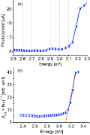
- 4a) for about 21.6 min and then dropped exponentially. Although we observe this behavior reproducibly for different NRs, we can still only speculate on the origin of this phenomenon. In fact several contributions may occur. Initially, the ZnO surface under the AFM tip is covered with adsorbates such



Bimodal atomic force microscopy driving the higher eigenmode in frequency-modulation mode: Implementation, advantages, disadvantages and comparison to the open-loop case
Beilstein J. Nanotechnol. 2013, 4, 198–207, doi:10.3762/bjnano.4.20
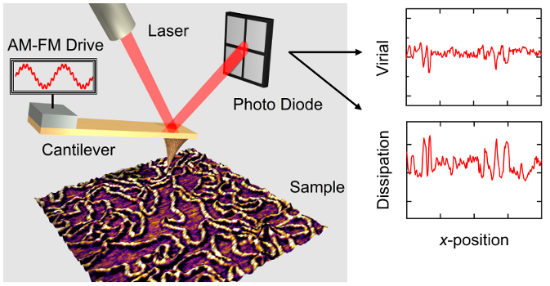
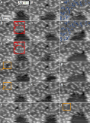
- surface and, at certain positions, single atomic/molecular adsorbates/defects. In the bottom row single scan lines for three different 2nd mode amplitudes are compared with each other. The red scan lines were taken from the images in the top row (position indicated by red arrow). The 2nd mode phase-shift


Catalytic activity of nanostructured Au: Scale effects versus bimetallic/bifunctional effects in low-temperature CO oxidation on nanoporous Au
Beilstein J. Nanotechnol. 2013, 4, 111–128, doi:10.3762/bjnano.4.13
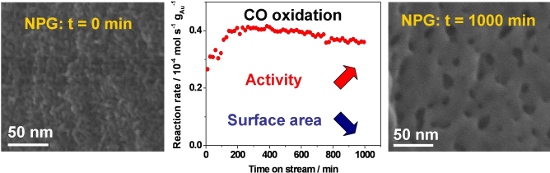
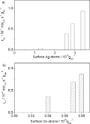
- thermodynamic point of view, Ag prefers either to be on the surface or to form interfacial alloys with Au, while Au prefers to segregate at the core due to the lower surface energy of Ag compared to Au in the absence of adsorbates [56][58]. This may be modified by strongly adsorbing species. The number of


Focused electron beam induced deposition: A perspective
Beilstein J. Nanotechnol. 2012, 3, 597–619, doi:10.3762/bjnano.3.70
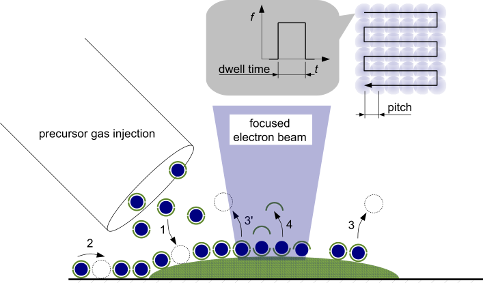
- differential equations for the rate of change of adsorbates relevant for the FEBID process. This will be the focus of this section, with particular emphasis on employing this approach to multicomponent scenarios relevant for the formation of binary FEBID structures, i.e., structures grown in the presence of
- preventing the undesired inclusion of impurity adsorbates from the residual gas. In this case the residual gas adsorbate would act as a second precursor. Secondly, for the preparation of binary FEBID structures by using two or more functional precursors, a recipe for the fine-tuning of the material
- kinetic limitations (large growth rate, reduced diffusion in the presence of two precursor adsorbates) a strong inclination to the formation of amorphous material can be expected. Nevertheless, in the case of combining an organometallic precursor with metal species that exhibit large mixing enthalpies and


Distribution of functional groups in periodic mesoporous organosilica materials studied by small-angle neutron scattering with in situ adsorption of nitrogen
Beilstein J. Nanotechnol. 2012, 3, 428–437, doi:10.3762/bjnano.3.49
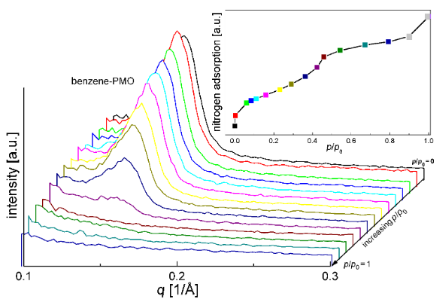
- ] and providing insight into both the sorption mechanism, i.e., micropore filling, formation of nitrogen layers and capillary condensation [23][24], and the structural properties. Often adsorbates are favored in which hydrogen atoms can be isotopically substituted by deuterium atoms and, hence, the


An NC-AFM and KPFM study of the adsorption of a triphenylene derivative on KBr(001)
Beilstein J. Nanotechnol. 2012, 3, 221–229, doi:10.3762/bjnano.3.25
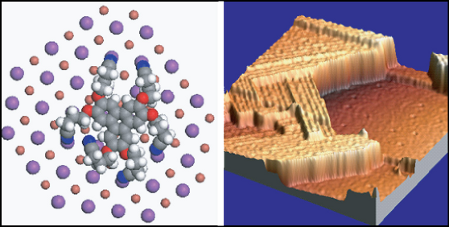
- combined with NC-AFM [16][17][18][19] to investigate metallic or semiconducting surfaces, as well as adsorbates [20][21] or thin insulating films on metals [18][22][23]. But its application to bulk insulating surfaces [24][25][26] is only beginning, and studies of molecular adsorption on these surfaces are
- still very scarce [6][8]. Coupling these two techniques is not only interesting for the characterization of the electrical properties of the adsorbates, but also for the extraction of topographic images that are free from distortion induced by electrostatic forces [27]. In the following, we present the
- high values are in contrast to the values reported for studies of adsorbates on metals [20][21]. On these systems, the electric potential is fixed at the surface of the metal, at a microscopic distance from the tip. The situation is radically different on thick insulators, in which case the potential


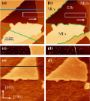


Lifetime analysis of individual-atom contacts and crossover to geometric-shell structures in unstrained silver nanowires
Beilstein J. Nanotechnol. 2011, 2, 740–745, doi:10.3762/bjnano.2.81
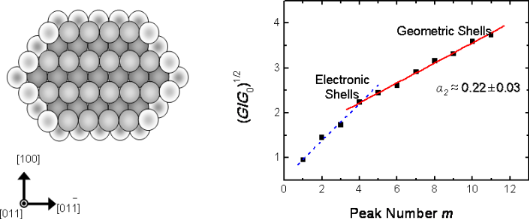
- silver at room temperate, at about 15 G0 in UHV and at about 22 G0 under ambient conditions. The authors argued that under ambient conditions adsorbates decrease the atom mobility, resulting in an enhanced stability of small contacts. In our case, we have exactly the opposite situation: The


Distance dependence of near-field fluorescence enhancement and quenching of single quantum dots
Beilstein J. Nanotechnol. 2011, 2, 645–652, doi:10.3762/bjnano.2.68
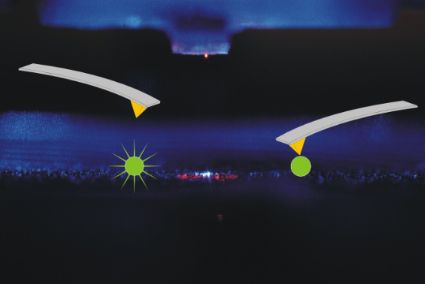
- deflection versus piezo extension plot. Sample and cantilever preparation Microscope glass cover slips (24 × 24 mm2, Menzel, Germany) were washed with acetone, ethanol and water and dried gently with nitrogen. To remove any fluorescent adsorbates, the substrates were dipped in boiling piranha solution (1:3


Femtosecond time-resolved photodissociation dynamics of methyl halide molecules on ultrathin gold films
Beilstein J. Nanotechnol. 2011, 2, 618–627, doi:10.3762/bjnano.2.65
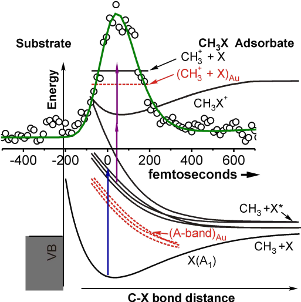
- the present investigation are concerned with the dependence of the photoexcitation and the subsequent photodissociation dynamics on the electronic structure of the organic adsorbates and, even more importantly, on the interaction with the substrate surface. Furthermore, the obtained results provide


Nanostructured, mesoporous Au/TiO2 model catalysts – structure, stability and catalytic properties
Beilstein J. Nanotechnol. 2011, 2, 593–606, doi:10.3762/bjnano.2.63
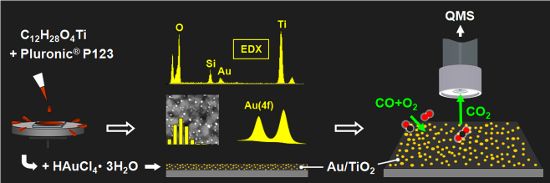
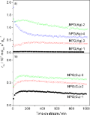
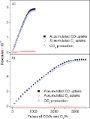
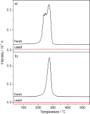
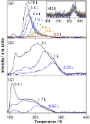
- catalysts [38][48], contradicts this proposal. Furthermore, the very rapid deactivation at room temperature, which is considerably faster than observed for dispersed Au/TiO2 catalysts at similar reaction temperatures (not shown), indicates that in that case contributions from other site-blocking adsorbates






Tip-enhanced Raman spectroscopic imaging of patterned thiol monolayers
Beilstein J. Nanotechnol. 2011, 2, 509–515, doi:10.3762/bjnano.2.55
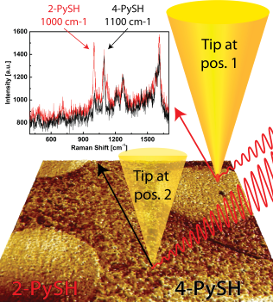
- spectroscopy, emphasizing the usefulness of TERS. Keywords: mercaptopyridine; microcontact printing; monolayer; spectroscopic imaging; tip-enhanced Raman spectroscopy; Introduction The chemical characterization of surface adsorbates is of great interest in several areas of research. The composition of
- adsorbates have very similar properties, i.e., a monolayer consisting of both 2-PySH and 4-PySH. With TERS, both isomers could be localized on the surface by their spectroscopic signature and approximate information on the surface coverage could be obtained from the intensity of characteristic marker bands




Towards a scalable and accurate quantum approach for describing vibrations of molecule–metal interfaces
Beilstein J. Nanotechnol. 2011, 2, 427–447, doi:10.3762/bjnano.2.48
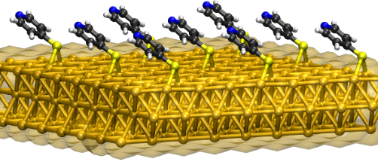
- macroscopic metal/oxide layer. There are a number of studies (see [3] for a review) that have shown the flexibility of the combination of STM with IETS for the investigation of single adsorbates on the nanoscale. Recently, our group was able to demonstrate that, with an appropriate anharmonic model of the
- vibrations Before performing an anharmonic calculation for adsorbed molecules on a surface, we need to determine the normal mode vectors of the system. This can be a computationally demanding task for large systems, and the normal mode analysis of adsorbates can be efficiently carried out using the partial


Influence of water on the properties of an Au/Mpy/Pd metal/molecule/metal junction
Beilstein J. Nanotechnol. 2011, 2, 384–393, doi:10.3762/bjnano.2.44
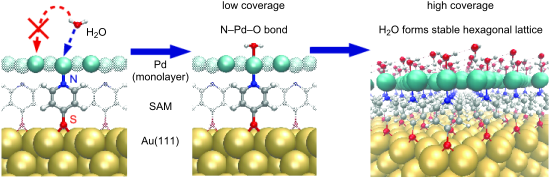
- experimental evidence yet with respect to the presence of these adsorbates on the Pd layer. Hence it is fair to say that the reason for the strong downshift of the Pd DOS in the Au/Mpy/Pd junction is still unclear. The electrochemical metalization of the SAMs occurs in the presence of an aqueous electrolyte
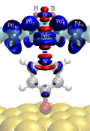
- molecule on the upper side through an O–Pd bond and to the Mpy-SAM through a N–Pd bond on the bottom side. Usually one would assume that the Pd atom that does not participate in the bonding to the SAM would show the stronger binding to additional adsorbates. Note that the N–Pd bond is only negligibly
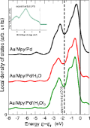
- observed downshift of the Pd DOS. On the other hand, the rather stable water structures on the Au/Mpy/Pd junction might have a considerable impact on the adsorption of other species and directly influence the concentration of adsorbates on the Pd surface in equilibrium. As an alternative explanation, the

![[Graphic 1]](/bjnano/content/inline/2190-4286-2-44-i1.png?max-width=637&scale=0.945456) )R3...
)R3...


![[Graphic 2]](/bjnano/content/inline/2190-4286-2-44-i2.png?max-width=637&scale=1.18182) = 1/3 ML. Plott...
= 1/3 ML. Plott...
Single-pass Kelvin force microscopy and dC/dZ measurements in the intermittent contact: applications to polymer materials
Beilstein J. Nanotechnol. 2011, 2, 15–27, doi:10.3762/bjnano.2.2
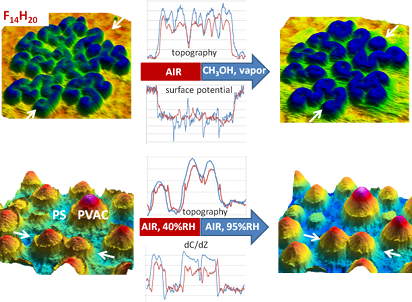
- discussed images of F14H20 adsorbates also illustrate a high spatial resolution of surface potential and dC/dZ detection in the single-pass operation performed in the intermittent contact mode. A true spatial resolution of KFM is often determined as a width of a transition region between locations of





Defects in oxide surfaces studied by atomic force and scanning tunneling microscopy
Beilstein J. Nanotechnol. 2011, 2, 1–14, doi:10.3762/bjnano.2.1
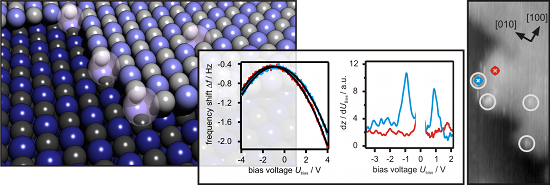
- , interstitials, vacancies or adsorbates. Furthermore, any deviation from the crystalline pattern constitutes such a defect [6]. These defects in the pristine surface may be generated by bombardment with particles, irradiation or contamination with adsorbates. Defects may also be generated during growth. For
- single point defects or single adsorbates, instead of integrating over a square millimeter range. However, absolute values of the work function cannot be measured directly, only work function differences. Point defects Oxygen vacancies, also known as color centers, are electron trapping point defects and
- are supposed to be involved in electron transfer processes on the surface. The trapped electrons in the color centers can be transferred to adsorbates such as Au atoms. The defect-free MgO surface is quite inert while a defect rich surface shows a high and complex chemical reactivity [22]. In order to





