


Search results
Search for "cathode" in Full Text gives 169 result(s) in Beilstein Journal of Nanotechnology.
Freestanding graphene/MnO2 cathodes for Li-ion batteries
Beilstein J. Nanotechnol. 2017, 8, 1932–1938, doi:10.3762/bjnano.8.193
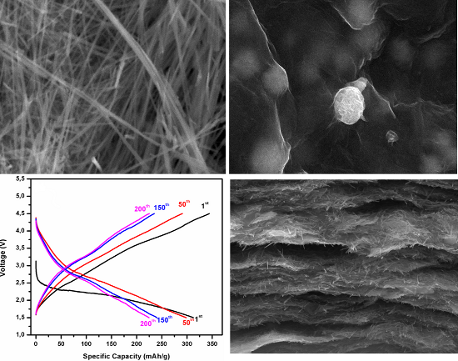
- coin cells. The initial specific capacity of graphene/α-, β-, and γ-MnO2 freestanding cathodes was found to be 321 mAhg−1, 198 mAhg−1, and 251 mAhg−1, respectively. Finally, the graphene/α-MnO2 cathode displayed the best cycling performance due to the low charge transfer resistance and higher
- electrochemical reaction behavior. Graphene/α-MnO2 freestanding cathodes exhibited a specific capacity of 229 mAhg−1 after 200 cycles with 72% capacity retention. Keywords: CR2016 coin cells; freestanding cathode; graphene; Li-ion battery; MnO2; Introduction Nowadays low cost, clean and sustainable energy
- capacity of Li-ion batteries. In commercial Li-ion batteries, LiCoO2, which has a specific capacity of 140 mAh/g, is used as the cathode material although it has many disadvantages such as high cost, toxicity and limited sources. Therefore, researchers have been developing different cathode materials such


Application of visible-light photosensitization to form alkyl-radical-derived thin films on gold
Beilstein J. Nanotechnol. 2017, 8, 1863–1877, doi:10.3762/bjnano.8.187
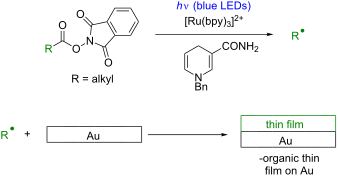
- arenediazonium ion can accept a single electron from a cathode to generate aryl radical and N2 at relatively high potentials. Rapid covalent bonding [11][12][13][14] of aryl radical to surfaces followed by further attachment of radicals to already-grafted arenes results in polymerization and generates dense



Self-assembly of chiral fluorescent nanoparticles based on water-soluble L-tryptophan derivatives of p-tert-butylthiacalix[4]arene
Beilstein J. Nanotechnol. 2017, 8, 1825–1835, doi:10.3762/bjnano.8.184
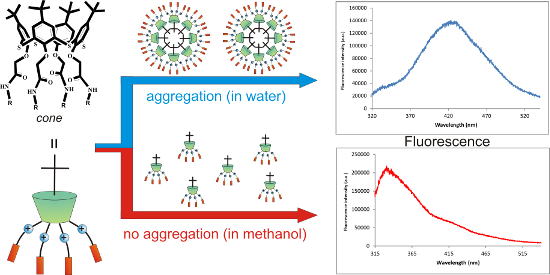
- ) were prepared similar to those studied by DLS. The sample on the chuck was moved in the vacuum chamber apparatus by Quorum (Q 150T ES). A conductive layer was deposited by the cathode sputtering technique using an Au/Pd alloy (80/20). The thickness of the alloy was 15 nm. Possible paths of the



Two-dimensional carbon-based nanocomposites for photocatalytic energy generation and environmental remediation applications
Beilstein J. Nanotechnol. 2017, 8, 1571–1600, doi:10.3762/bjnano.8.159
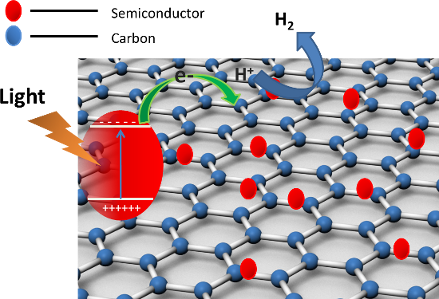
- achieved in 1972 by Fujishima and Honda on a TiO2 anode and Pt cathode under ultraviolet (UV) light irradiation [6]. After this, research interest in exploring semiconductors for hydrogen production has grown significantly and many research groups have focussed their studies in this direction [7][8][9][10
- as an anode and is connected to a Pt cathode. The photogenerated electrons reduce H+ ions to generate H2 on the Pt electrode while holes oxidize water to form O2 on TiO2 electrode, as illustrated in the Figure 4a. After this discovery, semiconductor-based materials with suitable band gaps have


Preparation of thick silica coatings on carbon fibers with fine-structured silica nanotubes induced by a self-assembly process
Beilstein J. Nanotechnol. 2017, 8, 1145–1155, doi:10.3762/bjnano.8.116
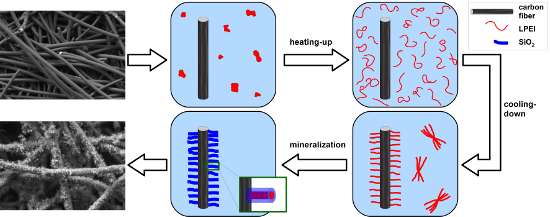
- field of adsorption enable the adaption to catalytic applications [2]. For example, cobalt diselenide nanoparticles can be grafted onto a carbon fiber felt creating a three-dimensional hydrogen evolution cathode based on the high conductivity of carbon fibers [3]. A primary objective of the present


Growth, structure and stability of sputter-deposited MoS2 thin films
Beilstein J. Nanotechnol. 2017, 8, 1115–1126, doi:10.3762/bjnano.8.113
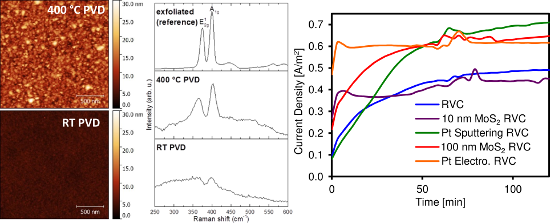
- to the particular two-terminal setup [54] and electrode geometry but allow relative comparisons of the tested electrode materials. Figure 7 shows the current density resulting from a positive potential applied to the entire cell (anode + cathode) of 1.50 V. Both platinum coated electrode (PVD and
- electrocatalysis applications of our PVD MoS2 films. Experimental Magnetron sputter deposition MoS2 deposition was undertaken in a modified, industrially compatible sputtering plant (Pfeiffer Vakuum, Germany). Thin films have been sputter deposited by an unbalanced cathode from AJA (AJA International, North
- linear anode layer ion source (Veeco ALS 340, Fort Collins, CO, USA) was performed on the substrates. For the MoS2 deposition, the cathode was powered with a 10 kW DC power supply in power regulation mode. Pulse frequency of 80 kHz, pulse time 1 µs and power 150 W, power density ≈3.3 W·cm−2, was applied


Structural properties and thermal stability of cobalt- and chromium-doped α-MnO2 nanorods
Beilstein J. Nanotechnol. 2017, 8, 1032–1042, doi:10.3762/bjnano.8.104
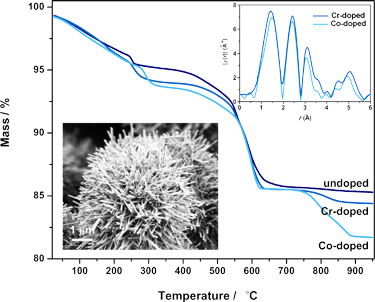
- can be used as a cathode-active material for rechargeable lithium batteries [8], an electrode material for supercapacitors [9][10], and shows excellent catalytic activity for the selective oxidation of benzyl alcohols [11][12]. The catalytic properties are related to the redox cycling of various
- Co2+ have been published. It seems that doping with cobalt allows for the preparation of materials with enhanced characteristics. In an attempt to modify α-MnO2 as cathode for high energy density lithium batteries, nanostructured MnO2, doped with 2 atom % Co, was synthesized [20]. In Co-doped
- cathode material of choice in rechargable Li-ion batteries. Under overcharge conditions Mn4+ is much more safer than Co4+ and Ni4+, which are thermally unstable at the top charge. Also, at higher energy densities and operation voltages, and in combination with organic flammable electrolytes and carbon


Vapor deposition routes to conformal polymer thin films
Beilstein J. Nanotechnol. 2017, 8, 723–735, doi:10.3762/bjnano.8.76
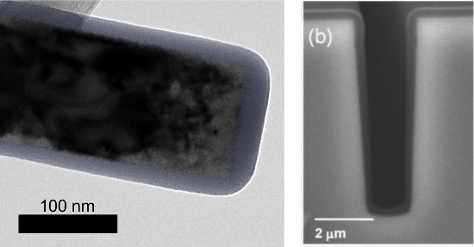
- that can be used as a cathode for micro lithium ion batteries. Composite electrodes for supercapacitors have been developed by forming pseudo-capacitive, conjugated polymer thin films on various electrodes such as vertically aligned CNTs, aligned graphene flakes, and nano-porous anodized alumina (NAA


Synthesis of graphene–transition metal oxide hybrid nanoparticles and their application in various fields
Beilstein J. Nanotechnol. 2017, 8, 688–714, doi:10.3762/bjnano.8.74
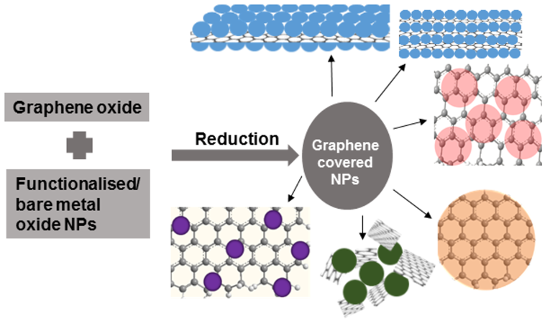
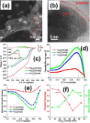
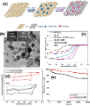
- 3a) via hydrothermal synthesis and chemical reduction of V2O5 by GO simultaneously in a Teflon lined autoclave [111]. When this hybrid is used as a cathode material in LIBs, it provides fast charging and discharging capability with long cycle performance (Figure 3b). VO2 (M) nanotube–graphene hybrids
- cathode material is used in LIB, where the VO2 nanotubes are wrapped by and trapped between the GS [112]. Although the capacity of this hybrid is good, the rate capability is not. To improve the rate capability, Nethravathi et al. use a hydrothermal method to prepare N-doped graphene–VO2 nanosheet-built
- sandwiched GSs not only show enhanced electrial conductivity but also preserve the water molecules between the two layers of V2O5 which facilitates the Li+ diffusion, significantly improving the electrochemical performance. V2O5 quantum dot/graphene is a promising cathode material for use in long-life






Gas sensing properties of MWCNT layers electrochemically decorated with Au and Pd nanoparticles
Beilstein J. Nanotechnol. 2017, 8, 592–603, doi:10.3762/bjnano.8.64
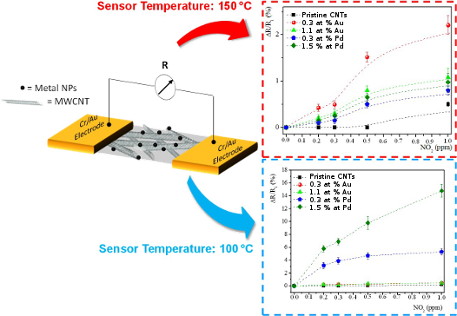
- , a gold or palladium sacrificial anode, used as the working electrode. A platinum cathode was used as the counter electrode. The electrolyte solution was composed of quaternary ammonium halide (0.05 M) dissolved in a 3:1 mixture of tetrahydrofuran and acetonitrile. Specifically, the quaternary
- . The electrophoretic deposition was a cathodic process in which the applied working potential was a little bit more negative than the open circuit potential (η = −200 mV), in order to induce the migration of the positively charged colloidal NPs towards the MWCNT-based device, used as cathode. This mild


Anodization-based process for the fabrication of all niobium nitride Josephson junction structures
Beilstein J. Nanotechnol. 2017, 8, 539–546, doi:10.3762/bjnano.8.58
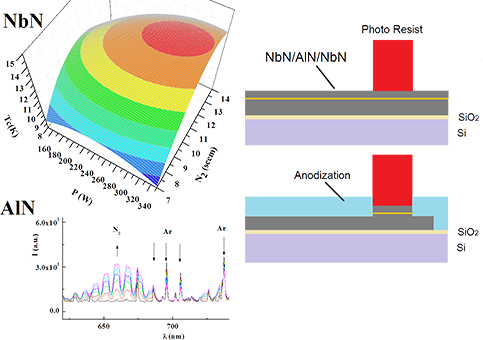
- current density has been set while the potential difference (Vs) between cathode and anode in the electrolytic cell has been monitored simultaneously. The samples were anodized using different current bias and voltage compliance (Vc) to scrutinize the effects on the growth of NbN oxide. The cell has a


Phosphorus-doped silicon nanorod anodes for high power lithium-ion batteries
Beilstein J. Nanotechnol. 2017, 8, 222–228, doi:10.3762/bjnano.8.24
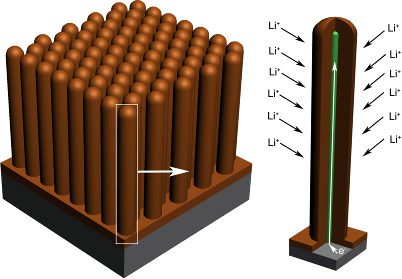
- capacity of Si will bring great changes regarding anode–cathode matching. For the practical application of Si-based anodes, the state-of-the-art commercial cathodes cannot deliver a suitable matching with the Si anode. Thus, the search for suitable cathodes should be of high priority for researchers of Si
- side covered by insulating type) was pretreated in alcohol and then used as the anode. The cathode was a graphite rod with 55 mm length and 5 mm diameter, and was kept 25 mm away from the anode. The anodization process was carried out in 0.8 M NaOH aqueous solution, and a constant current of 6 mA was


Effect of nanostructured carbon coatings on the electrochemical performance of Li1.4Ni0.5Mn0.5O2+x-based cathode materials
Beilstein J. Nanotechnol. 2016, 7, 1960–1970, doi:10.3762/bjnano.7.187
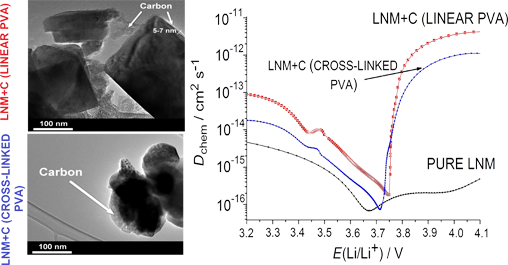
- and currents [9][10]. The most common way of overcoming this problem is the modification of cathode materials by introducing additives and by depositing coatings that would suppress the interaction of electrolyte and the surface of particles. Various kinds of materials have been tested for surface
- modification, namely other cathode materials (LiMnPO4 [11], LiMn2O4 [12], LiCoO2 [13], LiNiO2 [14]) or simple binary compounds such as CaF2 [15], TiO2 [16], ZnO [17] and Al2O3 [18]. During the assembly of the lithium-ion cells, the cathode materials are always mechanically mixed with carbon black in order to
- enhance the electronic conductivity. However, this method of carbon introduction provides the contact only between the external surfaces of cathode materials aggregates, but it does not improve the coherence and hence the electrical conductivity inside the aggregates. Both kinds of problems can be solved




Mesoporous hollow carbon spheres for lithium–sulfur batteries: distribution of sulfur and electrochemical performance
Beilstein J. Nanotechnol. 2016, 7, 1229–1240, doi:10.3762/bjnano.7.114
- solubility of the lithium polysulfides (Li2Sx, 3 ≤ x ≤ 8) formed as intermediate products during charge and discharge in the commonly used organic electrolytes. The dissolved polysulfides shuttle between the cathode and anode and cause the deposition of insoluble Li2S2 and Li2S on both upon further reduction
- to 15.5 cm3·mol−1 for sulfur) [12]. This can lead to the loss of electrical contact of Li2S with the conducting additive or the current collector [9]. Cathode materials composed of porous carbon and sulfur show promising results with regard to overcoming these problems. Thus, a lot of research has
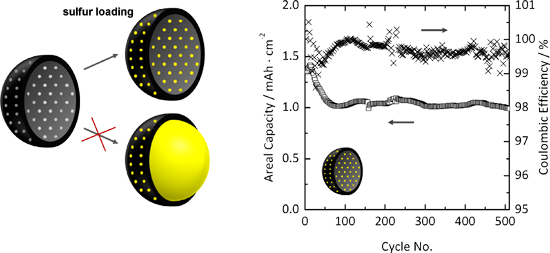
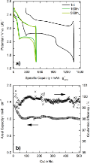
- HCS/sulfur composite containing 61 wt % sulfur as cathode material. The voltage range was 2.5–1.7 V with respect to Li/Li+. Representative charge–discharge curves for the first, 100th and 500th cycles of a cell with areal sulfur loading of 2.0 mg·cm−2 are shown in Figure 8a. This intermediate loading


Reasons and remedies for the agglomeration of multilayered graphene and carbon nanotubes in polymers
Beilstein J. Nanotechnol. 2016, 7, 1174–1196, doi:10.3762/bjnano.7.109
- . The electrodes are graphite rods (99.99% pure) to produce MWNTs, while a carbon anode containing metal particles is used to produce SWNTs. The anode and cathode are 50 mm long each with diameters of 6 mm and 10–13 mm, respectively. The discharge current and voltage were fixed, respectively, at 70 A
- and 20 V. The surface temperatures of anode and cathode were ca. 4000 K and ca. 3500 K, respectively. Because of this temperature difference, the anode gets corroded while the cathode remains intact. A translation feedthrough was used to position the anode tip to maintain the optimum electrode spacing
- (ca. 1 mm) [128]. About 50% of the carbon vapors condense at the cathode tip as slag-like deposit (arrow A in Figure 14) called “cylindrical hard deposit”. Some of the remaining carbon vapors condense in the gas phase and form soot. It adheres to the reaction chamber walls (arrow B in Figure 14) and


Experimental and simulation-based investigation of He, Ne and Ar irradiation of polymers for ion microscopy
Beilstein J. Nanotechnol. 2016, 7, 1113–1128, doi:10.3762/bjnano.7.104
- . The spin-casted parameters were 10 000 rpm/s spinning acceleration and 2 000 rpm spinning speed for a time period of 60 s. For this sample preparation a SPIN150-v3 spincoater was used. The sputtering was performed on a Cameca IMS 4f [48]. The primary ions were generated in a cold cathode duoplasmatron


High-resolution noncontact AFM and Kelvin probe force microscopy investigations of self-assembled photovoltaic donor–acceptor dyads
Beilstein J. Nanotechnol. 2016, 7, 799–808, doi:10.3762/bjnano.7.71
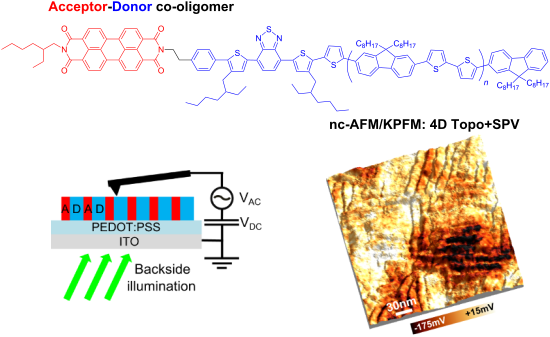
- –acceptor solar cells, the SPV measures the splitting of the quasi-Fermi levels of the holes and electrons under illumination across the donor–acceptor interface [8]. In operating devices, the quasi-Fermi levels of the holes and electrons are nearly aligned with the Fermi levels of the anode and cathode
- , respectively. The SPV matches the open circuit voltage and is negative when the anode is grounded. Here, the situation is more complicated. The ITO substrate is also grounded, but in the absence of a top metallic cathode, both donor and acceptor units can contribute to the local SPV measured at the surface of


Synthesis and applications of carbon nanomaterials for energy generation and storage
Beilstein J. Nanotechnol. 2016, 7, 149–196, doi:10.3762/bjnano.7.17
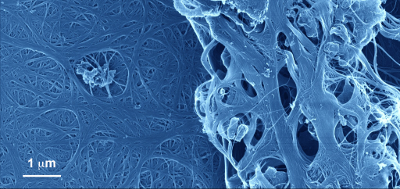
- ). Several setups have been proposed but the one proposed by Bezmelnitsyn et al. [29] is one of the most popular because of the large quantity of material produced. It uses 24 carbon strip, auto-loaded anodes that are subsequently consumed during the process. The cathode consists of a rotating carbon wheel
- compared to CVD, and Chemical vapor deposition (CVD): high quality, most common method with low batch yield (≈30 mg/day). In the arc-discharge method, the carbon is evaporated by helium plasma ignited by high current passed through an opposing carbon anode and cathode. This method requires the use of a
- process [96][97]. In the electrochemical exfoliation method, the graphite or HOPG is usually connected to an electrode (anode). The counter electrode (cathode) is usually a platinum (Pt) wire and the setup is usually placed in an acidic solution (Figure 16). The complete exfoliation takes place in 15–30
















Evaluation of gas-sensing properties of ZnO nanostructures electrochemically doped with Au nanophases
Beilstein J. Nanotechnol. 2016, 7, 22–31, doi:10.3762/bjnano.7.3
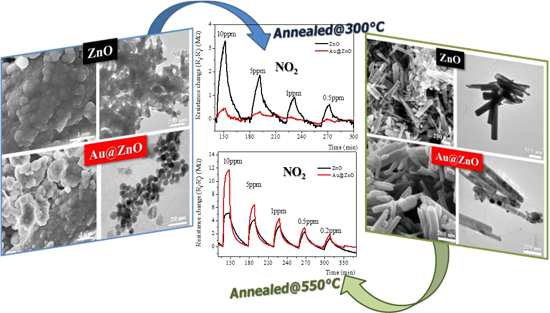
- ZnO by Au NPs Au@ZnO hybrid nanostructures were prepared by SAE procedure carried out under inert (N2) atmosphere, using a three-electrode cell equipped with an Au anode, a Pt cathode, and an Ag/AgNO3 (0.1 M in acetonitrile) reference electrode [43][47]. The electrodes with area of about 1.25 cm2 were




Electrochemical coating of dental implants with anodic porous titania for enhanced osteointegration
Beilstein J. Nanotechnol. 2015, 6, 2183–2192, doi:10.3762/bjnano.6.224
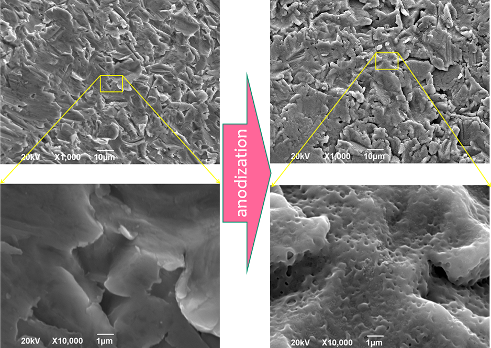
- particular, despite the selected Vt = 150 V applied to the cathode, a value of only ≈3.5 V was reached, given the low it = 0.1 A set as a protection limit against unwanted side effects. The profiles for anodization were similarly equivalent for the different implants, yet different from the cathodization, as
- is a cation, and in principle, should be preferentially driven to the cathode. However, we may suppose that at least electrically neutral species containing Mg are also formed in the electrolyte, such as Mg3(PO4)2 or, more likely, Mg(OH)2. These species with comparatively large size and low mobility
- implants. Anodization The implants were suspended vertically upside-down and submerged in a 1.5 M aqueous solution of phosphoric acid H3PO4 (Sigma Aldrich, Milan, Italy). The counter electrode (normally the cathode) was an inert Pt wire (1 mm thickness), curled in a spiral to form an almost compact circle


Self-assembly mechanism of Ni nanowires prepared with an external magnetic field
Beilstein J. Nanotechnol. 2015, 6, 2123–2128, doi:10.3762/bjnano.6.217
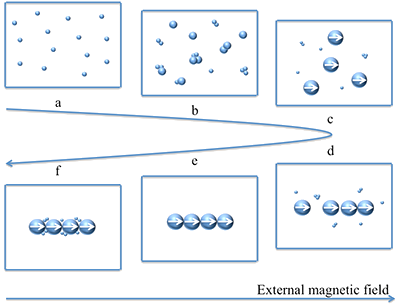
- )3]2+, [Ni(N2H4)2]2+ and [Ni(NH3)6]2+ [30]. The above reaction can be separated into an anode reaction (N2H4 oxidation) and a cathode reaction (Ni deposition). The possible self-assembly mechanism shown in Figure 5 was deduced from the morphology change of Ni nanowires during the reaction and can be





Enhanced model for determining the number of graphene layers and their distribution from X-ray diffraction data
Beilstein J. Nanotechnol. 2015, 6, 2113–2122, doi:10.3762/bjnano.6.216
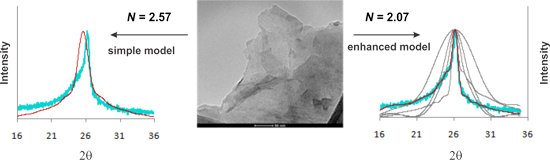
- molten salt, and 25 °C in aqueous solution. It should be underlined that, during the electrolysis, the cations reduced at the electrode intercalate at the graphite surface and generate a high mechanical stress that causes exfoliation of the cathode. This phenomenon enables the electrochemical synthesis
- TEM analysis using a FEI Tecnai G2 Spirit TWIN with a LaB6 cathode. XRD spectra were recorded using a PAN-analytical X’Pert Pro diffractometer (Cu Kα radiation). Raman spectra were recorded using LABRAM ARAMIS-HORIBA JOBIN YVON system with 532 nm wavelength incident laser light, hole 250 μm, slit of


Comprehensive characterization and understanding of micro-fuel cells operating at high methanol concentrations
Beilstein J. Nanotechnol. 2015, 6, 2000–2006, doi:10.3762/bjnano.6.203
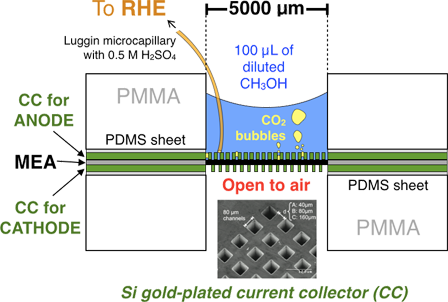
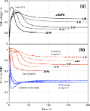
- the cathode potential. Information about the open circuit potential (OCP), the voltage and the mass transport related phenomena are available. Using 2 M CH3OH, the anode showed mass transport problems. With 4 and 6 M CH3OH both electrodes experience this situation, whereas with 10 and 20 M CH3OH the
- issue is attributed to the cathode. The stabilization and fuel consumption time depends mainly on the cathode performance, which is very sensitive to fuel crossover. The exposure to 20 M CH3OH produced a loss in performance of more than 75% of the highest power density (16.3 mW·cm−2). Keywords: fuel
- ][2][3]. Due to the fuel crossover from the anode to the cathode [4][5][6], these systems have to use the fuel in very dilute concentrations (<4 M) [7]. Otherwise, a severe performance loss occurs [8][9][10]. Esquivel et al. have reported a highly performant and efficient passive micro-fuel cell [11



Surface engineering of nanoporous substrate for solid oxide fuel cells with atomic layer-deposited electrolyte
Beilstein J. Nanotechnol. 2015, 6, 1805–1810, doi:10.3762/bjnano.6.184
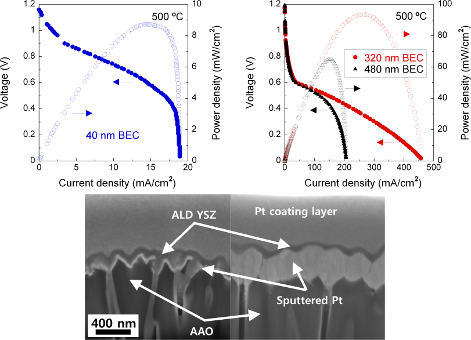
- of BEC thickness on the electrochemical performance, polarization curves were plotted for 40, 320, and 480 nm-thick BEC cells having 210 nm-thick ALD YSZ electrolyte and 60 nm-thick top electrode catalyst (used as cathode), referred to the Cell-A, Cell-B, and Cell-C (Figure 1). Three kinds of cells
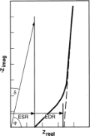
- (DC) bias voltages (OCV and 0.1 V with respect to the cathode) for the Cell-B were overlapped to differentiate the ohmic resistance (resulting from charge transport inside electrolyte) from the activation resistance (resulting from reaction kinetics at electrode–electrolyte interface), as shown in the
- ) and two pairs of constant phase element and resistance (related to electrode–electrolyte interfacial resistance) [6]. Referring to the previous literatures [6][20][21][22], it is considered that semicircles at higher and lower frequencies correspond to the anode and cathode interfacial resistances


Materials for sustainable energy production, storage, and conversion
Beilstein J. Nanotechnol. 2015, 6, 1601–1602, doi:10.3762/bjnano.6.163

- -noble metals with a long lifetime and a low kinetic barrier for conversion. For electrochemical storage, batteries based on new ionic shuttles such as sodium or magnesium are being explored. Moreover, oxygen from air could serve as an active cathode material, which does not need to be intrinsically



