Search results
Search for "colloid" in Full Text gives 120 result(s) in Beilstein Journal of Nanotechnology.
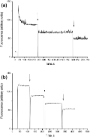
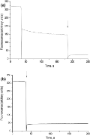
Manipulation of isolated brain nerve terminals by an external magnetic field using D-mannose-coated γ-Fe2O3 nano-sized particles and assessment of their effects on glutamate transport
Beilstein J. Nanotechnol. 2014, 5, 778–788, doi:10.3762/bjnano.5.90
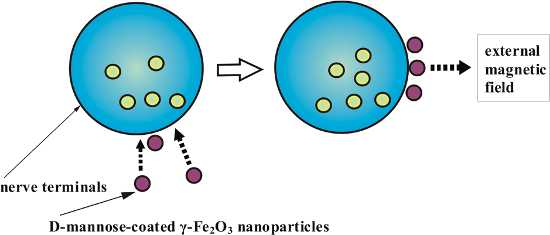
- , 0.1 M sodium citrate (13 mL) was added under sonication, and the magnetite was oxidized by slow addition of 5% sodium hypochlorite solution (10 mL) to yield maghemite (γ-Fe2O3). The above described washing procedure was repeated with the resulting primary colloid, which was finally passed through a
- Millex HV syringe filter (0.45 µm membrane, 33 mm in diameter). Coating of colloidal iron oxide nanoparticles was achieved by the post-synthesis method [12]. Aqueous D-mannose (2 mL; concentration 128 mg/mL) was added dropwise under sonication to a portion of primary colloid containing 44 mg of iron



One-step synthesis of high quality kesterite Cu2ZnSnS4 nanocrystals – a hydrothermal approach
Beilstein J. Nanotechnol. 2014, 5, 438–446, doi:10.3762/bjnano.5.51
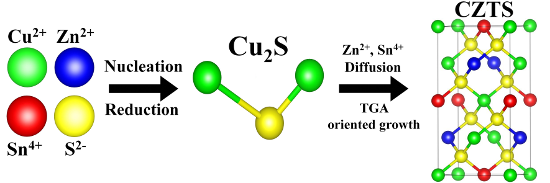
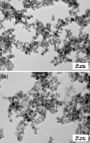
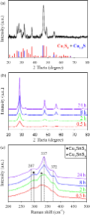
- are observed. The above results demonstrate that high concentration of TGA is not favourable for the formation of monodisperse CZTS nanocrystals. At a high concentration, TGA might form a colloid which wraps a certain surface of CZTS particles, inhibiting the growth of crystals in all directions [25




Preparation of poly(N-vinylpyrrolidone)-stabilized ZnO colloid nanoparticles
Beilstein J. Nanotechnol. 2014, 5, 402–406, doi:10.3762/bjnano.5.47
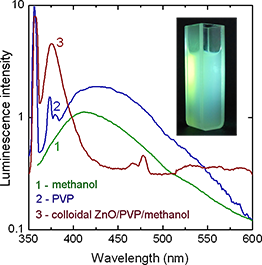
- instance, a nano-colloid has been synthesized using a top-down wet chemistry method with bulk ZnO powder with grain size of 1–2 mm as starting material [9]. Stearic or oleic acids have been used as capping agents in the stabilization technique to prevent agglomeration of the ZnO nanoparticles [9][10][11


Photoactivation of luminescence in CdS nanocrystals
Beilstein J. Nanotechnol. 2014, 5, 355–359, doi:10.3762/bjnano.5.40
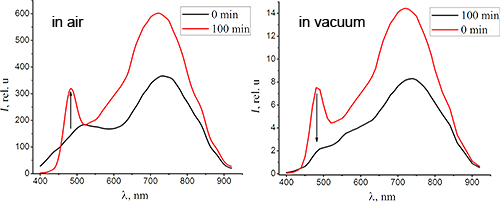
- cadmium sulfide nanocrystals (NCs) synthesized by colloid chemistry in a gelatinous matrix. The photostimulation of the short-wavelength emission band with λmax = 480 nm has been detected. It is shown that the determining factor of the photostimulation effect is the adsorption of the water molecules on
- nanocrystals used in these experiments were prepared by colloid chemistry of solutions of cadmium- and sulfursalts in an aqueous gelatin solution. Details of the sample preparation are described in [15]. The average radius of the cadmium sulfide nanocrystals was calculated from the optical absorption spectra


Design criteria for stable Pt/C fuel cell catalysts
Beilstein J. Nanotechnol. 2014, 5, 44–67, doi:10.3762/bjnano.5.5
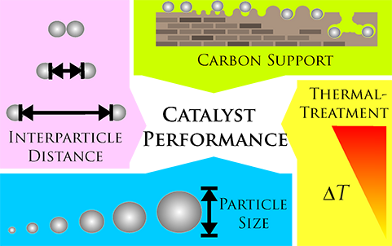
- ], nanohorns [29], ordered mesoporous carbons (OMCs) [30][31], carbon aerogels [32], carbon shells [33][34][35][36], colloid-imprinted carbon supports (CIC) [37] and even boron-doped diamond structures [38][39]. Alternatively, certain non-carbon materials (e.g., oxides, carbides and nitrides of metals such as





Modulation of defect-mediated energy transfer from ZnO nanoparticles for the photocatalytic degradation of bilirubin
Beilstein J. Nanotechnol. 2013, 4, 714–725, doi:10.3762/bjnano.4.81
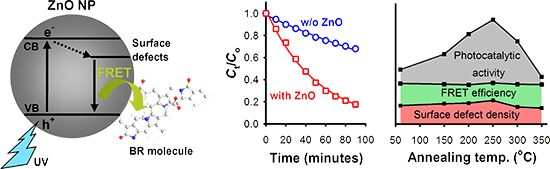
- glass substrates were initially cleaned by successive sonication in soap water, acetone, ethanol and DI water respectively for 15 min each. Once the solvent on the glass substrates dried, another 100 μL of the ZnO nanoparticle colloid was dropped again and the process was repeated several times. A total
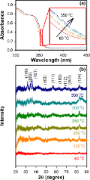
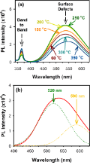
- of 10 mL ZnO nanoparticle colloid was dropped on each glass substrate. Finally, the ZnO nanoparticle coated glass substrates were annealed at different temperatures up to 350 °C in air for 1 h. The annealed ZnO nanoparticles were then redispersed in chloroform by sonication for 1 h and stored in dark


Ultramicrosensors based on transition metal hexacyanoferrates for scanning electrochemical microscopy
Beilstein J. Nanotechnol. 2013, 4, 649–654, doi:10.3762/bjnano.4.72
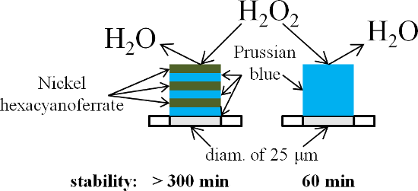
- [18]. The electrodeposition of nickel hexacyanoferrate (NiHCF) was carried out in a non-colloid solution containing 1 mM NiCl2 and 0.5 mM K3[Fe(CN)6] with an excessive amount of supporting electrolyte (0.1 M HCl and 0.5 M KCl), while cycling the electrode potential between 0 and 0.85 V at a scan rate


Mapping of plasmonic resonances in nanotriangles
Beilstein J. Nanotechnol. 2013, 4, 588–602, doi:10.3762/bjnano.4.66
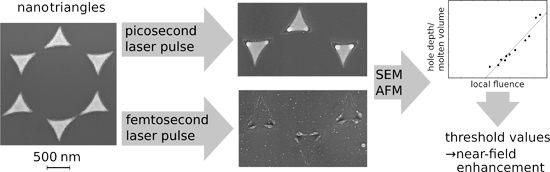
- these data to Equation 3 the detailed fluence profile can be derived. (Such a fit is shown in Figure S1 in Supporting Information File 1.) Sample preparation For the preparation of the plasmonic structures two kinds of nanostructuring methods have been applied, namely colloid lithography and electron
- beam lithography. The material used was exclusively gold. Figure 3a and Figure 3b present an example for the first and Figure 3c and Figure 3d for the second technique, respectively. In colloid lithography, self-assembled monolayers of meso- or nanoscopic spherical particles are produced by self
- of colloid lithography is that, while it is relatively easy to implement, periodic arrays of uniform nanostructures can be distributed over large areas (up to a few cm2). Furthermore, the triangular structures prepared with this method can have tip radii as small as 5 nm, a size which is difficult to


Near-field effects and energy transfer in hybrid metal-oxide nanostructures
Beilstein J. Nanotechnol. 2013, 4, 306–317, doi:10.3762/bjnano.4.34
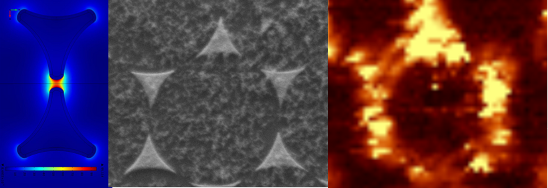
- the CVR process. Future work will therefore aim at an integration of the ALD process into the CVR technique. B. Systems with Ag nanoantennas from NSL Nanosphere lithography (NSL) is a well-established technique for the generation of periodic structures on the submicron scale [17]. Colloid spheres
- as template masks for deposition of materials through the open holes of the layer structure. After removal of the colloid particles, typically arrangements of triangular structures are obtained. The distance between the structures is determined by the size of the original colloid sphere, and can be
- gap between the antennas. Since the structural dimension and the gap size scale with the diameter of the colloid spheres, the use of smaller spheres is more promising. However, for very small sphere sizes it gets increasingly difficult to identify the positions of individual antennas in the confocal








Sub-10 nm colloidal lithography for circuit-integrated spin-photo-electronic devices
Beilstein J. Nanotechnol. 2012, 3, 884–892, doi:10.3762/bjnano.3.98
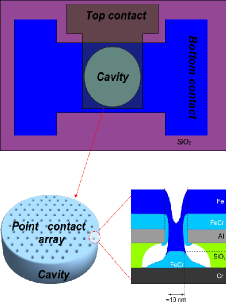
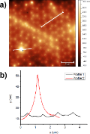
- complexity, efficiency, areal scale, and cost. Colloid-based patterning is known to be capable of producing individual sub-10 nm objects. However, ordered, large-area nano-arrays, fully integrated into photonic or electronic devices have remained a challenging task. In this work, we extend the practice of
- fabrication tool in bio-, opto-, and nanotechnology. Nanoparticles in the colloid are made to form a mask on a given material surface, which can then be transferred by etching into nanostructures of various sizes, shapes, and patterns [2][3]. Such nanostructures can be used in biology for detecting proteins
- ease of use and low cost. Colloid-based patterning is known to be capable of producing individual sub-10 nm objects. However, ordered large-area nano-arrays fully integrated into photonic or electronic devices have not been demonstrated by using colloidal lithography. In this work we use a self


Tuning the properties of magnetic thin films by interaction with periodic nanostructures
Beilstein J. Nanotechnol. 2012, 3, 831–842, doi:10.3762/bjnano.3.93
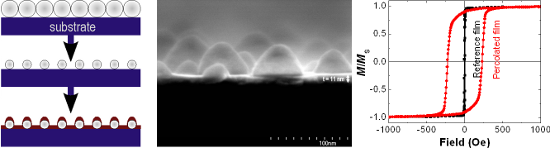
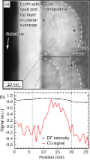
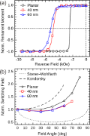
- , respectively. Alternatively to film deposition on size-reduced PS particles for percolated magnetic films, one may use self-assembly of inorganic spheres, such as Au nanoparticles, for nanostructuring. Commercially available Au colloid solutions with particle sizes of 60 and 40 nm have been used to prepare
- monolayers of self-assembled Au particles on thermally oxidized Si(100) substrates [28]. The Au colloid solution was diluted with pure ethanol in the volume ratio of 2:1. A volume of 60 µL of such solution was dispersed onto the substrates and dried under ambient conditions in a covered box to prevent air
- flow (see [29] for details). The arrangement of the nanoparticles in the islands was investigated by SEM. Due to the low particle concentration in the colloid solution they form a number of irregularly shaped islands, which extend over several tens of microns. Figure 4 presents two SEM micrographs of


Controlled positioning of nanoparticles on a micrometer scale
Beilstein J. Nanotechnol. 2012, 3, 773–777, doi:10.3762/bjnano.3.86
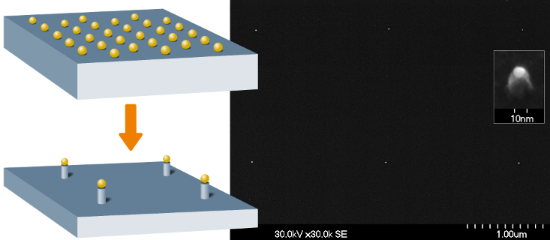
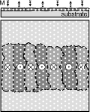
- , positioning of the resist disks would no longer be purely statistical but instead conform to multiples of the lattice parameter of the underlying hexagonal colloid lattice. To exploit the high long-range colloidal order, however, a sample holder with laser-interference-controlled translations becomes a must


Assessing the plasmonics of gold nano-triangles with higher order laser modes
Beilstein J. Nanotechnol. 2012, 3, 674–683, doi:10.3762/bjnano.3.77
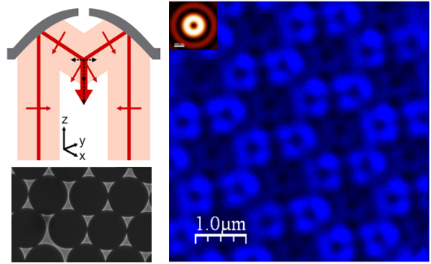
- -triangles in particular [3][4][5][6] has been investigated both directly and indirectly. Likewise, the plasmonic behaviour of metallic nano-triangle arrays, namely Fischer patterns [7] made by colloid lithography, has been studied to some extent. Optical extinction spectroscopy [8], confocal microscopy [9
- either onto an avalanche photodiode (APD) or onto a grating spectrometer coupled with a liquid nitrogen cooled CCD camera. The samples were prepared by colloid lithography. Via drying of a strongly diluted colloidal suspension, a self-assembled monolayer of polystyrene spheres was created on a substrate


Colloidal lithography for fabricating patterned polymer-brush microstructures
Beilstein J. Nanotechnol. 2012, 3, 397–403, doi:10.3762/bjnano.3.46
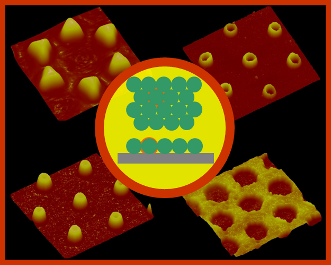
- evaporation of solvents [1][2][3][4]. Such periodic arrays of microspheres were used already in the early 1980s by Fischer and co-workers as shadow masks in colloid lithography (CL) for the deposition of platinum nanomaterials [5]. Since then, CL has become a simple, versatile, and cost-effective fabrication
- technique for a large number of researchers in the field of micro/nanofabrication [2][3][4][6]. A variety of lithographic methods have since been developed, in which colloid microsphere arrays are used as masks for depositing nanomaterials and as scaffolds for templating 2-D or 3-D functional patterns [2][3
- nanoscale, by changing the sphere diameter of the colloid mask. Spherical particles are commercially available with a wide range of sizes and types, or can be synthesized, e.g., by emulsion polymerization for polymer latex spheres or by controlled precipitation for inorganic oxides [12]. Patterned polymer


Functionalised zinc oxide nanowire gas sensors: Enhanced NO2 gas sensor response by chemical modification of nanowire surfaces
Beilstein J. Nanotechnol. 2012, 3, 368–377, doi:10.3762/bjnano.3.43
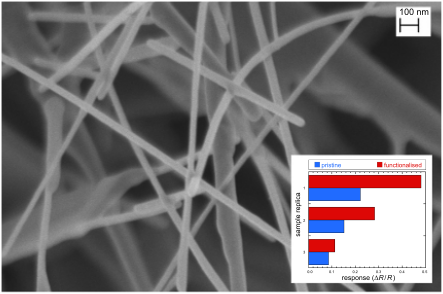
- determined by transmission electron microscope (TEM, JEOL-2100) with an accelerating voltage of 200 kV. For TEM experiments, the specimens were prepared by deposition of a dilute solution of the colloid onto a carbon-coated copper grid and drying at room temperature. Thermogravimetric (TG) measurements were


Self-assembled monolayers and titanium dioxide: From surface patterning to potential applications
Beilstein J. Nanotechnol. 2011, 2, 845–861, doi:10.3762/bjnano.2.94
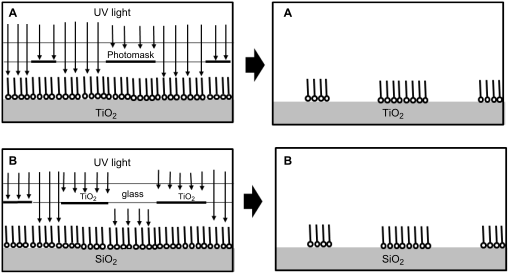
- two-steps method, in which a HS–(CH2)10–COOH monolayer was first adsorbed on gold and then exposed to an ethanolic TiO2 colloid solution, and a one-step process in which an ethanolic colloid of TiO2 nanocrystallites was prepared by the sol–gel method in the presence of the functionalized thiols prior



Highly efficient ZnO/Au Schottky barrier dye-sensitized solar cells: Role of gold nanoparticles on the charge-transfer process
Beilstein J. Nanotechnol. 2011, 2, 681–690, doi:10.3762/bjnano.2.73
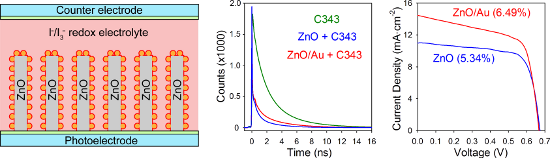
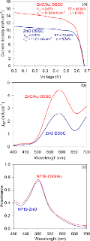
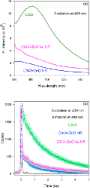
- 0.01 mM HAuCl4·H2O aq. solution. (a) Optical absorption of ZnO nanorods, ZnO/Au-nanocomposite photoelectrode and Au-nanoparticle colloid (particle size ~20 nm) and (b) TEM image of Au nanoparticles in situ deposited on the surface of a ZnO nanorod. (a) J–V characteristics of the bare ZnO-nanorod and



Distinction of nucleobases – a tip-enhanced Raman approach
Beilstein J. Nanotechnol. 2011, 2, 628–637, doi:10.3762/bjnano.2.66
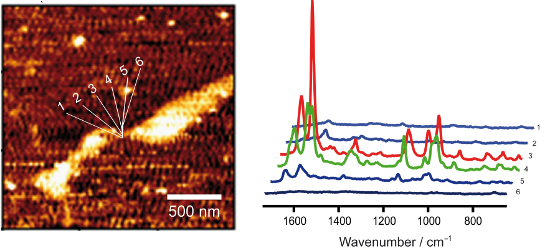
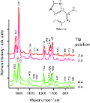
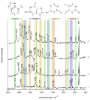
- stranded calf thymus DNA (Sigma-Aldrich) were used in these experiments without further purification. Any further chemicals used for buffer solutions and colloid synthesis were purchased either at Sigma-Aldrich or VWR international. The adenine homopolymer and the calf thymus DNA were dissolved in a buffer



Platinum nanoparticles from size adjusted functional colloidal particles generated by a seeded emulsion polymerization process
Beilstein J. Nanotechnol. 2011, 2, 459–472, doi:10.3762/bjnano.2.50
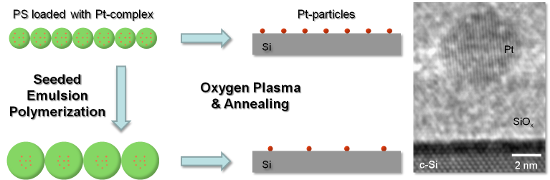
- distance of about 260 nm for well-defined crystalline platinum nanoparticles limited by deformation processes due to softening of the organic material during the plasma applications. Keywords: colloid lithography; functional colloids; miniemulsion polymerization; nanoparticles; seeded emulsion
- the reaction details, respectively. First, sodium chloride was added to the continuous phase. The presence of salt affects the stability of colloidal particles as the extension of the electrical double layer of ionic surfactants present at the colloid interface is reduced by the counter ions of the
- of the colloid and its value in the saturated state after etching, one arrives at an equivalent Pt layer thickness of around 3 to 4 Å (Pt lattice parameter aPt = 3.92 Å). A similar result was obtained for Pt-precursor loaded polymethylmethacrylate (PMMA) particles [35]. This suggests that the



Magnetic interactions between nanoparticles
Beilstein J. Nanotechnol. 2010, 1, 182–190, doi:10.3762/bjnano.1.22
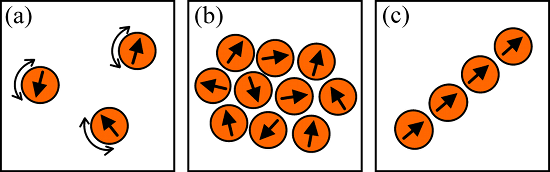
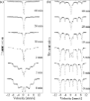
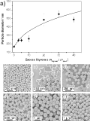
- permission from Xu, M.; Bahl, C. R. H.; Frandsen, C.; Mørup, S. Inter-particle interactions in agglomerates of α-Fe2O3 nanoparticles: Influence of grinding, J. Colloid Interface Science 2004, 279 132–136. Copyright (2004) by Elsevier. (a) The quadrupole shift of coated (open circles) and uncoated (solid