


Search results
Search for "contact angle" in Full Text gives 148 result(s) in Beilstein Journal of Nanotechnology.
Morphology control of zinc oxide films via polysaccharide-mediated, low temperature, chemical bath deposition
Beilstein J. Nanotechnol. 2015, 6, 799–808, doi:10.3762/bjnano.6.83
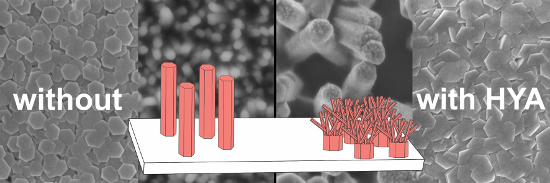
- originating from the amorphous glass (data not shown). FE-SEM also failed to visualize the seeds on the glass slides, probably due to their small size and the strong electric charging of the substrate. However, indirect evidence of a successful seeding was possible. Contact angle measurements showed that the
- slides are slightly more hydrophobic after the seeding process. The contact angle of a seeded glass slide was about 58° in comparison to 46° for a clean glass slide. Furthermore, the UV–vis spectra of seeded glass slides showed an absorption band in the UV range at approximately the energy of the ZnO
- was used for a background correction. The contact angle measurement of the ZnO films was carried out using a Surftens apparatus (OEG GmbH, Frankfurt, Germany). The electrical conductivity measurements were performed with a 2100 Multimeter (Keithley Instruments Inc., Cleveland, USA). For the




Applications of three-dimensional carbon nanotube networks
Beilstein J. Nanotechnol. 2015, 6, 792–798, doi:10.3762/bjnano.6.82
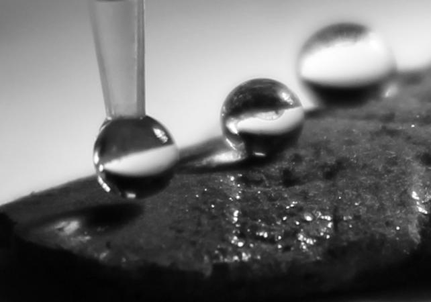
- hydrophobicity one can measure the advanced static contact angle at room temperature for water droplets of different volumes ranging from 5 to 20 µL, as shown in Figure 4a. The presence of a composite solid–liquid–air interface explains the high value of the measured contact angle (Θ = 175°), as evaluated in
- Figure 4b, with no observable roll-off angle, even when the substrate is turned upside down, see Figure 5a. Therefore, we infer that the contact angle hysteresis is sufficiently high to pin the water droplet on the MWCNT surface. It is possible to estimate the adhesive force in length units of a surface
- in contact with water from the equation [19]: where γLV denotes the surface tension of the liquid–vapor (LV) interface for water γLV = 72.5 mN/m, and Θ is the measured contact angle (Θ = 175°). The estimated adhesion force of the water droplet (20 µL) reported in Figure 4b, is about 50 µN. Measuring


Self-assembled anchor layers/polysaccharide coatings on titanium surfaces: a study of functionalization and stability
Beilstein J. Nanotechnol. 2015, 6, 617–631, doi:10.3762/bjnano.6.63
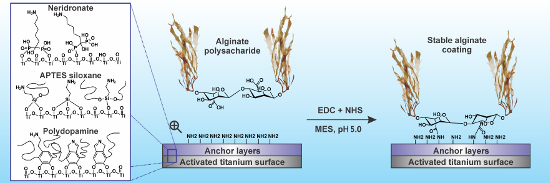
- established continuity of the layers are examined by scanning electron microscopy, surface profilometry and atomic force microscopy. The changes in hydrophilicity after each modification step are further examined by contact angle goniometry. Keywords: alginate; biomimetic surfaces; bisphosphonates
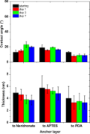
- changes in hydrophilicity after each modification and immersion step are further examined by contact angle goniometry. Results and Discussion Surface analysis of activated titanium surfaces The surface concentration of elements present on pristine, activated and flat titanium surfaces, as determined by
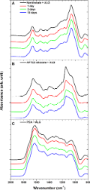
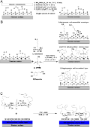
- the successful covalent attachment of ALG chains to neridronate, APTES and PDA anchor layers immobilized on activated titanium surfaces. The formation of the ALG and anchor layer films was investigated utilizing SE, AFM and contact angle goniometry. The IRRAS analysis further evidenced the established


Filling of carbon nanotubes and nanofibres
Beilstein J. Nanotechnol. 2015, 6, 508–516, doi:10.3762/bjnano.6.53
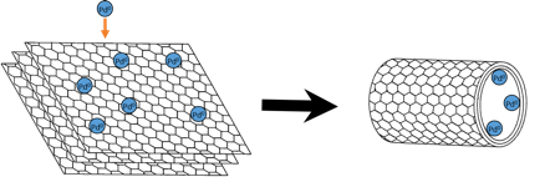
- relationship between the TCNS radius, the radius of the nanoscale drop of material used to fill the TCNS, and the contact angle between the filler and the TCNS. This model successfully predicted the capillary absorption of non-wettable nanoparticles [93] and has been employed to achieve filling [94] as well as


Synergic combination of the sol–gel method with dip coating for plasmonic devices
Beilstein J. Nanotechnol. 2015, 6, 500–507, doi:10.3762/bjnano.6.52
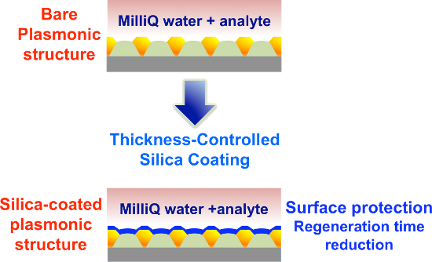
- fine-tuning of the silica layer thickness on the plasmonic structure were studied. Control of the silica coating thickness was achieved through a combined approach involving sol–gel and dip-coating techniques. The silica films were characterized using spectroscopic ellipsometry, contact angle
- hydrophobic property of the surface is an important characteristic from the perspective of biosensing applications since it also allows for altering the surface affinity for specific molecules. The surface of the films prepared from fresh sol of pH ≈4 was further characterized through contact angle
- measurements. As shown in Figure 2, these results highlight that the films are hydrophilic with a contact angle of 65°. This value is independent of the film thickness, but decreases with ethanol dilution up to 34° (inset of Figure 2). This suggests a correlation between the distribution of hydroxy groups


Conformal SiO2 coating of sub-100 nm diameter channels of polycarbonate etched ion-track channels by atomic layer deposition
Beilstein J. Nanotechnol. 2015, 6, 472–479, doi:10.3762/bjnano.6.48
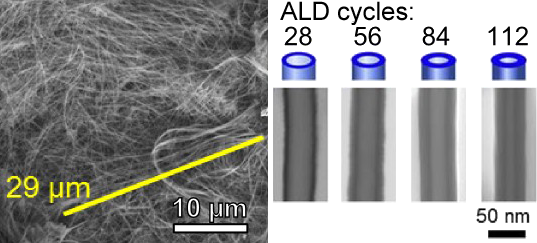
- photoelectron spectroscopy (XPS) and Fourier-transform infrared spectroscopy (FTIR). The hydrophilicity of SiO2-coated PC membranes was tested by contact angle measurements. Experimental Figure 1 displays schematically the three main steps involved in the fabrication of SiO2 coated track-etched membranes. These
- standard Cu-lacey transmission electron microscopy grids. Thickness and homogeneity of the resulting nanotubes were characterized by using a high resolution scanning electron microscope (JEOL JSM-7401F) fitted with a transmitted electron detector (STEM-in-SEM). Contact angle measurements Contact angles
- wettability of uncoated and SiO2-coated track-etched membranes was investigated by contact angle measurements. Figure 6 shows the contact angle as a function of the number of ALD cycles. The contact angle decreases with increasing thickness of the SiO2 layer, evidencing that the membrane surface changes its


Exploiting the hierarchical morphology of single-walled and multi-walled carbon nanotube films for highly hydrophobic coatings
Beilstein J. Nanotechnol. 2015, 6, 353–360, doi:10.3762/bjnano.6.34
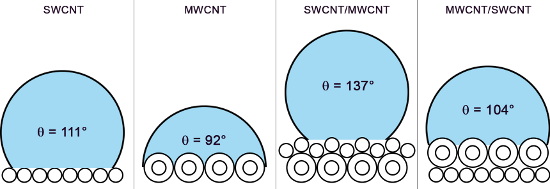
- investigation of carbon nanotube films through scanning electron microscopy (SEM) reveals the multi-scale hierarchical morphology of the self-assembled carbon nanotube random networks. Moreover, contact angle measurements show that hierarchical SWCNT/MWCNT composite surfaces exhibit a higher hydrophobicity
- depending on the number of coaxially arranged graphite planes. Moreover, owing to their honeycomb lattice, carbon nanotubes are inherently hydrophilic (the contact angle of graphite with water being approx. 86° [22]) but apolar. However, by surface functionalization or textured arrangement it can be
- SWCNT films. Moreover, in Figure 3a and Figure 3b, images of water droplets cast on our SWCNT and MWCNT films are shown, with average contact angle values of θ = 110 ± 3° and θ = 97 ± 8°, respectively. These results can be ascribed to the particular morphology of both the films induced by the inherent


Oxygen-plasma-modified biomimetic nanofibrous scaffolds for enhanced compatibility of cardiovascular implants
Beilstein J. Nanotechnol. 2015, 6, 254–262, doi:10.3762/bjnano.6.24
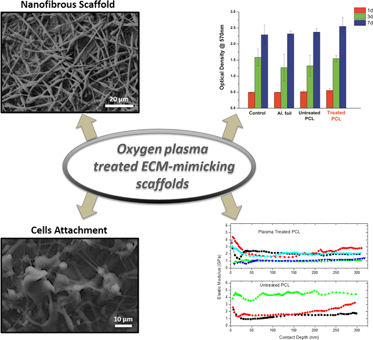
- . Goniometry (contact angle measurements), scanning electron microscopy (SEM), atomic force microscopy (AFM), and X-ray photoelectron spectroscopy (XPS) measurements were used to evaluate the morphological and chemical changes induced by the plasma treatment. Moreover, depth-sensing nanoindentation was
- observed from the contact angle measurements presented in Table 1, the untreated PCL scaffold demonstrated a water contact angle of 91.3°. A significant decrease of the contact angle was found for both modified systems with insignificant differences in the measured values (21.4° and 19.8° for P = 20 W and
- not appear to have any additional effect as far as the goniometry analysis is concerned. It is worth noting that the presented data from the contact angle measurements are particularly valid only for comparative purposes as the nanofibrous scaffolds are not smooth and homogeneous solid surfaces but


Mechanical properties of MDCK II cells exposed to gold nanorods
Beilstein J. Nanotechnol. 2015, 6, 223–231, doi:10.3762/bjnano.6.21
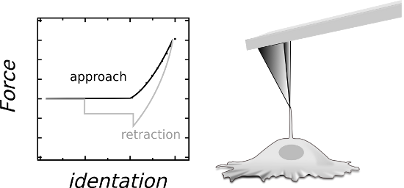
- , of approximately 1 micrometer. While for untreated cells we found a pre stress of T0 = 0.7 ± 0.1 mN/m and an area compressibility modulus of KA = 0.8 ± 0.02 N/m assuming a radius of the cap of R1 = 12 μm and a contact angle of 0 = 20° (Figure 4) , cells exposed to CTAB coated gold nanorods even at


Synthesis of boron nitride nanotubes and their applications
Beilstein J. Nanotechnol. 2015, 6, 84–102, doi:10.3762/bjnano.6.9
- substrate where the contact angle was found to be more than 170° [8]. The origin of this super hydrophobicity was attributed to the surface morphology and adsorption capacity of BNNTs for airborne molecules [9]. BNNTs were also used to prepare composite materials to enhance their physical properties. Bansal




Formation of stable Si–O–C submonolayers on hydrogen-terminated silicon(111) under low-temperature conditions
Beilstein J. Nanotechnol. 2015, 6, 19–26, doi:10.3762/bjnano.6.3
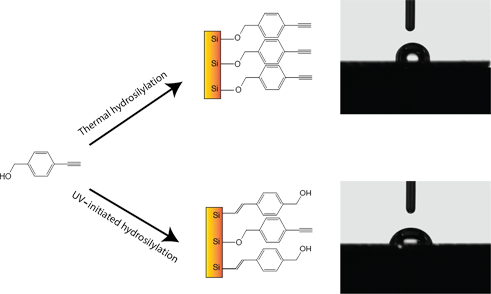
- model we compare the results from reactions with bifunctional alkynes carried out under thermal treatment (<130 °C) and under UV irradiation, respectively. X-ray photoelectron spectroscopy and contact angle measurements showed that under thermal conditions, the Si–H surface predominately reacts to form
- UV-irradiated surfaces. Considering that the exposed end groups on the surface of the UV-irradiated samples were C–OH, the reason for the absorbance of water is considered to be a more hydrophilic surface. To further examine the nature of the grafting, contact angle (CA) measurements were performed
- susceptible to oxidation. The O 1s spectra from the ethynylbenzyl alcohol had been already discussed in the previous section with C–O contributing to the high percentage of oxygen observed. Conclusion From the XPS analysis and the contact angle measurements, several conclusions can be drawn from this study


The capillary adhesion technique: a versatile method for determining the liquid adhesion force and sample stiffness
Beilstein J. Nanotechnol. 2015, 6, 11–18, doi:10.3762/bjnano.6.2
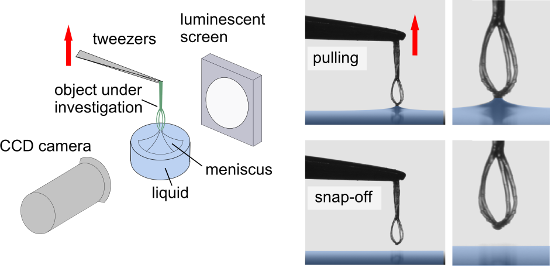
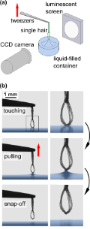
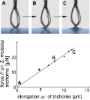
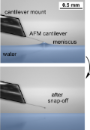
- its elastic properties. Capillary bridges were thoroughly studied with respect to kinetics and geometry dependence, in addition to the investigation and discussion of the contact angle and the related capillary length. The nucleation radius and growth of the liquid meniscus pulled from a flat surface
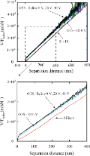
- were studied by Debregeas et al. [16]. The contact angle and contact angle hysteresis measurements on a curved surface (lens) pulling away from a meniscus were used to determine the advancing and receding contact angle of different solid materials [17] and the dynamics of this formation process [18
- . The effect of the surface coating of human head hair on its adhesive properties is highly relevant, for example, in the field of hair cosmetics. We investigated natural hair, hair with silicone-coated ends (poly(dimethylsiloxane) (PDMS), Sylgard 184, Dow Corning, water contact angle approx. 110°) and


Si/Ge intermixing during Ge Stranski–Krastanov growth
Beilstein J. Nanotechnol. 2014, 5, 2374–2382, doi:10.3762/bjnano.5.246
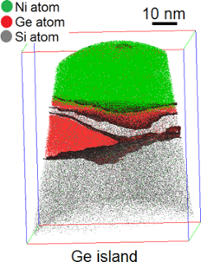
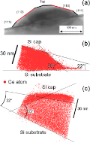
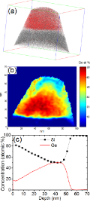
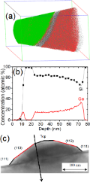
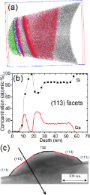
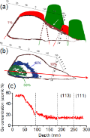
- the sample, thus assessment of atomic ordering would be difficult to evidence in the APT volumes. In addition, {15 3 23} facets (contact angle ≈36°) and {105} facets (contact angle ≈11°, i.e., the facets on top of the island in Figure 5a) were not clearly identified in our measurements. However, one




Modification of a single-molecule AFM probe with highly defined surface functionality
Beilstein J. Nanotechnol. 2014, 5, 2122–2128, doi:10.3762/bjnano.5.221
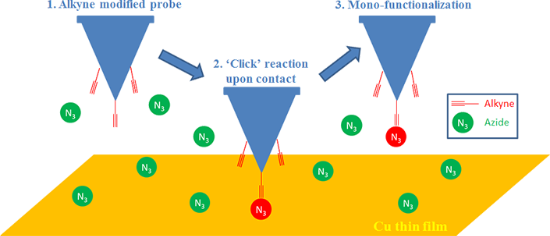
- Information File 1). The slides were washed with DMF, CHCl3, MeOH, and dried in a stream of argon. After each modification process, the probe and substrate surfaces were characterized with FTIR and contact angle measurements. As shown in Figure S4 and Table S1 in Supporting Information File 1. AFM force


Properties of plasmonic arrays produced by pulsed-laser nanostructuring of thin Au films
Beilstein J. Nanotechnol. 2014, 5, 2102–2112, doi:10.3762/bjnano.5.219
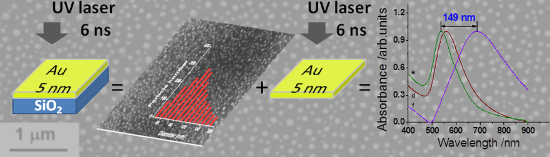
- contact angle values around 90º and higher (e.g., 105º, 120º, 131º for Ni, Au and Cu, respectively) [28]. Recently, increasing interest in dewetting of thin metal films has occurred due to the fabrication potential for self-organized nanostructures [1][2][3][4][5][6][7][8][9], which can be applied for
- postulated how the NP shapes depend on the equilibrium of the surface tension forces [34]. The partially spherical/spheroidal shapes correspond to the case of partial wetting of the substrate by the molten metal and are characterized by a contact angle value of less than 90°. This angle approaches 180° in


Controlling the dispersion of supported polyoxometalate heterogeneous catalysts: impact of hybridization and the role of hydrophilicity–hydrophobicity balance and supramolecularity
Beilstein J. Nanotechnol. 2014, 5, 1749–1759, doi:10.3762/bjnano.5.185
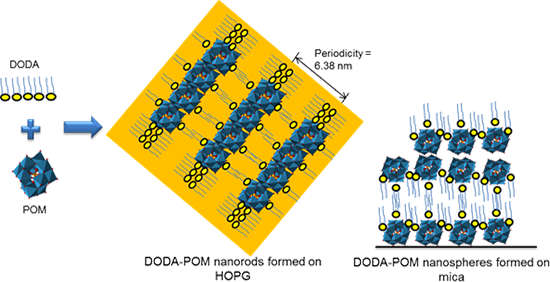
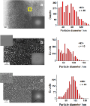
- individual Keggin-POM units (Figure 8b). Contact angle measurements were performed in order to verify the effect of UV–ozone treatment on the hydrophobic property of HOPG. Table S1 (Supporting Information File 1) shows that water contact angle decreased from 62.5 to 25° when the UV–ozone treatment duration


Hydrophobic interaction governs unspecific adhesion of staphylococci: a single cell force spectroscopy study
Beilstein J. Nanotechnol. 2014, 5, 1501–1512, doi:10.3762/bjnano.5.163
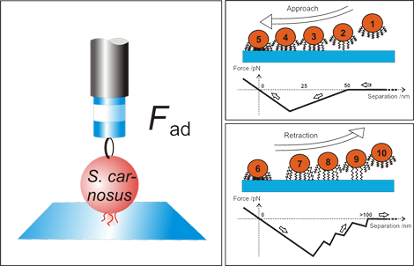
- contact angle measurements, this protocol enables the preparation of a self-assembled monolayer (SAM) with a thickness of about 2.6 nm and an rms roughness below 0.2 nm. In [21] it was shown that the SAM is hydrophobic, homogeneous, dense, upright and in all-trans configuration. The contact angles


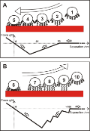
Surface topography and contact mechanics of dry and wet human skin
Beilstein J. Nanotechnol. 2014, 5, 1341–1348, doi:10.3762/bjnano.5.147
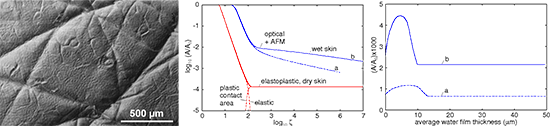
- were measured 5 times at different locations for each state of the skin by using a contact angle measurement device OCA20 (Dataphysics Instruments, Filderstadt, Germany). According to our measurements the advancing water contact angle on human wrist skin is (112.9 ± 1)° (mean ± s.e.m., n = 10) on dry
- skin and (121.4 ± 1.6)° (n = 9) on wet skin. The larger contact angle on wet skin could reflect either a change in the skin surface chemistry, or more likely may be due to the increase in the surface roughness of wet skin. The receding contact angle was not measured but it would be smaller than the
- advancing contact angle. In the literature, the values of the water contact angle on human skin range from 80 to 110° [7]. Results and Discussion Surface roughness power spectrum of skin Similar to [6] the measured height profiles z = h(x) were used to calculate the surface roughness power spectrum defined


Topology assisted self-organization of colloidal nanoparticles: application to 2D large-scale nanomastering
Beilstein J. Nanotechnol. 2014, 5, 1203–1209, doi:10.3762/bjnano.5.132
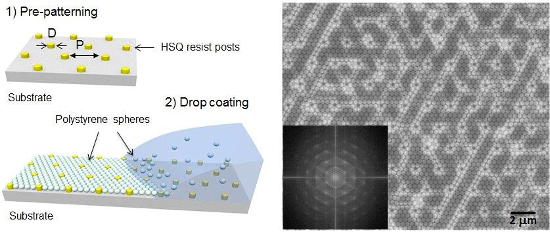
- containing PS beads and the contact angle between the droplet and the substrate, thus influencing the auto-organization process. Comparison of structures without template (simple self-organization) and structures with template (topology assisted self-organization) Although self-organization presents a simple


Physical principles of fluid-mediated insect attachment - Shouldn’t insects slip?
Beilstein J. Nanotechnol. 2014, 5, 1160–1166, doi:10.3762/bjnano.5.127
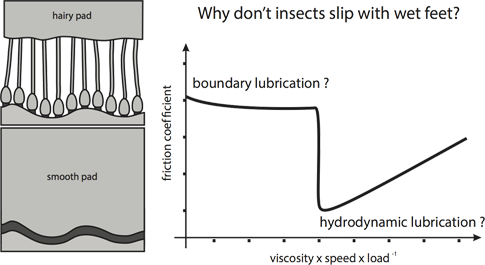
- 1 can be estimated by using By using a few experimentally accessible parameters such as mediating fluid height, viscosity, and contact angle (for a more detailed review on the challenges on measuring these parameters see [14]), this model can then be used to discuss and qualitatively predict a few
- model. The contact of a circular rigid disk (radius R) and a plane rigid surface is mediated by a thin fluid layer (height h). The contact angle of the fluid to the surface and the disk θ is assumed to be identical in this case. Regions of hydrodynamic and boundary lubrication of two fluid mediated


The study of surface wetting, nanobubbles and boundary slip with an applied voltage: A review
Beilstein J. Nanotechnol. 2014, 5, 1042–1065, doi:10.3762/bjnano.5.117
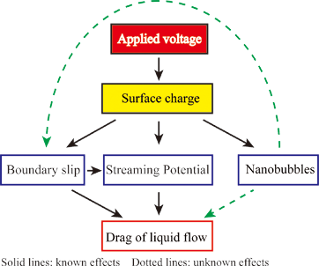
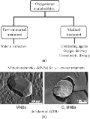
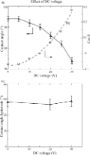
- this review, the influence of an applied voltage on the surface wettability, nanobubbles, surface charge density and slip length are discussed. The contact angle (CA) and contact angle hysteresis (CAH) of a droplet of deionized (DI) water on a hydrophobic polystyrene (PS) surface were measured with
- of liquid flow in micro/nano scale. In this review, recent studies on the effect of an applied voltage on surface wetting, nanobubbles at the interface, and boundary slip are summarized. Firstly, the influence of an applied voltage on the contact angle (CA) and contact angle hysteresis (CAH) on a
- section, a summary and an outlook are provided. Review 1 Contact angle and contact angle hysteresis with applied voltage When a voltage is applied to a droplet deposited on a solid surface, the surface tension between solid and liquid changes, which leads to a change of the wettability of the surface, the










Insect attachment on crystalline bioinspired wax surfaces formed by alkanes of varying chain lengths
Beilstein J. Nanotechnol. 2014, 5, 1031–1041, doi:10.3762/bjnano.5.116
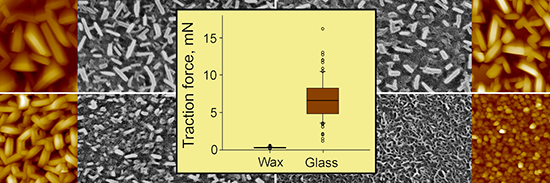
- apparent contact angle of water, which were very close to those measured on plant surfaces bearing three-dimensional waxes (e.g., [49][50][51]). The tarsal attachment system of the C. septempunctata beetle used in this study has been previously described in detail by Gorb et al. [52]. The tarsus bears two
- -distilled water on wax surfaces were performed by using a high-speed optical contact angle measuring device OCAH 200 (DataPhysics Instruments GmbH, Filderstadt, Germany) according to the needle-in sessile drop method. For a detailed description of the method, see [50]. We applied 1 μL drops and ellipse


Measuring air layer volumes retained by submerged floating-ferns Salvinia and biomimetic superhydrophobic surfaces
Beilstein J. Nanotechnol. 2014, 5, 812–821, doi:10.3762/bjnano.5.93
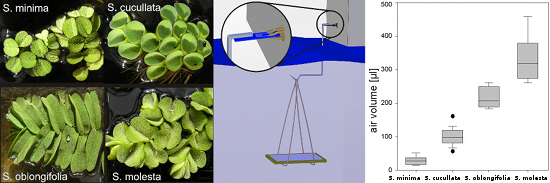
- structured, superhydrophobic, self-cleaning plant surfaces (Lotus-effect) [1][2] there has been an increasing interest in superhydrophobic surfaces [3][4][5]. Superhydrophobicity describes the extreme repellence of water by a surface. The level of water repellence is usually described by the contact angle
- which is the angle between the solid and the liquid at the three-phase contact line. Contact angles above 90° are considered hydrophobic while surfaces with contact angles above 150° are called superhydrophobic [6][7][8][9]. Smooth surfaces can reach a maximum contact angle of 120° [10]. Accordingly
- of the surface structures (Cassie–Baxter wetting state) [13]. The contact angle of water droplets can be equally high in both wetting states [14][15]. However, in the Wenzel wetting state the water is in full contact with the surface and individual droplets adhere firmly [16]. In contrast to this in


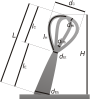
The surface microstructure of cusps and leaflets in rabbit and mouse heart valves
Beilstein J. Nanotechnol. 2014, 5, 622–629, doi:10.3762/bjnano.5.73
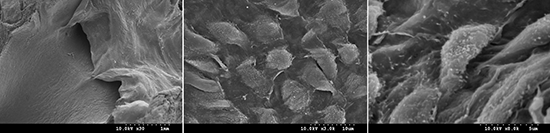
- fabrication of valve substitutes or partial substitutes. Namely, the model may help ameliorate heart valve replacement surgery. Keywords: contact angle; geometric parameter; heart valve; hemocompatibility; microstructure; Introduction Bionics, or biomimetics, have made tremendous developments in the past
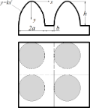
- be used to calculate the fractal roughness factor. By changing the roughness factor, the relationship between the contact angle of the rough surface θf and that of the smooth surface θY can be described by Equation 1: Where f1 and f2 are the surface area fractions of solid-liquid and gas-liquid on
- the contact depth h′ is determined by the contact angle between the droplet and the solid (namely Young’s contact angle θY), which is shown in Figure 9. Since the size of the droplet is much larger than that of the microstructure, the bottom of the droplet can be approximated as a straight line and



Manipulation of nanoparticles of different shapes inside a scanning electron microscope
Beilstein J. Nanotechnol. 2014, 5, 133–140, doi:10.3762/bjnano.5.13
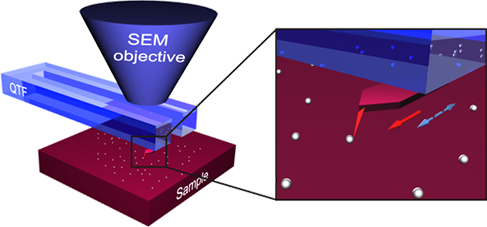
- model can be applied to determine the geometry of the resulted Ag NP given that the contact angle of NP–substrate interface is known. In this case the real shape of the Ag NP is a truncated sphere. NP–substrate contact area. Depending on the NP morphology two basic approaches for the determination of
- of the contact: where Θ is the contact angle for Ag/SiO2 interface. As described previously [20], for sphere-like NPs contact mechanics (adhesive contact approach) must be applied. The contact area is typically calculated on the basis of continuum elasticity models for deformable spheres such as the





