Search results
Search for "cross-linking" in Full Text gives 133 result(s) in Beilstein Journal of Nanotechnology.
Imaging of carbon nanomembranes with helium ion microscopy
Beilstein J. Nanotechnol. 2015, 6, 1712–1720, doi:10.3762/bjnano.6.175
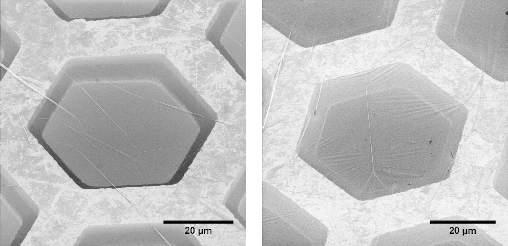
- (CNMs) prepared from aromatic self-assembled monolayers constitute a recently developed class of 2D materials. They are made by a combination of self-assembly, radiation-induced cross-linking and the detachment of the cross-linked SAM from its substrate. CNMs can be deposited on arbitrary substrates
- with electron [1] or soft X-ray irradiation [2], which results in the cross-linking of neighbouring molecules into a CNM of molecular thickness. The CNM is then released from its substrate by dissolving the latter [3]. The thickness, chemical composition, and density of the original SAM determine the




Continuum models of focused electron beam induced processing
Beilstein J. Nanotechnol. 2015, 6, 1518–1540, doi:10.3762/bjnano.6.157
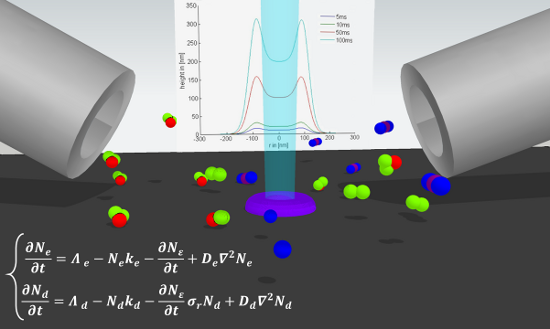
- -activated cross linking of hydrocarbon contaminants is a common problem in many etch processes [6][9][14]. Simultaneous FEBID and FEBIE can be simulated using models such as those described in [11], with adjustment to account for system-specific details such as the surface site competition behavior of the


![[Graphic 37]](/bjnano/content/inline/2190-4286-6-157-i117.png?max-width=637&scale=1.18182) and chemisorbed
and chemisorbed ![[Graphic 38]](/bjnano/content/inline/2190-4286-6-157-i118.png?max-width=637&scale=1.18182) adsorbates versus pressure, calcul...
adsorbates versus pressure, calcul...


Self-assembled anchor layers/polysaccharide coatings on titanium surfaces: a study of functionalization and stability
Beilstein J. Nanotechnol. 2015, 6, 617–631, doi:10.3762/bjnano.6.63
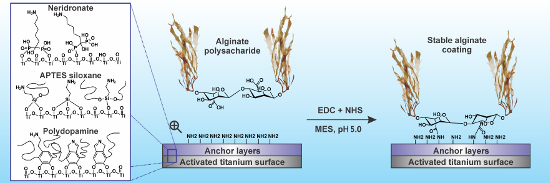
- mechanisms are accompanied by adsorption and further condensation between the surface reactive species and APTES siloxane aggregates formed in the reactive solution. The presence of ethoxy groups, resulting in an incomplete cross-linking of the APTES siloxane polymer network, can be seen by the significant
- molecules) formed by ionic cross-linking [40]. The proposed architecture is envisaged to enhance adhesion, proliferation, differentiation of osteoblasts, and thus ultimately, to achieve a better integration of the titanium implant into the bone tissue. Conclusion In the present contribution, we demonstrated


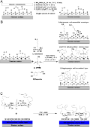
Chains of carbon atoms: A vision or a new nanomaterial?
Beilstein J. Nanotechnol. 2015, 6, 559–569, doi:10.3762/bjnano.6.58
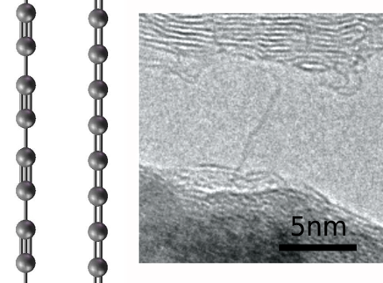
- chain of atoms is left. Conclusion The existence of sp1-hybridized carbon has been secured experimentally and is undisputed. The high instability of bulk carbyne, however, due to cross-linking between chains of carbon atoms, made the availability of this material in bulk quantities and under ambient


Raman spectroscopy as a tool to investigate the structure and electronic properties of carbon-atom wires
Beilstein J. Nanotechnol. 2015, 6, 480–491, doi:10.3762/bjnano.6.49
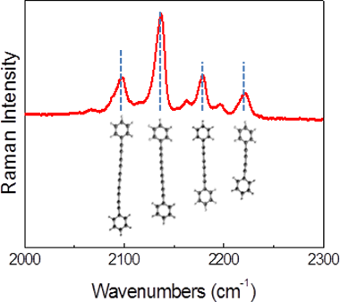
- cross-linking effects and thus requires in situ characterization techniques, as reported in many papers [7][47]. A similar approach was exploited using thermal or laser vaporization cluster sources [6][48]. sp carbon has also been produced by ion irradiation of amorphous carbon [49] and by femtosecond
- , as required to induce a cumulenic structure. Secondly, they are chosen to be bulky enough to prevent interactions among sp chains, thus avoiding cross-linking and degradation. Raman spectroscopy of carbon-atom wires As pointed out when discussing the structural and electronic properties, the
- , we can obtain a fair representation of the experimental spectrum. Hydrogen-terminated polyynes show limited stability with time since they easily undergo a transition towards sp2 as a consequence of cross-linking reactions [77]. It is known that end groups bulkier than hydrogen, such as phenyls or


Tailoring the ligand shell for the control of cellular uptake and optical properties of nanocrystals
Beilstein J. Nanotechnol. 2015, 6, 232–242, doi:10.3762/bjnano.6.22
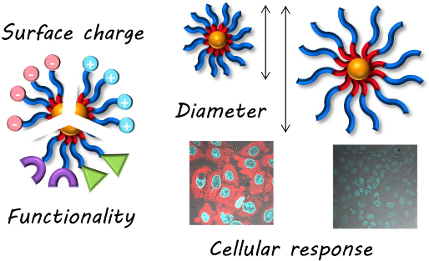
- -assembled vesicles and micelles in water, depending on the chosen block length ratio [19]. The high amount of present double bonds in the micelle core offers the possibility of radically initiated cross-linking of the structures or even microemulsion polymerizations to produce very dense capsules. Review
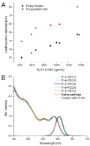
- has shown to drastically enhance the fluorescence properties, namely the fluorescence quantum efficiency, of encapsulated CdSe/CdS/ZnS and CdSe/CdxZn(1-x)S/ZnS core–shell–shell quantum dots (QDs). This enhancement can be explained to a certain extent by the cross-linking of the micelles but further
- emulsion polymerization has been developed, in which additional monomer like styrene, isoprene and divinylbenzene are added as a cross-linking reagent after the micellar encapsulation and polymerized in the hydrophobic core [26]. The monomers react with the double bonds of the PI forming a covalently






Nanoparticle interactions with live cells: Quantitative fluorescence microscopy of nanoparticle size effects
Beilstein J. Nanotechnol. 2014, 5, 2388–2397, doi:10.3762/bjnano.5.248
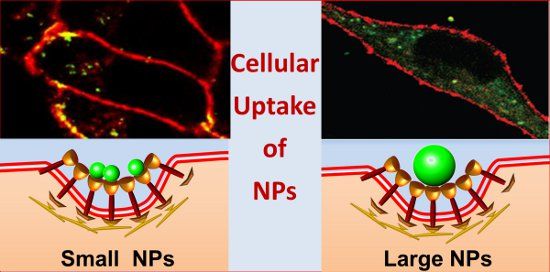
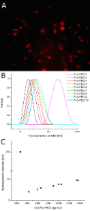
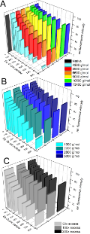
- AuNCs (diameter less than 10 nm) accumulate at the membrane prior to internalization by the cell as a whole (Figure 3), and that a certain NP concentration on the membrane is required to overcome the energy costs associated with membrane bending. By contrast, a larger NP can act as a cross-linking agent


Nanobioarchitectures based on chlorophyll photopigment, artificial lipid bilayers and carbon nanotubes
Beilstein J. Nanotechnol. 2014, 5, 2316–2325, doi:10.3762/bjnano.5.240
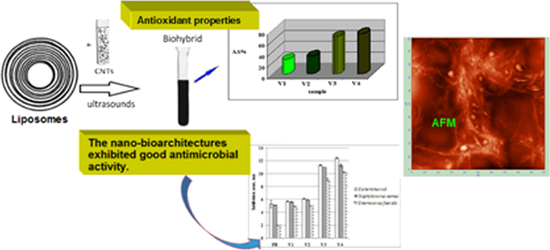
- their aggregation; spherical-shaped profiles of liposomes could be observed along and near the carbon nanotubes. Thus, a carbon nanotube network was formed by the cross-linking of CNTs via liposomes with islands of lipid vesicles. This proves that the bionanocomposite undergoes self-assembly in an


Characterization of 10,12-pentacosadiynoic acid Langmuir–Blodgett monolayers and their use in metal–insulator–metal tunnel devices
Beilstein J. Nanotechnol. 2014, 5, 2240–2247, doi:10.3762/bjnano.5.233
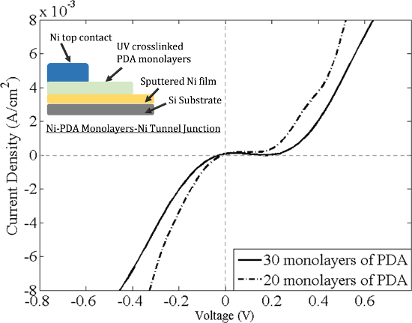
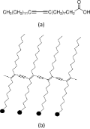
- structure. The selection of the insulating material is very important: it should be amphiphilic, compatible with the LB technique and polymerizable. Such cross-linking can make the film more compact, thereby reducing the intermolecular distance and making the film more resistant to physical damage during
- dioxide at a deposition pressure of 3 mTorr. The LB films of 20 and 30 PDA monolayers were deposited onto this Ni-coated substrate using the LB deposition technique [10][18][19]. The Langmuir monolayer was exposed to 254 nm UV radiation to allow cross-linking of the monomers. A confined Ni top contact was
- electrolyte. The PDA shows half-redox characteristics in the CV studies suggesting it is a pseudo-redox material. The redox peak of the PDA LB film shows a distinct shift with an increase in the scan rate from 5 to 150 mV/s. This peak can be attributed to the cross-linking of the vinyl group caused by the UV


Biopolymer colloids for controlling and templating inorganic synthesis
Beilstein J. Nanotechnol. 2014, 5, 2129–2138, doi:10.3762/bjnano.5.222
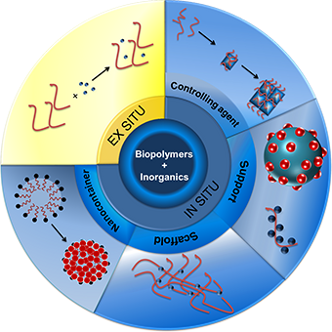
- strategies for the formation of hybrid materials have been recently reviewed elsewhere in detail [2]. In the present review, we will describe the use of biopolymers as controlling agents and templates, which implies that the polymer is almost always formed beforehand. Nevertheless, cross-linking processes of


Electrostatic interplay: The interaction triangle of polyamines, silicic acid, and phosphate studied through turbidity measurements, silicomolybdic acid test, and 29Si NMR spectroscopy
Beilstein J. Nanotechnol. 2014, 5, 2026–2035, doi:10.3762/bjnano.5.211
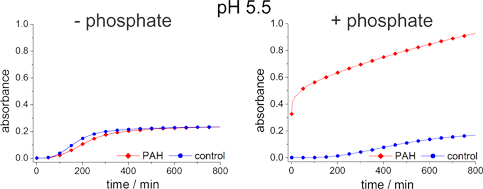
- or bioinspired silica synthesis approaches [21][25][26][27][28][29][30][31][32]. The addition of negatively charged phosphate ions (see above) to pure LCPA solutions has already been studied in detail. Phosphate results in a cross-linking of the positively charged LCPAs. The resulting self-assembly


Model systems for studying cell adhesion and biomimetic actin networks
Beilstein J. Nanotechnol. 2014, 5, 1193–1202, doi:10.3762/bjnano.5.131
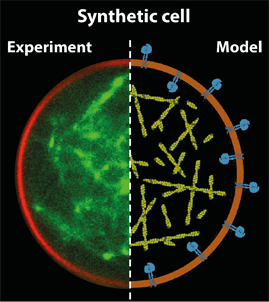
- unordered manner. In the presence of actin-cross-linking proteins, self-organised actin structures emerged, which were similar to those in living motile cells [69][70]. The liposomes, which incorporated these actin networks, exhibited nonspherical shapes. Experimental protocols on preparing giant liposomes
- with encapsulated actin, myosin and other cross-linking proteins are discussed in more detail by Takiguchi et al. [69]. In a later study, actomyosin cortices were anchored to the outside or inside of cell-sized liposomes. This arrangement also resulted in shape changes of the biomimetic system. The


Classical molecular dynamics investigations of biphenyl-based carbon nanomembranes
Beilstein J. Nanotechnol. 2014, 5, 865–871, doi:10.3762/bjnano.5.98
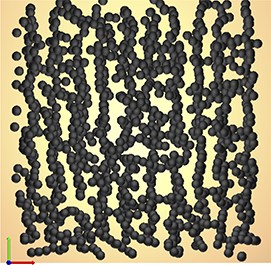
- stripe configuration always forms (for all reasonable γ). This is in part also observed in DFT calculations [8]. Only for a sufficient randomization of the initial state, which corresponds to a substantial excitation and to the breakup of sufficiently many phenyls, a true cross-linking is observed. The
- would like to discard cross-linking mechanisms that rest on very special properties of just one molecule. Conclusion Our investigations demonstrate that carbon nanomembranes, which are produced from molecular precursors such as biphenylthiols, very likely constitute irregular metastable configurations


En route to controlled catalytic CVD synthesis of densely packed and vertically aligned nitrogen-doped carbon nanotube arrays
Beilstein J. Nanotechnol. 2014, 5, 219–233, doi:10.3762/bjnano.5.24
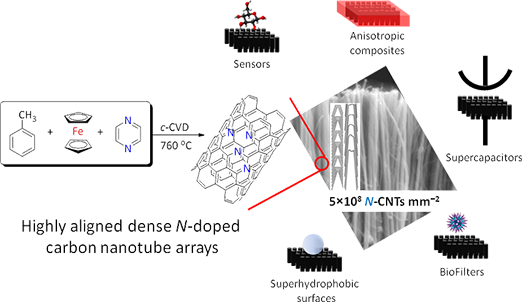
- ]. Therefore, if the density of inter-tube bonds is sufficiently high, a tightly-packed bundle of covalently cross-linked nanotubes (analogous to the cross-linking of polymer chains) with substantially changed mechanical properties, compared to MWCNT arrays, could be synthesized. The aligned MWCNT arrays were


Fabrication of carbon nanomembranes by helium ion beam lithography
Beilstein J. Nanotechnol. 2014, 5, 188–194, doi:10.3762/bjnano.5.20
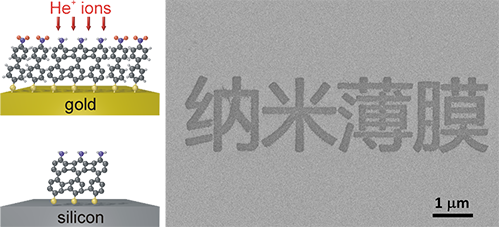
- Xianghui Zhang Henning Vieker Andre Beyer Armin Golzhauser Department of Physics, Physics of Supramolecular Systems and Surfaces, Bielefeld University, 33615 Bielefeld, Germany 10.3762/bjnano.5.20 Abstract The irradiation-induced cross-linking of aromatic self-assembled monolayers (SAMs) is a
- universal method for the fabrication of ultrathin carbon nanomembranes (CNMs). Here we demonstrate the cross-linking of aromatic SAMs due to exposure to helium ions. The distinction of cross-linked from non-cross-linked regions in the SAM was facilitated by transferring the irradiated SAM to a new substrate
- , which allowed for an ex situ observation of the cross-linking process by helium ion microscopy (HIM). In this way, three growth regimes of cross-linked areas were identified: formation of nuclei, one-dimensional (1D) and two-dimensional (2D) growth. The evaluation of the corresponding HIM images


Energy transfer in complexes of water-soluble quantum dots and chlorin e6 molecules in different environments
Beilstein J. Nanotechnol. 2013, 4, 895–902, doi:10.3762/bjnano.4.101
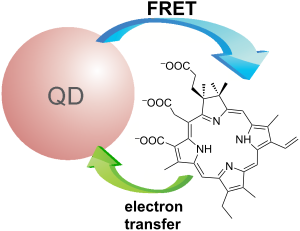
- cross-linking reagent was performed. Using PEG as an additional QD shell resulted in an increase of the average distance between the QD and Ce6 molecules in the complexes to ≈5.5 nm. For the complexes, formed via electrostatic interaction, the hydrophobic CdSe/ZnS/TOPO QDs with a core diameter of 5.0 nm


Selective surface modification of lithographic silicon oxide nanostructures by organofunctional silanes
Beilstein J. Nanotechnol. 2013, 4, 218–226, doi:10.3762/bjnano.4.22
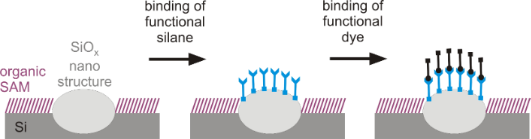
- between two OTS molecules leading to a cross-linking of the layer molecules. Thus, the presence of a surface water layer on the silicon oxide is a necessary condition for the monolayer formation, but on the other hand too much water on the surface also promotes vertical polymerization. As the silicon


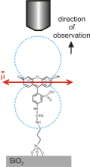
![[Graphic 2]](/bjnano/content/inline/2190-4286-4-22-i2.png?max-width=637&scale=1.18182) (red arrow) of FITC bound to a SiO2 surface.
(red arrow) of FITC bound to a SiO2 surface.
Growth behaviour and mechanical properties of PLL/HA multilayer films studied by AFM
Beilstein J. Nanotechnol. 2012, 3, 778–788, doi:10.3762/bjnano.3.87
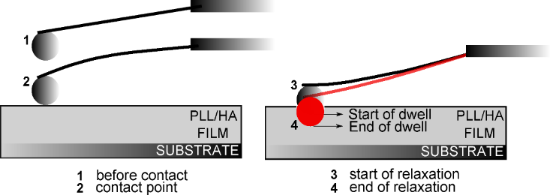
- -applications as their elasticity can be tuned in a wide range simply by changing the cross-linker content in the structure. In that manner, PLL/HA films gained more attention than their analogues, and a wide range of Young’s moduli between 3 and 400 kPa was accessed by cross-linking (mostly with 1-ethyl-3-(3


Horizontal versus vertical charge and energy transfer in hybrid assemblies of semiconductor nanoparticles
Beilstein J. Nanotechnol. 2012, 3, 629–636, doi:10.3762/bjnano.3.72
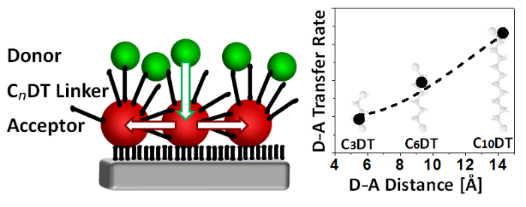
- linker-dependent quenching for DT arises from cross-linking of the NPs within the layer and thereby facilitates charge transfer within the adsorbed monolayers of acceptor NPs in the horizontal plane. The energy transfer process, within the layer of the large NPs, probably takes place due to close packing


Polymer blend lithography: A versatile method to fabricate nanopatterned self-assembled monolayers
Beilstein J. Nanotechnol. 2012, 3, 620–628, doi:10.3762/bjnano.3.71
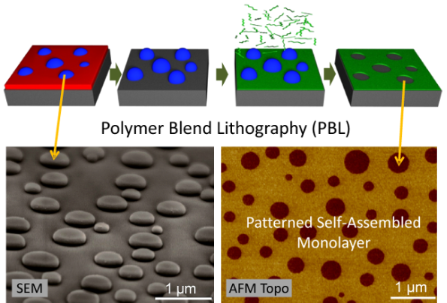
- combined to make the film ready for lithographic applications [52][53]. Zemla et al. [52] describe a technique where after cross-linking one polymer, the other one is removed, and a protein is adsorbed at the free surface areas. The second polymer, however, cannot be dissolved due to the cross-linking and


Directed deposition of silicon nanowires using neopentasilane as precursor and gold as catalyst
Beilstein J. Nanotechnol. 2012, 3, 535–545, doi:10.3762/bjnano.3.62
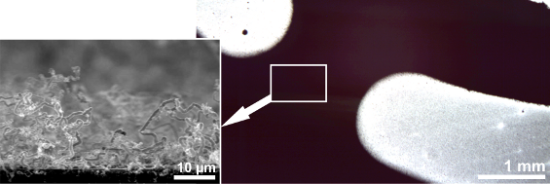
- ” persisted, reproducing the pattern of the mask (Figure 12, left). Obviously cross-linking occurs during the irradiation, decreasing the solubility of this material (negative photoresist). Annealing of this patterned film for one hour in the presence of air, as described above, left a thin but visible layer


Low-temperature synthesis of carbon nanotubes on indium tin oxide electrodes for organic solar cells
Beilstein J. Nanotechnol. 2012, 3, 524–532, doi:10.3762/bjnano.3.60
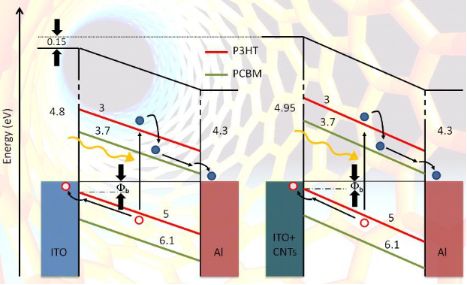
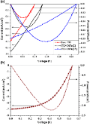
- induce cross linking between the inner shells (walls) of the tubes through sp3 bond formation, facilitating charge-carrier hopping to inner shells [28]. Such intershell bridging provides additional charge-carrier transport pathways, offsetting the effect of a conductivity decrease induced by defect




FTIR nanobiosensors for Escherichia coli detection
Beilstein J. Nanotechnol. 2012, 3, 485–492, doi:10.3762/bjnano.3.55
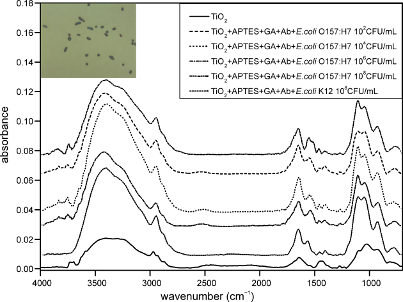
- demonstrated. Cross-linking tethers were used to immobilize antibodies effectively through a chemical method. E. coli O157:H7 was identified and classified with standard methods and according to its infrared signature. Nanomaterials used for the immobilization and detection of pathogens, enabled the possible


Ultraviolet photodetection of flexible ZnO nanowire sheets in polydimethylsiloxane polymer
Beilstein J. Nanotechnol. 2012, 3, 353–359, doi:10.3762/bjnano.3.41
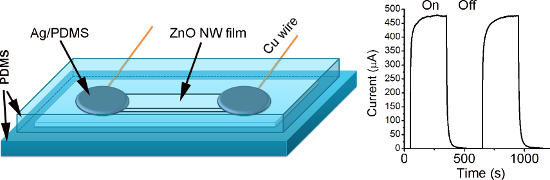
- the membrane filter. PDMS polymer was prepared by mixing the viscous PDMS liquid (Sylgard 184) and the cross-linking agent at a mass ratio of 10:1. The mixed PDMS was poured into a polystyrene Petri dish and dried in vacuum for 5 h to form a rubbery PDMS film. The PDMS liquid was also used for making
- a vacuum drying process for cross-linking of the polymer. The thickness of the PDMS layer above the ZnO nanowire film can be controlled by adjusting the volume of PDMS liquid in the Petri dish. In this work the thickness of the PDMS layer above the ZnO nanowire film was about 2 mm. For the devices


Forming nanoparticles of water-soluble ionic molecules and embedding them into polymer and glass substrates
Beilstein J. Nanotechnol. 2012, 3, 267–276, doi:10.3762/bjnano.3.30
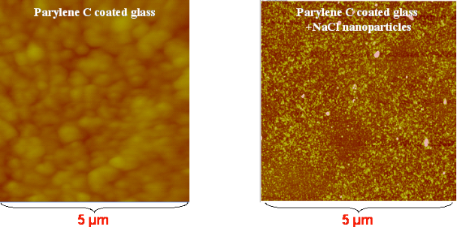
- . One of these methods is chemical bonding. For example, the cross-linking process was used for the embedding of NaCl nanocrystals into polymers containing unsaturated double bonds [1][2]. Some other methods were developed for the coating of polymers with nanocrystals of NaCl, Na2CO3 and Na2SO4