


Search results
Search for "density" in Full Text gives 1728 result(s) in Beilstein Journal of Nanotechnology. Showing first 200.
Crystalline and amorphous structure selectivity of ignoble high-entropy alloy nanoparticles during laser ablation in organic liquids is set by pulse duration
Beilstein J. Nanotechnol. 2025, 16, 1141–1159, doi:10.3762/bjnano.16.84
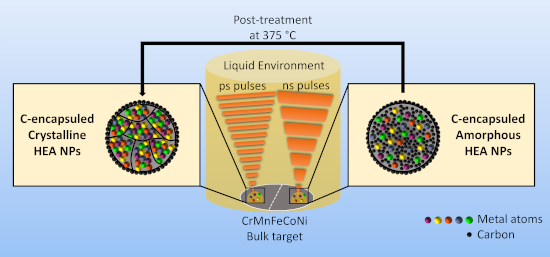
- on density functional theory calculations of binding energies and machine learning algorithms for an efficient catalyst design [15][17][19]. The synthesis of HEA NPs has been realized by many methods, including carbothermal shock synthesis (CTS) [20][21], chemical reduction [22][23], fast-moving bed




Towards a quantitative theory for transmission X-ray microscopy
Beilstein J. Nanotechnol. 2025, 16, 1113–1128, doi:10.3762/bjnano.16.82
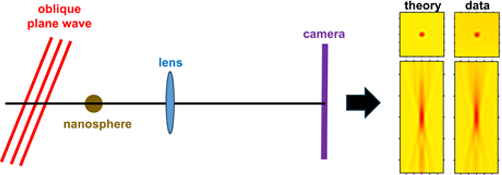
- , Section S13) to determine the nanosphere’s shape, composition, diameter, and density. Both SEM and TEM showed that the nanospheres were indeed roughly spherical and of similar size (Supporting Information File 1, Section S13). Specifically, we measured the diameter of 35 nanospheres by SEM and obtained a
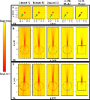
- outlier sizes and shapes that we had also found by TEM. The 3D TXM images thereby enabled a direct comparison of radial intensity profiles for each nanosphere with those predicted by the model calculated for that specific diameter and the density of crystalline gold. For all nine nanospheres we observed a
- predicted radial intensity profiles (Supporting Information File 1, Section S14). The same is true for an error in estimation of the gold density, where we found that to match the data the nanosphere would require a nanosphere density of 60% of that for crystalline gold (Supporting Information File 1



Influence of ion beam current on the structural, optical, and mechanical properties of TiO2 coatings: ion beam-assisted vs conventional electron beam evaporation
Beilstein J. Nanotechnol. 2025, 16, 1097–1112, doi:10.3762/bjnano.16.81
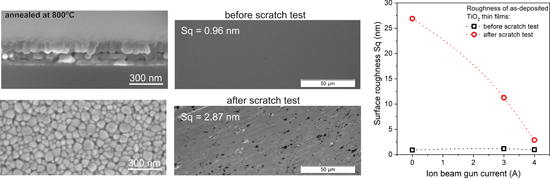
- migration. This can result in much better adhesion of the films to the substrate [11]. In addition, the advantage of using additional ion beam assistance in the EBE processes is an increased packing density of the coatings, making them more resistant to moisture [8][12]. Moreover, the IBAD technique has
- substrates heated to 250 °C, the refractive index was 2.4. Packing density (PD) and porosity (P) of both as-deposited and annealed coatings were determined using the real part of refractive index. Packing density was calculated according to the Clausius–Mossotti relation [60][61]: where ρf and ρb represent
- the film and bulk densities of titania, respectively, while nf and nb denote the refractive indices of the TiO2 coatings and bulk material for amorphous titanium dioxide as 2.449 [43][61][62]. Porosity (P) was calculated based on the Equation 3 [63][64]: The highest packing density (0.87) and the




Fabrication of metal complex phthalocyanine and porphyrin nanoparticle aqueous colloids by pulsed laser fragmentation in liquid and their potential application to a photosensitizer for photodynamic therapy
Beilstein J. Nanotechnol. 2025, 16, 1088–1096, doi:10.3762/bjnano.16.80
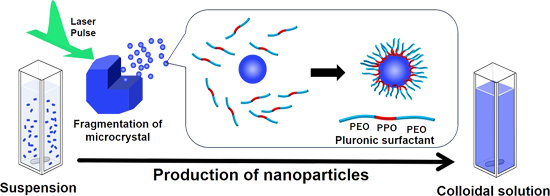
- cells were maintained in MEM medium (Sigma-Aldrich, M4655-500ML) with 10% fetal bovine serum, penicillin (100 U·mL−1)/streptomycin (100 μg·mL−1) at 37 °C in 5% CO2. PC12 and HeLa cells were plated at a density of 20,000 cells per well of a 96 well plate (CORNING, 356461) and a PDL-coated 96 well plate


Piezoelectricity of hexagonal boron nitrides improves bone tissue generation as tested on osteoblasts
Beilstein J. Nanotechnol. 2025, 16, 1068–1081, doi:10.3762/bjnano.16.78
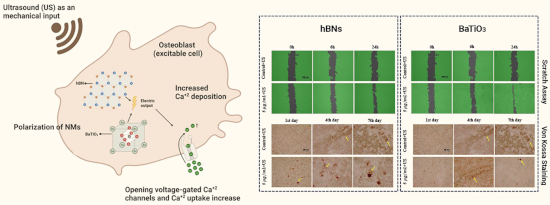
- ]. Cells at a density of 104 cells/well were seeded in 96-well plates for overnight incubation. Cells were treated with NMs with increasing concentration values (0.25, 0.5, 1, 5, and 10 µg/mL) and incubated for 24 h. Then, the Alamar Blue % solution was added to each well to incubate for 3 h at 37 °C and 5
- were taken using an inverted microscope (Carl Zeiss, Germany) to observe calcium deposition formation. Cell viability assay for von Kossa staining assay The cell viability assay was performed with Alamar Blue colorimetric assay. Cells at a density of 6 × 10³ cells/well were seeded in 24-well plates


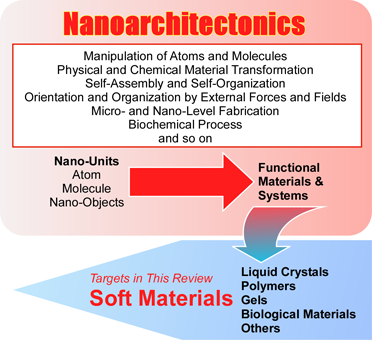
Soft materials nanoarchitectonics: liquid crystals, polymers, gels, biomaterials, and others
Beilstein J. Nanotechnol. 2025, 16, 1025–1067, doi:10.3762/bjnano.16.77
- . At a temperature of 5 °C, the molecules formed islands with a high degree of density. At 40 °C and 10 mN·m−1, a network of separated nanowires was observed. As the surface pressure increased, the separated nanowires exhibited a tendency to come closer together, ultimately forming a nanowire network
- varying compositions. In other words, chemical energy and catalysis can be used to reversibly move functional liquid crystals at the microscale. The chemical fuels’ energy density is significantly higher than that of current batteries, by at least two orders of magnitude, making chemically powered liquid






Multifunctional properties of bio-poly(butylene succinate) reinforced with multiwalled carbon nanotubes
Beilstein J. Nanotechnol. 2025, 16, 1014–1024, doi:10.3762/bjnano.16.76
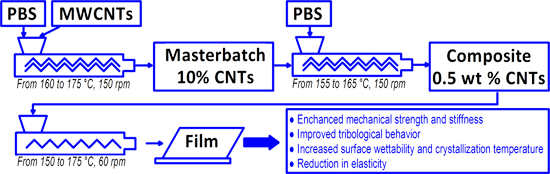
- wettability of films based on the nanocomposite is 7 mN·m−1 higher than that of the original PBS (52 versus 45 mN·m−1). This indicates that PBS/CNT_0.5 films will not require additional activation before applying paints, adhesives, or coatings. The addition of CNTs also affects the density of PBS
- . Specifically, with the incorporation of 0.5 wt % CNTs, the density of PBS increases by 1%, and with the addition of 10 wt % CNTs, the density increases by 5%. The results of tensile tests for PBS and PBS/CNT_0.5 samples are presented in Table 4. The tests were performed in both the machine direction (MD) and
- (Bangkok, Thailand), with a density of 1.26 g·cm−3, an MFR (190 °C, 2.16 kg) of 5 g/10 min, a melting point of 115 °C, and a puncture impact resistance of 4 kJ·m−2, was used. Industrial-grade multiwalled carbon nanotubes (MWCNTs), purchased from Nanografi NanoTechnology (NG01IM0101), Ankara, Turkey, with a



Time-resolved probing of laser-induced nanostructuring processes in liquids
Beilstein J. Nanotechnol. 2025, 16, 968–1002, doi:10.3762/bjnano.16.74
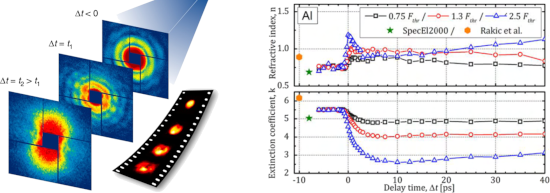
- ablation and fragmentation products with a high defect density, and enhances catalytic activity. In addition, the liquid may also participate in the reaction by electrostatic stabilization [12], formation of gases [16], or chemical interaction with the target to enhance redox reactions or passivating
- ][72][73] utilizes the spatial coherence of X-ray laser pulses such that the fully coherent diffraction pattern of an object is reconstructed by iterative phase retrieval algorithms retrieving the object density. This technique is particularly suited for time-resolved imaging of dynamic processes
- , which show transient states that exist only for femtoseconds. While the initial demonstration used the forward scattered intensity (small-angle X-ray scattering, SAXS) to derive the spatial scattering length distribution (related to material density), an extension enabled reconstructing scattering at


Shape, membrane morphology, and morphodynamic response of metabolically active human mitochondria revealed by scanning ion conductance microscopy
Beilstein J. Nanotechnol. 2025, 16, 951–967, doi:10.3762/bjnano.16.73
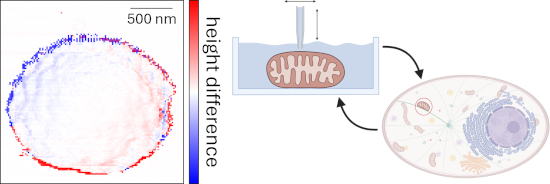
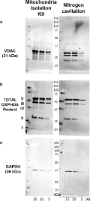
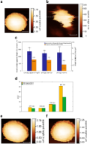
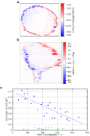
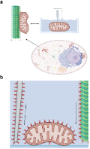
- in high density within the outer membrane, are observed. This absence can be attributed to membrane fluctuations in living and metabolically active systems, which exhibit amplitudes of several 10 nm. See Supporting Information File 1, Section S5, for more information. These fluctuations obscure the



Synthesis of biowaste-derived carbon-dot-mediated silver nanoparticles and the evaluation of electrochemical properties for supercapacitor electrodes
Beilstein J. Nanotechnol. 2025, 16, 933–943, doi:10.3762/bjnano.16.71
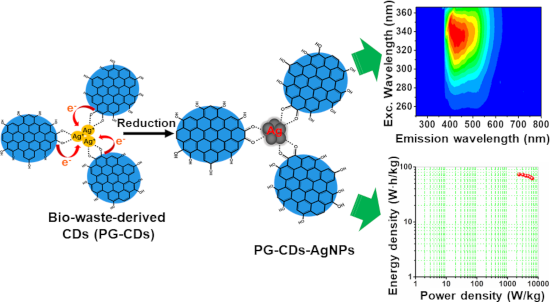
- as-synthesized PG-CDs-AgNPs electrode exhibited the maximum specific capacitance of 540 F/g in a three-electrode study. The asymmetric supercapacitor (ASC) device with PG-CDs-AgNPs as the positive electrode reached the maximum specific capacitance of 200 F/g having a superior energy density of 71 W·h
- /kg at 1.5 A/g. Even at a high current density of 4 A/g, the ASC device reached a specific capacitance of 175 F/g, reinforcing its capability. The method described here provides a straightforward green approach towards biowaste-derived CD-mediated synthesis of AgNPs to produce efficient supercapacitor
- devices store charge across the electric double layers [3]. Supercapacitors are highly sought-after energy storage devices, as their high power density, ultrastability, and rapid charge–discharge capability render them irreplaceable by traditional metal-ion batteries [4]. Typically, the functioning of


Focused ion beam-induced platinum deposition with a low-temperature cesium ion source
Beilstein J. Nanotechnol. 2025, 16, 910–920, doi:10.3762/bjnano.16.69
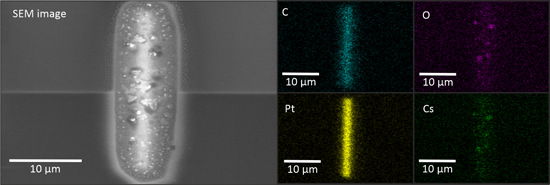
- currents. Deposition rate, material composition, and electrical resistivity were examined and compared with layers deposited at comparable settings with a standard gallium (Ga) FIB. The deposition rate is found to depend linearly on the current density. The rate is comparable for Cs+ and Ga+ under similar
- density of 6 pA·μm−2 . Before deposition, a small part of the Si substrate was gently milled with the Cs+ FIB at 16 kV, such that any native oxide and other contaminations were completely removed at this location. With that, the influence of oxygen molecules on the deposited layer can be excluded. The
- in the size or density of the bubbles when comparing depositions on Si (upper part) and Si with the native oxide layer (lower part). Similar to Rb+ FIBID-Pt discussed in [11], these bubbles appear after exposure of the samples to air (during the short transfer from the Cs+ FIB to the Ga+ FIB) and are


Characterization of ion track-etched conical nanopores in thermal and PECVD SiO2 using small angle X-ray scattering
Beilstein J. Nanotechnol. 2025, 16, 899–909, doi:10.3762/bjnano.16.68
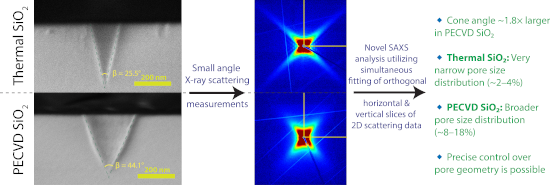
- the undamaged material, which can be exploited for the fabrication of nanopores with narrow size distribution [13][29][40]. The geometry of the resulting nanopores is determined by several factors, including the substrate material, the type and concentration of the etchant, the density of the material
- can only be grown on a Si substrate. PECVD, in contrast, allows for the deposition at much lower temperatures on many different substrates with control over the film properties, such as stoichiometry, density, refractive index, and residual stress. As these fabrication methods involve fundamentally
- typically differ in morphology, density, and stoichiometry compared to thermally grown SiO2. The electronic energy loss (Se) in the thermal and PECVD SiO2 layers was calculated using the SRIM2008 code [49]. The average Se values for thermal SiO2 for 1.6 GeV, 185 MeV, and 89 MeV Au irradiation are 21.1, 16.6


Heat-induced transformation of nickel-coated polycrystalline diamond film studied in situ by XPS and NEXAFS
Beilstein J. Nanotechnol. 2025, 16, 887–898, doi:10.3762/bjnano.16.67
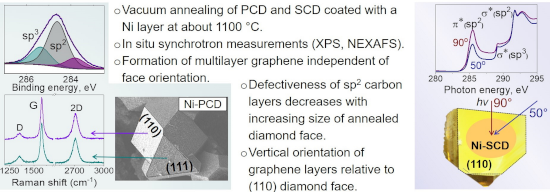
- readily transforms to sp2-hybridized carbon. For excitation at 830 eV, the sp2 peak is quite broad (1.1 eV) compared to that in the spectrum of a highly ordered graphite crystal (0.6 eV) [42]. The reason for this is the high density of defects in the carbon layer formed on the Ni-PCD surface during


Ar+ implantation-induced tailoring of RF-sputtered ZnO films: structural, morphological, and optical properties
Beilstein J. Nanotechnol. 2025, 16, 872–886, doi:10.3762/bjnano.16.66
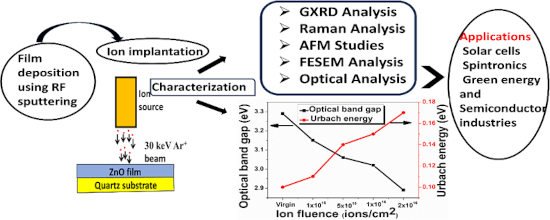
- were implanted with 30 keV Ar+ at fluences varying from 1 × 10¹⁵ to 2 × 10¹⁶ ions·cm−2. Surface variables (roughness and particle size), structural variables (crystallite size and dislocation density), and optical properties (diffuse reflectance, Urbach energy, and optical bandgap) were studied in
- (002) peak at 34.41° with increase in ion fluence is given in Figure 3 and Table 1. For more detailed information regarding the structural evolution of implanted ZnO films, the crystallite size (D), microstrain (ε), and dislocation density (δ) values are calculated from the (002) peaks using the
- lattice, they create defects and dislocations. This creates lattice strain, which increases with ion fluence. The size and type of the implanted ions, as well as the dose, can affect the amount of strain introduced [24]. It is observed that dislocation density values increase with the rise in implantation






Insights into the electronic and atomic structures of cerium oxide-based ultrathin films and nanostructures using high-brilliance light sources
Beilstein J. Nanotechnol. 2025, 16, 860–871, doi:10.3762/bjnano.16.65

- . It is important to emphasize that the significantly higher brilliance of synchrotron radiation beams, compared with laboratory sources, provides much higher sensitivity towards diluted elements, such as low-concentration dopants and low-density metal NPs. A significant step forward in the
- density of empty states of the investigated sample. In contrast, the extended energy range X-ray absorption fine structure (EXAFS), up to a few hundred electronvolts above the absorption edge, is sensitive to the local atomic structure around the absorbers. A polarization-dependent Ce L3-edge EXAFS study


Synchrotron X-ray photoelectron spectroscopy study of sodium adsorption on vertically arranged MoS2 layers coated with pyrolytic carbon
Beilstein J. Nanotechnol. 2025, 16, 847–859, doi:10.3762/bjnano.16.64
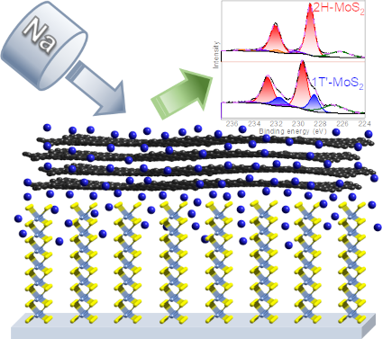
- intensity in the regions before and after the π* resonance at 284–285 eV and 286–289 eV can be associated with the interaction between PyC and MoS2 components [43]. The shift of the C K-edge spectrum of the PyC-MoS2 film toward lower photon energies corresponds to the electron density transfer from the
- carbon component to MoS2, as shown by density functional theory (DFT) calculations for the MoS2/graphene heterostructure [44][45]. According to the DFT calculations, the changes observed in the PyC-MoS2 spectrum between the π* and σ* resonances may result from the interaction of the π electrons of carbon
- density from alkali metals to MoS2, which led to the 2H‒1T′ transition [19][32][53][54]. Such structural transformations are accompanied by the formation of Mo‒Mo and Na‒S bonds and the weakening of S–Mo bonds [3]. In the spectra of sodiated films, the Mo 3d and S 2p doublets related to sodium-free 2H


Facile one-step radio frequency magnetron sputtering of Ni/NiO on stainless steel for an efficient electrode for hydrogen evolution reaction
Beilstein J. Nanotechnol. 2025, 16, 837–846, doi:10.3762/bjnano.16.63
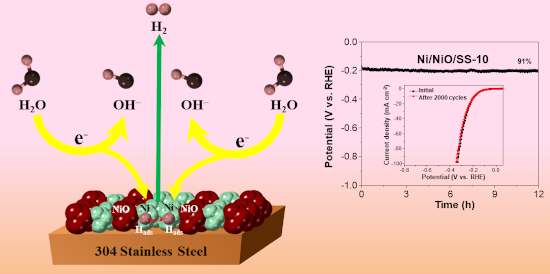
- efficiency. The evaluation of catalytic activities revealed that the optimal sample of Ni/NiO/SS-10 displayed a higher HER performance than bare SS. To produce H2 at a current density of 10 mA·cm−2, this electrode required a low overpotential of 184 mV and demonstrated remarkable durability over 12 h of
- provides better HER efficacy than other as-synthesized catalysts. To reach a cathodic current density of 10 mA·cm−2, SS, Ni/NiO/SS-5, Ni/NiO/SS-10 Ni/NiO/SS-15, and Ni/NiO/SS-20 electrodes needed overpotentials of 431, 247, 184, 326, and 382 mV vs RHE, respectively. A smaller overpotential implies a
- density of 10 mA·cm−2 (Figure 7c). Also, the LSV curve of Ni/NiO/SS-10 exhibits minimal changes after 2000 cycles (inset of Figure 7c). Additionally, the current density was maintained during the 12 h testing of chronoamperometry, as depicted in Figure 7d. This indicates the high stability of the Ni/NiO


Supramolecular hydration structure of graphene-based hydrogels: density functional theory, green chemistry and interface application
Beilstein J. Nanotechnol. 2025, 16, 806–822, doi:10.3762/bjnano.16.61
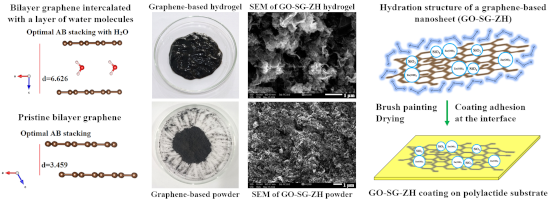
- supramolecular hydration structures that preserve graphene nanosheets from the restacking through hydrophobic force, van der Waals force, and π–π interaction. In this manuscript, density functional theory and high-performance computing (HPC) are used for modeling and calculating van der Waals force between
- advance nanoscale properties and nanotechnology applications. Keywords: antibacterial coating; bioinspired hydration; density functional theory; graphene-based hydrogel; supramolecular structure; Introduction Biological cells are assemblies of biomolecules that are hydrated with water molecules. The
- ]. Therefore, supramolecular graphene-based hydrogels with hydration intercalation and hydration force are quite useful for preserving and generating graphene-based nanosheets for many applications. In this manuscript, we calculated van der Waals forces in bilayer graphene structures using density functional


Morphology and properties of pyrite nanoparticles obtained by pulsed laser ablation in liquid and thin films for photodetection
Beilstein J. Nanotechnol. 2025, 16, 785–805, doi:10.3762/bjnano.16.60
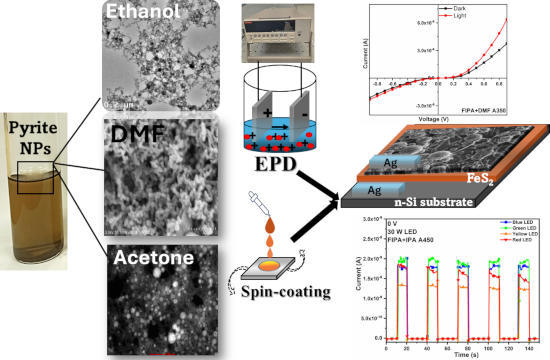
- experimental variables that cause the kinetics of the nanoparticles formation to change, resulting in nanoparticles with different sizes and morphologies [40]. Thermodynamic properties such as density, dielectric constant, viscosity, vapor pressure, and optical properties of the solvents are some of the
- nanoparticle synthesis by PLAL. For instance, it has been reported that the density and viscosity of the surrounding liquid influence the expansion of the plasma plume. The expansion dynamics of the plume differ due to the larger opposing force induced by the increased viscosity of the solvent, which in turn
- retained their original morphology as observed in the colloidal state, with aggregates of spherical particles. Further control over film uniformity, packing density, or morphology can be achieved by modifying the deposition parameters in EPD, including voltage and deposition time [56]. The surface






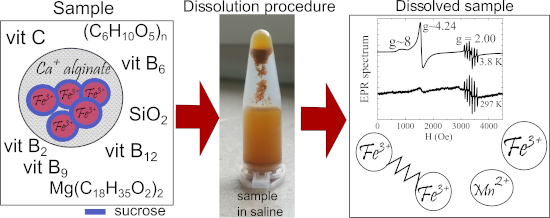
Changes of structural, magnetic and spectroscopic properties of microencapsulated iron sucrose nanoparticles in saline
Beilstein J. Nanotechnol. 2025, 16, 762–784, doi:10.3762/bjnano.16.59





Thickness dependent oxidation in CrCl3: a scanning X-ray photoemission and Kelvin probe microscopies study
Beilstein J. Nanotechnol. 2025, 16, 749–761, doi:10.3762/bjnano.16.58
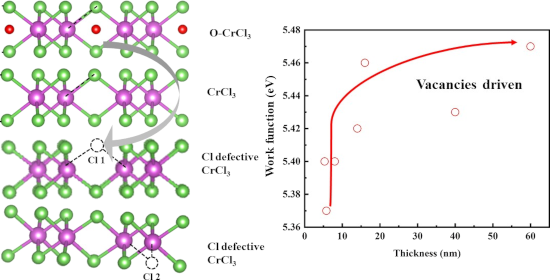
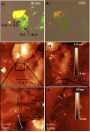
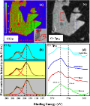
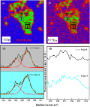
- contrast, in Figure 5c the Cr 2p3/2 spectrum shows also a second component at 576 eV in addition to the main component at 577.5 eV. Both maps display an increased intensity of Cl emission from the parts on the right side of the flake. On the left side, the density of Cl vacancies is supposedly higher (see
- the surface potential represents the most evident variation on the CrCl3 surface, where a higher surface potential is related to a higher level of oxidation of the thicker flakes, probably related to an increased density of Cl vacancies acting as dissociation centers and the formation of a Cl





Synthesis of a multicomponent cellulose-based adsorbent for tetracycline removal from aquaculture water
Beilstein J. Nanotechnol. 2025, 16, 728–739, doi:10.3762/bjnano.16.56
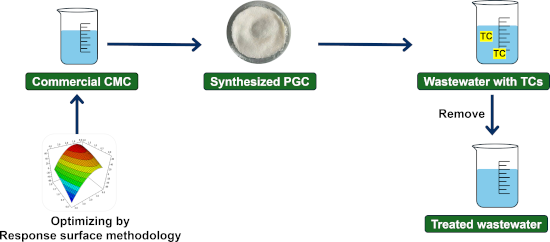
- . Additionally, the detection of sulfur in PGC indicates the potential presence of residual ZnSO4 precursor. Figure 3c–l present significant changes in the elemental distribution of O, S, Zn, and Ca in PGC compared to pristine CMC. These elements display a higher density on the surface of PGC. Brunauer–Emmett
- employed to identify key influencing factors and optimize the synthesis process using RSM. The independent variables included CMC mass (X1) [31], PVA mass (X2), and GA volume (X3) [32], along with the molar ratio of Ca2+ and Zn2+ (X4) [25]. Polyvinyl alcohol (PVA), characterized by a high density of


Efficiency of single-pulse laser fragmentation of organic nutraceutical dispersions in a circular jet flow-through reactor
Beilstein J. Nanotechnol. 2025, 16, 711–727, doi:10.3762/bjnano.16.55
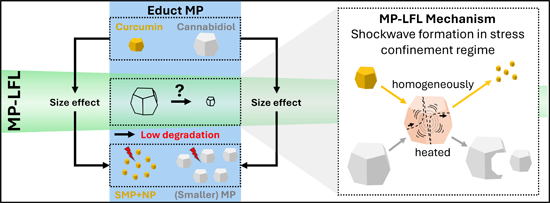
- colloids, for example, to increase their defect density in favor of electrocatalytic or optical properties without changing their size [6][7][8]. In addition, the acronym PUDEL has recently been used for pulsed laser diffusion enhancement in liquids, which refers to an increase in diffusion without
- , the number-weighted particle density distribution was used. The corresponding results are shown in Figure 3 for curcumin and in Figure 4 for CBD. The exemplary SEM images of curcumin in Figure 3A of the starting material and Figure 3B of the laser-treated product qualitatively indicate a recognizable
- order of magnitude larger compared to the curcumin particles, which is also reflected in the number-weighted particle density distribution in Figure 4C, and the density of both materials is similar, the method of analytical centrifugation is useful to compare the hydrodynamic particle size distribution


Nanostructured materials characterized by scanning photoelectron spectromicroscopy
Beilstein J. Nanotechnol. 2025, 16, 700–710, doi:10.3762/bjnano.16.54
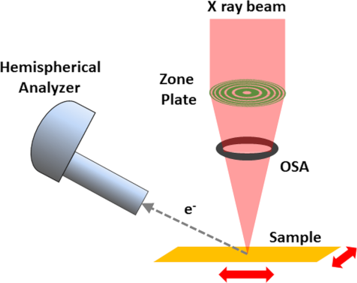
- the samples. Those may be spent to increase energy resolutions at values lower than 80–100 meV and also at higher energies. Similar improvements may also be reached in the spatial resolution; however, any increase in photon density goes with an enhancement of undesired beam-induced effects, such as


High-temperature epitaxial growth of tantalum nitride thin films on MgO: structural evolution and potential for SQUID applications
Beilstein J. Nanotechnol. 2025, 16, 690–699, doi:10.3762/bjnano.16.53
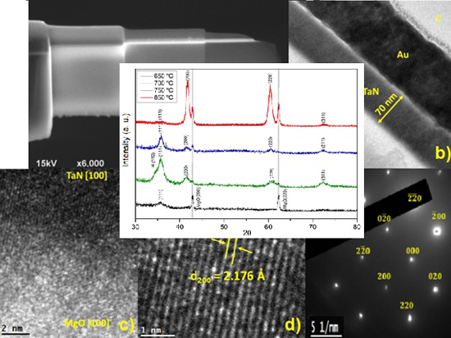
- and chemical properties, including ultrahardness (comparable to that of diamond) and high melting points around 3000 °C. These properties can be qualitatively understood by observing that the Fermi energy falls within a pronounced minimum of the density of states [7]. Some reports have shown that TaN
- frequency of 7.5 Hz, the substrate-to-target distance was 5 cm, and the incident energy density was 4.88 J·cm−2. We studied the stoichiometry and properties of the thin films as a function of gas pressure by introducing N2 to realize RPLD. At this time, the ion pumps were closed and isolated from the PLD





