


Search results
Search for "detection" in Full Text gives 834 result(s) in Beilstein Journal of Nanotechnology. Showing first 200.
Mn-doped ZnO nanopowders prepared by sol–gel and microwave-assisted sol–gel methods and their photocatalytic properties
Beilstein J. Nanotechnol. 2024, 15, 1283–1296, doi:10.3762/bjnano.15.104
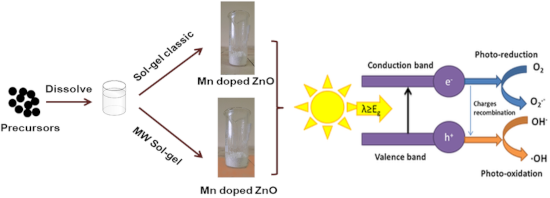
- /mc space group. No other phases, including Mn-based compounds, were detected within the detection limits of the instrument, suggesting that the dopant has been incorporated into the zincite lattice. The patterns of the two samples, SG and MW, are very similar, with slightly more intense diffraction


Dual-functionalized architecture enables stable and tumor cell-specific SiO2NPs in complex biological fluids
Beilstein J. Nanotechnol. 2024, 15, 1238–1252, doi:10.3762/bjnano.15.100
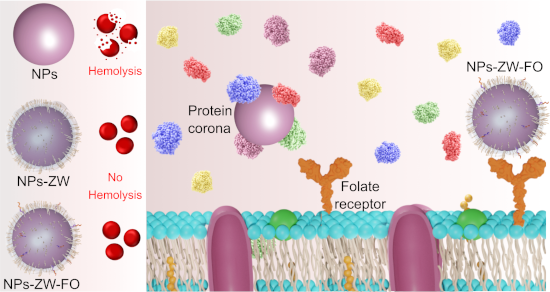
- equipment (Malvern Instruments Ltd., UK – detection angle of 173° and laser wavelength of 633 nm). For DLS measurements, NPs were dispersed in MilliQ water (1.0 mg·mL–1). To determine the zeta potential, the NPs were diluted in 10 Mm of phosphate buffer at a concentration of 1.0 mg·mL–1. All measurements
- -ZW-NH2 samples was visualized. The low concentration of the functional groups was probably not significant enough for detection. The SiO2NPs-ZW-FO showed a less negative zeta potential value than the previous functionalization steps, which is opposite to what was expected after adding folate [38][41


Realizing active targeting in cancer nanomedicine with ultrasmall nanoparticles
Beilstein J. Nanotechnol. 2024, 15, 1208–1226, doi:10.3762/bjnano.15.98
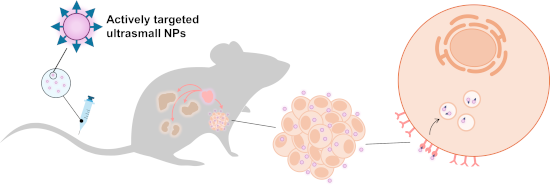
- therapeutic target for MM [161]. Based on this, the Gd construct was utilized for the detection of malignant plasma cells in MM using magnetic resonance imaging (MRI). Competitive cell-binding assays confirmed the maintenance of antibody specificity after conjugation to usNPs. The resulting targeted usNPs
- -noise ratio for MM detection, surpassing levels achievable with other clinically approved imaging modalities. As early as 30 min post-administration, animals treated with the targeted usNPs demonstrated a ≈3-fold improvement in SNR for plasmacytomas in the spine. Song et al. synthesized AuNCs protected


Unveiling the potential of alginate-based nanomaterials in sensing technology and smart delivery applications
Beilstein J. Nanotechnol. 2024, 15, 1077–1104, doi:10.3762/bjnano.15.88

- disease diagnosis, quick detection of diverse drugs and chemicals, and long-term monitoring [9]. In the recent decade, sensor technology has seen breakthroughs thanks to the usage of nanomaterials with superior physicochemical properties [10][11][12][13]. Nowadays, the development of sensors based on
- several hours for results. The development of compact and portable miniaturized sensors has enabled the detection of different biomarkers for continuous, real-time human health monitoring [1][2]. Temperature, heart rate, electrical conductivity, dehydration, and glucose are some of the indicators that
- nanoparticles have demonstrated enormous advantages for sensing applications. First, alginate-based nanoparticles have a high surface area-to-volume ratio. This feature allows for increased interaction with the target analyte, leading to enhanced sensitivity and detection capabilities. Additionally, alginate


Signal generation in dynamic interferometric displacement detection
Beilstein J. Nanotechnol. 2024, 15, 1070–1076, doi:10.3762/bjnano.15.87
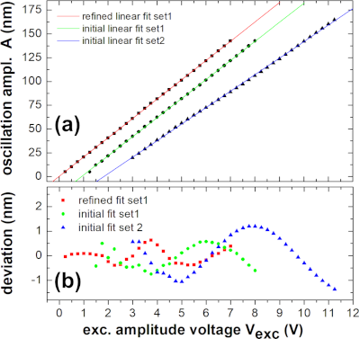
- . Keywords: amplitude calibration; displacement detection; force microscopy; interferometer signal; NC-AFM; Introduction Optical interferometry is a reliable technique utilizing light waves to measure distance and displacement with high precision [1][2]. With the light wavelength as the length standard, a
- curve, where the slope of IM(d) is a maximum. Such an adjustment facilitates a most sensitive displacement detection. Note, that it is not possible to adjust the interferometer to d0 with a small number m because of limitations in positioning the fiber end face parallel to the cantilever surface. Upon


Effect of wavelength and liquid on formation of Ag, Au, Ag/Au nanoparticles via picosecond laser ablation and SERS-based detection of DMMP
Beilstein J. Nanotechnol. 2024, 15, 1054–1069, doi:10.3762/bjnano.15.86

- implications for developing more efficient and stable SERS substrates for chemical detection applications. Keywords: dimethyl methyl phosphonate; laser material interaction; metal nanoparticles; picosecond laser ablation; SERS; thiram; Introduction Metal nanoparticles (NPs) are versatile materials widely
- capable of trace detection. Dimethyl methyl phosphonate (DMMP) is commonly used as a less toxic simulant for sarin, a G-series nerve agent. DMMP can, in general, be used in making chemical weapons. Zheng et al. [30] reviewed various methods for DMMP detection, including mass-sensitive sensors, surface
- substrates is the central aspect of the sensing field because of its simple sample collection from any rough surface [36][40]. Filter paper (FP) SERS substrates are rigorously investigated for the detection of hazardous dye molecules such as crystal violet (CV) and malachite green (MG) on fish [41


Bolometric IR photoresponse based on a 3D micro-nano integrated CNT architecture
Beilstein J. Nanotechnol. 2024, 15, 1030–1040, doi:10.3762/bjnano.15.84
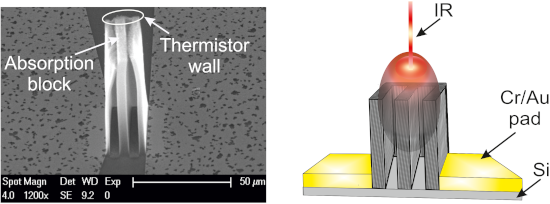
- numerous advantages at room temperature operation. New thermally isolated micro-nano architectures equipped with integrated temperature sensors should outperform their predecessors regarding various critical aspects, such as ultra-broadband detection from ultraviolet (UV) to terahertz radiation [1
- attractive options for non-cryogenic IR microbolometer and thermal detection technology. The sensitivity of a bolometer is quantified by its responsivity, which is given by the expression [11]: where ΔV is the corresponding voltage change, ΔP represents the incident power on the active detection area, Ibias
- minimum power that can be detected by the bolometer for a 1 Hz detection bandwidth. The experimental setups for the responsivity and noise measurements included several devices, such as a DC power supply, an IR laser source, an optical chopper (Thorlabs MC2000B), a low-noise transimpedance amplifier (TIA


Atomistic insights into the morphological dynamics of gold and platinum nanoparticles: MD simulations in vacuum and aqueous media
Beilstein J. Nanotechnol. 2024, 15, 995–1009, doi:10.3762/bjnano.15.81
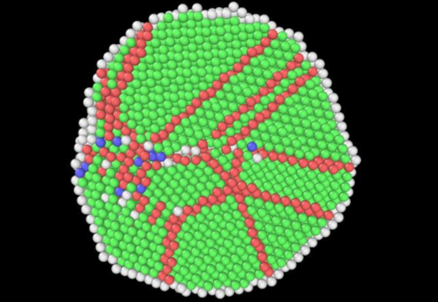
- surfaces of the large NPs. This is in agreement with previous findings for Ag NPs with a similar diameter range [49]. It should be noted that the considered variations in the NP size are rather subtle and below detection for current analytical capabilities [85]. There are slight disparities between Au and


Recent progress on field-effect transistor-based biosensors: device perspective
Beilstein J. Nanotechnol. 2024, 15, 977–994, doi:10.3762/bjnano.15.80
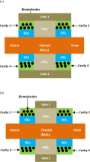
- to detect a wide range of biomolecules, such as proteins, DNA, and antibodies. This article presents a comprehensive review of advancements in the architectures of FET-based biosensors aiming to enhance device performance in terms of sensitivity, detection time, and selectivity. The review
- FET-based biosensors. Finally, this article proposes intriguing avenues for further research on the topology of FET-based biosensors. Keywords: biomolecule detection; biosensors; charge modulation; dielectric modulation; field-effect transistor; Review 1 Introduction In recent years, biosensor
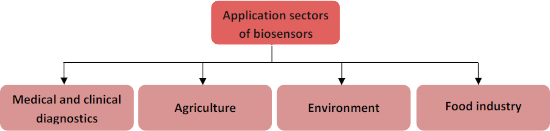
- water bodies. Therefore, the detection of harmful pollutants in the environment is a critical issue. Numerous works have reported on the application of biosensors for environmental monitoring, especially those based on optical or electrochemical transduction platforms [10][11][12][13]. Moreover




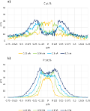
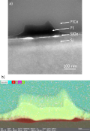
Water-assisted purification during electron beam-induced deposition of platinum and gold
Beilstein J. Nanotechnol. 2024, 15, 884–896, doi:10.3762/bjnano.15.73
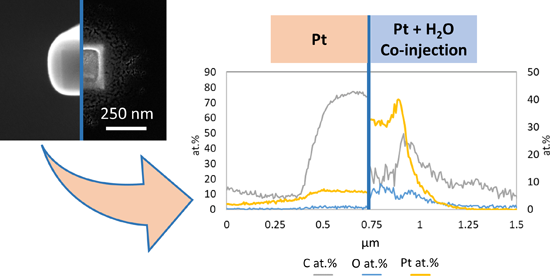
- was monitored in ultrahigh vacuum by mass spectrometry, leading to the detection of both gaseous CO and CH4 species [45]. The production of these two volatile species is ascribed to two different processes: (i) for CH4 the removal of trapped species and (ii) for CO the electron-induced hydration of





Green synthesis of biomass-derived carbon quantum dots for photocatalytic degradation of methylene blue
Beilstein J. Nanotechnol. 2024, 15, 755–766, doi:10.3762/bjnano.15.63
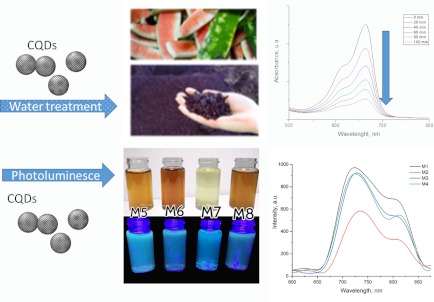
- (Figure 1a). Samples M1 and M5 exhibit a barely noticeable band between 250 and 300 nm, a typical peak was not observed for both samples probably due to the presence of some carbon impurity that hinder the detection of the π–π* transition around 270 nm. Dynamic light scattering Figure 2 shows the size


Effect of repeating hydrothermal growth processes and rapid thermal annealing on CuO thin film properties
Beilstein J. Nanotechnol. 2024, 15, 743–754, doi:10.3762/bjnano.15.62
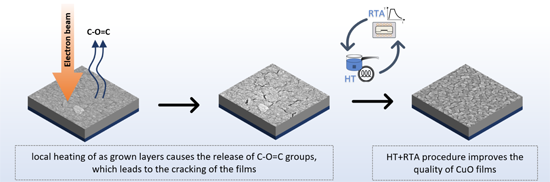
- × magnification. The spectral resolution was of the order of 0.5 cm−1. A 532 nm semiconductor laser was used to illuminate the samples. The measurements were performed without detection of polarization of the scattered light. A liquid nitrogen-cooled multichannel silicon CCD camera was used as a detector. Results




Simultaneous electrochemical determination of uric acid and hypoxanthine at a TiO2/graphene quantum dot-modified electrode
Beilstein J. Nanotechnol. 2024, 15, 719–732, doi:10.3762/bjnano.15.60
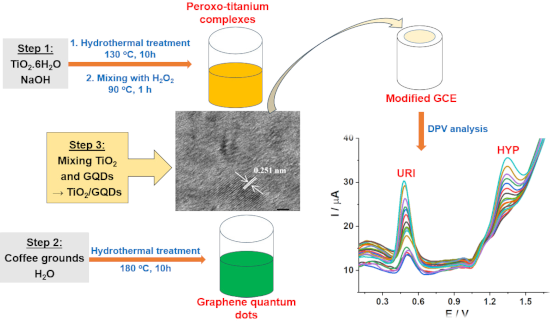
- conditions, the calibration plots were linear in the range from 1.00 to 15.26 μM for both uric acid and hypoxanthine. The limits of detection of this method were 0.58 and 0.68 μM for uric acid and hypoxanthine, respectively. The proposed DPV method was employed to determine uric acid and hypoxanthine in
- further studies. Linear range and limit of detection DPV curves for mixtures containing equal concentrations of URI and HYP are shown in Figure 8a. The peak current increases linearly when the concentration of both analytes increases from 1.00 to 15.26 µM (Figure 8b). The regression equations are as
- follows: The limit of detection (LOD) is described as 3S/M, where S is the standard deviation and M is the slope obtained from the calibration plot. The LOD values are 0.58 µM for URI and 0.68 µM for HYP. The cross-effect is a key factor for the simultaneous determination of analytes in a mixture. Figure


Enhancing higher-order modal response in multifrequency atomic force microscopy with a coupled cantilever system
Beilstein J. Nanotechnol. 2024, 15, 694–703, doi:10.3762/bjnano.15.57

- traditional rectangular cantilever is weaker in air, which affects the sensitivity of multifrequency AFM detection. To address this issue, we previously proposed a bridge/cantilever coupled system model to enhance the higher-order modal response of the cantilever. This model is simpler and less costly than
- ; Introduction Multifrequency atomic force microscopy (AFM) has become an important tool for nanoscale imaging and characterization [1][2]. This technique involves the excitation and detection of multiple frequencies to improve data acquisition speed, sensitivity, and resolution, as well as to enable material
- properties mapping with additional contrast [3]. Among the various multifrequency AFM methods, bimodal AFM is the most commonly used, which relies on the excitation and detection of two resonant frequencies [4]. Most studies have focused on the first two eigenmodes of the cantilever, with the fundamental


Functional fibrillar interfaces: Biological hair as inspiration across scales
Beilstein J. Nanotechnol. 2024, 15, 664–677, doi:10.3762/bjnano.15.55
- prey, evade obstacles, or detect potential dangers [130][137]. Airflow sensors with bio-inspired, fibrillar structures based on the working principles of cricket cerci, which, when clustered in arrays, aid in detection of oscillating flows following “viscous coupling” [138], have been developed [139
- detect chemicals in their surroundings, enabling them to locate sustenance, recognize their species, and avoid danger [147]. Moth antennae possess dense arrays of hairs, which have been found to interact with surrounding airflow in order to enhance diffusion of chemicals to the antennae for detection


AFM-IR investigation of thin PECVD SiOx films on a polypropylene substrate in the surface-sensitive mode
Beilstein J. Nanotechnol. 2024, 15, 603–611, doi:10.3762/bjnano.15.51
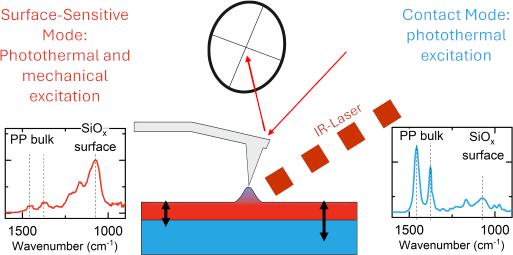
- measured in a first-order detection scheme with or without additional resonance enhancement. However, it contains chemical information from a much larger depth (hundreds of nanometers to several micrometers). If the difference or sum of freely selectable laser pulse repetition frequency and mechanical
- modulation (i.e., drive frequency) in surface-sensitive AFM-IR mode equals a mechanical resonance of the tip–surface contact, sufficient IR signal enhancement can be obtained at this frequency (i.e., detection frequency). This is used to measure the IR signature of thin material sections close to the top
- sample excitation). However, it is much more flexible in the choice of the drive and detection frequencies, as only the mixing frequency needs to match a system resonance and not the individual frequencies themselves. Here, we use AFM-IR in the surface-sensitive mode to investigate thin silicon oxide


Stiffness calibration of qPlus sensors at low temperature through thermal noise measurements
Beilstein J. Nanotechnol. 2024, 15, 580–602, doi:10.3762/bjnano.15.50
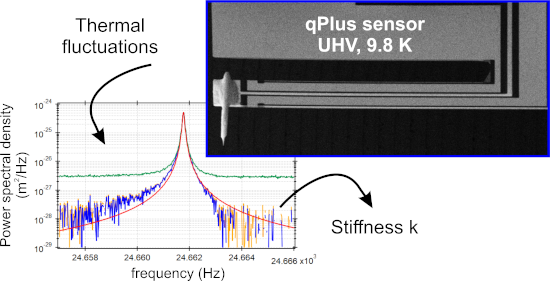
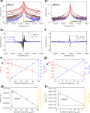
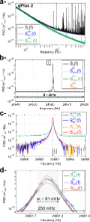
- optical detection setup. Nc-AFM experiments are then mostly performed with quartz sensors, essentially implemented according to two geometries: quartz tuning fork (QTF) [19] or length-extensional resonator (LER) [20][21][22]. The commercial versions of these probes are the qPlus sensor (Scienta-Omicron
- piezoelectric nature, which facilitates the readout of the tip deflection, based on the piezoelectric charge induced by the quartz upon oscillation through a simple I/V, or charge, preamplifier [27][28], as compared to the heavy optical detection setup required for silicon cantilevers. Nowadays, the qPlus
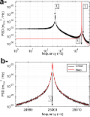
- similar to Equation 7 if the summation is performed over all the eigenmodes of the probe (, cf. [35][77]). From an experimental point of view, the number of accessible eigenmodes (m) is limited because the detection bandwidth of the fluctuations is restricted. Then, the relative error introduced in the

Radiofrequency enhances drug release from responsive nanoflowers for hepatocellular carcinoma therapy
Beilstein J. Nanotechnol. 2024, 15, 569–579, doi:10.3762/bjnano.15.49
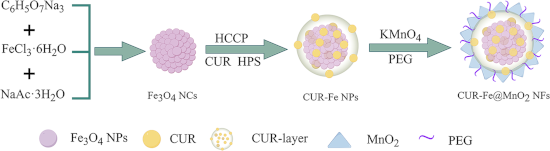
- measured by a Malvern Zetasizer Nano ZS instrument (Nano ZS90, Malvern, UK). A 2 mg NF sample was added into 1 mL of deionized water and directly detected by ZS90. The detection angle was 90 degrees. The compositions were also analyzed using Fourier-transform infrared spectroscopy (Nicolet iS50, Thermo


Fabrication of nanocrystal forms of ᴅ-cycloserine and their application for transdermal and enteric drug delivery systems
Beilstein J. Nanotechnol. 2024, 15, 465–474, doi:10.3762/bjnano.15.42
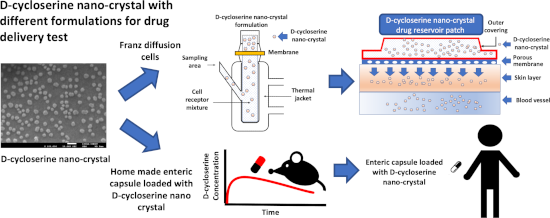
- detection was accomplished with a LYNXEYE detector (Bruker AXS GmbH), and the XRPD patterns were obtained on a D8 ADVANCE (Bruker AXS GmbH). Preparation of different hydrophobic formulations mixed with DCS aqueous solution for the reservoir transdermal delivery The DCS aqueous solution was mixed with
- . The total run time of the LC was 20 min. Ionization and detection of the analyte were performed on a triple quadrupole mass spectrometer (API-2000, AB Sciex Pte. Ltd.), operating in positive ion mode. Quantitation was done using multiple reaction monitoring (MRM) mode to monitor protonated precursor


Heat-induced morphological changes in silver nanowires deposited on a patterned silicon substrate
Beilstein J. Nanotechnol. 2024, 15, 435–446, doi:10.3762/bjnano.15.39
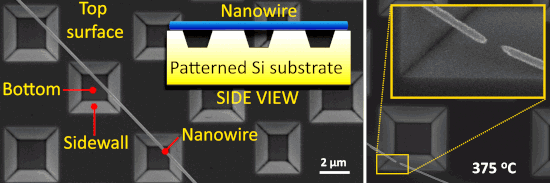
- significant bending in the suspended part in the heating scheme 2. The onset temperature of this phenomenon is difficult to determine as the deformation can be below the detection limits of SEM. Moreover, in SEM we only see the 2D projection normal to the electron beam. If NWs are bent out of the substrate


Potential of a deep eutectic solvent in silver nanoparticle fabrication for antibiotic residue detection
Beilstein J. Nanotechnol. 2024, 15, 426–434, doi:10.3762/bjnano.15.38
- [2], the ability of real-time measurements [3], extremely high sensitivity [4], remarkable selectivity [5], and tremendous versatility [4][6][7]. Many scholars have taken advantage of these properties in cancer diagnosis [8], detection of hazardous chemicals [9], tracing of microorganisms [7][10][11
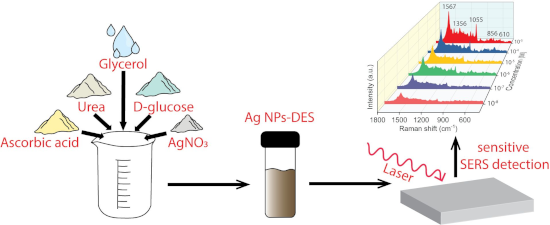
- NPs. The resulting Ag NPs-DES is used for SERS detection of toxic antibiotics such as nitrofurantoin (NFT) and sulfadiazine (SDZ). These substances have been widely used since the 1970s because of rapid and absolute results against microbes [32], but they are also responsible for hormonal disruptions
- regarding the detection of NFT and SDZ, we demonstrate application aspects of our product, showing the great potential of DESs in sensing and biomedical applications. Results and Discussion Formation of Ag NPs-DES We have developed new and simple strategy to fabricate Ag NPs-DES in which ascorbic acid was


Classification and application of metal-based nanoantioxidants in medicine and healthcare
Beilstein J. Nanotechnol. 2024, 15, 396–415, doi:10.3762/bjnano.15.36
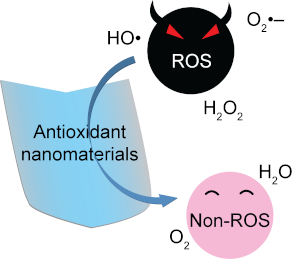
- reduction in infarction size, TNF-α levels, cardiac fibrosis, and improvement in cardiac systolic function. Gold nanorods serving as surface-enhanced Raman scattering probes have demonstrated sensitivity for the early detection of ICAM-1, a significant signal for screening atherosclerosis, particularly in


On the mechanism of piezoresistance in nanocrystalline graphite
Beilstein J. Nanotechnol. 2024, 15, 376–384, doi:10.3762/bjnano.15.34

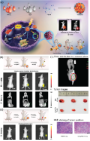
- , Technische Universität Darmstadt, 64287 Darmstadt, Germany 10.3762/bjnano.15.34 Abstract Strain sensors are sensitive to mechanical deformations and enable the detection of strain also within integrated electronics. For flexible displays, the use of a seamlessly integrated strain sensor would be beneficial


Comparative electron microscopy particle sizing of TiO2 pigments: sample preparation and measurement
Beilstein J. Nanotechnol. 2024, 15, 317–332, doi:10.3762/bjnano.15.29
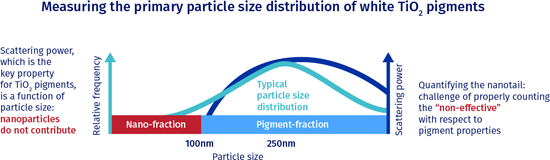
- median size (D50n) due to the detection of a higher number of liberated primary particles. After dispersion, the samples were transported to the Agilent laboratory. The following day, they were re-dispersed in two different ways just before measurement. This was done to evaluate the impact of sample
- evaluation of E171 anatase samples. The larger deviations for sample D indicate, that the limited field of view and its implicit effect on the detection of the large particle fraction appears to be the primary cause of the deviation between the measurements shown in Figure 1. The particle size results are
- , and M3 completely rely on particle edge detection by the human eye, which is the most accurate detection method assuming good laboratory practice. Methods M1, P1, and P6 rely on automated particle detection, the former using a model-free sizing algorithm and the latter two using a sizing algorithm


Exploring the relationships between physiochemical properties of nanoparticles and cell damage to combat cancer growth using simple periodic table-based descriptors
Beilstein J. Nanotechnol. 2024, 15, 297–309, doi:10.3762/bjnano.15.27
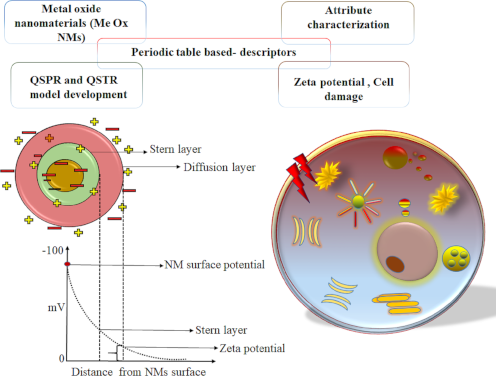
- systems. Metal NPs can lead to greater signal amplification, greater sensitivity, and higher detection. However, NPs with properties that generate ROS can increase cell damage. In cancer cells, rapid proliferation leads to an imbalance of oxygen, abnormal structure, and blood supply, making the tumor





