


Search results
Search for "development" in Full Text gives 1358 result(s) in Beilstein Journal of Nanotechnology. Showing first 200.
Synchrotron X-ray photoelectron spectroscopy study of sodium adsorption on vertically arranged MoS2 layers coated with pyrolytic carbon
Beilstein J. Nanotechnol. 2025, 16, 847–859, doi:10.3762/bjnano.16.64
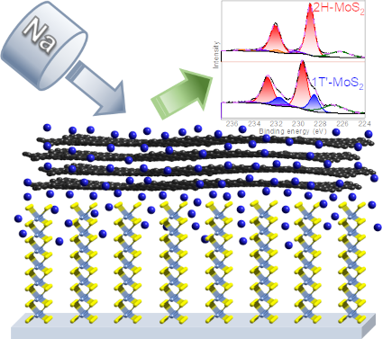
- film, and annealing of the sodiated sample restores its structure. The obtained results demonstrate the important role of the graphitic coating in the development of viable MoS2-based electrodes for energy storage systems. Keywords: graphitic coating; molybdenum disulfide film; Na adsorption


Synthesis and magnetic transitions of rare-earth-free Fe–Mn–Ni–Si-based compositionally complex alloys at bulk and nanoscale
Beilstein J. Nanotechnol. 2025, 16, 823–836, doi:10.3762/bjnano.16.62
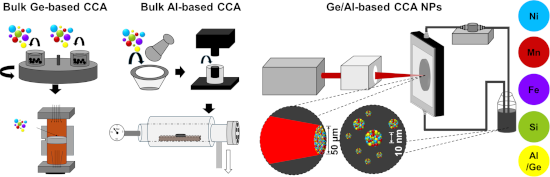
- temperature ranges, such as room-temperature cooling and cryogenic systems [3][4]. The magnetic transition also plays a critical role in the development of temperature-sensitive magnetic sensors and actuators [5][6]. These devices harness the abrupt change in magnetic properties at Tc to detect temperature
- potential to replace rare earth elements in magnetic materials [18]. The development of rare-earth-free or rare-earth-lean magnets is critical because of the economic, environmental, and supply chain challenges associated with rare earth elements [19][20]. For instance, mining and processing of rare earths


Thickness dependent oxidation in CrCl3: a scanning X-ray photoemission and Kelvin probe microscopies study
Beilstein J. Nanotechnol. 2025, 16, 749–761, doi:10.3762/bjnano.16.58
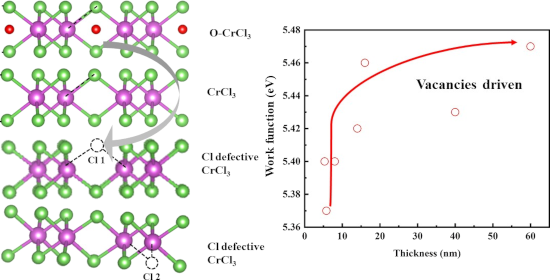
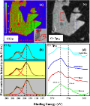
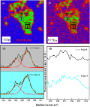
- oxidation or the introduction of surface vacancies, a novel and versatile approach is unveiled for the development of low-dimensional multifunctional nanodevices. Keywords: chemical mapping; CrX3; Kelvin probe force microscopy; mechanical exfoliation; scanning photoelectron microscopy (SPEM); two





Serum heat inactivation diminishes ApoE-mediated uptake of D-Lin-MC3-DMA lipid nanoparticles
Beilstein J. Nanotechnol. 2025, 16, 740–748, doi:10.3762/bjnano.16.57
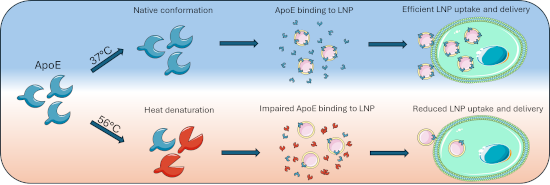
- protein corona formation in vitro and prevent bias in LNP development. Keywords: apolipoprotein E; fetal calf serum; heat inactivation; lipid nanoparticle; protein corona; Introduction Nanotechnology has gained a strong foothold in the field of drug delivery, having significant promise to overcome the
- a crucial part during pre-clinical nanoparticle development. The influence of the protein corona is particularly evident for the efficacy of lipid nanoparticles used for RNA delivery. Lipid nanoparticles (LNPs) protect the encapsulated RNA from premature clearance and simultaneously facilitate the
- delivery efficiency, it is becoming increasingly clear that the in vivo environment to which the nanoparticles will be exposed should be considered during LNP development. Nevertheless, the initial screening of nanoparticles in vitro is often restricted to experiments using tissue culture media


Synthesis of a multicomponent cellulose-based adsorbent for tetracycline removal from aquaculture water
Beilstein J. Nanotechnol. 2025, 16, 728–739, doi:10.3762/bjnano.16.56
- . These limitations have spurred the development of more effective and versatile adsorbents. Modern adsorbents are available in diverse compositions. Moreover, they are easy to manufacture and generally both cost-effective and environmentally friendly. Cellulose-based adsorbents, in particular, have
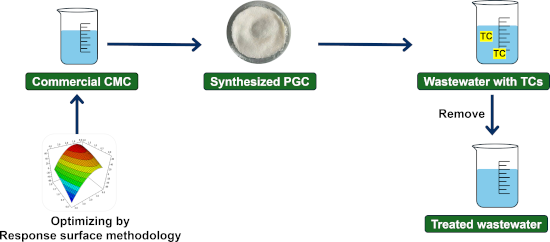
- efficiency, eco-friendliness, versatility, and up to 70% removal efficiency of tetracyline, oxytetracycline, chlortetracycline, and doxycycline, the synthesized PGC material shows great potential for addressing environmental challenges and promoting sustainable development. The PGC adsorbent, with higher


Efficiency of single-pulse laser fragmentation of organic nutraceutical dispersions in a circular jet flow-through reactor
Beilstein J. Nanotechnol. 2025, 16, 711–727, doi:10.3762/bjnano.16.55
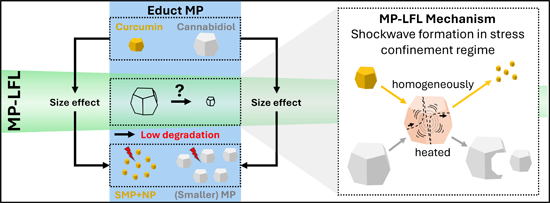
- School in Advanced Optical Technologies (SAOT), Friedrich-Alexander-Universität Erlangen-Nürnberg, Paul-Gordan-Strasse 6, Erlangen 91052, Germany Department of Molecular Food Chemistry and Food Development, Institute of Food and One Health, Gottfried Wilhelm Leibniz University Hannover, Am Kleinen Felde


Nanostructured materials characterized by scanning photoelectron spectromicroscopy
Beilstein J. Nanotechnol. 2025, 16, 700–710, doi:10.3762/bjnano.16.54
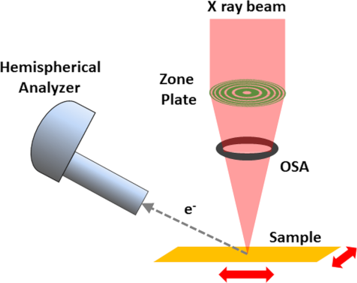
- devices, which include the synthesis, characterization, and processing, are part of an emerging and rapidly growing field referred to as nanotechnology. However, despite the large efforts of the scientific and industrial communities in the development of new nanostructured materials and related
- corresponding CL spectrum. XPS measurements provide valuable information on the electronic structure and properties of the NiO samples, which strongly support the development of potential applications including gas sensors and optical resonators [43][47]. Conclusion SPEM is a synchrotron-based technique
- surface chemical changes, local charging, and space-charge effects. To partially mitigate this effects, strong efforts must be spent in the development of new photoelectron detection systems capable of collecting the majority of electrons, currently wasted due to the limited acceptance angles of


High-temperature epitaxial growth of tantalum nitride thin films on MgO: structural evolution and potential for SQUID applications
Beilstein J. Nanotechnol. 2025, 16, 690–699, doi:10.3762/bjnano.16.53
- as lossless power transmission, magnetic levitation in transportation systems, and the creation of powerful electromagnets. Furthermore, superconductivity plays a pivotal role in the development of advanced technologies, including quantum computing and nanometric electronic devices. Despite
- significant progress, a major challenge remains in discovering materials that exhibit superconductivity at higher, more practical temperatures. The efficient fabrication of materials with a low superconducting energy gap and an intermediate Tc is crucial for the development and enhancement of superconducting
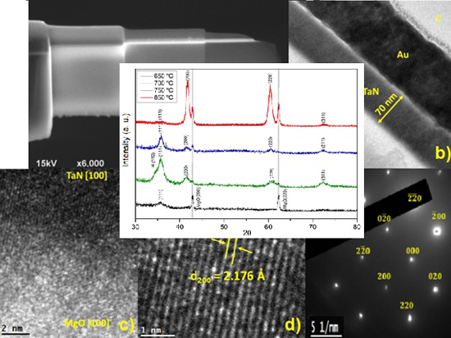
- temperature on the structural evolution of TaN thin films deposited on MgO(100) substrates was investigated using XRD and TEM. Figure 3 shows the XRD patterns of TaN films deposited at various temperatures, revealing critical insights into phase development, crystallinity, and epitaxial growth as the


Aprepitant-loaded solid lipid nanoparticles: a novel approach to enhance oral bioavailability
Beilstein J. Nanotechnol. 2025, 16, 652–663, doi:10.3762/bjnano.16.50
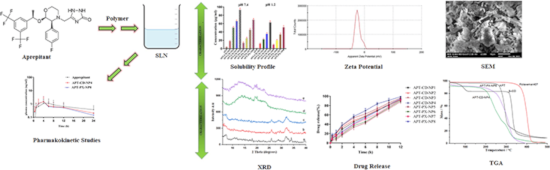
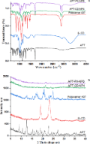
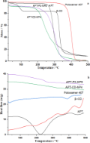
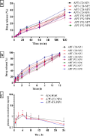
- , Robert Stevenson Road, Edinburgh, EH9 3FB, United Kingdom 10.3762/bjnano.16.50 Abstract Objectives of the present study are the development of aprepitant (APT)-loaded solid lipid nanoparticles (SLNs) using the polymers poloxamer 407 and β-cyclodextrin for enhanced solubility and their pharmacokinetic



Nanoscale capacitance spectroscopy based on multifrequency electrostatic force microscopy
Beilstein J. Nanotechnol. 2025, 16, 637–651, doi:10.3762/bjnano.16.49

- ; quantitative force spectroscopy; scanning capacitance force microscopy; Introduction Technological progress in fields including electronics, energy storage, photonics, and biomedical devices would not have been possible without the development of new materials. Progress in these areas requires a detailed




A formulation containing Cymbopogon flexuosus essential oil: improvement of biochemical parameters and oxidative stress in diabetic rats
Beilstein J. Nanotechnol. 2025, 16, 617–636, doi:10.3762/bjnano.16.48
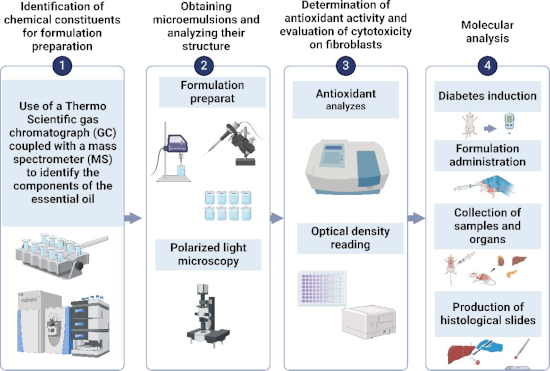
- %), corroborating the findings of the present study. However, other minor components were not identified in this study, showing that the composition of the essential oil can change significantly when obtained from different geographical origins. Development of microemulsions considering the pseudoternary phase
- components can facilitate the development of nanometer-scale systems such as MEs and liquid crystals [15]. This region was divided into three distinct regions, with a central region of transparent viscous systems (TVS), which may be a region of lyotropic liquid crystals [16][17], and two regions of
- of M7-EOCF is very close to the activity of Trolox, that is, above 90%. Therefore, there was possibly saturation at the concentration used. A study by Alencar et al. [35], which aimed to analyze the antioxidant activity of lemongrass (C. citratus) EO before and after the development of spray-dried




Focused ion and electron beams for synthesis and characterization of nanomaterials
Beilstein J. Nanotechnol. 2025, 16, 613–616, doi:10.3762/bjnano.16.47

- the best of times, it was the worst of times" [2] – onto a 200 × 200 micron square of plastic using an electron beam. This achievement prompts a reflection: is nowadays the best or the worst of times for the development of electron and ion beam technologies? With the hope to contribute addressing this
- towards its further development, a comprehensive roadmap for focused ion beam technologies has been recently published by an interdisciplinary group of international experts. Although not part of this thematic issue, we encourage the reader to take a look at the original paper [17]. While achieving
- , and substrates to transform them from specialized prototyping to market-relevant methods. Advances are particularly needed in precursor development to achieve desirable material compositions and in modeling to enable full 3D-growth control. As we transition into an era defined by artificial

Polyurethane/silk fibroin-based electrospun membranes for wound healing and skin substitute applications
Beilstein J. Nanotechnol. 2025, 16, 591–612, doi:10.3762/bjnano.16.46
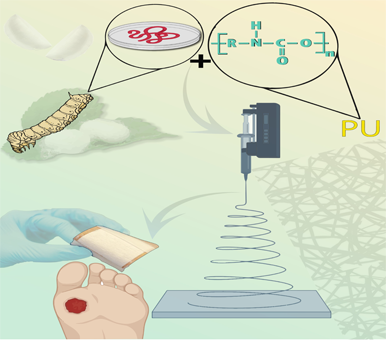
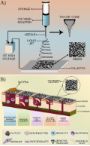
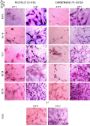
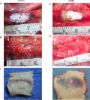
- the development of implants, medical devices, and drug delivery systems that solve challenging issues from health to medicine [5]. Because of innovations in tissue engineering, genetic engineering, and nanotechnology, scientists can now see into the innermost functions of living organisms with a level
- are cleared by macrophage efferocytosis, apoptosis, or return to blood vessels [40]. Proliferation Granulation tissue development, re-epithelialization, and neovascularization are features of the proliferative phase. This period may last several weeks [41]. Fibroblasts, keratinocytes, macrophages, and
- advancement in this sector with the development of many dermo-epidermal substitutes. However, there is still a need for a full-thickness dermal substitute [49]. In this regard, nanotechnology has seen remarkable work in the biomedical field in recent years, offering promising solutions for the development of



Feasibility analysis of carbon nanofiber synthesis and morphology control using a LPG premixed flame
Beilstein J. Nanotechnol. 2025, 16, 581–590, doi:10.3762/bjnano.16.45
- Malaysia (UTM) through UTM Fundamental Research (UTMFR: PY/2024/01611) grant with cost center number Q.J130000.3824.23H94. This research was also supported by Universiti Teknologi Malaysia (UTM) through Prototype Development Fund (PDF Cycle 2: PY/2024/00430) grant with cost center number



Nanomaterials in targeting amyloid-β oligomers: current advances and future directions for Alzheimer's disease diagnosis and therapy
Beilstein J. Nanotechnol. 2025, 16, 561–580, doi:10.3762/bjnano.16.44
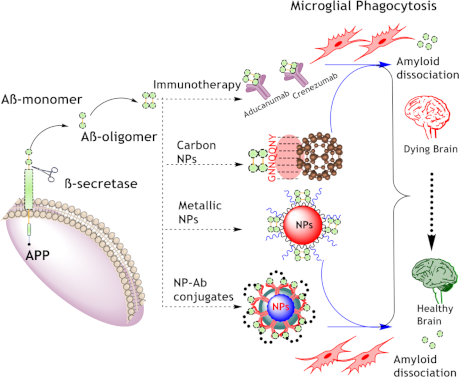
- oligomers with smaller molecular weight, rather than the more conspicuous amyloid fibrils, that play a pivotal role in the development and progression of various protein misfolding diseases, including neurodegenerative disorders and type-II diabetes. Numerous studies have highlighted a disconnect between
- [5], suggesting that certain genetic factors can significantly accelerate the development of the disease. In contrast, the Icelandic mutations appear to have a protective effect, reducing both the overall levels of AβOs and the concentrations of amyloid fibrils, which are another form of amyloid
- possibility that AβOs may have distinct properties and biological implications that differ from those of amyloid fibrils, suggesting a more complex relationship in the pathology of amyloid-related diseases. Understanding these pathways is crucial for unraveling the role of AβOs in the development and


Retrieval of B1 phase from high-pressure B2 phase for CdO nanoparticles by electronic excitations in CdxZn1−xO composite thin films
Beilstein J. Nanotechnol. 2025, 16, 551–560, doi:10.3762/bjnano.16.43

- developed under the provision of the Polish Ministry and Higher Education project “Support for research and development with the use of research infrastructure of the National Synchrotron Radiation Centre SOLARIS" under contract No. 1/SOL/2021/2. We acknowledge the SOLARIS Centre for providing access to the


Functionalized gold nanoflowers on carbon screen-printed electrodes: an electrochemical platform for biosensing hemagglutinin protein of influenza A H1N1 virus
Beilstein J. Nanotechnol. 2025, 16, 540–550, doi:10.3762/bjnano.16.42
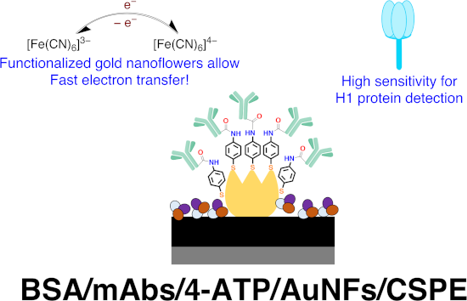
- measurements [46]. Furthermore, compatibility with microfluidic devices is important for the development of portable biosensing devices with automated functions and of simple use. Different antigens of the influenza A H1N1 virus have been targeted for detection over the years. In order to make a substantial
- , electrode stability in different solvents, and circuit fitting for the EIS data. Acknowledgements The authors acknowledge SensUs organization for technical discussions on biosensors development, Dr. Quentin Palomar-Marchand for the technical advice provided on electrochemical measurements, and Jayendra


Electron beam-based direct writing of nanostructures using a palladium β-ketoesterate complex
Beilstein J. Nanotechnol. 2025, 16, 530–539, doi:10.3762/bjnano.16.41
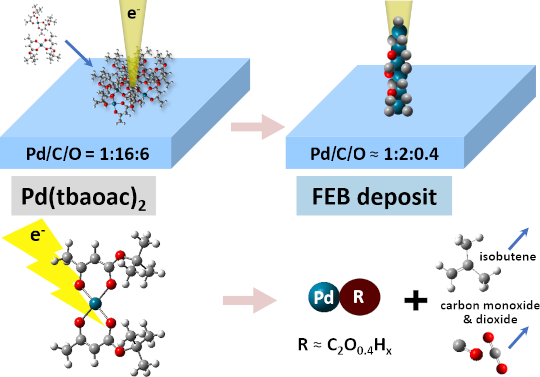
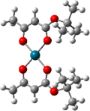
- )2] [40][41]. The potential of growing 3D nanostructures with this precursor was also explored. The insights gained from this research could be valuable in the development of precursors tailored for FEBID. Experimental The structure of [Pd(tbaoac)2] is shown in Figure 1. The precursor was synthesized


Zeolite materials with Ni and Co: synthesis and catalytic potential in the selective hydrogenation of citral
Beilstein J. Nanotechnol. 2025, 16, 520–529, doi:10.3762/bjnano.16.40
- metallic species for various applications, leading to the invention of new functional materials for sustainable development, such as catalysts [1][2][3]. Among the various methods used to modify zeolites, ion exchange is the most widely employed. Different ion exchange methods are known, such as ion
- systems enables the creation of materials with enhanced properties compared to monocationic zeolites, which is crucial for the development of advanced catalysts and other materials [7][8][9][10]. Natural zeolites attract significant attention because of their abundance, low cost, non-toxic nature, and


N2+-implantation-induced tailoring of structural, morphological, optical, and electrical characteristics of sputtered molybdenum thin films
Beilstein J. Nanotechnol. 2025, 16, 495–509, doi:10.3762/bjnano.16.38
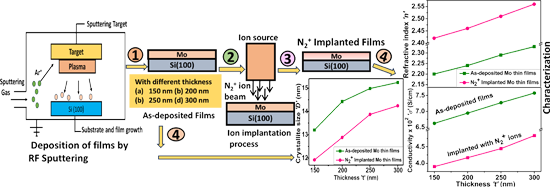
- nitrogen ion implantation on molybdenum thin films. They also examined the phase development and tribological alterations caused by ion implantation. Furthermore, Nakano et al. [26] investigated the deterioration of optical characteristics in polycrystalline Mo mirrors exposed to irradiation with helium or
- thickness and investigating the effects of these factors on the characteristics of molybdenum thin films. This study promotes the development of next-generation Mo thin films with precisely tuned characteristics. The findings of this research contribute to the optimization and development of Mo thin films
- thankful to the Ministry of Human Resources and Development (MHRD) for RUSA 2.0 grants to the Centre for Advanced Material Research (CAMR), Kurukshetra University, Kurukshetra.


Performance optimization of a microwave-coupled plasma-based ultralow-energy ECR ion source for silicon nanostructuring
Beilstein J. Nanotechnol. 2025, 16, 484–494, doi:10.3762/bjnano.16.37

- beam current varies with different ion energies [29][30]. This article focuses on optimizing the beam current generated by a cost-effective microwave-based ECR ion source and the subsequent development of nanoscale patterns on the surface of silicon. The relationship between the beam current and
- ripple structure, the power spectral density factor along the parallel and perpendicular direction of the developed ripples is presented in Figure 6g,h. The prominent peak present in Figure 6g indicates the development of the ripple structure along the x direction (parallel) with a particular wavevector
- surface reduces the reflection of UV–visible light because of light trapping by multiple reflections [47][48][49]. Ar-ion bombardment for 3 h leads to the development of a well-defined nanopattern on the silicon surface; hence, the reflectivity becomes minimal compared to the other two surfaces that were


Synthetic-polymer-assisted antisense oligonucleotide delivery: targeted approaches for precision disease treatment
Beilstein J. Nanotechnol. 2025, 16, 435–463, doi:10.3762/bjnano.16.34

- oligomer (PMO); phosphorothioate (PS); polyplexes; ribose substitutions; small interfering RNA (siRNA); synthetic polymers; tricyclo-DNA (tcDNA); Introduction The development and use of personalised therapies tailored to individual patients have emerged as a powerful strategy for treating various
- patient-personalised therapies [41][42]. In 2019, Kim et al. pioneered the development of milasen, a ssASO drug tailored to a single patient affected by a rare form of Batten’s disease, and its clinical efficiency was successfully proven [43]. Despite significant progress in the discovery of novel
- in ASO-based therapies. Some promising strategies to overcome these limitations involve the conjugation of ASOs with peptides [53], polymers [54], aptamers [55], and antibodies [56], as well as the development of novel drug delivery systems [57][58]. This review discusses the challenges associated


Quantification of lead through rod-shaped silver-doped zinc oxide nanoparticles using an electrochemical approach
Beilstein J. Nanotechnol. 2025, 16, 422–434, doi:10.3762/bjnano.16.33
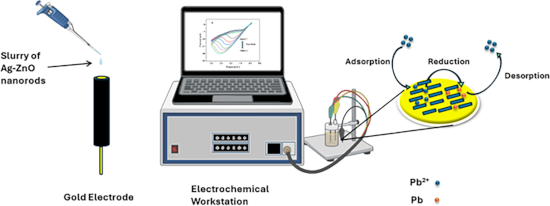
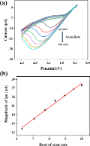
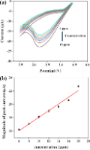
- uncomplicated method for producing Ag@ZnO NRs. These fabricated Ag@ZnO NRs play an effective role as an electron mediator in the development of lead chemical sensors which are both highly sensitive and robust in nature. Based on our current understanding, the lead sensor we developed exhibits the most notable





Biomimetics and bioinspired surfaces: from nature to theory and applications
Beilstein J. Nanotechnol. 2025, 16, 418–421, doi:10.3762/bjnano.16.32
- mammals while addressing the functional fibrillar interfaces in biological hair. Presenting one applied example for biomimetic approaches, Ali et al. [7] used the hydrophobicity of the integument of spring tail (Collembola) as a template for the bioinspired development of nanofilament coatings that reduce

Size control of nanoparticles synthesized by pulsed laser ablation in liquids using donut-shaped beams
Beilstein J. Nanotechnol. 2025, 16, 407–417, doi:10.3762/bjnano.16.31
- and have a relatively low degree of crystallinity compared to the original target (Figure S4, Supporting Information File 1). The crystalline to amorphous transition is likely due to the development of stresses induced by ultrafast heating and cooling during PLAL [53]. However, both oxidation and
- from the European Regional Development Fund and the State Budget of the Czech Republic (project SenDiSo No. CZ.02.01.01/00/22_008/0004596).





