


Search results
Search for "electrostatic interactions" in Full Text gives 139 result(s) in Beilstein Journal of Nanotechnology.
Nanoscale effects in the characterization of viscoelastic materials with atomic force microscopy: coupling of a quasi-three-dimensional standard linear solid model with in-plane surface interactions
Beilstein J. Nanotechnol. 2016, 7, 554–571, doi:10.3762/bjnano.7.49
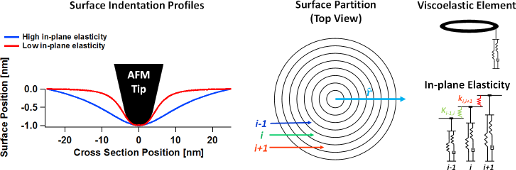
- [19]. Frequently, but not always, relatively large molecules are involved and their cohesive energy is governed by dispersion (van der Waals) and electrostatic forces, which are generally weaker than those generated by stretched covalent bonds or electrostatic interactions in ionic crystals, and which


Comparison of the interactions of daunorubicin in a free form and attached to single-walled carbon nanotubes with model lipid membranes
Beilstein J. Nanotechnol. 2016, 7, 524–532, doi:10.3762/bjnano.7.46
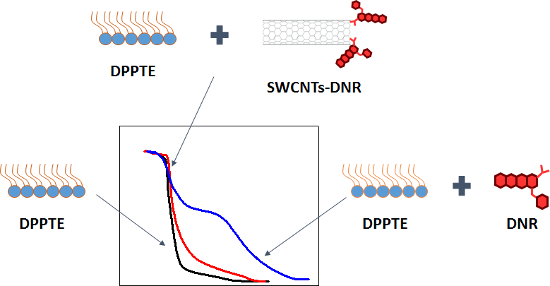
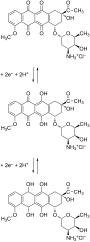
- fluidization. Changes in the properties of DPPTE membrane were attributed to the electrostatic interactions [24]. Since the thiolipid molecules are negatively charged and pKa of daunorubicin is equal to 8.4 [28], at the pH corresponding to pure water there is electrostatic attraction between the negatively
- charged polar heads of the lipid and positively charged drug. Obviously, hydrophobic interactions between the hydrophobic part of the drug and acyl chains of the lipids should be also taken into account, but electrostatic interactions seem to be playing the most important role, especially in case of the
- is different. Daunorubicin in the free form significantly changes the properties of DPPTE monolayers by increasing the area per molecule in the monolayer and causing their immense fluidization. The electrostatic interactions between positively charged drug and negatively charged polar headgroups of




Influence of calcium on ceramide-1-phosphate monolayers
Beilstein J. Nanotechnol. 2016, 7, 236–245, doi:10.3762/bjnano.7.22
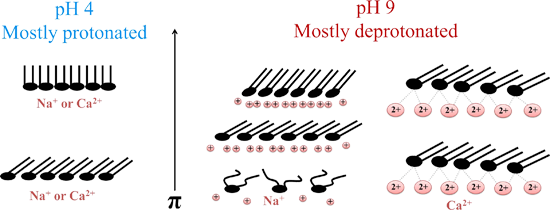
- observed for the system on the pH 9 subphase. In the case of the pH 9 subphase without calcium, the untilted state is reached at much higher lateral pressures due to stronger electrostatic interactions. The presence of calcium ions leads to a very rigid structure, which does not change upon compression. In


3D solid supported inter-polyelectrolyte complexes obtained by the alternate deposition of poly(diallyldimethylammonium chloride) and poly(sodium 4-styrenesulfonate)
Beilstein J. Nanotechnol. 2016, 7, 197–208, doi:10.3762/bjnano.7.18
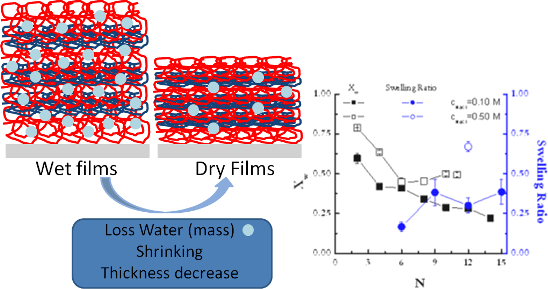
- polyelectrolytes, biopolymers – such as peptides, proteins and nucleic acids – colloidal particles, carbon nanotubes, and/or microgels [8][9][10], which confers to this method an almost unlimited chemical versatility. Even though the method frequently makes use of electrostatic interactions, the multilayers can



Fabrication and characterization of novel multilayered structures by stereocomplexion of poly(D-lactic acid)/poly(L-lactic acid) and self-assembly of polyelectrolytes
Beilstein J. Nanotechnol. 2016, 7, 81–90, doi:10.3762/bjnano.7.10
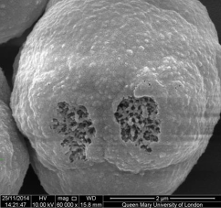
- structures for biotechnological and biomedical applications, such as biosensors and carriers for drug delivery, led researchers to extend this technique beyond multilayer structure fabrication based on electrostatic interactions [7][8][9][10][11]. Over the years, other interactions such as covalent bonding


Controlled graphene oxide assembly on silver nanocube monolayers for SERS detection: dependence on nanocube packing procedure
Beilstein J. Nanotechnol. 2016, 7, 9–21, doi:10.3762/bjnano.7.2
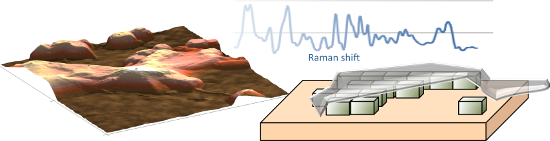
- ] proposed to assemble silver nanoparticles to graphene oxide sheets employing electrostatic interactions and a polymer, as adhesive agent, to impart greater stability against aggregation of AgNPs. Previous investigations are generally focused on spherical nanoparticles and only recently Fan et al. reported


Ultrastructural changes in methicillin-resistant Staphylococcus aureus induced by positively charged silver nanoparticles
Beilstein J. Nanotechnol. 2015, 6, 2396–2405, doi:10.3762/bjnano.6.246
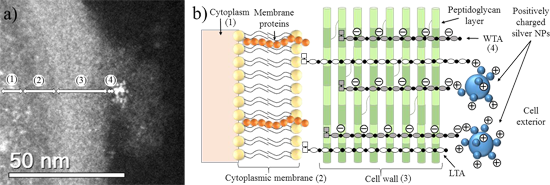
- electrostatic interactions and that WTAs and related CWGs (which contain negatively charged backbones) [21] might play a major role in disrupting the equilibrium of cell wall dynamics [51]. However, the elaborate processes that interrelate these mechanisms are not fully understood. Future research should focus
- to negatively charged CWGs is determined by electrostatic interactions between WTAs and related polyanionic CWGs [21] and that these interactions play a key role in creating instability in cell wall physiology [51]. This is because WTAs are located outside of the PG layer [18][20] and are attracted


Self-organization of gold nanoparticles on silanated surfaces
Beilstein J. Nanotechnol. 2015, 6, 2345–2353, doi:10.3762/bjnano.6.242
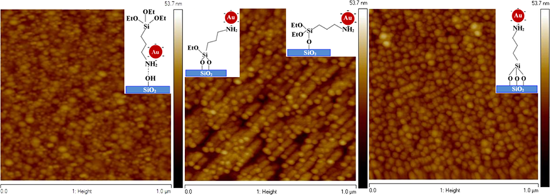
- ]. A considerable amount of work has focused on the immobilization of AuNPs on amine-terminated self-assembled monolayer on different substrates [21][22][23]. In this study, colloidal self-organization of AuNPs was achieved through electrostatic interactions between AuNPs and the functionalized surface


Kelvin probe force microscopy for local characterisation of active nanoelectronic devices
Beilstein J. Nanotechnol. 2015, 6, 2193–2206, doi:10.3762/bjnano.6.225
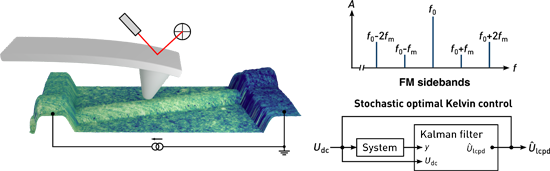
- AM topography feedback is sensitive to the static force gradient, which contains electrostatic interactions, Equation 10, that increase as the dc bias does not match the surface potential; consequently, the topography feedback retracts the tip, reducing C''. In Figure 4c, we plot the ratio of the ωm
- '' depends strongly on the electrostatic interactions between tip and surface and may change significantly on structured surfaces even for a well-tuned topography controller. During a scan, imperfect Kelvin feedback therefore leads to errors in the measured CPD, constituting a source of topography-induced
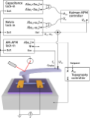
- fed back into the system. In case of KFM, the resulting dc voltage compensates the electrostatic interactions. This standard PID feedback loop is illustrated in Figure 5a. Knowing the system dynamics, a multitude of tuning rules can be applied [35]. In practice, however, the feedback gains are often


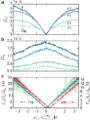
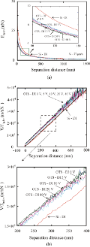
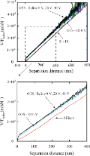
![[Graphic 33]](/bjnano/content/inline/2190-4286-6-225-i48.png?max-width=637&scale=1.18182) for different modulation amplitu...
for different modulation amplitu...




Template-controlled mineralization: Determining film granularity and structure by surface functionality patterns
Beilstein J. Nanotechnol. 2015, 6, 1763–1768, doi:10.3762/bjnano.6.180
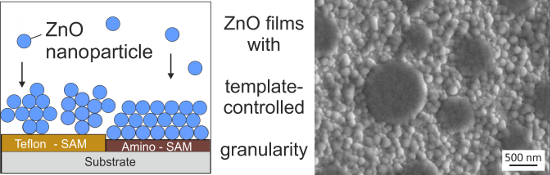
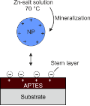
- -range forces. Together these mechanisms lead to a homogenous film with a smooth surface in the APTES-functionalized holes (Figure 1). The FDTS on the other hand is highly hydrophobic [31]. Electrostatic interactions with the particles are minimal compared to the deposition on APTES, where a homogenous

Natural and artificial binders of polyriboadenylic acid and their effect on RNA structure
Beilstein J. Nanotechnol. 2015, 6, 1338–1347, doi:10.3762/bjnano.6.138
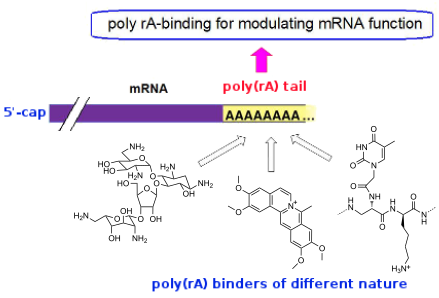
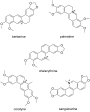
- berberine, palmatine, coralyne and sanguinarine (Figure 3). The binding process involving these molecules, whose structures bring positive charges, is characterized predominantly by electrostatic interactions with the RNA, and in some cases by intercalative binding. The first report on the interaction of a
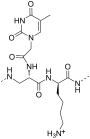
- nucleopeptides (Figure 10), a significant role was played not only by the molecular recognition of complementary nucleobases, but also by the electrostatic interactions occurring between anionic phosphodiester moieties and the cationic residues present in the nucleopeptide structures. It is also interesting to
- mention that, on the other hand, negatively charged nucleopeptoids carrying a poly(dT) sequence were not able to hybridize both poly(dA) and poly(rA). This proved that electrostatic interactions associated with adequate flexibility and three-dimensional presentation of the functional groups of the





Heterometal nanoparticles from Ru-based molecular clusters covalently anchored onto functionalized carbon nanotubes and nanofibers
Beilstein J. Nanotechnol. 2015, 6, 1287–1297, doi:10.3762/bjnano.6.133
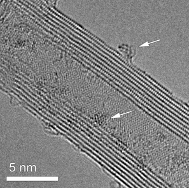
- form an ion pair by electrostatic interactions (on CNF–NMe3+). For species 1–8 (Figure 2), the anchoring yield is always better on MWNT–PPh2 than on CNF–PPh2. This result is explained by the fact that the amount of phosphine groups is higher on MWNT than on CNF (P/C determined by bulk elemental
- (SIMS) after anchoring. It should be pointed out that the SIMS analysis was difficult because of undesired electrostatic interactions in the very narrow acceleration section (a few millimeters) between the grounded sample and the extraction lens of the spectrometer at 2 kV. These point effects can be


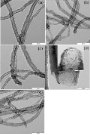


Morphology control of zinc oxide films via polysaccharide-mediated, low temperature, chemical bath deposition
Beilstein J. Nanotechnol. 2015, 6, 799–808, doi:10.3762/bjnano.6.83
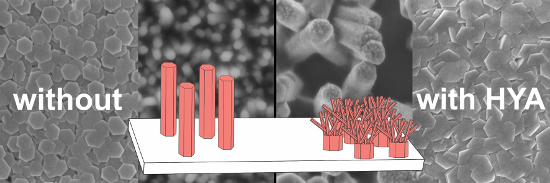
- both of which charged molecules can be chemisorbed by electrostatic interactions. In addition, the uncharged {100} faces of ZnO can support the physisorption of molecules. Such adsorption phenomena can influence the growth rates of the corresponding faces, leading to different crystal habits. Solvent



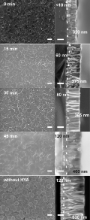

Self-assembled anchor layers/polysaccharide coatings on titanium surfaces: a study of functionalization and stability
Beilstein J. Nanotechnol. 2015, 6, 617–631, doi:10.3762/bjnano.6.63
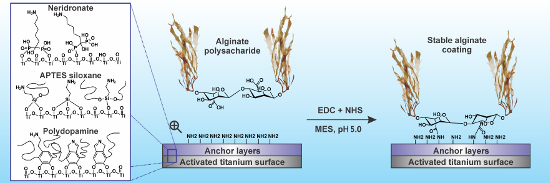
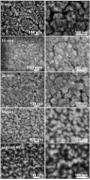
- titanium surfaces. Bio-related titanium surface modifications based on polysaccharides and synthetic polymers have been performed by physisorption and electrostatic interactions. In comparison with polylactide coatings, physisorbed alginate coatings are capable of exhibiting pronounced cell adhesion [17


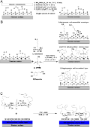
Silica micro/nanospheres for theranostics: from bimodal MRI and fluorescent imaging probes to cancer therapy
Beilstein J. Nanotechnol. 2015, 6, 546–558, doi:10.3762/bjnano.6.57
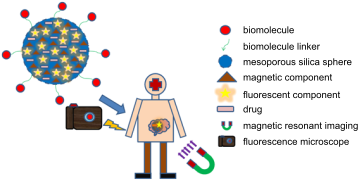
- electrostatic interactions. The prepared NPs were characterized by X-ray analysis, X-ray photoelectron sepectroscopy (XPS), TEM, PL spectroscopy and vibrating sample magnetometer. In XRD, five diffraction peaks were observed that were assigned to 220, 311, 400, 511 and 440 planes. These results suggested the


Synthesis, characterization, monolayer assembly and 2D lanthanide coordination of a linear terphenyl-di(propiolonitrile) linker on Ag(111)
Beilstein J. Nanotechnol. 2015, 6, 327–335, doi:10.3762/bjnano.6.31
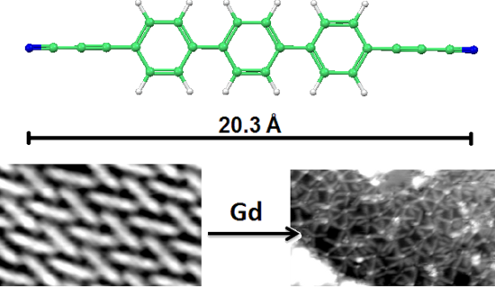
- the respect to the substrate within a given domain are present. The high-resolution STM topograph depicted in Figure 4a clearly indicates that the monolayer pattern is determined by non-covalent interactions between adjacent linkers, in particular electrostatic interactions [43][47][53]. The packing


Synthesis of boron nitride nanotubes and their applications
Beilstein J. Nanotechnol. 2015, 6, 84–102, doi:10.3762/bjnano.6.9
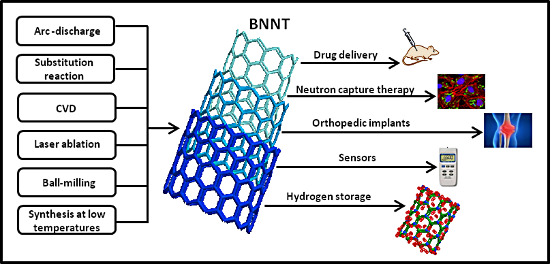
- investigation concerning the interactions of BNNTs with tryptophan (Trp), aspartic acid (Asp), and arginine (Arg) was also carried out [68]. It was found that the polar Asp and Arg interacted with the BNNT surface through the charge transfer and electrostatic interactions while Trp, a neutral amino acid, had no


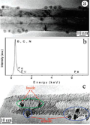


Liquid-phase exfoliated graphene: functionalization, characterization, and applications
Beilstein J. Nanotechnol. 2014, 5, 2328–2338, doi:10.3762/bjnano.5.242
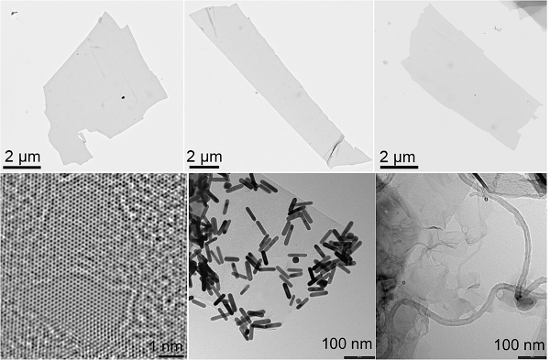
- -evolving centre of natural PSII by using functionalized graphene by the 1,3-dipolar cycloaddition with positively charged dendrons. The charged moieties recognize the inorganic tetraruthenate (Ru4POM) anionic catalyst by electrostatic interactions, as illustrated in Figure 8. The device produced by
- anions of Ru4POM in the charged functional moieties by complementary electrostatic interactions were introduced. Comparing the insertion of a shorter moiety by the diazonium arylation reaction with the positively charged dendrons attached by the 1,3-dipolar cycloaddition described before, we confirmed


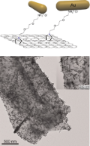


Effects of surface functionalization on the adsorption of human serum albumin onto nanoparticles – a fluorescence correlation spectroscopy study
Beilstein J. Nanotechnol. 2014, 5, 2036–2047, doi:10.3762/bjnano.5.212
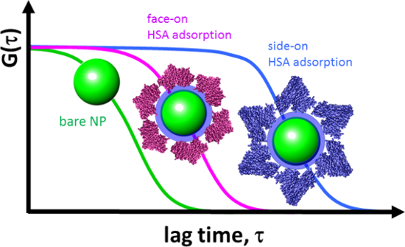
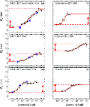
- with the charged NP surfaces [46]. The binding affinities were not governed by the net charge of the proteins (as specified by the isoelectric point) but rather by electrostatic interactions between localized charged regions on the protein and the NP surfaces [46]. An interesting temperature dependence
- monolayer arises if the HSA molecule adheres to the NP surface with one of its two large, triangular faces. We had suggested earlier that HSA adsorption is mediated by electrostatic interactions between a positively charged region on one of the large HSA faces (Figure 4a, red circle) and the negatively
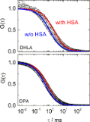
- comparison with NPs coated with small thiolated ligands. For the zwitterionic, DPA-coated QDs, K′D = 0.31 ± 0.06 µM, the affinity is more than an order of magnitude higher than for DHLA-QDs, presumably because of the additional electrostatic interactions between carboxylic acid side chains on the protein and



Electrostatic interplay: The interaction triangle of polyamines, silicic acid, and phosphate studied through turbidity measurements, silicomolybdic acid test, and 29Si NMR spectroscopy
Beilstein J. Nanotechnol. 2014, 5, 2026–2035, doi:10.3762/bjnano.5.211
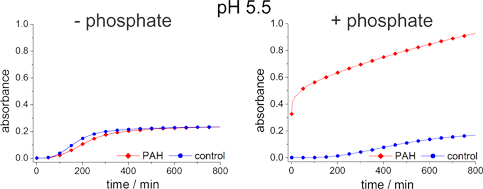
- charged for pH > 9.8. Hence, purely electrostatic interactions between the polyamine and monosilicic acid cannot be expected. In contrast to monosilicic acid, higher silicic acid oligomers/silica nanoparticles exhibit lower pKa values. For fumed silica, two different types of silanol groups are reported
- with pKa values of ca. 8 and 4.5 [46][47]. It can therefore be assumed that, in the relevant pH range of 5–7, the silica nanoparticles exhibit a negative surface charge. Electrostatic interactions will, therefore, occur between the positively charged polyamine and negatively charged higher silicic acid
- the sodium metasilicate solutions strongly enhances the absorbance at pH 6.8. That means the polyamine additive pronouncedly accelerates the aggregation process, which can be explained by the electrostatic interactions between the positively charged PAH and negative surface charges of higher silica


The surface properties of nanoparticles determine the agglomeration state and the size of the particles under physiological conditions
Beilstein J. Nanotechnol. 2014, 5, 1774–1786, doi:10.3762/bjnano.5.188
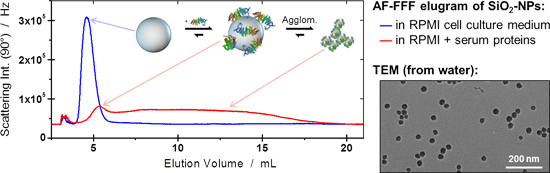
- Debye-length scale is an important value describing the distance of electrostatic interactions between colloids. At physiological salt concentrations (at approximately 150 mM salinity), the Debye length is of the order of 0.8 nm (for symmetric electrolytes such as sodium chloride). This leads to


Controlling the dispersion of supported polyoxometalate heterogeneous catalysts: impact of hybridization and the role of hydrophilicity–hydrophobicity balance and supramolecularity
Beilstein J. Nanotechnol. 2014, 5, 1749–1759, doi:10.3762/bjnano.5.185
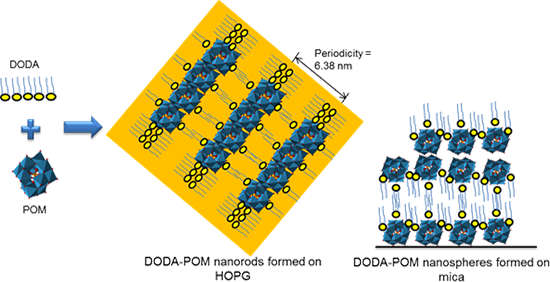
- -based catalysts with enhanced processability, recoverability, and reusability. Organic–inorganic hybridization can be achieved either, through electrostatic interactions between POM anions and a polyampholyte polymer [15], or through covalent functionalization of POM anions with an organic moiety [16
- hybrids are deposited. For instance, surfactant-encapsulated clusters of POM anions, formed through electrostatic interactions, were reported to form well-ordered straight nanorods on graphite [17], whereas hybrid materials formed through covalent functionalization of POM formed planar layer-by-layer


Hydrophobic interaction governs unspecific adhesion of staphylococci: a single cell force spectroscopy study
Beilstein J. Nanotechnol. 2014, 5, 1501–1512, doi:10.3762/bjnano.5.163
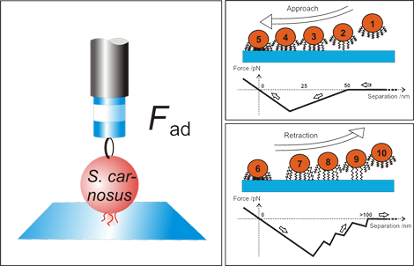
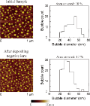
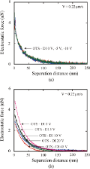
- involved [26]. Since hydrophilic and hydrophobic Si wafers differ in composition only by a 2.6 nm thin OTS-monolayer on the surface, the van der Waals forces are nearly identical [13][27]. Forces due to electrostatic interactions between the negatively charged bacterium and the two types of wafer surfaces
- , which are both negatively charged (Table 1), are repulsive. Since the streaming potential is 20% more negative on the hydrophilic Si wafer, different electrostatic interactions give rise to a difference of adhesion forces of only a factor of 1.2, yet we record differences in the range of factors 10 to


The study of surface wetting, nanobubbles and boundary slip with an applied voltage: A review
Beilstein J. Nanotechnol. 2014, 5, 1042–1065, doi:10.3762/bjnano.5.117
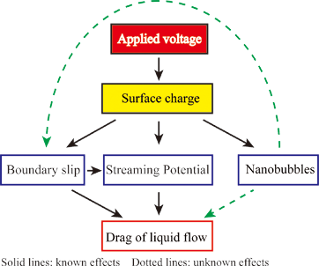
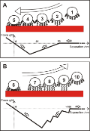
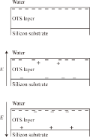
- protonation/deprotonation. The charged solid surface will lead to a layer in which ions are strongly attracted to the charged surface and do not move because of electrostatic interactions. Furthermore, there is another layer close to the surface called diffuse layer which is composed of ions that are










Energy transfer in complexes of water-soluble quantum dots and chlorin e6 molecules in different environments
Beilstein J. Nanotechnol. 2013, 4, 895–902, doi:10.3762/bjnano.4.101
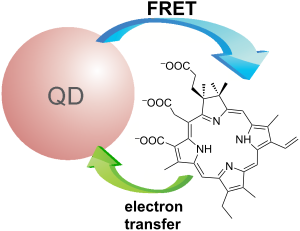
- dissipation occurs in all types of QD–Ce6 complexes and their contribution to the intracomplex energy transfer varies from 70% in covalently bonded complexes to ≈90% in complexes formed by electrostatic interactions and may be responsible for QD and Ce6 PL quenching. Electron transfer is the other possible
- electrostatic interactions in aqueous solution as a function of n. (a) Evolution of PL spectra of 5 nm QDs (dotted line) and sensibilized luminescence of Ce6 (solid line) extracted from PL spectra of the QD–Ce6 complexes. The PL excitation wavelength is 475 nm. The intensity of the Ce6 emission is multiplied by





