


Search results
Search for "functional materials" in Full Text gives 117 result(s) in Beilstein Journal of Nanotechnology.
Peptide-equipped tobacco mosaic virus templates for selective and controllable biomineral deposition
Beilstein J. Nanotechnol. 2015, 6, 1399–1412, doi:10.3762/bjnano.6.145
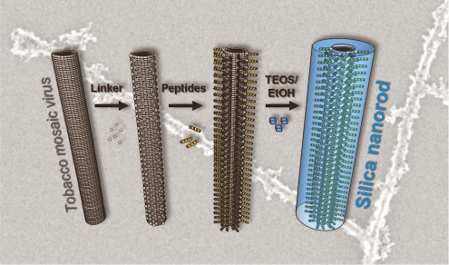
- , further expanding their application potential to miniaturized arrays and devices [66][67][68] and “smart” functional materials [31][69] for numerous purposes. TMV–inorganic hybrids will likely yield rigid and durable [70] technical components, which are also compatible with biological molecules and




Overview of nanoscale NEXAFS performed with soft X-ray microscopes
Beilstein J. Nanotechnol. 2015, 6, 595–604, doi:10.3762/bjnano.6.61
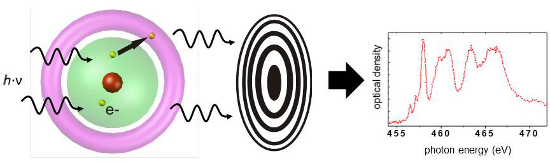
- Peter Guttmann Carla Bittencourt Institute for Soft Matter and Functional Materials, Helmholtz-Zentrum Berlin für Materialien und Energie GmbH, Albert-Einstein-Str. 15, 12489 Berlin, Germany ChIPS, University of Mons, B-7000, Mons, Belgium 10.3762/bjnano.6.61 Abstract Today, in material science
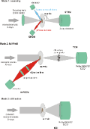


Nanoparticle shapes by using Wulff constructions and first-principles calculations
Beilstein J. Nanotechnol. 2015, 6, 361–368, doi:10.3762/bjnano.6.35
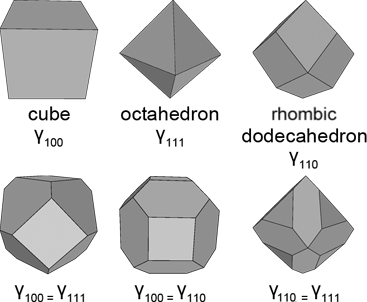
- successfully account for the nanoparticle shapes observed in experiments, including nanoparticles that interact strongly with their environment. Being a multi-scale, first-principles thermodynamics technique, it offers a parameter-free model for the key components of modern functional materials. Recent



Liquid-phase exfoliated graphene: functionalization, characterization, and applications
Beilstein J. Nanotechnol. 2014, 5, 2328–2338, doi:10.3762/bjnano.5.242
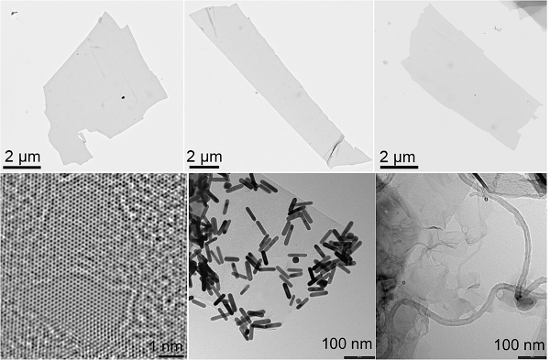
- of graphene into advanced functional materials forward. Keywords: applications; dispersions; graphene; organic functionalization; ultrasonication; Review Introduction Various methodologies for the production of graphene and chemically modified graphene have been described during the last years [1
- tailored design of advanced materials. The covalent organic functionalization of graphene is necessary for several purposes. For example: (1) to increase the dispersibility in common organic solvents and water and (2) to combine the properties of graphene with the properties of other functional materials
- pristine graphene. In order to introduce higher loadings of functional materials, stronger chemical reactions for graphene functionalization can be achieved by the attack of radical species. As reactive radical species, aryl diazonium salts are attractive and popular sources. These radicals covalently




Mechanical properties of sol–gel derived SiO2 nanotubes
Beilstein J. Nanotechnol. 2014, 5, 1808–1814, doi:10.3762/bjnano.5.191
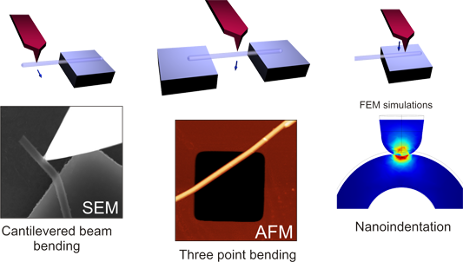
- grants 8420, 9007, Estonian Nanotechnology Competence Centre (EU29996), ERDF “TRIBOFILM” 3.2.1101.12-0028, “IRGLASS” 3.2.1101.12-0027, “Nano-Com” 3.2.1101.12-0010 and IUT2-25 project "Structure sensitive interaction mechanisms in functional materials at nanoscale". The authors are also grateful for


Controlling the dispersion of supported polyoxometalate heterogeneous catalysts: impact of hybridization and the role of hydrophilicity–hydrophobicity balance and supramolecularity
Beilstein J. Nanotechnol. 2014, 5, 1749–1759, doi:10.3762/bjnano.5.185
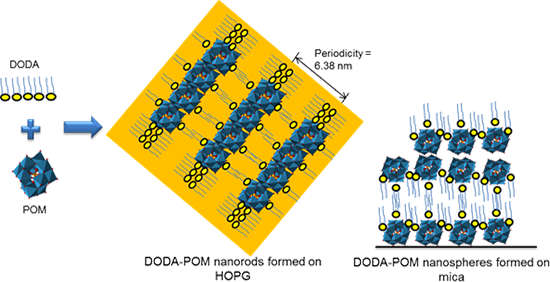
- oxoanionic clusters of early transition metals that have attracted growing interest for the development of advanced functional materials. A plethora of tunable properties combined with their ability to form hybrid materials with organic moieties, have opened up new avenues not only in the field of


The influence of molecular mobility on the properties of networks of gold nanoparticles and organic ligands
Beilstein J. Nanotechnol. 2014, 5, 1664–1674, doi:10.3762/bjnano.5.177
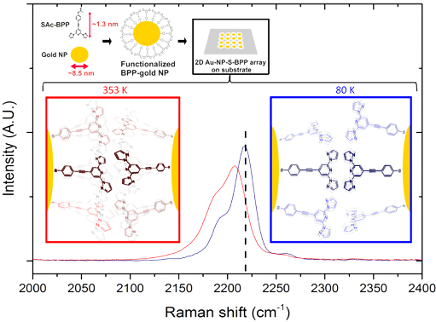
- nature, self-assembly is a bottom-up method to fabricate structures at all scales from nanometer-sized ingredients. In this way, new functional materials can be created with properties that are, in principle, based on the specific functionality of their building blocks [1]. An interesting approach, used

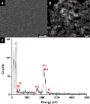

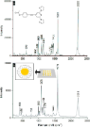


Synthesis of hydrophobic photoluminescent carbon nanodots by using L-tyrosine and citric acid through a thermal oxidation route
Beilstein J. Nanotechnol. 2014, 5, 1513–1522, doi:10.3762/bjnano.5.164
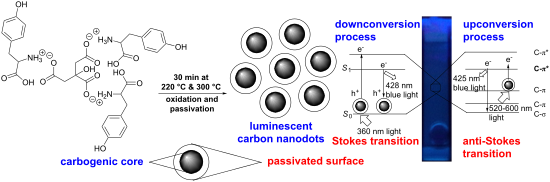
- : composite materials; fluorescence quenching; hydrophobic; luminescence; upconversion; Introduction The synthesis of fluorescent functional materials raised significant interest in order to understand biological processes such as DNA sequencing, detection of DNA-hybridization, protein sensing, single


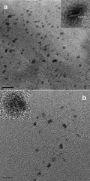


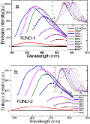


Visible light photooxidative performance of a high-nuclearity molecular bismuth vanadium oxide cluster
Beilstein J. Nanotechnol. 2014, 5, 711–716, doi:10.3762/bjnano.5.83
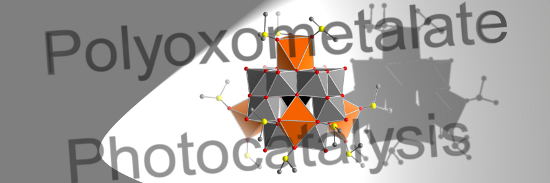
- the cluster shell [15][16][17][18][19]. Using this approach, materials for energy conversion and storage [20][21], homogeneous and heterogeneous catalysis [1][14], biomedical applications [22][23][24] and nanostructured functional materials [17][25][26] have been developed. We have recently started


In situ monitoring magnetism and resistance of nanophase platinum upon electrochemical oxidation
Beilstein J. Nanotechnol. 2013, 4, 394–399, doi:10.3762/bjnano.4.46
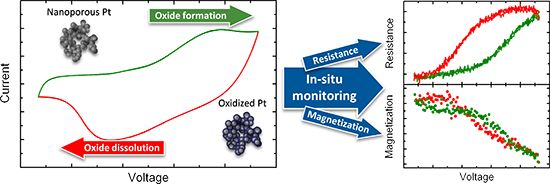
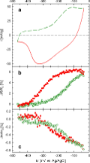
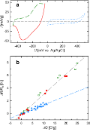
- Institute of Physics, University of Graz, Universitätsplatz 5, 8010 Graz, Austria 10.3762/bjnano.4.46 Abstract Controlled tuning of material properties by external stimuli represents one of the major topics of current research in the field of functional materials. Electrochemically induced property tuning


Porous polymer coatings as substrates for the formation of high-fidelity micropatterns by quill-like pens
Beilstein J. Nanotechnol. 2013, 4, 377–384, doi:10.3762/bjnano.4.44
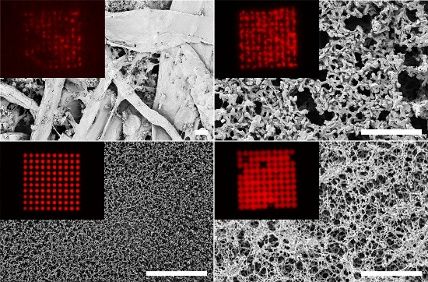
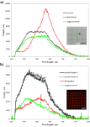
- Functional Materials (CNFM), University of Nebraska-Lincoln, USA Institute of Toxicology and Genetics (ITG), Karlsruhe Institute of Technology (KIT), Germany Physical Institute and Center for Nanotechnology (CeNTech), University of Münster, Germany Applied Physical Chemistry, Heidelberg University, Germany


Continuous parallel ESI-MS analysis of reactions carried out in a bespoke 3D printed device
Beilstein J. Nanotechnol. 2013, 4, 285–291, doi:10.3762/bjnano.4.31
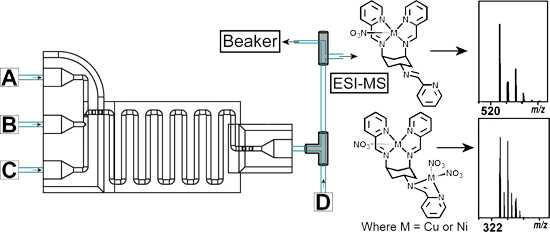
- investigating the use of various new print materials, for example active functional materials, to highlight the versatility and configurability of 3D printing and 3D-printed reactionware. We are also designing new geometries that will provide reaction conditions currently difficult to achieve with traditional


Electrospinning preparation and electrical and biological properties of ferrocene/poly(vinylpyrrolidone) composite nanofibers
Beilstein J. Nanotechnol. 2013, 4, 189–197, doi:10.3762/bjnano.4.19

- scientists because of its unique molecular structure and fascinating electronic properties and its potential applications in catalysis in organic synthesis, as functional materials, photosensitizers, stabilizers and conditioners, and in biochemistry and pharmaceuticals [13]. Fc decorated or incorporated into


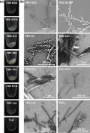
Towards atomic resolution in sodium titanate nanotubes using near-edge X-ray-absorption fine-structure spectromicroscopy combined with multichannel multiple-scattering calculations
Beilstein J. Nanotechnol. 2012, 3, 789–797, doi:10.3762/bjnano.3.88
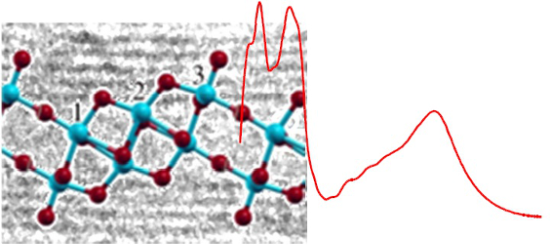
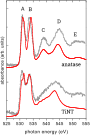
- Functional Materials, Albert-Einstein-Str. 15, 12489 Berlin, Germany 10.3762/bjnano.3.88 Abstract Recent advances in near-edge X-ray-absorption fine-structure spectroscopy coupled with transmission X-ray microscopy (NEXAFS–TXM) allow large-area mapping investigations of individual nano-objects with spectral



Macromolecular shape and interactions in layer-by-layer assemblies within cylindrical nanopores
Beilstein J. Nanotechnol. 2012, 3, 475–484, doi:10.3762/bjnano.3.54
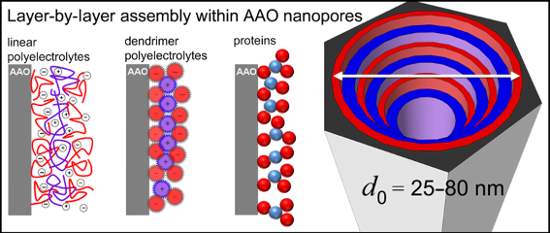
- adsorbing components, to generate multilayered structures. Different functional materials can be stepwise incorporated by LbL, within a single surface structure by electrostatic self-assembly [3][4], molecular-recognition pairs [5][6][7], or covalent-bond formation [8]. Homogeneous and heterogeneous layered




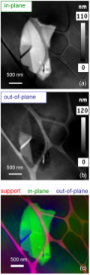
X-ray absorption spectroscopy by full-field X-ray microscopy of a thin graphite flake: Imaging and electronic structure via the carbon K-edge
Beilstein J. Nanotechnol. 2012, 3, 345–350, doi:10.3762/bjnano.3.39
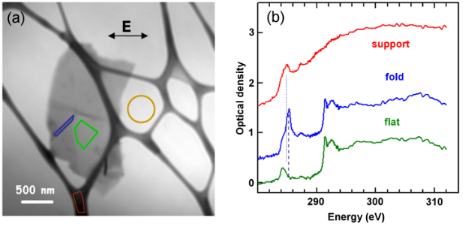
- Jean Rouxel (IMN), Université de Nantes, CNRS, Nantes, France Helmholtz-Zentrum Berlin für Materialien und Energie GmbH, Institute for Soft Matter and Functional Materials, D-12489 Berlin, Germany 10.3762/bjnano.3.39 Abstract We demonstrate that near-edge X-ray-absorption fine-structure spectra


Biomimetic materials
Beilstein J. Nanotechnol. 2011, 2, 135–136, doi:10.3762/bjnano.2.16

- layer of our planet down to the surfaces of lotus leaves or Salvinia water ferns. And these are only two out of the 20 million species which all have secrets to be revealed: Biomimetic materials provide innovative solutions for the design of a new generation of bio inspired functional materials. Wilhelm



