


Search results
Search for "lateral resolution" in Full Text gives 112 result(s) in Beilstein Journal of Nanotechnology.
Imaging ultra thin layers with helium ion microscopy: Utilizing the channeling contrast mechanism
Beilstein J. Nanotechnol. 2012, 3, 507–512, doi:10.3762/bjnano.3.58
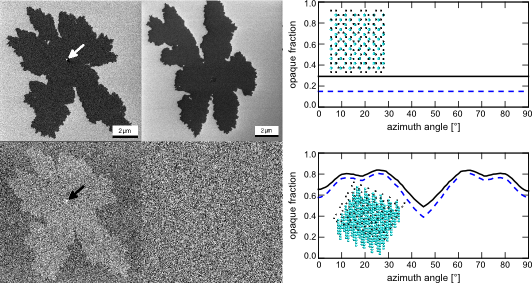
- build-up in the irradiated sample area [5]. Contrast in SE images is primarily based on differences in work function and the yield of SE generation in the region near the surface [6]. As a consequence, HIM has an unprecedented surface sensitivity in SE mode. Together with the high lateral resolution
- of SEs in carbon is 1 nm [6]. The high contrast between the different patches, and the high lateral resolution, are a result of this characteristic of the SEs in HIM. All the SEs contributing to the different contrast patches are generated under identical conditions, nearly exclusively within a thin
- are dominated by the ions stopped deep in the sample, a comparable relative change will occur closer to the surface for the helium particles that will eventually be backscattered. This will have a negative influence on the lateral resolution that can be achieved in BSHe images. SE images will not be


Mapping mechanical properties of organic thin films by force-modulation microscopy in aqueous media
Beilstein J. Nanotechnol. 2012, 3, 464–474, doi:10.3762/bjnano.3.53
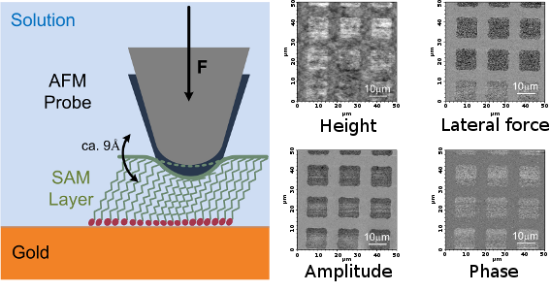
- important role in a broad range of applications. Although force-modulation microscopy (FMM) is used to map the apparent elastic properties of such films with high lateral resolution in air, it has rarely been applied in aqueous media. In this letter we describe the use of FMM to map the apparent elastic
- lateral resolution is important for a broad range of applications in materials science [1][2][3][4][5][6][7][8][9][10] and in the life sciences [11][12][13][14][15][16][17][18][19][20]. The atomic force microscope (AFM) [21], due to its force sensitivity and ability to image surface topography with high
- lateral resolution, is ideally suited to map these properties. Intermittent AFM imaging modes, such as tapping mode [22][23][24], and pulsed-force mode [12][25][26][27][28], have been developed for soft, often biological, samples in liquid environments. Although these imaging modes reduce the lateral



Parallel- and serial-contact electrochemical metallization of monolayer nanopatterns: A versatile synthetic tool en route to bottom-up assembly of electric nanocircuits
Beilstein J. Nanotechnol. 2012, 3, 134–143, doi:10.3762/bjnano.3.14
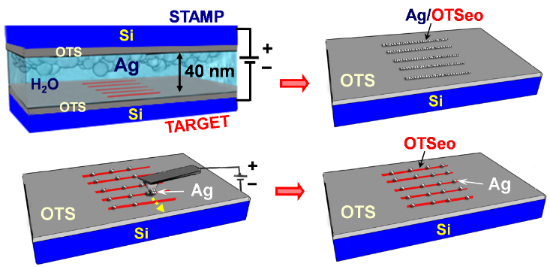
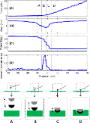
- regions and the narrow lines of the same template feature, respectively. Because of the high density of nanoparticles in region A, the lateral resolution of individual particles in the topographic image of this region (left) is poor, particles widths being here obtained from the simultaneously recorded


Substrate-mediated effects in photothermal patterning of alkanethiol self-assembled monolayers with microfocused continuous-wave lasers
Beilstein J. Nanotechnol. 2012, 3, 65–74, doi:10.3762/bjnano.3.8
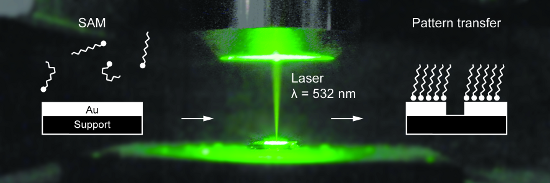
- continuous-wave lasers. The lateral resolution, generally, depends on both the type of the organic monolayer and the nature of the substrate. In previous studies we reported on photothermal patterning of distinct types of SAMs on Si supports. In this contribution, a systematic study on the impact of the
- patterning technique. Because of the strongly temperature-dependent thermal conductivity of Si, surface-temperature profiles on Au/Si substrates are very narrow ensuring a particularly high lateral resolution. At a 1/e spot diameter of 2 µm, fabrication of subwavelength structures with diameters of 300–400
- optical diffraction limit, laser nanofabrication encounters significant challenges. Typically, minimum structure sizes are not much smaller than the wavelength of the laser source [13]. A means to extend the lateral resolution of laser patterning techniques into the subwavelength range is to take




Distinction of nucleobases – a tip-enhanced Raman approach
Beilstein J. Nanotechnol. 2011, 2, 628–637, doi:10.3762/bjnano.2.66
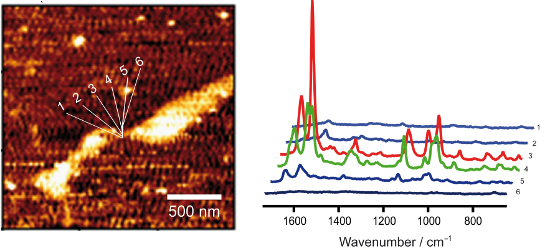
- of labeling or amplification steps. Here we investigate the intrinsic properties of tip-enhanced Raman scattering (TERS) towards the development of a novel, label-free, direct sequencing method. It is known that TERS allows the acquisition of spectral information with high lateral resolution and
- electromagnetic field in the vicinity of the particle and consequently an increase of the Raman signal. Due to the size of the particle a lateral resolution of <20 nm can be reached [4][5][6][7][8]. The feasibility of TERS for biological samples has been exemplified by studies of specific molecules [9], single
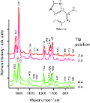
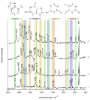
- contamination. The spectra look remarkably similar and the main spectral features of uracil can be assigned. Minor variations in band intensity ratios and positions can be attributed to the previously discussed effects that appear when measuring with such a high lateral resolution [30]. Surprisingly, the



Distinguishing magnetic and electrostatic interactions by a Kelvin probe force microscopy–magnetic force microscopy combination
Beilstein J. Nanotechnol. 2011, 2, 552–560, doi:10.3762/bjnano.2.59
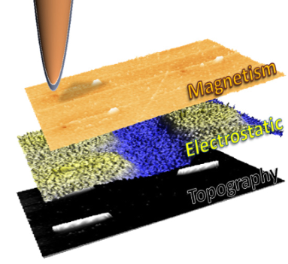
- different short, medium and long range interactions with high sensitivity and lateral resolution. The spreading of this technique was possible thanks to the development of specific operation modes and to the functionalization of the probes. Thus, regarding the mode employed, SFM can be used to characterize
- recorded at a given distance from the surface using the so-called lift mode [31] or retrace mode [32]. Typical distances for this second scan are between 20 nm and 50 nm. However, in order to improve both the lateral resolution and sensitivity, especially when dealing with materials with weak magnetization


Tip-enhanced Raman spectroscopic imaging of patterned thiol monolayers
Beilstein J. Nanotechnol. 2011, 2, 509–515, doi:10.3762/bjnano.2.55
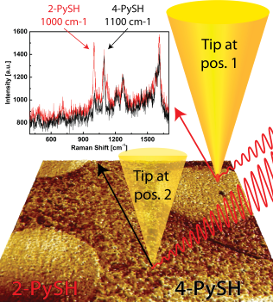
- the lateral resolution of TERS was not used to its full potential, but, by exploiting the signal enhancement, weak scatterers could be identified over a larger area. Thiols are used for several purposes. They can form a very thin protective layer on metal surfaces [8] or can be employed in sensorics
- ]. Single point TERS experiments have already been presented by our group in a study of the spectral and binding properties of 4-PySH on gold [29]. By using TERS, the topography and the chemical composition of molecular monolayers can be measured simultaneously during Raman imaging with high lateral
- resolution, around 15 nm, as demonstrated for areas of less than 500 × 500 nm2 [30]. As shown here, large sample areas can also be measured to gain information from coarser structures. Traditionally this is the scale where confocal Raman microscopy has its strengths, but due to the low signal intensity from




The role of the cantilever in Kelvin probe force microscopy measurements
Beilstein J. Nanotechnol. 2011, 2, 252–260, doi:10.3762/bjnano.2.29
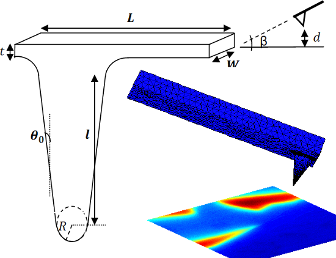
- obtain high lateral resolution. Colchero et al. [12] calculated the influence of the cantilever on the KPFM resolution, and several groups [13][14][15] derived analytic expressions for the cantilever electrostatic force. To the best of our knowledge, despite the above studies, the accurate role of the
- of relative to a model that takes into account only the tip. In addition, since only a scaling factor is introduced in Equation 2, the cantilever does not affect the lateral resolution, but may strongly affect the CPD absolute value, even in high resolution UHV KPFM measurements, as we demonstrate
- below. It should be noted that our model does not include signal-to-noise considerations, which may reduce the lateral resolution due to the above scaling. Results and Discussion Cantilever influence on the system PSF and force analysis The influence of the cantilever was calculated for two different


Defects in oxide surfaces studied by atomic force and scanning tunneling microscopy
Beilstein J. Nanotechnol. 2011, 2, 1–14, doi:10.3762/bjnano.2.1
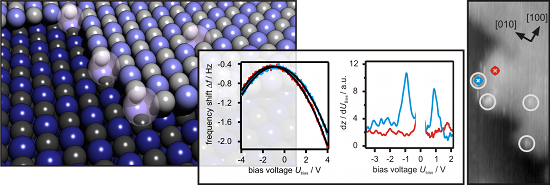
- . This means on the other hand, the contact potential difference is actually 2 to 10 times larger than recorded. Furthermore, we conclude that the tip is influenced by these defects over a distance of approximately 2–3 nm, which might be a reasonable estimation of the tip size. This gives also the lateral
- resolution of the measurements. As shown in [36] and [49], the determined contact potential difference depends also on the tip-sample distance. In general, a smaller distance increases the size of the interaction and decreases the integration area, this means the determined difference of the contact


Magnetic interactions between nanoparticles
Beilstein J. Nanotechnol. 2010, 1, 182–190, doi:10.3762/bjnano.1.22
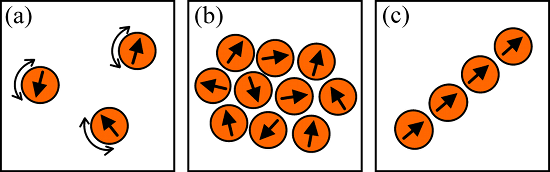
- magnetic field component of a thin sample with a lateral resolution of a few nanometers [32][33]. From the obtained images, the influence of dipolar interactions between magnetic nanoparticles can be very apparent. For example, this technique has resolved an almost linear magnetic flux along the chain



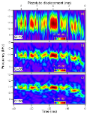
Tip-sample interactions on graphite studied using the wavelet transform
Beilstein J. Nanotechnol. 2010, 1, 172–181, doi:10.3762/bjnano.1.21
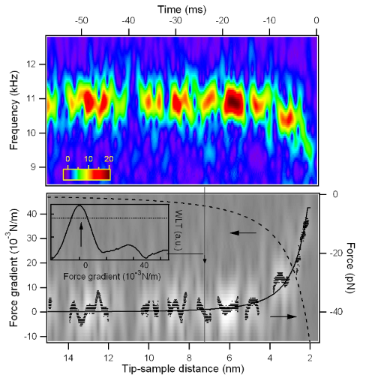
- radius of curvature given by the manufacturer (R = 10 nm). To promote this technique from proof of principle to a measurement of the Hamaker constant with a good lateral resolution, a thorough characterization of the tip radius of curvature is needed. Finally, we note that the whole force curve is




Preparation, properties and applications of magnetic nanoparticles
Beilstein J. Nanotechnol. 2010, 1, 21–23, doi:10.3762/bjnano.1.4

- small statistical significance like in case of High Resolution Transmission Electron Microscopy (HR-TEM) and Spin Polarized Scanning Tunneling Microscopy (SP-STM) or the necessary lateral resolution is only on the verge of being approached as in case of synchrotron-based microscopy methods like



