Search results
Search for "matrix" in Full Text gives 846 result(s) in Beilstein Journal of Nanotechnology. Showing first 200.
Interaction of graphene oxide with tannic acid: computational modeling and toxicity mitigation in C. elegans
Beilstein J. Nanotechnol. 2024, 15, 1297–1311, doi:10.3762/bjnano.15.105
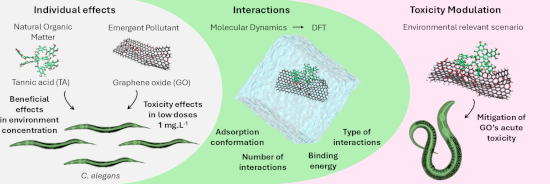
- modeling, including reactive classical molecular dynamics and ab initio calculations, we reveal that TA preferentially binds to the most reactive sites on GO surfaces via the oxygen-containing groups or the carbon matrix; van der Waals interaction forces dominate the binding energy. TA exhibits a dose


Enhanced catalytic reduction through in situ synthesized gold nanoparticles embedded in glucosamine/alginate nanocomposites
Beilstein J. Nanotechnol. 2024, 15, 1227–1237, doi:10.3762/bjnano.15.99
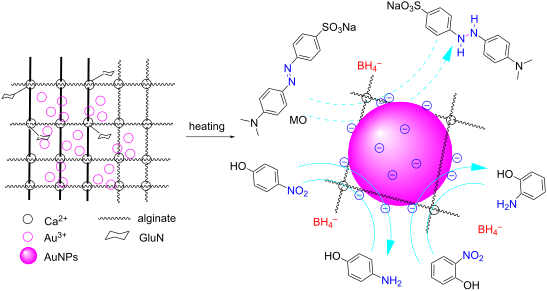
- Au3+ into Au(0) during the synthesis of the nanocomposite AuNPs@GluN/Alg without additional chemicals. Alginate serves as a stabilizing agent. In the ionotropic gelation mechanism, the cross-linking matrix of Ca–alginate, formed by Ca2+ ions and carboxyl groups in sodium alginate, becomes insoluble



AI-assisted models to predict chemotherapy drugs modified with C60 fullerene derivatives
Beilstein J. Nanotechnol. 2024, 15, 1170–1188, doi:10.3762/bjnano.15.95
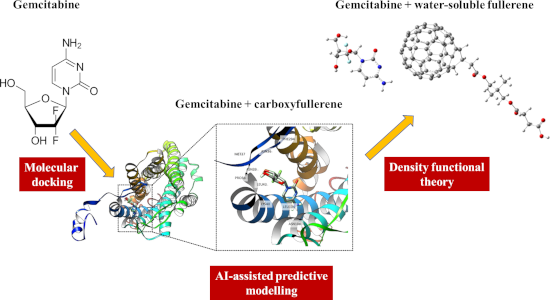
- (Supporting Information File 1) shows the correlation matrix between the ten most relevant quantum descriptors used to obtain the mathematical models. There are significant correlations between the molecular weight and the polarizability of about 0.93 and between polarizability and the number of rings of
- several drugs. The quantitative descriptors included in the produced models are discussed next. Table 3 contains the used quantitative descriptors and the importance that each one has in the mathematical models. The docking score was the predicted variable in all cases. In addition, the correlation matrix
- (Supporting Information File 1, Figure S1) was used to build the models. Among the IBM Watson AI models, the first one was obtained using all the initially proposed quantitative descriptors (Table 1). In the second and fourth models, polarizability was not used because, as shown in the correlation matrix, it


Photocatalytic methane oxidation over a TiO2/SiNWs p–n junction catalyst at room temperature
Beilstein J. Nanotechnol. 2024, 15, 1132–1141, doi:10.3762/bjnano.15.92
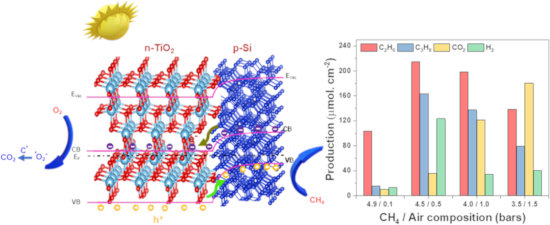
- photocatalytic efficiency. For years, doping of metal nanoparticles (NPs) into a semiconductor matrix has been extensively studied to enhance photocatalytic CH4 oxidation performance. Metal NPs in, for example, Au/TiO2, Au@Pd/ZnO, and Pt@Cu/TiO2 composites act as electron scavenger centers and own more free


Direct electron beam writing of silver using a β-diketonate precursor: first insights
Beilstein J. Nanotechnol. 2024, 15, 1117–1124, doi:10.3762/bjnano.15.90

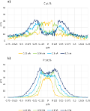
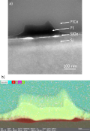
- . Compared to the typically obtained granular structure of metallic nanoparticles in a carbonaceous matrix, the deposit composition and chemistry evolution are unexpected. The resulting deposit exhibits a carbon-rich body with a surface decorated with silver nanoparticles and an interfacial layer of
- ’, transitioning into the typical granular deposit structure of elemental metal particles embedded in a carbonaceous matrix sitting on top of the relatively uniform interfacial layer of elemental silver (cf. Figure 1e). The second halo region H2 depicted in Figure 1f becomes thinner overall and shows a high
- or Hhfac, removing most of the ligand elements. A second important factor here could be the thermal energy input from the elevated stage temperature of 60 °C, which increases the mobility of the formed silver atoms and clusters in the carbonaceous matrix. Finally, collisional momentum transfer from


Recent updates in applications of nanomedicine for the treatment of hepatic fibrosis
Beilstein J. Nanotechnol. 2024, 15, 1105–1116, doi:10.3762/bjnano.15.89
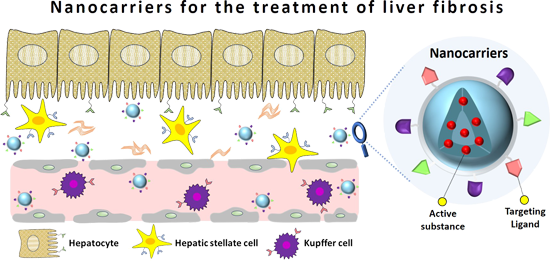
- to the trans-differentiation of hepatic stellate cells (HSCs) into collagen-producing myofibroblasts, resulting in the progressive accumulation of extracellular matrix (ECM) protein [12]. The condition may be caused by various etiologies, including viral hepatitis infection, alcohol abuse, and
- , including the reduced expression of collagen I and alpha smooth muscle actin. These NPs also contributed to proteolytic breakdown of collagen by up-regulation of matrix metalloproteinases (MMPs) and down-regulation of tissue inhibitors of MMPs (TIMPs). TiO2 NPs also could induce enhanced leakiness and drug
- overexpressed in activated HSCs and strongly related to the transformation of HSCs into matrix-producing myofibroblasts during liver fibrinogenesis [68][69]. The HSC-mediated antifibrotic drugs work through several mechanisms, including inhibition of fibrogenesis (ECM synthesis), inhibition of HSC proliferation


Unveiling the potential of alginate-based nanomaterials in sensing technology and smart delivery applications
Beilstein J. Nanotechnol. 2024, 15, 1077–1104, doi:10.3762/bjnano.15.88
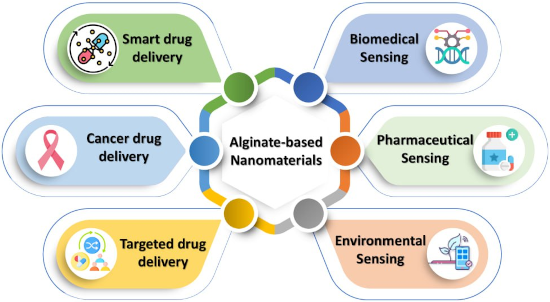
- , these nuclei grow and accumulate within the alginate matrix, resulting in the formation of alginate-based nanoparticles. The morphology and size of the nanoparticles can be controlled by adjusting various specifications of materials such as the concentration of alginate, metal ion precursor, pH, and
- therapy [78]. Alginate-based fully natural nanoparticles were developed and used for cancer treatment. Pakistani scientists investigated amygdalin in an alginate–chitosan-based matrix [79]. Amygdalin is a natural material and it has very strong anticancerous activity. Scientists achieved over 90% drug
- alginate matrix in which carboxyl groups of alginate were cross-linked with methacrylate and dialdehyde. They used this matrix as a sealant patch for the lungs and for the controlled delivery of soluble drugs such as DOX. The oxidation of alginate produces functional aldehyde groups, which that can form


Interface properties of nanostructured carbon-coated biological implants: an overview
Beilstein J. Nanotechnol. 2024, 15, 1041–1053, doi:10.3762/bjnano.15.85
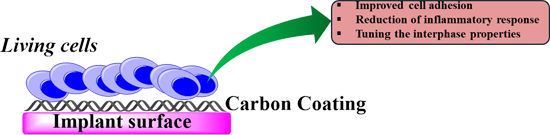
- because of the efforts required for achieving a homogenous dispersion in an inorganic–organic matrix [22][23][24]. In this short review, we are discussing nanostructured and nanosized carbon-based materials used to improve the durability and physicochemical properties of biological implants as summarized
- structural polymorphism [40] (arrangement, number, and order of layers), the electronic coupling between different layers, and the matrix in which graphene is embedded [41]. Indeed, the matrix plays a pivotal role owing to the ultimate surface-to-volume ratio and the poor electrostatic screening displayed by
- onto the surface, forming a matrix composed by platelets and coagulation cascade components. This process triggers the inflammatory response of neutrophils, which attempt to degrade the implant through phagocytosis and the release of reactive oxygen species. Macrophages play a key role changing from



Electrospun nanofibers: building blocks for the repair of bone tissue
Beilstein J. Nanotechnol. 2024, 15, 941–953, doi:10.3762/bjnano.15.77
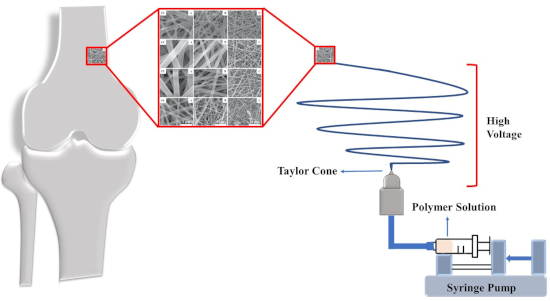
- because of their extremely large surface area-to-volume ratio, small pore size, and high porosity. Nanofibers are known to be highly functional systems with the ability to mimic the structure and function of the natural bone matrix, facilitating osteogenesis for cell proliferation and bone regeneration
- of calcium and phosphate and the protection of bone marrow are among the characteristics of bone tissue [9][10]. Bone tissue, which is a special form of connective tissue, consists of cells, fibers, and extracellular matrix; histologically, it can be divided into two bone types, namely, woven bone
- surrounding muscle tissue as well. It plays an important role in bone growth and fracture healing [18][19]. The composition of bone tissue Any bone in the body has both an organic and inorganic composite structure. The composition of extracellular bone matrix can be estimated as approximately 60–65% organic


Effects of cutting tool geometry on material removal of a gradient nanograined CoCrNi medium entropy alloy
Beilstein J. Nanotechnol. 2024, 15, 925–940, doi:10.3762/bjnano.15.76
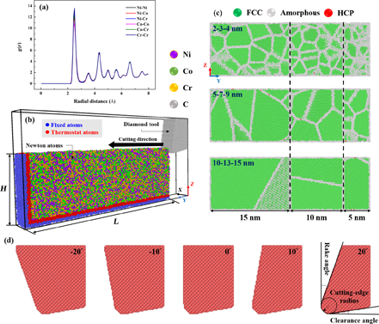
- ][31]. The number of grain boundaries increases with decreasing average grain size, resulting in a more significant increase in local stress in the cutting zone and at the grain boundaries of the matrix [32]. Moreover, the average von Mises stress decreases as the average grain size increases. In









Water-assisted purification during electron beam-induced deposition of platinum and gold
Beilstein J. Nanotechnol. 2024, 15, 884–896, doi:10.3762/bjnano.15.73
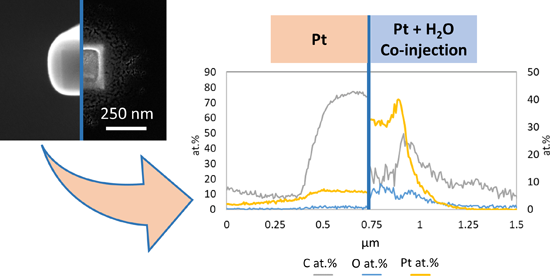
- carbon matrix [15][17][18]. Variation of deposition conditions [15] and post-deposition purifications [18][19][20][21] have all led to an increased Pt content in the deposits, but a straightforward method of obtaining pure material is still a challenge. However, Shawrav et al. [22] managed to deposit





A review on the structural characterization of nanomaterials for nano-QSAR models
Beilstein J. Nanotechnol. 2024, 15, 854–866, doi:10.3762/bjnano.15.71
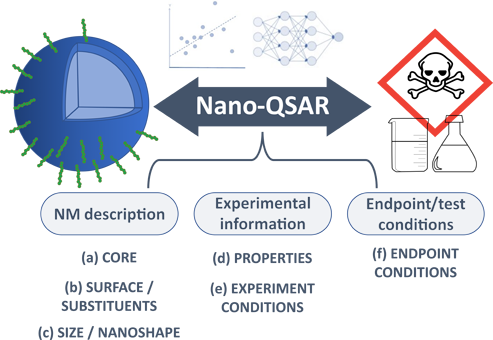
- only based on the structure of the functionalization group [53][54]. Coating descriptors are not only found in common-core models. For example, Kleandrova et al. included descriptors based in the bond adjacency matrix for the organic coating if present (a zero was used for uncoated nanoforms) [18


Intermixing of MoS2 and WS2 photocatalysts toward methylene blue photodegradation
Beilstein J. Nanotechnol. 2024, 15, 817–829, doi:10.3762/bjnano.15.68
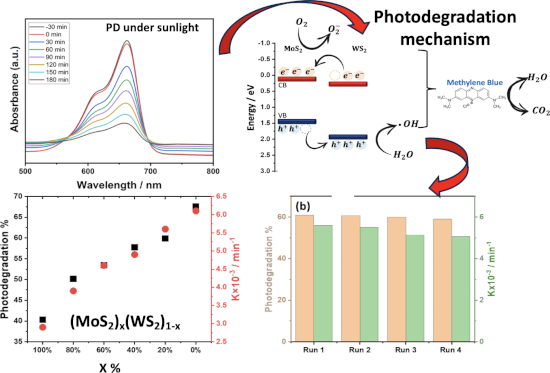
- of Mo and W, in Figure 5h and Figure 5i. As it can be seen, the WS2 catalyst appeared to be well embedded within the MoS2 matrix indicating a successful intermixing of both phases. Photodegradation measurements To examine the photocatalytic performance of MoS2 and WS2 towards the PD of MB, we first


Electrospun polysuccinimide scaffolds containing different salts as potential wound dressing material
Beilstein J. Nanotechnol. 2024, 15, 781–796, doi:10.3762/bjnano.15.65
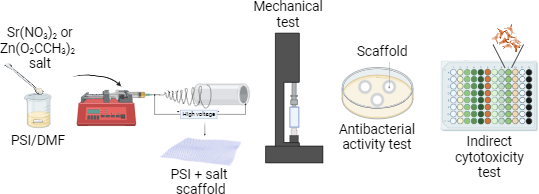
- , and fibers can be produced with uniform diameters in a controlled way [13][14]. Electrospun fibers are similar to macromolecule networks (e.g., collagen, fibrinogen, elastin) around the cells, which are called extracellular matrix (ECM). The ECM has fiber diameters in the size range of 50–500 nm and



Simultaneous electrochemical determination of uric acid and hypoxanthine at a TiO2/graphene quantum dot-modified electrode
Beilstein J. Nanotechnol. 2024, 15, 719–732, doi:10.3762/bjnano.15.60
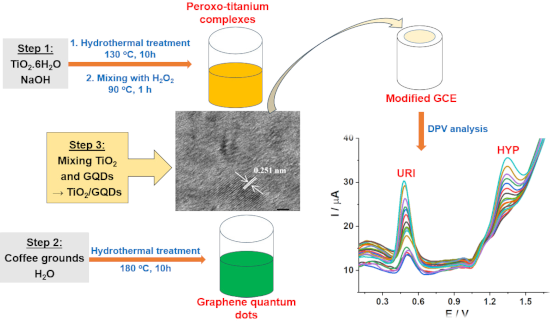
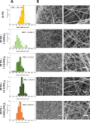
- nm that consist of fine nanoparticles (Figure 3a), while that of GQDs shows fine spherical particles around 3–5 nm with high depression. In the composite sample, TiO2 nanoparticles of around 100 nm can be seen to be highly dispersed in the GQDs matrix (Figure 3c). The TiO2 particles in TiO2/GQDs in


Gold nanomakura: nanoarchitectonics and their photothermal response in association with carrageenan hydrogels
Beilstein J. Nanotechnol. 2024, 15, 678–693, doi:10.3762/bjnano.15.56

- within the gel matrix since the concentration of AuNMs and AuNRs incorporated into the k-CG hydrogels was the same. Therefore, it can be assumed that AuNMs due to their outward concave growth at the edges provided more surface area and greater stability in k-CG hydrogels, leading to greater photothermal






Radiofrequency enhances drug release from responsive nanoflowers for hepatocellular carcinoma therapy
Beilstein J. Nanotechnol. 2024, 15, 569–579, doi:10.3762/bjnano.15.49
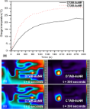
- head coil. The parameters of the T1 mapping sequences were as follows: repetition time (TR), 7.02 ms; echo time (TE), 1.87, 2.1, 2.45, 2.75, and 3.69 ms; field of view (FOV), 234 × 300 mm; matrix, 280 × 512; slice thickness, 1.5 mm; and bandwidth, 260 Hz/Px. The parameters of the T2 mapping sequences
- were as follows: TR 1220 ms; TE, 13.8, 27.6, 41.4, 55.2, and 69 ms; FOV, 159 × 159 mm; matrix, 384 × 384; slice thickness, 3 mm; and bandwidth, 228 Hz/Px. Finally, T1/T2 was calculated and concentration/relaxation rate curves were constructed. Statistical analysis Statistical Package for the Social


Cholesterol nanoarchaeosomes for alendronate targeted delivery as an anti-endothelial dysfunction agent
Beilstein J. Nanotechnol. 2024, 15, 517–534, doi:10.3762/bjnano.15.46
- -1,1-bisphosphonic acid) is a nitrogenous bisphosphonate with high affinity for the bone matrix of hydroxyapatite, chelating capacity of divalent cations, and anti-osteoclast activity, widely used in clinical settings as an anti-resorptive agent in osteoporosis [7][8][9]. ALN is known to reduce
- matrix, typical of cardiovascular pathologies, and is desorbed from it in an acid medium, locally reaching micro- and even millimolar concentrations [18]. Delivering high doses of ALN to extra-osseous targets, such as blood cells or inflamed vascular walls, in order to profit from its anti-inflammatory
- , had an anti-matrix metalloproteinase (MMP) effect. Free ALN caused a statistically not significant decrease of MMP activity. However, the endocytosis of 50 μg TL/mL nanoARC-Chol(ALN) yielded the highest anti-MMP2 activity (Figure 8). A high proportion of archaeolipids from H. tebenquichense





Photocatalytic degradation of methylene blue under visible light by cobalt ferrite nanoparticles/graphene quantum dots
Beilstein J. Nanotechnol. 2024, 15, 475–489, doi:10.3762/bjnano.15.43
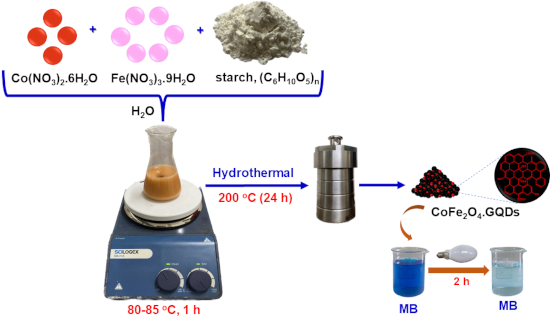
- this study, we describe an eco-friendly facile hydrothermal method to prepare magnetic CF/GQDs nanocomposites. The CF nanoparticles, 8–10 nm in diameter, were highly dispersed in a graphene quantum dot matrix and directly formed at 200 °C. Stacking GQDs sheets onto the CF nanoparticles resulted in CF
- expected. Figure 5 shows that the elements, such as iron and cobalt, are evenly distributed in the GQDs matrix. No other elements were found, indicating no impurities in CF/GQDs. The Fe/Co molar ratio of 2.05 in CF/GQDs is very close to 2, the Fe/Co initial ratio. As depicted in Figure 6a, the CF/GQDs




Fabrication of nanocrystal forms of ᴅ-cycloserine and their application for transdermal and enteric drug delivery systems
Beilstein J. Nanotechnol. 2024, 15, 465–474, doi:10.3762/bjnano.15.42
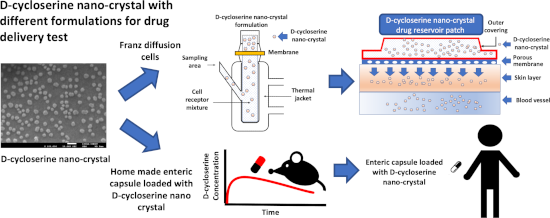
- , matrix, and microneedle systems [24][25][26]. In addition, enteric-coated solid dosage forms for oral administration have shown significant improvement in providing better absorption and targeted delivery [27][28]. In this study, due to high water solubility of DCS (Log P = −1.72) and difficulty to
- dissolving DCS in organic solvents to fabricate the matrix patch formulation, only reservoir patch formulations of DCS in well-suspended (DCS nanocrystals) or emulsified (DCS water solution) forms were feasible to evaluate transdermal drug delivery. Coating drugs with pharmaceutically biocompatible enteric


Classification and application of metal-based nanoantioxidants in medicine and healthcare
Beilstein J. Nanotechnol. 2024, 15, 396–415, doi:10.3762/bjnano.15.36
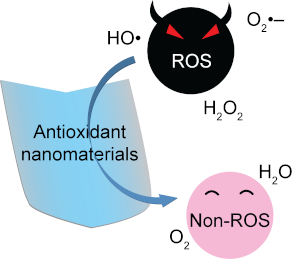
- radicals, preventing oxidative stress and cellular damage thanks to their diverse size and surface properties. Administering platinum NPs to transient middle cerebral artery occlusion (tMCAO) mice significantly decreased the infarct volume, matrix metalloproteinase-9 (MMP-9) activation, and the generation


On the mechanism of piezoresistance in nanocrystalline graphite
Beilstein J. Nanotechnol. 2024, 15, 376–384, doi:10.3762/bjnano.15.34
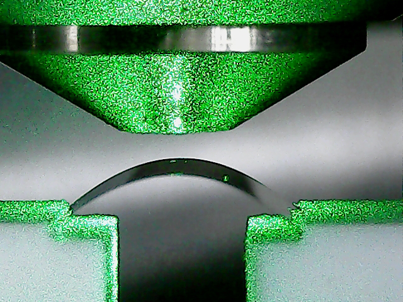
- Figure 2c, and the fit parameters are given in Table 1. The model was initially given for a matrix in which conducting particles are dispersed in a polymer matrix and are separated by tunnel junctions. In this model, the conductivity in the film is determined by the number of conductive paths, N, and the
- can be considered as a matrix of grains and grain boundaries (GBs), where the grains are separated by the GBs and have different resistivities [31]. Hence, the tunneling + destruction model might indeed be an appropriate physical representation of the nano/microstructure of NCG. The model explains


Nanomedicines against Chagas disease: a critical review
Beilstein J. Nanotechnol. 2024, 15, 333–349, doi:10.3762/bjnano.15.30
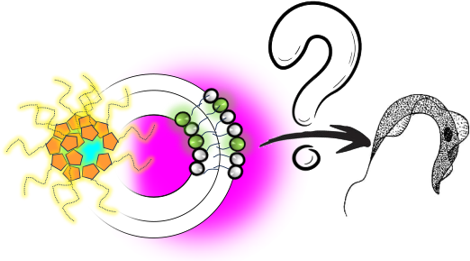
- hypertrophy and parasite load, chronic inflammation, fibrosis, and the levels and activities of cardiopathogenic biomarker enzymes and cytokines/chemokines (IL-1β, TNF-α, IL-6, and CCL5), matrix metalloproteinases (MMP-2 and MMP-9), and inducible enzymes (cyclooxygenase and nitric oxide synthase) implicated
- microfluidics, are still too costly for routine research in developing countries [138][139]. The therapeutic performance of intravenous nanomedicines strongly depends on the anatomical pathological context, mainly on the extent of inflammation or retention permeation effect, and the extracellular matrix

Comparative electron microscopy particle sizing of TiO2 pigments: sample preparation and measurement
Beilstein J. Nanotechnol. 2024, 15, 317–332, doi:10.3762/bjnano.15.29
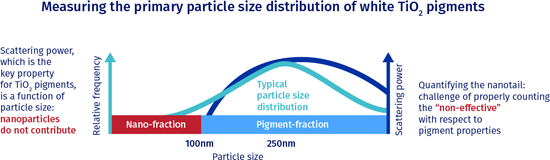
- and carbon black pigment in an oily matrix [22]. (This procedure is very close to ISO 787-24). The L* value represents the ability of a titanium dioxide pigment to efficiently scatter light, whereas the b* value indicates whether the scattered light has longer or shorter wavelength, that is, whether


Quantitative wear evaluation of tips based on sharp structures
Beilstein J. Nanotechnol. 2024, 15, 230–241, doi:10.3762/bjnano.15.22
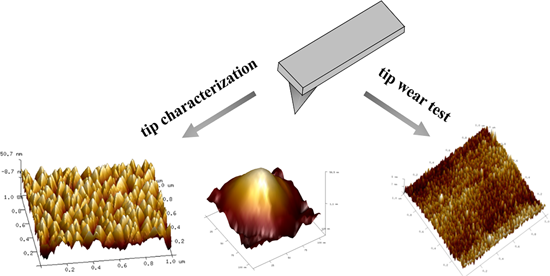
- between the sample and the tip was confirmed, and the potential of using sharp structures to describe the tip structure was examined. Distinct matrix arrays were created for the tip and the sample shapes. To produce an image of a sample matrix using a tip matrix, the tip matrix was positioned
- perpendicularly above the sample matrix. When the tip apex touched the sample, the difference between the tip and sample matrices was calculated to determine the position of the tip apex. The position of the tip apex was then recorded, and the tip apex was moved horizontally to contact the next pixel of the
- sample matrix. This process was repeated until all points on the sample matrix had been scanned. The resulting image comprised the recorded height information of the tip apex. Figure 4 illustrates the two tip shapes used in the simulation, a blunt tip with a tip diameter of 20 nm at a distance of 5 nm