Search results
Search for "optics" in Full Text gives 283 result(s) in Beilstein Journal of Nanotechnology. Showing first 200.
Pure and mixed ordered monolayers of tetracyano-2,6-naphthoquinodimethane and hexathiapentacene on the Ag(100) surface
Beilstein J. Nanotechnol. 2019, 10, 1188–1199, doi:10.3762/bjnano.10.118
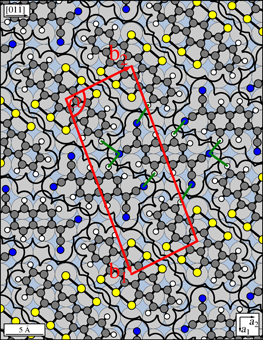
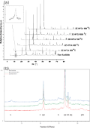
- hemispherical LEED optics. These intrinsic distortions were corrected using a custom-written software according to the formulas given in [30]. Nevertheless, some residual distortions still remain that typically cause a less perfect fitting of the simulated and experimental LEED patterns in the outer region of


Fe3O4 nanoparticles as a saturable absorber for giant chirped pulse generation
Beilstein J. Nanotechnol. 2019, 10, 1065–1072, doi:10.3762/bjnano.10.107
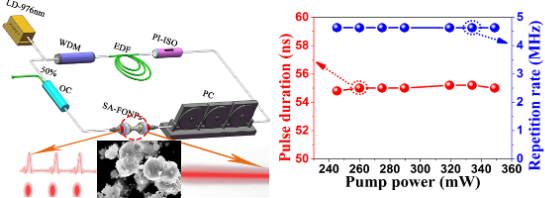
- Equipment Development” Project (Grant No. 2013YQ310633); Open Research Fund of State Key Laboratory of Transient Optics and Photonics, Chinese Academy of Sciences (number SKLST201401, SKLST201809); Open Research Fund of State Key Laboratory of Pulsed Power Laser Technology, Electronic Engineering Institute


Correlation of surface-enhanced Raman scattering (SERS) with the surface density of gold nanoparticles: evaluation of the critical number of SERS tags for a detectable signal
Beilstein J. Nanotechnol. 2019, 10, 1016–1023, doi:10.3762/bjnano.10.102
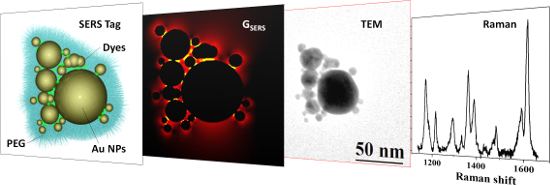
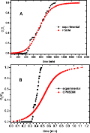
- linear response, it was found that 10 SERS AuNTs inside the probed area are required. These findings indicate that a better signal-to-noise ratio requires high-magnification optics, while linearity versus tag number can be improved by using low-magnification optics or a high tag density. In general the
- , which can be obtained more easily with low-magnification optics when the surface density of the SERS tags is as low as a few units per micrometer square. These results contribute to the optimization of the experimental conditions for the use of SERS tags in analytical and biomedical analysis with high
- inside the probed area is required to obtain a linear response, that is, on the order of 10 tags. Overall, these results suggest that a better signal-to-noise ratio requires optics with a high numerical aperture, while linearity versus tags number is improved by using low-magnification optics. However


Electronic properties of several two dimensional halides from ab initio calculations
Beilstein J. Nanotechnol. 2019, 10, 823–832, doi:10.3762/bjnano.10.82
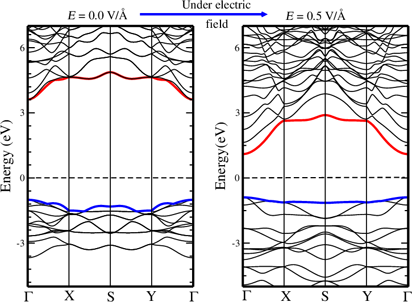
- , as it was done with MoS2 [51] and phosphorene monolayers [52]. At the same time, the compounds studied could be relevant in optics and optoelectronics, to design new photodetectors, polarizing filters, or modulating devices, as has already been done with other two-dimensional compounds [53][54]. Also


Renewable energy conversion using nano- and microstructured materials
Beilstein J. Nanotechnol. 2019, 10, 771–773, doi:10.3762/bjnano.10.76

- desirable to use raw materials from cheap earth-abundant elements [15] or to minimize the amount of absorber materials by a combination with optics for efficient light collection [4][16] in order to achieve environmentally friendly production and recycling cycles. This also implies that substances with a
Ceria/polymer nanocontainers for high-performance encapsulation of fluorophores
Beilstein J. Nanotechnol. 2019, 10, 522–530, doi:10.3762/bjnano.10.53
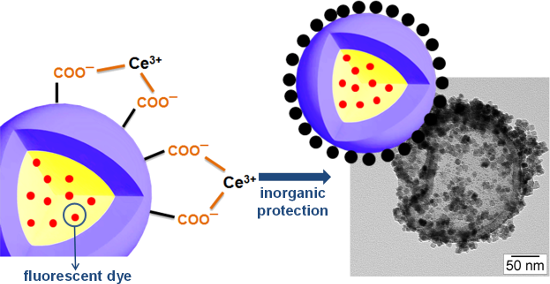
- Kartheek Katta Dmitry Busko Yuri Avlasevich Katharina Landfester Stanislav Baluschev Rafael Munoz-Espi Max Planck Institute for Polymer Research, Ackermannweg 10, 55128 Mainz, Germany Optics and Spectroscopy Department, Faculty of Physics, Sofia University “St. Kliment Ochridski” 5 James Bourchier


Intuitive human interface to a scanning tunnelling microscope: observation of parity oscillations for a single atomic chain
Beilstein J. Nanotechnol. 2019, 10, 337–348, doi:10.3762/bjnano.10.33
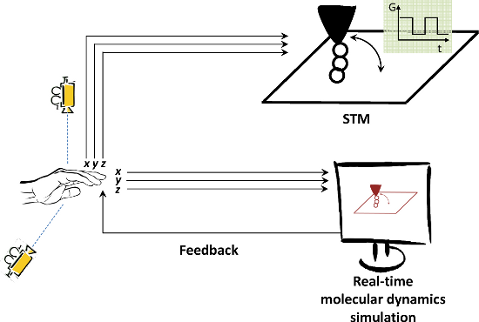
- atomic chain. This back-scattering makes this phenomenon similar to that of the Fabry–Pérot interferometer in optics. This was demonstrated in experiments by making length histograms [8] of conductance and it was observed as oscillations in conductance. However, in this method averaging over many atomic




Electromagnetic analysis of the lasing thresholds of hybrid plasmon modes of a silver tube nanolaser with active core and active shell
Beilstein J. Nanotechnol. 2019, 10, 294–304, doi:10.3762/bjnano.10.28
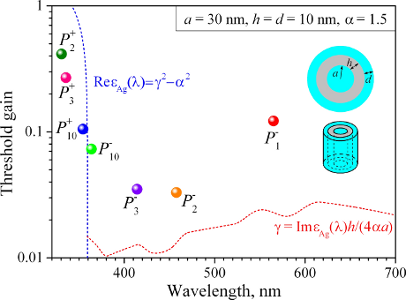
- Denys M. Natarov Trevor M. Benson Alexander I. Nosich Laboratory of Micro and Nano Optics, Institute of Radio-Physics and Electronics NASU, vul. Proskury 12, Kharkiv 61085, Ukraine George Green Institute for Electromagnetics Research, The University of Nottingham, University Park, Nottingham, NG7
- precision of their fabrication, has already turned plasmonics into a very dynamic research area within contemporary optics and photonics. The physical basis of this enhanced interaction is provided by the existence of the very slow (in the phase-velocity sense) surface-plasmon waves guided by metal


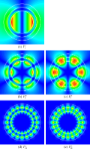
![[Graphic 29]](/bjnano/content/inline/2190-4286-10-28-i46.svg?max-width=637&scale=1.18182) λ = 565.03...
λ = 565.03...

![[Graphic 36]](/bjnano/content/inline/2190-4286-10-28-i53.svg?max-width=637&scale=1.18182) ...
...


Study of silica-based intrinsically emitting nanoparticles produced by an excimer laser
Beilstein J. Nanotechnol. 2019, 10, 211–221, doi:10.3762/bjnano.10.19
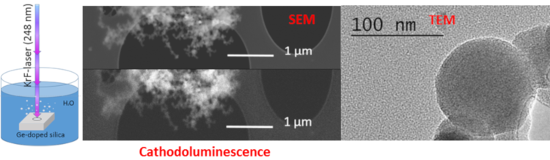
- Imene Reghioua Mattia Fanetti Sylvain Girard Diego Di Francesca Simonpietro Agnello Layla Martin-Samos Marco Cannas Matjaz Valant Melanie Raine Marc Gaillardin Nicolas Richard Philippe Paillet Aziz Boukenter Youcef Ouerdane Antonino Alessi Univ Lyon, UJM-Saint-Etienne, CNRS, Graduate School Optics



New micro/mesoporous nanocomposite material from low-cost sources for the efficient removal of aromatic and pathogenic pollutants from water
Beilstein J. Nanotechnol. 2019, 10, 119–131, doi:10.3762/bjnano.10.11
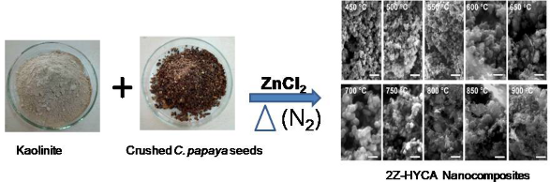
- divergence and antiscatter slit and a large Nibeta filter. The detector was set to continuous mode with an active length of 3.0061°. Scanning electron microscopy (SEM) and specific surface area analysis SEM analysis was performed on a Japan Electron Optics Laboratory JSM 6510 with an energy dispersive X-ray




A new bioinspired method for pressure and flow sensing based on the underwater air-retaining surface of the backswimmer Notonecta
Beilstein J. Nanotechnol. 2018, 9, 3039–3047, doi:10.3762/bjnano.9.282
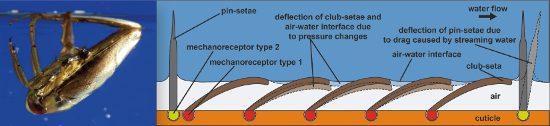
- GeV storage ring (ring current = 400 mA, top-up mode), were monochromated with a double-multilayer monochromator and tuned to an X-ray energy of 12 keV. A scientific CMOS detector (pco.Edge 5.5) was used in combination with 10× magnifying visible-light optics (UPLAPO10x) and a 20 µm thick scintillator


Site-controlled formation of single Si nanocrystals in a buried SiO2 matrix using ion beam mixing
Beilstein J. Nanotechnol. 2018, 9, 2883–2892, doi:10.3762/bjnano.9.267
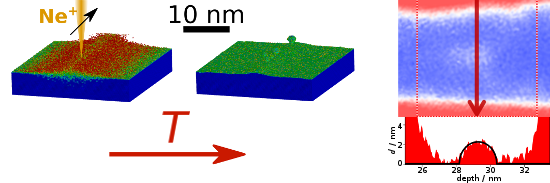
- exception of optical applications. The latter is due to its indirect band gap in the bulk state. Benefiting from their reduced size, Si NCs show optical activity [1][2] and quantum confinement behavior [3] and have inspired novel applications in microelectronics [4], optics [1] and photovoltaics [5][6]. In


Charged particle single nanometre manufacturing
Beilstein J. Nanotechnol. 2018, 9, 2855–2882, doi:10.3762/bjnano.9.266
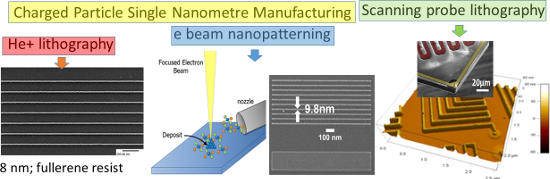
- beams can be divided into two approaches: either the particle beam is generated far from the sample and scanned over it using electric or magnetic focusing and deflection optics or the beam is generated at a field-emission tip located in close proximity to the sample and the tip itself is scanned to
- forms of charged particle microscopy and lithography, according to the RPS formula [27][28], where ds and dc are the contributions to the final spot size due to spherical aberration and chromatic aberration. The Gaussian optical image size magnified through the lens optics is dg. The quantum mechanical
- -eSPL process is similar to EBL but the energy of the primary beam used for SPL is much lower (below 100 eV) and the electron beam is generated in close proximity to the sample surface (below 100 nm), thus without the need for optics to control the beam. To trigger the electron emission a voltage is


Biomimetic surface structures in steel fabricated with femtosecond laser pulses: influence of laser rescanning on morphology and wettability
Beilstein J. Nanotechnol. 2018, 9, 2802–2812, doi:10.3762/bjnano.9.262
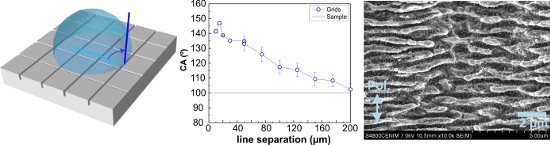
- ). The instrumentation used to measure the contact angle (CA) was an OCA 15EC system that allows mechanical deposition of 4 µL deionized water droplets on the areas of interest. The system has a homogeneous illumination source and imaging optics that project the image of the droplet onto a CCD camera



Oriented zinc oxide nanorods: A novel saturable absorber for lasers in the near-infrared
Beilstein J. Nanotechnol. 2018, 9, 2730–2740, doi:10.3762/bjnano.9.255
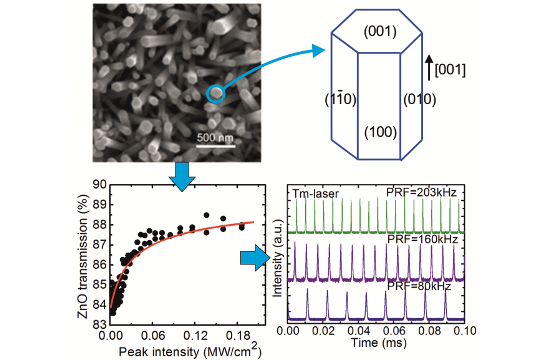
- Virgili (URV), Campus Sescelades, 43007 Tarragona, Spain State Key Laboratory of Crystal Materials and Institute of Crystal Materials, Shandong University, Jinan 250100, China Max Born Institute for Nonlinear Optics and Short Pulse Spectroscopy, Max-Born-Str. 2a, 12489 Berlin, Germany Functional Materials



Optimization of Mo/Cr bilayer back contacts for thin-film solar cells
Beilstein J. Nanotechnol. 2018, 9, 2700–2707, doi:10.3762/bjnano.9.252
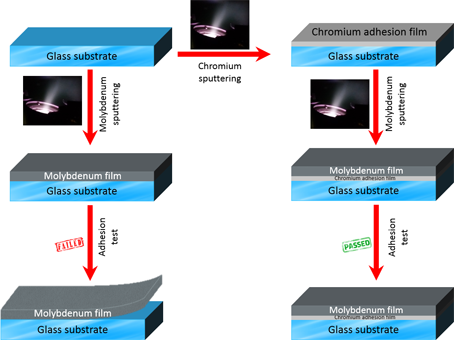
- source operating in parallel beam mode with a Hypix 3000 detector (0D mode). The incidence angle (α) was fixed to 1° during data collection. The incident optics were a 5° Soller slit, 10 mm incident slit and a 0.137 mm divergence slit. Receiving optics were a 0.114° collimator and 20 mm receiving slits


Polarization-dependent strong coupling between silver nanorods and photochromic molecules
Beilstein J. Nanotechnol. 2018, 9, 2657–2664, doi:10.3762/bjnano.9.247
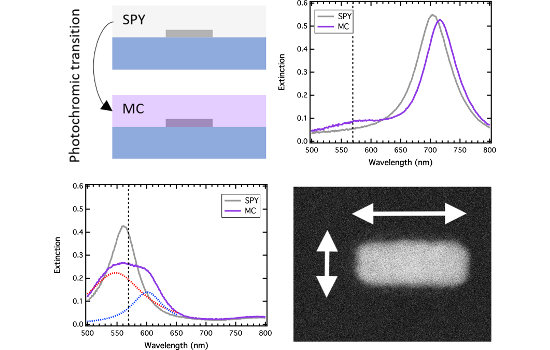
- nanosource would be useful in nano-optics applications. As an example, Zhou et al. were able to fabricate a two-color hybrid nanosource by trapping different emitters in the close vicinity of a cylindrical nanoparticle [17]. The color emitted by this nanosource then depends on the incident in-plane



Impact of the anodization time on the photocatalytic activity of TiO2 nanotubes
Beilstein J. Nanotechnol. 2018, 9, 2628–2643, doi:10.3762/bjnano.9.244
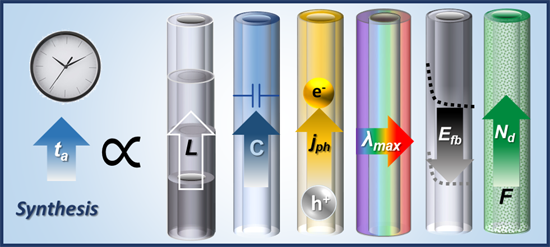
- characterizations. A UV hot-mirror filter (Edmund Optics F45-066) was used to prevent the heating of the electrolyte and to allow light with an irradiance power of 20 mW/cm2 to pass. Photocurrent transient curves were obtained by blocking the light for periods of 5 s with an automated shutter (Lambda SC Smart
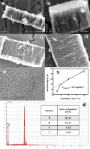


Characterization of the microscopic tribological properties of sandfish (Scincus scincus) scales by atomic force microscopy
Beilstein J. Nanotechnol. 2018, 9, 2618–2627, doi:10.3762/bjnano.9.243

- of moulted skin of sandfish. W. W. gratefully acknowledges a scholarship from the China Scholarship Council (CSC). G. G. gratefully acknowledges support from the Helmholtz Postdoc Program and from the Karlsruhe School of Optics and Photonics (KSOP). This work was partly carried out with the support


Enhancement of X-ray emission from nanocolloidal gold suspensions under double-pulse excitation
Beilstein J. Nanotechnol. 2018, 9, 2609–2617, doi:10.3762/bjnano.9.242
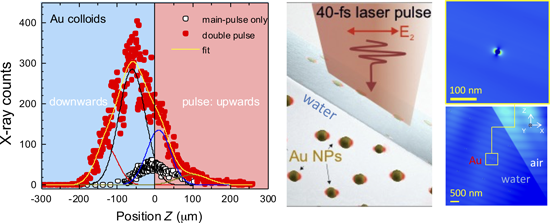
- for the double-pulse irradiation using half-wave plates (65-906, Edmund Optics) and polarization beam splitters (47-048, Edmund Optics). Vertically and horizontally polarized pulses are defined as the pre-pulse and the main pulse, respectively. The vertically polarized pre-pulse intensity is below the
- . After combination, the pulses were tightly focused onto a film from the solution jet with an off-axis parabolic mirror (effective focus length of f = 50.8 mm, reflection angle of 90°, and numerical aperture NA =0.25, 47-097, Edmund Optics) in air. Under these focusing conditions, the theoretical


SERS active Ag–SiO2 nanoparticles obtained by laser ablation of silver in colloidal silica
Beilstein J. Nanotechnol. 2018, 9, 2396–2404, doi:10.3762/bjnano.9.224
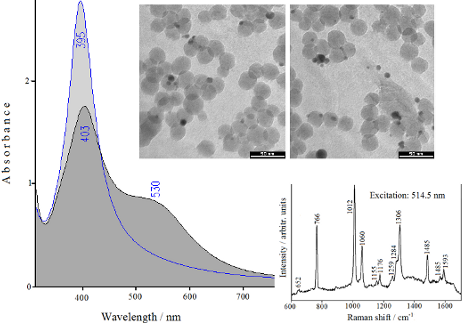
- power meter (model 362; Scientech, Boulder, CO, USA) giving ≈5% accuracy in the 300–1000 nm spectral range. FT-SERS measurements were collected with a Fourier transform Raman spectrometer (Bruker Optics, Model MultiRam), equipped with a broad range quartz beamsplitter, an air-cooled Nd:YAG laser


Hydrothermal-derived carbon as a stabilizing matrix for improved cycling performance of silicon-based anodes for lithium-ion full cells
Beilstein J. Nanotechnol. 2018, 9, 2381–2395, doi:10.3762/bjnano.9.223
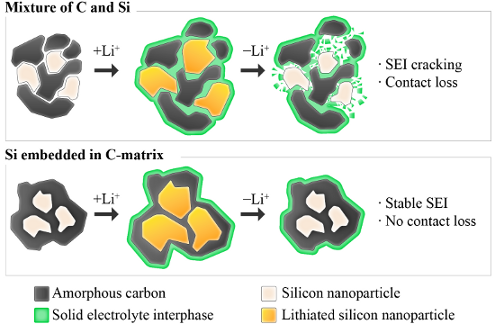
- disassembling the cell in a glove box and assembling of a full cell using the prelithiated Si/C electrode as the negative electrode. Characterization methods A Bruker Senterra Raman microscope (Bruker Optics Inc.) was used to record the Raman spectra using a green laser with a wavelength of 532 nm and a laser


High-throughput micro-nanostructuring by microdroplet inkjet printing
Beilstein J. Nanotechnol. 2018, 9, 2372–2380, doi:10.3762/bjnano.9.222
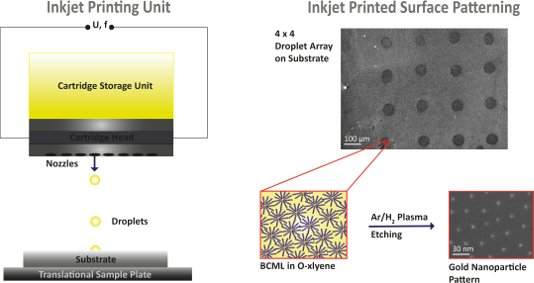
- densities is highly important in many fields, ranging from nano-optics to biosensor technologies and biomaterials. A well-established method to fabricate quasi-hexagonal patterns of metal nanoparticles is block copolymer micelle nanolithography, which relies on the self-assembly of metal-loaded micelles on
- : biofunctional surfaces; inkjet printing; microstructures; nanolithography; nanoparticles; Introduction Many applications require well-organized micro- and nanoscale patterning of metallic nanoparticles. Examples include high-performance optics [1], multimodal waveguides [2], biosensors [3] and biomaterials [4


Performance analysis of rigorous coupled-wave analysis and its integration in a coupled modeling approach for optical simulation of complete heterojunction silicon solar cells
Beilstein J. Nanotechnol. 2018, 9, 2315–2329, doi:10.3762/bjnano.9.216
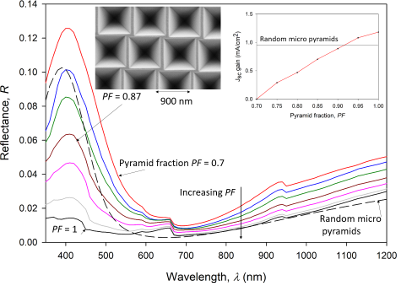
- can change from TE to TM or vice versa. This is unlike in (locally) flat interfaces considered with ray optics or TMM, where local TE and TM polarization persist after reflection or refraction. This difference in 3D wave simulations is caused by the diffracted waves, which may not propagate in the
- ). Likewise, the PF was also kept constant at 0.7, as was the thickness of ITO (85 nm) and a-Si:H (15 nm). For validation we added in this case simulations with RT/TMM (using the simulator CROWM) for the texture with P = 5000 nm. Such large features can be tackled with geometrical optics and are too large for


Metal–dielectric hybrid nanoantennas for efficient frequency conversion at the anapole mode
Beilstein J. Nanotechnol. 2018, 9, 2306–2314, doi:10.3762/bjnano.9.215
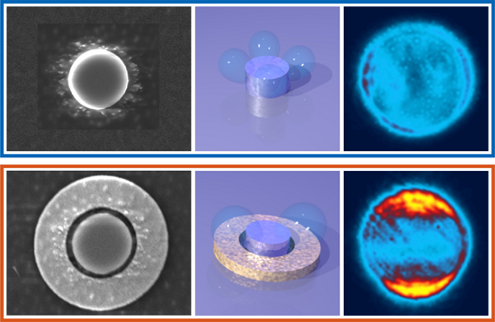
- reveal the possibility to achieve tuneable metamixers and higher resolution in nonlinear sensing and spectroscopy, by means of improved both pump coupling and emission efficiency due to the excitation of the anapole mode enhanced by the plasmonic nanoantenna. Keywords: nanophotonics; nonlinear optics
- have already been achieved in integrated nonlinear optics [24], including SHG in quasi-phase-matched waveguides [25], efficient frequency-comb generation [25], and optical parametric oscillation [26]. Only very recently, thanks to the dramatic improvement of nanofabrication techniques, the integration
- resonance, was theoretically proposed as an efficient system to enhance second-order nonlinear effects in nanoscale optics [27]. Soon after, three independent experiments validated these theoretical predictions [28][29][30]. The conversion efficiencies reported were higher than 10−5, which is more than four