Search results
Search for "piezoelectric" in Full Text gives 155 result(s) in Beilstein Journal of Nanotechnology.
Measuring adhesion on rough surfaces using atomic force microscopy with a liquid probe
Beilstein J. Nanotechnol. 2017, 8, 813–825, doi:10.3762/bjnano.8.84
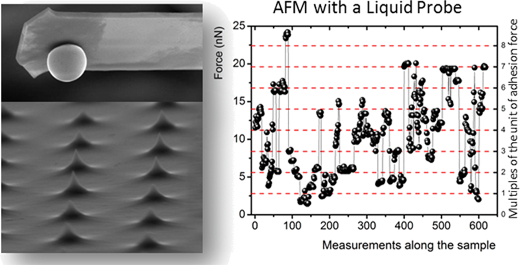
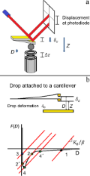
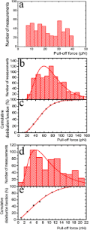
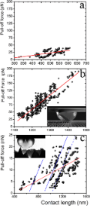
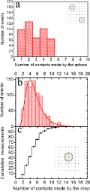
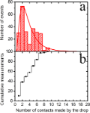
- employed for measuring forces in the colloidal probe technique [4][5]. The surface under study is moved up and down by applying a voltage to a piezoelectric translator while recording the cantilever deflection. The deflection of the cantilever is measured with the optical beam deflection technique. As the

Synthesis of graphene–transition metal oxide hybrid nanoparticles and their application in various fields
Beilstein J. Nanotechnol. 2017, 8, 688–714, doi:10.3762/bjnano.8.74
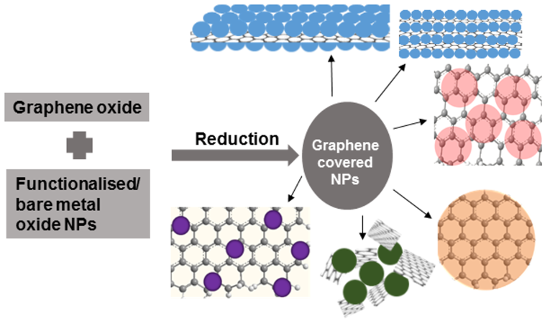
- binding energy of 60 meV. It has been extensively studied because of its potential application in solar cells, sensors, diode lasers, piezoelectric devices, as surface acoustic wave propagators, antibacterial agents and ultraviolet light emitters. Graphene-based ZnO hybrids proved to be promising






Dispersion of single-wall carbon nanotubes with supramolecular Congo red – properties of the complexes and mechanism of the interaction
Beilstein J. Nanotechnol. 2017, 8, 636–648, doi:10.3762/bjnano.8.68
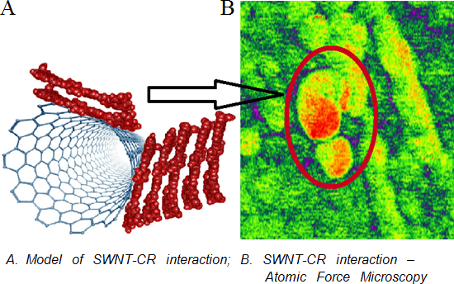
- characteristic: stiffness (elasticity) of the material (DMT Modulus; the higher value of the modified Young's modulus means the more stiff material), adhesion forces (it allows mapping the maximum force with which the microcantilever is attracted by the sample at the time of retract of the piezoelectric scanner


The longstanding challenge of the nanocrystallization of 1,3,5-trinitroperhydro-1,3,5-triazine (RDX)
Beilstein J. Nanotechnol. 2017, 8, 452–466, doi:10.3762/bjnano.8.49
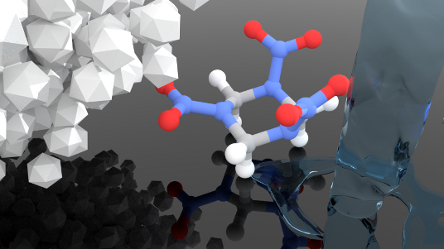
- , etc. Ultrasonic spray pyrolysis Since the nineties, spray crystallization and synthesis has been performed using several atomizers, and among them piezoelectric transducers [75][76]. As a spray technique, the goal is to produce one particle per droplet, but here the crystallization is controlled by
- particles and sub-micrometer-sized CL-20:HMX cocrystals. The claimed large-scale synthesis has not been fairly investigated. For instance increasing the number of piezoelectric transducers and scaling up the furnace would require excessive amounts of electrical power, thus making the cost-effectiveness of


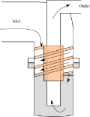
Multimodal cantilevers with novel piezoelectric layer topology for sensitivity enhancement
Beilstein J. Nanotechnol. 2017, 8, 358–371, doi:10.3762/bjnano.8.38
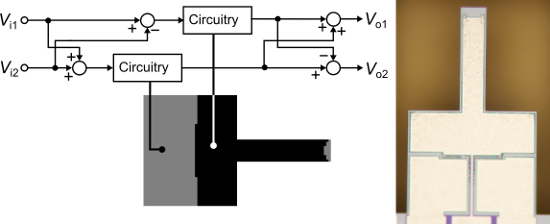
- of the transducer layout on the cantilever for higher order modes has not been addressed. To fully utilize an integrated piezoelectric transducer, this work alters the layout of the piezoelectric layer to maximize both the deflection of the cantilever and measured piezoelectric charge response for a
- multifrequency AFM and has the potential to provide higher resolution imaging on higher order modes. Keywords: atomic force microscopy; multifrequency AFM; multimodal AFM; piezoelectric cantilever, self-sensing; Introduction The invention of the atomic force microscope (AFM) [1] provided for the observation of
- AFM cantilever instrumentation requires a piezoelectric stack actuator at the base of the cantilever for excitation [3] inevitably adding additional resonances as is visible from the so called forest of peaks [22]. These additional frequency components make cantilever resonance tuning almost


Template-controlled piezoactivity of ZnO thin films grown via a bioinspired approach
Beilstein J. Nanotechnol. 2017, 8, 296–303, doi:10.3762/bjnano.8.32
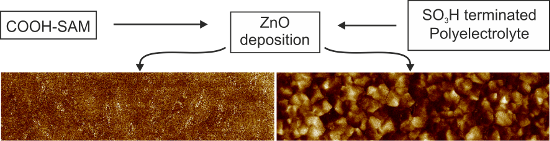
- of functional inorganic materials under mild reaction conditions where organic templates direct the deposition process. In this study, this principle was adapted for the formation of piezoelectric ZnO thin films. The influence of two different organic templates (namely, a carboxylate-terminated self
- -assembled monolayer and a sulfonate-terminated polyelectrolyte multilayer) on the deposition and therefore on the piezoelectric performance was investigated. While the low negative charge of the COOH-SAM is not able to support oriented attachment of the particles, the strongly negatively charged sulfonated
- polyelectrolyte leads to texturing of the ZnO film. This texture enables a piezoelectric performance of the material which was measured by piezoresponse force microscopy. This study shows that it is possible to tune the piezoelectric properties of ZnO by applying templates with different functionalities


Impact of surface wettability on S-layer recrystallization: a real-time characterization by QCM-D
Beilstein J. Nanotechnol. 2017, 8, 91–98, doi:10.3762/bjnano.8.10
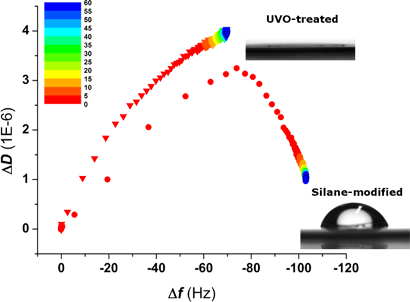
- -layers on different supports [17][18]. The QCM-D responses, i.e., the resonance frequency f and the energy dissipation D of the shear oscillatory motion of a piezoelectric quartz crystal sensor, change upon adsorption or desorption of material on the surface of that sensor. The measured parameters are


Graphene–polymer coating for the realization of strain sensors
Beilstein J. Nanotechnol. 2017, 8, 21–27, doi:10.3762/bjnano.8.3
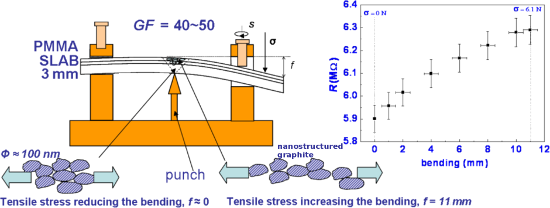
- described a simple fabrication process to produce a low-cost graphene film on a PMMA substrate. The process makes use of the direct application of a nanostructured graphite colloidal suspension to a PMMA slat. Bending tests have been performed on this structure in order to study its piezoelectric response


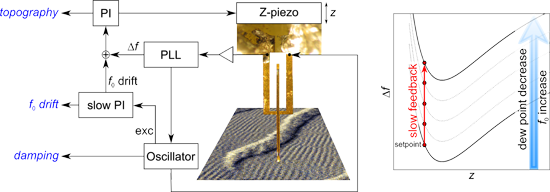
Noise in NC-AFM measurements with significant tip–sample interaction
Beilstein J. Nanotechnol. 2016, 7, 1885–1904, doi:10.3762/bjnano.7.181
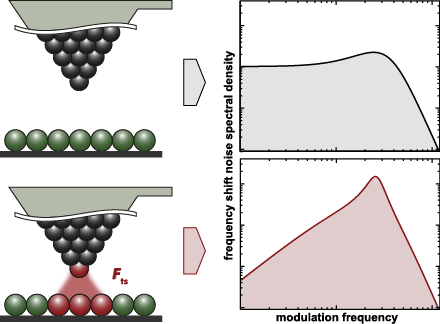
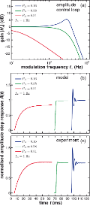
- speculate that the low-frequency deviation is caused by mechanical instabilities within the system, or by instabilities within the piezoelectric excitation system. For example, low-frequency noise has been observed when using photothermal excitation [23]. Disabling the amplitude control loop results in a



![[Graphic 32]](/bjnano/content/inline/2190-4286-7-181-i73.png?max-width=637&scale=1.18182) wit...
wit...

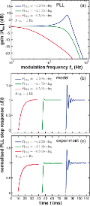
![[Graphic 34]](/bjnano/content/inline/2190-4286-7-181-i75.png?max-width=637&scale=1.18182) wit...
wit...



Sb2S3 grown by ultrasonic spray pyrolysis and its application in a hybrid solar cell
Beilstein J. Nanotechnol. 2016, 7, 1662–1673, doi:10.3762/bjnano.7.158
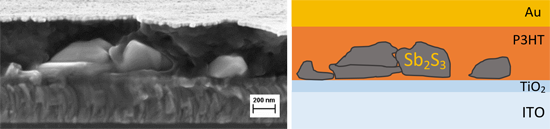
- (CSP) is a simple and fast method in which a solution of precursor materials is pulverized and the aerosol is then guided by flow of carrier gas onto a hot substrate. The droplets can be produced pneumatically, or, ultrasonically with a piezoelectric generator submerged in the solution bath. The




Hydrophilic silver nanoparticles with tunable optical properties: application for the detection of heavy metals in water
Beilstein J. Nanotechnol. 2016, 7, 1654–1661, doi:10.3762/bjnano.7.157
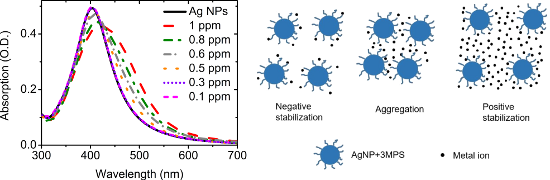
- the Smolukovsky equation [55]. The scanning tunneling microscope (Tops System, WA Technology) consists of a UHV attachment with an antivibration stacking and a piezoelectric tube with 2 mm maximum scanning area for the tip movement. The lateral resolution of the microscope is ±1 Å and the accuracy in


Viability and proliferation of endothelial cells upon exposure to GaN nanoparticles
Beilstein J. Nanotechnol. 2016, 7, 1330–1337, doi:10.3762/bjnano.7.124
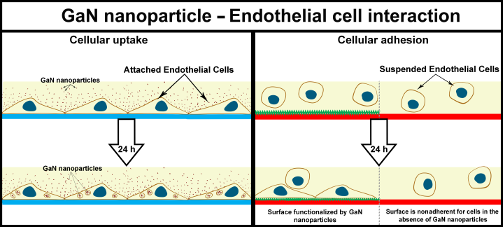
- good candidate material due to its chemical inertness and, in particular, its piezoelectric properties, which opens the possibility of it being able to transmit an electrical signal to cells. This might be used to activate cells receptors through simple external activation (e.g., via an ultrasound
- field). In comparison to other materials intensively investigated in this area (such as boron nitride nanotubes [13], barium titanate [14], or hydroxyapatite [15]), nanoscale GaN, in addition to its biocompatibility, shows strong enhancement of the piezoelectric properties compared to the bulk material
- semiconductor material, widely used in optoelectronics, in particular in industrial production of UV solid-state lasers and light-emitting diodes. This material has many remarkable characteristics, including piezoelectric properties, high thermal stability, radiation hardness, and excellent chemical inertness



Optical absorption signature of a self-assembled dye monolayer on graphene
Beilstein J. Nanotechnol. 2016, 7, 862–868, doi:10.3762/bjnano.7.78
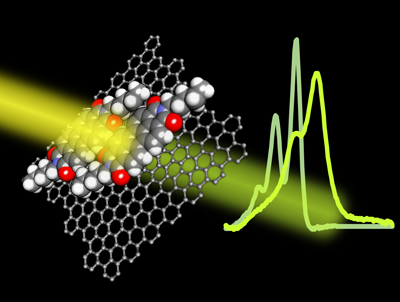
- to the PTCDI solution. The STM images were recorded under ambient conditions (ca. 300 K) with a custom-made digital system by the immersion of a 250 μm mechanically cut tip of Pt/Ir (90/10) purchased from Goodfellow into a 5 μL droplet of solution. The scanning piezoelectric ceramic was calibrated by



Understanding interferometry for micro-cantilever displacement detection
Beilstein J. Nanotechnol. 2016, 7, 841–851, doi:10.3762/bjnano.7.76
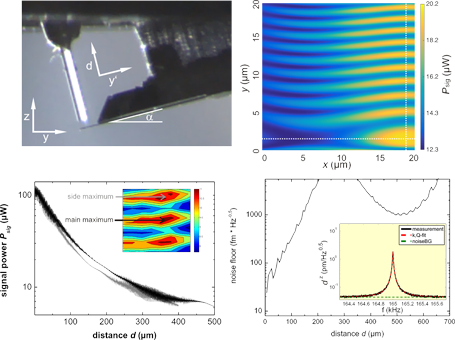
- any tip–sample interaction. The optical fiber, IV, is glued in a ferrule, V, which is bent by 15° with respect to the vertical axis to match the cantilever angle. The fiber end is coarse-approached from the top with a piezoelectric actuator moving the triangular sapphire prism, VI, along the z-axis




![[Graphic 27]](/bjnano/content/inline/2190-4286-7-76-i36.png?max-width=637&scale=1.18182) of the noise floor of the interferometer signal as a function of the...
of the noise floor of the interferometer signal as a function of the...
High-resolution noncontact AFM and Kelvin probe force microscopy investigations of self-assembled photovoltaic donor–acceptor dyads
Beilstein J. Nanotechnol. 2016, 7, 799–808, doi:10.3762/bjnano.7.71
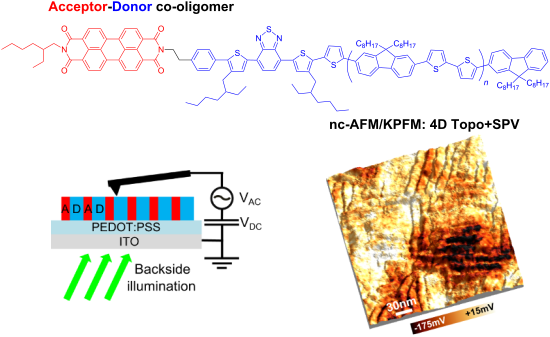
- ). The lateral lag (due to thermal drift and piezoelectric actuator creep) between the set of images used for the SPV calculation was corrected by using the lattice tool of the WsXM software [22] (see Figure S9 in Supporting Information File 1). After correcting the images, the residual lateral error in


Microwave solvothermal synthesis and characterization of manganese-doped ZnO nanoparticles
Beilstein J. Nanotechnol. 2016, 7, 721–732, doi:10.3762/bjnano.7.64
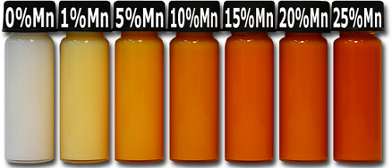
- , varistors, TFT display windows and laser technology [5][6][7]. ZnO displays pyroelectric and piezoelectric properties, thanks to which it is used in electroacoustic devices [8]. It is a biocompatible material used for producing biosensors and in drug delivery applications [9]. Thanks to antibacterial


Length-extension resonator as a force sensor for high-resolution frequency-modulation atomic force microscopy in air
Beilstein J. Nanotechnol. 2016, 7, 432–438, doi:10.3762/bjnano.7.38
- [4][5]. Recently, atomic resolution has been achieved with a qPlus sensor in air on potassium bromide and graphite [2][6]. In this paper, we demonstrate the suitability of the piezoelectric self-sensing length-extension resonator (LER) [7][8] for high-resolution FM-AFM imaging in air. The LER has a
- turn is screwed to a Cypher droplet holder (Figure 1b) for operation in a Cypher AFM (Asylum Research). The resonator is excited electrically by applying a small AC voltage to one of its electrodes (input) and the displacement-induced piezoelectric current is detected on the other electrode which is


Efficiency improvement in the cantilever photothermal excitation method using a photothermal conversion layer
Beilstein J. Nanotechnol. 2016, 7, 409–417, doi:10.3762/bjnano.7.36
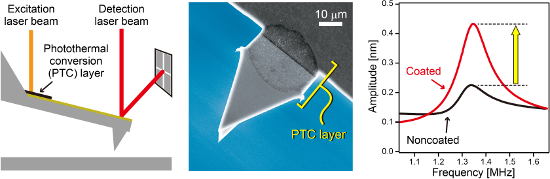
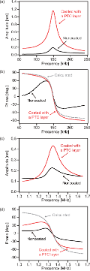
- of its simple setup and high usability. In the method, a cantilever oscillation is excited by vibrating a piezoelectric actuator integrated in a cantilever holder. However, spurious resonances in the surrounding liquid and mechanical parts often deteriorate the stability and accuracy of AFM



High-bandwidth multimode self-sensing in bimodal atomic force microscopy
Beilstein J. Nanotechnol. 2016, 7, 284–295, doi:10.3762/bjnano.7.26
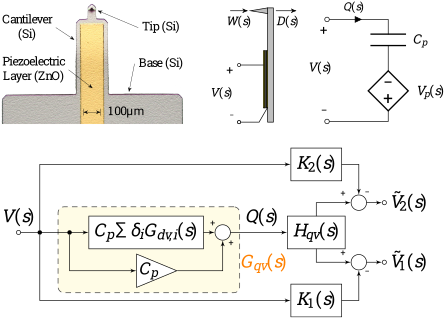
- standard microelectromechanical system (MEMS) processes to coat a microcantilever with a piezoelectric layer results in a versatile transducer with inherent self-sensing capabilities. For applications in multifrequency atomic force microscopy (MF-AFM), we illustrate that a single piezoelectric layer can be
- simultaneously used for multimode excitation and detection of the cantilever deflection. This is achieved by a charge sensor with a bandwidth of 10 MHz and dual feedthrough cancellation to recover the resonant modes that are heavily buried in feedthrough originating from the piezoelectric capacitance. The setup
- enables the omission of the commonly used piezoelectric stack actuator and optical beam deflection sensor, alleviating limitations due to distorted frequency responses and instrumentation cost, respectively. The proposed method benefits from a more than two orders of magnitude increase in deflection to


Single-molecule mechanics of protein-labelled DNA handles
Beilstein J. Nanotechnol. 2016, 7, 138–148, doi:10.3762/bjnano.7.16
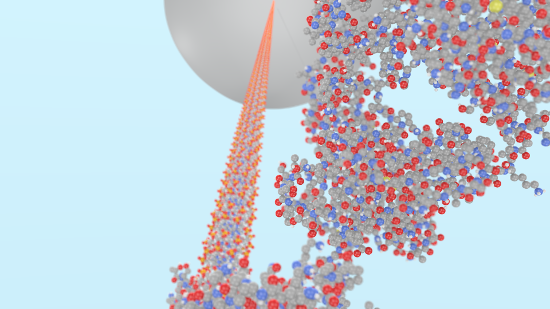
- label at the 3’ end of the bead-coupled DNA strand was tethered to a biotin-coated bead, by bringing both beads within close proximity of each other (a few hundred nanometres). The position of this pipette was controlled with a closed-loop piezoelectric element, during force–displacement measurements



Chemical bath deposition of textured and compact zinc oxide thin films on vinyl-terminated polystyrene brushes
Beilstein J. Nanotechnol. 2016, 7, 102–110, doi:10.3762/bjnano.7.12
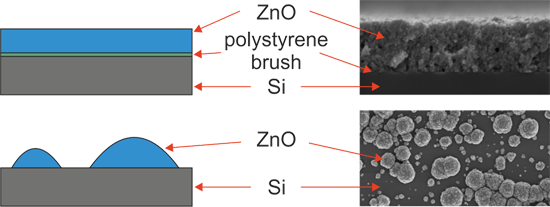
- ; thin film growth; zinc oxide; Introduction Due to its promising properties like photoemission in the UV range and its high piezoelectric coefficient, zinc oxide (ZnO; space group P63mc) is interesting for a wide range of applications. Several research groups investigate its application in light


Large area scanning probe microscope in ultra-high vacuum demonstrated for electrostatic force measurements on high-voltage devices
Beilstein J. Nanotechnol. 2015, 6, 2485–2497, doi:10.3762/bjnano.6.258
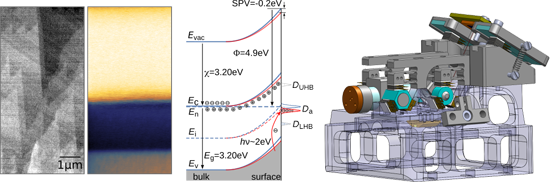
- piezoelectric stages, which allows for a travel range of 12 mm in lateral directions. A stage consists of three 1D shear piezo actuators and two sapphire sliders. Three flexures compress the two stages together. The scanner has an aperture of 38 mm in which an additional piezo actuator is located with a travel


Vibration-mediated Kondo transport in molecular junctions: conductance evolution during mechanical stretching
Beilstein J. Nanotechnol. 2015, 6, 2417–2422, doi:10.3762/bjnano.6.249
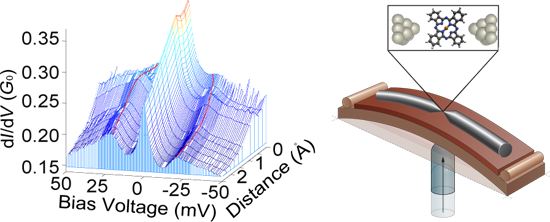
- of a Ag wire (99.997%, 0.1 mm diameter, Goodfellow), which was attached to a flexible substrate. A three-point bending configuration under cryogenic vacuum conditions was used in order to break the wire at the notch to form an adjustable gap between two ultra clean Ag tips. A piezoelectric element


Template-controlled mineralization: Determining film granularity and structure by surface functionality patterns
Beilstein J. Nanotechnol. 2015, 6, 1763–1768, doi:10.3762/bjnano.6.180
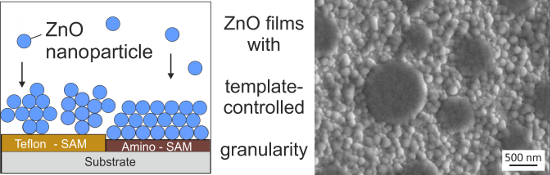
- , piezoelectric activity and the mechanical properties. A very pronounced contrast is observed between areas with an underlying fluorinated, low energy template surface, showing a much more (almost two orders of magnitude) coarse-grained film with a typical agglomerate size of around 75 nm. In contrast, amino
- investigations will reveal if other properties such as piezoelectric activity, conductivity, optical or mechanical properties can also be controlled by the patterned surface chemistry of the substrate. Conclusion Here we demonstrate the control of the structure and granularity of a growing film by means of a

Lower nanometer-scale size limit for the deformation of a metallic glass by shear transformations revealed by quantitative AFM indentation
Beilstein J. Nanotechnol. 2015, 6, 1721–1732, doi:10.3762/bjnano.6.176
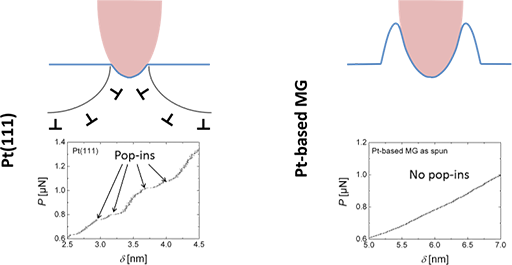
- compliant sample surface, an extension of the z-scanner also leads to a penetration of the AFM tip into the sample surface by the penetration depth δ = Z − D. While the cantilever deflection D is calibrated independently, the height value Z is subject to drift or creep effects of the piezoelectric scanner
- . The accuracy in δ is thus limited by piezoelectric creep of the AFM scanner. In order to minimize vertical drift, the tip position was equilibrated before each indentation by recording a slow 500 × 500 nm2 scan of the area to be indented by AFM. Indentation measurements were then started from the
- position of the scanner during nc-AFM imaging, i.e., half of the oscillation amplitude or a few nanometers above the surface. In order to further account for piezoelectric creep effects during rate-dependent measurements a drift difference ΔZdrift with regard to the fastest measurement was calculated