


Search results
Search for "scaffold" in Full Text gives 103 result(s) in Beilstein Journal of Nanotechnology.
A facile approach to nanoarchitectured three-dimensional graphene-based Li–Mn–O composite as high-power cathodes for Li-ion batteries
Beilstein J. Nanotechnol. 2012, 3, 513–523, doi:10.3762/bjnano.3.59
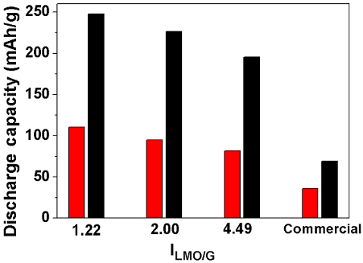
- to improve the power density and cyclability of LIBs [17][18]. Basically, such a strategy is based on the design of a nanostructured, metal current collector, by using Cu or Al nanorods to form a 3D conducting scaffold, to improve the kinetics of Li diffusion and electron transfer in the electrode
- materials involve high-temperature reactions that may destroy the graphene structure. Although a graphene-based cathode may be difficult to prepare, the conducting scaffold formed by graphene sheets is ideal for the formation of 3D architectured cathodes to improve the performance of LIB further, especially
- the conducting scaffold of graphene sheets improves the kinetics of Li ion diffusion and electron transfer. The voltage profiles of the LMO/G (ILMO:G = 1.22) electrode under various discharge currents are presented in Figure 6c, which shows that the discharge voltages are maintained at >3.3 V even at




Surface functionalization of aluminosilicate nanotubes with organic molecules
Beilstein J. Nanotechnol. 2012, 3, 82–100, doi:10.3762/bjnano.3.10
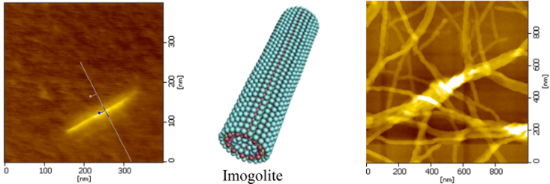
- inorganic nanostructures instead of flat surfaces has been demonstrated to be an effective process for preparing various previously untested functional organic/inorganic nanohybrids. The organic parts generally provide functional groups for the nanohybrids, while the inorganic parts act as the scaffold for
- ratios and ability to form network structures. It is no doubt that nanotubes with reactive surfaces and a reliable supply are preferred for the application as scaffold of organic molecules. Carbon nanotubes (CNTs) play an important role in the nanotube family. However, the surface of CNTs is inert for
- adsorption and assembly of organic molecules on the imogolite surface is expected to produce interesting results. Imogolite may act as a one-dimensional scaffold for functional molecules. Moreover, the surface energy of imogolite nanotubes can be lowered by the organic layer, and this can greatly improve the


Self-organizing bioinspired oligothiophene–oligopeptide hybrids
Beilstein J. Nanotechnol. 2011, 2, 525–544, doi:10.3762/bjnano.2.57
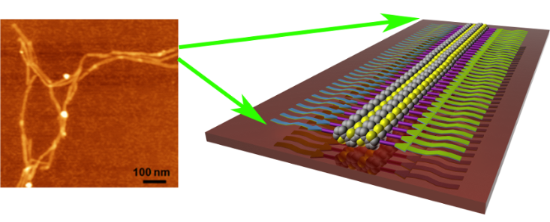
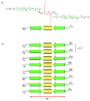
- a common self-assembly mechanism, as discussed previously, it is natural to assume that similar peptide–peptide interactions play the structure-determining role during the aggregation of our hybrid compound and form the scaffold of the fibrils. Relying on the basic ideas and our current
- molecules preserved their relative positions in the aggregates with respect to their neighbors, however, certain conformational rearrangements both at the molecular level and at the nanoscale were observed. In all the cases, the β-sheet organization dominated the structure and remained the main scaffold for




Other Beilstein-Institut Open Science Activities



