


Search results
Search for "shear" in Full Text gives 188 result(s) in Beilstein Journal of Nanotechnology.
Nanoprofilometry study of focal conic domain structures in a liquid crystalline free surface
Beilstein J. Nanotechnol. 2017, 8, 2544–2551, doi:10.3762/bjnano.8.254
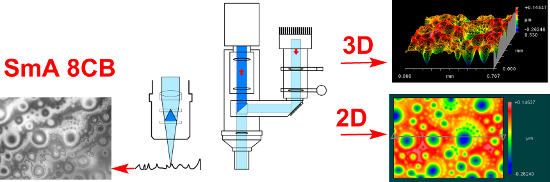
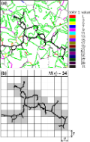
- the elastic moduli of liquid crystals. The shear modulus, G, is given as where C and C1 are scaling constants depending on surfactant, t is the relative temperature, γ is the surface tension coefficient of the free surface with FCDs, and L is the FCD dimension. This relation underlines that the
- smectic-A phase with FCDs has different elastic properties compared to an ideal smectic-A sample. Usually, it is observed that for the shear parallel to the smectic layers, the shear modulus is zero. In the case of a SmA sample with a FCD, the free sliding is hindered by the presence of FCDs. This problem




Alternating current magnetic susceptibility of a ferronematic
Beilstein J. Nanotechnol. 2017, 8, 2515–2520, doi:10.3762/bjnano.8.251
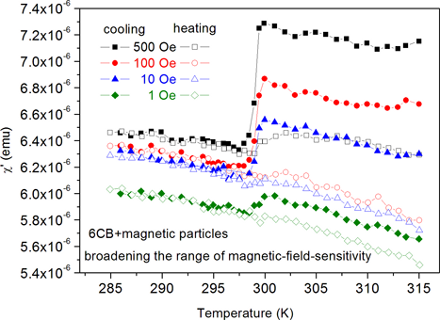
- attention that nematic liquid crystals (LCs) have attracted in recent decades is due to the anisotropy of their physical properties. This anisotropy allows for a realignment of their director (the axis of cylindrical symmetry) by external electrical or magnetic fields, or by shear [1]. In common nematics


![[Graphic 7]](/bjnano/content/inline/2190-4286-8-251-i7.svg?max-width=637&scale=1.18182) = 10−4 in the nematic phas...
= 10−4 in the nematic phas...


Interface conditions of roughness-induced superoleophilic and superoleophobic surfaces immersed in hexadecane and ethylene glycol
Beilstein J. Nanotechnol. 2017, 8, 2504–2514, doi:10.3762/bjnano.8.250
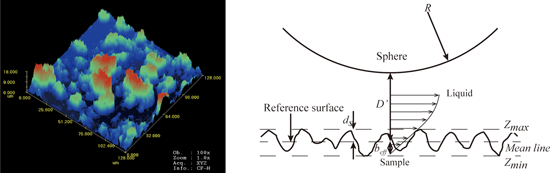
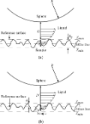
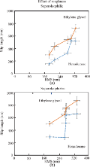
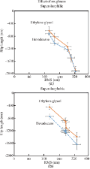
- negative and decrease from a1 to a5. This means that the flow velocity at the reference surface is discontinuous due to the rough structure. The increasing amplitude parameter enhances the fluid shear and inhibits the flow velocity, which forms an area where the average velocity equals that under non-slip





Numerical investigation of the tribological performance of micro-dimple textured surfaces under hydrodynamic lubrication
Beilstein J. Nanotechnol. 2017, 8, 2324–2338, doi:10.3762/bjnano.8.232
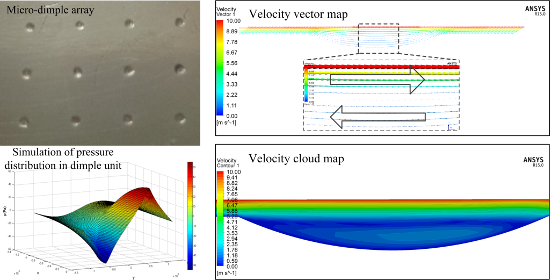
- tribological performance of a friction pair under the condition of hydrodynamic lubrication can be characterized by the following tribological characteristics: (1) dimensionless average film carrying force; (2) dimensionless average film shear force; (3) friction coefficient. The film carrying force is
- wall of the calculation domain, that is, the area of the micro-dimple unit. A high dimensionless average film carrying force indicates a good load-carrying capacity of the friction pair. In a similar way, as shown in Equation 9, the film shear force is calculated by integrating the shear stress along
- the y-axis on the upper wall over the total calculation domain: where Fy is shear force and τ′ is the shear stress. The dimensionless form of the average film shear force can be obtained by The friction coefficient is defined as the ratio of the dimensionless average film shear force to the




Molecular dynamics simulations of nanoindentation and scratch in Cu grain boundaries
Beilstein J. Nanotechnol. 2017, 8, 2283–2295, doi:10.3762/bjnano.8.228
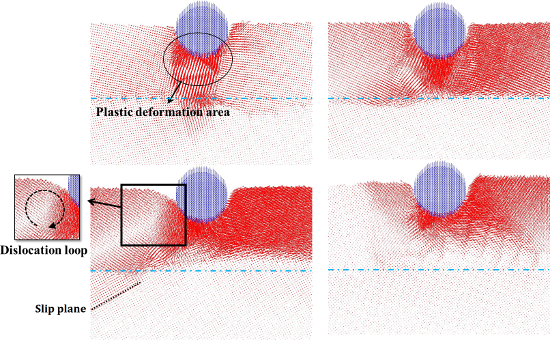
- . Since the atoms behind the grain boundary were destroyed by the scratch, the slip and the pile up increased gradually. The accumulation of atoms was more obvious at higher processing distances. The destruction of the grain boundary restricted the resistance of the force transmission. Moreover, shear




Material property analytical relations for the case of an AFM probe tapping a viscoelastic surface containing multiple characteristic times
Beilstein J. Nanotechnol. 2017, 8, 2230–2244, doi:10.3762/bjnano.8.223
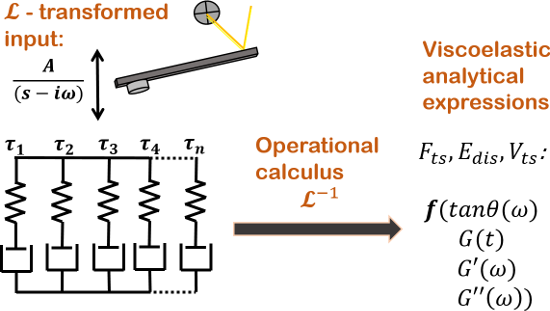
- properties. Throughout these derivations the shear moduli have been employed, although these quantities can be also expressed in terms of their corresponding tensile moduli (E) by using the well-known relation: E = 2G(1 + ν). Figure 4 shows the computational results of a dissipation spectroscopy curve (gray


A comparative study of the nanoscale and macroscale tribological attributes of alumina and stainless steel surfaces immersed in aqueous suspensions of positively or negatively charged nanodiamonds
Beilstein J. Nanotechnol. 2017, 8, 2045–2059, doi:10.3762/bjnano.8.205
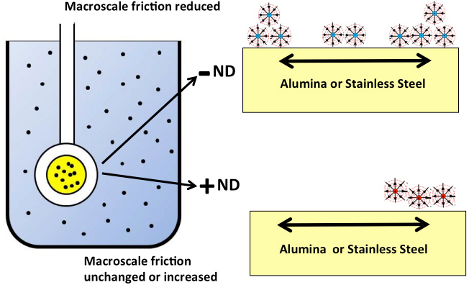
- (SEM) measurements were employed to assess nanoparticle uptake, surface polishing, and resistance to solid–liquid interfacial shear motion. The QCM studies revealed abrupt changes to the surfaces of both alumina and stainless steel upon injection of –ND into the surrounding water environment that are
- are forming robust lubricious deposits on stainless and alumina surfaces that enable gliding of the surfaces through the −ND suspensions with relatively low resistance to shear. In contrast, +ND suspensions are failing to improve tribological performance for either of the surfaces and may have abraded
- suspensions have received far less attention [1][2][7][8][9]. Although the low shear strength of water is beneficial in the hydrodynamic regime of lubrication, under normal loads it also enables contact between opposing surfaces. Nanoparticulate additives have the potential to overcome this deficiency, by


Imidazolium-based ionic liquids used as additives in the nanolubrication of silicon surfaces
Beilstein J. Nanotechnol. 2017, 8, 1961–1971, doi:10.3762/bjnano.8.197
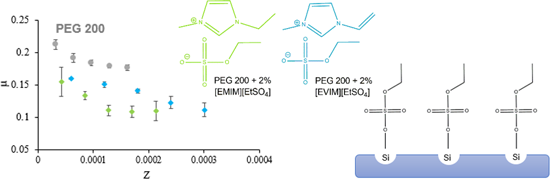
- anions, methylsulfate ([MeSO4]), n-buthylsulfate ([n-BuSO4]) and octylsulfate ([OcSO4]), as oil additives to lubricate steel surfaces and got different results. They found that friction did not improve with respect to that obtained with the base oil (glycerol), except under high shear conditions. Among



Enhancement of mechanical and electrical properties of continuous-fiber-reinforced epoxy composites with stacked graphene
Beilstein J. Nanotechnol. 2017, 8, 1909–1918, doi:10.3762/bjnano.8.191
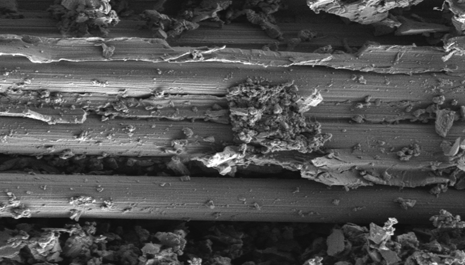
- , radiation, modification with rubber, silica, carbon or other nanoparticles, showing interesting enhancements in interlaminar shear strength (ILSS), fracture toughness, fatigue life and related properties [2][3][4][5][6]. Graphite nanoplatelets (GNPs) or stacked graphene (SG) have been developed as a low


Stick–slip boundary friction mode as a second-order phase transition with an inhomogeneous distribution of elastic stress in the contact area
Beilstein J. Nanotechnol. 2017, 8, 1889–1896, doi:10.3762/bjnano.8.189
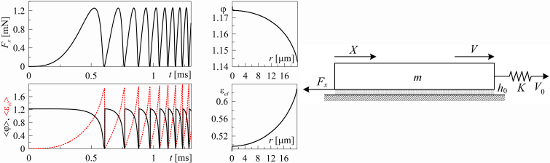
- of the friction block through an elastic spring, the frequency of the melting/solidification phase transitions increases with time. Keywords: boundary friction; dimensionality reduction; numerical simulation; shear stress and strain; stick–slip motion; tribology; Introduction The boundary friction
- transition (which follows from the computer simulations [14][15] and experimental investigations [5]), the free-energy density can be written in the form [10]: where T is the temperature of the lubricant; Tc is the critical temperature; εel is the shear component of the elastic stress; α, a and b are
- positive constants. The order parameter φ is a periodic component of the microscopic density of the material: in a solid-like state of the lubricant φ > 0, while in a liquid-like state φ = 0. Using Equation 1 and the definition τ = ∂f / ∂εel [10][22] shear stresses that appear in the lubricant can be


![[Graphic 15]](/bjnano/content/inline/2190-4286-8-189-i33.png?max-width=637&scale=1.18182) = 1.0, ...
= 1.0, ...


Formation and shape-control of hierarchical cobalt nanostructures using quaternary ammonium salts in aqueous media
Beilstein J. Nanotechnol. 2017, 8, 494–505, doi:10.3762/bjnano.8.53
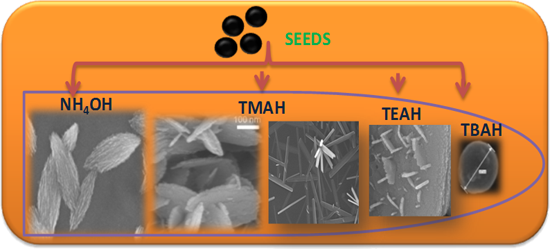
- ambient conditions and under zero shear is discussed first. The critical steps for the formation of nanoplates are the twinning of seed crystals, the size reduction of particles and their controlled assembly to form two-dimensional nanoplates. The cobalt seeds are small spherical nanoparticles of ca. 30
- misleading conclusions and often SEM micrographs may be required for more accurate interpretation. As discussed above, the nanoplates here were formed by aging the Co-TMAH sample under zero shear. A controlled experiment was performed by allowing the growth of seeds treated with TMAH in an ultrasonication


Photocatalysis applications of some hybrid polymeric composites incorporating TiO2 nanoparticles and their combinations with SiO2/Fe2O3
Beilstein J. Nanotechnol. 2017, 8, 272–286, doi:10.3762/bjnano.8.30
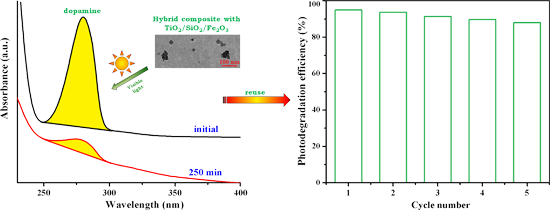
- ) at varying shear rates of 10–100 s−1. The viscosity measurements were performed at 25.0 ± 0.2 °C in triplicate, and the sample volume was kept constant to 0.6 mL. Fourier transform infrared (FTIR) spectra were recorded on a Bruker Vertex 70 FTIR spectrometer. The X-ray diffraction analysis was


Studying friction while playing the violin: exploring the stick–slip phenomenon
Beilstein J. Nanotechnol. 2017, 8, 159–166, doi:10.3762/bjnano.8.16
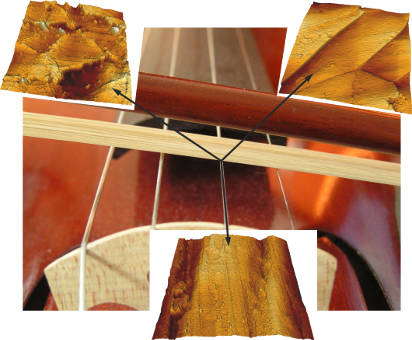
- effect originates from the periodic rupture of junctions created between two rubbing surfaces due to the increasing shear stress at the interface. It is ultimately responsible for the behavior of many braking systems, earthquakes, and unpleasant squeaky sounds caused by the scratching of two surfaces. In


Impact of surface wettability on S-layer recrystallization: a real-time characterization by QCM-D
Beilstein J. Nanotechnol. 2017, 8, 91–98, doi:10.3762/bjnano.8.10
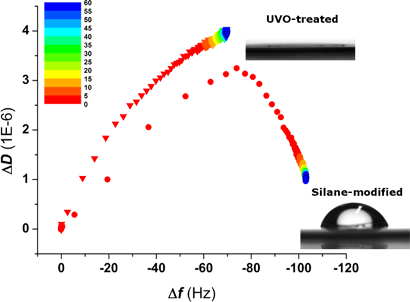
- -layers on different supports [17][18]. The QCM-D responses, i.e., the resonance frequency f and the energy dissipation D of the shear oscillatory motion of a piezoelectric quartz crystal sensor, change upon adsorption or desorption of material on the surface of that sensor. The measured parameters are


Structural and tribometric characterization of biomimetically inspired synthetic "insect adhesives"
Beilstein J. Nanotechnol. 2017, 8, 45–63, doi:10.3762/bjnano.8.6
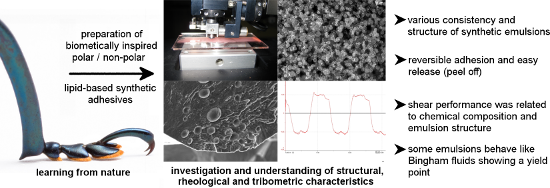
- adhesivenesses, ranging between 1–18 mN. The adhesive performance was drastically reduced in the emulsions that contained albumin as the protein component or that lacked protein. Tribometric shear tests were performed at moderate normal loads. Our measured friction forces (4–93 mN in the first and 0.1–5.8 mN in
- the second generation emulsions) were comparatively low. Differences in shear performance were related to the chemical composition and emulsion structure. Conclusion: By varying their chemical composition, synthetic heterogeneous adhesive emulsions can be adjusted to have diverse consistencies and are
- by the adhesive secretion [7][8][9][10][11][12]. Recently, the suggestion has been made, that during friction regimes, insect adhesives induce rate-dependent viscosity changes caused by non-Newtonian shear strains [5][13][14]. Chemical analyses of adhesive insect secretions employed during locomotion


Graphene–polymer coating for the realization of strain sensors
Beilstein J. Nanotechnol. 2017, 8, 21–27, doi:10.3762/bjnano.8.3
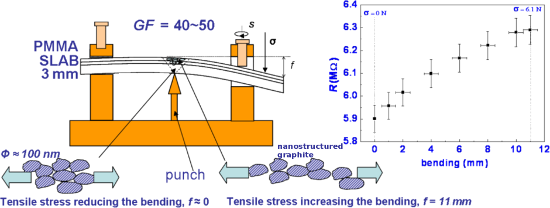
- poly(methyl methacrylate) (PMMA). The good adhesion to the PMMA surface, combined with the shear stress, allows a uniform and continuous spreading of the graphite nanocrystals, resulting in a very uniform graphene multilayer coating on the substrate surface. The fabrication process is simple and yields
- surface, combined with the shear stress, allowed for the uniform and continuous spreading of the graphite nanocrystals on the substrate surface with formation of a very uniform graphene multilayer coating. The electrical response to the mechanical deformation of a strain sensor is generally quantified by
- ) film to achieve a very uniform coating of the substrate surface. The adhesion to the PMMA surface, combined with the applied shear stress, allowed a uniform and continuous spreading of the graphite nanocrystals on the substrate surface with formation of a very uniform graphene multilayer coating. The


When the going gets rough – studying the effect of surface roughness on the adhesive abilities of tree frogs
Beilstein J. Nanotechnol. 2016, 7, 2116–2131, doi:10.3762/bjnano.7.201
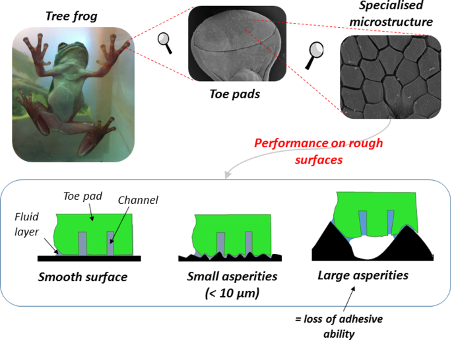
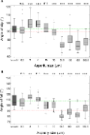
- abrasion of the pad epithelium. Here, we tested the effect of surface roughness on the attachment abilities of the tree frog Litoria caerulea. This was done by testing shear and adhesive forces on artificial surfaces with controlled roughness, both on single toe pads and whole animal scales. It was shown
- frictional shear stress (Figure 2A). Forces initially increased with roughness, with the largest shear stresses being measured on the 6 µm surface (30.1 ± 13.8 kPa; z = −5.1672, p < 0.00014). Shear stress values on the 15 µm surfaces were 18.48 ± 6.1 kPa, higher than the smooth values (z = −5.5663, p
- < 0.00014), but lower than the forces on the 6 µm surface. The shear stress measured on the largest roughnesses tested were at a consistent level of ca. 16 kPa, still higher than those measured on the smooth surface (e.g., comparing smooth to 100 µm, z = −5.5072, p < 0.00014). Adhesive forces (Figure 2B




A new approach to grain boundary engineering for nanocrystalline materials
Beilstein J. Nanotechnol. 2016, 7, 1829–1849, doi:10.3762/bjnano.7.176
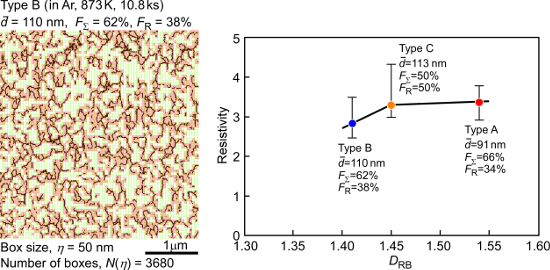
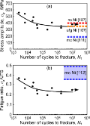
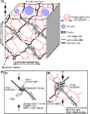
- high-cycle fatigue may result from a rapid migration of low-angle boundaries involving some dislocation mechanisms and enhanced by segregated P atoms at finally resultant random boundaries along shear bands. The operating mechanism will be explained later in some detail. Figure 7 shows the
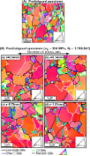
- fatigue. The cyclic stress-induced grain growth, accompanying the transformation of low-angle boundaries into the boundaries with higher misorientation angle, is associated with the evolution of a “diamond-shaped” grain structure along initially formed shear bands. This resulted in intergranular fatigue
- probably deformed by shear stress as in the case of a single crystal, because the persistent slip bands (PSBs) can continuously transfer across the low-angle boundaries [97]. The fatigue cracks preferentially nucleated along random boundaries whose boundary plane may almost correspond to the direction of







Effective intercalation of zein into Na-montmorillonite: role of the protein components and use of the developed biointerfaces
Beilstein J. Nanotechnol. 2016, 7, 1772–1782, doi:10.3762/bjnano.7.170
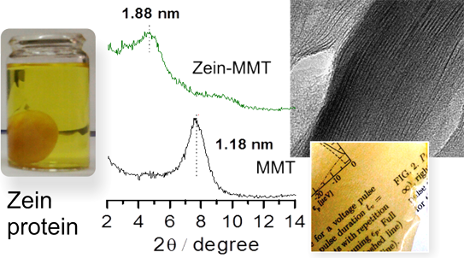
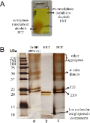
- in aqueous 80% (v/v) ethanol solution by vigorous stirring in a shear mixer (G2 model, Lomi) in order to properly disperse the clay. Solutions of zein (80% (v/v) ethanol/water) with different content in protein (30–1500 mg) were prepared in 50 mL, in order to achieve different weight proportions of




The effect of dry shear aligning of nanotube thin films on the photovoltaic performance of carbon nanotube–silicon solar cells
Beilstein J. Nanotechnol. 2016, 7, 1486–1491, doi:10.3762/bjnano.7.141
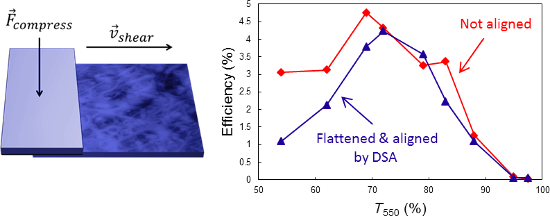
- aligned parallel to the surface. The recently developed process of dry shear aligning – in which shear force is applied to the surface of carbon nanotube thin films in the dry state, has been shown to yield nanotube films that are very flat and in which the surface nanotubes are very well aligned in the
- direction of shear. It is thus reasonable to expect that nanotube films subjected to dry shear aligning should outperform otherwise identical films formed by other processes. In this work, the fabrication and characterisation of carbon nanotube–silicon solar cells using such films is reported, and the
- photovoltaic performance of devices produced with and without dry shear aligning is compared. Keywords: absorbance; carbon nanotubes; current-voltage; dry shear aligning; order parameter; Introduction During the last decade or so, the potential benefits of using carbon nanotubes in solar cells has been


Deformation-driven catalysis of nanocrystallization in amorphous Al alloys
Beilstein J. Nanotechnol. 2016, 7, 1428–1433, doi:10.3762/bjnano.7.134
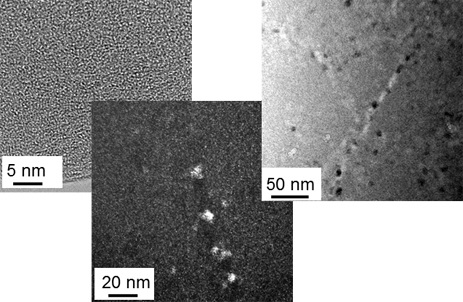
- processing route is intense deformation and nanocrystals have been shown to develop in shear bands during the deformation process. Some controversy surrounded the idea of adiabatic heating in shear bands during their genesis, but specific experiments have revealed that the formation of nanocrystals in shear
- bands has to be related to localized deformation rather than thermal effects. A much less debated issue has been the spatial distribution of deformation in the amorphous alloys during intense deformation. The current work examines the hypothesis that intense deformation affects the regions outside shear
- bands and even promotes nanocrystal formation in those regions upon annealing. Melt-spun amorphous Al88Y7Fe5 alloy was intensely cold rolled. Microcalorimeter measurements at 60 °C indicated a slight but observable growth of nanocrystals in shear bands over the annealing time of 10 days. When the cold


The self-similarity theory of high pressure torsion
Beilstein J. Nanotechnol. 2016, 7, 1267–1277, doi:10.3762/bjnano.7.117
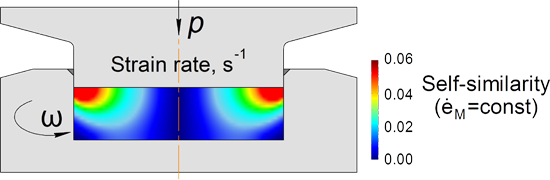
- of the process. The analysis shows that the main parameters of HPT are proportional to βq, with β being the angle of the anvil rotation. The meaning of the parameter q is: q = 0 for velocity and strain rate, q = 1 for shear strain and von Mises strain, q = n for stress, pressure and torque (n is the
- -similarity; severe plastic deformation; Introduction High pressure torsion (HPT) is a severe plastic deformation process, which is widely used for producing nanocrystalline metals and alloys [1][2][3]. The generally accepted theory of HPT is based on the assumptions of uniformity of simple shear deformation
- along the height of the specimen and that there is no slippage between the sample and the anvils. This theory gives a simple expression for the shear strain where β is the torsion angle of the anvil, r is the radial position and H is the height of the disc. However, a number of recent experiments and


Functional diversity of resilin in Arthropoda
Beilstein J. Nanotechnol. 2016, 7, 1241–1259, doi:10.3762/bjnano.7.115
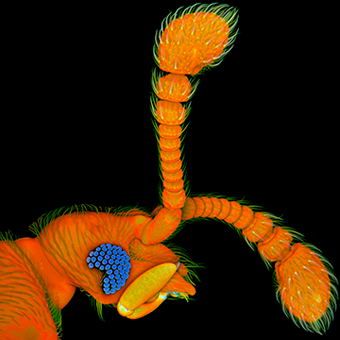
- of hairs (setae) and applied shear force lead to the formation of a maximal real contact area without slippage within the contact [104]. This indicates that material flexibility is very important for the contact formation of adhesive pads. With a minimal normal load, flexible materials can create a


Reasons and remedies for the agglomeration of multilayered graphene and carbon nanotubes in polymers
Beilstein J. Nanotechnol. 2016, 7, 1174–1196, doi:10.3762/bjnano.7.109
- (TEM) and other high-resolution imaging tools. Wrinkles were observed in flat graphene sheets that occur due to the instability of the 2D lattice structure [13]. Wrinkling is a large and out-of-plane deflection caused by compression (in-plane) or shear, and it is usually found in thin and flexible
- uses the shear forces produced in the roll gaps to disperse, mix or homogenize viscous materials as shown in Figure 6. Each roll of the calender rotates at a different velocity. The first and the third roller, called feeding and apron roller, respectively, rotate in the same direction (say clockwise
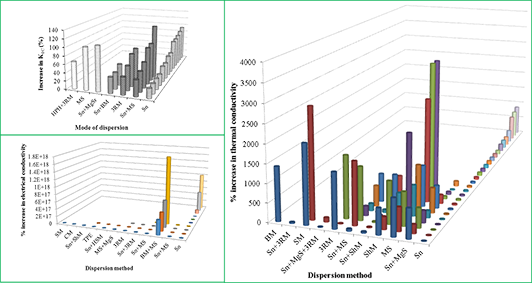
- produced nanocomposite. The highly dispersed RGO–epoxy showed 52% improvement in fracture toughness (K1C) while poorly dispersed RGO–epoxy showed only 24% improvement in K1C. It shows that a better dispersion of RGO can be obtained using ball milling [13]. High-shear mixing and extrusion: High-shear mixing


Generalized Hertz model for bimodal nanomechanical mapping
Beilstein J. Nanotechnol. 2016, 7, 970–982, doi:10.3762/bjnano.7.89
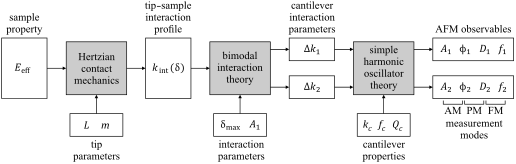
- ][5], force modulation [6][7], phase imaging [8][9], loss tangent imaging [10], friction force microscopy [11], creep compliance [12], shear modulation force microscopy [13], pulsed force microscopy [14] and torsional approaches [15]. These techniques can be broadly classified as either “parametric


![[Graphic 4]](/bjnano/content/inline/2190-4286-7-89-i40.png?max-width=637&scale=1.18182) approximation applied to Equation 6 i...
approximation applied to Equation 6 i...





