


Search results
Search for "sputtering" in Full Text gives 402 result(s) in Beilstein Journal of Nanotechnology. Showing first 200.
Scanning transmission helium ion microscopy on carbon nanomembranes
Beilstein J. Nanotechnol. 2021, 12, 222–231, doi:10.3762/bjnano.12.18
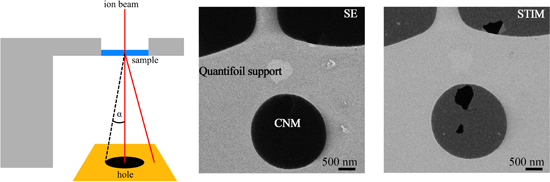
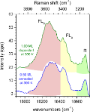
- yield is significantly increased because sputtering occurs not only in backward but also in forward direction [16][17]. To observe and control the milling process, the ion transmission signal is preferred over the SE signal because it is related to the membrane thickness. The detection of the
- using the software package TRIM in the program Stopping and Range of Ions in Matter (SRIM) [26]. The “Surface Sputtering/Monolayer Collision Steps” calculation was selected due to the limited thickness of the membranes to ensure that the collisions in each monolayer were considered. 50000 ions at 15 and


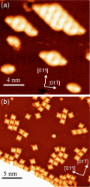
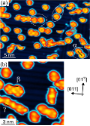
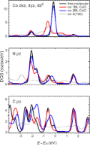
TiOx/Pt3Ti(111) surface-directed formation of electronically responsive supramolecular assemblies of tungsten oxide clusters
Beilstein J. Nanotechnol. 2021, 12, 203–212, doi:10.3762/bjnano.12.16
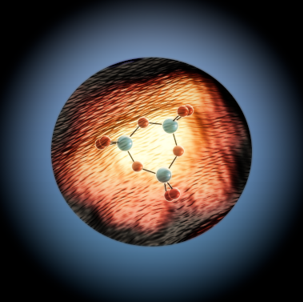
- , the Pt3Ti(111) single crystal surface (purchased by MaTecK) was cleaned by several cycles of neon sputtering (p(Ne) = 1 × 10⁻⁵ mbar) for 10 min and subsequently annealed at 1200 K for 25 min until a sharp p(2×2) pattern was visible by LEED. This procedure led to a clean alloy surface with a single Pt



Paper-based triboelectric nanogenerators and their applications: a review
Beilstein J. Nanotechnol. 2021, 12, 151–171, doi:10.3762/bjnano.12.12
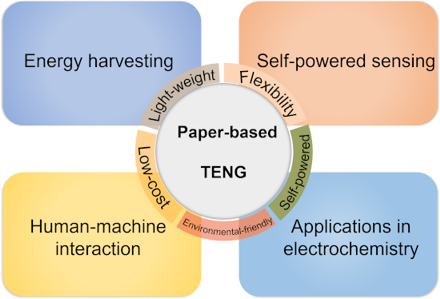
- usually allow a better control over the material thickness, yielding more homogeneous structures. The vacuum evaporation is applicable to a variety of metals at a high rate of up to 50 nm·s−1; however, it requires expensive equipment and high-vacuum conditions. The sputtering can be conducted by using
- conductivity. VF is a simple and rapid method to cast functional materials onto solution-processable substrates without the need to implement any time-consuming and high-cost processes (e.g., evacuation, thermal/e-beam heating, and radio-frequency sputtering). The conductivity is also easily adjustable by






Bio-imaging with the helium-ion microscope: A review
Beilstein J. Nanotechnol. 2021, 12, 1–23, doi:10.3762/bjnano.12.1

- ). Ion collisions with a nucleus in the sample result in (back-)scattering of the primary ion, displacement of atoms in the sample, sputtering of material and generation of phonons (heat). However, incoming ions also undergo many interactions with electrons in the sample, leading to the generation of


Piezotronic effect in AlGaN/AlN/GaN heterojunction nanowires used as a flexible strain sensor
Beilstein J. Nanotechnol. 2020, 11, 1847–1853, doi:10.3762/bjnano.11.166
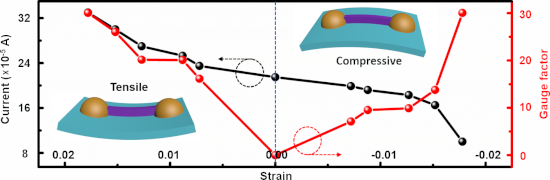
- /GaN NW was transferred to a flexible PET substrate, and ITO electrodes were prepared by magnetron sputtering on both ends of the NW to form an ohmic contact. Measurements The selective EC etching process and the morphology of the NWs were imaged using an optical microscope (Leica DM2500M), an SEM


Molecular dynamics modeling of the influence forming process parameters on the structure and morphology of a superconducting spin valve
Beilstein J. Nanotechnol. 2020, 11, 1776–1788, doi:10.3762/bjnano.11.160
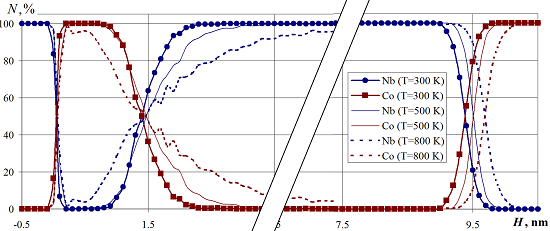
- layered nanostructure consisting of Nb, CuNi, CoOx and Co layers, prepared by magnetron sputtering. High-resolution transmission electron microscopy (HR-TEM) image of a layered Co, CoOx and CuNi nanostructure prepared by magnetron sputtering. Sketch of a Nb/Co spin-valve nanosystem. The numbers next to


Direct observation of the Si(110)-(16×2) surface reconstruction by atomic force microscopy
Beilstein J. Nanotechnol. 2020, 11, 1750–1756, doi:10.3762/bjnano.11.157
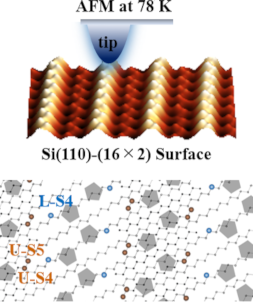
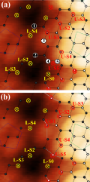
- cantilever was used, which was cleaned by Ar+ sputtering to remove the oxide and contamination on the tip. The deflection of the cantilever was measured by the optical beam deflection method. The topography of the surface was imaged while feedback electronics were used to adjust the tip–sample distance to



Imaging and milling resolution of light ion beams from helium ion microscopy and FIBs driven by liquid metal alloy ion sources
Beilstein J. Nanotechnol. 2020, 11, 1742–1749, doi:10.3762/bjnano.11.156
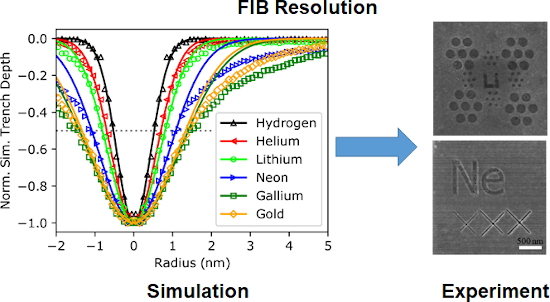
- ) for helium (13 fold) but only from 6 nm (milling) to 4 nm (imaging) for lithium (1.5 fold). The simulated minimum milling width of a 30 keV point-like ion beam in Figure 4 has been obtained using SRIM [39]. The “monolayer collision steps/surface sputtering” mode has been used to simulate the size of
- elements) has been evaluated in terms of the distance to the impinging ion. To account for the milling of a line we calculated the projected distance instead of evaluating the radial distance of the emission site from the beam center. The resulting Gaussian-like sputtering profiles have been normalized and
- helium beam were measured by examining sputtered lines [42] as well as pores [43] in membranes. Gallium is used and optimized for industrial and scientific applications and sputtering beam profiles were measured by TEM [44][45]. The additional influence of the required ExB filter for multi-element or


Out-of-plane surface patterning by subsurface processing of polymer substrates with focused ion beams
Beilstein J. Nanotechnol. 2020, 11, 1693–1703, doi:10.3762/bjnano.11.151
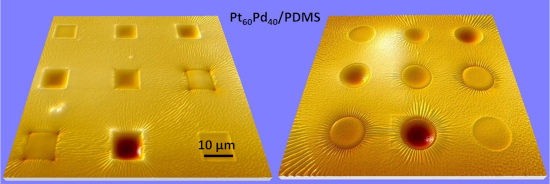
- destroys the films and roughens the surface due to dominating sputtering processes. A very different behavior, resulting in the formation of complex, multiscale 3D patterns, is observed for polydimethylsiloxane samples. The roles of the metal film structure, elastic properties of the polymer substrate, and
- direct, maskless surface patterning with a superior lateral resolution and depth control [2][3]. The portfolio of the currently used FIB-based and FIB-assisted surface patterning techniques includes a number of different methods, such as ion-beam sputtering of surface layers (ion-beam milling), ion-beam
- polymer bulk [7]. In fact, the method utilizes ion energy losses to manipulate the surface morphology by means of radiation damage generated in the substrate bulk and minimizes the surface damage resulting from sputtering. This leaves the thin films and the prefabricated thin-film nanostructures on the


The influence of an interfacial hBN layer on the fluorescence of an organic molecule
Beilstein J. Nanotechnol. 2020, 11, 1663–1684, doi:10.3762/bjnano.11.149
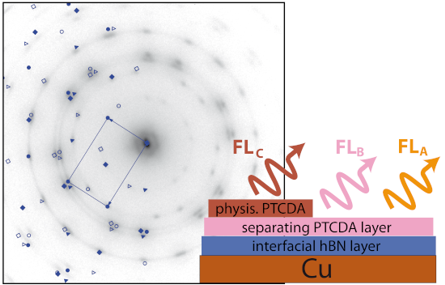
- of borazine that is known to occur even when stored at low temperatures, m/z 2) and borazine (m/z 80) showed a ratio of approximately 1:1. The clean Cu(111) surface was prepared by consecutive steps of sputtering for 30 min with Ar+ ions (1000 eV, 4 μA) and annealing at 1010 K for 30 min. After the
- last sputtering cycle, the Cu(111) sample was heated to 1010 K and ca. 2000 L borazine were dosed (1.5 × 10⁻⁶ mbar via the background for 30 min) onto the sample held at 1010 K. After stopping the borazine dosing, the sample was cooled down with 1 K·s−1. The structural quality of the bare Cu(111
- morphology on a micrometer scale [60]. We propose that the defect-rich regions exhibit a large step density due to impurities and/or grain boundaries. Consequently, we assume that the hot spots are related to an inhomogeneous mesoscopic roughness of the Cu(111) surface, which is remnant after sputtering and






Piezoelectric sensor based on graphene-doped PVDF nanofibers for sign language translation
Beilstein J. Nanotechnol. 2020, 11, 1655–1662, doi:10.3762/bjnano.11.148
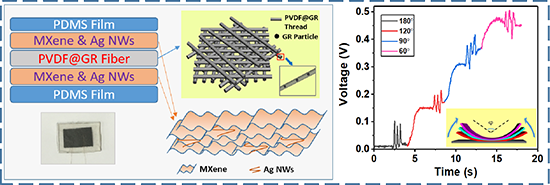
- piezoelectric sensor. Ti3C2 MXene and Ag NWs maintain the good conductivity of the electrode and avoid possible short-circuit problems occurring after magnetron sputtering. Also, a stable flexibility of the structure is maintained. GR is added with six different mass fractions, that is, 0, 0.2, 0.4, 0.6, 0.8


A self-powered, flexible ultra-thin Si/ZnO nanowire photodetector as full-spectrum optical sensor and pyroelectric nanogenerator
Beilstein J. Nanotechnol. 2020, 11, 1623–1630, doi:10.3762/bjnano.11.145
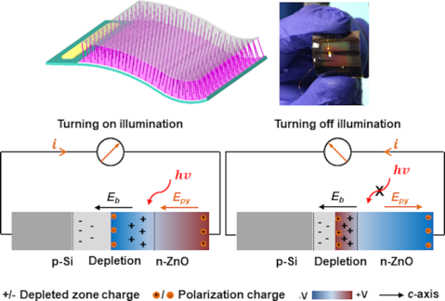
- deposited onto 45 μm p-Si by radio frequency (RF) magnetron sputtering. Next, the sample was placed into a solution of 0.877 g hexamethylenetetramine, 1.372 g Zn(CH3COO)2, and 13 mL ammonium hydroxide to grow ZnO NWs for half an hour via a hydrothermal method in a mechanical convection oven at 90 °C
- . Finally, by RF magnetron sputtering, a 200 nm thick layers of ITO and Cu were deposited on ZnO NWs and p-Si, respectively. Electrical measurements: the measurement setup includes a source meter, an optical platform, a chopper, sample, and a light source. Sample, chopper and light source must be in the


Oxidation of Au/Ag films by oxygen plasma: phase separation and generation of nanoporosity
Beilstein J. Nanotechnol. 2020, 11, 1608–1614, doi:10.3762/bjnano.11.143
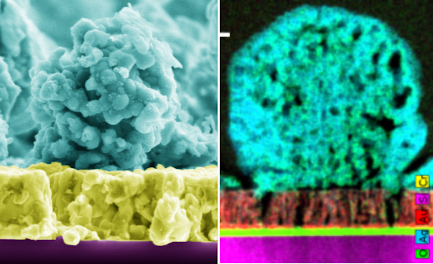
- Lewis et al. [20]. However, instead of using nanostructures as before, we used Au/Ag alloy thin films deposited by co-sputtering as the model system to study the oxidation process triggered by radio-frequency oxygen plasma (Figure 1). The oxidation and phase separation processes resulted in the
- a high specific surface area. Experimental The Au/Ag films were deposited by magnetron co-sputtering of gold and silver targets (99.99% in purity). The electrical power applied to the gold and silver targets was fixed to 25 and 100 W, respectively. This yielded Au/Ag films with 75 atom % and 25 atom
- speed and no intentional heating was applied to the substrate during the procedure. To ensure a proper adhesion of the Au/Ag alloy films, prior to each deposition a ≈100 nm thick chromium layer was deposited by sputtering of a chromium target (99.99% in purity), under pure argon atmosphere at 10 mT, for


Walking energy harvesting and self-powered tracking system based on triboelectric nanogenerators
Beilstein J. Nanotechnol. 2020, 11, 1590–1595, doi:10.3762/bjnano.11.141
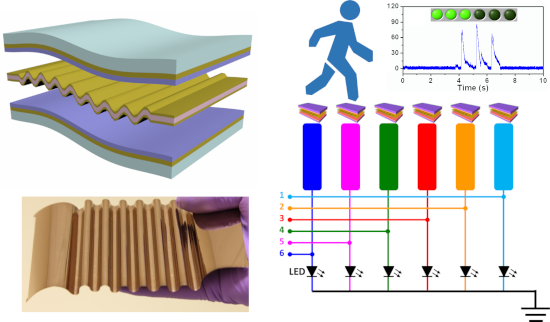
- and deionized water were used to clean 50 μm thick PTFE films, which were then dried with nitrogen. During the etching process, DC sputtering was used on the surface of the PTFE film as a mask to deposit Au particles for 45 s. Next, a gas mixture containing O2, CF4, and Ar was introduced to the
- . Fabrication of the u-TENG The u-TENG fabrication procedure was adapted, with modifications, from [34]. The back electrode was formed by depositing a Cu layer on the unmodified surface of a PTFE film via magnetron sputtering. A poly(dimethylsiloxane) (PDMS)-coated PTFE film was mounted onto a poly(ethylene




Adsorption and self-assembly of porphyrins on ultrathin CoO films on Ir(100)
Beilstein J. Nanotechnol. 2020, 11, 1516–1524, doi:10.3762/bjnano.11.134
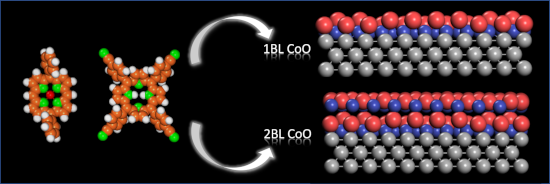
- molecules were carefully outgassed for 2 to 5 h prior to deposition at ±10 K of the evaporation temperature. CoO was prepared on an Ir(100) single crystal surface cleaned by ion sputtering and annealing. The Ir(100)-(1 × 1) surface was prepared according to [31]. We employ thin films of two distinct




Helium ion microscope – secondary ion mass spectrometry for geological materials
Beilstein J. Nanotechnol. 2020, 11, 1504–1515, doi:10.3762/bjnano.11.133
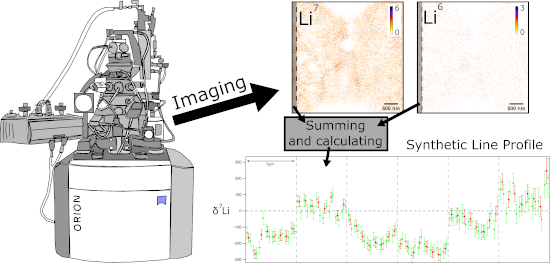
- ions of species x to the number of sputtered atoms of x, in a matrix-matched reference sample. The concentration of x, Cx, can then be calculated using Equation 1, and depends on the secondary ion current, Ix, the calculated useful yield UYx, the primary ion beam current, Ip and the sputtering yield, Y
- , which is typically measured after the analysis: The sputtering yield depends on the nature of the atoms as well as the matrix in which they are bound. This yield can be predicted semi-empirically for a primary Ne beam [17]. Figure 3 shows how the calculated yield of different atoms varies for a silicate
- . The calculated sputtering yield as a function of the atomic number for a 10 kV primary Ne beam impacting a silicate glass matrix for a low-density glass (2.2 g·cm−3, blue) and a high-density glass (3.3 g·cm−3, red), calculation after [17]. Reflected-light micrograph of the analysed Spodumene grain



Controlling the electronic and physical coupling on dielectric thin films
Beilstein J. Nanotechnol. 2020, 11, 1492–1503, doi:10.3762/bjnano.11.132
- (100) crystal was cleaned by cycles of Ar+ sputtering and annealing at 500 °C. MgO(100) films were grown by Mg evaporation in an oxygen environment. The Mg fluxes used were on the order of 1 Å/min as monitored by a quartz microbalance. The MgO deposition was done at a temperature of 270 °C and at an O2




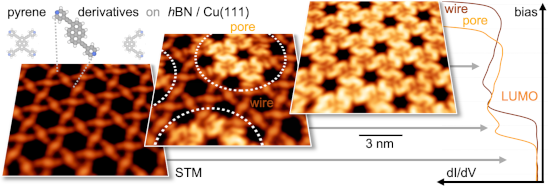
Self-assembly and spectroscopic fingerprints of photoactive pyrenyl tectons on hBN/Cu(111)
Beilstein J. Nanotechnol. 2020, 11, 1470–1483, doi:10.3762/bjnano.11.130
- was cleaned by repeated Ar+ sputtering cycles at an energy of 800–1000 eV, followed by annealing at 1070 K. Monolayer hBN was grown via chemical vapor deposition using borazine ((HBNH)3, Katchem spol s.r.o, www.katchem.cz), following a protocol described previously [25]. Subsequently, a submonolayer





Antimicrobial metal-based nanoparticles: a review on their synthesis, types and antimicrobial action
Beilstein J. Nanotechnol. 2020, 11, 1450–1469, doi:10.3762/bjnano.11.129

- subsections. Physical methods Examples of physical methods used to synthesize NPs are the evaporation/condensation method, magnetron sputtering, mechanochemical processing (MCP), microwave-thermal method, photoreduction process, and pulsed laser ablation, among others. The evaporation/condensation method
- setup [23]. Magnetron sputtering is a high-rate vacuum-coating technique generally used to synthesize films, multilayer or hybrid systems based on substrate coating. For example, Piedade et al. obtained ZnO, ZnO–C and ZnO–Cu films with thickness values ranging from 385 to 1635 nm. In addition, Galstyan


Wafer-level integration of self-aligned high aspect ratio silicon 3D structures using the MACE method with Au, Pd, Pt, Cu, and Ir
Beilstein J. Nanotechnol. 2020, 11, 1439–1449, doi:10.3762/bjnano.11.128
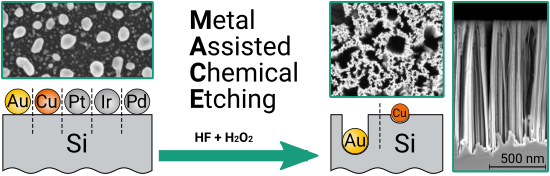
- nanometre scale. The target film thickness was 5 nm and was adjusted using the sputtering rate. Figure 1 shows SEM images after the annealing process (Figure 1a–d) and the results of the particle distribution analysis (Figure 1f–j). Figure 1e shows the surface of the Ir sample directly after the ALD process
- PVD methods. The deposition of gold and palladium was done by magnetron sputtering. The film thickness has been adjusted by the use of a calibrated deposition rate. Ion beam sputter deposition (IBSD) has been used to deposit platinum and copper. For copper deposition, the thickness has been controlled


Impact of fluorination on interface energetics and growth of pentacene on Ag(111)
Beilstein J. Nanotechnol. 2020, 11, 1361–1370, doi:10.3762/bjnano.11.120
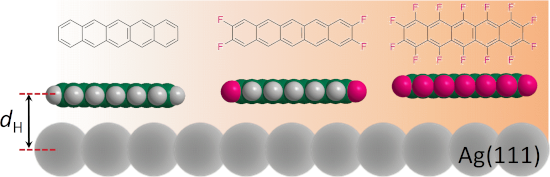
- [60] and vacuum-sublimed on clean metal surfaces (prepared by repeated Ar+ ion sputtering and annealing cycles [up to 550 °C]), with deposition rates of about 0.5 Å/min. The film mass thickness was monitored with a quartz crystal microbalance (QCM) near the sample, and a nominal thickness of 4 Å is


Controlling the proximity effect in a Co/Nb multilayer: the properties of electronic transport
Beilstein J. Nanotechnol. 2020, 11, 1336–1345, doi:10.3762/bjnano.11.118
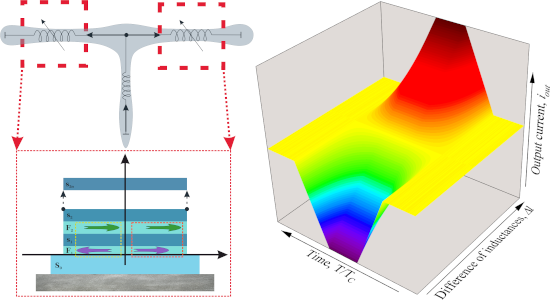
- prepared by using the magnetron sputtering system Leybold Heraeus Z-400 during a single deposition cycle without depressurization of the chamber. Only three targets were used for the structure preparation: niobium (99.95% purity) was used as a superconducting Cooper pair generator and interlayer separator

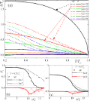
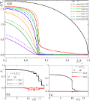


Effect of localized helium ion irradiation on the performance of synthetic monolayer MoS2 field-effect transistors
Beilstein J. Nanotechnol. 2020, 11, 1329–1335, doi:10.3762/bjnano.11.117
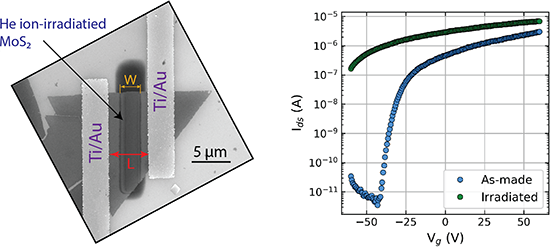
- achieved by selective ion sputtering in thin film transistors has also been observed in He+-irradiated InGaZnO devices [27]. This irradiation-induced carrier activation depends not only on the fluence of the ion beam, but also on the absolute number of defects that can be introduced. Therefore, the
- atomic vacancy yield per each delivered ion as a function of target penetration depth on the 35 nm-Au/5 nm-Ti/0.7 nm-MoS2/285 nm-SiO2 stack [41]. As evident from Figure 3d, the sulfur sputtering yield at the Ti–MoS2 interface is very close to that of unencapsulated MoS2 [15], indicating notable damage to


Structural and electronic properties of SnO2 doped with non-metal elements
Beilstein J. Nanotechnol. 2020, 11, 1321–1328, doi:10.3762/bjnano.11.116
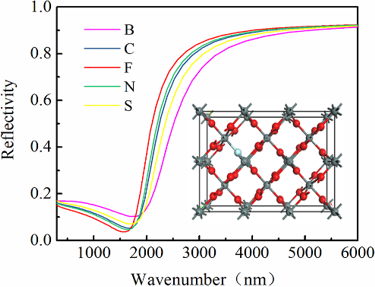
- . Nguyen successfully prepared p-type N-doped SnO2 films using magnetron sputtering [9]. The results show that the SnO2 films were n-type semiconductors, and the concentration of free carriers in the film increased as the temperature for sedimentation increased. Also, p-type semiconductors were



An atomic force microscope integrated with a helium ion microscope for correlative nanoscale characterization
Beilstein J. Nanotechnol. 2020, 11, 1272–1279, doi:10.3762/bjnano.11.111

- used, in situ, in between exposures to assess the shrinkage, stiffness change or sputtering of the resist. More applications such as conductive AFM, piezo-force microscopy or magnetic force microscopy are within reach of the presented technology and would make AFM–HIM appealing to the microelectronics





