


Search results
Search for "surface defects" in Full Text gives 104 result(s) in Beilstein Journal of Nanotechnology.
Effect of the tip state during qPlus noncontact atomic force microscopy of Si(100) at 5 K: Probing the probe
Beilstein J. Nanotechnol. 2012, 3, 25–32, doi:10.3762/bjnano.3.3
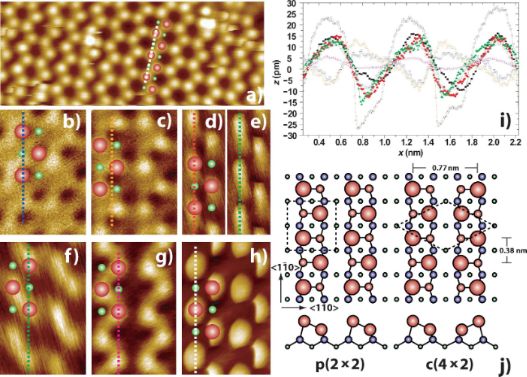
- -induced imaging variation At 5 K we routinely observe the c(4 × 2) reconstruction and associated surface defects (Figure 1a). Note that in order to avoid perturbation of the surface during scanning we typically image at a setpoint corresponding to low tip–sample interaction (i.e., at a frequency shift


Highly efficient ZnO/Au Schottky barrier dye-sensitized solar cells: Role of gold nanoparticles on the charge-transfer process
Beilstein J. Nanotechnol. 2011, 2, 681–690, doi:10.3762/bjnano.2.73
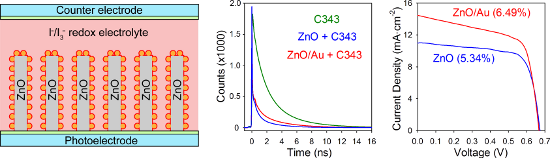
- . However, it has been well documented that gold can form both ohmic as well as Schottky junctions with n-type ZnO, depending on the crystal defects of ZnO [24][25]. In this regard, Brillson and coworkers [26][27] demonstrated that by removing the surface defects of ZnO, a ZnO/Au ohmic junction can be
- converted to a Schottky junction. Therefore, in the present study, in order to ensure the formation of a Schottky barrier at the ZnO/Au interface, the ZnO/Au photoelectrodes were annealed at 450 °C in air for 30 min after the deposition of the Au nanoparticles in order to remove the surface defects of ZnO



Superhydrophobicity in perfection: the outstanding properties of the lotus leaf
Beilstein J. Nanotechnol. 2011, 2, 152–161, doi:10.3762/bjnano.2.19
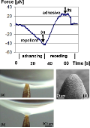
- retraction of a drop [13], similar to the measurement shown in Figure 5. Table 1 shows, in addition to other relevant properties, the maximal adhesion forces of water drops on fresh lotus leaves and leaves of other species with intact wax. The adhesion forces are strongly dependent on surface defects which








Enhanced visible light photocatalysis through fast crystallization of zinc oxide nanorods
Beilstein J. Nanotechnol. 2010, 1, 14–20, doi:10.3762/bjnano.1.3
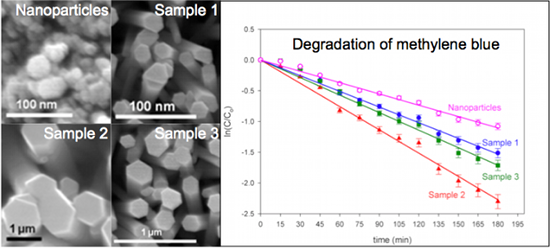
- surface defects play an important role in the photocatalytic activity of metal-oxide nanostructures, as the contaminant molecules need to be adsorbed on to the photocatalytic surface for the redox reactions to occur. The higher the effective surface area, the higher will be the adsorption of target
- within the band gap (surface defects) [16], thereby affecting the optical and electronic properties [17]. Increased electron trapping due to higher defect sites leads to enhancement in the photocatalytic efficiency. This increase in photocatalytic efficiency is possible provided the electron-hole pair


Other Beilstein-Institut Open Science Activities



